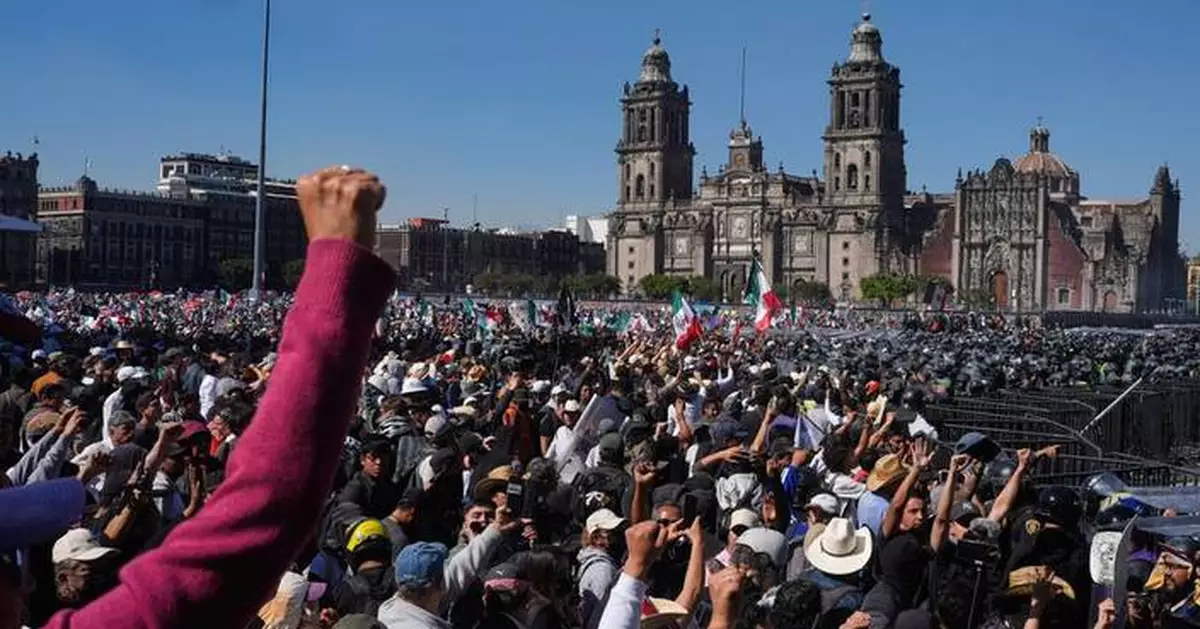
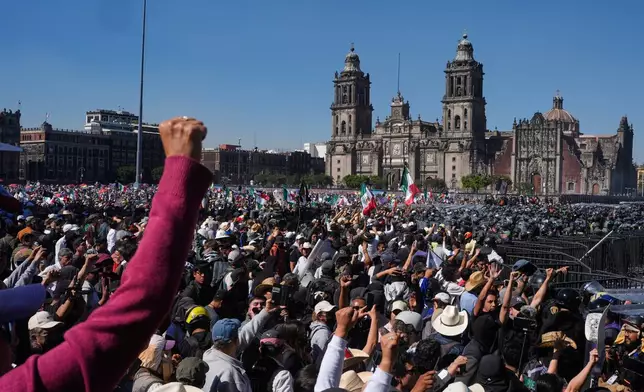
MEXICO CITY (AP) — Several thousand people took to the streets of Mexico City on Saturday to protest crime, corruption and impunity in a demonstration organized by members of Generation Z, but which ended with strong backing from older supporters of opposition parties.
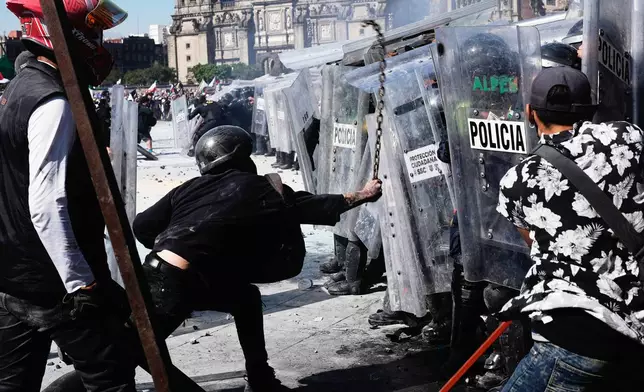
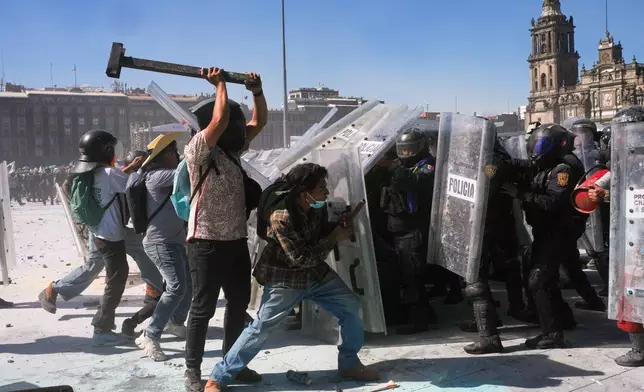
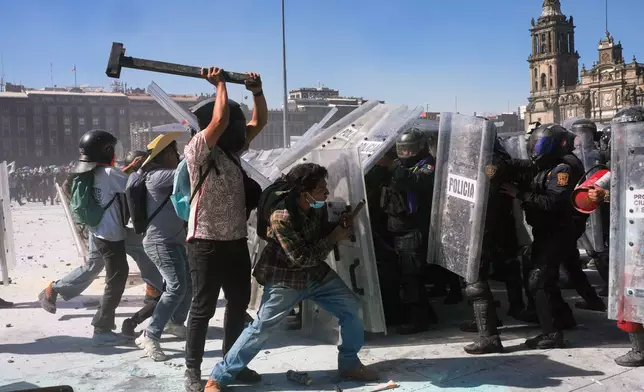
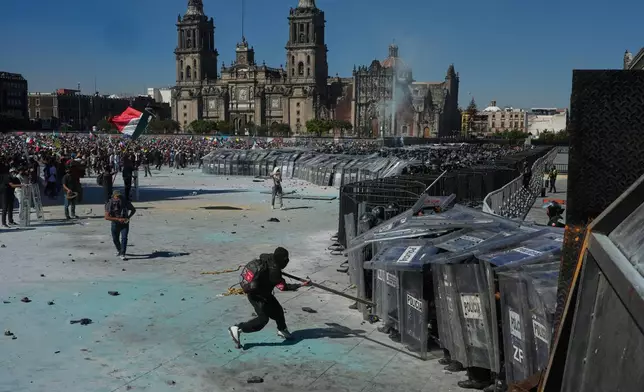
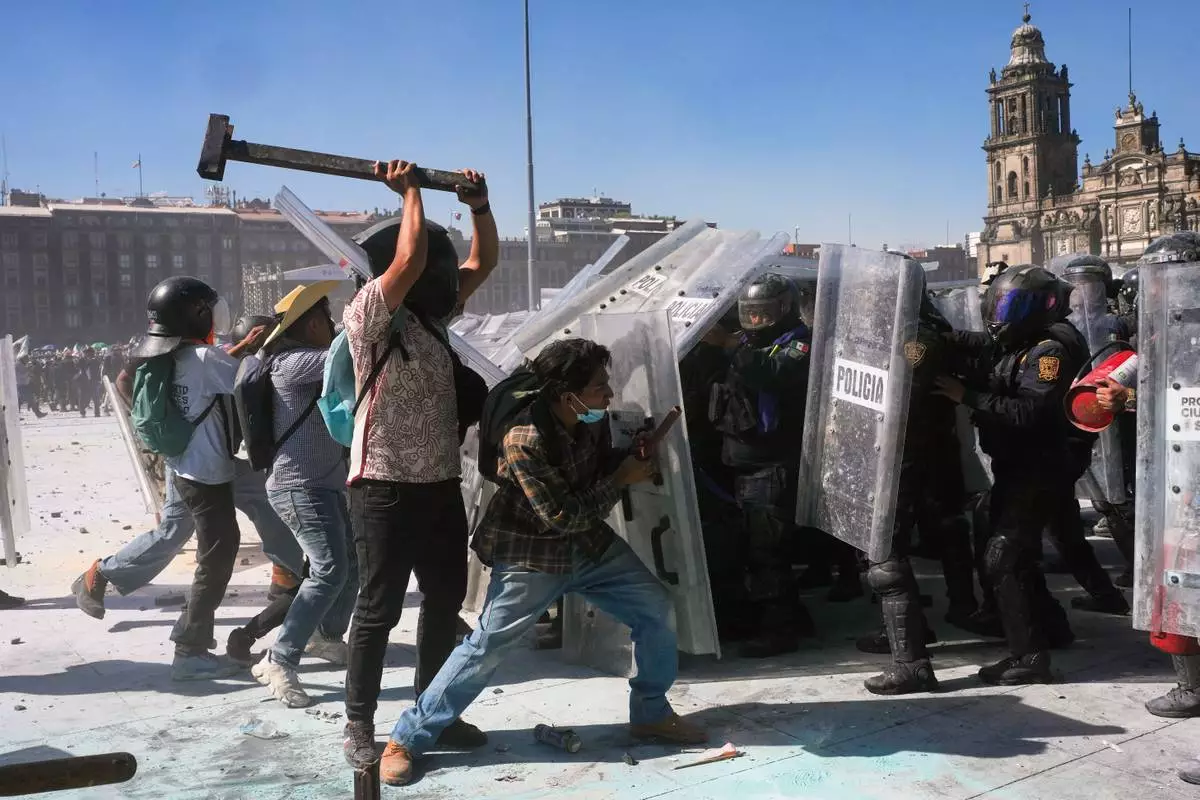
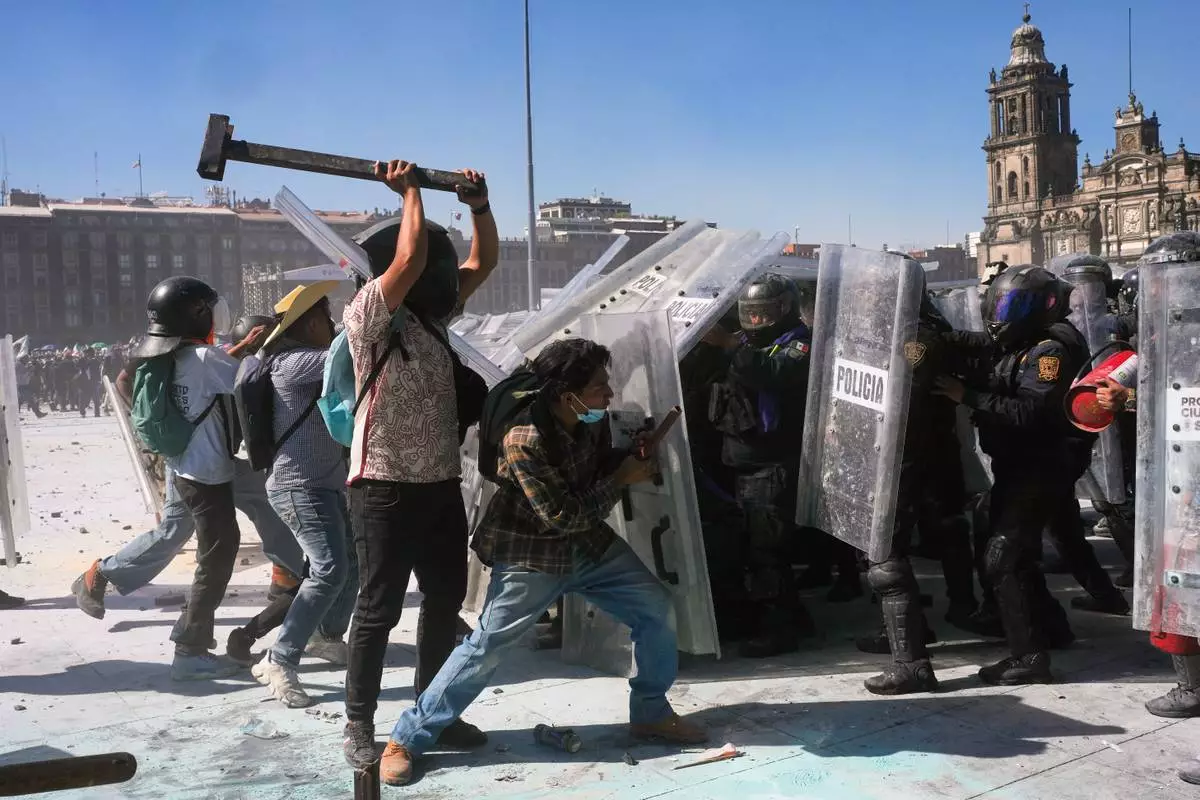
The demonstration was mostly peaceful but ended with some young people clashing with the police. Protesters attacked police with stones, fireworks, sticks and chains, grabbing police shields and other equipment.
Click to Gallery
Protesters charge against police during a youth anti-government march in Mexico City, Saturday, Nov. 15, 2025. (AP Photo/Marco Ugarte)
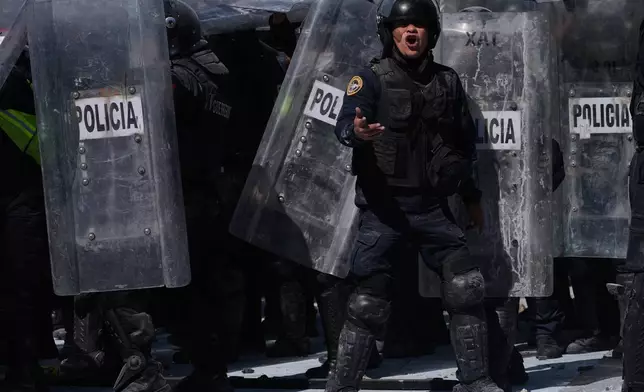
An officer yells at protesters charging at police during a youth anti-government march in Mexico City, Saturday, Nov. 15, 2025. (AP Photo/Marco Ugarte)
Protesters charge at police during a youth anti-government march in Mexico City, Saturday, Nov. 15, 2025. (AP Photo/Marco Ugarte)
Protesters charge at police during a youth anti-government march in Mexico City, Saturday, Nov. 15, 2025. (AP Photo/Marco Ugarte)
Protesters charge on police during a youth anti-government march in Mexico City, Saturday, Nov. 15, 2025. (AP Photo/Marco Ugarte)
Protesters take part in a youth anti-government march in Mexico City, Saturday, Nov. 15, 2025. (AP Photo/Marco Ugarte)
The capital’s security secretary, Pablo Vázquez. said 120 people were injured, 100 of them police officers. Twenty people were arrested.
In several countries this year, members of the demographic group born between the late 1990s and early 2010s have organized protests against inequality, democratic backsliding and corruption.
The largest "Gen Z” protests took place in Nepal in September, following a ban on social media, and led to the resignation of that nation’s prime minister. In Mexico, many young people say they are frustrated with systemic problems like corruption and impunity for violent crimes.
“We need more security” said Andres Massa, a 29-year-old business consultant who carried the pirate skull flag that has become a global symbol of Gen Z protests.
Arizbeth Garcia, a 43-year-old physician who joined the protests said she was marching for more funding for the public health system, and for better security because doctors “are also exposed to the insecurity gripping the country, where you can be murdered and nothing happens.”
Mexican President Claudia Sheinbaum still has high approval ratings despite a recent spate of high profile murders that includes the assassination of a popular mayor in the western state of Michoacan.
In the days leading up to Saturday’s protest, Sheinbaum accused right-wing parties of trying to infiltrate the Gen Z movement, and of using bots on social media to try to increase attendance.
This week some “Gen Z” social media influencers said they no longer backed Saturday’s protests. While elderly figures like former President Vicente Fox, and Mexican billionaire Ricardo Salinas Pliego published messages in support of the protests.
Saturday’s march was attended by people from several age groups, with supporters of the recently killed Michoacan Mayor Carlos Manzo, attending the protest wearing the straw hats that symbolize his political movement.
“The state is dying,” said Rosa Maria Avila, a 65-year-old real estate agent who traveled from the town of Patzcuaro in Michoacan state.
“He was killed because he was a man who was sending officers into the mountains to fight delinquents. He had the guts to confront them,” she said of Manzo.
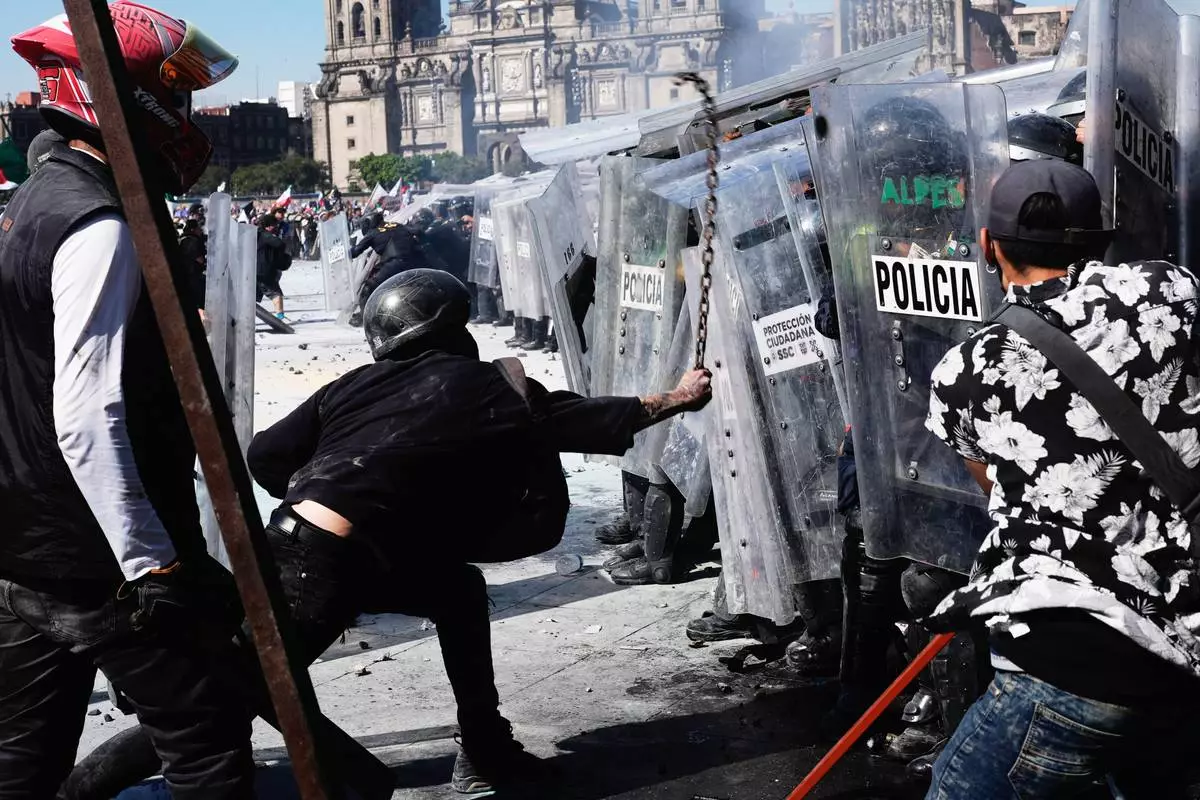
Protesters charge against police during a youth anti-government march in Mexico City, Saturday, Nov. 15, 2025. (AP Photo/Marco Ugarte)
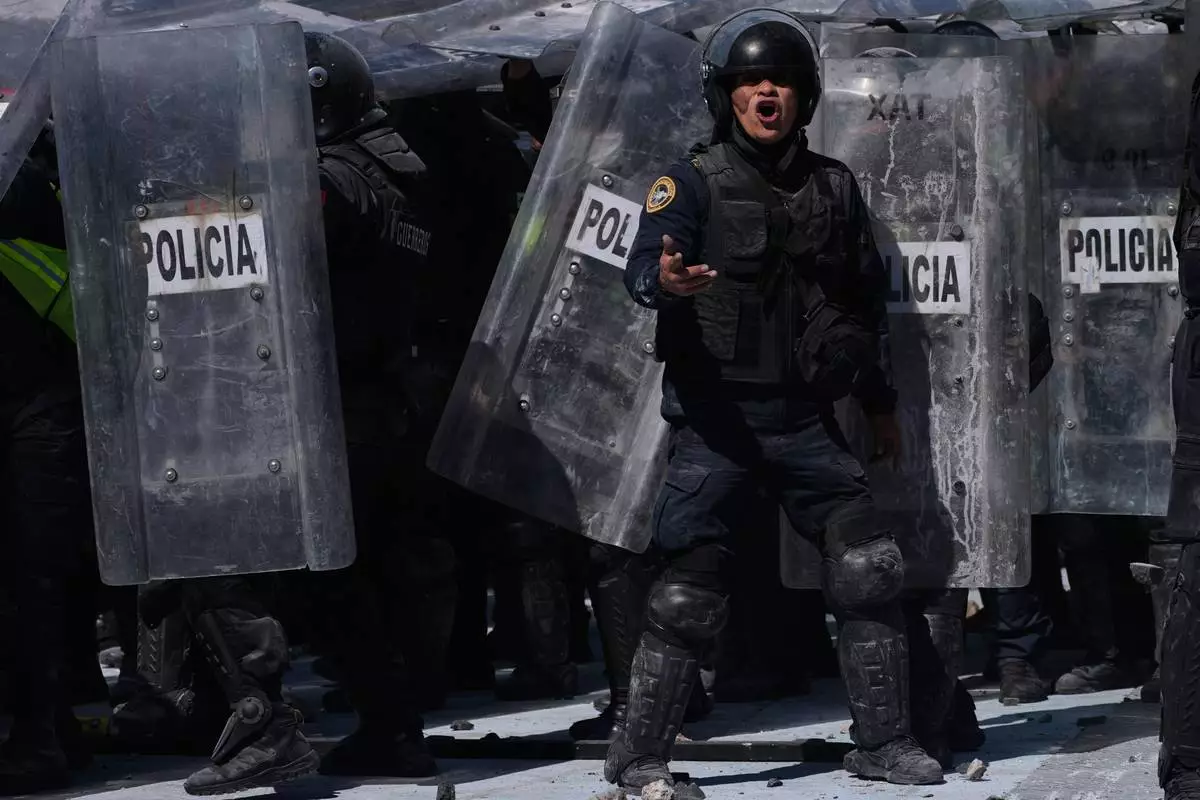
An officer yells at protesters charging at police during a youth anti-government march in Mexico City, Saturday, Nov. 15, 2025. (AP Photo/Marco Ugarte)
Protesters charge at police during a youth anti-government march in Mexico City, Saturday, Nov. 15, 2025. (AP Photo/Marco Ugarte)
Protesters charge at police during a youth anti-government march in Mexico City, Saturday, Nov. 15, 2025. (AP Photo/Marco Ugarte)
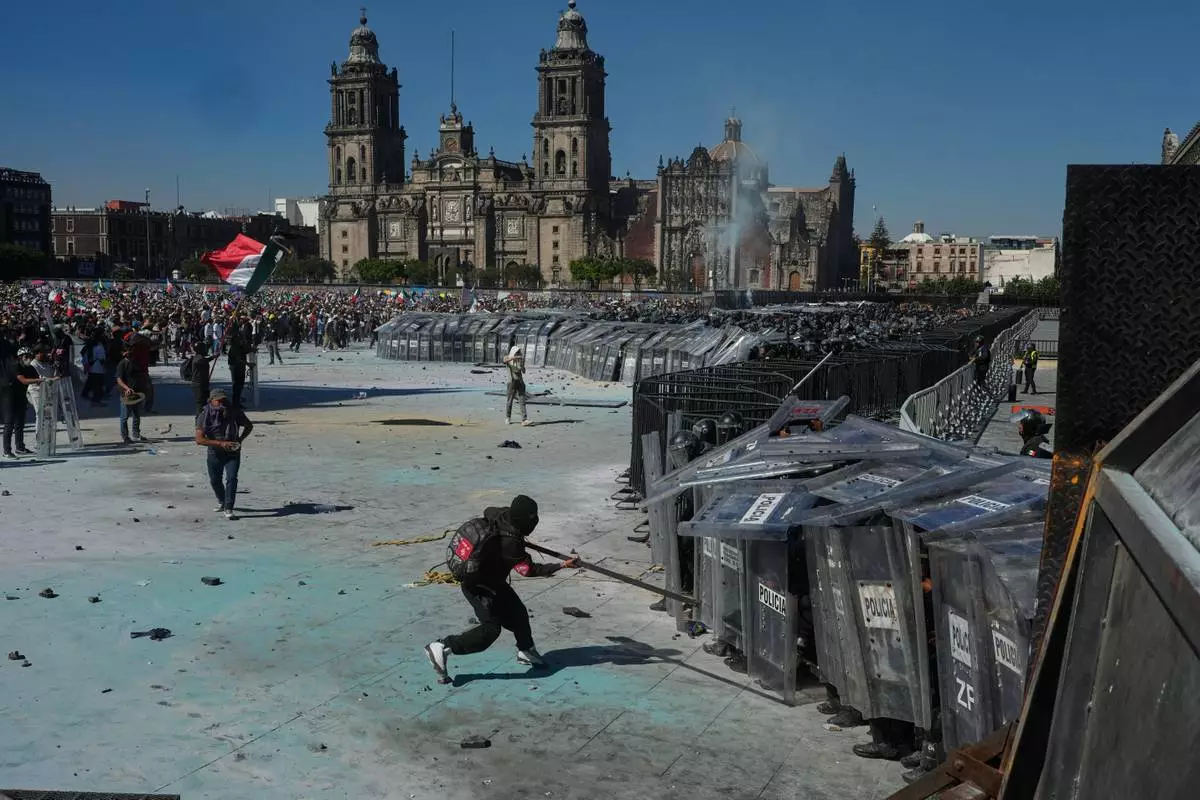
Protesters charge on police during a youth anti-government march in Mexico City, Saturday, Nov. 15, 2025. (AP Photo/Marco Ugarte)
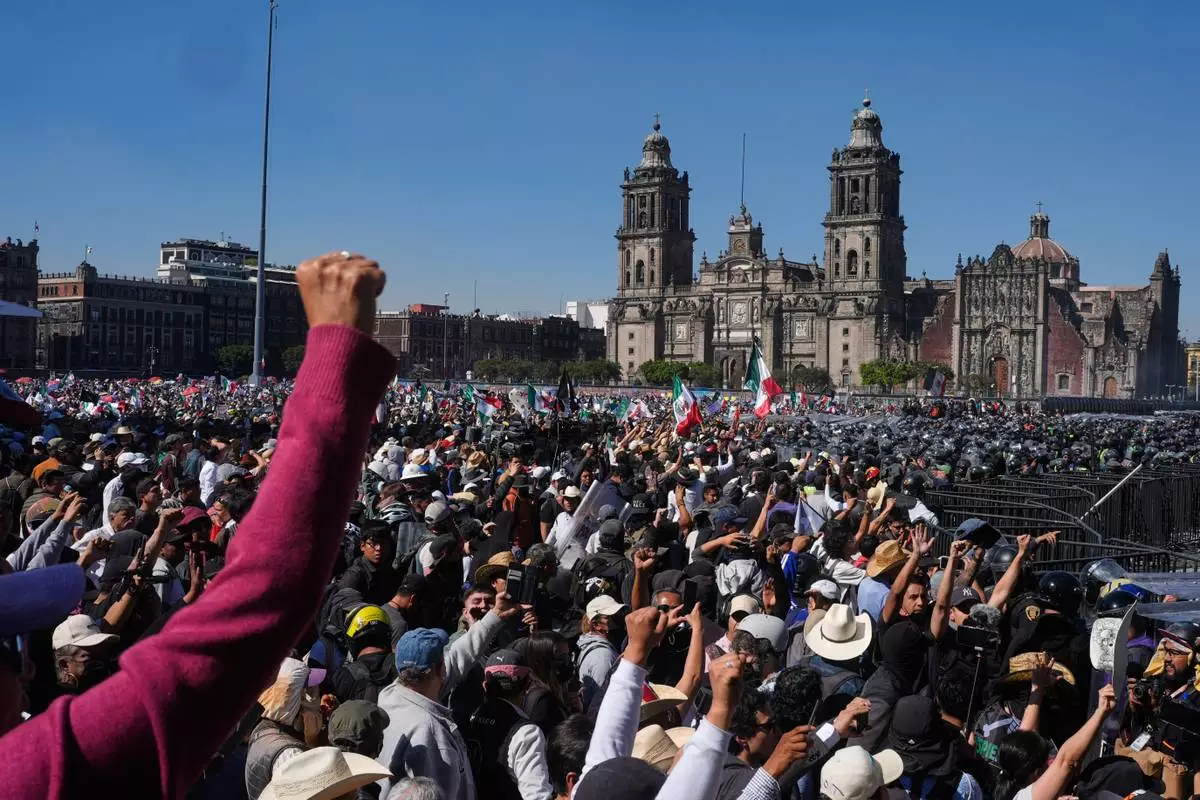
Protesters take part in a youth anti-government march in Mexico City, Saturday, Nov. 15, 2025. (AP Photo/Marco Ugarte)
WASHINGTON (AP) — The U.S. Supreme Court is hearing arguments at 10 a.m. ET over the constitutionality of President Donald Trump’s order to end birthright citizenship for children born in the United States to someone in the country illegally or temporarily.
The birthright citizenship order, which Trump signed on Jan. 20, 2025, the first day of his second term, is part of his Republican administration’s broad immigration crackdown.
Trump plans to be in attendance. He will be the first sitting president to attend oral arguments at the nation’s highest court.
Every lower court to have considered the issue has found the order illegal and prevented it from taking effect. A definitive ruling by the nation’s highest court is expected by early summer.
Here’s the latest:
Sauer, Trump’s top Supreme Court lawyer, is at the lectern, defending the president’s birthright citizenship order. Trump is in the courtroom.
On American Samoa, an island cluster in the South Pacific roughly halfway between Hawaii and New Zealand, native-born children are considered “U.S. nationals” — a distinction that gives them certain rights and obligations while denying them others.
American Samoans are entitled to U.S. passports and can serve in the military. Men must register for the Selective Service. They can vote in local elections in American Samoa but cannot hold public office in the U.S. or participate in most U.S. elections.
Those who wish to become citizens can do so, but the process costs hundreds of dollars and can be cumbersome. In 2022, the Supreme Court rejected an appeal seeking to extend birthright citizenship to American Samoa.
An Alaska appeals court is weighing whether to dismiss criminal charges against an Alaska resident born in American Samoa after she was elected to a local school board.
Crowds watched from the sidewalks as Trump’s motorcade drove along Constitution and Independence Avenues, passing the Washington Monument and the National Mall on the way to the court building.
Justice Felix Frankfurter, a native of Austria, was the last of six justices who were born abroad. The current court is American from birth.
Still, the citizenship issue hits close to home for some justices.
Thomas and Ketanji Brown Jackson are descended from enslaved people who eventually had their citizenship established by the 14th Amendment.
Justice Sonia Sotomayor’s parents were born in Puerto Rico, where residents became citizens under a 1917 law enacted by Congress. The justice most closely tied to an immigrant is Alito, whose father was born in Italy.
Way back in 1841, former President John Quincy Adams represented a shipload of African men and women who had been sold into slavery in the famous Amistad case.
Former President William Howard Taft became chief justice nearly eight years after leaving the White House in 1913. Charles Evans Hughes left the Supreme Court for a presidential run in 1912, which he nearly won, then returned to the court in 1930 as chief justice.
In 1966, Richard Nixon argued his only Supreme Court case, which he lost.
Twenty-four Democratic state attorneys general put out a statement Wednesday morning saying they’re “proud to lead the fight against this unlawful order.”
While Democratic attorneys general have sued the Trump administration scores of times, the plaintiffs in this case are represented by the American Civil Liberties Union and other civil rights groups.
The Democratic attorneys filed court papers supporting their position. Twenty-five of their Republican counterparts filed a friend-of-the-court brief backing the Trump administration.
The only state sitting this one out is New Hampshire.
More than 250,000 babies born in the U.S. each year would not be citizens, according to research from the Migration Policy Institute and Pennsylvania State University’s Population Research Institute.
The order would only apply going forward, the administration has said. But opponents have said a court ruling in Trump’s favor could pave the way for a later effort to take away citizenship from people who were born to parents who were not themselves U.S. citizens.
The president and first lady Melania Trump showed up for the court ritual marking the arrival of a new justice following the confirmations of Justice Neil Gorsuch in 2017 and Justice Brett Kavanaugh a year later.
The ceremony for Trump’s third appointee, Justice Amy Coney Barrett, was delayed a year because of the COVID-19 pandemic and Trump, who was no longer in office, did not attend.
Traditionally the president has avoided attending arguments to maintain distance between the government branches — since the executive officer’s presence is seen by many as a way to pressure the independent court to rule in their favor.
Given the unusual nature of it all — Trump’s presence in the courtroom spotlights how high the stakes are for him, as the court’s decision will have massive consequences on his longstanding promise to crack down on immigration.
Last year, Trump said that he badly wanted to attend a hearing on whether he overstepped federal law with his sweeping tariffs, but he decided against it, saying it would have been a distraction.
Adam Winkler, a constitutional law professor at UCLA, told the The Associated Press that Trump’s attending SCOTUS oral arguments signals how important the president views this case.
However, Trump’s presence “is unlikely to sway the justices,” Winkler said, adding that the SCOTUS justices “pride themselves in their independence, even if some agree with much of Trump’s agenda.”
The fanfare of Trump being in the courtroom will make for a different experience for the justices themselves, however, as “Trump’s presence will make the atmosphere a little bit more circus-like,” Winkler said.
Solicitor General D. John Sauer is making his ninth Supreme Court argument and second in as many weeks. Sauer’s biggest win to date was the presidential immunity decision that spared Trump from being tried for his effort to overturn the 2020 election.
Sauer was a Supreme Court law clerk to Justice Antonin Scalia early in his legal career.
ACLU legal director Cecillia Wang, the child of Chinese immigrants, is presenting her second argument to the Supreme Court. In the first Trump administration, a 5-4 conservative majority ruled against Wang’s clients in another immigration case.
It’s not an April Fool’s joke. Alito was born this day in 1950. Only Thomas, who turns 78 in June, is older than Alito among the nine justices.
In the post-pandemic era, the other justices allow the 77-year-old Thomas, the longest-serving member of the court, to pose a question or two before the free-for-all begins.
In a second round of questioning, the justices ask questions in order of seniority. Chief Justice John Roberts, whose center chair makes him the most senior, gets the first crack.
The justices have routinely gone beyond the allotted time since returning to the courtroom following the Covid-19 pandemic.
A buzzer and the court marshal’s cry, “All rise,” signal the justices’ entrance from behind red curtains. The livestream won’t kick in for several minutes, until after the ceremonial swearing-in of lawyers to the Supreme Court bar.
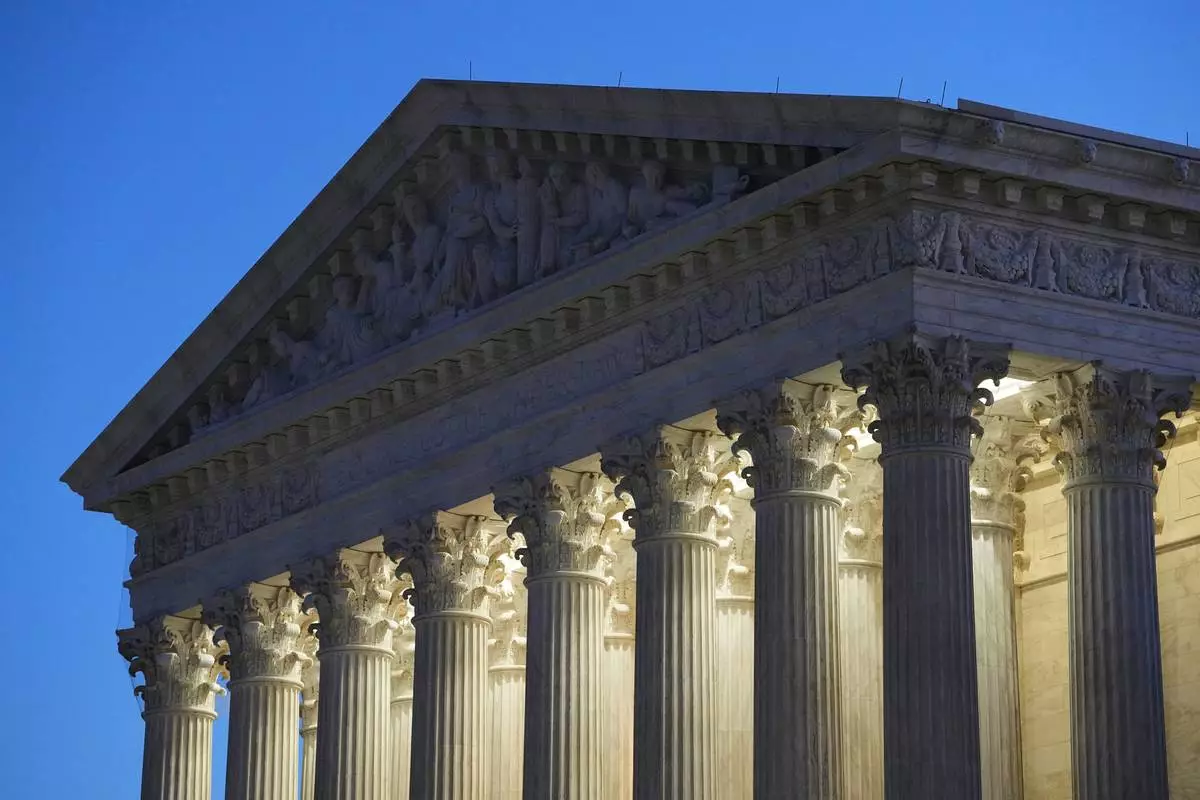
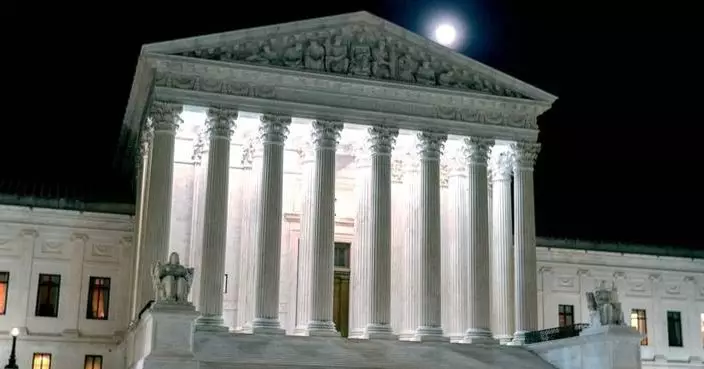
FILE - The U.S. Supreme Court is seen in Washington on Feb. 24, 2026. (AP Photo/Matt Rourke, File)
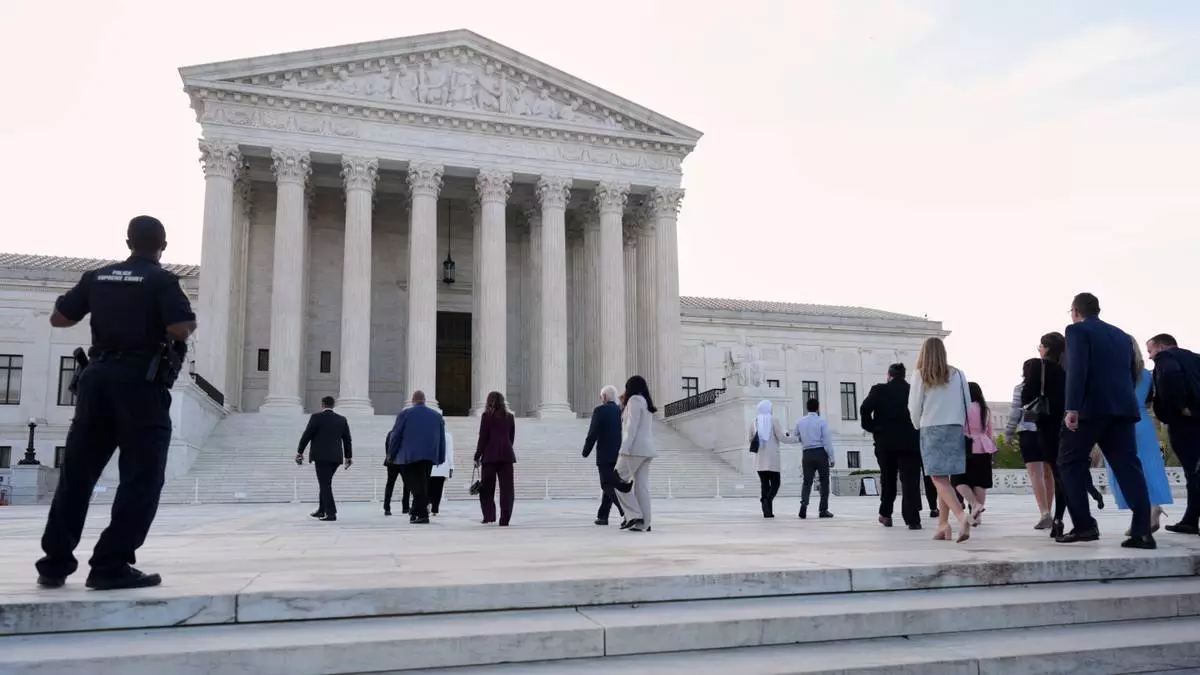
People arrive to walk inside the U.S. Supreme Court, on Capitol Hill in Washington, Wednesday, April 1, 2026. The Supreme Court justices will hear oral arguments today on whether President Donald Trump can deny citizenship to children born to parents who are in the United States illegally or temporarily. (AP Photo/J. Scott Applewhite)