An Indiana lawmaker who has yet to make a decision on whether to back President Donald Trump's push to have Republicans redraw the state's congressional boundaries was the victim of a swatting call Sunday that brought sheriff's deputies to his home.
The call, in which someone reported a fake emergency at the Terre Haute home of state Sen. Greg Goode, came hours after Trump criticized Indiana lawmakers for not moving forward with the plan and singled out Goode and Senate President Pro Tem Rodric Bray. Trump has been trying to persuade Republican-led states across the country to aggressively redraw their congressional maps to help the GOP hold the U.S. House in next year's midterm elections.
Deputies were sent to Goode's home after receiving an email “advising harm had been done to persons inside a home,” according to a statement from the Vigo County Sheriff's Office.
“All persons were secure, safe, and unharmed. Investigation showed that this was a prank or false email (also known as ‘swatting’),” the statement said. The incident is under investigation.
Goode, a Republican, wrote on social media that the responding deputies were “under the impression of a domestic violence emergency.” He thanked the deputies for acting professionally.
“While this entire incident is unfortunate and reflective of the volatile nature of our current political environment, I give thanks to God that my family and I are ok,” Goode wrote.
Earlier Sunday, Trump singled out Goode and Indiana Senate President Pro Tem Rodric Bray while demanding that Republicans move forward with a redistricting plan for Indiana. Republicans already hold a 7-2 advantage in the state's congressional delegation.
“Because of these two politically correct type 'gentlemen,' and a few others, they could be depriving Republicans of a Majority in the House, a VERY BIG DEAL!” Trump wrote on his social media platform.
Bray, the Republican leader of Indiana’s Senate, announced Friday that his chamber will no longer meet to vote on redistricting, citing a lack of support from his members even after pressure from the White House. Vice President JD Vance has visited multiple times to make the case.
Goode, a Republican member of the Senate, has not publicly stated his position on redistricting and says he will not make a decision without seeing a map and legislation introduced for lawmakers’ review.
The White House didn't immediately respond to a request for comment.
The goal of swatting is to get authorities, particularly a SWAT team, to respond to an address by making bogus claims of violence happening inside.
Democrats need to gain just three seats to win control of the House next year, leading to Trump's strong-arming of GOP-controlled states. Legislatures or commissions in Texas, Missouri, North Carolina and Ohio have adopted new maps to boost Republicans’ odds, while California and Virginia are poised to counter Trump's push and redraw their own maps to benefit Democrats.
This story was first published Nov. 16, 2025. It was updated Nov. 19, 2025, to correct the position of state Sen. Greg Goode on redistricting Indiana’s congressional districts. He has not yet made a decision and has not said he is opposed to the plan. This story also was updated to remove a photo showing another man named Greg Goode.
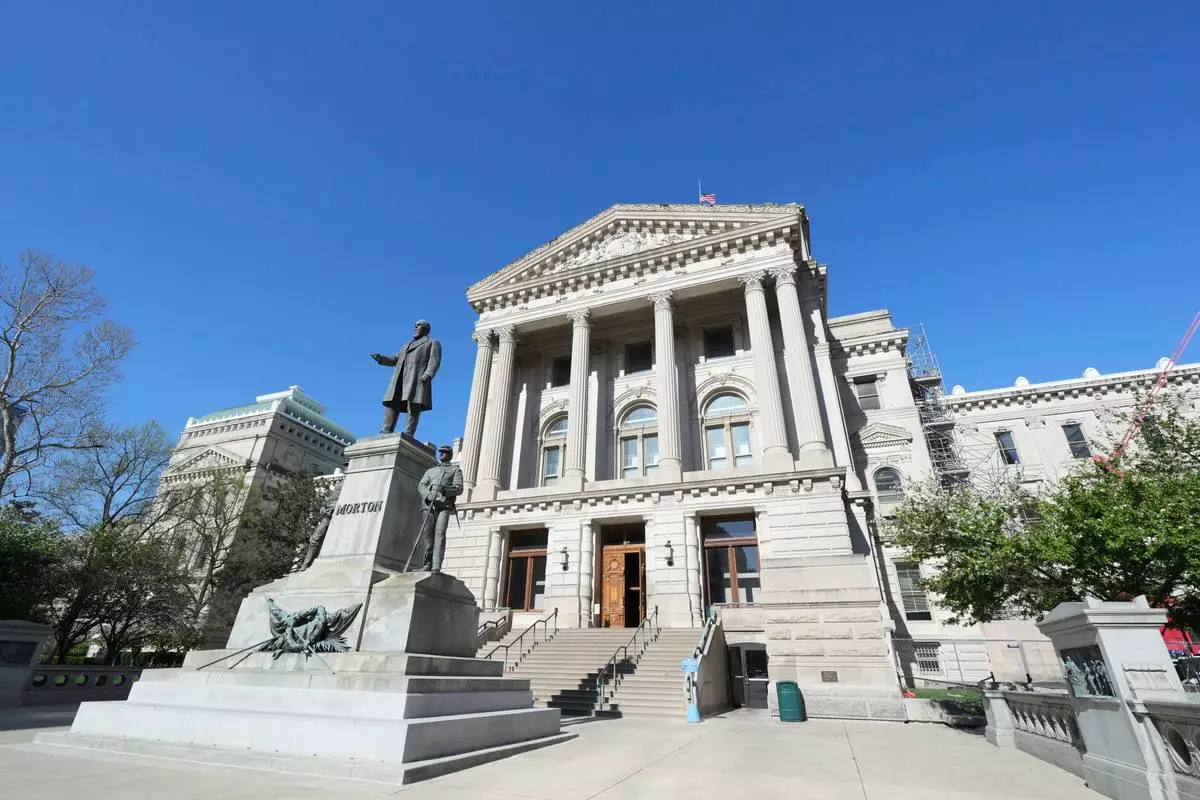
FILE - A general exterior view of the Indiana Statehouse in Indianapolis, April 23, 2025. (AP Photo/AJ Mast, File)

FILE - Republican 3rd district congressional candidate Greg Goode talks with supporters at a Johnson County Republican election watch party in Overland Park, Kan., Aug. 2, 2016. (AP Photo/Orlin Wagner, File)
DUBAI, United Arab Emirates (AP) — Residents of Dubai and Doha, Qatar, awoke to the sound of explosions Tuesday as air defenses worked to intercept new waves of incoming Iranian fire, and Israel launched new strikes on Iran and Lebanon, as the war in the Middle East showed no signs of abating.
Dubai, a major transit hub for international travel, briefly shut its airspace as the military said it was “responding to incoming missile and drone threats” around the city.
The Israeli military said early Tuesday it had begun a “wide-scale wave of strikes” across Iran’s capital and was also stepping up strikes on Iran-backed Hezbollah militants in Lebanon. Israel also reported two incoming salvos before dawn from Iran at Tel Aviv and elsewhere, and said Hezbollah targeted Israel's north.
Iran kept up the pressure on the energy infrastructure of its Gulf Arab neighbors, hitting an oil facility in Fujairah, a UAE emirate on the country’s east coast with the Gulf of Oman that has been repeatedly targeted. State-run WAM news reported that no one had been injured in the blast from the drone strike.
Iran's attacks on Gulf nations and its stranglehold on the Strait of Hormuz, through which a fifth of the world's oil is transported, has given rise to increasing concerns of a global energy crisis. Early Tuesday it hit a tanker anchored off the coast of Fujairah, one of about 20 vessels hit since Israel and the United States started the war with an attack on Iran on Feb. 28.
With Washington under increasing pressure over rising oil prices, Brent crude, the international standard, remained over $100 a barrel, up more than 40% since the war started.
U.S. President Donald Trump said he had demanded that roughly a half-dozen countries send warships to keep the Strait of Hormuz open. But his appeals brought no immediate commitments, with many saying they are hesitant to get involved in a war with no defined exit plan and skeptical that they could do more than the U.S. Navy.
The UAE shut down its airspace early Tuesday as its military reported it was “responding to missile and drone threats from Iran." The closure was soon lifted, and not long after the sounds of explosions could be heard as the military worked to intercept incoming fire.
The snap announcement on its airspace showed the balancing act Emirati authorities face in trying to keep their long-haul carriers, Emirates and Etihad, flying as Iranian attacks continue to target the country.
Saudi Arabia’s Defense Ministry reported intercepting a dozen drones Tuesday morning over the country’s vast Eastern Province, home to oil infrastructure.
In Qatar, the sounds of explosions boomed over the capital early in the day as defenses worked to intercept incoming fire. Qatar's Defense Ministry said later that it had successfully thwarted a missile attack on the city, though a fire broke out in an industrial area from a downed projectile.
Attacks from Iran-linked proxy forces continued in Iraq, as the U.S. Embassy in Baghdad was hit with shrapnel from drones that had been intercepted.
The embassy's air defenses were able to shoot down all four drones targeting the facility, according to two Iraqi security officials, speaking on condition of anonymity to discuss intelligence matters.
A separate strike targeted a house in the heavily fortified Presidential Compound in Baghdad’s al-Jadriya area, the officials said. It wasn’t clear who carried out either attack but Iran-allied militias have regularly been attacking American targets inside Iraq since the conflict began.
The Israeli military early Tuesday said it had launched new attacks across Tehran in addition to the Lebanese capital targeting Hezbollah militants.
More than 1,300 people have been killed in Iran since the start of the conflict, according to the Iranian Red Crescent.
Israel’s strikes have also displaced more than 1 million Lebanese — or roughly 20% of the population — according to the Lebanese government, which says some 850 people have been killed.
Some Israeli troops have pushed into southern Lebanon, and there are fears Israel is preparing a large-scale invasion.
The military's chief of staff, Lt. Gen. Eyal Zamir, said Monday on a visit to the northern border that Israel's army is “determined to deepen the operation until all of our objectives are achieved” and that the military's Northern Command is being reinforced with additional soldiers.
Israel reported two Iranian salvos early Tuesday fired toward Tel Aviv and an area south of the Sea of Galilee. More launches from Lebanon were also reported.
In Israel, 12 people have been killed by Iranian missile fire. At least 13 U.S. military members have been killed.
The virtual shutdown of the Strait of Hormuz is unnerving the world economy, driving up energy prices, threatening food shortages in poor countries, destabilizing fragile states and complicating efforts by central banks to drive down prices for consumers.
There have been a handful of ships getting through, primarily Iranian but also from other countries including India and Turkey, and Iranian Foreign Minister Abbas Araghchi said: “from our perspective it is open” — just not for the United States, Israel and its allies.
Underscoring the danger of even getting close to the strait, a tanker anchored off the eastern coast of the United Arab Emirates was hit by a projectile early Tuesday morning.
The United Kingdom Maritime Trade Operations center, run by the British military, reported the attack, saying the vessel was in the Gulf of Oman off Fujairah. It said the tanker sustained “minor structural damage” and no one was hurt.
On Monday, Trump said “numerous countries” have told him “they’re on the way” to help police the Strait of Hormuz but there was no sign of that actually happening.
Europeans have been critical of the U.S. and Israel for failing to provide clarity on their objectives in the war and have suggested that they are more interested in a diplomatic solution than getting dragged into the conflict.
Japan and Australia said Monday they had not been asked to help protect the strait and had no current plans to do so, and Italy's Foreign Minister Antonio Tajani said his country favors strengthening anti-piracy and defensive missions in the Red Sea, but not expanding their role in the Strait of Hormuz.
British Prime Minister Keir Starmer said his country might deploy mine-hunting drones already in the region, but “will not be drawn into the wider war.”
Rising reported from Bangkok and Mroue from Beirut, Lebanon. Associated Press writers Russ Bynum in Savannah, Georgia; Giovanna Dell'Orto in Miami, Florida; and Qassim Abdul-Zahra in Baghdad contributed to this report.
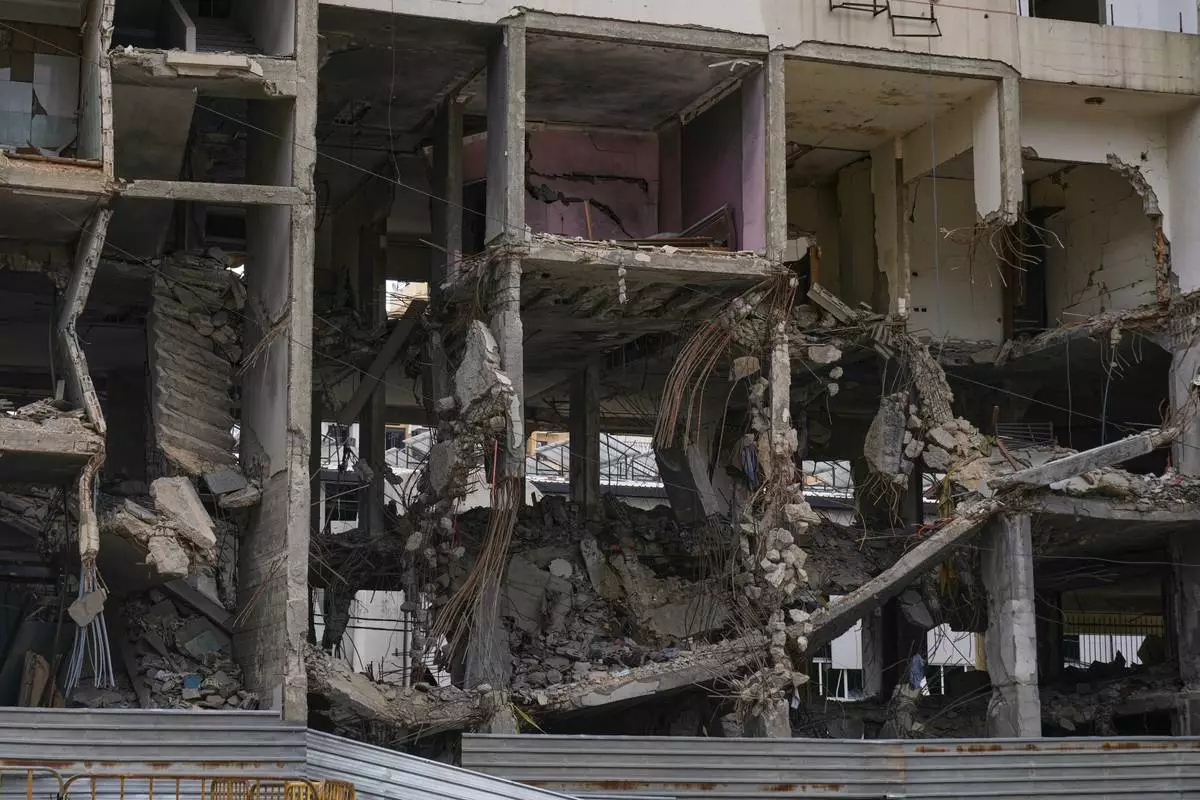
A view of a building damaged in an Israeli airstrike, in Dahiyeh, Beirut's southern suburbs, Beirut's southern suburbs, Lebanon, Monday, March 16, 2026. (AP Photo/Bilal Hussein)
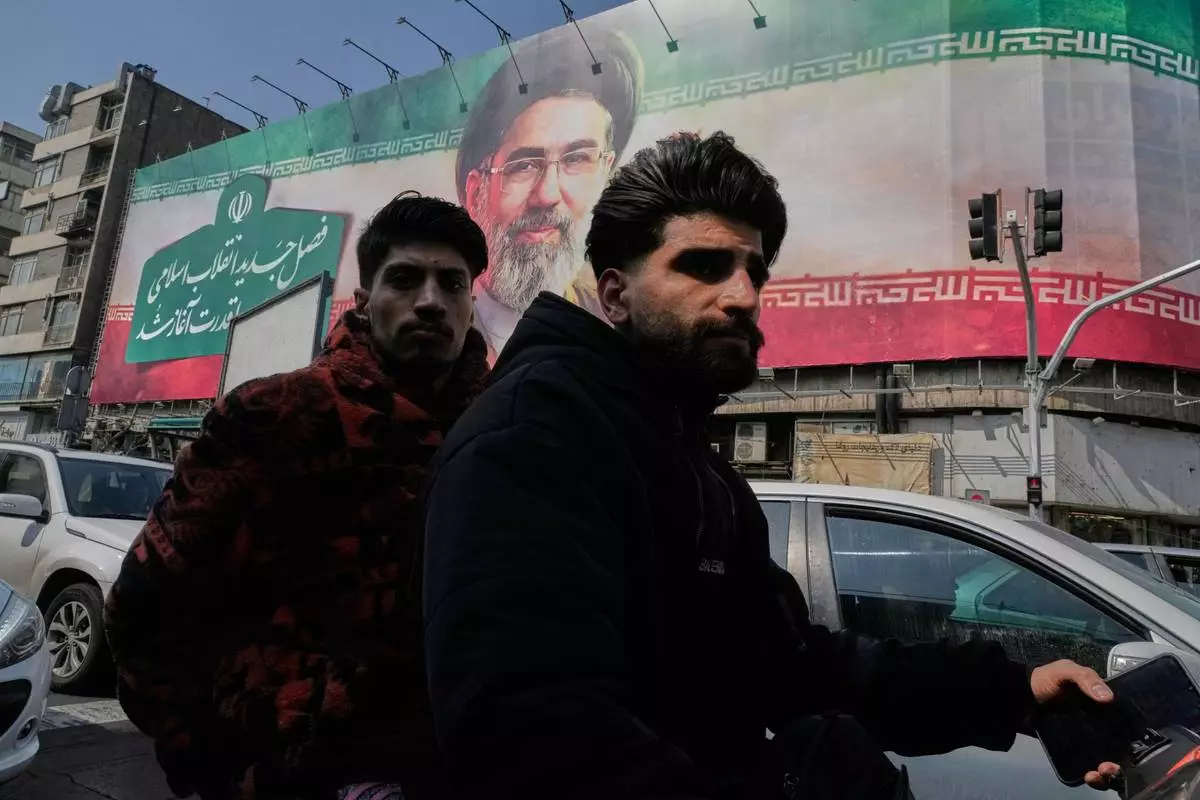
Two men ride their motorbike past a billboard of the Iranian Supreme Leader Ayatollah Mojtaba Khamenei in downtown Tehran, Iran, Saturday, March 14, 2026. (AP Photo/Vahid Salemi)
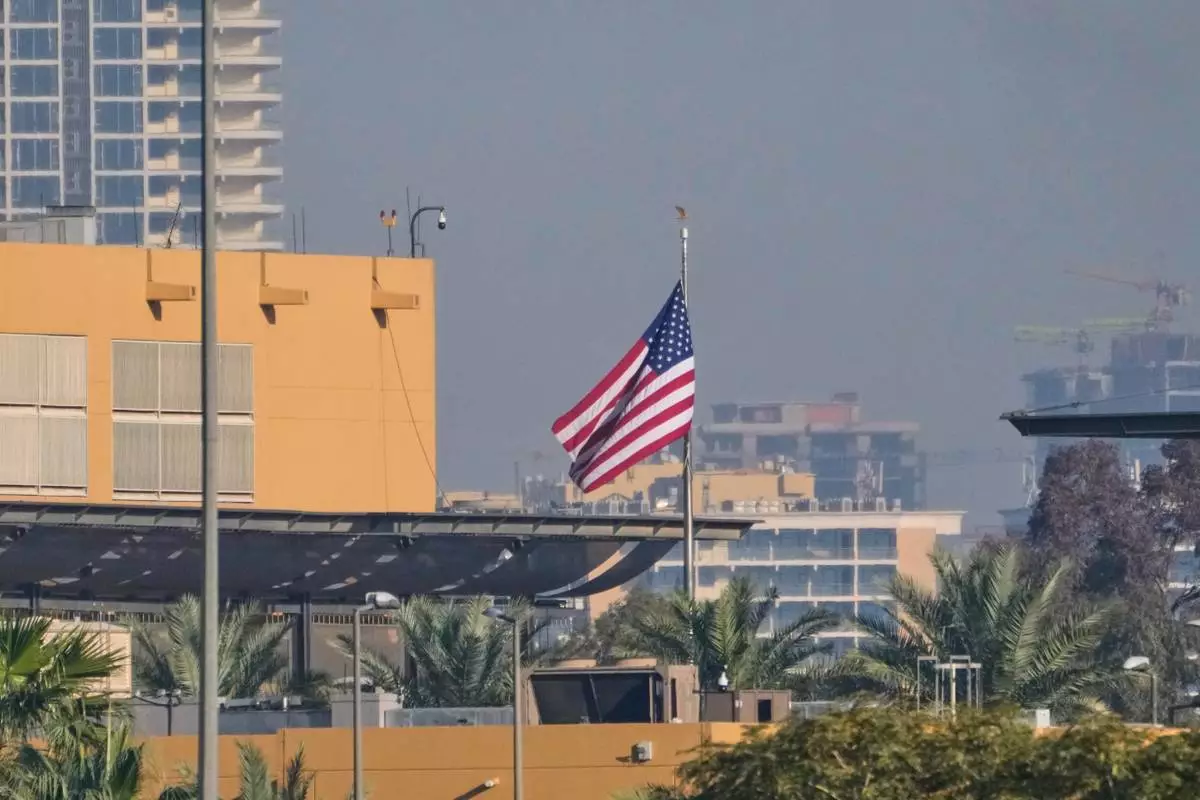
U.S. Embassy is seen across the Tigris River in Baghdad, Tuesday, March 17, 2026. (AP Photo/Hadi Mizban)
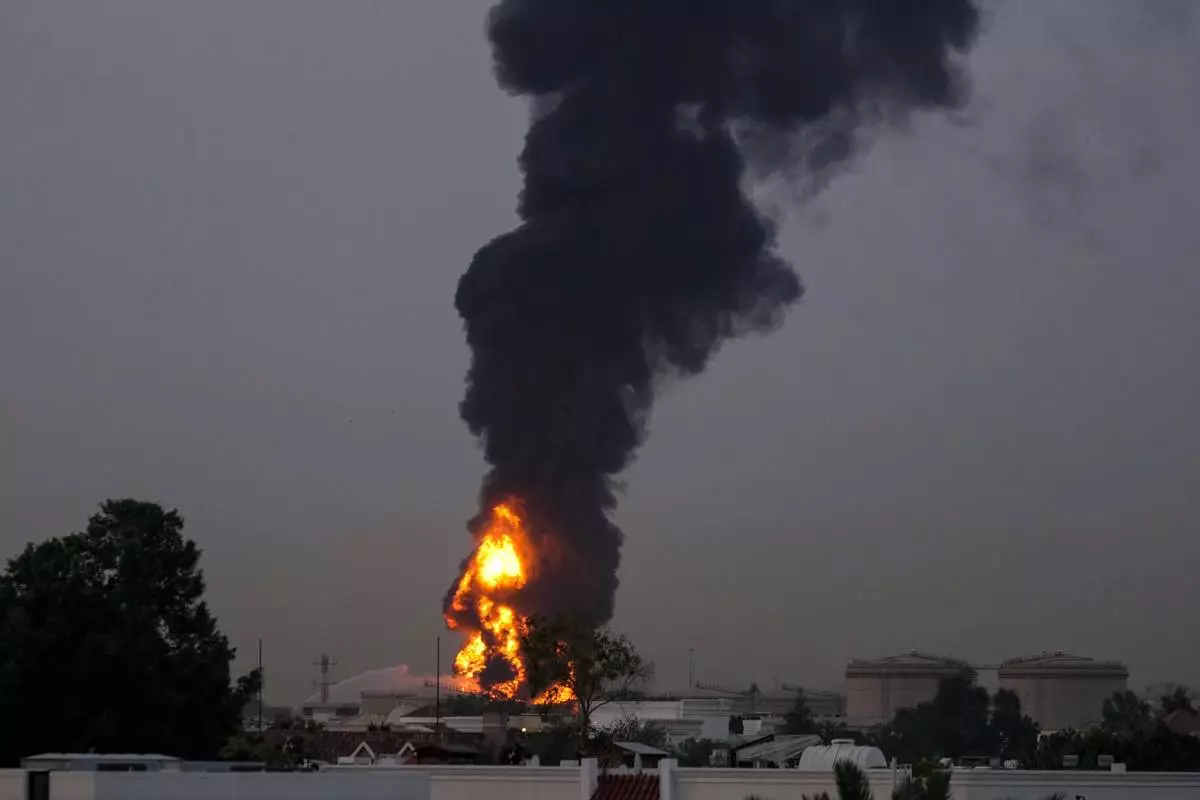
Fire and plumes of smoke rises after a drone struck a fuel tank forcing the temporary suspension of flights. near Dubai International Airport, in United Arab Emirates, early Monday, March 16, 2026. (AP Photo)
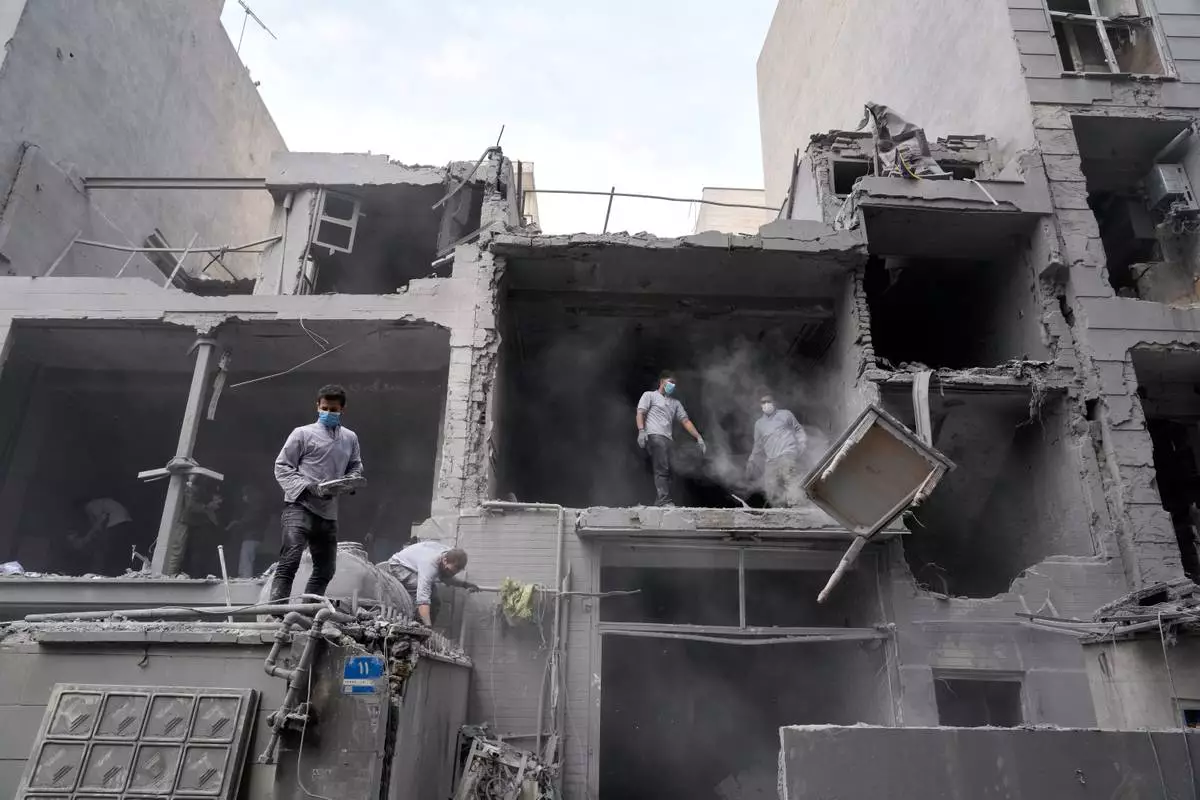
Volunteers clean debris from a residential building damaged when a nearby police station was hit Friday in a U.S.-Israeli strike in Tehran, Iran, Sunday, March 15, 2026. (AP Photo/Vahid Salemi)