DHAKA, Bangladesh (AP) — Bangladesh’s ousted Prime Minister Sheikh Hasina and one of her close aides were sentenced to death Monday over her crackdown on a student uprising last year that killed hundreds of people and led to the toppling of her 15-year rule.
The International Crimes Tribunal based in Dhaka, the capital, passed sentence on Hasina and former Home Minister Asaduzzaman Khan for their involvement in the use of deadly force against protesters.
Click to Gallery

Police use baton to disperse protesters gather outside the demolished residence of Sheikh Mujibur Rahman, Bangladesh's former leader and the father of the country's ousted Prime Minister Sheikh Hasina after the verdict against Hasina, in Dhaka, Bangladesh, Monday, Nov. 17, 2025. (AP Photo/ Rajib Dhar)
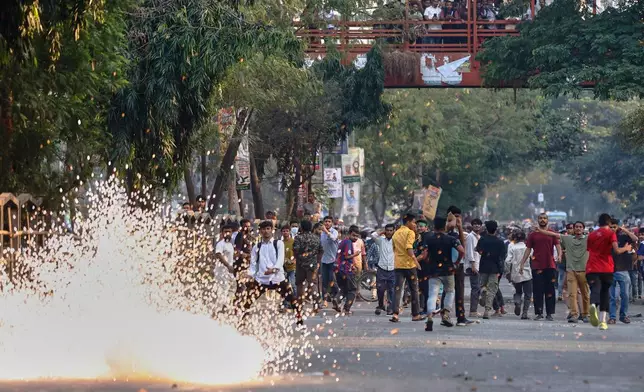
Police use stun grenades to disperse protesters gathering outside the demolished residence of Sheikh Mujibur Rahman, Bangladesh's former leader and the father of the country's ousted Prime Minister Sheikh Hasina following the verdict against her, in Dhaka, Bangladesh, Monday, Nov. 17, 2025. (AP Photo/ Rajib Dhar)
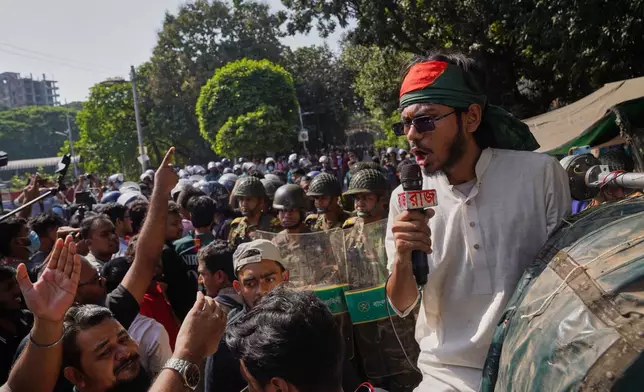
Protesters shout slogans outside the demolished residence of Sheikh Mujibur Rahman, Bangladesh's former leader and the father of the country's ousted Prime Minister Sheikh Hasina ahead of an expected verdict against Hasina, in Dhaka, Bangladesh, Monday, Nov. 17, 2025. (AP Photo/Ahadul Karim Khan)
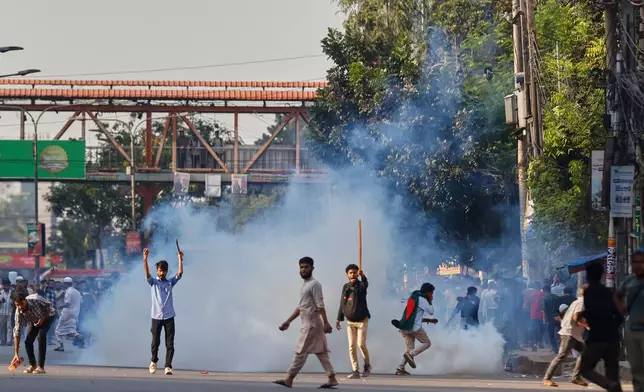
Protesters throw stones and shout slogans during a standoff with police outside the demolished residence of Sheikh Mujibur Rahman, Bangladesh's former leader and the father of the country's ousted Prime Minister Sheikh Hasina after the verdict against Hasina, in Dhaka, Bangladesh, Monday, Nov. 17, 2025. (AP Photo/ Rajib Dhar)
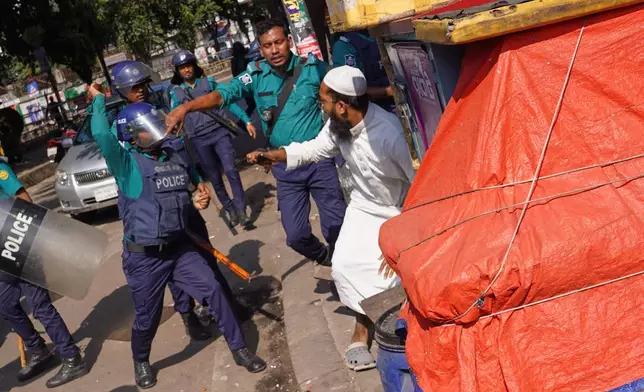
Police use baton to disperse protesters gather outside the demolished residence of Sheikh Mujibur Rahman, Bangladesh's former leader and the father of the country's ousted Prime Minister Sheikh Hasina ahead of an expected verdict against Hasina, in Dhaka, Bangladesh, Monday, Nov. 17, 2025. (AP Photo/ Ahadul Karim Khan)
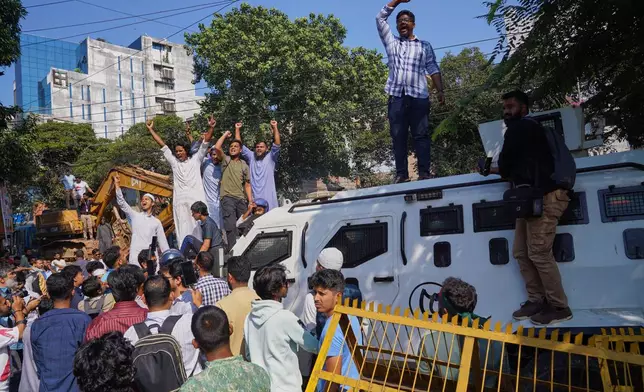
Protesters shout slogans outside the demolished residence of Sheikh Mujibur Rahman, Bangladesh's former leader and the father of the country's ousted Prime Minister Sheikh Hasina ahead of an expected verdict against Hasina, in Dhaka, Bangladesh, Monday, Nov. 17, 2025. (AP Photo/ Ahadul Karim Khan)
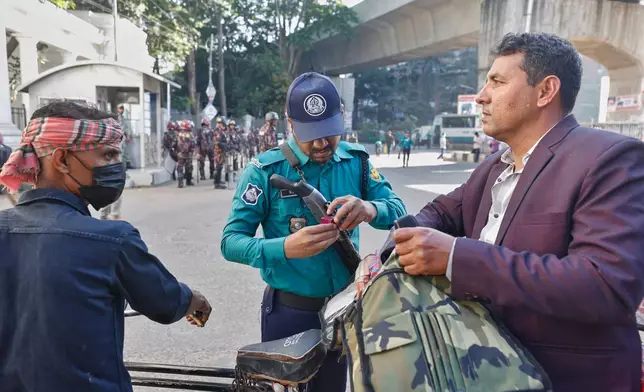
A police man checks the bag of a commuter near International Crimes Tribunal after security has been beefed up across the country ahead of an expected verdict against ousted Prime Minister Sheikh Hasina, in Dhaka, Bangladesh, Monday, Nov. 17, 2025. (AP Photo/Rajib Dhar)
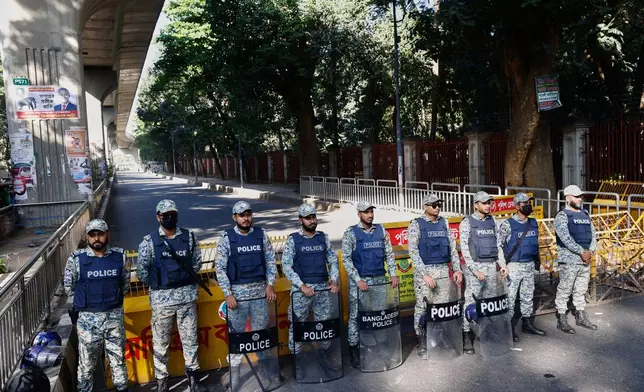
Policemen stand guard outside International Crimes Tribunal after security has been beefed up across the country ahead of an expected verdict against ousted Prime Minister Sheikh Hasina, in Dhaka, Bangladesh, Monday, Nov. 17, 2025. (AP Photo/Rajib Dhar)
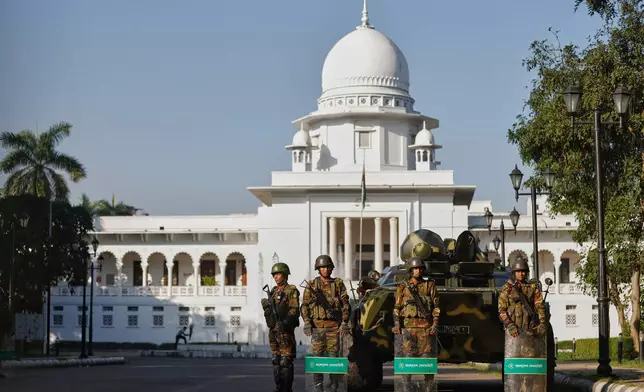
Bangladeshi Army soldiers stand guard outside the Supreme Court after security have been beefed up across the country ahead of an expected verdict against ousted Prime Minister Sheikh Hasina, in Dhaka, Bangladesh, Monday, Nov. 17, 2025. (AP Photo/Rajib Dhar)
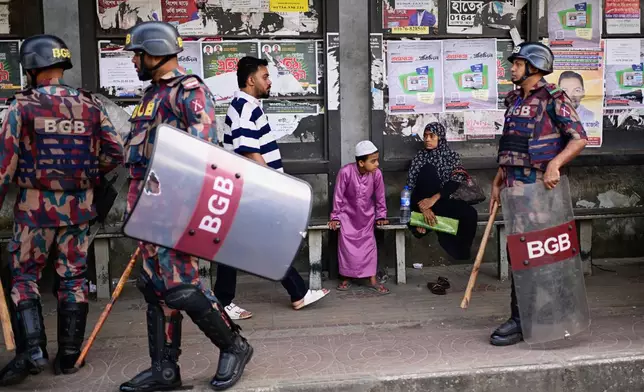
Security personnel walk past a bus stop as ousted Prime Minister Sheikh Hasina and her former ruling Awami League party called for a nationwide "lockdown" in protest against her trial, in Dhaka, Bangladesh, Thursday, Nov. 13, 2025. (AP Photo/Mahmud Hossain Opu)
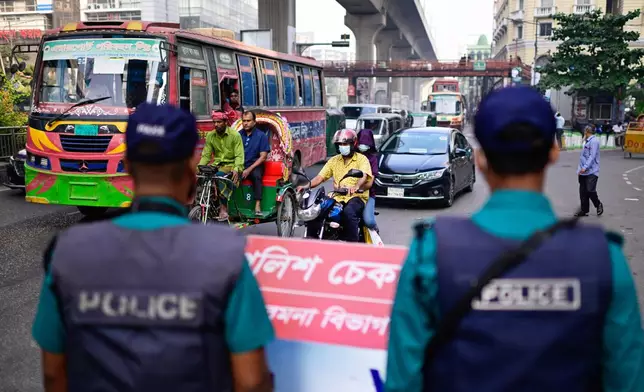
Security personnel stand guard at a traffic intersection as ousted Prime Minister Sheikh Hasina and her former ruling Awami League party called for a nationwide "lockdown" in protest against her trial, in Dhaka, Bangladesh, Thursday, Nov. 13, 2025. (AP Photo/Mahmud Hossain Opu)
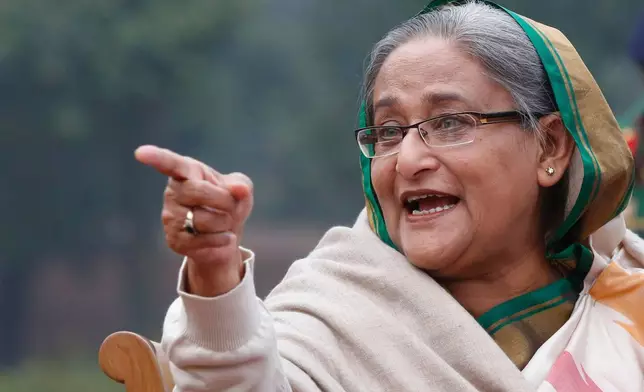
FILE- Bangladesh's Prime Minister Sheikh Hasina speaks during a press conference in Dhaka, Bangladesh, on Jan. 6, 2014. (AP Photo/Rajesh Kumar Singh, File)
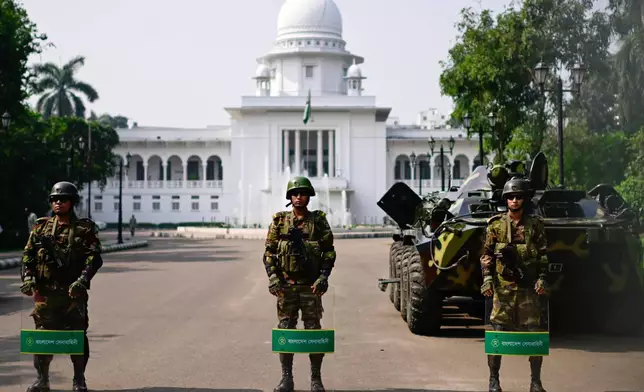
Security personnel stand guard at Bangladesh's Supreme Court as ousted Prime Minister Sheikh Hasina and her former ruling Awami League party called for a nationwide "lockdown" in protest against her trial in Dhaka, Bangladesh, Thursday, Nov. 13, 2025. (AP Photo/Mahmud Hossain Opu)
Hasina and Khan, who fled to India last year, were sentenced in absentia. India has so far declined to extradite them, making it unlikely that they would ever be executed or imprisoned.
Hasina, who was convicted on five charges of crimes against humanity, was also sentenced to prison until natural death for making inflammatory remarks and ordering the extermination of student protesters through the use of helicopters, drones, and lethal weapons.
A third suspect, a former police chief, was sentenced to five years in prison after becoming a state witness against Hasina and pleading guilty.
More than 800 people were killed and about 14,000 were injured in the student-led uprising in July and August of 2024, according to the health adviser to Bangladesh’s interim government. However, the United Nations in February estimated as many as 1,400 people were killed.
Hasina said the charges were unjustified, arguing that she and Khan “acted in good faith and were trying to minimize the loss of life.”
“We lost control of the situation, but to characterize what happened as a premeditated assault on citizens is simply to misread the facts,” she said Monday in a statement denouncing a verdict she called “biased and politically motivated."
Her Awami League party called for a national shutdown on Tuesday to protest the verdict.
Hasina, 78, cannot appeal the verdict unless she surrenders or is arrested within 30 days of the judgment.
Bangladesh is still grappling with instability after Hasina was ousted on Aug. 5, 2024. Political bickering, the rise of Islamists, and violations of human and political rights have overshadowed aspirations for a more democratic Bangladesh, human rights groups say.
Bangladeshi Nobel Peace Prize laureate Muhammad Yunus took over as the head of an interim government three days after her fall. He has vowed to punish Hasina and banned the activities of the Awami League ahead of elections set for February.
A three-member tribunal, headed by Justice Golam Mortuza Mozumder, announced the ruling in a live broadcast that lasted for several hours.
Some of those in the packed courtroom cheered when Mazumder said Hasina was sentenced to death. He admonished them, telling them to express their feelings outside the courtroom.
Families of some of those killed or injured during the uprising waited for hours outside.
In a media statement Monday, Bangladesh’s Ministry of Home Affairs urged India to send both Hasina and Khan back soon, something New Delhi has so far refused to do.
Separately, Bangladesh’s Foreign Ministry in a statement said it would be extremely unfriendly and demeaning to justice for any other country to grant asylum to these individuals convicted of crimes against humanity.
“We urge the Indian government to immediately hand over these two convicts to the Bangladeshi authorities. It is also a legal obligation for India as per the existing extradition treaty between the two countries," it said.
India’s foreign ministry in a statement acknowledged the verdict but did not say whether it would hand the pair over to Dhaka.
“As a close neighbor, India remains committed to the best interests of people of Bangladesh, including in peace, democracy, inclusion and stability in that country. We will always engage constructively with all stakeholders to that end,” it said.
India's failure to extradite the pair has created some tensions between the neighboring nations.
In a statement, Yunus said the verdict offered justice to the thousands who were harmed in the uprising: “No one, regardless of power, is above the law."
Ordering the use of lethal force against young people and children, whose only weapons were their voices, violated laws and the basic bond between government and citizens, Yunus added.
The Bangladesh Nationalist Party, or BNP, headed by Hasina’s archrival, former Prime Minister Khaleda Zia, hailed the verdict.
BNP Secretary General Mirza Fakhrul Islam Alamgir said in a Facebook post that it wasn’t just a judgment on Sheikh Hasina’s crimes, but a “burial of all forms of dictatorship on this country’s soil.”
Nearly 50 arson attacks, mostly targeting vehicles, and dozens of crude bombs explosions were reported nationwide over the past week. Two people were killed in the arson attacks, local media reported.
Authorities at the Supreme Court, in a letter to army headquarters on Sunday, requested the deployment of soldiers around the tribunal premises ahead of the ruling. Paramilitary border guards and police were deployed in Dhaka and many other parts of the country.
Even as judges were still reading out the verdict, police elsewhere in Dhaka charged with batons and used stun grenades to disperse crowds.
Her son Sajeeb Wazed, currently in the United States, said in a message to The Associated Press that the “verdict is a joke and meaningless. My mother is safe in India. The trials were so legally flawed they won’t survive any challenge once rule of law returns to Bangladesh.”
A few kilometers away from the tribunal, Hasina’s opponents gathered outside the home of her father, Bangladesh's independence hero Sheikh Mujibur Rahman, that is now a museum. They brought two excavators to finish the demolition of the building, which was looted and damaged during earlier protests.
By the time evening fell, more than 300 people were still there and burned tires on the streets in Dhanmondi neighborhood while police and soldiers failed to convince them to leave the area.
The uprising began with weeks of student-led protests voicing discontent over a quota system for allocating government jobs that critics said favored those with connections to Hasina’s party.
Hundreds of people were killed as security forces cracked down on the demonstrations — violence that only fueled them, even after the quota system was dramatically scaled back.
Associated Press journalist Rajesh Roy contributed from New Delhi.
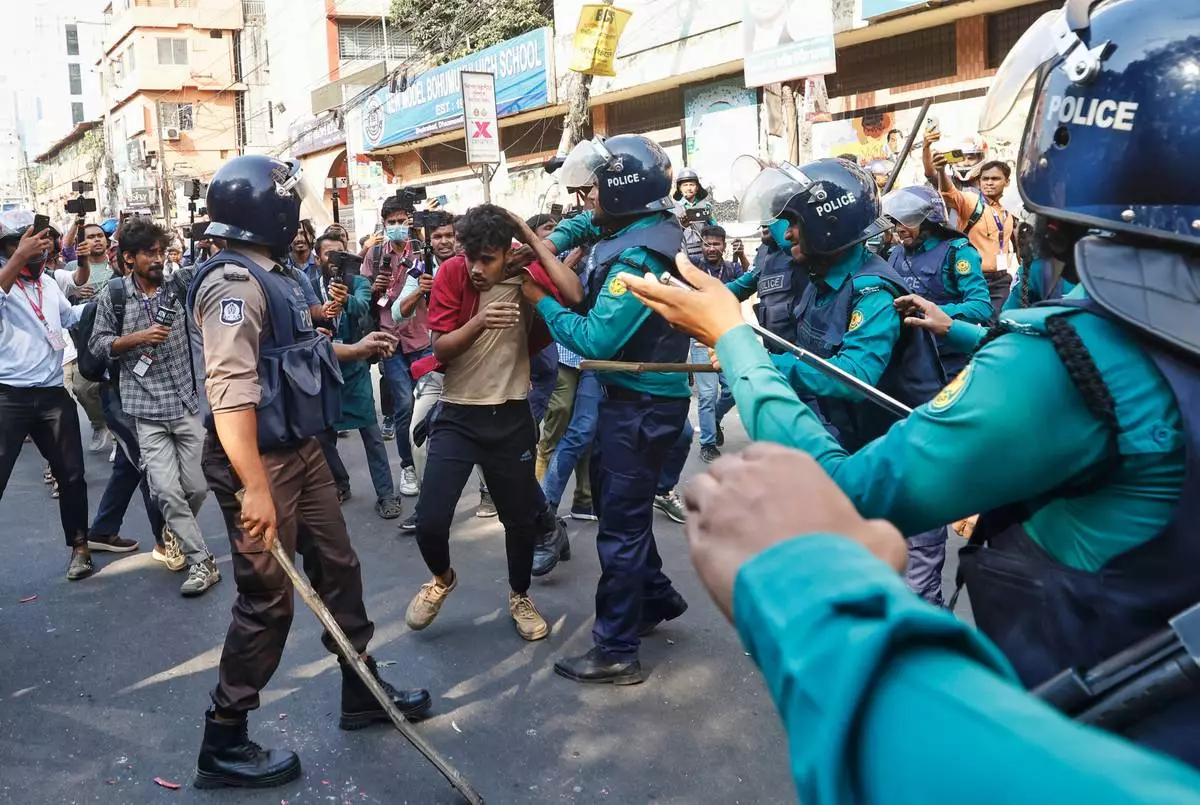
Police use baton to disperse protesters gather outside the demolished residence of Sheikh Mujibur Rahman, Bangladesh's former leader and the father of the country's ousted Prime Minister Sheikh Hasina after the verdict against Hasina, in Dhaka, Bangladesh, Monday, Nov. 17, 2025. (AP Photo/ Rajib Dhar)
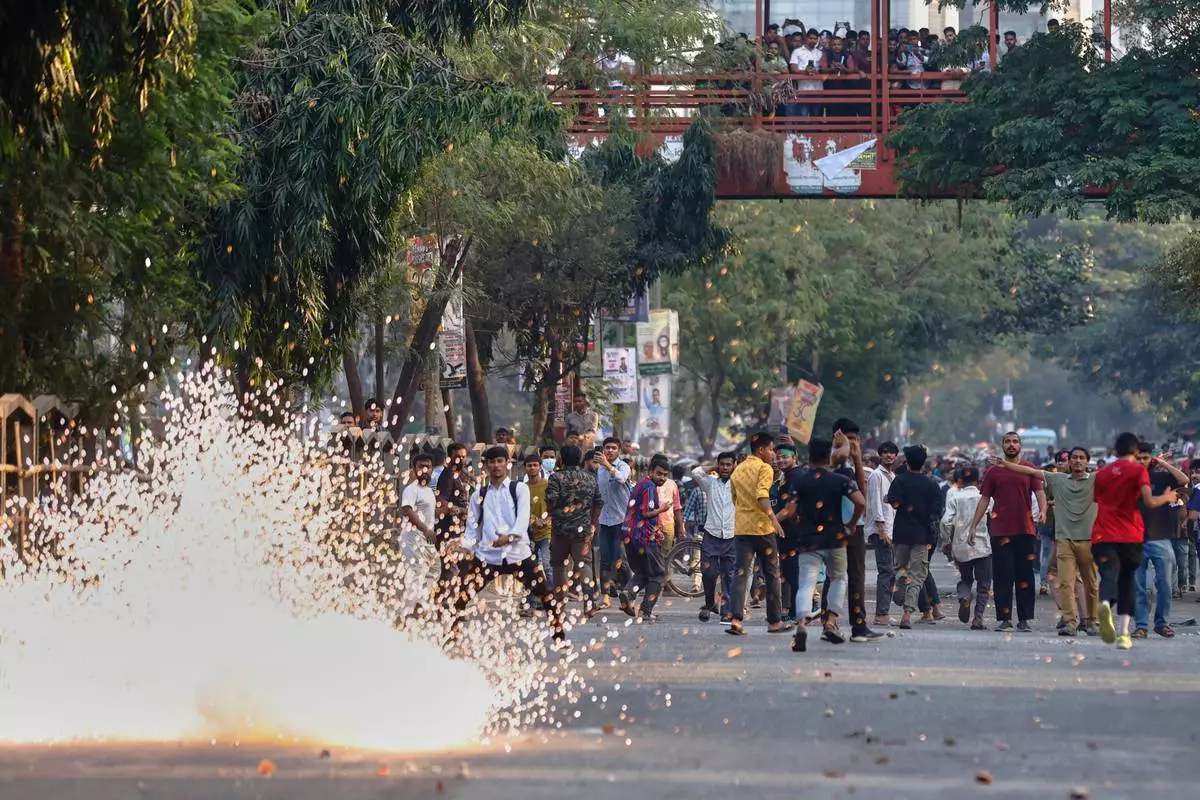
Police use stun grenades to disperse protesters gathering outside the demolished residence of Sheikh Mujibur Rahman, Bangladesh's former leader and the father of the country's ousted Prime Minister Sheikh Hasina following the verdict against her, in Dhaka, Bangladesh, Monday, Nov. 17, 2025. (AP Photo/ Rajib Dhar)
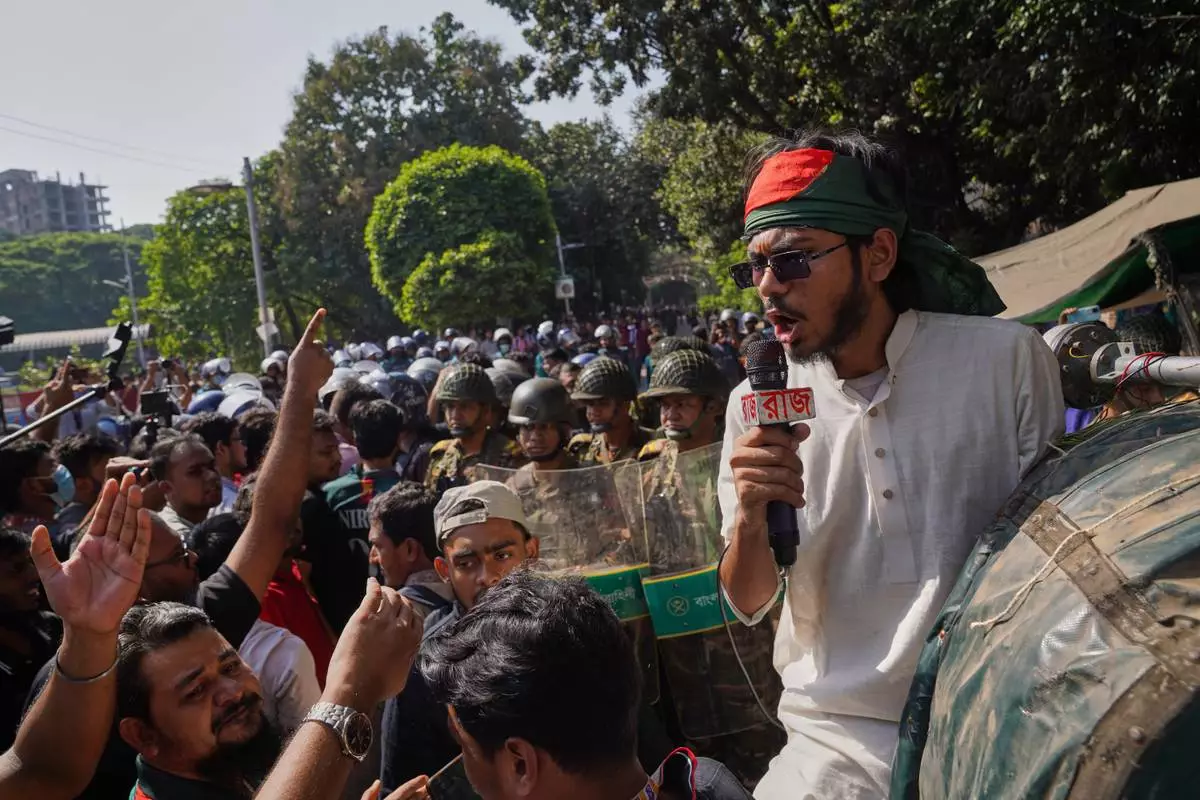
Protesters shout slogans outside the demolished residence of Sheikh Mujibur Rahman, Bangladesh's former leader and the father of the country's ousted Prime Minister Sheikh Hasina ahead of an expected verdict against Hasina, in Dhaka, Bangladesh, Monday, Nov. 17, 2025. (AP Photo/Ahadul Karim Khan)
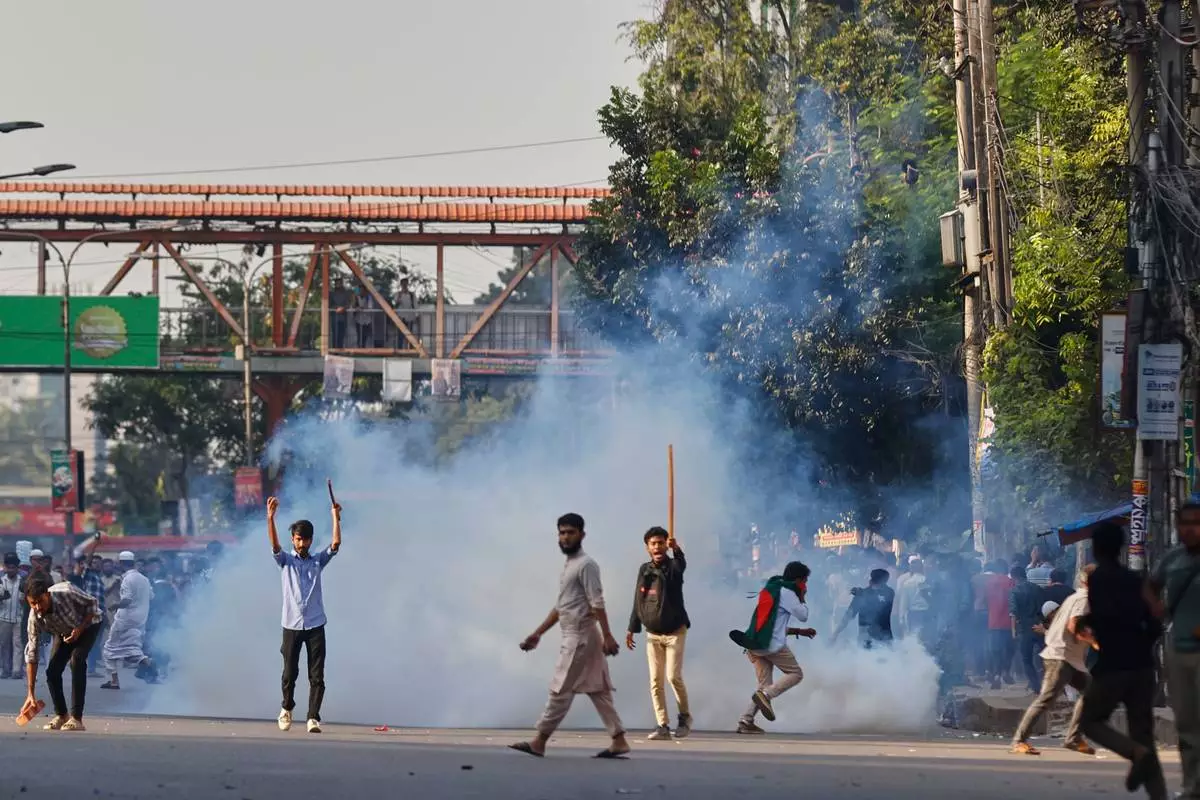
Protesters throw stones and shout slogans during a standoff with police outside the demolished residence of Sheikh Mujibur Rahman, Bangladesh's former leader and the father of the country's ousted Prime Minister Sheikh Hasina after the verdict against Hasina, in Dhaka, Bangladesh, Monday, Nov. 17, 2025. (AP Photo/ Rajib Dhar)
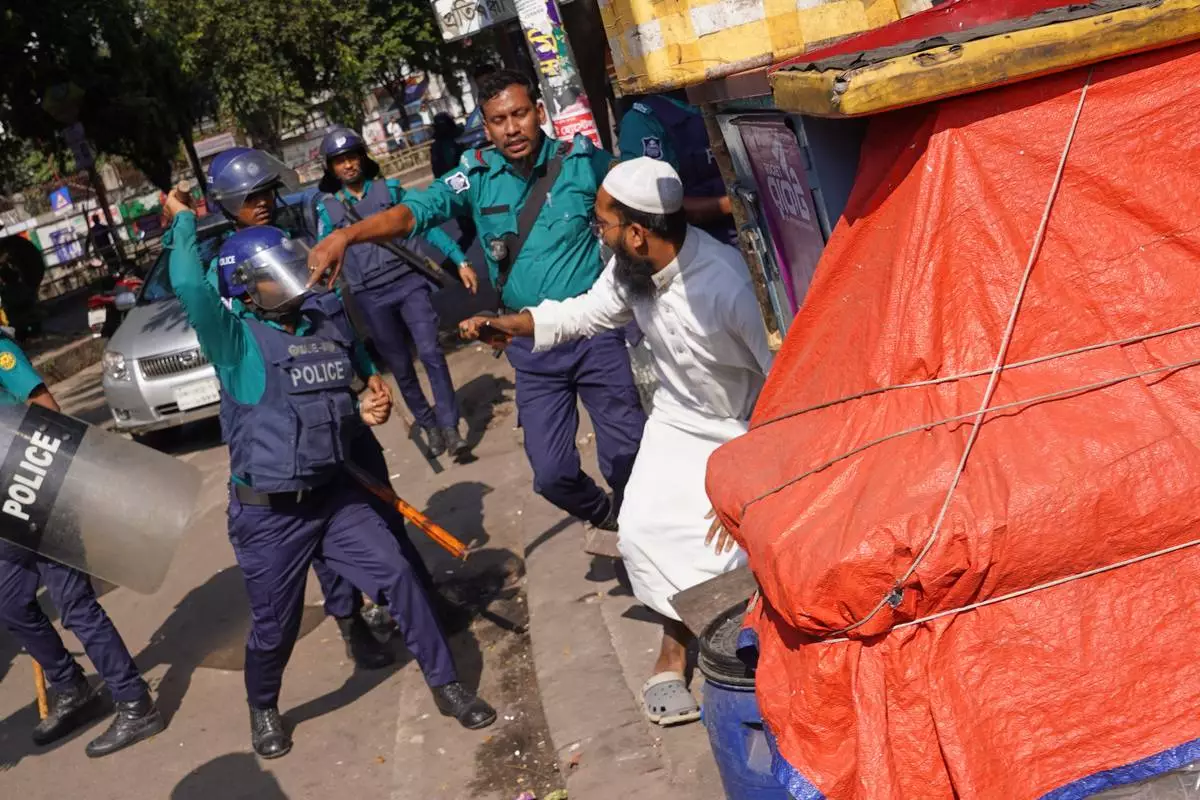
Police use baton to disperse protesters gather outside the demolished residence of Sheikh Mujibur Rahman, Bangladesh's former leader and the father of the country's ousted Prime Minister Sheikh Hasina ahead of an expected verdict against Hasina, in Dhaka, Bangladesh, Monday, Nov. 17, 2025. (AP Photo/ Ahadul Karim Khan)
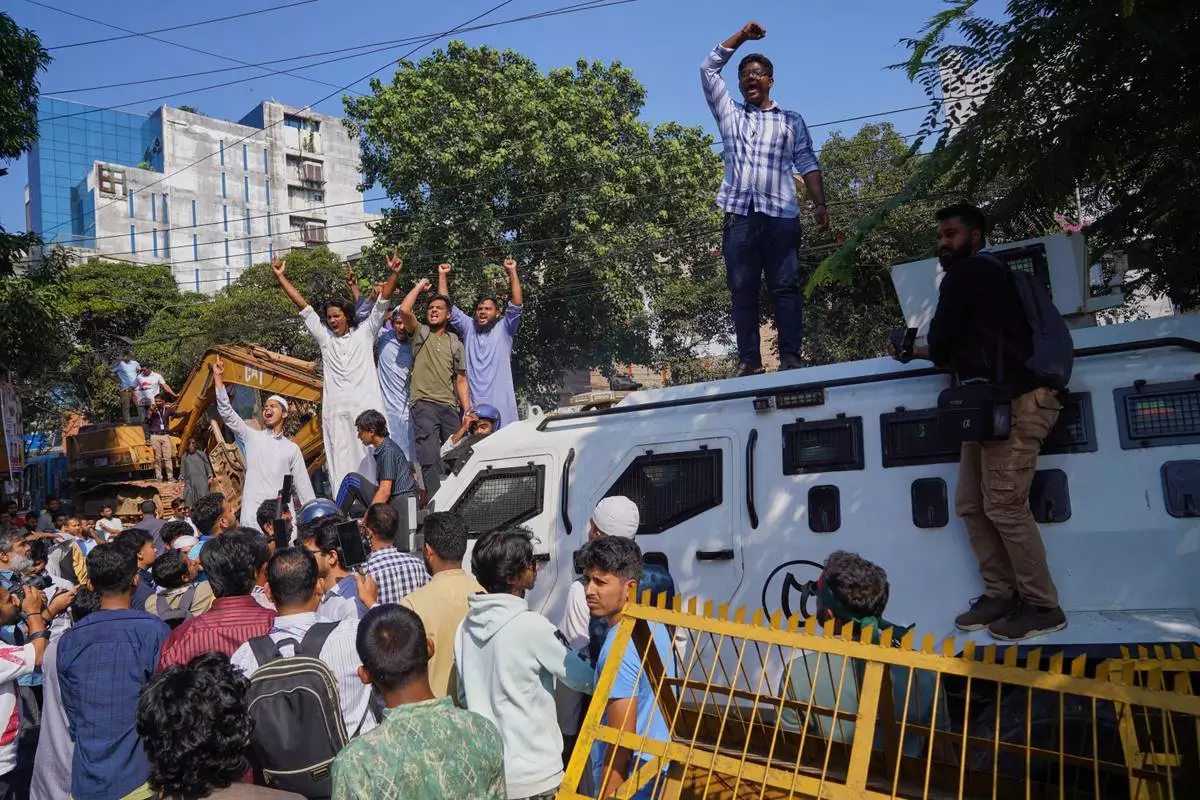
Protesters shout slogans outside the demolished residence of Sheikh Mujibur Rahman, Bangladesh's former leader and the father of the country's ousted Prime Minister Sheikh Hasina ahead of an expected verdict against Hasina, in Dhaka, Bangladesh, Monday, Nov. 17, 2025. (AP Photo/ Ahadul Karim Khan)
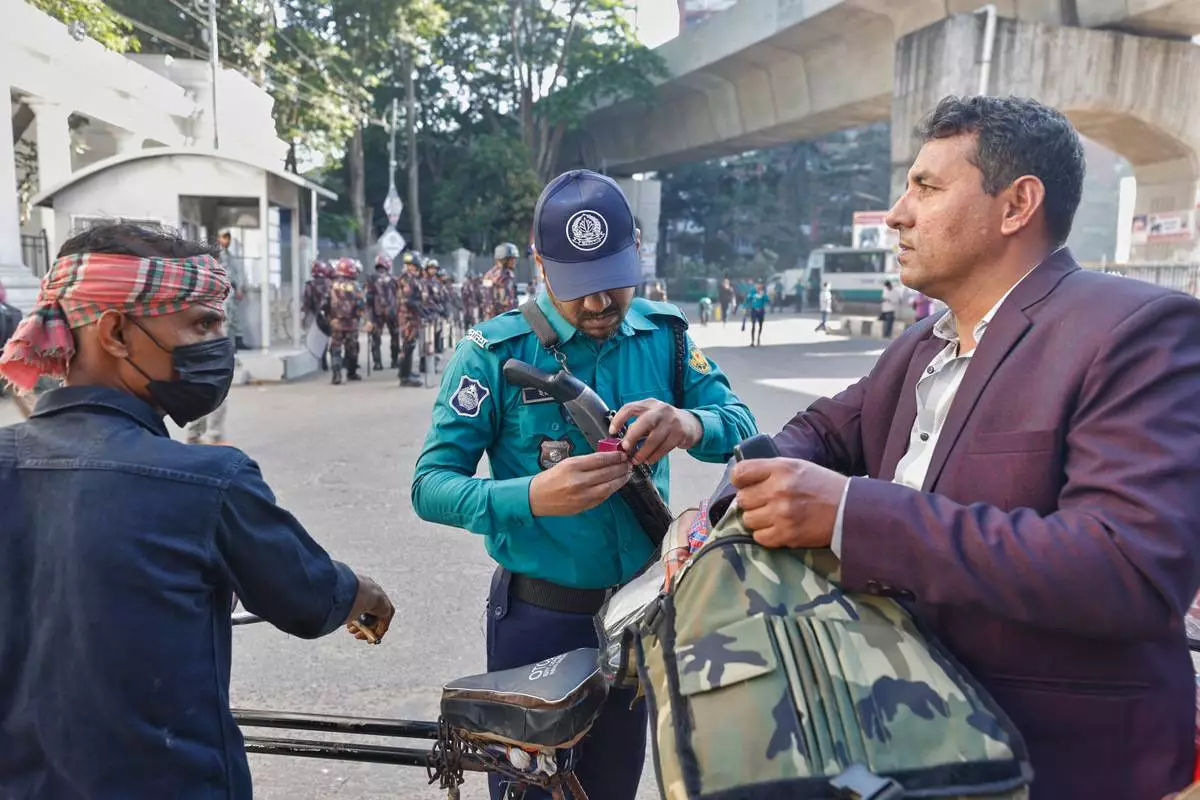
A police man checks the bag of a commuter near International Crimes Tribunal after security has been beefed up across the country ahead of an expected verdict against ousted Prime Minister Sheikh Hasina, in Dhaka, Bangladesh, Monday, Nov. 17, 2025. (AP Photo/Rajib Dhar)
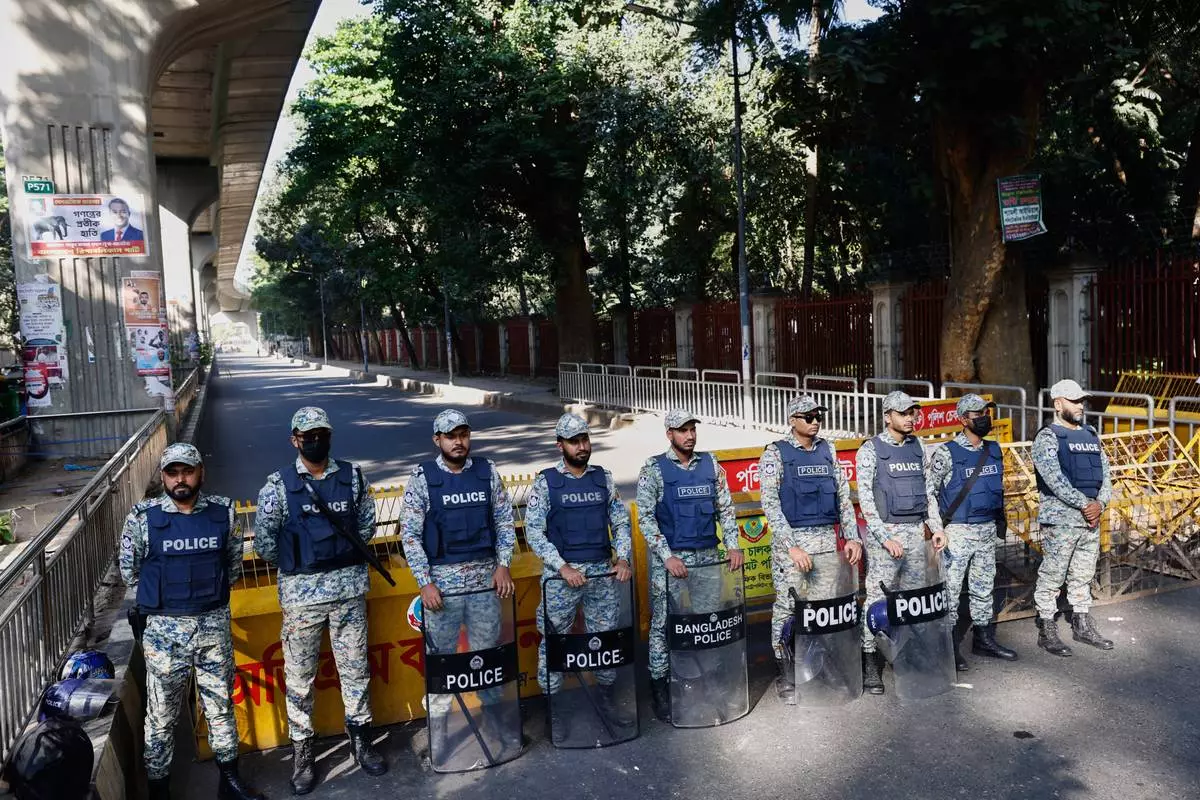
Policemen stand guard outside International Crimes Tribunal after security has been beefed up across the country ahead of an expected verdict against ousted Prime Minister Sheikh Hasina, in Dhaka, Bangladesh, Monday, Nov. 17, 2025. (AP Photo/Rajib Dhar)
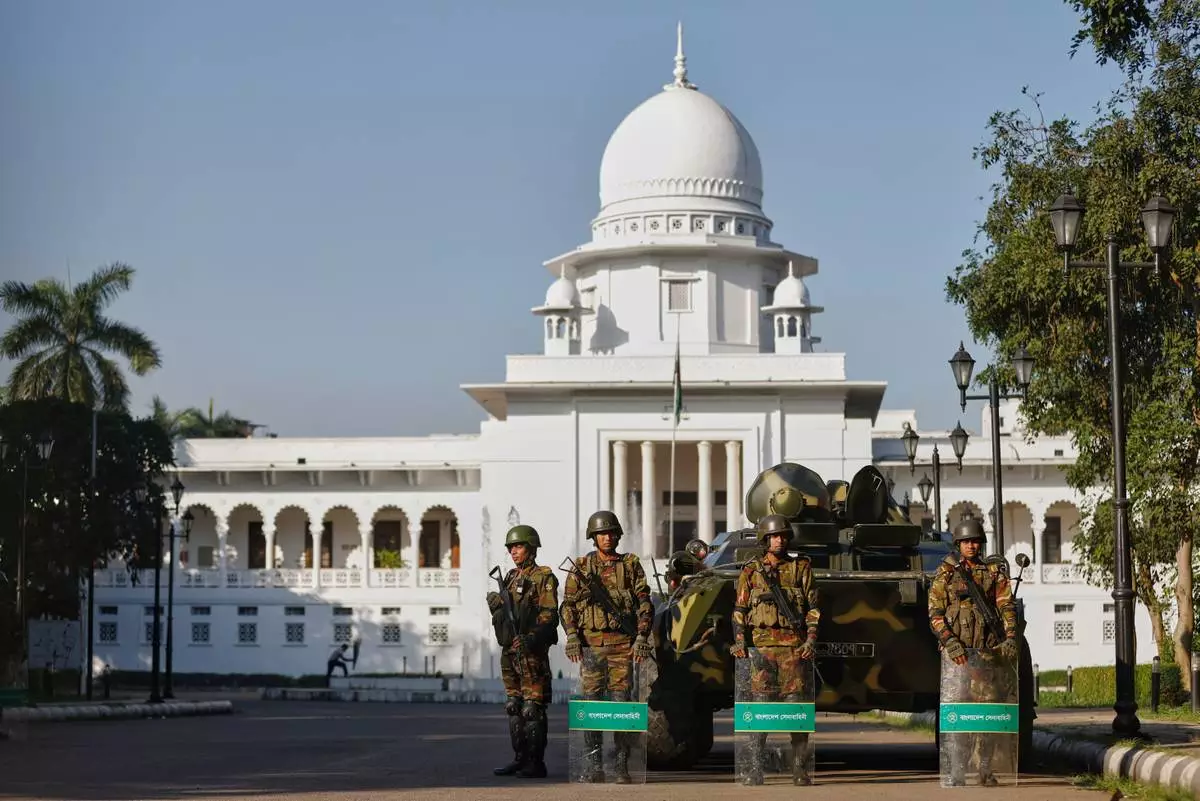
Bangladeshi Army soldiers stand guard outside the Supreme Court after security have been beefed up across the country ahead of an expected verdict against ousted Prime Minister Sheikh Hasina, in Dhaka, Bangladesh, Monday, Nov. 17, 2025. (AP Photo/Rajib Dhar)
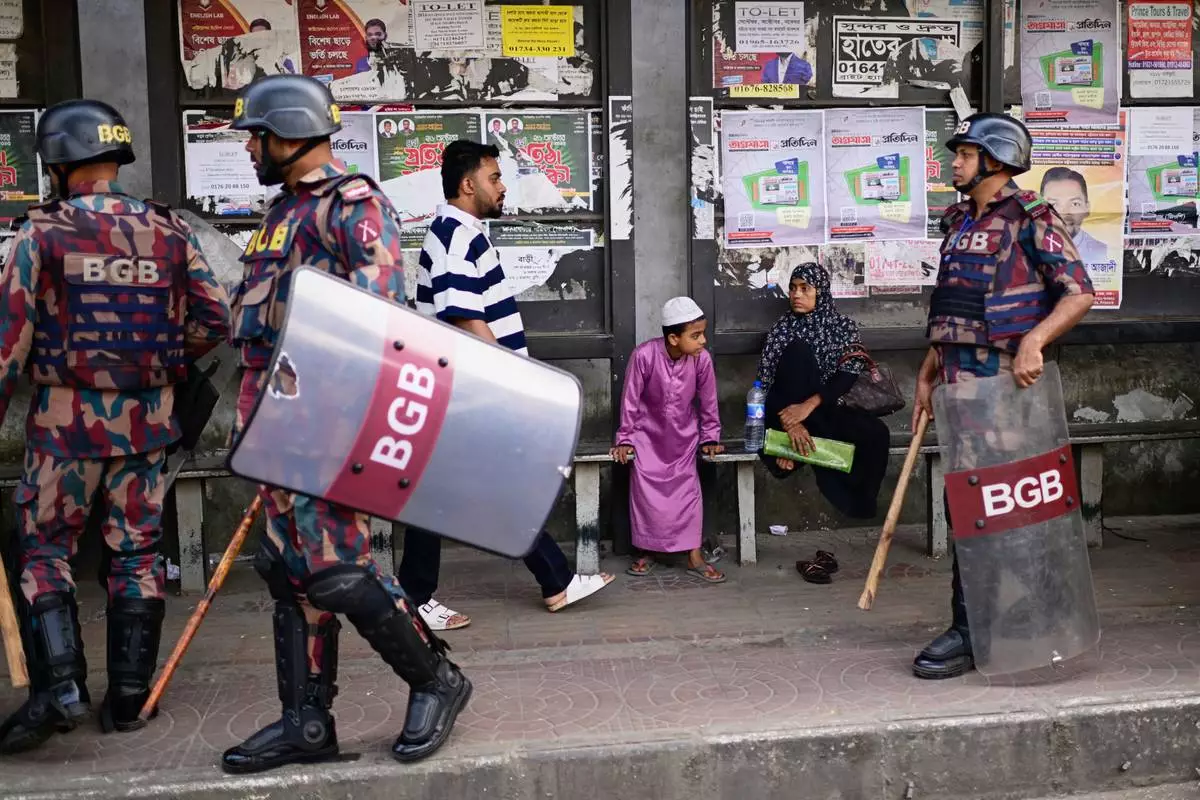
Security personnel walk past a bus stop as ousted Prime Minister Sheikh Hasina and her former ruling Awami League party called for a nationwide "lockdown" in protest against her trial, in Dhaka, Bangladesh, Thursday, Nov. 13, 2025. (AP Photo/Mahmud Hossain Opu)
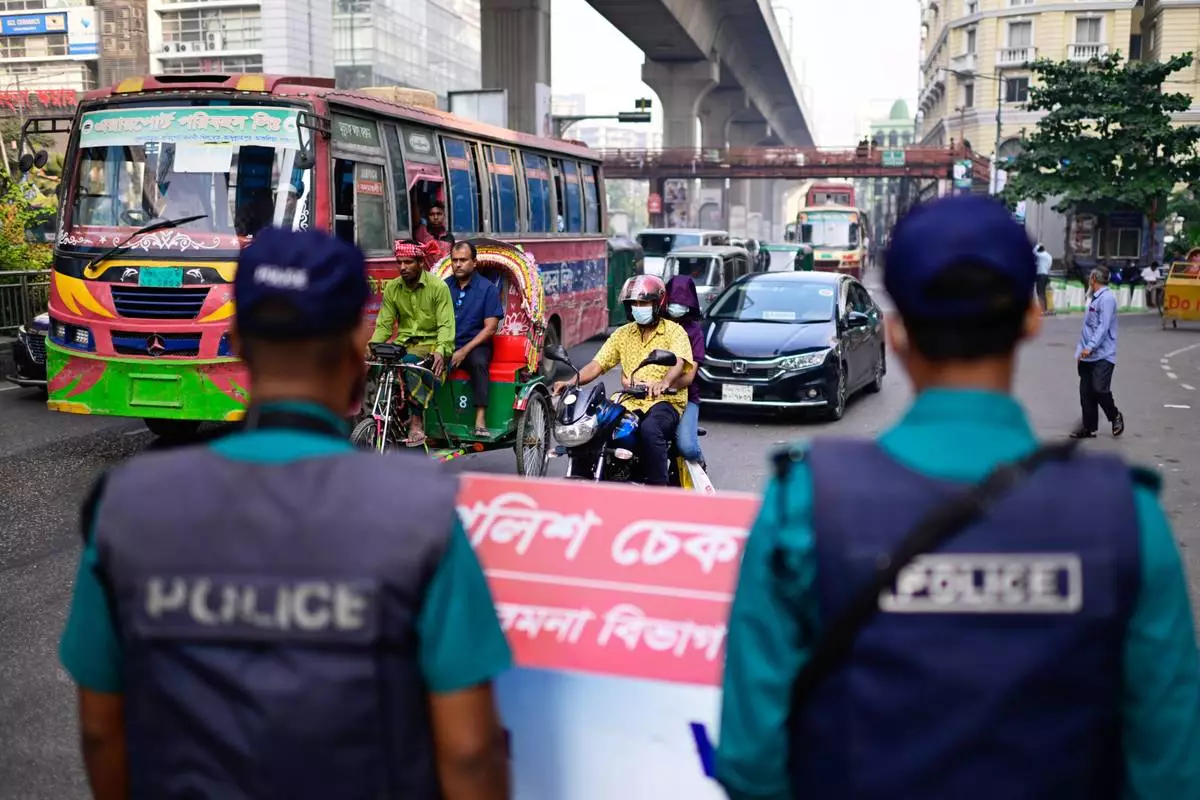
Security personnel stand guard at a traffic intersection as ousted Prime Minister Sheikh Hasina and her former ruling Awami League party called for a nationwide "lockdown" in protest against her trial, in Dhaka, Bangladesh, Thursday, Nov. 13, 2025. (AP Photo/Mahmud Hossain Opu)
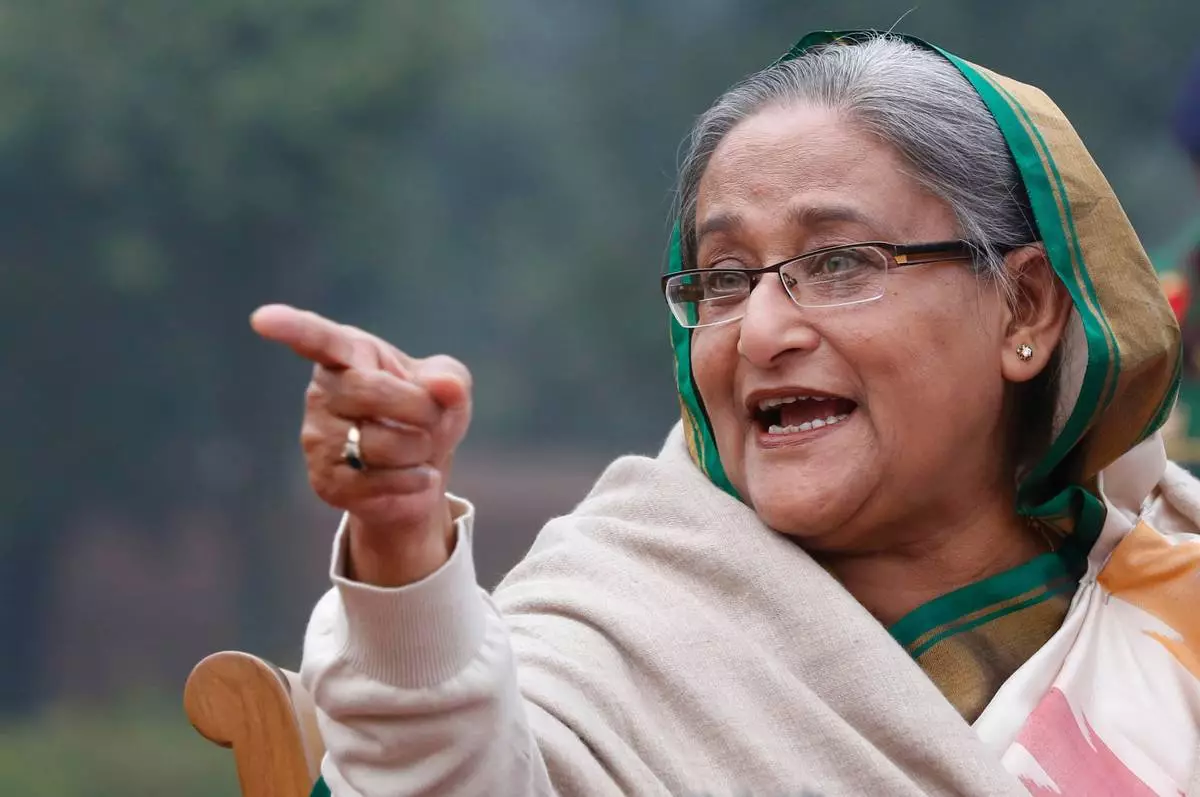
FILE- Bangladesh's Prime Minister Sheikh Hasina speaks during a press conference in Dhaka, Bangladesh, on Jan. 6, 2014. (AP Photo/Rajesh Kumar Singh, File)

Security personnel stand guard at Bangladesh's Supreme Court as ousted Prime Minister Sheikh Hasina and her former ruling Awami League party called for a nationwide "lockdown" in protest against her trial in Dhaka, Bangladesh, Thursday, Nov. 13, 2025. (AP Photo/Mahmud Hossain Opu)