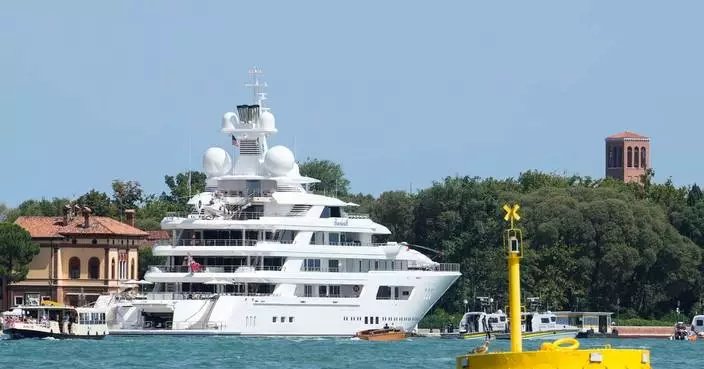
Since the 2025 Policy Address has reduced restrictions on the development of yacht industry and proposed to promote high-end yacht tourism, the industry pledged the support and regarded the policy shift as an opportunity to facilitate entry and exit procedures, improve related supporting facilities, develop various tourism modes like island hopping tours, yacht rentals, etc., and increase the number of berths for super yachts to promote the development of the yacht economy further.
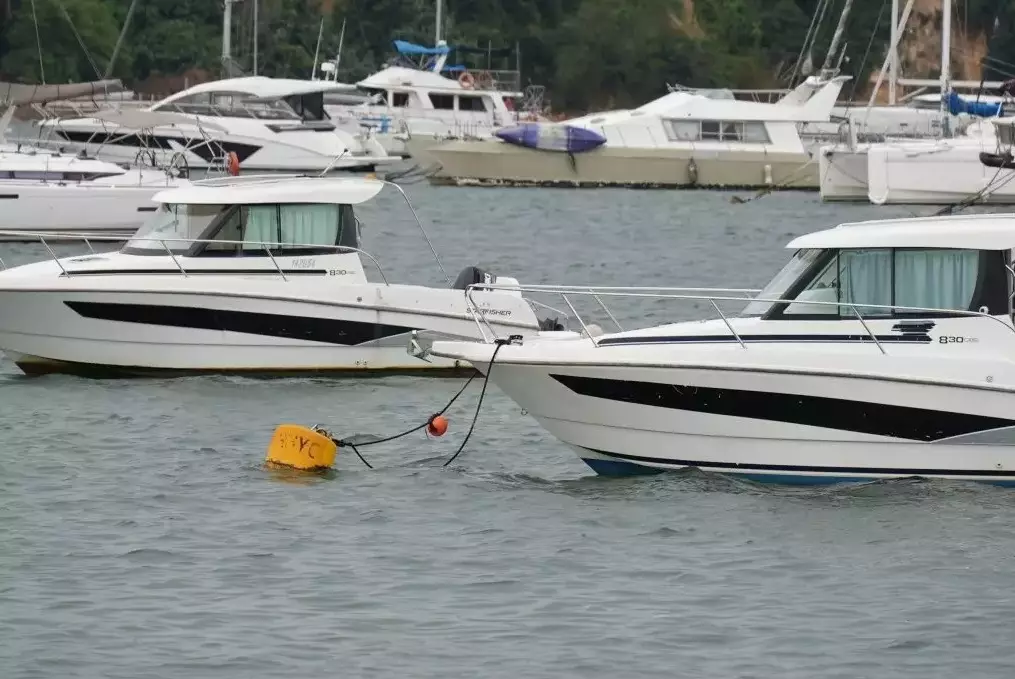
Since the 2025 Policy Address has reduced restrictions on the development of yacht industry and proposed to promote high-end yacht tourism, the industry pledged the support and regarded the policy shift as an opportunity. Photo by Bastille Post
According to the Policy Address, the requirements for the visiting yachts in Hong Kong will be relaxed to facilitate the free travel of yachts. Mr. Tommy Ho, Chairman of Hong Kong Yachting Association, has expressed his views about it during the interview with Bastille Post, indicating that he would support the Marine Department's optimization of the electronic business platform for one-stop declaration. He disclosed that the platform is expected to be completed by the middle of next year at the earliest. He believed that shipowners or captains would be able to declare on their own without going through an agent in the future. At present, the procedures for yachts to enter and leave the border are somewhat complicated and need to be handled separately by multiple departments. He suggested that the processing of relevant procedures can take the joint inspection in Macao as a reference. "We can arrange a place where all yachts can be moored and wait for the completion of procedures. Once completed, they can freely sail in the waters of Hong Kong." If there's a place for handling procedures in unison, it would be more convenient.
Click to Gallery
Since the 2025 Policy Address has reduced restrictions on the development of yacht industry and proposed to promote high-end yacht tourism, the industry pledged the support and regarded the policy shift as an opportunity. Photo by Bastille Post

Mr. Tommy Ho pointed that "If we want to promote the yacht economy and attract more foreign boats, the number of berths for super yachts must be increased." Photo by Bastille Post

Mr. Lawrence Chow believed that the "southbound travel for Mainland yachts" would not cause a shortage of berths in Hong Kong. Photo by Bastille Post

The industry practitioners pointed that VHF and AIS have been widely adopted on ocean-going yachts. Photo by Bastille Post
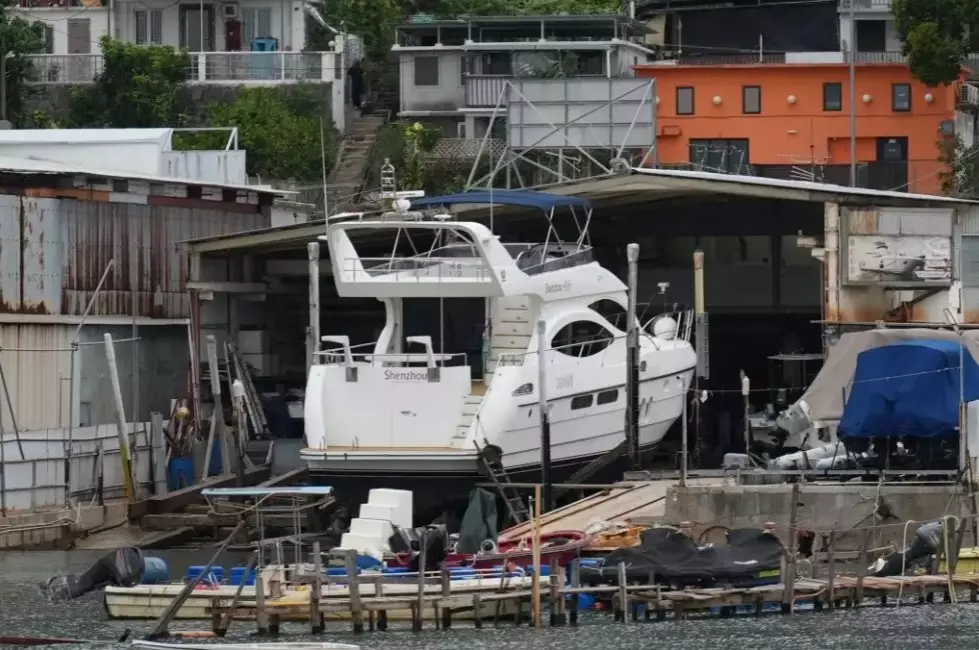
For vessel maintenance, a collaboration mode of "front shop, back factory" has been adopted. Photo by Bastille Post

The industry hoped to establish an interdepartmental yacht development committee, providing an additional channel for cooperation and communication between industry professionals and different government departments. Photo by Bastille Post
The industry personnel indicated that it is necessary to improve the facilities for berthing and on the island to promote high-end yacht tourism and attract high-value-added tourists to stay in Hong Kong. In the interview, Mr. Lawrence Chow, Chairman of Hong Kong Boating Industry Association, said that Hong Kong has numerous islands and beaches, making it very suitable for developing "island-hopping tours". Nevertheless, in order to support the development of yacht tourism, more fully-equipped berthing facilities would be needed. "Otherwise, such a benefit will be lost."
Mr. Tommy Ho pointed that "If we want to promote the yacht economy and attract more foreign boats, the number of berths for super yachts must be increased." Photo by Bastille Post
Mr. Ho also pointed out that restaurants, hotels, and other supporting facilities are all established on the islands for yacht passengers to stay in Hong Kong to enjoy themselves. "(Passengers) can drive the yachts to moor, go ashore to play, and then go to the resort hotel to have a spa, enjoy the food in the restaurant, and have fun for some days to promote the development of the big economy." He also said that the yachts used by high-end yacht passengers are often super yachts over 30 meters in length at present, while the number of berths for super yachts to dock in Hong Kong is still insufficient. "If we want to promote the yacht economy and attract more foreign boats, the number of berths for super yachts must be increased."
In addition, yacht rental can also boost local tourism and increase public participation. Mr. Chow mentioned that the boat clubs popular abroad also have development potential in Hong Kong. "There are yachts available for rent, but in Hong Kong, it's hard for you to rent a yacht to drive your own. For instance, we can establish a yacht club at the airport. After getting off the plane, you can board the yacht and drive it directly to Hung Hom Ferry Pier for landing. Then the next day, you can take a ferry to Sai Kung for further fun. As a result, the tourist will enjoy a three-day tour in total. But as for the specific implementation of such a prospect, we still need to consider how to develop it in the future."
Mr. Ho pointed out that the traditional yacht rentals in Hong Kong are usually for a full day, which is somewhat incompatible with the popular check-in-style tourism in the mainland. "As for the present, multiple models can be developed. The tourists can rent for 1 to 3 hours, half a day, or a full day. If we can release such new rental models, more people would definitely be attracted to rent yachts."
The Southbound Travel for Mainland Yachts Would Not Cause a Shortage of Berths, The Pontoon Bridge Berths are Advocated to Be Built
To welcome the visit of foreign and Mainland yachts to Hong Kong, the Marine Department has reserved five bays, namely Stanley Bay, Tai Tam Bay, Repulse Bay, Tai O, and Three Fathoms Cove, as designated anchorage areas. Mr. Chow said that the visiting yachts can go to the yacht clubs for replenishment. With the expected 110 dedicated berths in the five bays, he believed there would be sufficient berths, and the "southbound travel for Mainland yachts" would not cause a shortage of berths in Hong Kong.
Mr. Lawrence Chow believed that the "southbound travel for Mainland yachts" would not cause a shortage of berths in Hong Kong. Photo by Bastille Post
Mr. Ho suggested that the government can further improve the supporting facilities and site selection of new yacht berths. He took Tai Tam Bay as an example and pointed out that there's no pier at present, which makes it inconvenient for visiting yachts to land and travel between the city. As for the building of new yacht berths for the government, pontoon bridge berths can be used instead of anchor berths. Not only are they more stable during strong winds, but they will also be safer "with firefighting equipment, safety facilities, water supply, and electricity". The pontoon bridge berths can also refer to the design of foreign berths to save space.
As the construction of new typhoon shelters takes time, Mr. Ho suggested that the government could consider using part of the funds for building typhoon shelters to assist the abandoned yachts in moving out of the existing shelters as a transitional measure.
The Supporting Services Help to Guarantee the Safety of Independent Travel, The Relax of Ship Survey System is Advocated
To ensure the sailing safety of yachts visiting Hong Kong, the Marine Department plans to establish a Dynamic Yacht Monitoring System, requiring the yachts to be equipped with two devices: VHF and AIS. The industry practitioners believe that since the devices have been widely adopted on ocean-going yachts, the visiting yachts in Hong Kong do not need to install them specially.
The industry practitioners pointed that VHF and AIS have been widely adopted on ocean-going yachts. Photo by Bastille Post
Mr. Ho pointed out that Hong Kong law requires that the usage of VHF must require an application for a license from the Office of the Communications Authority and the name of a licensed operator. He suggested that the requirement of obtaining the related licenses can be included in the captain's license examination to avoid the inconvenience of captains having to shift the names due to the lack of relevant communications licenses.
Moreover, since the Marine Department is considering requiring captains visiting Hong Kong to pass a local knowledge test, Mr. Chow believed that this move would be helpful for Mainland captains to familiarize themselves with Hong Kong's sailing rules. In his eyes, the relevant training and certification bodies in the Mainland are also making progress. He hoped that the certification of the test results could have a longer validity period without the need to keep taking tests frequently. As for Mr. Ho, he thought that, compared with knowledge tests, it would be safer for visiting yachts to hire qualified local captains who are commonly called "Daai Seoi" in Cantonese. "After all, no matter how accurate the nautical charts and radars are, the sea surface, seabed, or weather conditions will still keep changing," Mr. Ho said. At the same time, the hiring can also help to increase employment opportunities for local workers.
Based on the relaxation of the current mechanism, Mr. Ho pointed out that super yachts over 30 meters in length and 150 tons are required to undergo "a minor inspection every year and a major inspection every four years" currently. "The annual inspection fee is over 100,000 HKD, and the average annual inspection fee in the fourth year is 1.5 million HKD." In addition, dismantling the engine for inspection would also cause environmental and time-consuming problems. He suggested that since yachts are different from commercial vessels and are used for a relatively short period of time in a year, the authorities could appropriately relax the inspection system to attract more super yachts from other regions to visit Hong Kong.
Strengthening Industrial Chain Cooperation in GBA, Promoting the Training of Maintenance Personnel for Yachts
In addition to the independent travel of yachts between Guangdong and Hong Kong, the yacht industry also hoped to form industrial chain cooperation with the Mainland, especially in the aspect of vessel maintenance, and adopt a collaboration mode of "front shop, back factory": large-scale and long-term maintenance of vessels can be carried out in the Mainland, while emergency repairs and daily management can be conducted in Hong Kong, to achieve mutual benefit and win-win results for the two sides.
For vessel maintenance, a collaboration mode of "front shop, back factory" has been adopted. Photo by Bastille Post
At present, the maintenance of vessels in Hong Kong is not only restricted by space but also faces the problem of manpower. Mr. Ho said that there is a shortage of yacht maintenance technicians, especially a lack of young people entering the industry. Currently, the relevant training courses are mainly provided by the Vocational Training Council and yacht clubs. However, Mr. Ho also pointed out that the current training of the Vocational Training Council mainly focuses on commercial vessels and cargo ships, lacking related courses focusing on yacht maintenance, etc. The industry is actively promoting the employment and training of professionals, strengthening promotion, and attracting new entrants to join in.
Calling for the Establishment of an Interdepartmental Committee and the Increase of Communication Channels between the Government and the Industry
To promote closer communication between the industry and government departments in the development of the yacht economy, the industry hoped to establish an interdepartmental yacht development committee, providing an additional channel for cooperation and communication between industry professionals and different government departments.
Mr. Ho supported such an advocacy and pointed out that Hong Kong Yachting Association has always been willing to serve as a hub platform among yacht owners, government departments, and industry partners. He hoped to take this opportunity to enable yacht operators and professionals of maintenance, insurance, and other related industries to realize an interdepartmental communication with the government. "It is absolutely beneficial to discuss what the industry can do and how to help the government promote Hong Kong's yacht economy."
The industry hoped to establish an interdepartmental yacht development committee, providing an additional channel for cooperation and communication between industry professionals and different government departments. Photo by Bastille Post