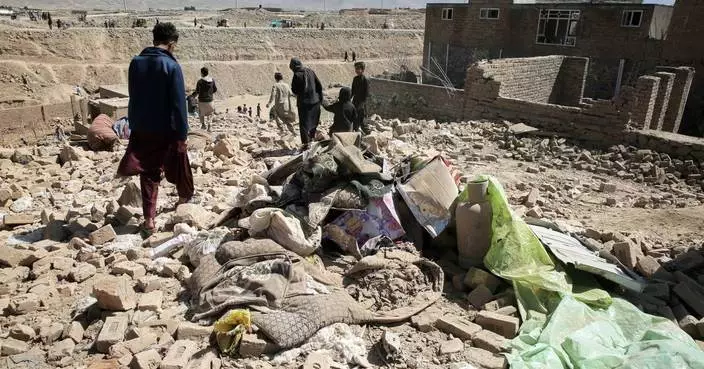
WASHINGTON (AP) — Foreign students enrolled at U.S. colleges in strong numbers this fall despite fears that a Trump administration crackdown would trigger a nosedive, yet there are signs of turbulence as fewer new, first-time students arrived from other countries, according to a new report.
Overall, U.S. campuses saw a 1% decrease in international enrollment this fall compared with last year, according to a survey from the Institute of International Education. But that figure is propped up by large numbers of students who stayed in the U.S. for temporary work after graduating. The number of new students entering the United States for the first time fell by 17%, the sharpest decrease since the COVID-19 pandemic.
Some universities are seeing backslides that have punched big holes in tuition revenue, but overall the falloff is less severe than some industry groups had forecast. Researchers credit colleges for helping students navigate visa issues through the summer.
“I think colleges and universities did absolutely everything in their power to advocate to get these students to the United States,” said Mirka Martel, head of research, evaluation and learning for the institute.
At DePaul University, a Catholic university in Chicago, the number of international graduate students fell by almost 62% this fall, a driving factor in recent spending cuts. The university president blamed student visa troubles and declining interest to study in the U.S., calling it a “massive” disruption.
Overall, nearly 60% of colleges reported a decrease in new foreign students this fall, the survey found, while 30% saw increases and others held even. More than 800 schools responded to the survey, which offers an early look at trends before full data is released next year.
The Trump administration has sought to reduce America’s reliance on foreign students. The White House is pushing colleges to cap enrollment of foreign students and enroll more from the U.S. In June, the State Department began screening visa applications more closely after temporarily halting all interviews.
Visa processing has continued to lag in some countries, including India, the largest source of America’s foreign students. Education firms have reported that future college students are now showing decreased interest in the U.S. and more in Europe and Asia. While international enrollment remained relatively steady, there are concerns about its sustainability.
“There are warning signs for future years, and I’m really concerned about what this portends for fall '26 and ’27,” said Clay Harmon, the executive director of AIRC: The Association of International Enrollment Management, which represents colleges and recruitment agencies.
Foreign students make up about 6% of America’s college students but they play an outsize role in campus budgets. Most pay higher tuition rates and don't get financial aid, effectively subsidizing U.S. students. Their numbers are far higher at elite campuses, often making up a quarter or more of the student body.
International students at the graduate level saw the biggest backslide this fall, with a 12% drop. That was mostly offset by rising numbers of students participating in Optional Practical Training, which allows students to stay in the U.S. for temporary work after graduating. Undergraduate numbers ticked up slightly.
Graduate students make up the biggest share of foreign students in the U.S., often coming for science, math and business programs. Numbers had already started leveling off last year after a post-pandemic surge, but the recent turmoil appears to have accelerated the downturn. In the survey, colleges that saw decreases cite factors including visa issues and other travel restrictions.
Many smaller and regional colleges have reported downswings, especially among master's and doctoral students.
In a recent campus address, the president of the University at Albany said a decrease in foreign graduate students was having a “disproportionate impact” on the school's budget. At Kent State University in Ohio, falling international numbers required an additional $4 million in cuts to balance the budget, the president wrote in an October update.
Even the biggest public universities weren't immune. The University of Illinois' flagship campus saw its international numbers dip, fueled by a 6% drop in graduate students. At the University of Michigan, foreign graduate enrollment fell by a similar share. Arizona State University, which has more foreign students than any other public campus, saw its overall numbers fall by 3%.
Universities are offering wider flexibility to students who couldn't make it to campus this fall, according to the survey. Almost three-quarters are allowing foreign students to defer their enrollment to the spring term, and more than half are allowing deferrals until fall 2026.
Colleges in other countries, meanwhile, have sought to capitalize on the disruption, said Joann Ng Hartmann, senior impact officer at NAFSA, an agency that promotes international education. In Germany, Canada and some other countries, colleges are ramping up efforts to recruit students who might be rethinking college in the U.S.
“They have friendlier policies, and students realize that," she said. “They have friendlier messaging for students that welcomes them.”
This story has been updated to correct the name of DePaul University.
The Associated Press’ education coverage receives financial support from multiple private foundations. AP is solely responsible for all content. Find AP’s standards for working with philanthropies, a list of supporters and funded coverage areas at AP.org.
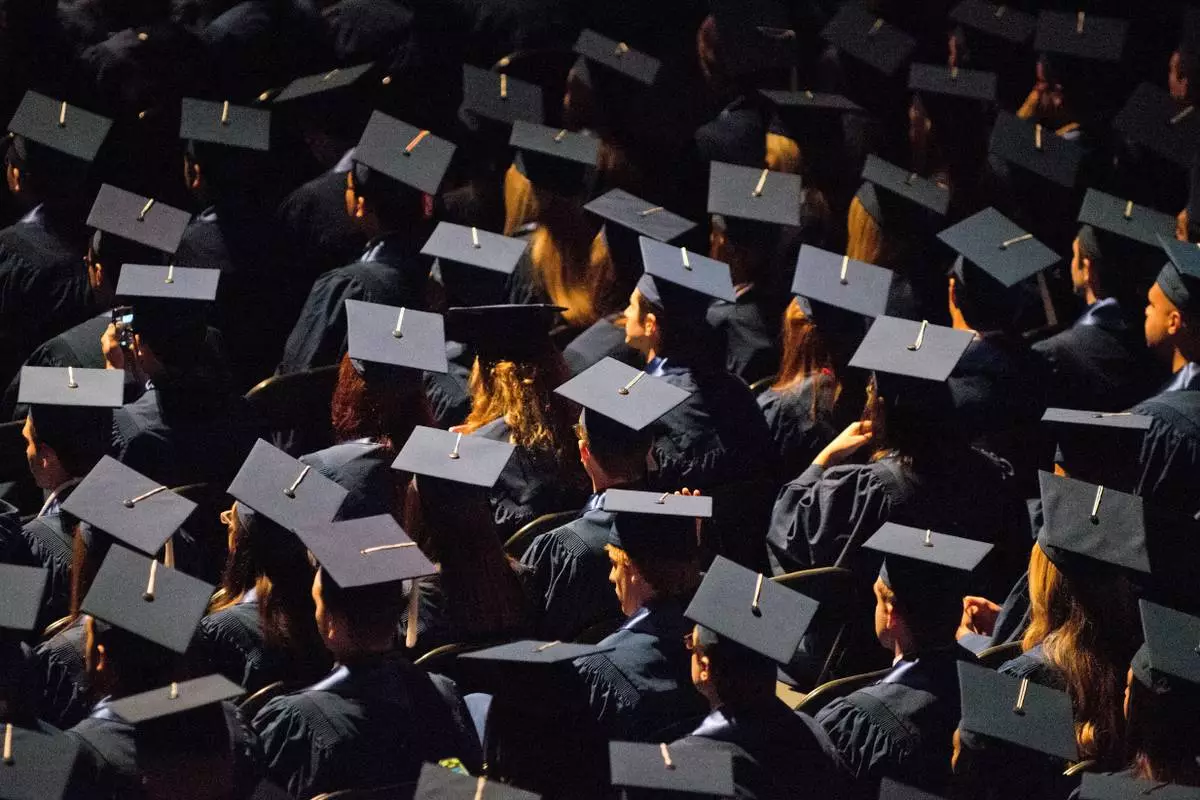
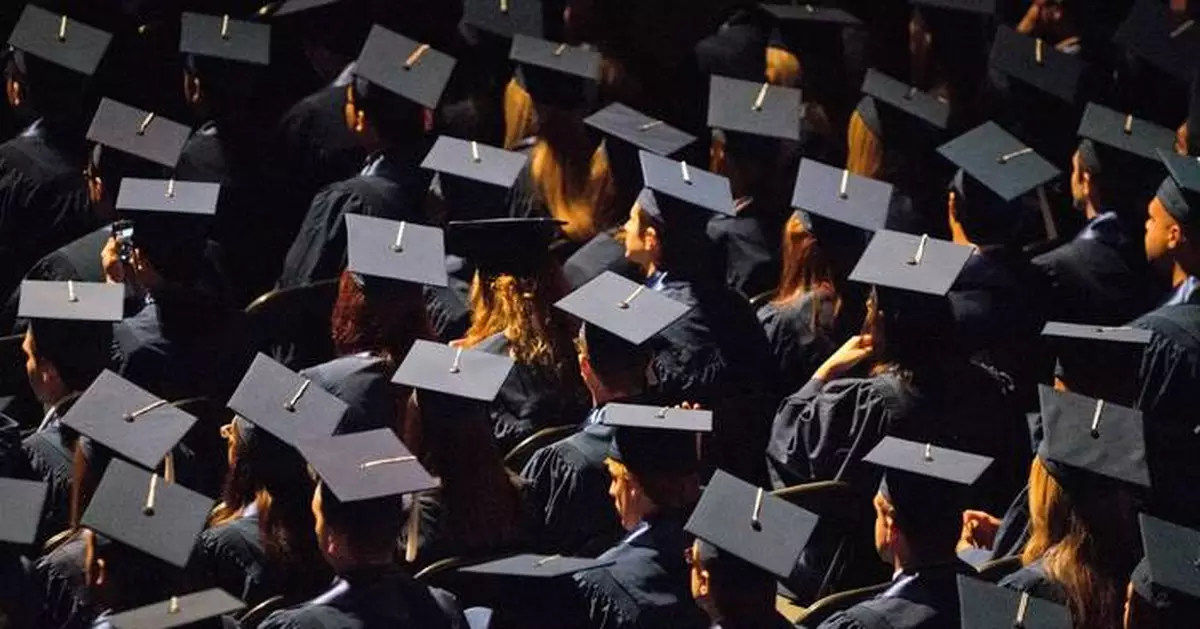
FILE - Students attend commencement ceremonies in the State Farm Center at the University of Illinois in Champaign, Ill., on Sunday, May 12, 2013. (Darrell Hoemann/The News-Gazette via AP, File)
WASHINGTON (AP) — In New York City, two men who federal authorities say were inspired by the Islamic State brought powerful homemade bombs to a far-right protest outside the mayoral mansion.
In Michigan, a naturalized citizen from Lebanon rammed his vehicle into a synagogue, where he was shot at by security before he shot himself to death.
In Virginia, a man previously imprisoned on a terrorism conviction was heard yelling “Allahu akbar” before opening fire in a university classroom in an attack that officials said ended when the shooter was killed by students.
The three acts of violence in the last week have laid bare a heightened terrorism threat unfolding against the backdrop of the U.S. war with Iran and as the country's counterterrorism system is strained by the departures of experienced national security professionals at the FBI and Justice Department. The firings and resignations, along with the diversion of resources and personnel over the last year to meet other Trump administration priorities, have fueled concerns about the capability to head off a potential surge in threats.
“So much experience has been decimated from the ranks,” said Frank Montoya, a retired senior FBI official. “The folks that were best positioned to get to the bottom of it before something really bad happened” are in many cases no longer with the government, he said, meaning less experienced personnel assigned to the threat are “starting from way behind.”
The FBI said it would not comment on personnel numbers and decisions, but issued a statement saying “agents and staff are dedicated professionals working around the clock to defend the homeland and crush violent crime. The FBI continuously assesses and realigns our resources to ensure the safety of the American people.”
Iran has vowed revenge for the killing by the U.S. and Israel of Supreme Leader Ayatollah Ali Khamenei, and though the fighting has so far been confined to the Middle East, the Islamic Republic has long professed its determination to carry out violence on American soil.
Iranian operatives, for instance, responded to the 2020 assassination of Gen. Qassem Soleimani during the first Trump administration with a disrupted murder-for-hire plot targeting former national security adviser John Bolton.
A Pakistani business owner who says he was carrying out instructions from a contact in Iran's paramilitary Revolutionary Guard was convicted in New York last week of trying to hire hit men in 2024 for assassination plots targeting public figures, including President Donald Trump, who was then running for president.
Though much attention has focused on Iran's use of proxies or hired hands to carry out plots, the country's capability to organize a large-scale assault on the U.S. remains unclear despite clear angst over the potential. The FBI warned in a recent bulletin to law enforcement about Iran’s aspiration to conduct a drone attack targeting California, but after the warning was publicized, officials emphasized the intelligence was unverified and that no specific plot was known to exist.
The U.S. government after the Sept. 11, 2001, attacks overhauled its intelligence and national security apparatus to prevent similarly catastrophic events. But in the years since, lone actors radicalized online have nonetheless carried out shootings like the 2015 ambush attacks at a pair of military sites in Chattanooga, Tennessee and a rampage at an Orlando nightclub the following year by a gunman who killed 49 people and raged against the “filthy ways of the west.”
Those plots by self-directed individuals have proved notoriously difficult to prevent and have occurred even when the FBI has not been roiled by firings and internal upheaval like during the first year of the Trump administration.
“They're self-directed,” said retired FBI official Edward Herbst. “That’s what makes them really lethal. You never know when they're going to rise up. You never know when and where they're going to attack.”
Terrorism concerns typically rise during times of international conflict when military action overseas is accompanied by increased vigilance, including outreach from agents to their sources, more active sharing of tips between federal and local law enforcement and closer coordination among FBI joint terrorism task forces, said Claire Moravec, a former FBI national security official who served as deputy homeland security adviser in Illinois.
Officials have said there is no indication that either the men arrested in connection with the explosives in New York, or the man responsible for Thursday’s Old Dominion University shooting, were motivated explicitly by the Iran war. The man who crashed into Temple Israel synagogue near Detroit on Thursday lost four family members in an Israeli airstrike in his native Lebanon last week, an official in Lebanon said.
Regardless, wars like the one in Iran can function as “accelerants,” raising the volume and intensity of grievances for the disaffected, Moravec said.
“Ultimately, the goal during these periods is not ‘surveillance’ but maintaining a broad awareness of how international events could translate into domestic security risks, so that threats can be identified and disrupted early,” she said in an email.
The Justice Department's National Security Division was established in 2006 to address threats of terrorism, espionage and other concerns. In the last year, lawyers in the division found themselves assigned to review the Jeffrey Epstein files to prepare them for release, and elite sections dedicated to prosecuting terrorists and catching spies have endured turnover.
About half of the division's counterterrorism prosecutors have left since the beginning of the Trump administration, along with about a third of its senior leadership, according to estimates from Justice Connection, a network of department alumni.
A Justice Department spokesperson said the division's singular focus remains “keeping the American people safe from threats foreign and domestic” and that there are no known or credible threats to the homeland.
FBI Director Kash Patel has fired dozens of agents, most recently about a dozen employees who worked on the counterintelligence investigation into Trump's retention of classified documents at his Mar-a-Lago estate in Florida.
“This is not an exaggeration to say that they are not as capable as they were a year and a half ago,” Matthew Olsen, who led the National Security Division during the Biden administration, said this week on the Lawfare podcast, adding that “they’ve lost, forced out, fired, the most capable, the most experienced FBI agents, FBI officials and DOJ prosecutors, that were working on the Iran threat.”
In the national security realm, where experience and source development are vital, the loss of institutional knowledge and community relationships can be a crushing blow, said Montoya, the former FBI official.
“There was no transition,” Montoya said of the agents who have been abruptly fired. “These guys were just walked out of the building. The new guys can call them and say, ‘Hey, can you tell me what you were doing?’” but even so, “you're still introducing a brand new face into the equation.”
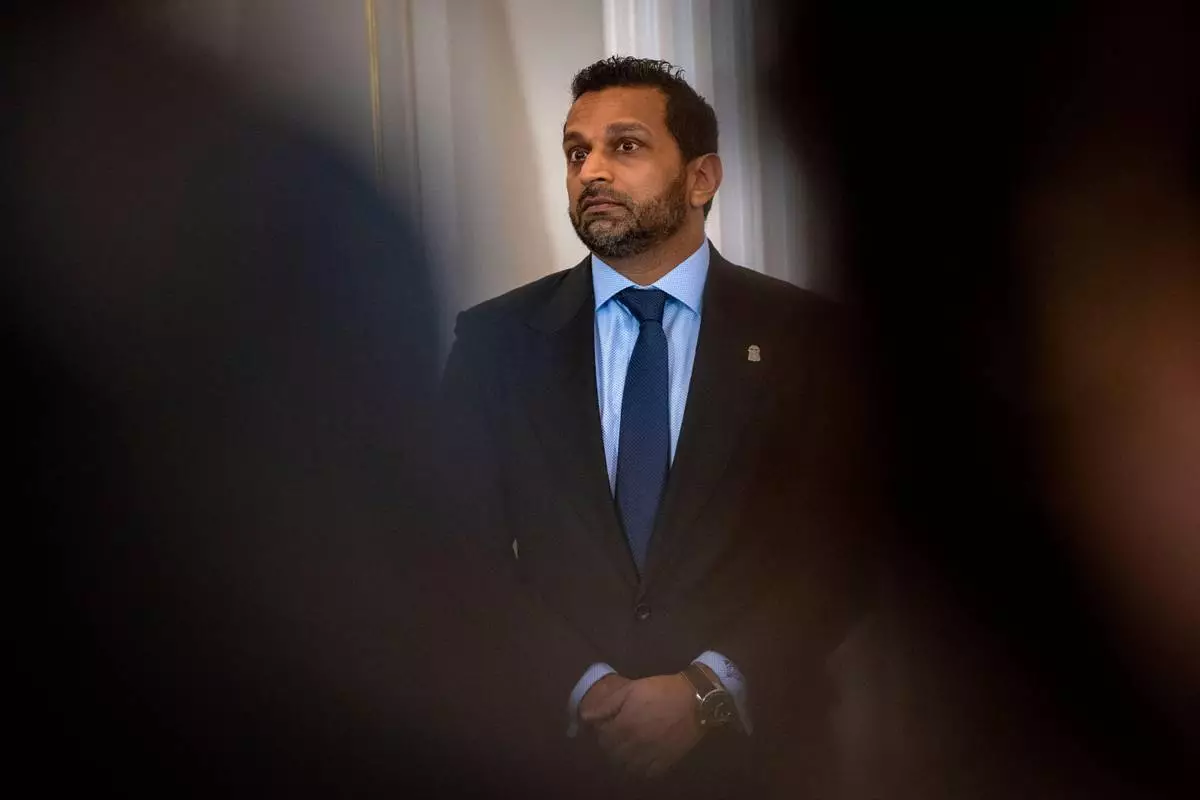
FBI Director Kash Patel takes part in a U.S. Hostage and Wrongful Detainee Flag Raising ceremony at the State Department, Monday, March 9, 2026 in Washington. (AP Photo/Kevin Wolf)
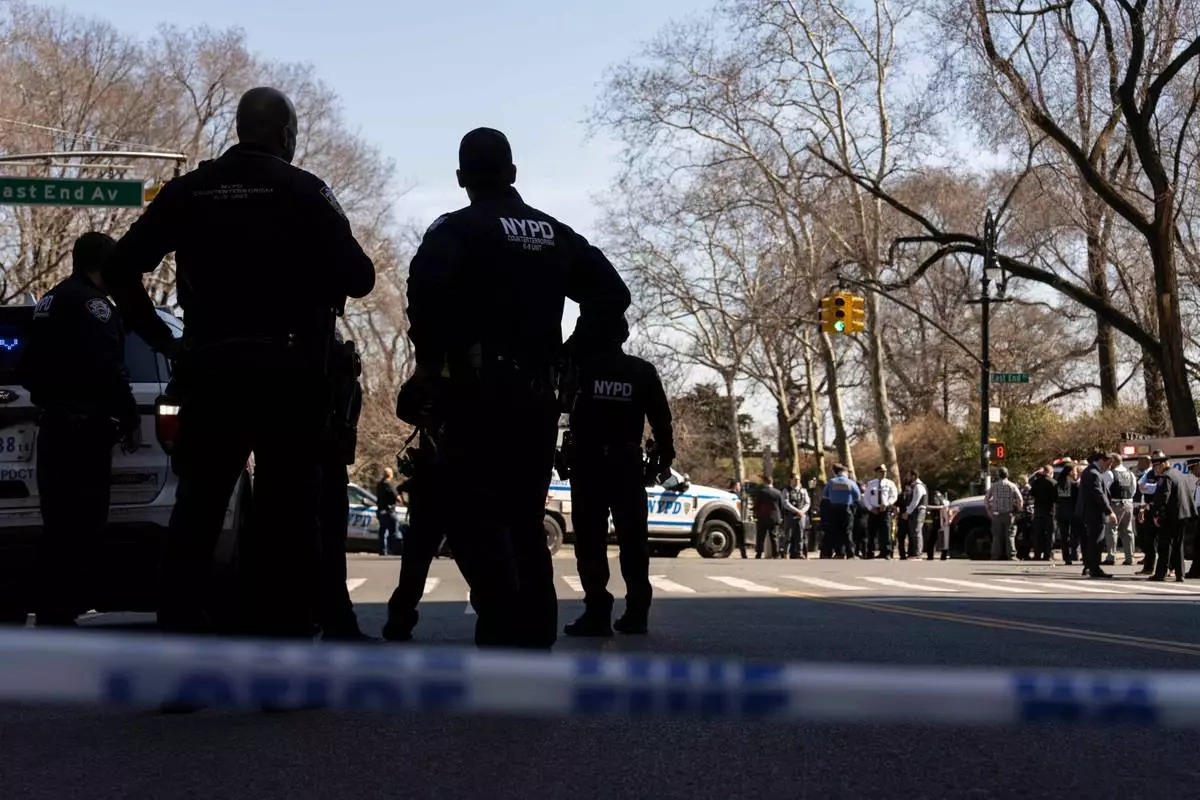
NYPD officers stand outside Carl Schurz Park as they investigate suspicious device, Tuesday, March 10, 2026, in New York. (AP Photo/Yuki Iwamura)
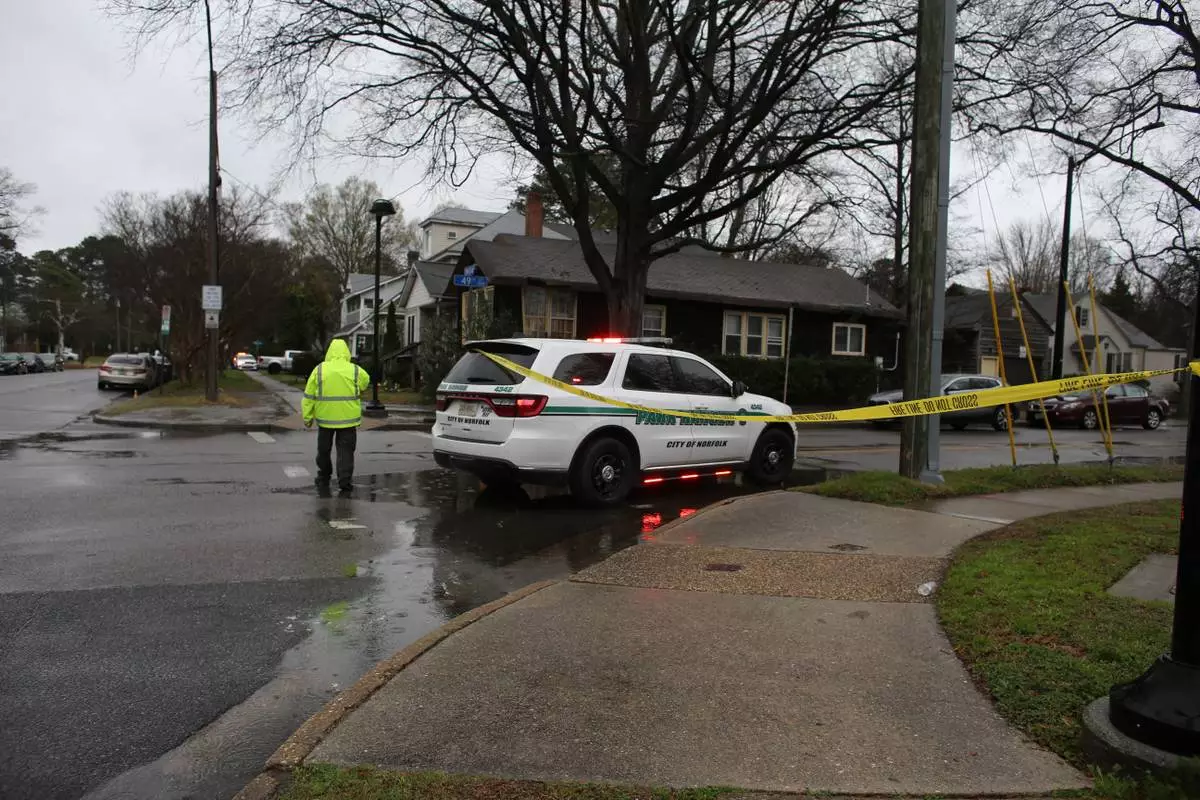
Police arrive outside Old Dominion University's campus after reports of an active shooter on Thursday, March 12, 2026, in Norfolk, Va. (AP Photo/John Clark)
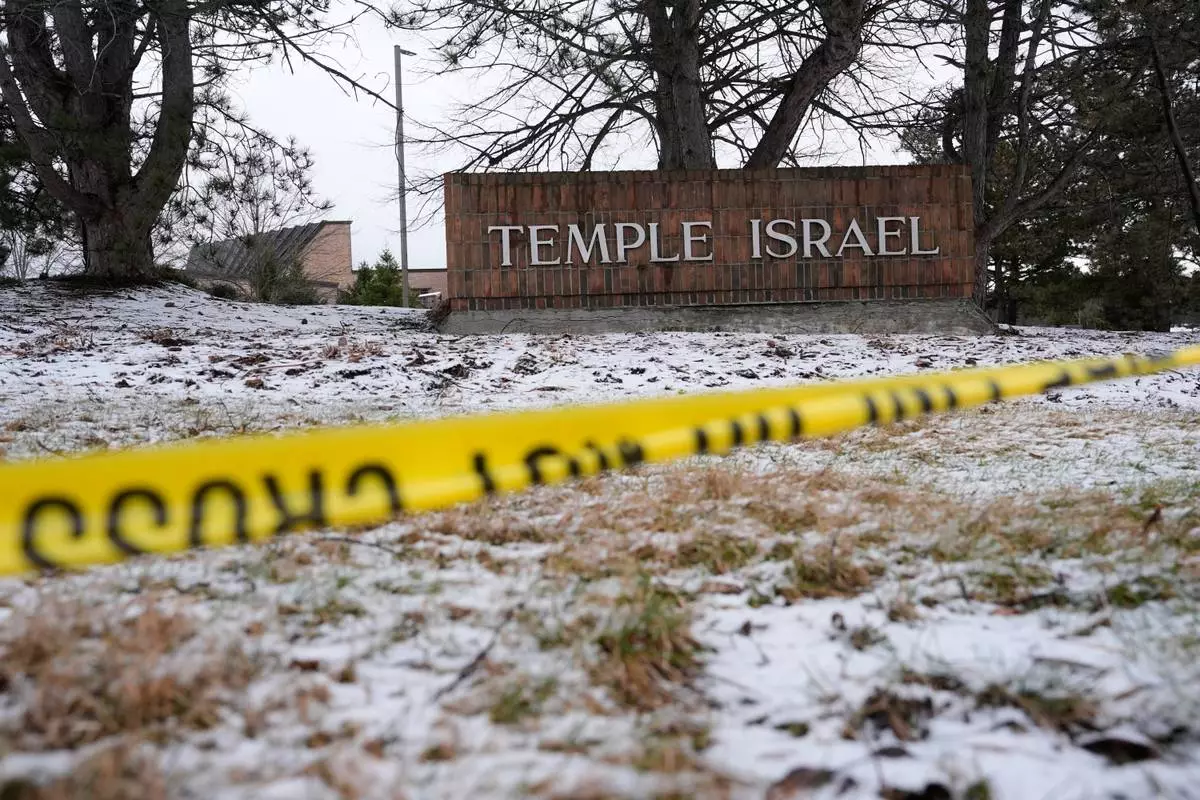
Police tape hangs outside the Temple Israel synagogue Friday, March 13, 2026, in West Bloomfield Township, Mich. (AP Photo/Paul Sancya)