NEW YORK--(BUSINESS WIRE)--Nov 17, 2025--
AV Laboratories is bringing biotechnology out of the research lab and into the realm of daily skincare. Founded by a team of scientists and innovators with deep roots in IVF and stem cell research, AV Laboratories is pioneering a new frontier in molecular skin longevity with its patented AVL SOM3® complex — a formulation that delivers precise cellular nutrition to help skin renew, restore, and rejuvenate from within.
This press release features multimedia. View the full release here: https://www.businesswire.com/news/home/20251113301060/en/
A Landmark Breakthrough in Cellular Precision
For founding member Monica Mezezi, this journey began decades earlier in the field of in vitro fertilization (IVF).
“As cofounder and CEO of LifeGlobal Group, I spent over twenty-five years developing and manufacturing advanced embryo culture media to improve IVF outcomes,” Mezezi explains. “Our landmark contribution — the creation of the single culture medium in 2002 — revolutionized the industry with a superior system that has become the global standard."
That achievement sparked a lifelong fascination with how cells thrive, repair, and communicate. “Working with embryonic cells taught me that every molecule matters,” Mezezi says. “Those early learnings inspired our mission at AVL — to apply the same molecular precision that sustains life at its beginning to support the skin’s longevity throughout life.”
The Convergence of Molecules and Regeneration
At the core of AVL’s research lies a single conviction: regeneration begins with metabolism.
The same molecules that sustain life in its earliest moments — amino acids, cofactors, antioxidants, and energy substrates — are also the keys to how our cells age, repair, and renew.
AVL SOM3® was engineered around this principle. It provides skin cells with all 20 amino acids, essential vitamins, and molecular cofactors in precise, biologically validated ratios — optimizing energy metabolism, reducing cellular stress, and promoting collagen, elastin, and NAD⁺ production.
“Traditional skincare often works on the surface,” says Mezezi. “We work from the inside out — at the molecular level where real regeneration begins.”
A New Benchmark for Molecular Skincare
Every AV Laboratories product — including the Face Serum, Eye Cream, Face Cream Light, Face Cream Rich, and Face Mist — is powered by AVL SOM3®. Each formula is designed to maintain optimal pH and osmolarity, ensuring perfect cellular compatibility and minimizing stress on the skin barrier.
Produced under medical-grade manufacturing standards, AVL products meet the same purity and quality benchmarks as biotechnology and medical device formulations. Each product undergoes extensive clinical testing to validate performance, safety, and efficacy — a level of scientific rigor rarely seen in consumer skincare.
“Our work in stem cell science taught us that even the smallest impurities can harm the most sensitive human cells," says Mezezi. “That is why we bring that same level of care to everything that touches the skin. AVL SOM3® is produced and controlled in our own FDA-registered facility, and our final formulations are manufactured in Europe under rigorous standards for ingredient safety, purity, and performance. Every batch is tested, certified, and fully traceable, offering true peace of mind in a time when cosmetic recalls are all too common.”
A Philosophy of Cellular Integrity
For Mezezi and her team, skin longevity is not about reversing time — it’s about restoring order at the cellular level.
“Aging, whether in an embryo or in skin, is really a story about loss of balance — energy depletion, oxidative stress, and metabolic noise,” she explains. “Our goal is to restore that balance, so cells can perform the way nature intended.”
This philosophy — that understanding how life begins can teach us how to sustain it — is what drives every innovation at AV Laboratories. It’s the convergence of biotechnology and beauty: rigorous science, elegantly expressed.
The Future of Skin Longevity
As AV Laboratories continues to expand its research and product line, its mission remains clear: to bring next-generation biotechnology to skin health, developing breakthrough technologies that redefine how we think about the appearance of skin aging and lasting wellness.
“We’re not a beauty brand borrowing science,” says Mezezi. “We are a science company advancing beauty. And we’re just getting started.”
About AV Laboratories
AV Laboratories is a biotechnology-driven skincare company pioneering molecular skin longevity through its patented AVL SOM3® technology. Developed from 25 years of IVF and stem cell science, AVL SOM3® delivers precise cellular nutrition to empower the skin’s natural renewal processes. Formulated and manufactured under medical-grade standards, AV Laboratories products are clinically tested, eco-conscious, and designed to redefine skin wellness at every age.
Website:www.avlaboratories.com
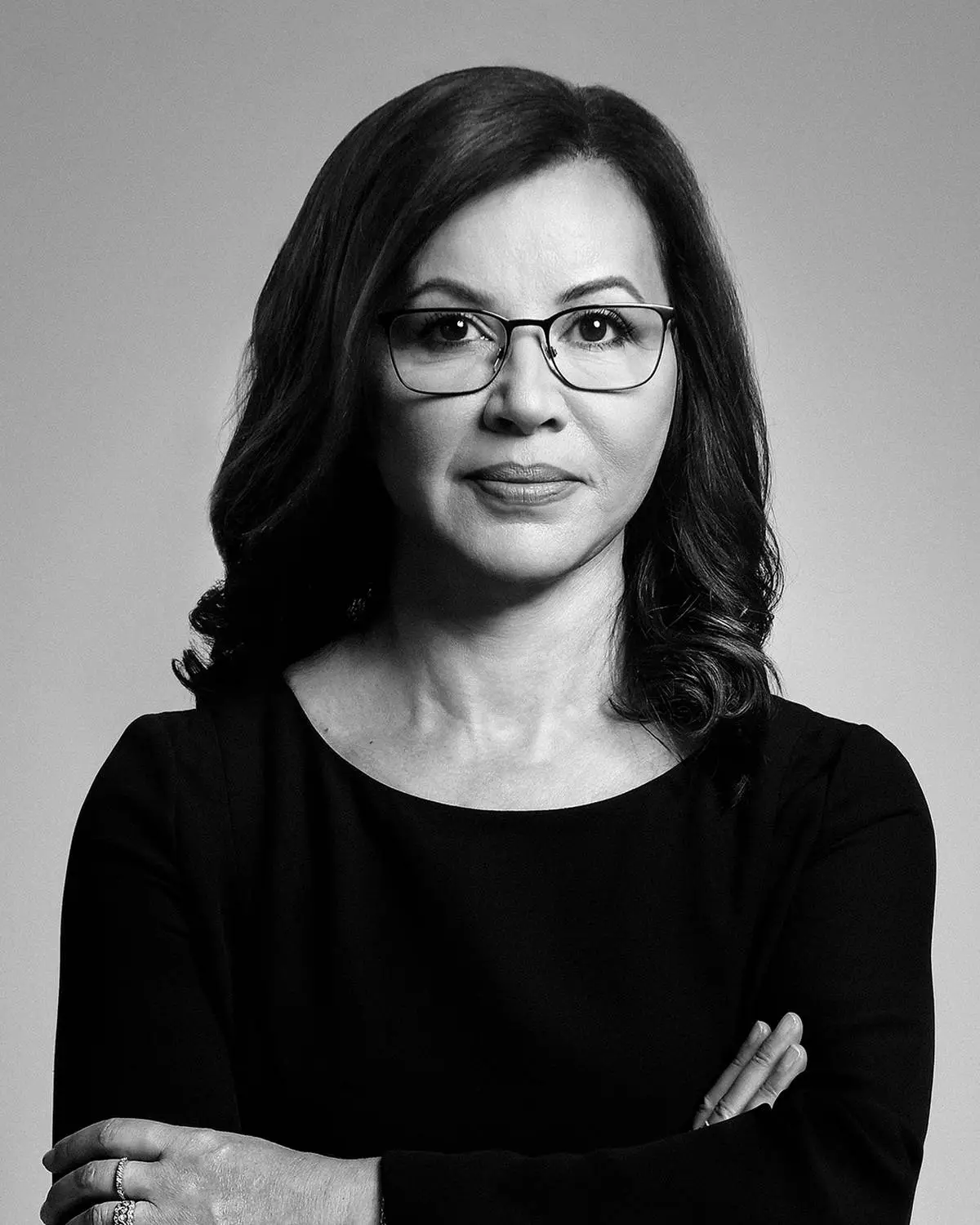
Monica Mezezi, MBA, AV Laboratories, AVL Advisory Board Chairwoman, From the Science of Life to the Science of Skin: AV Laboratories Redefines Cellular Renewal Through Molecular Biotechnology

HOMS, Syria (AP) — A year ago, Mohammad Marwan found himself stumbling, barefoot and dazed, out of Syria’s notorious Saydnaya prison on the outskirts of Damascus as rebel forces pushing toward the capital threw open its doors to release the prisoners.
Arrested in 2018 for fleeing compulsory military service, the father of three had cycled through four other lockups before landing in Saydnaya, a sprawling complex just north of Damascus that became synonymous with some of the worst atrocities committed under the rule of now ousted President Bashar Assad.
He recalled guards waiting to welcome new prisoners with a gauntlet of beatings and electric shocks. “They said, ‘You have no rights here, and we’re not calling an ambulance unless we have a dead body,’” Marwan said.
His Dec. 8, 2024 homecoming to a house full of relatives and friends in his village in Homs province was joyful.
But in the year since then, he has struggled to overcome the physical and psychological effects of his six-year imprisonment. He suffered from chest pain and difficulty breathing that turned out to be the result of tuberculosis. He was beset by crippling anxiety and difficulty sleeping.
He’s now undergoing treatment for tuberculosis and attending therapy sessions at a center in Homs focused on rehabilitating former prisoners, and Marwan said his physical and mental situations have gradually improved.
“We were in something like a state of death” in Saydnaya, he said. “Now we’ve come back to life.”
Marwan's country is also struggling to heal a year after the Assad dynasty’s repressive 50-year reign came to an end following 14 years of civil war that left an estimated half a million people dead, millions more displaced, and the country battered and divided.
Assad's downfall came as a shock, even to the insurgents who unseated him. In late November 2024, groups in the country’s northwest — led by Hayat Tahrir al-Sham, an Islamist rebel group whose then-leader, Ahmad al-Sharaa, is now the country’s interim president — launched an offensive on the city of Aleppo, aiming to take it back from Assad’s forces.
They were startled when the Syrian army collapsed with little resistance, first in Aleppo, then the key cities of Hama and Homs, leaving the road to Damascus open. Meanwhile, insurgent groups in the country’s south mobilized to make their own push toward the capital.
The rebels took Damascus on Dec. 8 while Assad was whisked away by Russian forces and remains in exile in Moscow. But Russia, a longtime Assad ally, did not intervene militarily to defend him and has since established ties with the country's new rulers and maintained its bases on the Syrian coast.
Hassan Abdul Ghani, spokesperson for Syrian Ministry of Defense, said HTS and its allies had launched a major organizational overhaul after suffering heavy losses in 2019 and 2020, when Assad’s forces regained control of a number of formerly rebel-controlled areas.
The rebel offensive in November 2024 was not initially aimed at seizing Damascus but was meant to preempt an expected offensive by Assad’s forces in opposition-held Idlib, Abdul Ghani said.
“The defunct regime was preparing a very large campaign against the liberated areas, and it wanted to finish the Idlib file,” he said. Launching an attack on Aleppo “was a military solution to expand the radius of the battle and thus safeguard the liberated interior areas.”
In timing the attack, the insurgents also aimed to take advantage of the fact that Russia was distracted by its war in Ukraine and that the Iran-backed Lebanese militant group Hezbollah, another Assad ally, was licking its wounds after a damaging war with Israel.
When the Syrian army’s defenses collapsed, the rebels pressed on, “taking advantage of every golden opportunity,” Abdul Ghani said.
Since his sudden ascent to power, al-Sharaa has launched a diplomatic charm offensive, building ties with Western and Arab countries that shunned Assad and that once considered al-Sharaa a terrorist.
A crowning moment of his success in the international arena: in November, he became the first Syrian president since the country’s independence in 1946 to visit Washington.
But the diplomatic successes have been offset by outbreaks of sectarian violence in which hundreds of civilians from the Alawite and Druze minorities were killed by pro-government Sunni fighters. Local Druze groups have now set up their own de facto government and military in the southern Sweida province.
There are ongoing tensions between the new government in Damascus and Kurdish-led forces controlling the country’s northeast, despite an agreement inked in March that was supposed to lead to a merger of their forces.
Israel is wary of Syria's new Islamist-led government even though al-Sharaa has said he wants no conflict with the country. Israel has seized a formerly U.N.-patrolled buffer zone in southern Syria and launched regular airstrikes and incursions since Assad’s fall. Negotiations for a security agreement have stalled.
Meanwhile, the country’s economy has remained sluggish, despite the lifting of most Western sanctions. While Gulf countries have promised to invest in reconstruction projects, little has materialized on the ground. The World Bank estimates that rebuilding the country’s war-damaged areas will cost $216 billion.
The rebuilding that has taken place so far has largely been on a small scale, with individual owners paying to fix their own damaged houses and businesses.
On the outskirts of Damascus, the once-vibrant Yarmouk Palestinian camp today largely resembles a moonscape. Taken over by a series of militant groups then bombarded by government planes, the camp was all but abandoned after 2018.
Since Assad’s fall, a steady stream of former residents have been coming back.
The most heavily damaged areas remain largely deserted but on the main street leading into the camp, bit by bit, blasted-out walls have been replaced in the buildings that remain structurally sound. Shops have reopened and families have come back to their apartments. But any sort of larger reconstruction initiative appears to still be far off.
“It’s been a year since the regime fell. I would hope they could remove the old destroyed houses and build towers,” said Maher al-Homsi, who is fixing his damaged home to move back to it even though the area doesn't even have a water connection.
His neighbor, Etab al-Hawari, was willing to cut the new authorities some slack.
“They inherited an empty country — the banks are empty, the infrastructure was robbed, the homes were robbed," she said.
Bassam Dimashqi, a dentist from Damascus, said of the country after Assad’s fall, “Of course it’s better, there’s freedom of some sort.”
But he remains anxious about the still-precarious security situation and its impact on the still-flagging economy.
“The job of the state is to impose security, and once you impose security, everything else will come," he said. "The security situation is what encourages investors to come and do projects.”
Marwan, the former prisoner, says the post-Assad situation in Syria is “far better” than before. But he has also been struggling economically.
From time to time, he picks up labor that pays only 50,000 or 60,000 Syrian pounds daily, the equivalent of about $5.
Once he finishes his tuberculosis treatment, he said, he plans to leave to Lebanon in search of better-paid work.
——
Sewell reported from Beirut. Associated Press journalist Omar Albam in Damascus contributed to this report.
A girl sits on a machine gun as visitors tour the "Syrian Revolution Military Exhibition," which opened last week ahead of the first anniversary of the ousting of the Bashar Assad regime in Damascus, Syria, Sunday, Dec. 7, 2025. (AP Photo/Ghaith Alsayed)
A boy checks out military equipment as visitors tour the "Syrian Revolution Military Exhibition," which opened last week ahead of the first anniversary of the ousting of the Bashar Assad regime in Damascus, Syria, Sunday, Dec. 7, 2025. (AP Photo/Ghaith Alsayed)
A Syrian man silhouetted by a digital billboard showing the date of the ousting of the Bashar Assad regime during celebrations marking the first anniversary, in Damascus , Syria, Sunday, Dec. 7, 2025. The Arabic words read: "A history retold and a bond renewed." (AP Photo/Hussein Malla)
Wanted portraits of former Syrian president Bashar Assad are displayed in the window of a coffeeshop, in Damascus Sunday, Dec. 7, 2025, as Syrians celebrate marking the first anniversary of the ousting of the Bashar Assad regime. (AP Photo/Hussein Malla)
Syrian men wearing anonymous masks flash victory signs, as they stand on top of their car with its front window covered by an Islamic flag, during celebrations marking the first anniversary of the ousting of the Bashar Assad regime in Damascus, Sunday, Dec. 7, 2025. (AP Photo/Hussein Malla)