Skip to Content Facebook Feature Image

Federal immigration agents will expand enforcement action in North Carolina to Raleigh, mayor says

News

Federal immigration agents will expand enforcement action in North Carolina to Raleigh, mayor says
News

News

Federal immigration agents will expand enforcement action in North Carolina to Raleigh, mayor says

2025-11-18 12:31 Last Updated At:12:40

CHARLOTTE, N.C. (AP) — Federal immigration authorities will expand their enforcement action in North Carolina to Raleigh as soon as Tuesday, the mayor of the state’s capital city said, while Customs and Border Protection agents continue operating in Charlotte following a weekend that saw arrests of more than 130 people in that city.

Mayor Janet Cowell said Monday that she didn’t know how large the operation would be or how long agents would be present. Immigration authorities haven’t spoken about it. The Democrat said in a statement that crime was lower in Raleigh this year compared to last and that public safety was a priority for her and the city council.

More Images
U.S. Border Patrol Commander at large Gregory Bovino takes a phone call, Monday, Nov. 17, 2025, in Charlotte, N.C. (AP Photo/Matt Kelley)
U.S. Border Patrol Commander at large Gregory Bovino takes a phone call, Monday, Nov. 17, 2025, in Charlotte, N.C. (AP Photo/Matt Kelley)

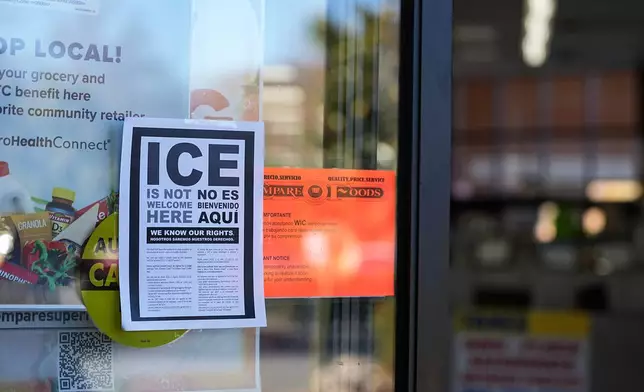
A sign reading 'ICE is not welcome here' is displayed outside of store front amidst federal law enforcement presence, Monday, Nov. 17, 2025, in Charlotte, N.C. (AP Photo/Matt Kelley)
A sign reading 'ICE is not welcome here' is displayed outside of store front amidst federal law enforcement presence, Monday, Nov. 17, 2025, in Charlotte, N.C. (AP Photo/Matt Kelley)

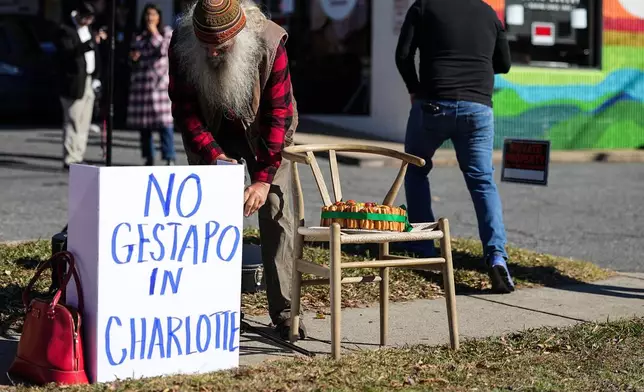
Protestors set up outside of Manolo's Bakery amidst federal law enforcement, Monday, Nov. 17, 2025, in Charlotte, N.C. (AP Photo/Matt Kelley)
Protestors set up outside of Manolo's Bakery amidst federal law enforcement, Monday, Nov. 17, 2025, in Charlotte, N.C. (AP Photo/Matt Kelley)

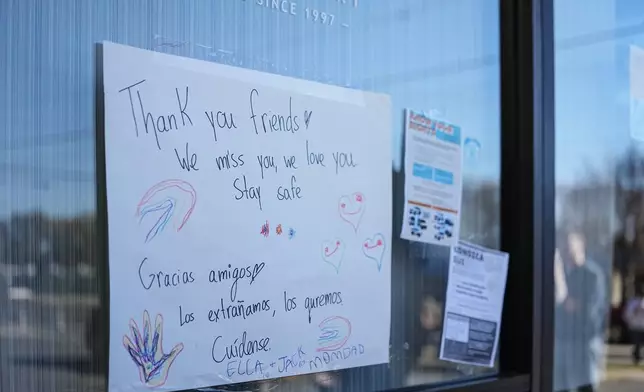
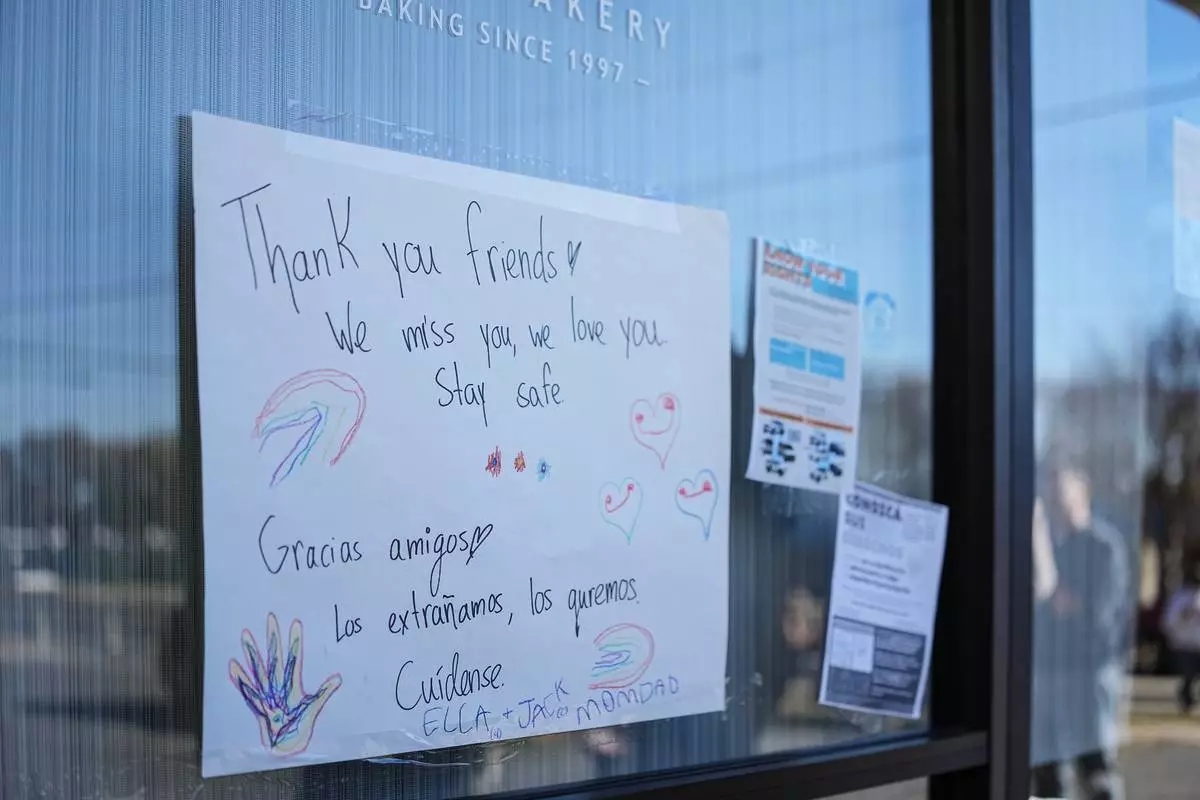
A sign of support is posted outside of Manolo's bakery which is closed amidst federal law enforcement presence, Monday, Nov. 17, 2025, in Charlotte, N.C. (AP Photo/Matt Kelley)

A sign of support is posted outside of Manolo's bakery which is closed amidst federal law enforcement presence, Monday, Nov. 17, 2025, in Charlotte, N.C. (AP Photo/Matt Kelley)

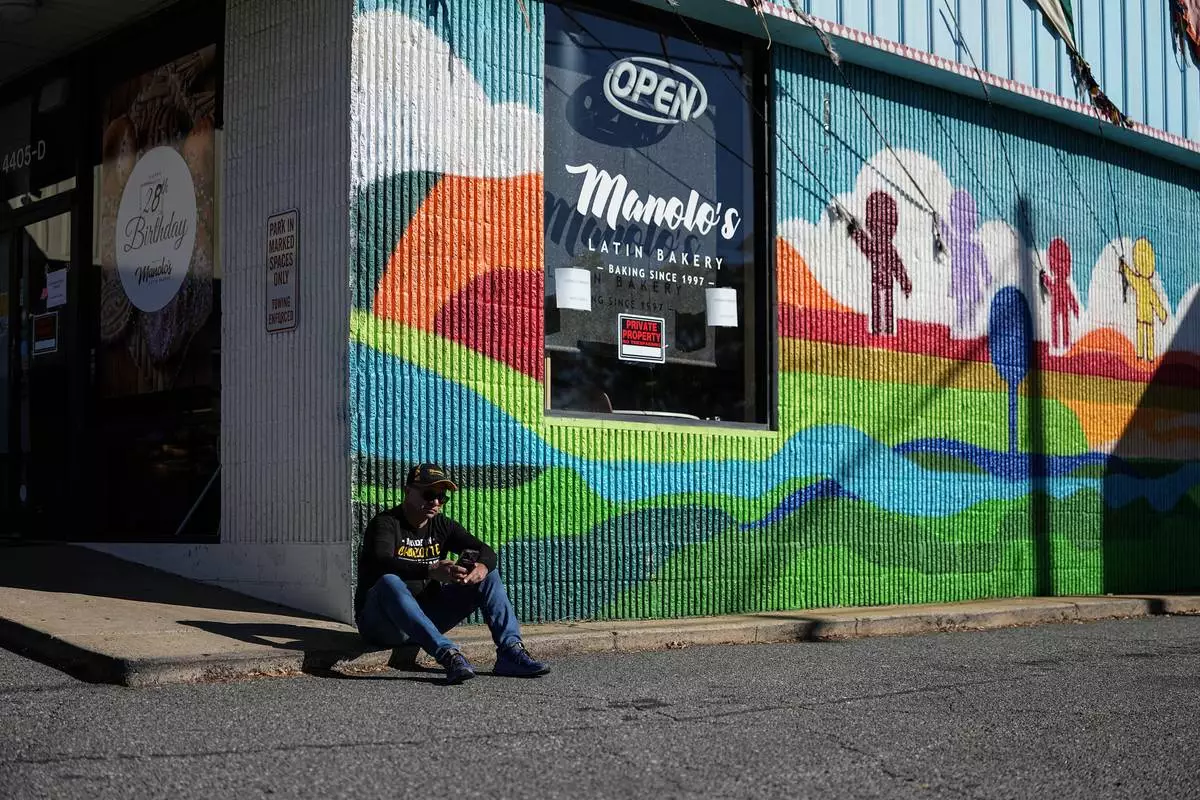
Manuel 'Manolo' Betancur sits outside of his bakery which is closed amidst federal law enforcement presence, Monday, Nov. 17, 2025, in Charlotte, N.C. (AP Photo/Matt Kelley)

Manuel 'Manolo' Betancur sits outside of his bakery which is closed amidst federal law enforcement presence, Monday, Nov. 17, 2025, in Charlotte, N.C. (AP Photo/Matt Kelley)

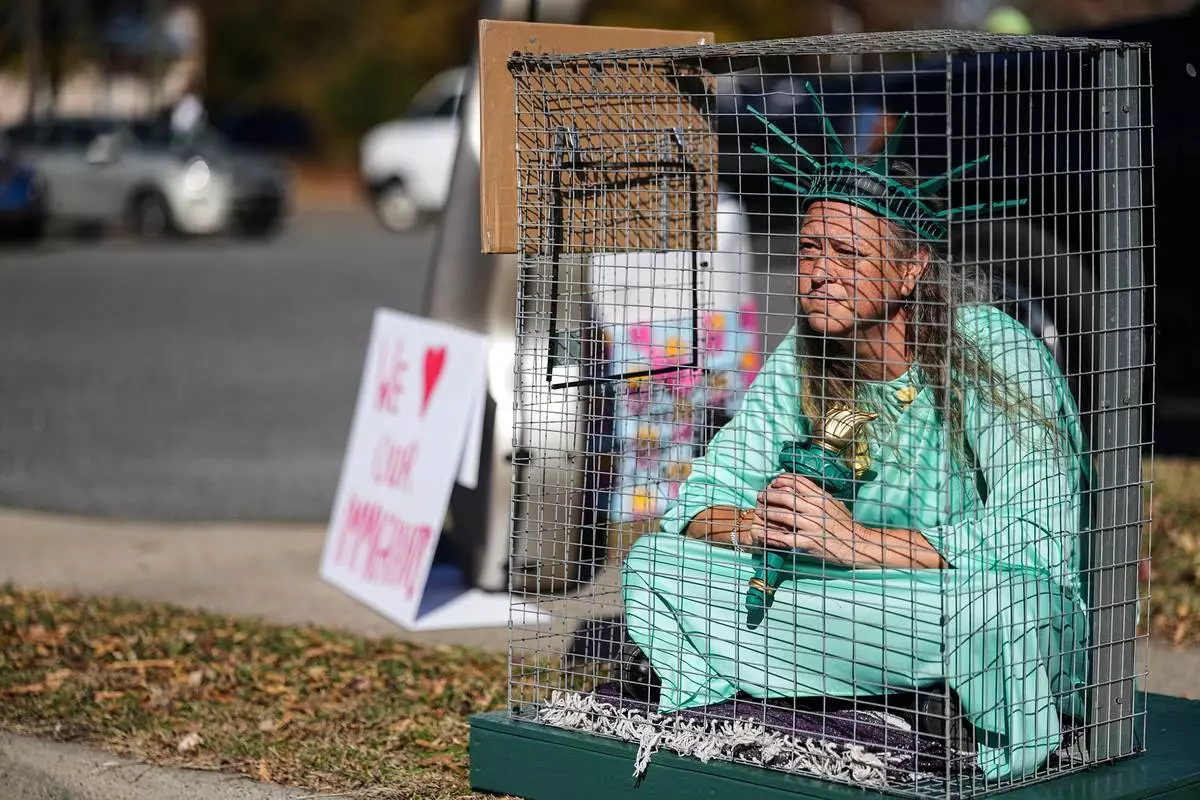
Shana Blake sits in a cage dressed as the Statue of Liberty to protest federal law enforcement presence in Charlotte, N.C. Monday, Nov. 17, 2025. (AP Photo/Matt Kelley)
Shana Blake sits in a cage dressed as the Statue of Liberty to protest federal law enforcement presence in Charlotte, N.C. Monday, Nov. 17, 2025. (AP Photo/Matt Kelley)

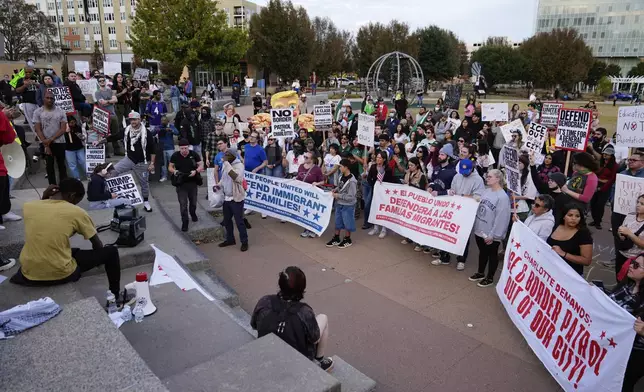
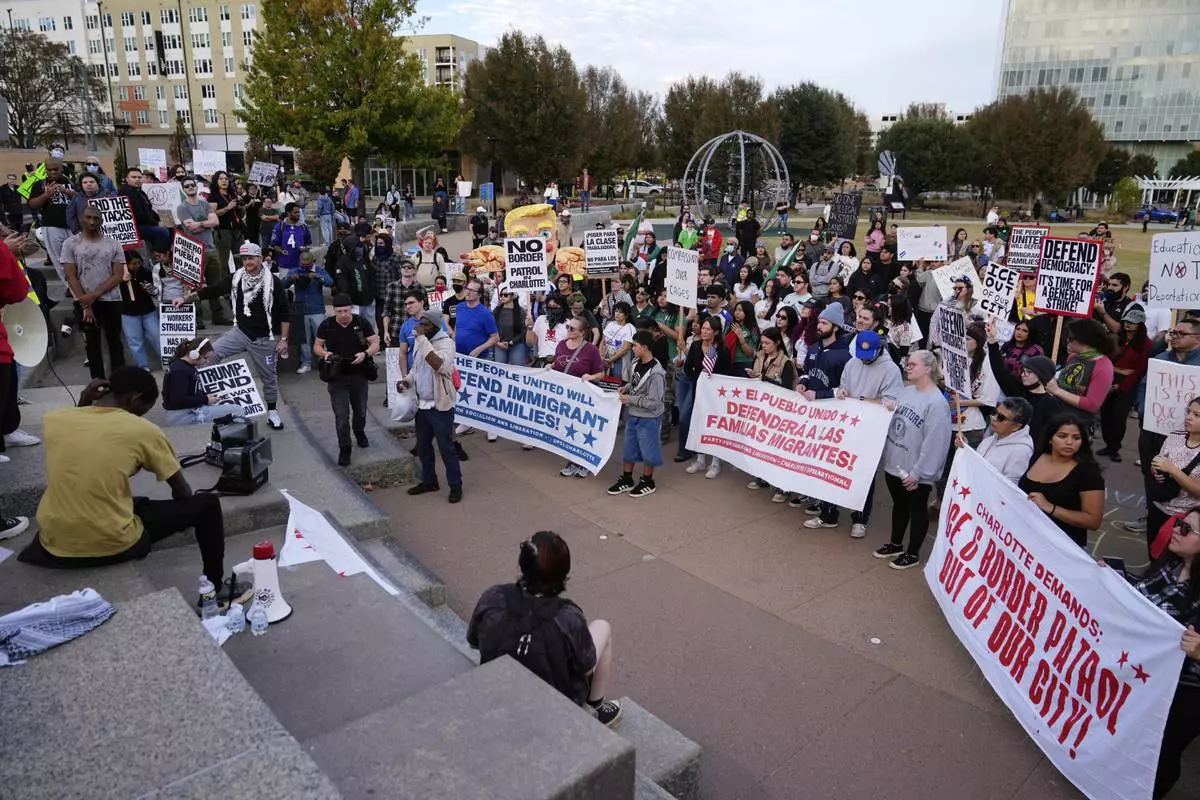
People protest against federal immigration enforcement Saturday, Nov. 15, 2025, in Charlotte, N.C. (AP Photo/Erik Verduzco)
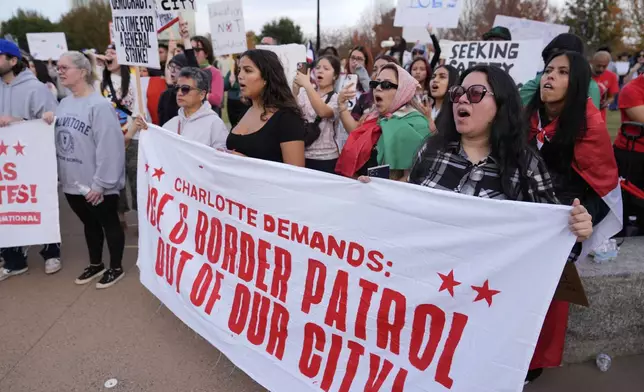
People protest against federal immigration enforcement Saturday, Nov. 15, 2025, in Charlotte, N.C. (AP Photo/Erik Verduzco)

People protest against federal immigration enforcement Saturday, Nov. 15, 2025, in Charlotte, N.C. (AP Photo/Erik Verduzco)

People protest against federal immigration enforcement Saturday, Nov. 15, 2025, in Charlotte, N.C. (AP Photo/Erik Verduzco)

“I ask Raleigh to remember our values and maintain peace and respect through any upcoming challenges,” Cowell said in a statement.

U.S. immigration agents arrested more than 130 people over the weekend in a sweep through Charlotte, North Carolina’s largest city, a federal official said Monday.

The movements in North Carolina come after the Trump administration launched immigration crackdowns in Los Angeles and Chicago. Both of those are deep blue cities in deep blue states run by nationally prominent officials who make no secret of their anger at the White House. The political reasoning there seemed obvious.

But why North Carolina and why was Charlotte the first target there?

Sure the mayor is a Democrat, as is the governor, but neither is known for wading into national political battles. In a state where divided government has become the norm, Gov. Josh Stein in particular has tried hard to get along with the GOP-controlled state legislature. The state's two U.S. senators are both Republican and President Donald Trump won the state in the last three presidential elections.

The Department of Homeland Security has said it is focusing on North Carolina because of so-called sanctuary policies, which limit cooperation between local authorities and immigration agents.

But maybe focusing on a place where politics is less outwardly bloody was part of the equation.

The White House “can have enough opposition (to its crackdown), but it's a weaker version" than what it faced in places like Chicago, said Rick Su, a professor at the University of North Carolina School of Law who studies local government, immigration and federalism.

“They’re not interested in just deporting people. They’re interested in the show,” he said.

The Trump administration has made Charlotte, a Democratic city of about 950,000 people, its latest focus for an immigration enforcement surge it says will combat crime — despite local opposition and declining crime rates. Residents reported encounters with immigration agents near churches, apartment complexes and stores.

Homeland Security Assistant Secretary Tricia McLaughlin said in a statement that Border Patrol officers had arrested “over 130 illegal aliens who have all broken” immigration laws. The agency said the records of those arrested included gang membership, aggravated assault, shoplifting and other crimes, but it did not say how many cases had resulted in convictions, how many people had been facing charges or any other details.

The crackdown set off fierce objections from area leaders.

“We’ve seen masked, heavily armed agents in paramilitary garb driving unmarked cars, targeting American citizens based on their skin color,” Stein said in a video statement late Sunday. “This is not making us safer. It’s stoking fear and dividing our community.”

Charlotte Mayor Vi Lyles said Monday she was “deeply concerned” about videos she’s seen of the crackdown but also said she appreciates protesters’ peacefulness.

“To everyone in Charlotte who is feeling anxious or fearful: You are not alone. Your city stands with you,” she said in a statement.

Charlotte and surrounding Mecklenburg County have both found themselves part of America’s debates over crime and immigration, two of the most important issues to the White House.

The most prominent was the fatal stabbing this summer of Ukrainian refugee Iryna Zarutska on a Charlotte light-rail train, an attack captured on video. While the suspect was from the U.S., the Trump administration repeatedly highlighted that he had been arrested previously more than a dozen times.

Charlotte, which had a Republican mayor as recently as 2009, is now a city dominated by Democrats, with a growing population brought by a booming economy. The racially diverse city includes more than 150,000 foreign-born residents, officials say.

Lyles easily won a fifth term as mayor earlier this month, defeating her Republican rival by 45 percentage points even as GOP critics blasted city and state leaders for what they call rising incidents of crime. Following the Nov. 4 election, Democrats are poised to hold 10 of the other 11 seats on the city council.

While the Department of Homeland Security has said it is focusing on the state because of sanctuary policies, North Carolina county jails have long honored “detainers,” or requests from federal officials to hold an arrested immigrant for a limited time so agents can take custody of them. Nevertheless, some common, noncooperation policies have existed in a handful of places, including Charlotte, where the police do not help with immigration enforcement.

In Mecklenburg County, the jail did not honor detainer requests for several years, until after state law effectively made it mandatory starting last year.

DHS said about 1,400 detainers across North Carolina had not been honored since October 2020, putting the public at risk.

For years, Mecklenburg Sheriff Garry McFadden pushed back against efforts by the Republican-controlled state legislature to force him and a handful of sheriffs from other urban counties to accept ICE detainers.

Republicans ultimately overrode a veto by then-Democratic Gov. Roy Cooper late last year to enact the bill into law.

While McFadden has said his office is complying with the law’s requirement, he continued a public feud with ICE leaders in early 2025 that led to a new state law toughening those rules. Stein vetoed that measure, but the veto was overridden.

Republican House Speaker Destin Hall said in a Monday post on X that immigration agents are in Charlotte because of McFadden’s past inaction: “They’re stepping in to clean up his mess and restore safety to the city.”

Last month, McFadden said he'd had a productive meeting with an ICE representative.

“I made it clear that I do not want to stop ICE from doing their job, but I do want them to do it safely, responsibly, and with proper coordination by notifying our agency ahead of time,” McFadden said in a statement.

But such talk doesn't calm the political waters.

“Democrats at all levels are choosing to protect criminal illegals over North Carolina citizens,” state GOP Chairman Jason Simmons said Monday.

Sullivan reported from Minneapolis and Robertson from Raleigh, North Carolina. Associated Press writers Brian Witte in Annapolis, Maryland and Rebecca Santana in Washington contributed to this report.
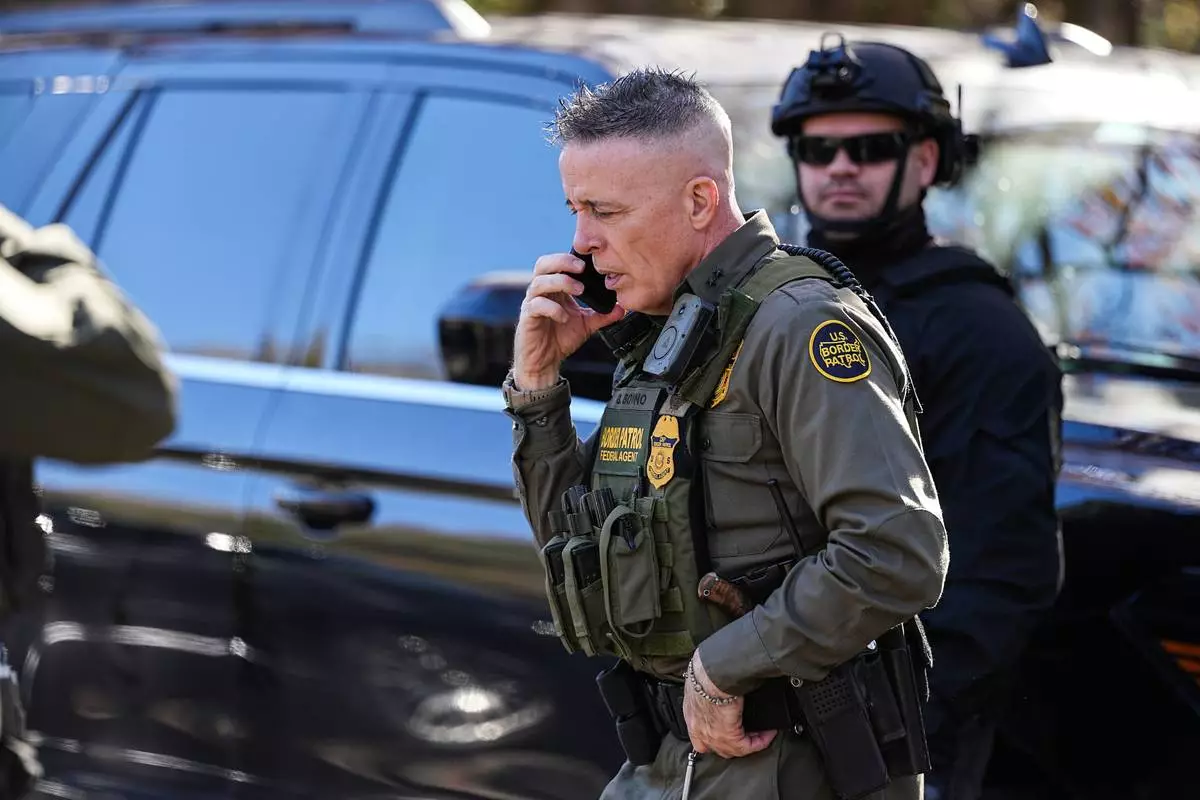
U.S. Border Patrol Commander at large Gregory Bovino takes a phone call, Monday, Nov. 17, 2025, in Charlotte, N.C. (AP Photo/Matt Kelley)

U.S. Border Patrol Commander at large Gregory Bovino takes a phone call, Monday, Nov. 17, 2025, in Charlotte, N.C. (AP Photo/Matt Kelley)

A sign reading 'ICE is not welcome here' is displayed outside of store front amidst federal law enforcement presence, Monday, Nov. 17, 2025, in Charlotte, N.C. (AP Photo/Matt Kelley)
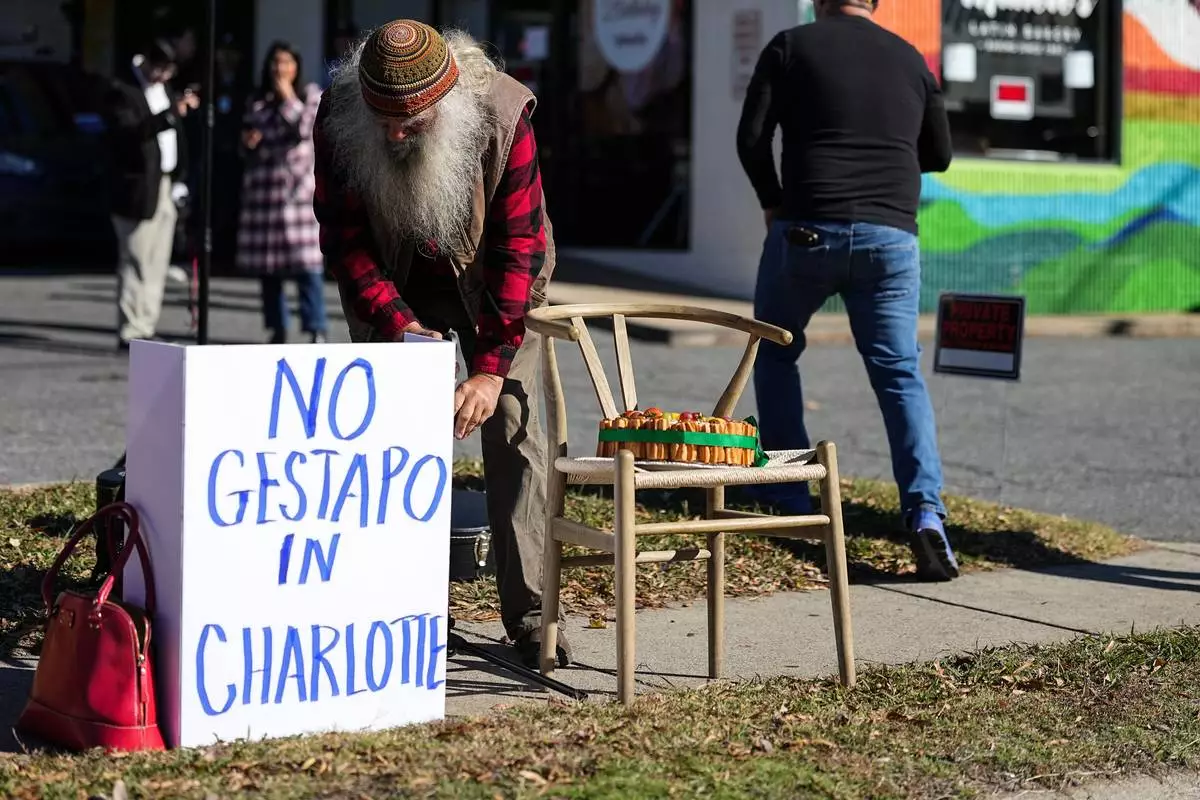
A sign reading 'ICE is not welcome here' is displayed outside of store front amidst federal law enforcement presence, Monday, Nov. 17, 2025, in Charlotte, N.C. (AP Photo/Matt Kelley)

Protestors set up outside of Manolo's Bakery amidst federal law enforcement, Monday, Nov. 17, 2025, in Charlotte, N.C. (AP Photo/Matt Kelley)
Protestors set up outside of Manolo's Bakery amidst federal law enforcement, Monday, Nov. 17, 2025, in Charlotte, N.C. (AP Photo/Matt Kelley)

A sign of support is posted outside of Manolo's bakery which is closed amidst federal law enforcement presence, Monday, Nov. 17, 2025, in Charlotte, N.C. (AP Photo/Matt Kelley)
A sign of support is posted outside of Manolo's bakery which is closed amidst federal law enforcement presence, Monday, Nov. 17, 2025, in Charlotte, N.C. (AP Photo/Matt Kelley)
Manuel 'Manolo' Betancur sits outside of his bakery which is closed amidst federal law enforcement presence, Monday, Nov. 17, 2025, in Charlotte, N.C. (AP Photo/Matt Kelley)

Manuel 'Manolo' Betancur sits outside of his bakery which is closed amidst federal law enforcement presence, Monday, Nov. 17, 2025, in Charlotte, N.C. (AP Photo/Matt Kelley)

Shana Blake sits in a cage dressed as the Statue of Liberty to protest federal law enforcement presence in Charlotte, N.C. Monday, Nov. 17, 2025. (AP Photo/Matt Kelley)
Shana Blake sits in a cage dressed as the Statue of Liberty to protest federal law enforcement presence in Charlotte, N.C. Monday, Nov. 17, 2025. (AP Photo/Matt Kelley)

People protest against federal immigration enforcement Saturday, Nov. 15, 2025, in Charlotte, N.C. (AP Photo/Erik Verduzco)
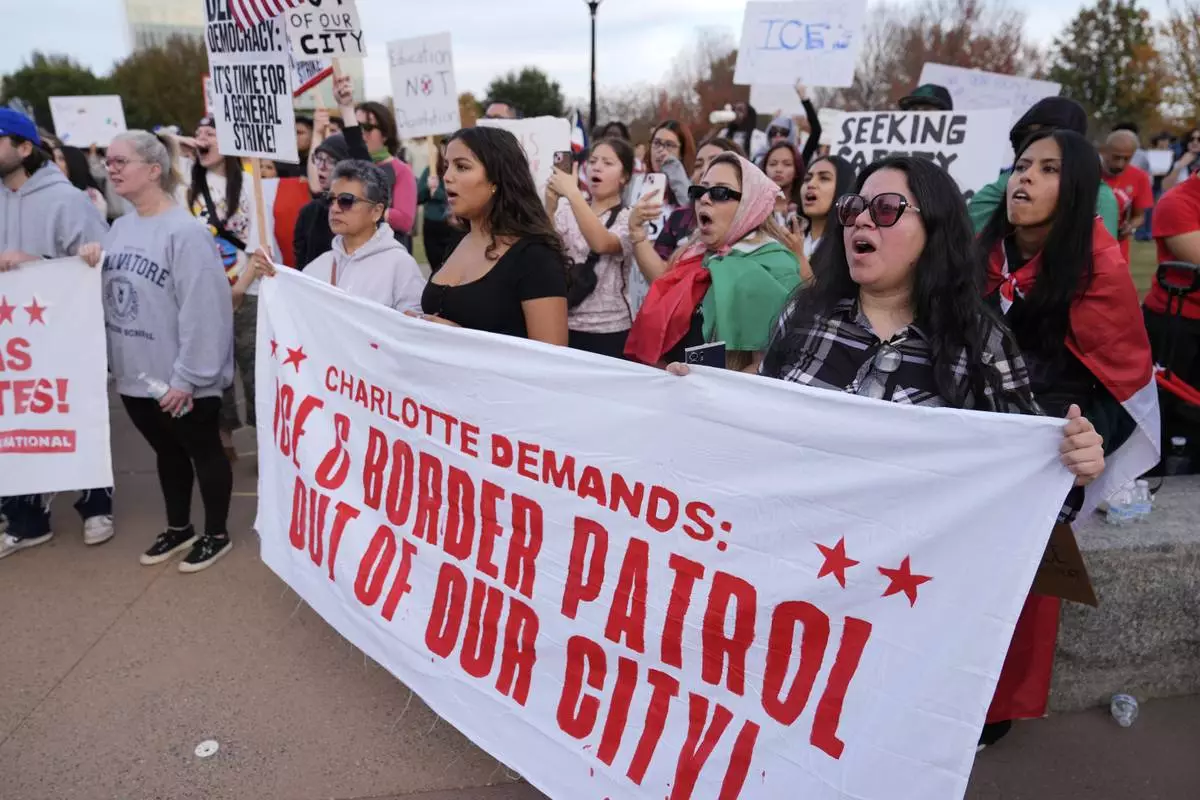
People protest against federal immigration enforcement Saturday, Nov. 15, 2025, in Charlotte, N.C. (AP Photo/Erik Verduzco)
People protest against federal immigration enforcement Saturday, Nov. 15, 2025, in Charlotte, N.C. (AP Photo/Erik Verduzco)
People protest against federal immigration enforcement Saturday, Nov. 15, 2025, in Charlotte, N.C. (AP Photo/Erik Verduzco)
WASHINGTON (AP) — In New York City, two men who federal authorities say were inspired by the Islamic State brought powerful homemade bombs to a far-right protest outside the mayoral mansion.

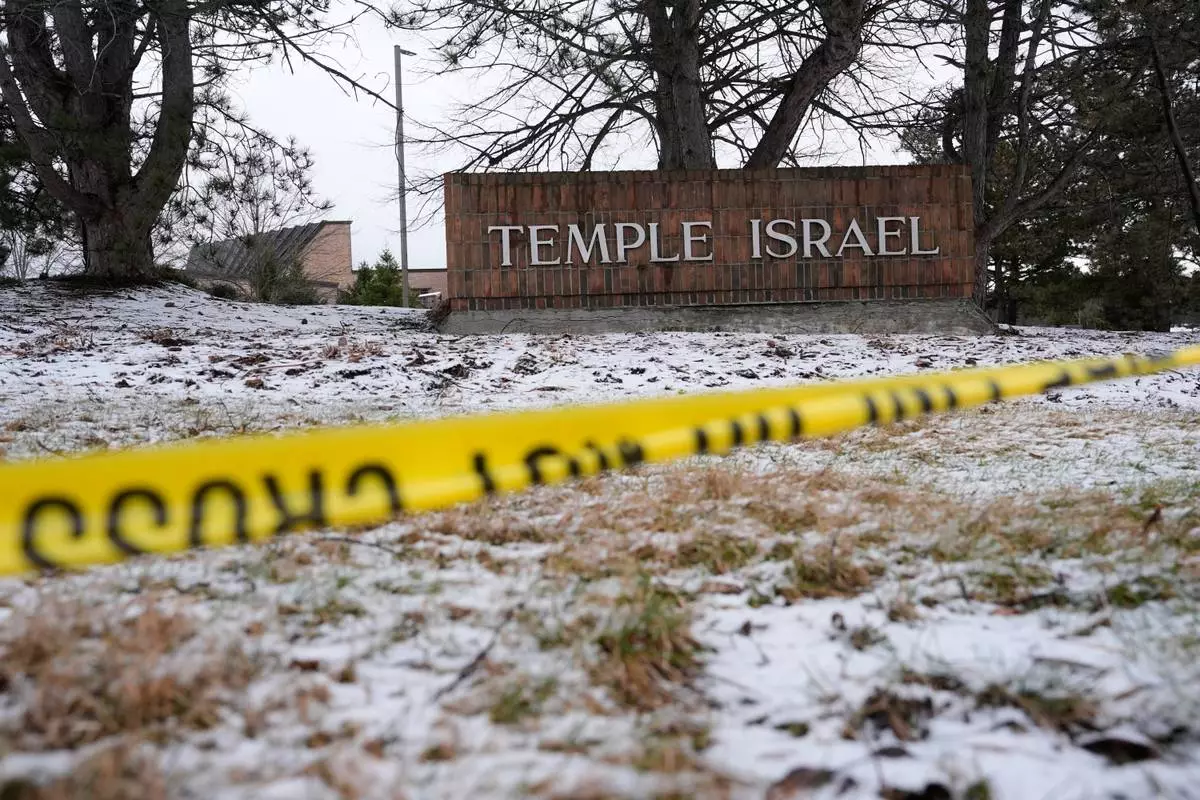
In Michigan, a naturalized citizen from Lebanon rammed his vehicle into a synagogue, where he was shot at by security before he shot himself to death.

In Virginia, a man previously imprisoned on a terrorism conviction was heard yelling “Allahu akbar” before opening fire in a university classroom in an attack that officials said ended when the shooter was killed by students.

The three acts of violence in the last week have laid bare a heightened terrorism threat unfolding against the backdrop of the U.S. war with Iran and as the country's counterterrorism system is strained by the departures of experienced national security professionals at the FBI and Justice Department. The firings and resignations, along with the diversion of resources and personnel over the last year to meet other Trump administration priorities, have fueled concerns about the capability to head off a potential surge in threats.

“So much experience has been decimated from the ranks,” said Frank Montoya, a retired senior FBI official. “The folks that were best positioned to get to the bottom of it before something really bad happened” are in many cases no longer with the government, he said, meaning less experienced personnel assigned to the threat are “starting from way behind.”

The FBI said it would not comment on personnel numbers and decisions, but issued a statement saying “agents and staff are dedicated professionals working around the clock to defend the homeland and crush violent crime. The FBI continuously assesses and realigns our resources to ensure the safety of the American people.”

Iran has vowed revenge for the killing by the U.S. and Israel of Supreme Leader Ayatollah Ali Khamenei, and though the fighting has so far been confined to the Middle East, the Islamic Republic has long professed its determination to carry out violence on American soil.

Iranian operatives, for instance, responded to the 2020 assassination of Gen. Qassem Soleimani during the first Trump administration with a disrupted murder-for-hire plot targeting former national security adviser John Bolton.

A Pakistani business owner who says he was carrying out instructions from a contact in Iran's paramilitary Revolutionary Guard was convicted in New York last week of trying to hire hit men in 2024 for assassination plots targeting public figures, including President Donald Trump, who was then running for president.

Though much attention has focused on Iran's use of proxies or hired hands to carry out plots, the country's capability to organize a large-scale assault on the U.S. remains unclear despite clear angst over the potential. The FBI warned in a recent bulletin to law enforcement about Iran’s aspiration to conduct a drone attack targeting California, but after the warning was publicized, officials emphasized the intelligence was unverified and that no specific plot was known to exist.

The U.S. government after the Sept. 11, 2001, attacks overhauled its intelligence and national security apparatus to prevent similarly catastrophic events. But in the years since, lone actors radicalized online have nonetheless carried out shootings like the 2015 ambush attacks at a pair of military sites in Chattanooga, Tennessee and a rampage at an Orlando nightclub the following year by a gunman who killed 49 people and raged against the “filthy ways of the west.”

Those plots by self-directed individuals have proved notoriously difficult to prevent and have occurred even when the FBI has not been roiled by firings and internal upheaval like during the first year of the Trump administration.

“They're self-directed,” said retired FBI official Edward Herbst. “That’s what makes them really lethal. You never know when they're going to rise up. You never know when and where they're going to attack.”

Terrorism concerns typically rise during times of international conflict when military action overseas is accompanied by increased vigilance, including outreach from agents to their sources, more active sharing of tips between federal and local law enforcement and closer coordination among FBI joint terrorism task forces, said Claire Moravec, a former FBI national security official who served as deputy homeland security adviser in Illinois.

Officials have said there is no indication that either the men arrested in connection with the explosives in New York, or the man responsible for Thursday’s Old Dominion University shooting, were motivated explicitly by the Iran war. The man who crashed into Temple Israel synagogue near Detroit on Thursday lost four family members in an Israeli airstrike in his native Lebanon last week, an official in Lebanon said.

Regardless, wars like the one in Iran can function as “accelerants,” raising the volume and intensity of grievances for the disaffected, Moravec said.

“Ultimately, the goal during these periods is not ‘surveillance’ but maintaining a broad awareness of how international events could translate into domestic security risks, so that threats can be identified and disrupted early,” she said in an email.

The Justice Department's National Security Division was established in 2006 to address threats of terrorism, espionage and other concerns. In the last year, lawyers in the division found themselves assigned to review the Jeffrey Epstein files to prepare them for release, and elite sections dedicated to prosecuting terrorists and catching spies have endured turnover.

About half of the division's counterterrorism prosecutors have left since the beginning of the Trump administration, along with about a third of its senior leadership, according to estimates from Justice Connection, a network of department alumni.

A Justice Department spokesperson said the division's singular focus remains “keeping the American people safe from threats foreign and domestic” and that there are no known or credible threats to the homeland.

FBI Director Kash Patel has fired dozens of agents, most recently about a dozen employees who worked on the counterintelligence investigation into Trump's retention of classified documents at his Mar-a-Lago estate in Florida.

“This is not an exaggeration to say that they are not as capable as they were a year and a half ago,” Matthew Olsen, who led the National Security Division during the Biden administration, said this week on the Lawfare podcast, adding that “they’ve lost, forced out, fired, the most capable, the most experienced FBI agents, FBI officials and DOJ prosecutors, that were working on the Iran threat.”

In the national security realm, where experience and source development are vital, the loss of institutional knowledge and community relationships can be a crushing blow, said Montoya, the former FBI official.

“There was no transition,” Montoya said of the agents who have been abruptly fired. “These guys were just walked out of the building. The new guys can call them and say, ‘Hey, can you tell me what you were doing?’” but even so, “you're still introducing a brand new face into the equation.”

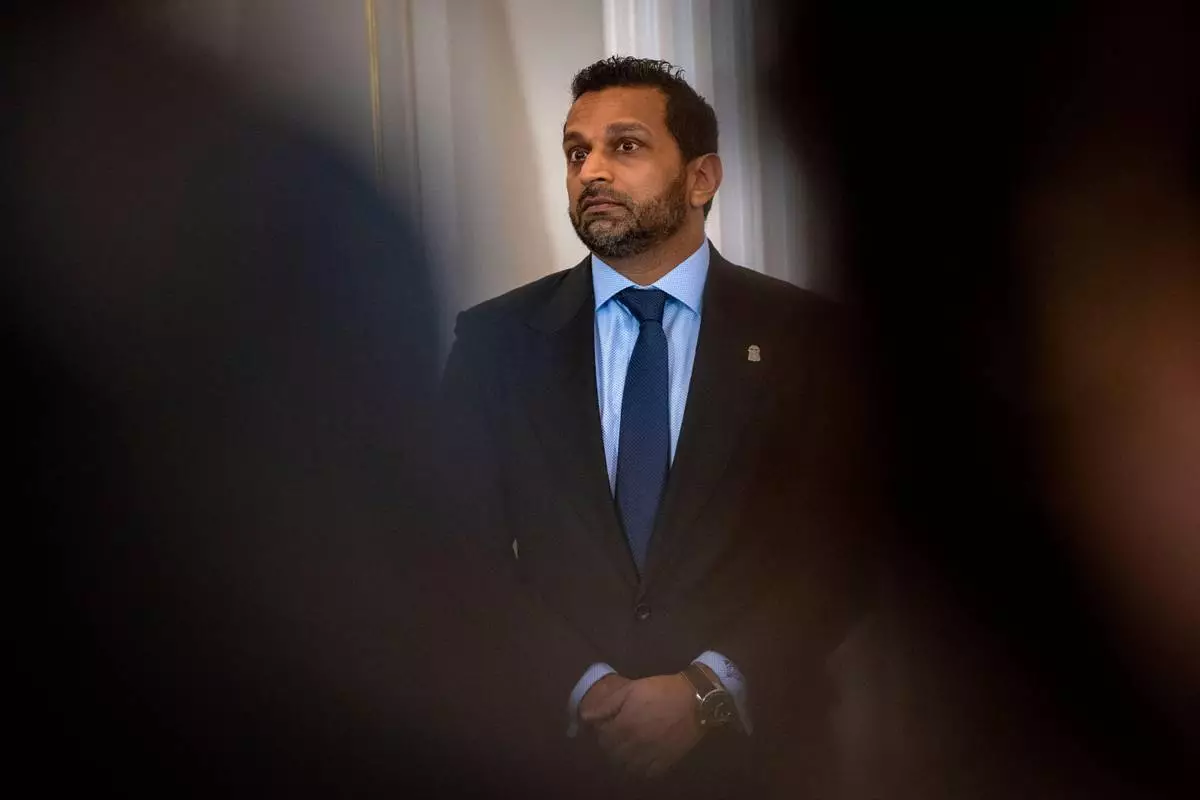
FBI Director Kash Patel takes part in a U.S. Hostage and Wrongful Detainee Flag Raising ceremony at the State Department, Monday, March 9, 2026 in Washington. (AP Photo/Kevin Wolf)

FBI Director Kash Patel takes part in a U.S. Hostage and Wrongful Detainee Flag Raising ceremony at the State Department, Monday, March 9, 2026 in Washington. (AP Photo/Kevin Wolf)

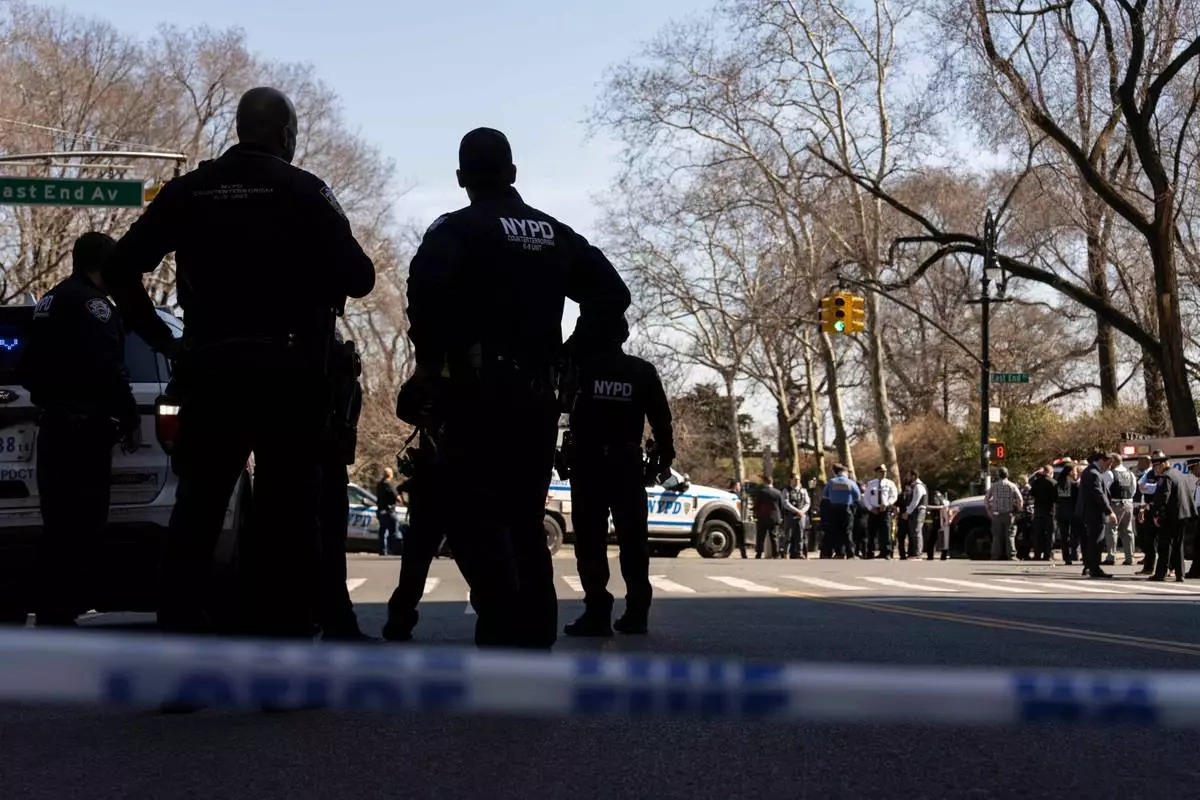
NYPD officers stand outside Carl Schurz Park as they investigate suspicious device, Tuesday, March 10, 2026, in New York. (AP Photo/Yuki Iwamura)

NYPD officers stand outside Carl Schurz Park as they investigate suspicious device, Tuesday, March 10, 2026, in New York. (AP Photo/Yuki Iwamura)

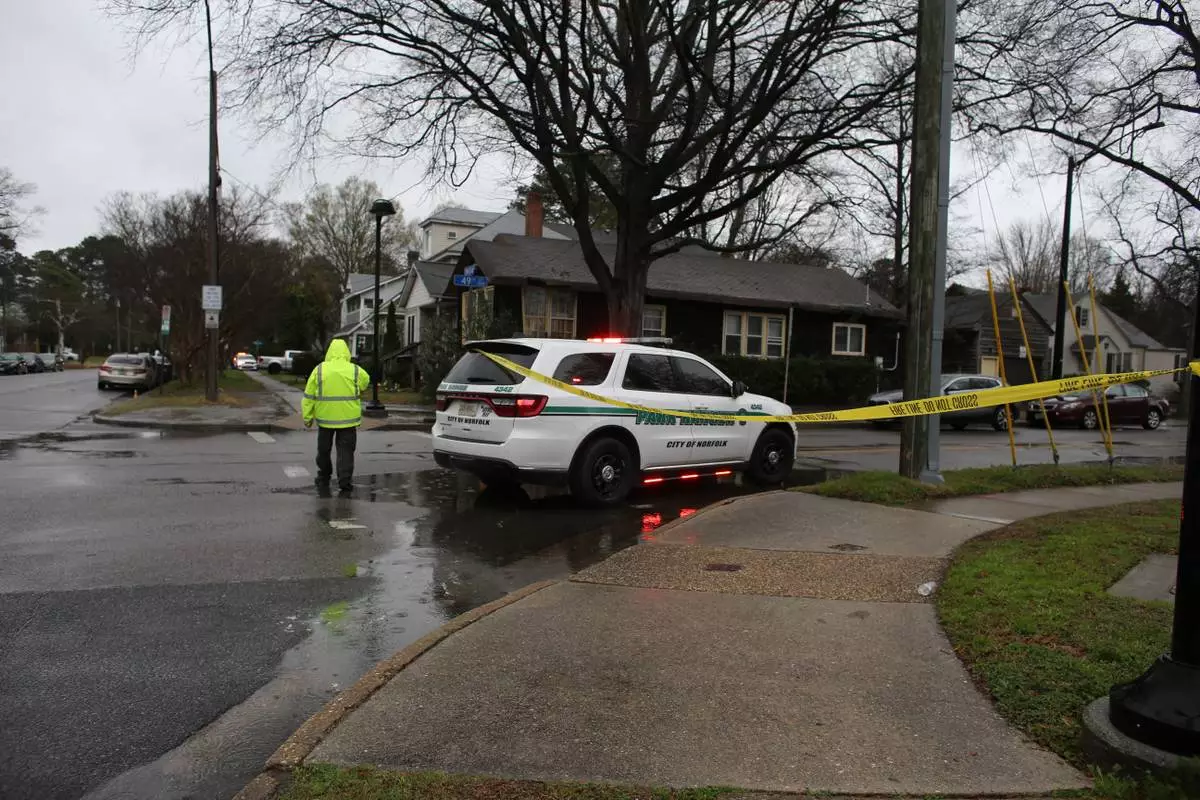
Police arrive outside Old Dominion University's campus after reports of an active shooter on Thursday, March 12, 2026, in Norfolk, Va. (AP Photo/John Clark)

Police arrive outside Old Dominion University's campus after reports of an active shooter on Thursday, March 12, 2026, in Norfolk, Va. (AP Photo/John Clark)

Police tape hangs outside the Temple Israel synagogue Friday, March 13, 2026, in West Bloomfield Township, Mich. (AP Photo/Paul Sancya)

Police tape hangs outside the Temple Israel synagogue Friday, March 13, 2026, in West Bloomfield Township, Mich. (AP Photo/Paul Sancya)

Recommended Articles