ABUJA, Nigeria (AP) — Nigeria suffered its second mass school abduction this week with authorities confirming an attack on a Catholic school in the conflict-battered northern region of the country on Friday.
A total of 303 schoolchildren and 12 teachers were abducted in Friday's attack at St. Mary’s School in Niger state's Papiri community. It wasn’t immediately confirmed who the attackers were. Local police said they have deployed a team to rescue the children.
Friday's attack happened four days after 25 students were abducted in neighboring Kebbi state.
Niger state closed all its schools following the latest abduction.
School kidnappings have come to define insecurity in Africa’s most populous nation, and analysts say it's often because armed gangs see schools as “strategic” targets to draw more attention.
UNICEF said last year that only 37% of schools across 10 of the conflict-hit states have early warning systems to detect threats.
The kidnappings are happening amid U.S. President Donald Trump's claims of targeted killings against Christians in the West African country. Attacks in Nigeria affect both Christians and Muslims. The school attack earlier this week in Kebbi state was in the Muslim-majority Maga town.
Kidnappers in the past have included Boko Haram, a jihadi insurgency that carried out the mass abduction of 276 Chibok schoolgirls more than a decade ago, bringing the Islamic extremist group to global attention.
But dozens of bandit groups have become active in the hard-hit northern region, often targeting remote villages with a limited security and government presence.
At least 1,500 students have been seized in the years since the Chibok attack, many released only after ransoms were paid.
Here’s what’s to know about northern Nigeria's widespread insecurity.
Boko Haram has long menaced large parts of Nigeria’s north, especially the northeast, as well as parts of neighboring Cameroon, Niger and Chad. The militant group has sought to impose an Islamic state in the region and its name — meaning “books are forbidden” — rejects Western education.
In 2014, Boko Haram burst onto the global stage with the Chibok abduction. Four years later, its fighters abducted 110 schoolgirls from a college in Yobe state in the northeast.
The militants have mounted a strong resurgence this year after splitting in the past, with many fighters now aligned with a local affiliate of the Islamic State group. The exact number of fighters with each group is unknown, though they are estimated in the low thousands.
The groups continue to recruit, sometimes forcibly, youth who have been left vulnerable in a region that Nigerian authorities and humanitarian organizations struggle to serve safely. The Trump administration's deep cuts in foreign aid to Nigeria this year haven't helped.
Other armed groups in northern Nigeria carry out abductions, largely for ransom. Authorities have said they include mostly former herders who took up arms against farming communities after clashes between them over increasingly strained resources.
Schools have been a popular target of the bandits, who are motivated more by money than religious beliefs. The attacks often occur at night, with gunmen at times zooming in on motorbikes or even dressed in military uniforms and then disappearing into the vast, under-policed landscape.
There is growing concern about links between the bandits and the militant groups, notably in the northwest.
“While often conflated with the militant Islamist groups, the bandits operating in northwestern Nigeria are a distinct driver of instability in this region,” the U.S.-backed Africa Center for Strategic Studies said earlier this year, noting that the bandits are thought to be responsible for about the same number of deaths there as Boko Haram and the IS affiliate are in the northeast.
In 2020, gunmen on motorcycles attacked a government secondary school in Katsina state and abducted more than 300 boys. The state government announced their release within a week. In 2021, gunmen abducted more than 300 schoolgirls in a nighttime raid on a government secondary boarding school in Zamfara state. Within weeks, all were released after the apparent payment of a ransom.
And in 2024, gunmen on motorcycles abducted 287 students at a government secondary school in Kaduna state.
Nigeria has struggled for years to combat Boko Haram and other armed groups, at times striking and killing civilians in mistaken air assaults meant for militants. The military also has carried out airstrikes and special operations targeting the hideouts of armed gangs.
But Islamic extremists in recent months have repeatedly overrun military outposts, mined roads with bombs and raided civilian communities despite the military’s claims of success against them. That surge in activity has strained security efforts across Nigeria's north.
Last month, President Bola Tinubu replaced the country’s security chiefs.
Earlier this year, the U.S. government approved the sale of $346 million in arms to strengthen Nigeria’s fight against insurgencies and criminal groups. More recently, however, Trump has threatened Nigeria with potential military action — and a halt to all aid and assistance — while alleging that Nigeria's government is failing to rein in the persecution of Christians. Nigeria has rejected the claim.
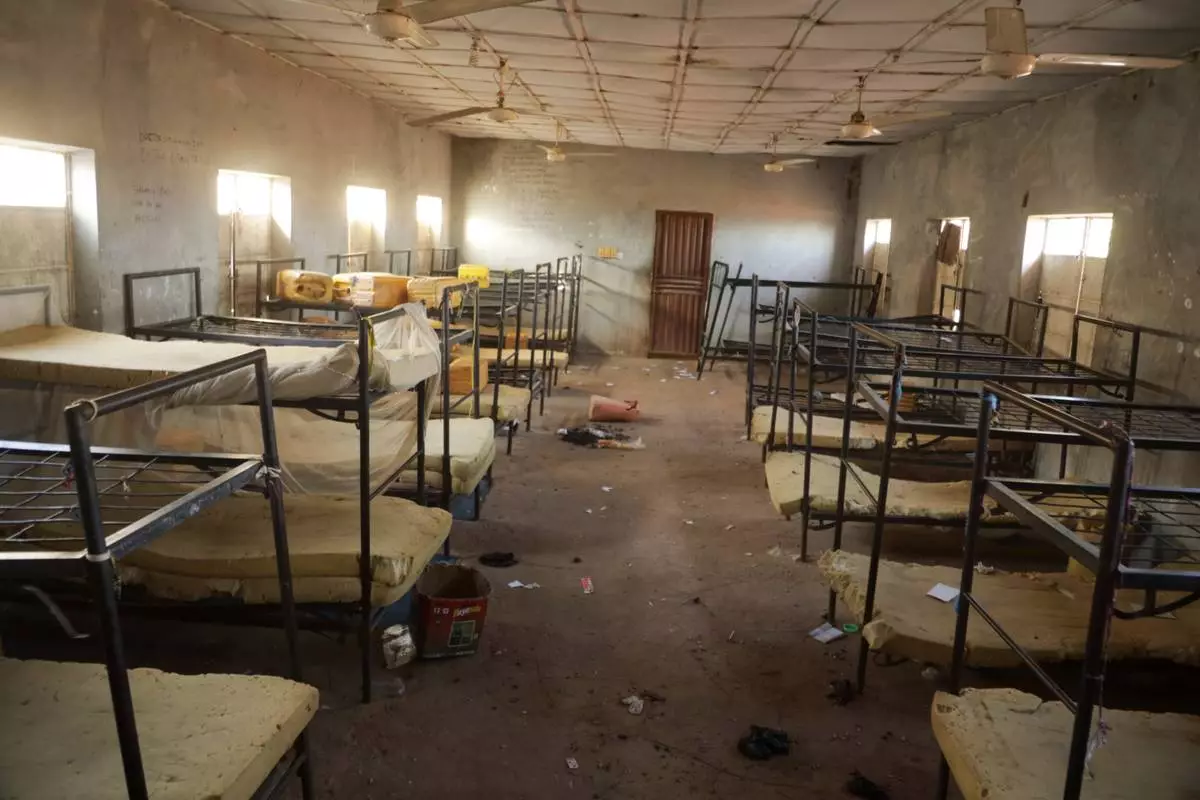
The dormitories where gunmen kidnapped school children is seen in Kebbi, Nigeria, Monday, Nov. 17, 2025. (AP Photo/Deeni Jibo)
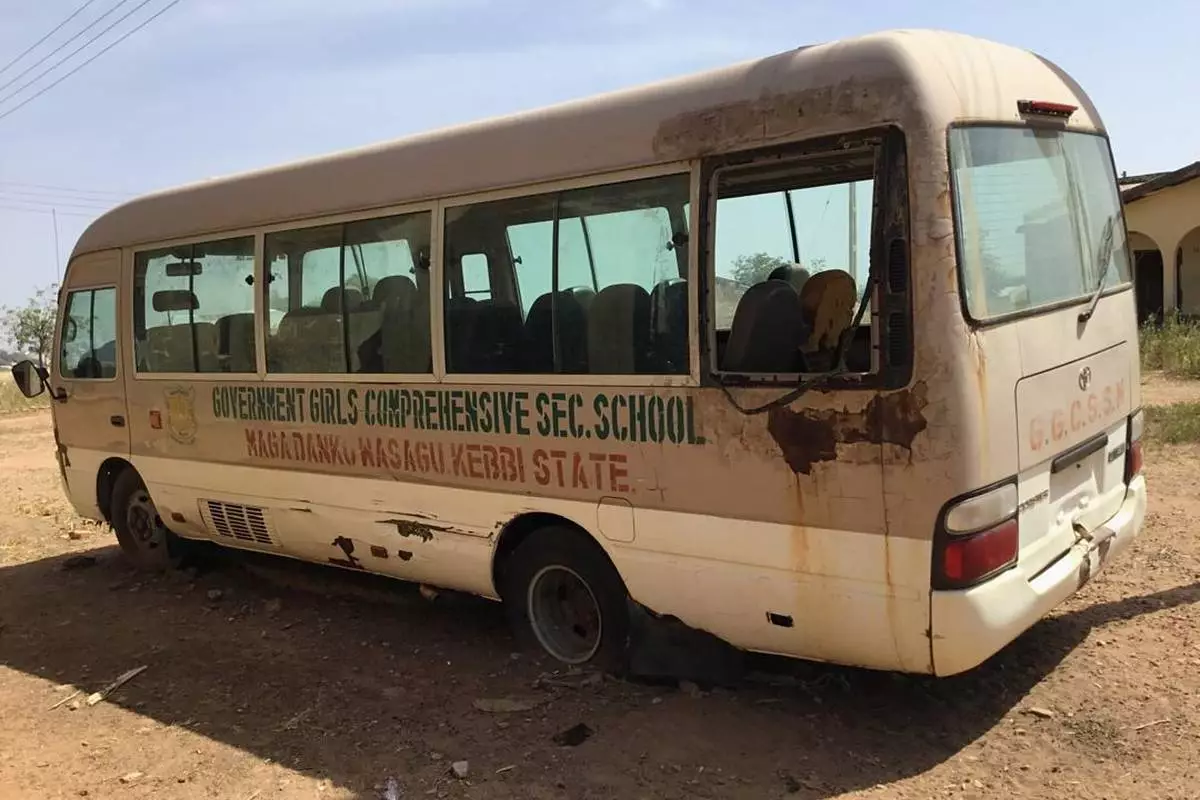
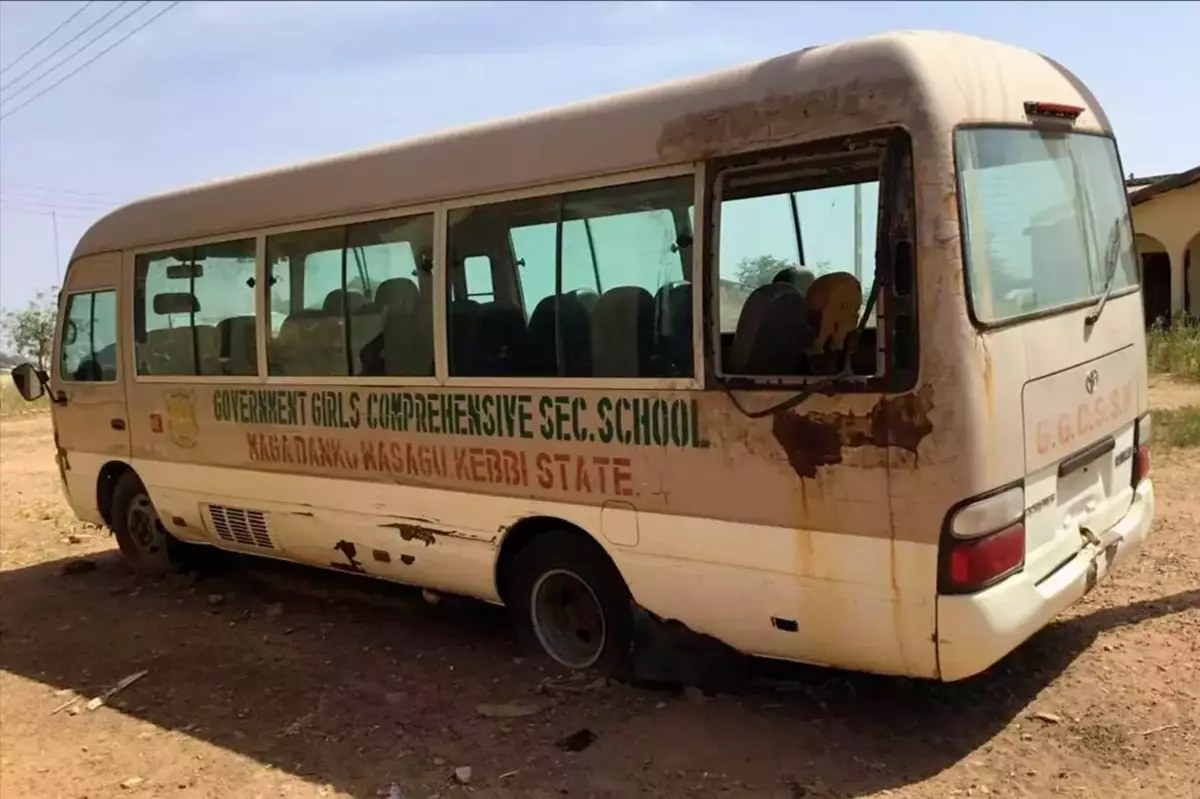
A view of the school bus of the Government Girls Comprehensive Secondary School, where gunmen on Monday attacked the school dormitory and abducted schoolgirls, is seen in Kebbi, Nigeria, Tuesday, Nov. 18, 2025. (AP Photo/Tunde Omolehin)
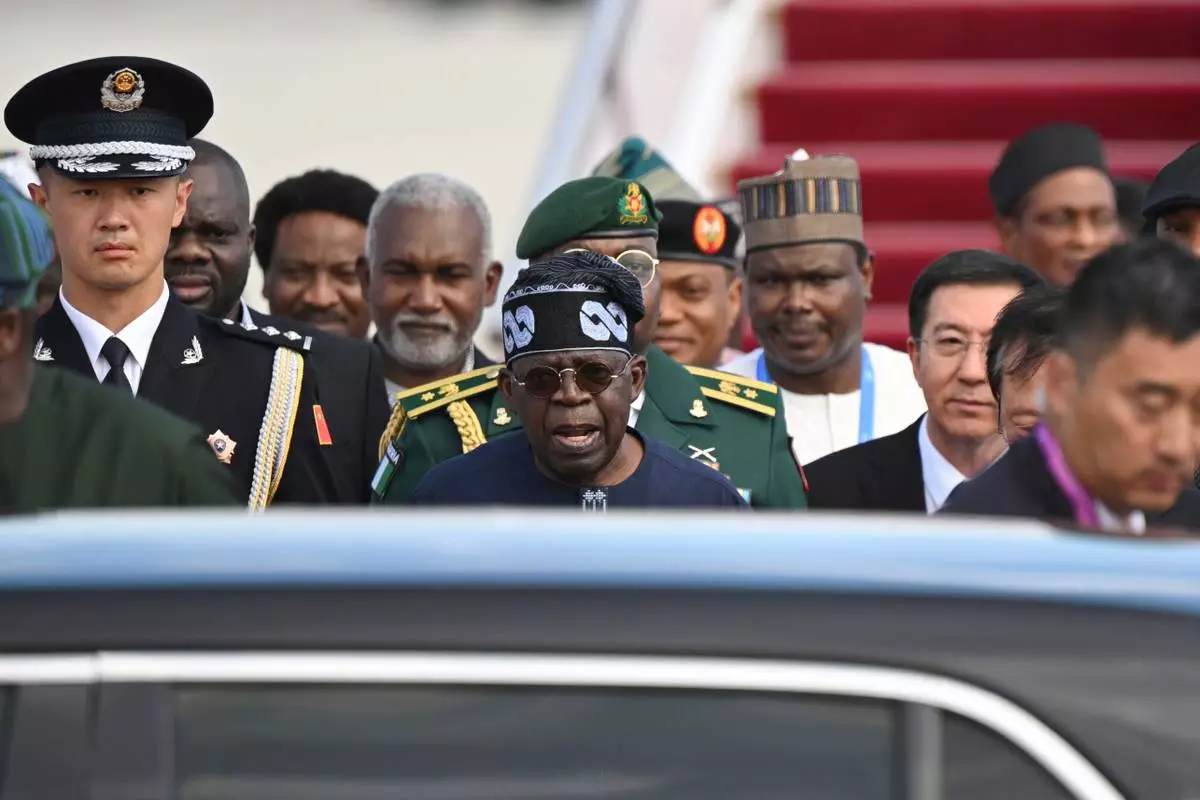
FILE - Nigerian President Bola Ahmed Tinubu, center, arrives at Beijing Capital International Airport in Beijing, Sept. 1, 2024. (Greg Baker/Pool Photo via AP, File)