NEW YORK--(BUSINESS WIRE)--Nov 18, 2025--
BARK (NYSE: BARK), a leading global omnichannel dog brand on a mission to make all dogs happy, today announced it's officially passing the creative leash. This holiday season, the humans stepped back and the dogs took over. The result? “Merry Chaos,” a celebration of the festive, unfiltered joy dogs bring to the holidays, and the first commercial in history directed entirely by a dog.
This press release features multimedia. View the full release here: https://www.businesswire.com/news/home/20251118562751/en/
Yes, you read that correctly.
After over a decade of telling stories about dogs, BARK decided it was time to let them tell their own. What followed was a creative experiment in canine authorship, led by Mia, an Australian Shepherd Pitbull mix with a strong point of view, a disregard for call times, and no union affiliation whatsoever. Her methods were unconventional, her vision unrelenting, and her on-set behavior legally uninsurable.
“She came in with a vision,” said Mikkel Holm, Chief Creative Officer at BARK. “And then promptly ate the vision board.”
This creative shift is part of a new initiative led by BARK’s recently appointed Chairdog, Hendrix, following the company’s announcement that it is now Co-Owned by Dogs. As a strong advocate for canine leadership, Hendrix pushed for increased dog-led storytelling and more “authentic perspectives,” reportedly delivered during a particularly persuasive nap under the conference table.
Shot on location with a human crew and one four-legged auteur, “Merry Chaos” captures the holidays exactly as the dogs experience it: wrapping paper as performance art, ornaments as chew toys, and dinner tables as moral dilemmas. GoPros were used (and subsequently chewed), sets were meticulously designed (and immediately destroyed), and editors were instructed to “follow the fur.”
“This wasn’t about control,” said Jeff Benjamin, Chief Creative Officer at Tombras, BARK’s creative agency partner. “It was about surrender. And occasionally letting the director lick the lens.”
Production went 230% over budget. Carpets were ruined. Several crew members are in therapy. And yet, the result is something singular: a campaign that lets dogs be dogs and shows the holidays exactly as they are—joyfully imperfect, spectacularly messy, and full of love.
“Merry Chaos” is part of BARK’s broader Dogs Own the Holidays campaign, a cheerful rebellion against the overly staged perfection of traditional seasonal advertising. The spot is airing now across social media and streaming platforms. View the full video here.
CREDITS
A BARK Production
In partnership with Tombras
Title: Merry Chaos
Directed by: A Dog (Non-Union, Unnamed, Unapologetic)
Creative Direction: That One With the Floppy Ear
Director of Photography: Tall Human with Bacon
Sound Design: Bark, Sniff, Crunch (Final Mix v37)
Set Styling: Previously Neat
Best Boy: Technically a Girl, Still a Dog
Craft Services: Rotisserie Chicken (Unattended)
Executive Producer: Hendrix the Dog
Approval Process: Tail Wag, Head Tilt, Nap
This holiday, embrace the mess. Let the dogs direct. They already do.
To learn more about BARK’s mission and explore this year’s December BarkBox and Super Chewer theme, Winter Wooferland, visit bark.co.

BARK Shifts Creative Control to the Real Holiday Experts: Dogs
NEW YORK (AP) — Stocks are climbing worldwide, and oil prices are easing Wednesday as hopes build that the war with Iran could end soon. Some of the moves are tentative, though, after financial markets have already seen similar bouts of optimism get quickly undercut several times.
The S&P 500 rose 0.6% and added to its leap from the day before, which was its best since last spring. That followed even bigger gains for stock markets across Europe and Asia, including an 8.4% surge in South Korea, which were catching up to Wall Street’s rally from Tuesday.
The Dow Jones Industrial Average was up 292 points, or 0.6%, as of 10 a.m. Eastern time, and the Nasdaq composite was 1% higher.
Oil prices also fell back toward $100 per barrel after President Donald Trump said shortly before Wall Street began trading that Iran “has just asked the United States of America for a CEASEFIRE!”
“We will consider when Hormuz Strait is open, free, and clear. Until then, we are blasting Iran into oblivion or, as they say, back to the Stone Ages!!!”
Trump had said the night before that the U.S. military could end its offensive in two to three weeks. That added to optimism following a couple tenuous signals of hope from earlier Tuesday that Wall Street latched onto, including a news report quoting Iran’s president as saying that it has “the necessary will to end the war” as long as certain requirements are met, including “guarantees to prevent a recurrence of aggression.”
The worry on Wall Street has been that the war may last a long time and keep oil and natural gas from the Persian Gulf out of global markets, which could create a brutal blast of inflation.
But hope has been quick to swing to doubt on Wall Street since the war with Iran began, triggering manic swings back and forth for financial markets. Trump has also made statements that lifted markets, only to see the gains quickly disappear after increasing his military threats against Iran. Investors say Trump’s statements are becoming less impactful for financial markets.
And oil prices remain high, even if they’ve eased so far this week. The price for a barrel of Brent crude oil, the international standard, was sitting at $101.16 following its declines, which is still up from roughly $70 before the war began.
U.S. gas prices rose again overnight to a national average of $4.06, according to the auto club AAA.
Iran hit an oil tanker off the coast of Qatar and Kuwait’s airport on Wednesday while airstrikes battered Tehran as the fighting continued. Iran also continues to hold a grip on the Strait of Hormuz, where a fifth of the world’s traded oil passes during peacetime.
“De-escalation hopes have given markets a lift, but we think the effects of the war would, in many cases, persist even if the war did end soon,” Thomas Mathews, head of markets, Asia Pacific at Capital Economics, said in a research note Wednesday.
“It’s worth thinking through how markets might fare if the war were to end ‘very soon,’” he wrote. “Do markets have further to recover if sentiment continues to improve? The answer is almost certainly yes.”
The White House said Trump will deliver a public address Wednesday evening on the Iran war.
On Wall Street, the majority of stocks rose, with Big Tech powering the move higher. Gains of 2.8% for Alphabet and 0.8% for Nvidia were two of the strongest forces lifting the S&P 500.
They helped offset a 13.1% drop for Nike, which fell even though it reported a stronger profit for the latest quarter than expected. Analysts said it gave some lackluster financial forecasts.
Hasbro fell 3.6% after the toy company found someone had gained unauthorized access to its computer network and is working to see what the full impact was.
In stock markets abroad, indexes leaped more than 1% in France, Germany and the United Kingdom. Asian markets had even bigger gains.
Tokyo’s Nikkei 225 jumped 5.2% after a survey by Japan’s central bank showed business sentiment for major Japanese manufacturers improved despite Iran war worries.
In the bond market, Treasury yields held relatively steady after a report said U.S. retailers made more money in February than economists expected. A separate report said U.S. manufacturing growth last month was slightly faster than economists expected. The 10-year Treasury yield rose to 4.32% from 4.30% late Tuesday.
AP Business Writers Chan Ho-him and Matt Ott contributed.
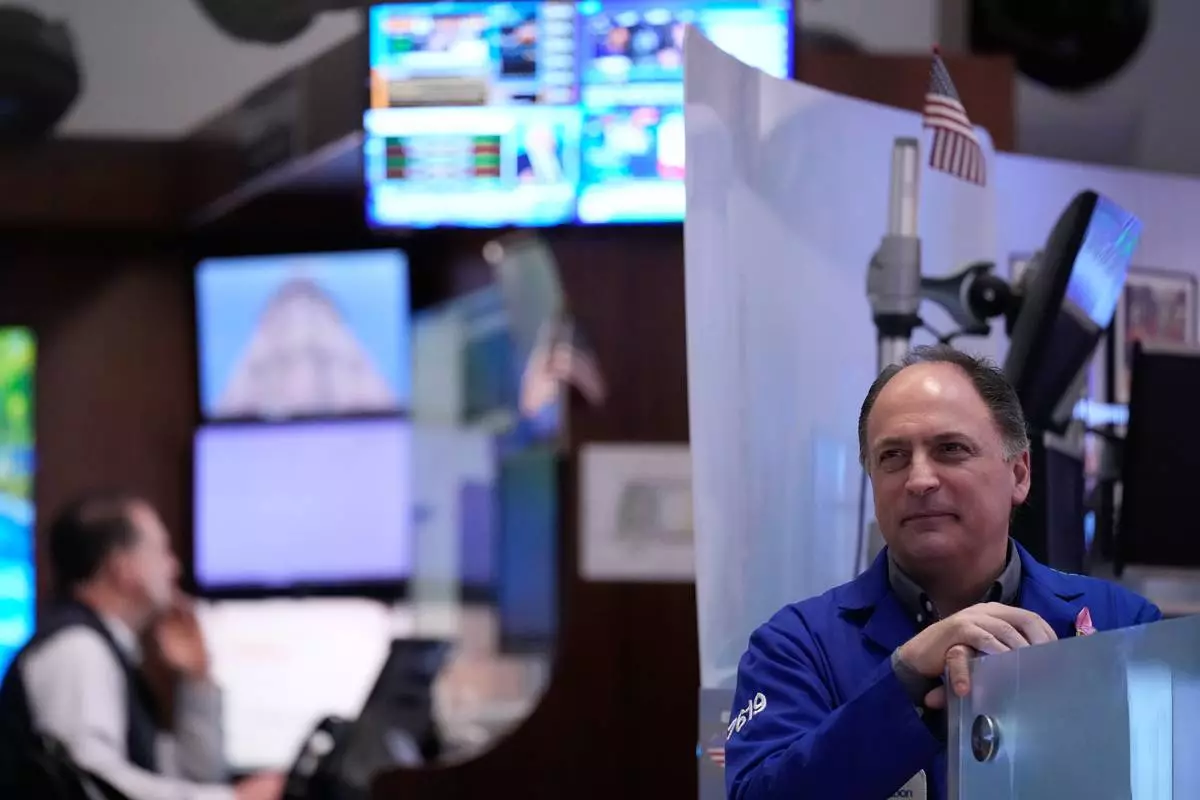
James Conti works on the floor at the New York Stock Exchange in New York, Tuesday, March 31, 2026. (AP Photo/Seth Wenig)
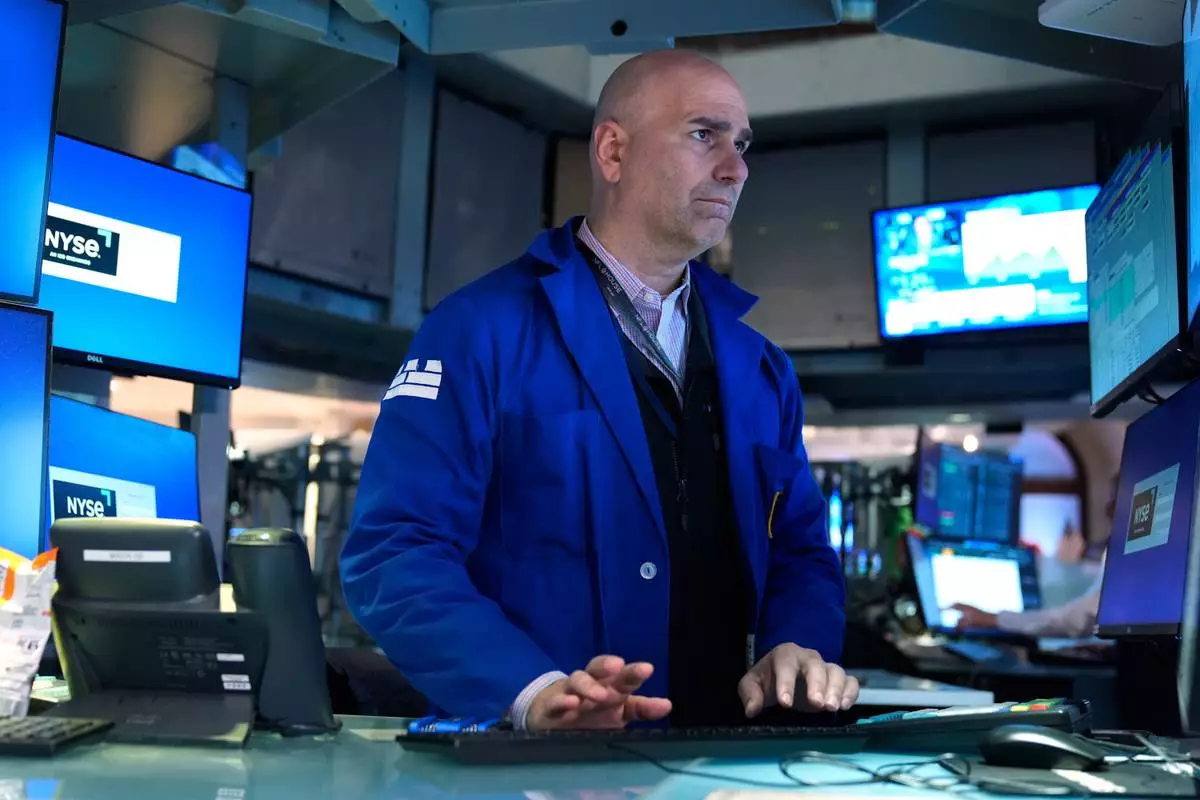
Philip Finale works on the floor at the New York Stock Exchange in New York, Tuesday, March 31, 2026. (AP Photo/Seth Wenig)
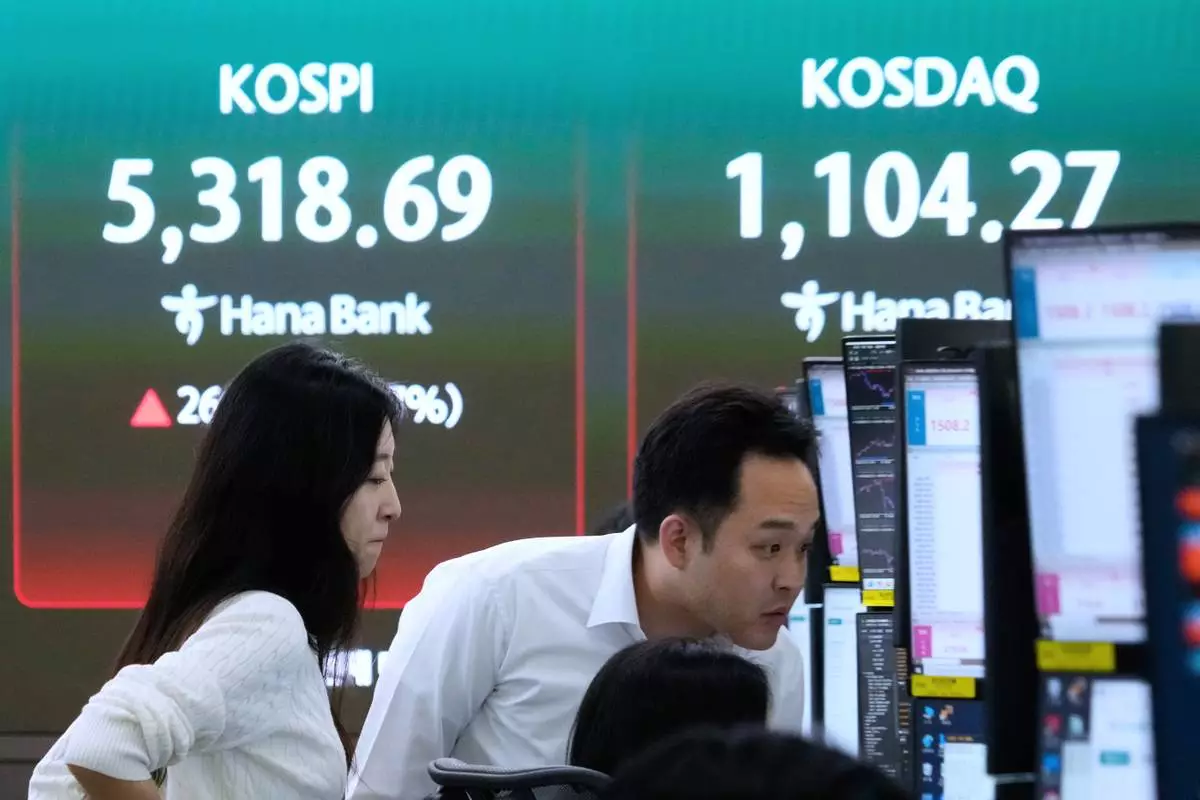
Currency traders watch monitors near a screen showing the Korea Composite Stock Price Index (KOSPI), left, at the foreign exchange dealing room of the Hana Bank headquarters in Seoul, South Korea, Wednesday, April 1, 2026. (AP Photo/Ahn Young-joon)
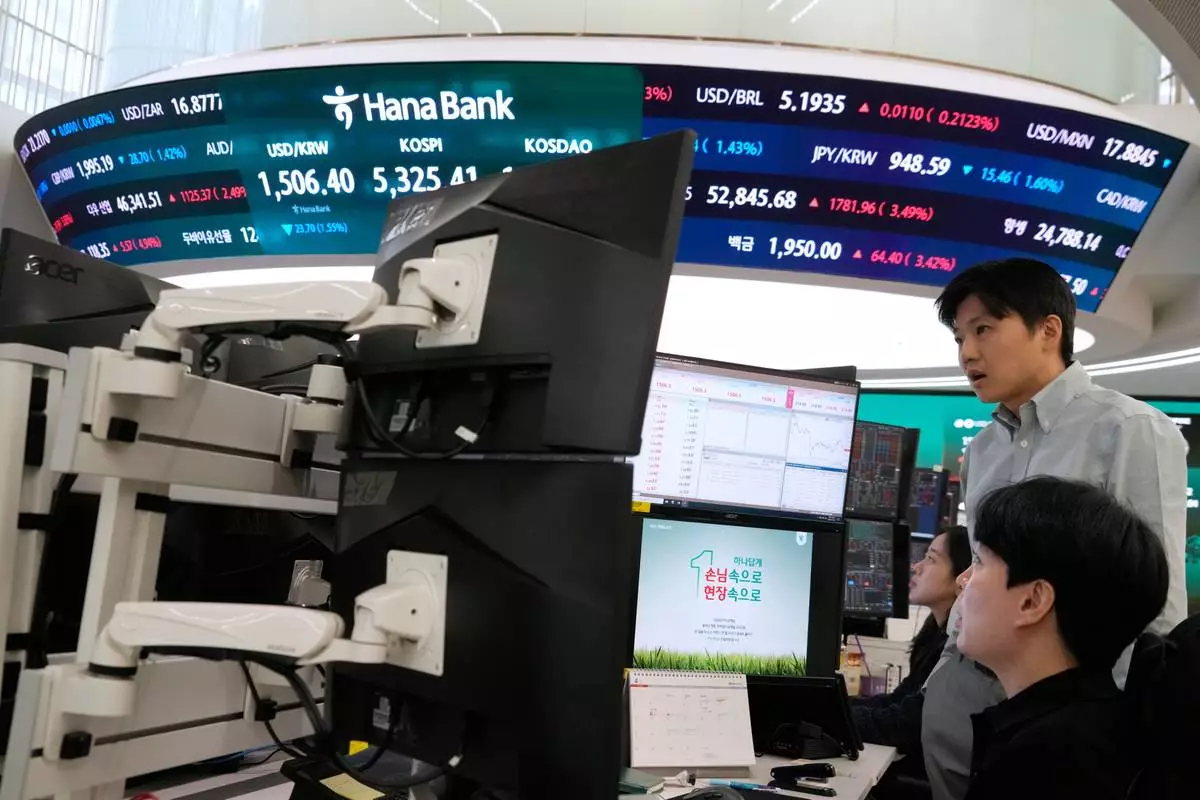
Currency traders watch monitors near a screen showing the Korea Composite Stock Price Index (KOSPI), top center, and the foreign exchange rate between U.S. dollar and South Korean won, top center left, at the foreign exchange dealing room of the Hana Bank headquarters in Seoul, South Korea, Wednesday, April 1, 2026. (AP Photo/Ahn Young-joon)
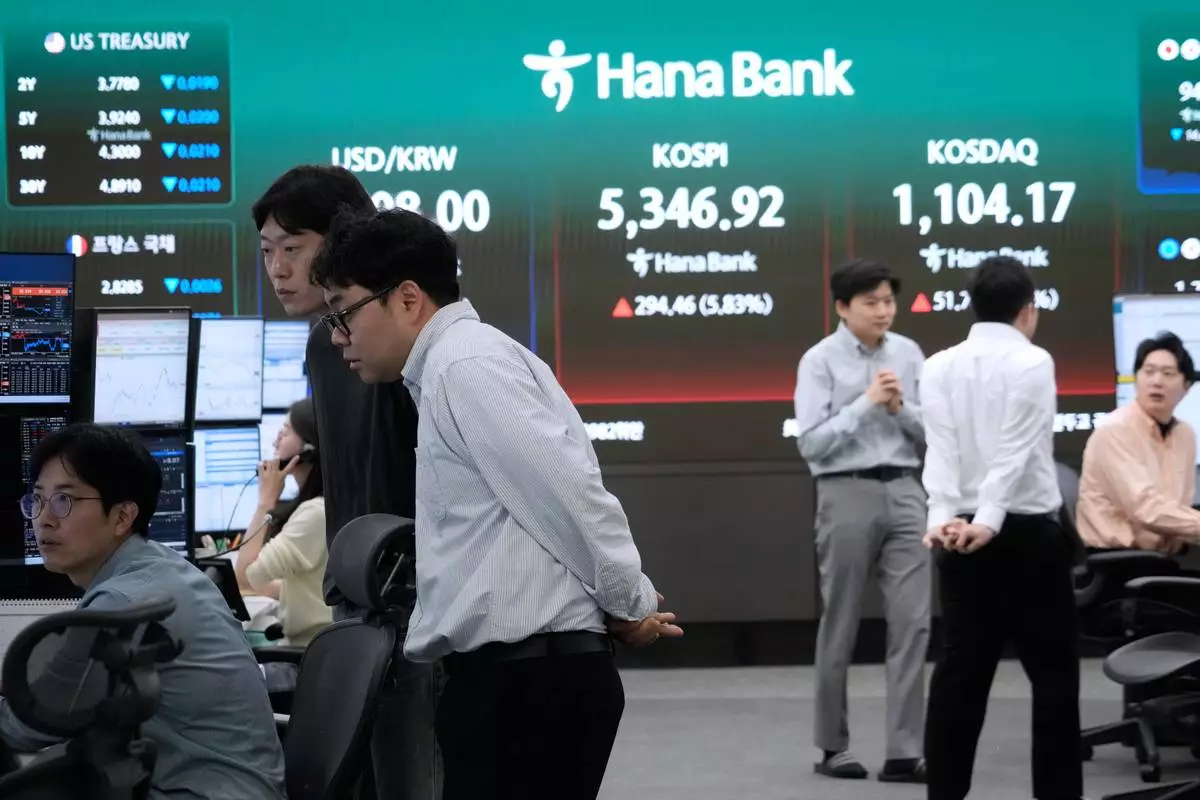
Currency traders work at the foreign exchange dealing room of the Hana Bank headquarters in Seoul, South Korea, Wednesday, April 1, 2026. (AP Photo/Ahn Young-joon)
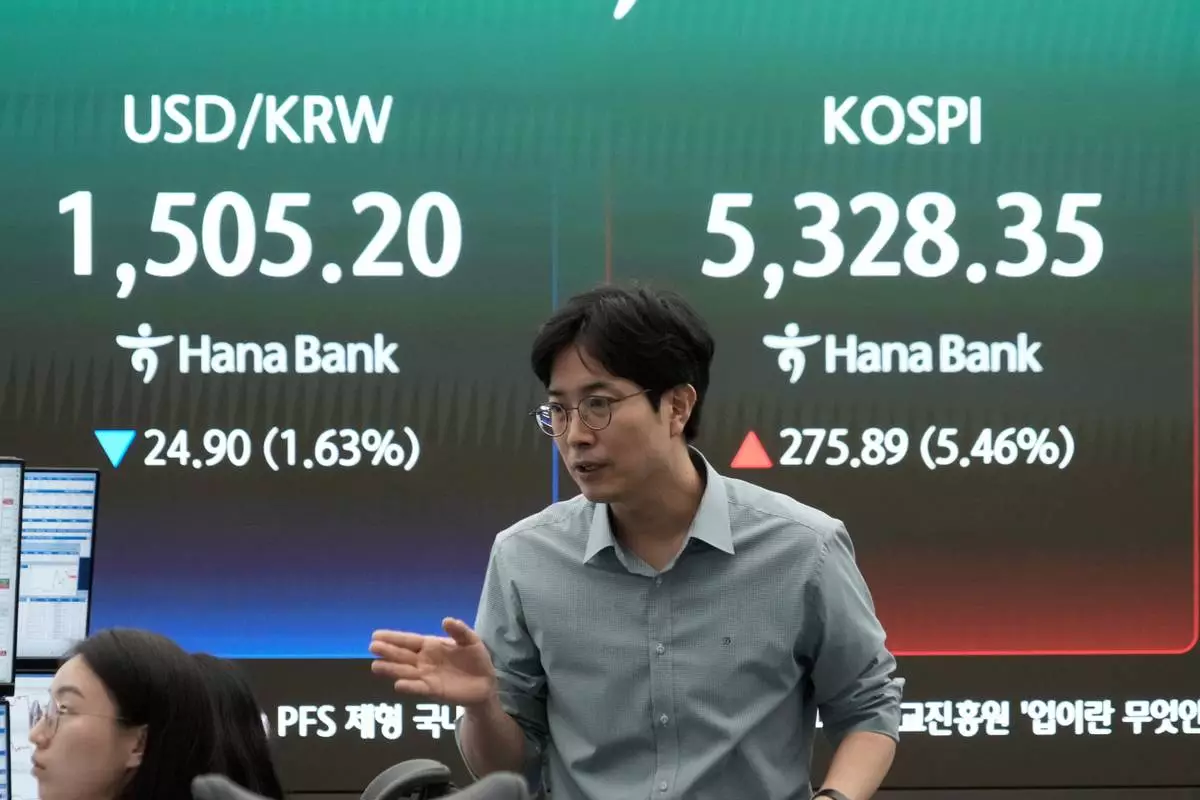
A currency trader reacts near a screen showing the Korea Composite Stock Price Index (KOSPI), right, and the foreign exchange rate between U.S. dollar and South Korean won at the foreign exchange dealing room of the Hana Bank headquarters in Seoul, South Korea, Wednesday, April 1, 2026. (AP Photo/Ahn Young-joon)
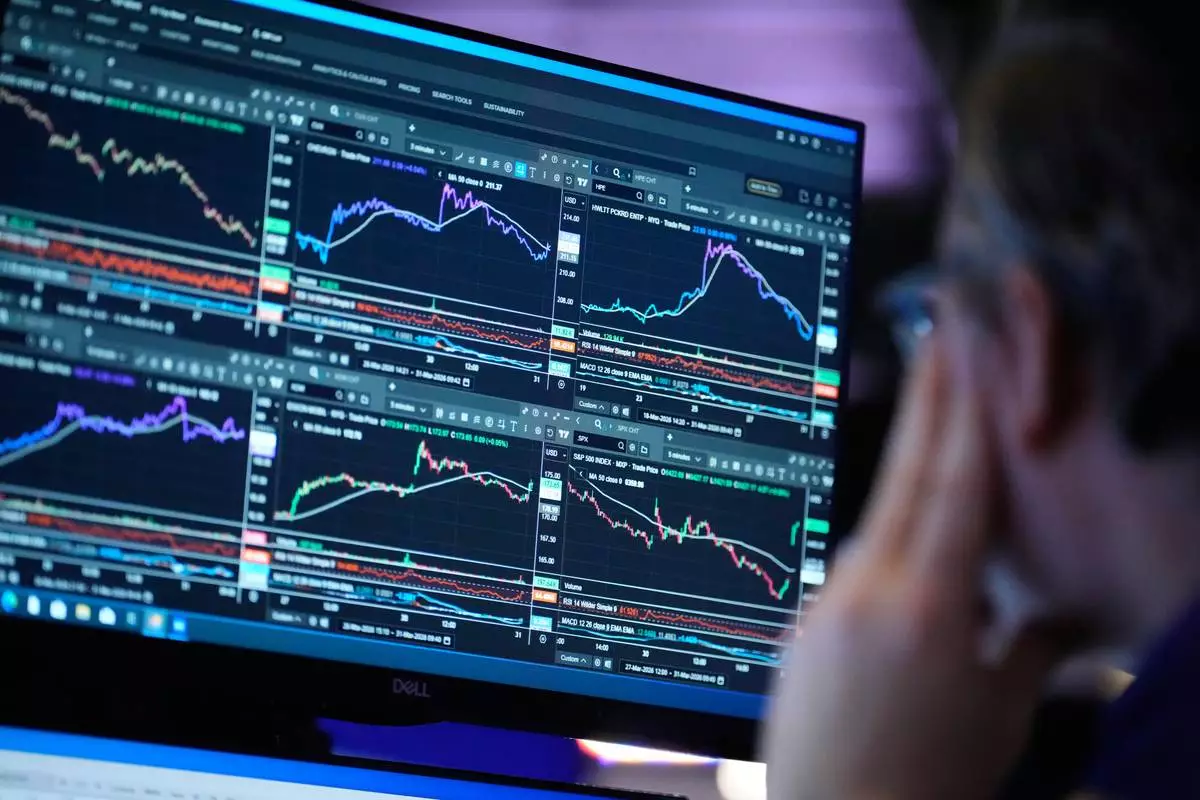
A screen displays financial information on the floor at the New York Stock Exchange in New York, Tuesday, March 31, 2026. (AP Photo/Seth Wenig)