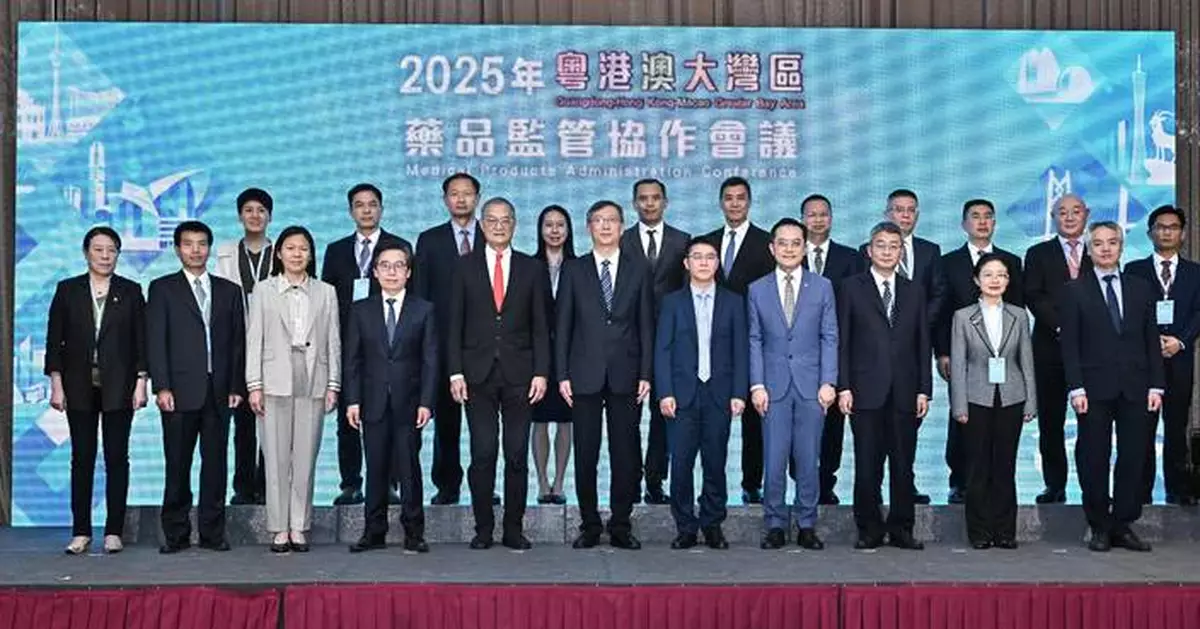
The 2025 Guangdong-Hong Kong-Macao Greater Bay Area (GBA) Medical Products Administration Conferencewas convened in Hong Kong today (November 18). Representatives from the National Medical Products Administration (NMPA)and the regulatory authorities ofGuangdong, Hong Kong and Macao exchanged views on enhancing the working mechanism for regulatory collaborations on drugs and medical devices in the GBA, and fostering the innovation development on regulating drugs and medical devices in the region.
Under the guidance of the NMPA, the Conference was co-organised by the Department of Health (DH) of the Hong Kong Special Administrative Region (HKSAR) Government, the Guangdong Provincial Medical Products Administration, and the Pharmaceutical Administration Bureau of the Macao Special Administrative Region Government. Deputy Commissioner of the NMPA, Dr Yang Sheng, also attended the Conference.
Addressing at the Conference, the Secretary for Health, Professor Lo Chung-mau, said, "The Recommendations of the Communist Party of China (CPC) Central Committee for Formulating the 15th Five‑Year Plan for Economic and Social Development, adopted at the Fourth Plenary Session of the 20th Central Committee of the CPC, proposed to support the development of innovative drugs and medical devices, and to promote the inheritance and innovation of Chinese medicine and the integration of Chinese medicine and Western medicine. The HKSAR Government is fully committed to aligning with these key national strategies, leveraging Hong Kong's unique advantages of enjoying strong support of the Motherland and being closely connected to the world under the 'One Country, Two Systems' principle to develop Hong Kong into an international health and medical innovation hub and a bridgehead for Chinese medicine to go global, contributing to the high-quality development of the national pharmaceutical industry."
"Through the establishment of 'one institute, one center' in the Hetao area (i.e. the Greater Bay Area International Clinical Trial Institute in the Hong Kong Park of the Hetao Shenzhen-Hong Kong Science and Technology Innovation Co-operation Zone and the Greater Bay Area International Clinical Trials Center (GBAICTI) in the Shenzhen Park) and the formation of the 'GBA Clinical Trial Collaboration Platform', we are promoting international multi-centre clinical trials of innovative drugs and medical devices, gathering top-tier global research resources and accelerating the transformation of research and development outcomes. By 2026, the Hong Kong Centre for Medical Products Regulation (CMPR) will be established, and the 'primary evaluation' for new drug registration will be implemented in phases, expediting the transformation of CMPR into an internationally recognised regulatory authority for medical products. These will strongly support the high-quality development of the national biopharmaceutical industry and jointly build the GBA into a world-class health and medical innovation hub. Regarding the development of Chinese medicine, we will announce the Chinese Medicine Development Blueprint outlining the way forward for the development of Chinese medicine in Hong Kong, and injecting new momentum for Chinese medicine to go global."
The Director of Health, Dr Ronald Lam, said, "GBA serves as a leading region for medical products innovation nationwide. The medical products regulatory authorities of Guangdong, Hong Kong and Macao have a significant responsibility. We not only safeguard public health of the people, but also drive scientific innovation with regulation and enhance the country's technological capabilities and international influence. This year marks the fifth anniversary of the release of the Work Plan for Regulatory Innovation and Development of Pharmaceutical and Medical Device in the GBA. There have been steady advancements in the innovative development of medical products regulation in the GBA, leading to fruitful achievements for Hong Kong in the field of medical products regulation, including the establishment of a real-time risk communication system, enhanced personnel and technical training, accelerated cross-boundary market access and circulation of high quality pharmaceutical and medical device products in the GBA, joint development of the standards of pharmaceutical products, and collaborative enforcement. These are some of the best examples of 'collaboration, innovation and mutual benefit' in the GBA."
At the meeting, Dr Lam also reported on the HKSAR's achievements in promoting the GBA's collaborative strength in pharmaceutical regulation. These achievements included hosting the first International Medical Device Regulatory Forum and the global "2025 Pharmaceutical Inspection Co-operation Scheme (PIC/S) Seminar" in Hong Kong. Under the "special measure of using Hong Kong registered drugs and medical devices used in Hong Kong public hospitals in GBA", 61 drugs and 73 medical devices have been allowed to be used in the 45 designated healthcare institutions. A total of 16 proprietary Chinese medicines (pCms) for external use and one pCmfor oral use, allregistered in Hong Kong, have been approved for sale in the Chinese Mainland. Additionally, one Western medicine and two Chinese medicines have been approved for production and market launch in the GBA through a new cross-boundary contract manufacturing model, under which research, development and production occur in Hong Kong while manufacturing takes place in the GBA.
During the Conference, representatives from Guangdong, Hong Kong and Macao exchanged viewson enhancing collaboration and training in drug evaluation and Good Manufacturing Practice inspection, as well as conducting international multi-centre clinical trials for innovative drugs and medical devices. In addition, the NMPA introduced the latest situation of various regulatory work, including the streamlining of approval procedures for Hong Kong- and Macao-registered traditional proprietary Chinese medicines for oral use.
Other HKSAR Government representatives at the Conference include Deputy Secretary for Health,Ms Elaine Mak, and the Controller of Regulatory Affairs of the DH, Dr Fung Ying. Representatives from the Hong Kong Hospital Authority, the GBAICTI, relevant departments from Guangdong Province and nine Chinese Mainland cities in the GBA also participated in the Conference.
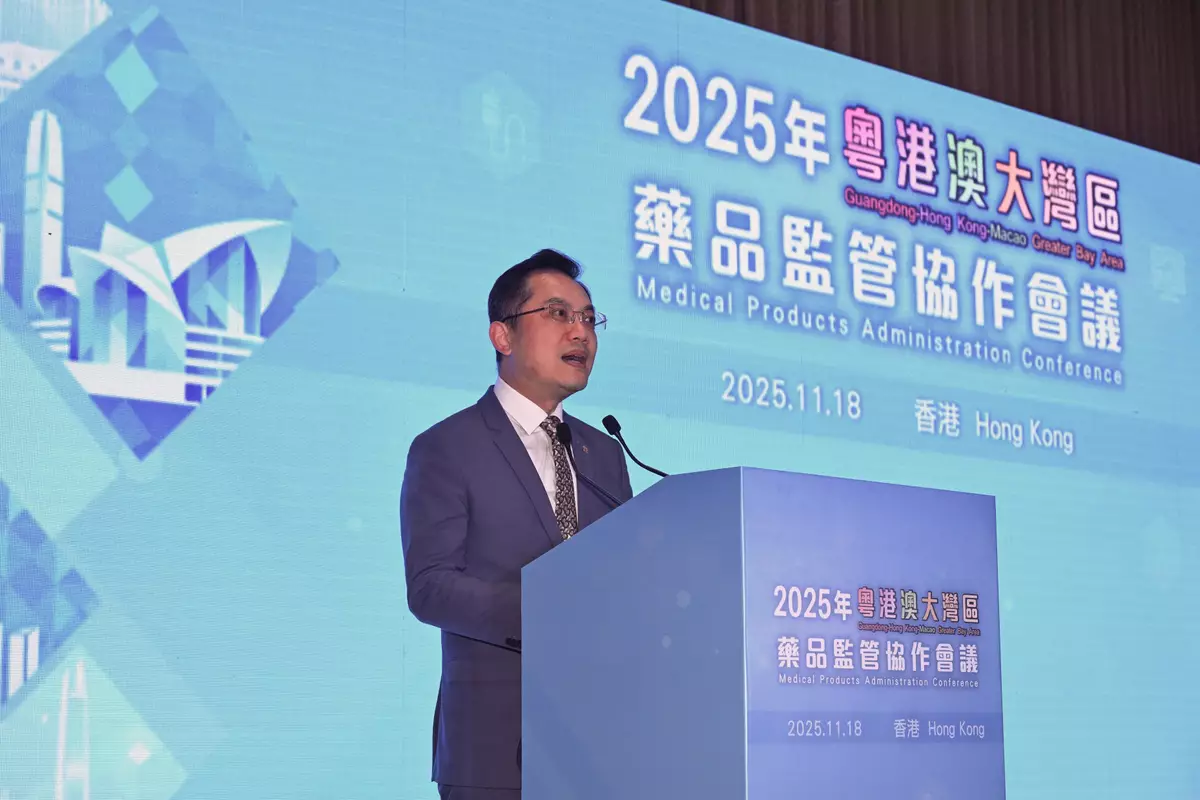
Hong Kong hosts GBA Medical Products Administration Conference to accelerate medical products regulation and innovation development across GBA Source: HKSAR Government Press Releases
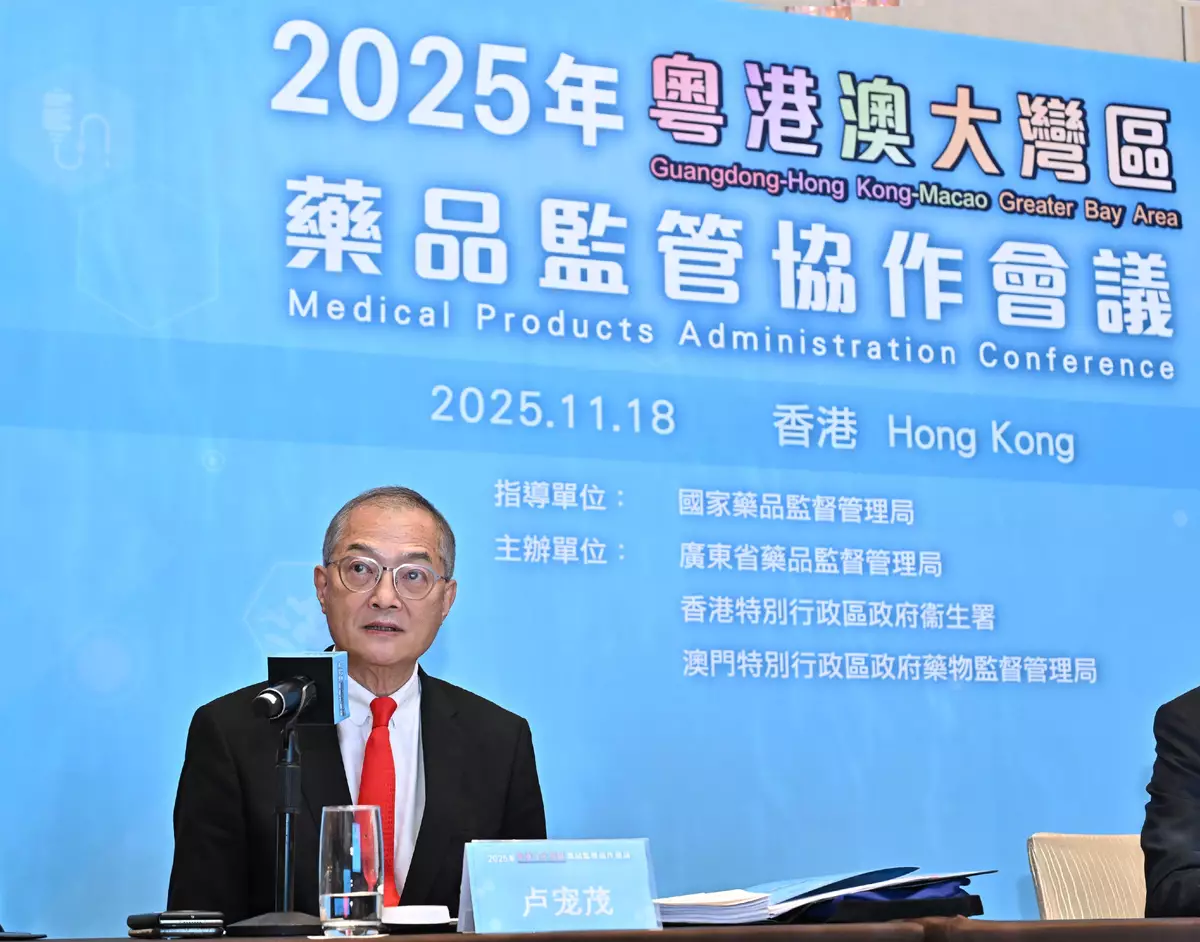
Hong Kong hosts GBA Medical Products Administration Conference to accelerate medical products regulation and innovation development across GBA Source: HKSAR Government Press Releases
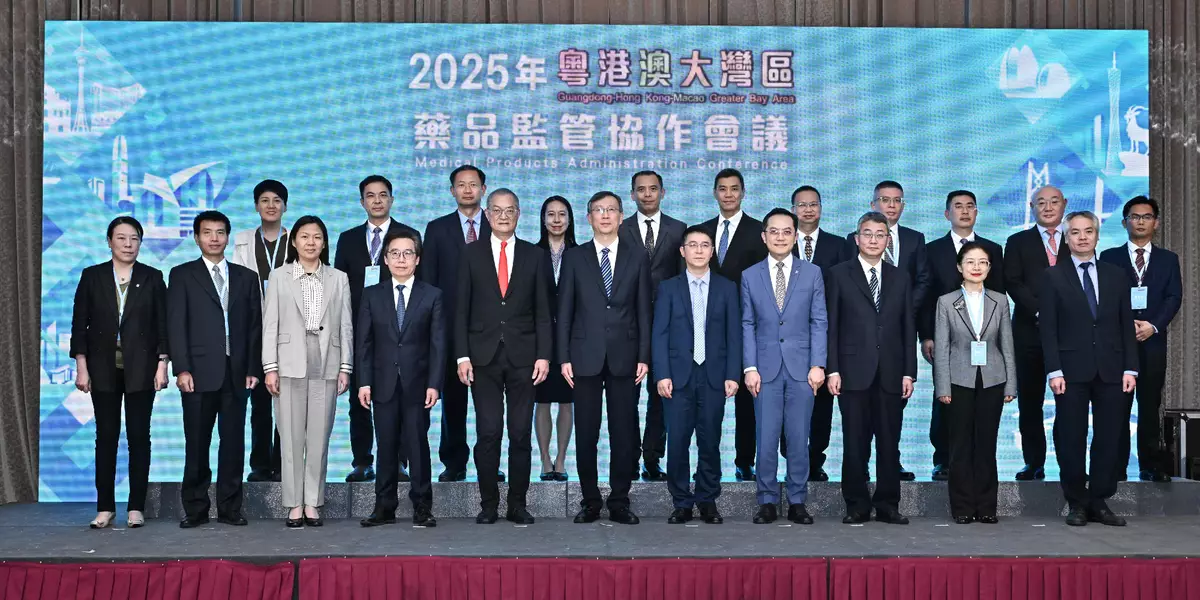
Hong Kong hosts GBA Medical Products Administration Conference to accelerate medical products regulation and innovation development across GBA Source: HKSAR Government Press Releases