ROCHESTER, N.Y.--(BUSINESS WIRE)--Nov 18, 2025--
Calero, the global leader in Technology Business Management solutions, today announced its win of two 2025 CODiE Awards: Best IT Management Solution and Best Financial & Market Data Solution.
This press release features multimedia. View the full release here: https://www.businesswire.com/news/home/20251118771499/en/
The CODiE Awards are the premier peer-recognized program celebrating excellence and innovation in technology. Each year, industry experts and fellow professionals evaluate products based on innovation, impact, and overall value, recognizing those that drive meaningful advancement across the sector. This year’s wins mark the fifth and sixth CODiE Awards Calero has earned since 2020.
“These awards reflect our team’s unwavering commitment to helping organizations navigate complex technology and data environments with clarity and confidence,” said Eric Martorano, President and CRO of Calero. “Our solutions are built to turn complexity into opportunity, giving organizations the clarity and control they need to make smarter decisions, improve efficiency, and drive meaningful growth. I’m inspired every day by our team’s passion and dedication, and these awards recognize the measurable impact we deliver for our customers around the world.”
With more than 3,000 customers in 102 countries, Calero delivers a modern, centralized platform encompassing Technology Expense Management, Technology Lifecycle Management, and Managed Technology Services. It is the only solution in the industry to provide Unified Technology Management across telecom, mobility, and SaaS – all in a single pane of glass. Calero’s unified platform reveals otherwise hidden insights into and control over organizations’ complete technology picture. These capabilities give organizations full visibility into their technology ecosystem, enhance asset governance, streamline operations, and reduce unnecessary spend.
Calero also leads the industry in Market Data Management, managing billions in market data spend for thousands of organizations worldwide. For more than 30 years, it has empowered financial institutions – from global tier 1 banks to specialized asset managers – to gain precise control over market data inventories. The end-to-end platform supports the full data lifecycle, from subscription tracking and vendor management to compliance readiness, helping organizations streamline operations, optimize resources, and focus on analysis and strategic decision-making.
“The CODiE Awards celebrate the visionaries shaping the future of technology,” said Jennifer Baranowski, President of the CODiE Awards. “This year’s winners exemplify how innovation, leadership, and purpose can come together to create solutions that move industries forward and make a lasting impact.”
About Calero
Calero is the leading provider of Technology Business Management solutions, empowering organizations to streamline and optimize their technology investments through three key solution pillars:
With a focus on delivering actionable insights and operational efficiency, Calero helps businesses achieve greater control and cost savings across their technology ecosystem. Find out more at www.calero.com.

Calero has won two 2025 CODiE Awards: Best IT Management Solution and Best Financial & Market Data Solution. The company’s centralized platform encompasses Technology Expense Management, Technology Lifecycle Management, and Managed Technology Services. It’s the only solution to provide Unified Technology Management across telecom, mobility, and SaaS – all in a single pane of glass.
BUCHAREST, Romania (AP) — A new European soccer league kicked off in Romania’s capital this week, giving amputee players from countries lacking domestic leagues an opportunity to compete on an international stage.
The European Amputee Football Federation, or EAFF, inaugurated the new Conference League in Bucharest. The games were held Thursday and Friday, and the final concluded on Friday when Maccabi Haifa FC of Israel was crowned the winner after beating Scotland’s Ayr United 4-0.
The victory meant a lot to Ben Binyamin of the team from Israel. Back in 2023, the Israeli player had his right leg blown off during the Hamas attack on the Tribe of Nova music festival, which left him fearing he would never play soccer again.
“I am very happy that we won this tournament, we won without conceding a single goal,” he told The Associated Press. “Football itself for us is our physiotherapy, our life, and our second family. It helps us in life. It gives us strength.”
Four teams participated in the tournament: FCSB of host nation Romania, Maccabi Haifa FC of Israel, Ayr United of Scotland and Panathinaikos AC PwD of Greece.
“We are very satisfied, very happy to bring pride to the country,” Binyamin added.
Inspired by the European club competition model in able-bodied soccer, the EAFF described the new league as a “historic milestone” that represents “another important step in the development of European amputee football.”
“The Conference League creates an international opportunity for clubs from countries where domestic amputee football leagues are not yet established,” it says on its website.
Played in a seven-versus-seven format, on 60-meter (196-foot) by 40-meter (131-foot) fields, amputee soccer is a game for amputees and people living with limb defects. Players have one leg and a pair of crutches, while goalkeepers have both legs but one hand or arm.
Established in 2015, the EAFF aims to help people with amputations or limb defects gain access to amputee soccer throughout Europe. The World Amputee Football Federation was established in 2002 and a World Cup is held every four years.
The new league hopes to attract more spectators to amputee soccer and gives teams opportunities to build international relationships. The EAFF also organizes a Nations League, Champions League, Europa League, and holds other initiatives like women’s and junior camps.
Iain Matthew, manager of the Scottish team, told the AP that while his team’s 0-4 loss to Maccabi Haifa was disappointing, the league itself offered valuable experience for his players.
“The competition is great for smaller nations … to get European football experience,” he said. “I think we could have played better, we could have defended better, but you’ve got to praise your players for what they’ve done over the week.”
McGrath reported from Leamington Spa, England.
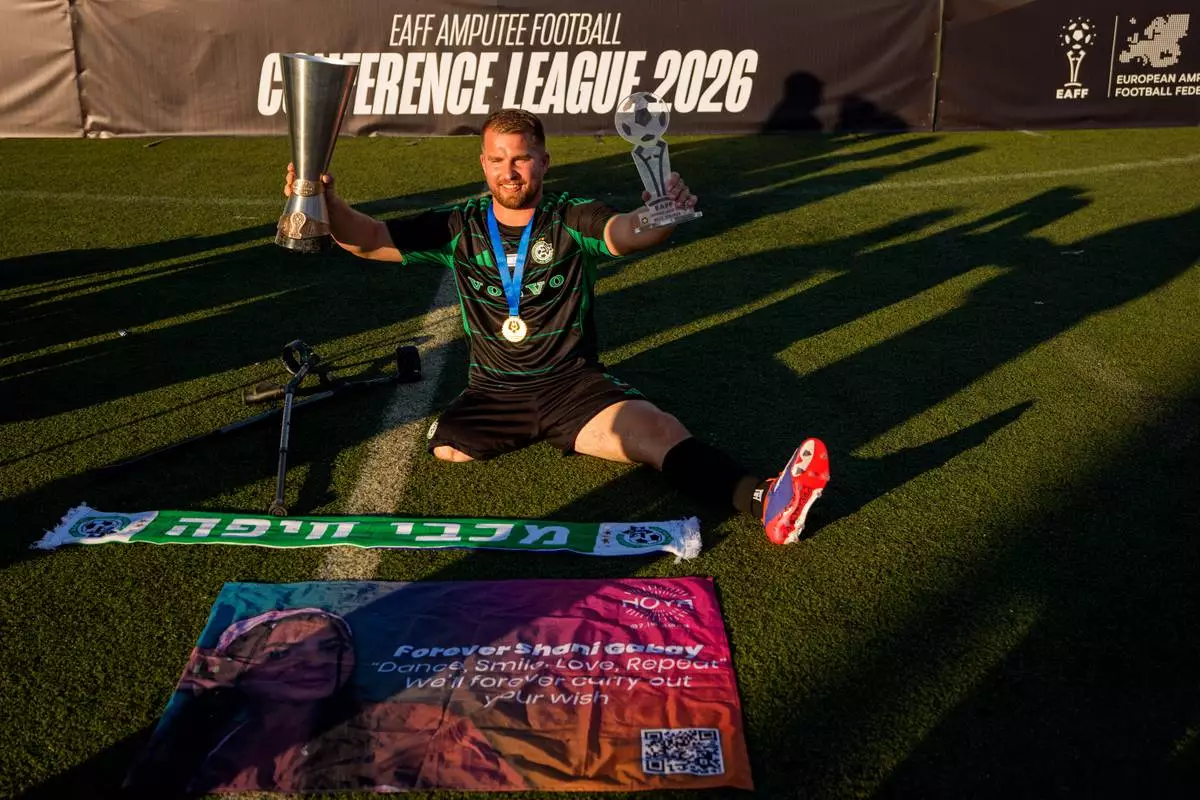
Maccabi Haifa's Ben Binyamin poses with the trophy during the medal ceremony at the end of the amputee soccer inaugural EAFF Conference League in Bucharest, Romania, Friday, Sept. 25, 2026. (AP Photo/Andreea Alexandru)
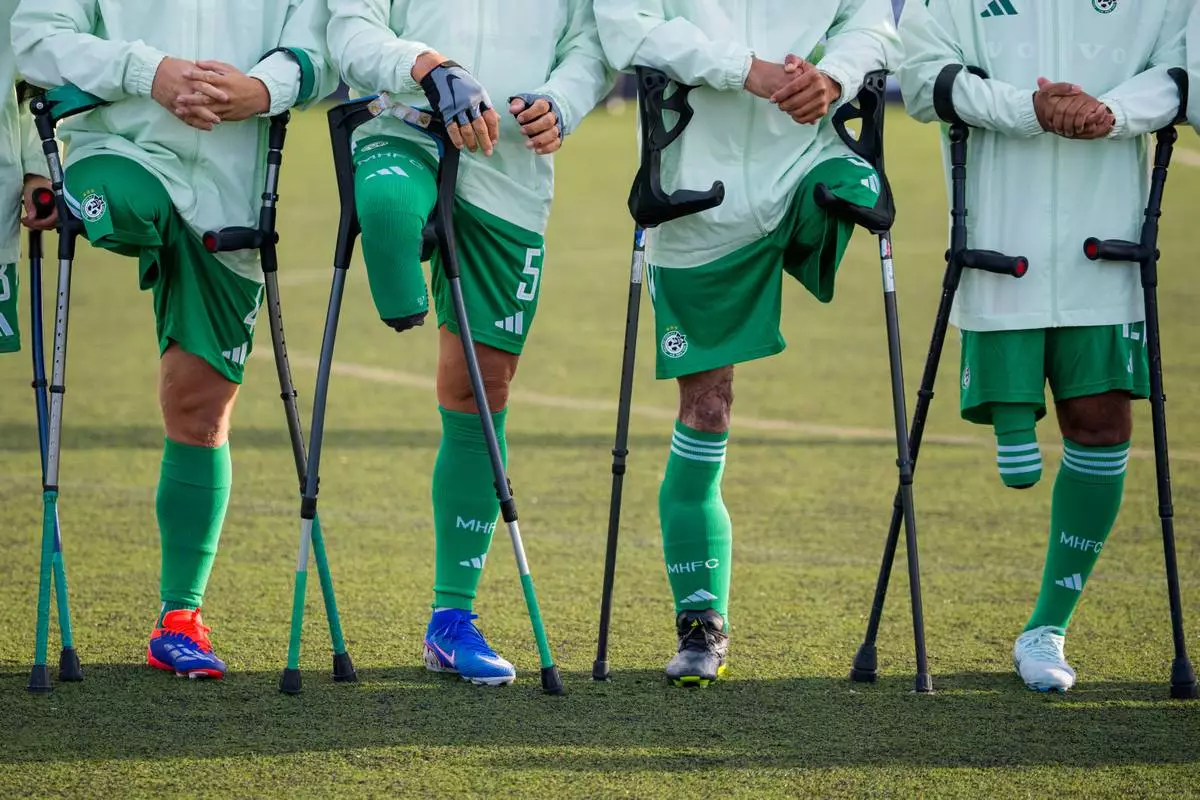
Maccabi Haifa's players line up before an amputee soccer match between Maccabi Haifa and Panathinaikos in the inaugural EAFF Conference League in Bucharest, Romania, Thursday, Sept. 24, 2026. (AP Photo/Andreea Alexandru)
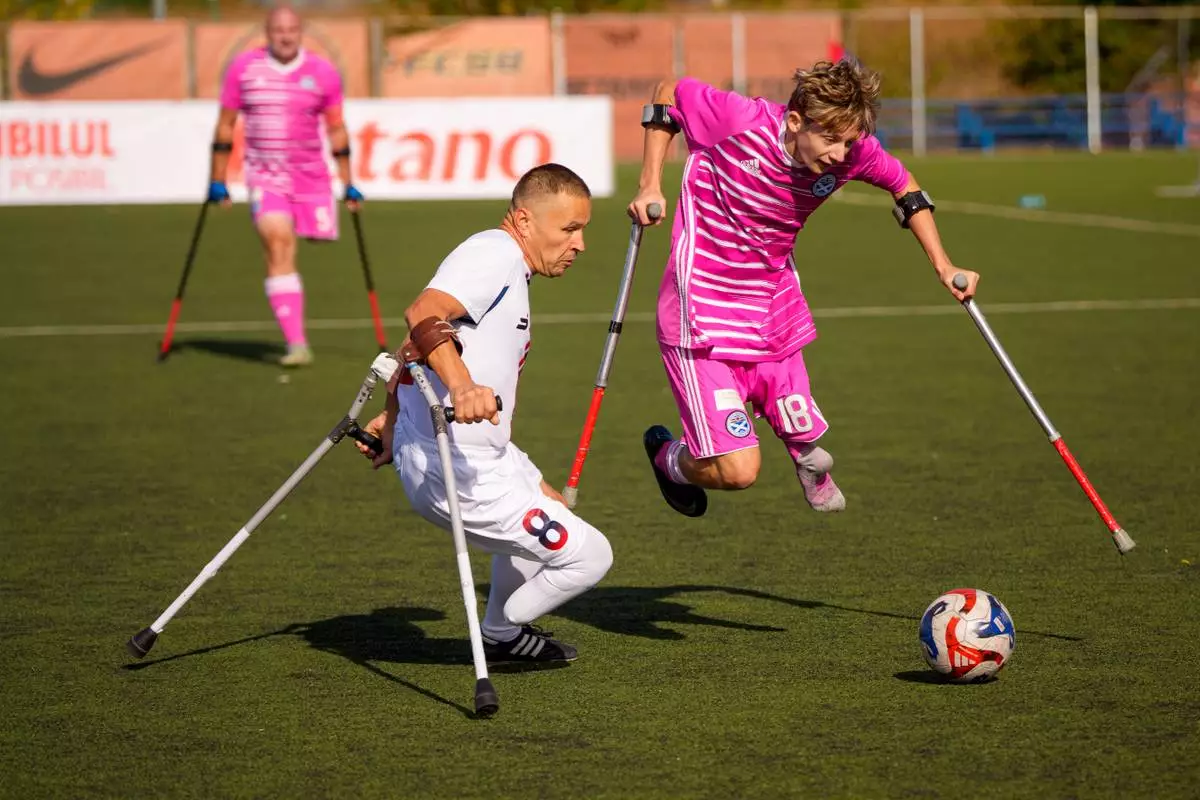
FCSB's Marian Sacacol, left, challenges for the ball with Ayr United's Charlie Hewson during an amputee soccer match between FCSB and Ayr United in the inaugural EAFF Conference League in Bucharest, Romania, Thursday, Sept. 24, 2026. (AP Photo/Andreea Alexandru)
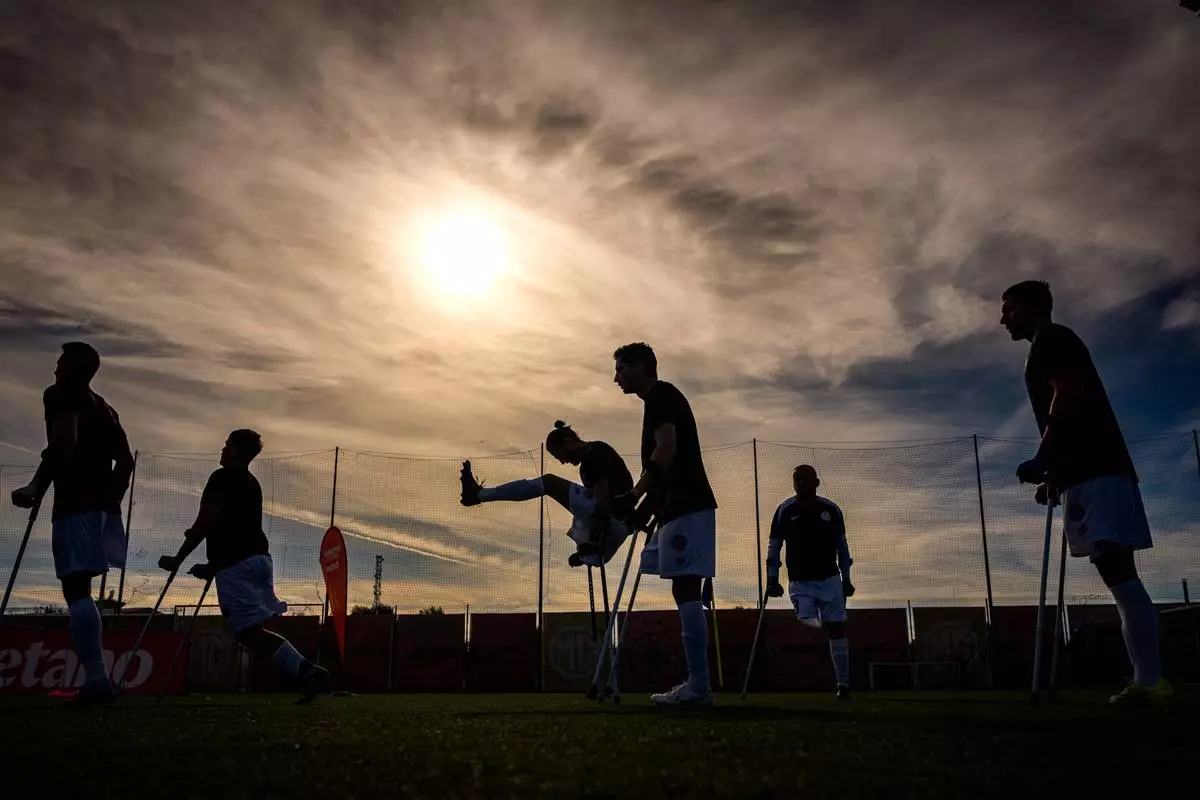
FCSB's players warm-up before an amputee soccer match between FCSB and AFAS in the inaugural EAFF Conference League in Bucharest, Romania, Thursday, Sept. 24, 2026. (AP Photo/Andreea Alexandru)
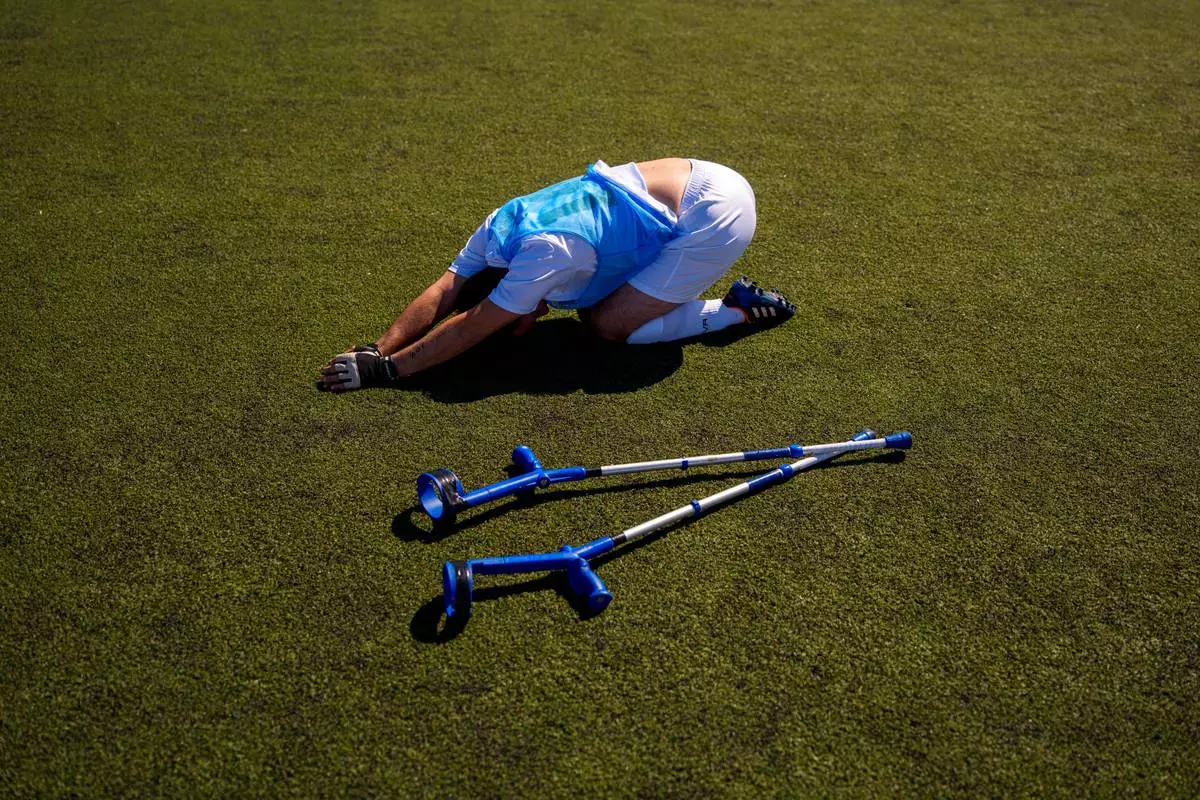
Panathinaikos' Vasileios Gogolos stretches during an amputee soccer match between Maccabi Haifa and Panathinaikos in the inaugural EAFF Conference League in Bucharest, Romania, Thursday, Sept. 24, 2026. (AP Photo/Andreea Alexandru)