MINNEAPOLIS (AP) — The Minnesota Twins took a small step toward rebuilding their bullpen Tuesday by acquiring reliever Eric Orze in a trade with the Tampa Bay Rays for minor league pitcher Jacob Kisting.
Orze had a 3.02 ERA and three saves in 33 relief appearances last season for the Rays, with 19 walks, 40 strikeouts and a .244 opponents' batting average in 41 2/3 innings. The 28-year-old right-hander also made 24 appearances at Triple-A Durham, posting a 2.20 ERA with 37 strikeouts in 28 2/3 innings.
A cancer survivor, Orze was a fifth-round draft pick in 2020 by the New York Mets and made his major league debut for them on July 8, 2024.
During the week leading up to the MLB trade deadline on July 31, the Twins dealt away their top four relievers: Jhoan Duran, Griffin Jax, Louis Varland and Brock Stewart.
Kisting, 22, was a 14th-round draft pick by the Twins in 2024. The right-hander had a 3.79 ERA with 23 walks and 77 strikeouts in 73 2/3 innings over 30 appearances this year between Low-A Fort Myers and High-A Cedar Rapids.
In other roster moves, outfielders Jake Fraley and Christopher Morel were designated for assignment by the Rays, who traded infielder Tanner Murray and outfielder Everson Pereira to the Chicago White Sox for right-handers Yoendrys Gómez and Steven Wilson.
Tampa Bay also released right-hander Forrest Whitley and traded infielder Tristan Gray to the Boston Red Sox for minor league right-hander Luis Guerrero.
AP MLB: https://apnews.com/hub/MLB

FILE - Tampa Bay Rays relief pitcher Eric Orze claps after forcing the final out to defeat the Minnesota Twins in 10 innings of a baseball game, July 6, 2025, in Minneapolis. (AP Photo/Abbie Parr, File)
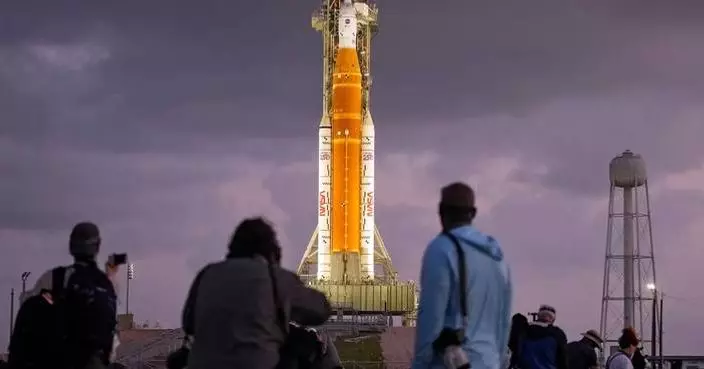
CAPE CANAVERAL, Fla. (AP) — NASA fueled its moon rocket Wednesday for humanity’s first lunar trip in more than half a century, aiming for an evening liftoff with four astronauts.
Tensions were high as hydrogen fuel started flowing into the rocket hours ahead of the planned launch. Dangerous hydrogen leaks erupted during a countdown test earlier this year, forcing a lengthy flight delay.
But no significant leaks occurred by the time Wednesday's fueling wrapped up. The launch team loaded more than 700,000 gallons of fuel (2.6 million liters) into the 32-story Space Launch System rocket on the pad, setting the stage for the Artemis II crew to board.
“It is time to fly,” commander Reid Wiseman said on the eve of launch via X. Favorable weather was forecast.
Three Americans and one Canadian will fly around the moon without stopping or even orbiting — then head straight back for a Pacific splashdown. They will set a new distance record for the farthest humans have traveled from Earth as they zoom some 4,000 miles (6,400 kilometers) beyond the moon and then hang a U-turn.
Astronauts last flew to the moon during Apollo 17 in 1972.
Artemis II is the opening shot of NASA's grand plans for a permanent moon base. The space program is aiming for a moon landing near the lunar south pole in 2028.
“The next era of exploration begins,” NASA Administrator Jared Isaacman posted on X.
Best wishes already have started to pour in, including from England's King Charles III to Canadian Space Agency astronaut Jeremy Hansen.
Hansen will become the first non-U. S. citizen to launch to the moon. The crew also includes Christina Koch and Victor Glover, the first woman and first Black astronaut, respectively, destined for the moon.
“In this historic moment, you stand as a bridge between nations and generations,” the king wrote in a letter to Hansen, “and I commend you for your courage, discipline and vision that have brought you to this threshold.”
The Associated Press Health and Science Department receives support from the Howard Hughes Medical Institute’s Department of Science Education and the Robert Wood Johnson Foundation. The AP is solely responsible for all content.
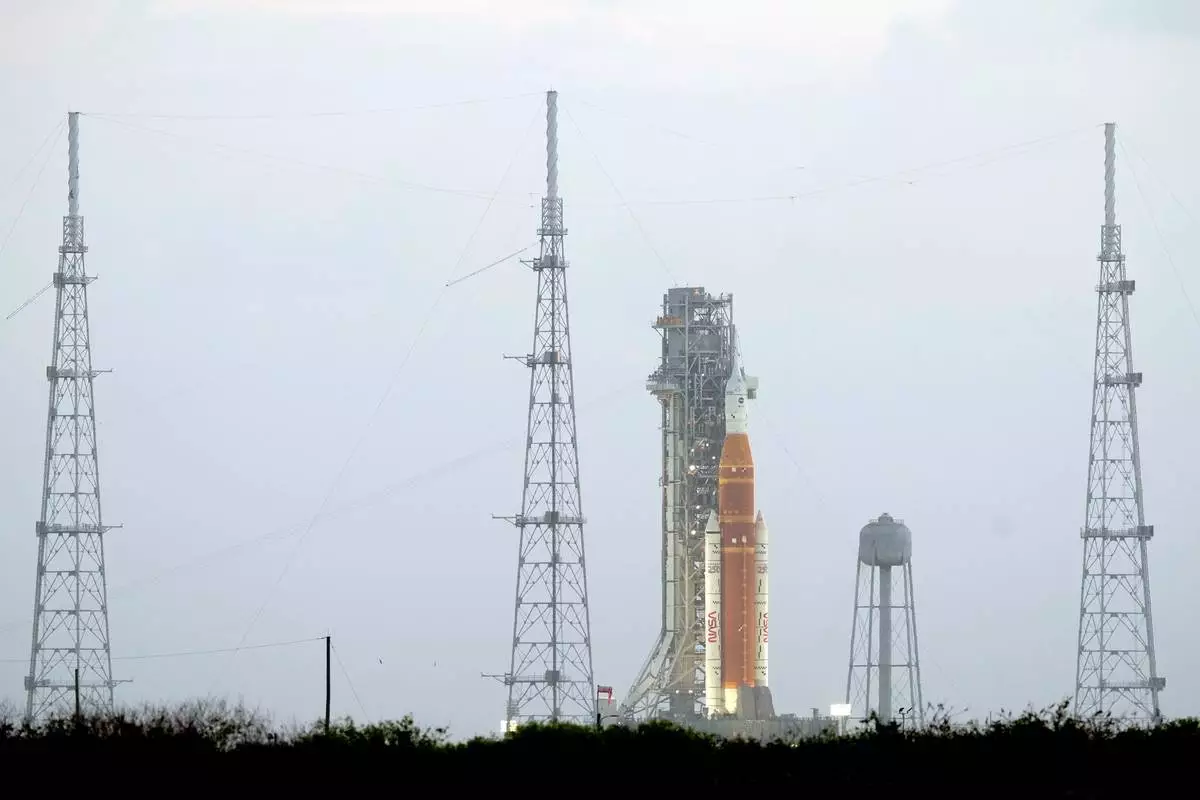
NASA's Artermis II moon rocket sits on Launch Pad 39-B at the Kennedy Space Center hours ahead of a planned launch attempt Wednesday, April 1, 2026, in Cape Canaveral, Fla. (AP Photo/Chris O'Meara)
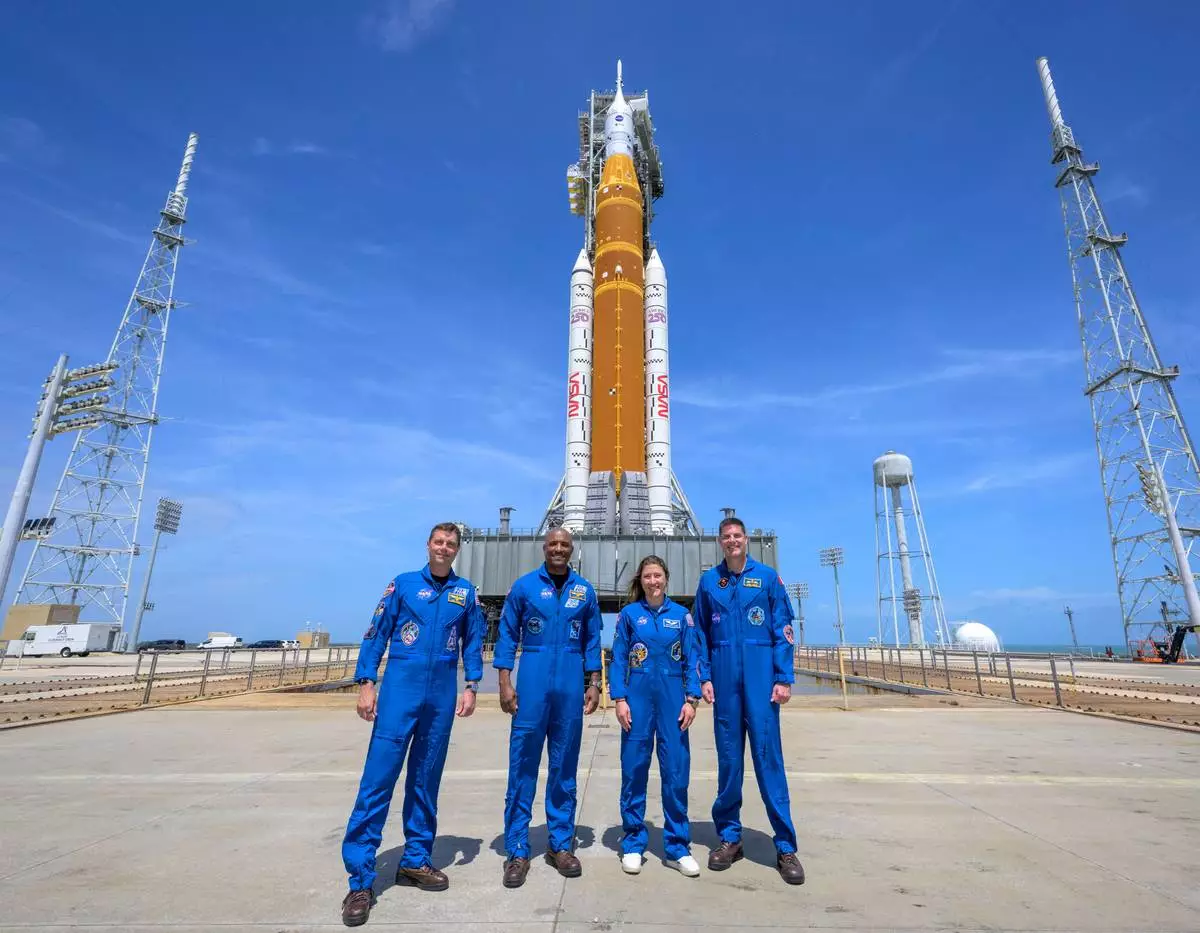
This photo provided by NASA shows NASA astronauts Reid Wiseman, Artemis II commander, from left, Victor Glover, Artemis II pilot, Christina Koch, Artemis II mission specialist, and CSA (Canadian Space Agency) astronaut Jeremy Hansen, Artemis II mission specialist, right, in a group photograph as they visit NASA's Artemis II SLS (Space Launch System) rocket and Orion spacecraft, Monday, March 30, 2026, at Launch Complex 39B of NASA's Kennedy Space Center, in Cape Canaveral, Fla. (Bill Ingalls/NASA via AP)
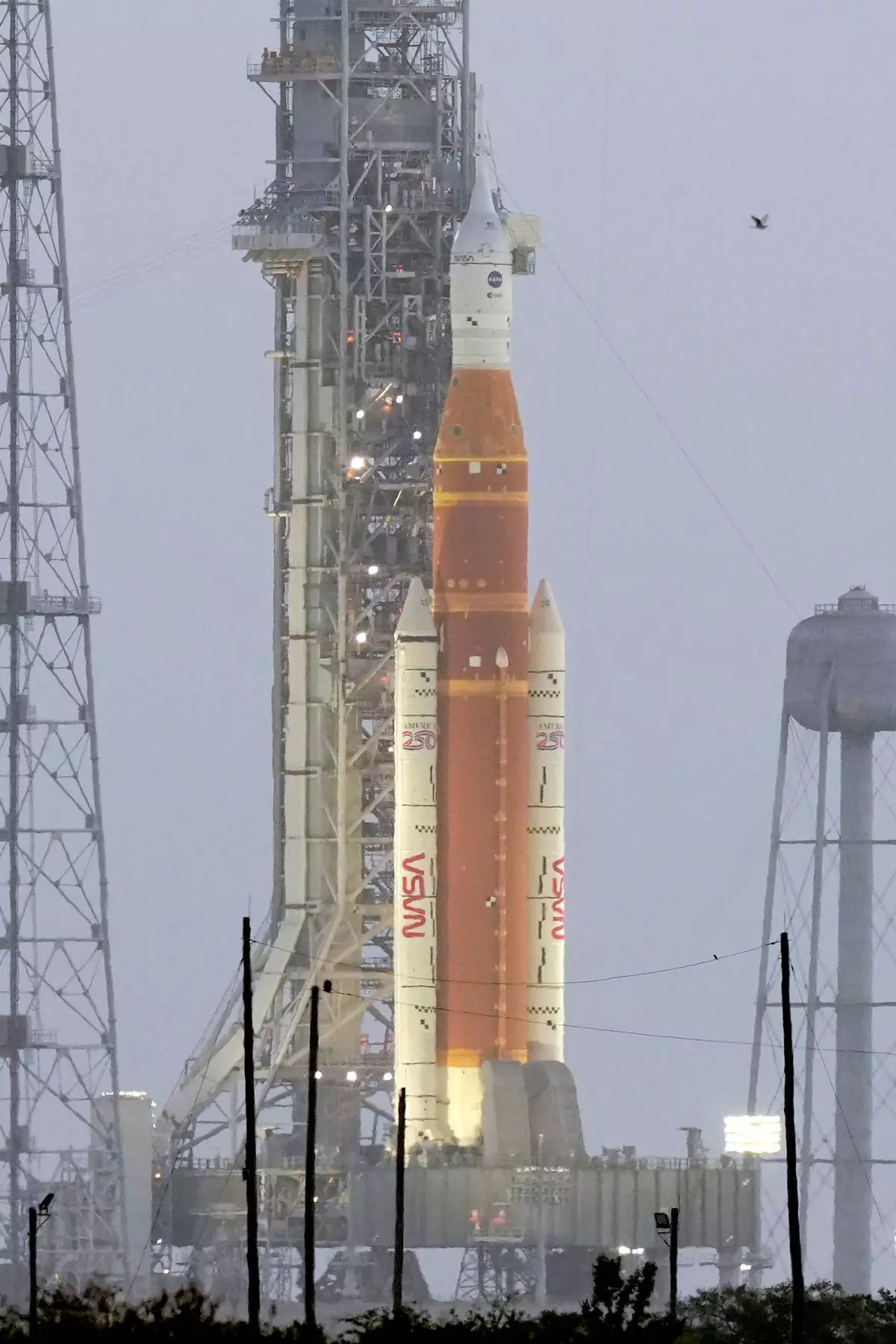
NASA's Artermis II moon rocket sits on Launch Pad 39-B at the Kennedy Space Center hours ahead of planned liftoff Wednesday, April 1, 2026, in Cape Canaveral, Fla. (AP Photo/Chris O'Meara)