ALEXANDRIA, Va. (AP) — The prosecution of former FBI Director James Comey hit another hurdle Wednesday as the Justice Department encountered mounting questions about how the case was presented to a grand jury for indictment.
The development risked further imperiling a politically charged prosecution already subject to multiple challenges and demands for its dismissal. It came during a hearing in which Comey's lawyers asked U.S. District Judge Michael Nachmanoff to throw out the case on grounds that the government was being vindictive and as a separate challenge to Lindsey Halligan, the hastily appointed and inexperienced prosecutor who secured the indictment, is pending.
The Justice Department's acknowledgment under questioning from a judge that the full grand jury did not review a copy of the final indictment is the latest indication of its seemingly disjointed pursuit of a criminal case against one of President Donald Trump's political enemies. Comey was fired by Trump in May 2017 while overseeing an FBI investigation into potential ties between Russia and Trump’s 2016 campaign. The two have been publicly at odds ever since, with Trump deriding Comey as “a weak and untruthful slime ball” and calling for his prosecution.
Concerns about the legal process came into focus earlier in the week when a different judge in the case raised questions about what he said were “profound investigative missteps,” including misstatements of law to the grand jury. The Justice Department denies that the process was tainted by irregularities.
Halligan initially asked the grand jury to return a three-count indictment against Comey. But after the grand jurors rejected one of the proposed counts, the Justice Department subsequently secured a second two-count indictment that accused Comey of making a false statement and obstructing Congress. Comey has pleaded not guilty and denied wrongdoing.
In a blistering ruling Monday, U.S. Magistrate Judge William Fitzpatrick, also handling parts of the case, said that after reviewing a transcript of the grand jury proceedings, he had questions about whether the full grand jury had reviewed the final two-count indictment that was returned.
Nachmanoff, the trial judge, pressed the Justice Department about Fitzpatrick's concerns during a court session Wednesday that chiefly focused on Comey's vindictiveness arguments. After conferring privately with Halligan, Tyler Lemons, one of the prosecutors, acknowledged that the revised indictment was not shown to all of the grand jurors.
“I was not there, but that is my understanding, your honor,” Lemons said.
Nachmanoff called Halligan to the lectern and asked her who was present when the final indictment was presented to a magistrate. She said only two grand jurors, including the foreperson, were there.
Comey lawyer Michael Dreeben called the government’s failure to present the final indictment to the entire grand jury grounds for dismissing the case. He also argued that the statute of limitations for the charged crimes has elapsed without a valid indictment.
“That would be tantamount to a bar of further prosecution in this case,” Dreeben said.
Nachmanoff did not issue an immediate decision, saying “the issues are too weighty and too complex” for a bench ruling.
The Justice Department dismissed the import of the revelation in a pair of Wednesday evening filings, saying that the two charges in the final indictment were identical to the two counts the grand jury approved when presented with the proposed indictment.
“Given that the grand jury was presented with the two counts on which it voted to return an indictment and in fact voted upon those counts,” prosecutors said, the case need not be dismissed.
Dreeben separately argued that the prosecution was improperly vindictive and rooted in Trump’s quest for retribution, circumstances requiring a dismissal.
“The president’s use of the Department of Justice to bring a criminal prosecution against a vocal and prominent critic in order to punish and deter those who would speak out against him violates the Constitution,” Dreeben said.
Though vindictive prosecution motions are not often successful, Comey’s lawyers have laid out a laundry list of verbal attacks from Trump in hopes of establishing the case as an outgrowth of the president's personal animus.
Trump amplified his long-running demands for a Comey prosecution with a September social media post in which he complained to Attorney General Pam Bondi about the lack of action against his political opponents. “We can’t delay any longer, it’s killing our reputation,” Trump wrote, adding that “JUSTICE MUST BE SERVED, NOW!!!”
“If this is not a direction to prosecute,” Dreeben said in court, “I’d really be at a loss to say what is.”
The night of that post, Trump said he would appoint Halligan, a White House aide without prior prosecutorial experience, as U.S. attorney for the Eastern District of Virginia, on an interim basis. She replaced a veteran prosecutor who was effectively forced from the job after not charging Comey or another Trump foe, New York Attorney General Letitia James.
Halligan secured an indictment of Comey days later as the statute of limitations on the case was about to expire. The charges are related to sworn testimony about whether Comey had authorized an FBI colleague to serve as an anonymous source to the news media.
Asked by Nachmanoff whether he considered Halligan to be a “stalking horse” or “puppet” for the administration, Dreeben demurred and opted against that characterization. But, he said, “She did what she was told to do."
Presidents, Dreeben said, have other tools at their disposal to punish critics, but bringing the full weight of the Justice Department to bear is impermissible.
“The government cannot use power of criminal prosecutions to attempt to silence a critic in violation of the First Amendment,” he said.
Lemons, the Justice Department prosecutor, insisted that Comey was indicted by a “properly constituted” grand jury because he broke the law — not because Trump ordered it.
“The defendant is not being put on trial for anything he said about the president,” Lemons said.
Lemons said nobody directed Halligan to prosecute Comey or seek his indictment.
“It was her decision and her decision only,” he added.
But Nachmanoff noted that Trump appointed Halligan just days before she presented the Comey case to the grand jury.
“What independent evaluation could she have done in that time period?” he asked Lemons.
Nachmanoff asked Lemons whether he has seen a “declination memo” in which prosecutors had outlined reasons for not seeking an indictment against Comey. Lemons said the department had instructed him not to disclose that “privileged” information.
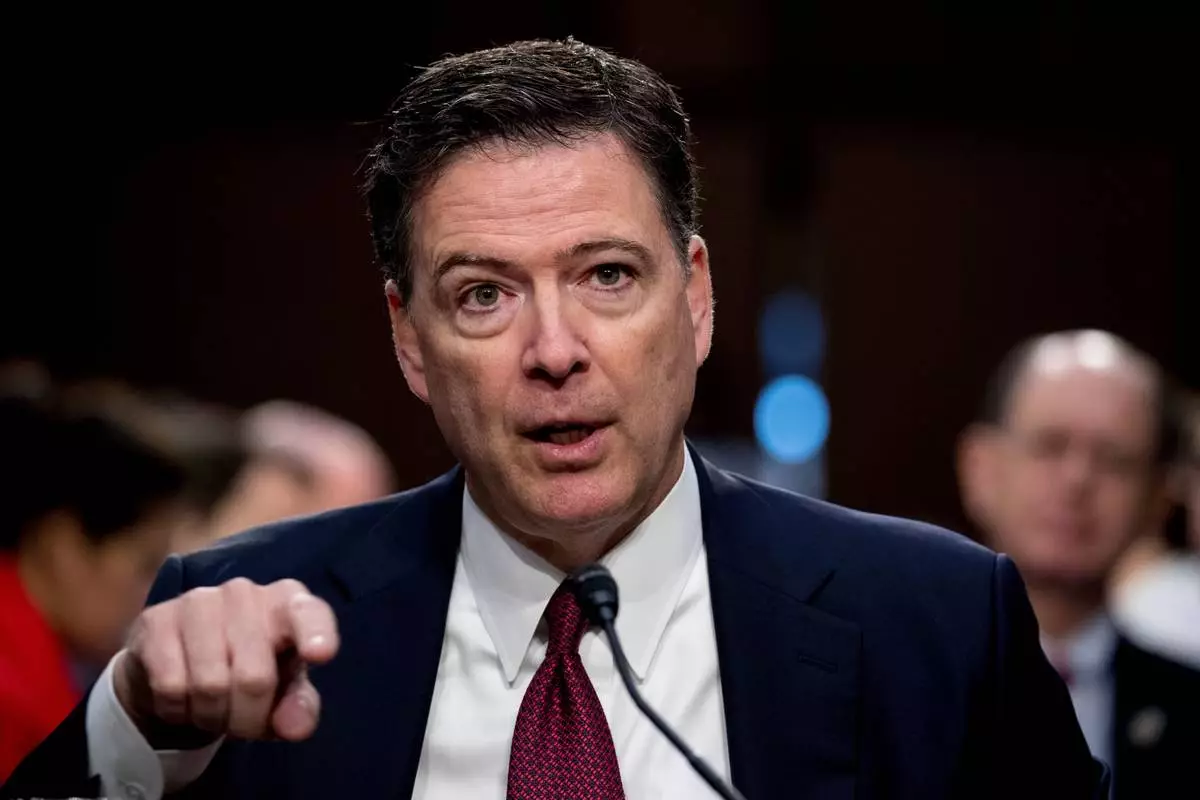
FILE - Former FBI Director James Comey speaks during a Senate Intelligence Committee hearing on Capitol Hill, in Washington, June 8, 2017. (AP Photo/Andrew Harnik, File)
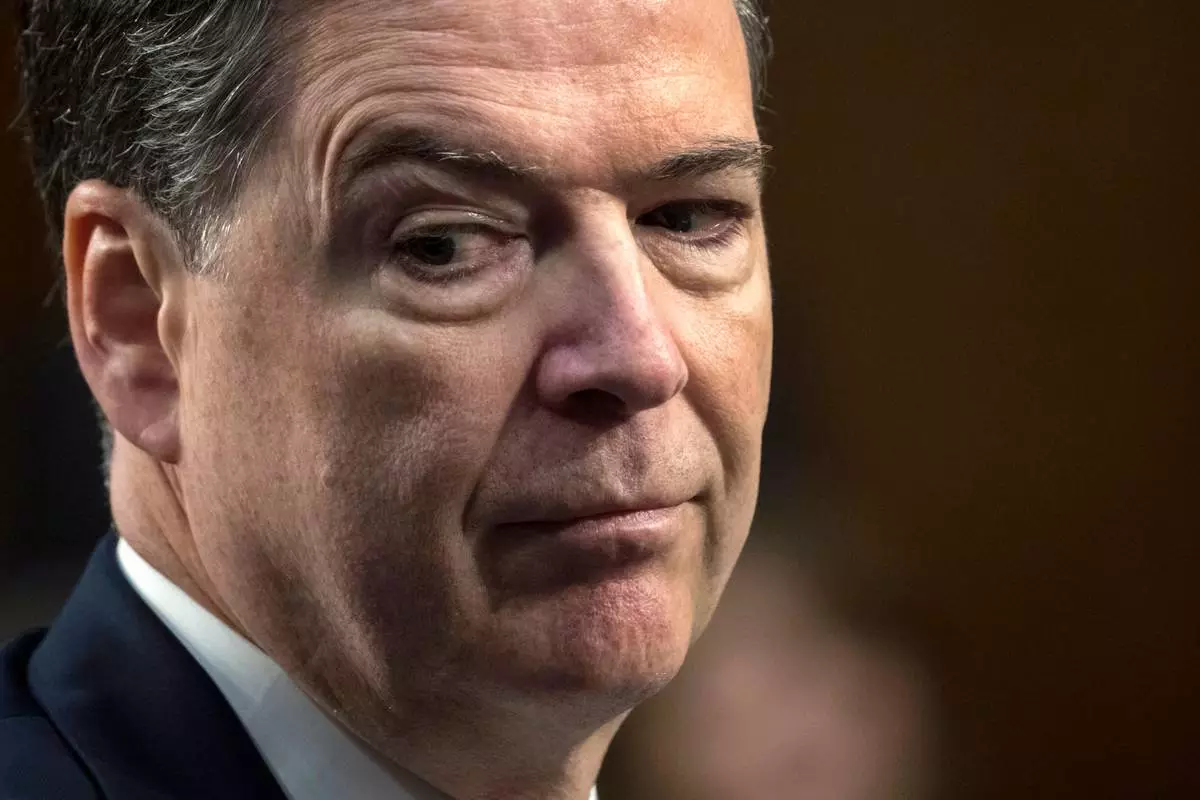
FILE - Former FBI Director James Comey testifies before the Senate Select Committee on Intelligence, on Capitol Hill in Washington, June 8, 2017. (AP Photo/J. Scott Applewhite, File)
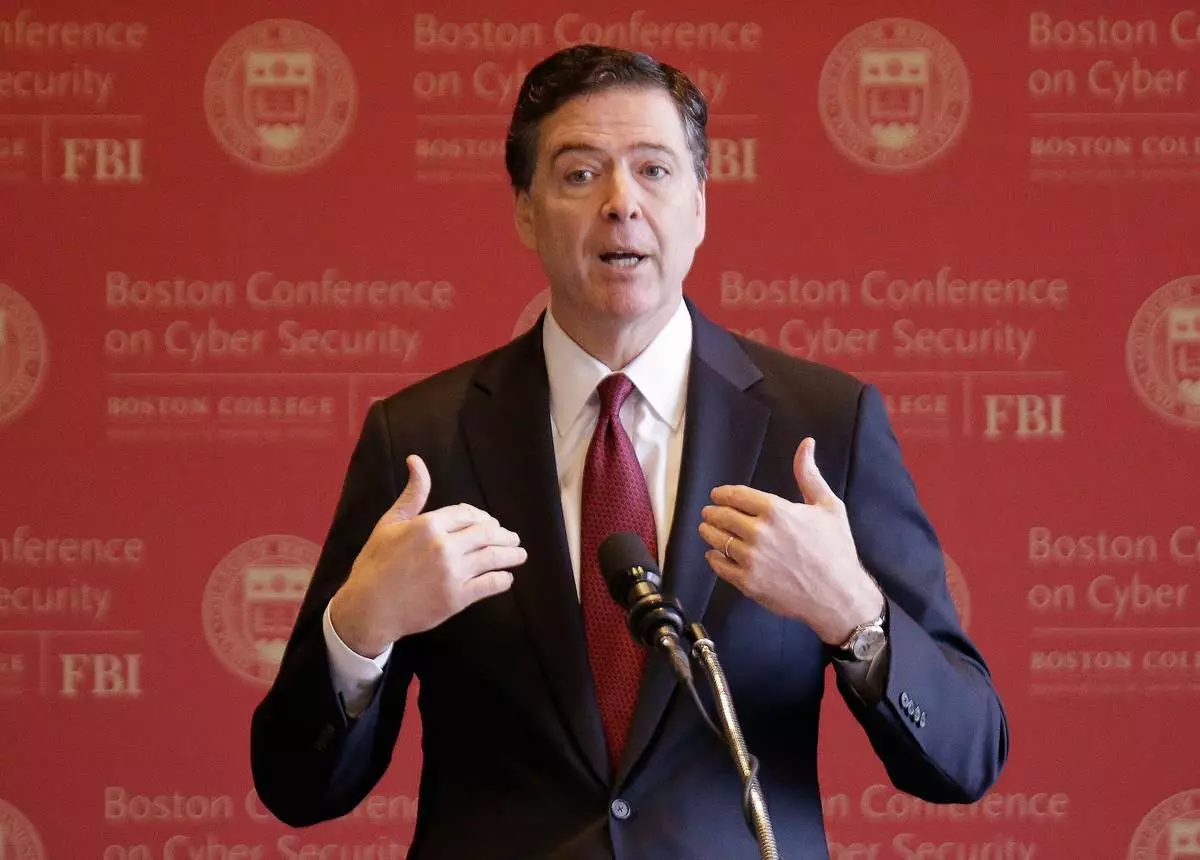
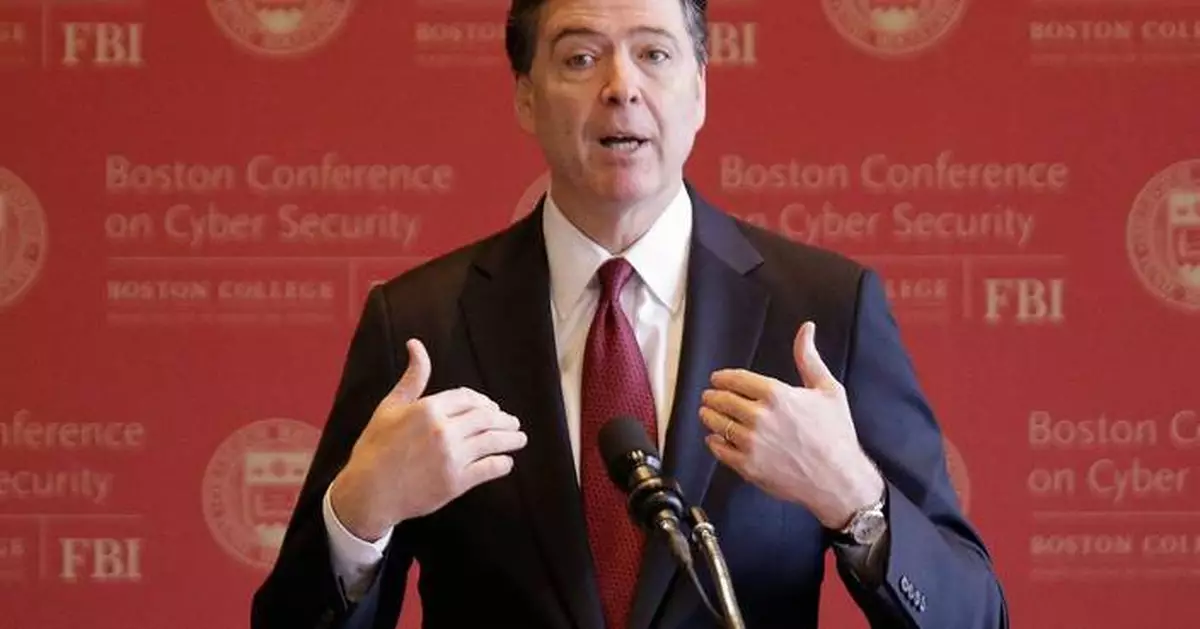
FILE - FBI Director James Comey gestures as he speaks on cyber security at the first Boston Conference of Cyber Security at Boston College, March 8, 2017, in Boston. (AP Photo/Stephan Savoia, File)
WASHINGTON (AP) — The U.S. Supreme Court has begun hearing arguments over the constitutionality of President Donald Trump’s order to end birthright citizenship for children born in the United States to someone in the country illegally or temporarily.
The birthright citizenship order, which Trump signed on Jan. 20, 2025, the first day of his second term, is part of his Republican administration’s broad immigration crackdown.
Trump is in attendance; he is the first sitting president to attend oral arguments at the nation’s highest court.
Every lower court to have considered the issue has found the order illegal and prevented it from taking effect. A definitive ruling by the nation’s highest court is expected by early summer.
Here’s the latest:
Trump spent just over an hour inside the courtroom. He apparently was only interested in hearing the arguments by the government’s lawyer, Solicitor General John Sauer.
The president departed shortly after Sauer wrapped up and the plaintiff was invited to present her case.
Cecillia Wang, the American Civil Liberties Union legal director facing off against Sauer, often centered her arguments around American courts’ reliance on English common law, which provides for citizenship based on the legal concept of jus soli, or “right of soil.”
“When the government tried to strip Mr. Wong Kim Ark’s citizenship on largely the same grounds they raised today, this court said no,” she said, adding “this court held that the 14th Amendment embodies the English common law rule: Virtually everyone born on U.S. soil is subject to its jurisdiction and is a citizen.”
Justice Jackson is drilling down into exactly how the government would actually figure out who’s entitled to citizenship and who’s not.
“Are you suggesting that when a baby is born people have to have documents? Present documents? Is this happening in the delivery room? How are we determining when or whether a newborn child is a citizen of the United States under your rule?” she’s asking Sauer.
Sauer seems to be saying that it would fall to the computer systems that give out Social Security numbers, saying they would automatically check the citizenship of the parents.
Roberts says the word is used 20 times in the 1898 decision. “Isn’t it at least something to be concerned about?”
Wang says it’s true that the Chinese parents were domiciled in the U.S., but that the decision did not turn on that fact, but instead a long history of basing citizenship on where the child was born.
More than an hour in, it’s the opponents’ turn
The ACLU’s Wang has begun her presentation in defense of birthright citizenship.
Sauer noted that the government is “not asking you overrule Wong Kim Ark,” which extended citizenship to children born in the U.S. to foreign parents.
But he added that it was “totally unambiguous” that the 1898 ruling “relates to domiciled aliens,” and not what he called “sojourners,” or temporary visitors.
Judge Alito is asking Sauer about the humanitarian issue of people who have been in the U.S. for a long time and are “subject to removal” but in “their minds” have made a permanent home in America.
Alito also says that immigration laws in the U.S. have been “ineffectively and in some cases unenthusiastically” enforced over the years.
He’s asking Sauer to address the “humanitarian problem” that arises with how to deal with those people when it comes to birthright citizenship.
Sauer is saying that when it comes to birthright citizenship the U.S. is an “outlier among modern nations” and is pointing to places in Europe who don’t allow birthright citizenship and suggesting there doesn’t seem to have been any humanitarian fallout there.
Kavanaugh says Congress might have used different language in laws enacted in 1940 and 1952 if it wanted to make clear that children of people here illegally or temporarily were not entitled to citizenship.
Much of the early discussions revolved around the concepts of “domicile,” or a person’s permanent residence, and to which government that person owes “allegiance.”
Solicitor General D. John Sauer began his arguments by noting that the citizenship clause “was adopted just after the Civil War to grant citizenship to the newly freed slaves and their children, whose allegiance to the United States had been established by generations of domicile here.”
It did not, he said, “grant citizenship to the children of temporary visitors or illegal aliens who have no such allegiance.”
Sauer insists that Trump’s order would apply “only prospectively.”
But Justice Sonia Sotomayor says the logic of the administration’s argument would allow a future president to try to strip citizenship from U.S.-born children years from now.
Sauer was asked by Chief Justice John Roberts about how significant is the issue of “birth tourism.”
Critics of birthright citizenship have long said that it attracts people from other countries who come to the U.S. in order to give birth so that their children can become American citizens. Then they go back to their home country.
Sauer was asked by Roberts about any data on how many people come to the U.S. for this reason. “No one knows for sure,” Sauer said, and cited “media estimates” for various numbers.
Thomas recounts that the aim of the 14th amendment was to make citizens of the freed slaves. “How much of the debates around the 14 Amendment had anything to do with immigration?”
Conservative and liberal justices are questioning Sauer’s history of the debates that led to the adoption of the 14th Amendment. Justice Neil Gorsuch says there’s precious little discussion about domicile, a key part of Sauer’s argument.
Justice Elena Kagan says part of Sauer’s case rests “on some pretty obscure sources.”
Many of the arguments in today’s case go back to the Supreme Court’s 1898 ruling in the case of Wong Kim Ark, which said a U.S.-born child of Chinese nationals was a citizen.
In that ruling, Justice Horace Gray wrote that Fourteenth Amendment “affirms the ancient and fundamental rule of citizenship by birth within the territory. That, he wrote, is “including all children here born of resident aliens.”
Roberts says it’s not clear how the recognized exceptions to citizenship, children of ambassadors and foreign invaders, can be applied to “a whole class of illegal aliens.”
Roberts says he’s not sure “how you get to that big group from such tiny and idiosyncratic examples.”
Sauer, Trump’s top Supreme Court lawyer, is at the lectern, defending the president’s birthright citizenship order. Trump is in the courtroom.
On American Samoa, an island cluster in the South Pacific roughly halfway between Hawaii and New Zealand, native-born children are considered “U.S. nationals” — a distinction that gives them certain rights and obligations while denying them others.
American Samoans are entitled to U.S. passports and can serve in the military. Men must register for the Selective Service. They can vote in local elections in American Samoa but cannot hold public office in the U.S. or participate in most U.S. elections.
Those who wish to become citizens can do so, but the process costs hundreds of dollars and can be cumbersome. In 2022, the Supreme Court rejected an appeal seeking to extend birthright citizenship to American Samoa.
An Alaska appeals court is weighing whether to dismiss criminal charges against an Alaska resident born in American Samoa after she was elected to a local school board.
Crowds watched from the sidewalks as Trump’s motorcade drove along Constitution and Independence Avenues, passing the Washington Monument and the National Mall on the way to the court building.
Justice Felix Frankfurter, a native of Austria, was the last of six justices who were born abroad. The current court is American from birth.
Still, the citizenship issue hits close to home for some justices.
Thomas and Ketanji Brown Jackson are descended from enslaved people who eventually had their citizenship established by the 14th Amendment.
Justice Sonia Sotomayor’s parents were born in Puerto Rico, where residents became citizens under a 1917 law enacted by Congress. The justice most closely tied to an immigrant is Alito, whose father was born in Italy.
Way back in 1841, former President John Quincy Adams represented a shipload of African men and women who had been sold into slavery in the famous Amistad case.
Former President William Howard Taft became chief justice nearly eight years after leaving the White House in 1913. Charles Evans Hughes left the Supreme Court for a presidential run in 1912, which he nearly won, then returned to the court in 1930 as chief justice.
In 1966, Richard Nixon argued his only Supreme Court case, which he lost.
Twenty-four Democratic state attorneys general put out a statement Wednesday morning saying they’re “proud to lead the fight against this unlawful order.”
While Democratic attorneys general have sued the Trump administration scores of times, the plaintiffs in this case are represented by the American Civil Liberties Union and other civil rights groups.
The Democratic attorneys filed court papers supporting their position. Twenty-five of their Republican counterparts filed a friend-of-the-court brief backing the Trump administration.
The only state sitting this one out is New Hampshire.
More than 250,000 babies born in the U.S. each year would not be citizens, according to research from the Migration Policy Institute and Pennsylvania State University’s Population Research Institute.
The order would only apply going forward, the administration has said. But opponents have said a court ruling in Trump’s favor could pave the way for a later effort to take away citizenship from people who were born to parents who were not themselves U.S. citizens.
The president and first lady Melania Trump showed up for the court ritual marking the arrival of a new justice following the confirmations of Justice Neil Gorsuch in 2017 and Justice Brett Kavanaugh a year later.
The ceremony for Trump’s third appointee, Justice Amy Coney Barrett, was delayed a year because of the COVID-19 pandemic and Trump, who was no longer in office, did not attend.
Traditionally the president has avoided attending arguments to maintain distance between the government branches — since the executive officer’s presence is seen by many as a way to pressure the independent court to rule in their favor.
Given the unusual nature of it all — Trump’s presence in the courtroom spotlights how high the stakes are for him, as the court’s decision will have massive consequences on his longstanding promise to crack down on immigration.
Last year, Trump said that he badly wanted to attend a hearing on whether he overstepped federal law with his sweeping tariffs, but he decided against it, saying it would have been a distraction.
Adam Winkler, a constitutional law professor at UCLA, told the The Associated Press that Trump’s attending SCOTUS oral arguments signals how important the president views this case.
However, Trump’s presence “is unlikely to sway the justices,” Winkler said, adding that the SCOTUS justices “pride themselves in their independence, even if some agree with much of Trump’s agenda.”
The fanfare of Trump being in the courtroom will make for a different experience for the justices themselves, however, as “Trump’s presence will make the atmosphere a little bit more circus-like,” Winkler said.
Solicitor General D. John Sauer is making his ninth Supreme Court argument and second in as many weeks. Sauer’s biggest win to date was the presidential immunity decision that spared Trump from being tried for his effort to overturn the 2020 election.
Sauer was a Supreme Court law clerk to Justice Antonin Scalia early in his legal career.
ACLU legal director Cecillia Wang, the child of Chinese immigrants, is presenting her second argument to the Supreme Court. In the first Trump administration, a 5-4 conservative majority ruled against Wang’s clients in another immigration case.
It’s not an April Fool’s joke. Alito was born this day in 1950. Only Thomas, who turns 78 in June, is older than Alito among the nine justices.
In the post-pandemic era, the other justices allow the 77-year-old Thomas, the longest-serving member of the court, to pose a question or two before the free-for-all begins.
In a second round of questioning, the justices ask questions in order of seniority. Chief Justice John Roberts, whose center chair makes him the most senior, gets the first crack.
The justices have routinely gone beyond the allotted time since returning to the courtroom following the Covid-19 pandemic.
A buzzer and the court marshal’s cry, “All rise,” signal the justices’ entrance from behind red curtains. The livestream won’t kick in for several minutes, until after the ceremonial swearing-in of lawyers to the Supreme Court bar.
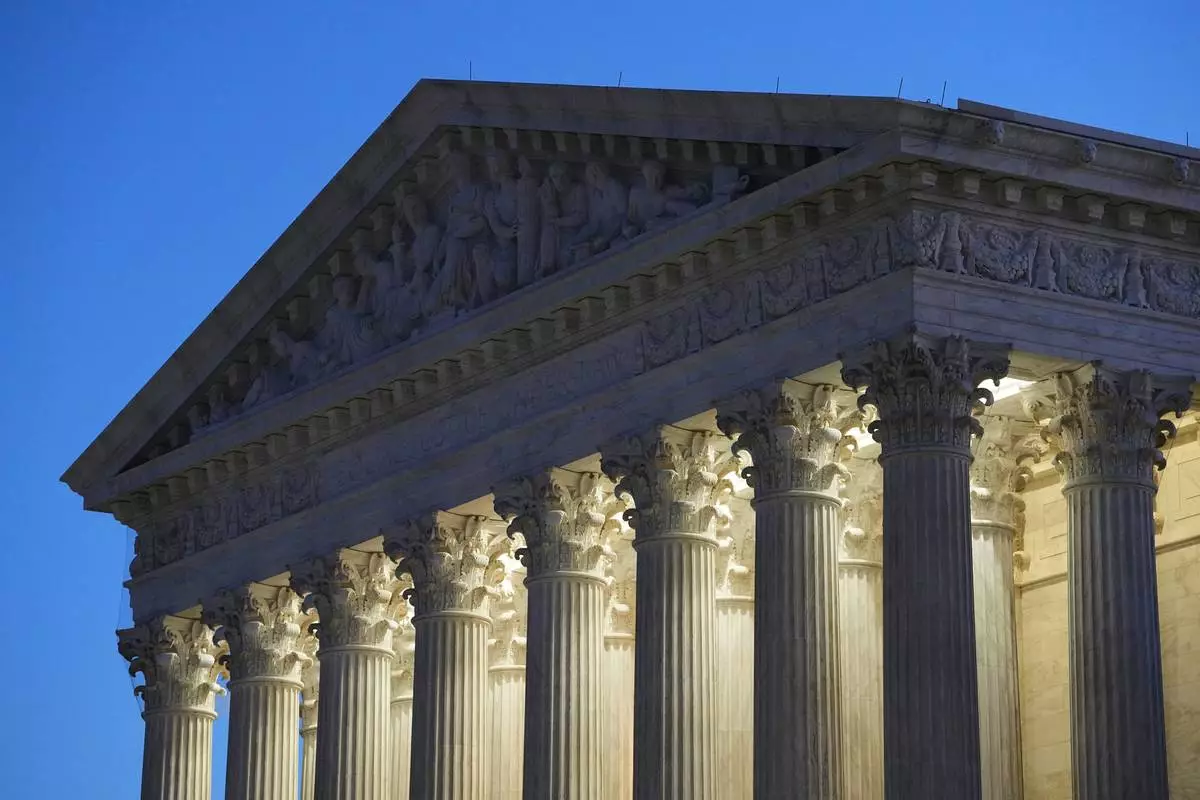
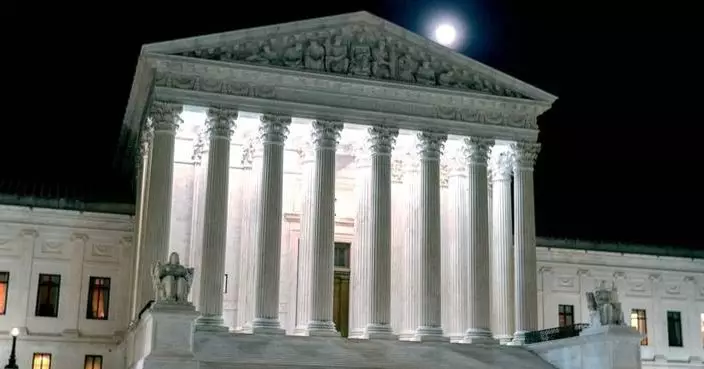
FILE - The U.S. Supreme Court is seen in Washington on Feb. 24, 2026. (AP Photo/Matt Rourke, File)
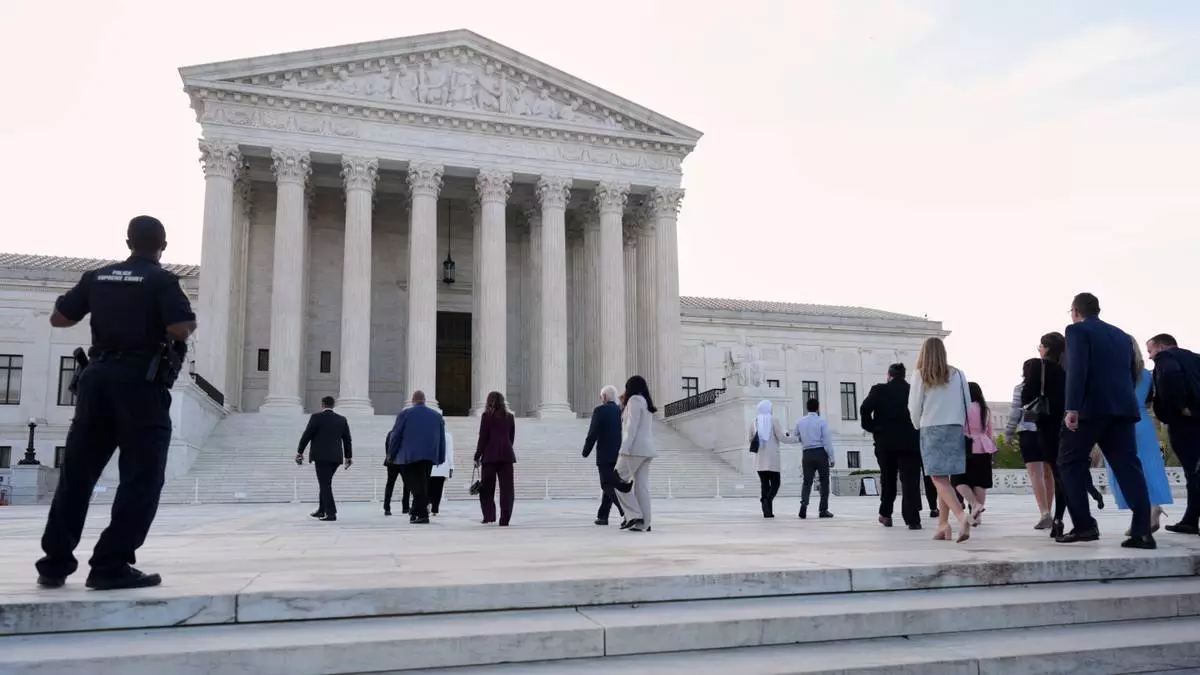
People arrive to walk inside the U.S. Supreme Court, on Capitol Hill in Washington, Wednesday, April 1, 2026. The Supreme Court justices will hear oral arguments today on whether President Donald Trump can deny citizenship to children born to parents who are in the United States illegally or temporarily. (AP Photo/J. Scott Applewhite)