Skip to Content Facebook Feature Image

Israel's military carries out strikes in Lebanon and Gaza, killing dozens of people

News

Israel's military carries out strikes in Lebanon and Gaza, killing dozens of people
News

News

Israel's military carries out strikes in Lebanon and Gaza, killing dozens of people

2025-11-20 06:03 Last Updated At:06:10

SIDON, Lebanon (AP) — The Israeli military carried out barrages of airstrikes in southern Lebanon Wednesday on what it said were Hezbollah sites, including weapons storage facilities, after a drone strike earlier in the day killed one person and wounded several others, including students on a bus.

The new wave of strikes came a day after an airstrike killed 13 people in the Palestinian refugee camp of Ein el-Hilweh, the deadliest of Israeli attacks on Lebanon since a ceasefire in the Israel-Hezbollah war a year ago.

More Images
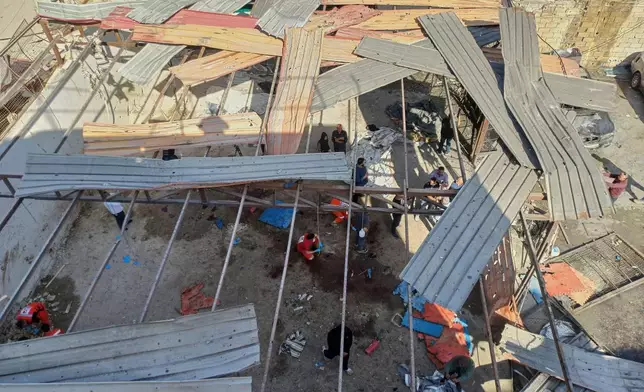
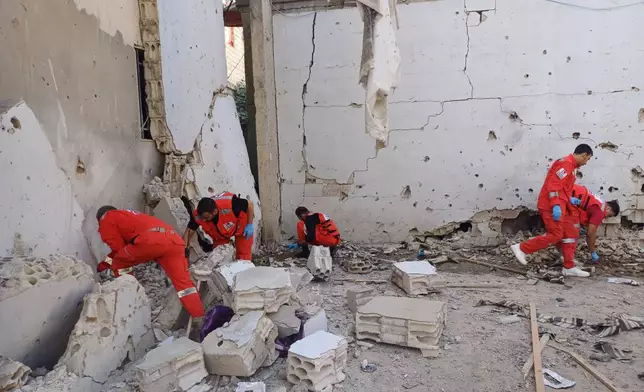
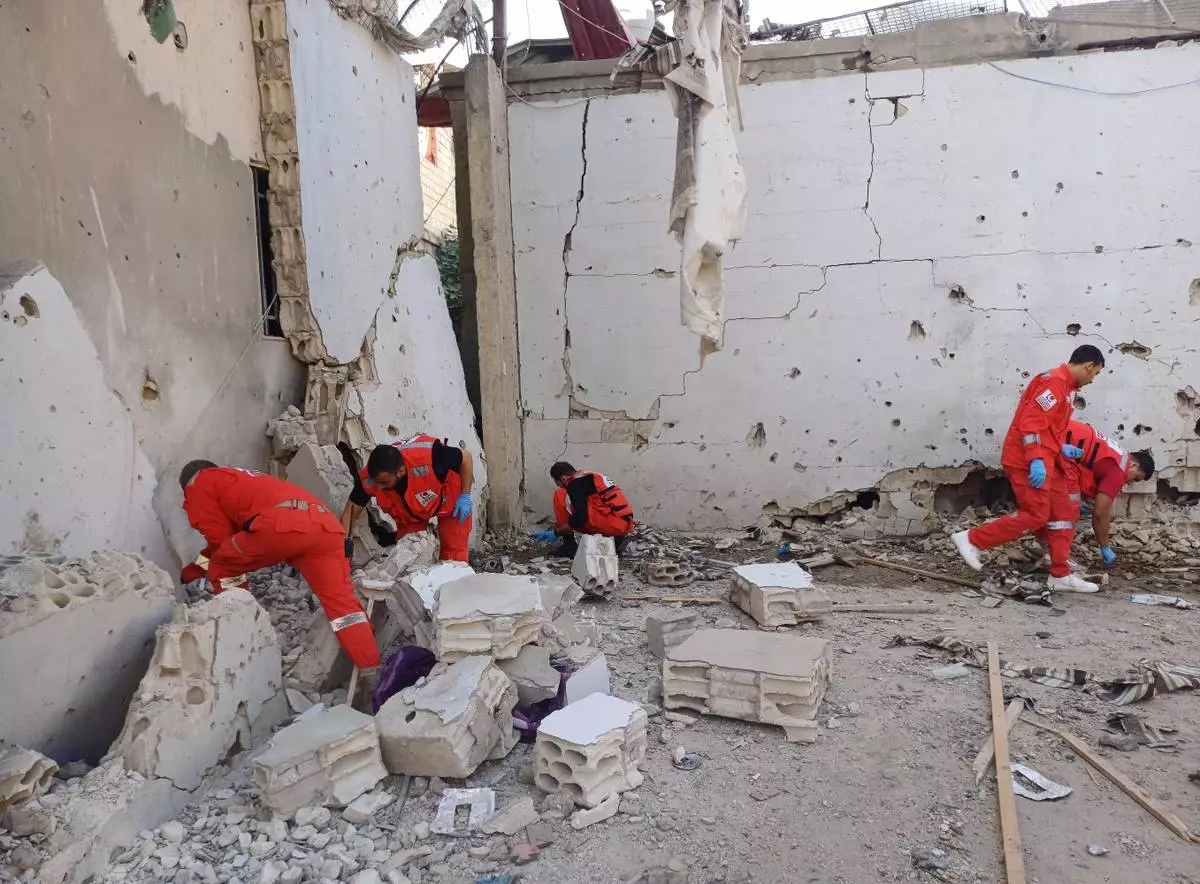
Palestinian rescue workers collect body remains at the scene where an Israeli strike on Tuesday night hit the Ein el-Hilweh Palestinian refugee camp, in the southern port city of Sidon, Lebanon, Wednesday, Nov. 19, 2025. (AP Photo/Mohammed Zaatari)
Palestinian rescue workers collect body remains at the scene where an Israeli strike on Tuesday night hit the Ein el-Hilweh Palestinian refugee camp, in the southern port city of Sidon, Lebanon, Wednesday, Nov. 19, 2025. (AP Photo/Mohammed Zaatari)
Palestinian rescue workers collect body remains at the scene where an Israeli strike on Tuesday night hit the Ein el-Hilweh Palestinian refugee camp, in the southern port city of Sidon, Lebanon, Wednesday, Nov. 19, 2025. (AP Photo/Mohammed Zaatari)
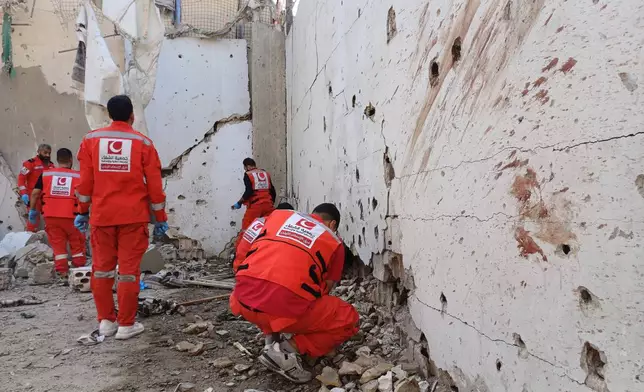
Palestinian rescue workers collect body remains at the scene where an Israeli strike on Tuesday night hit the Ein el-Hilweh Palestinian refugee camp, in the southern port city of Sidon, Lebanon, Wednesday, Nov. 19, 2025. (AP Photo/Mohammed Zaatari)
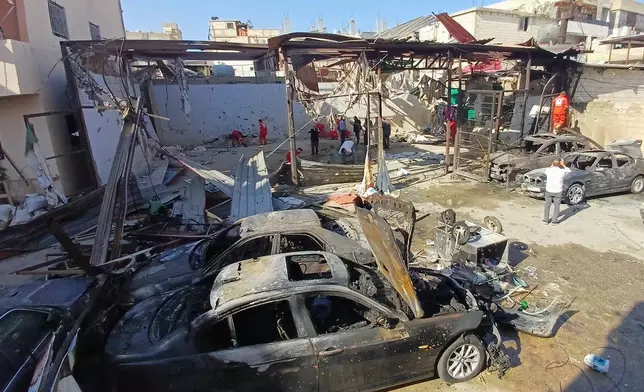
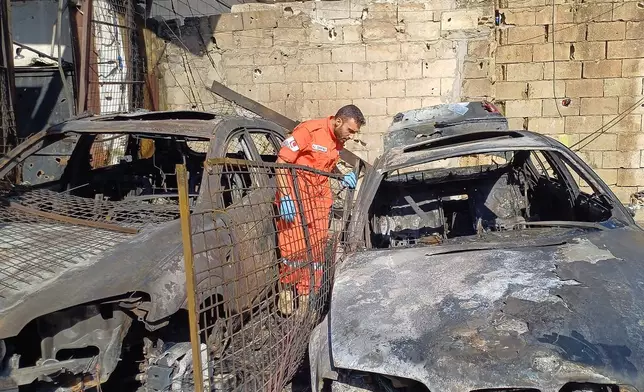
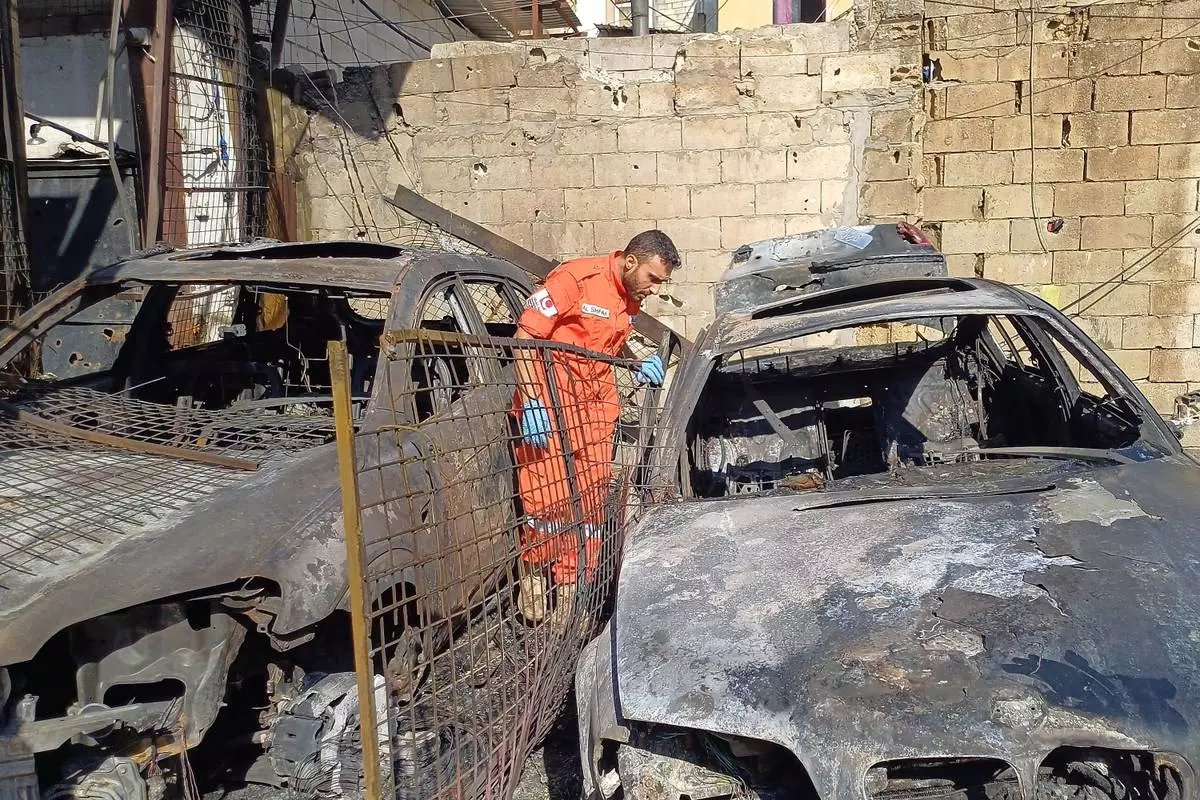
A Palestinian rescue worker checks cars that were damaged in an Israeli strike on Tuesday night at the Ein el-Hilweh Palestinian refugee camp, in the southern port city of Sidon, Lebanon, Wednesday, Nov. 19, 2025. (AP Photo/Mohammed Zaatari)

A Palestinian rescue worker checks cars that were damaged in an Israeli strike on Tuesday night at the Ein el-Hilweh Palestinian refugee camp, in the southern port city of Sidon, Lebanon, Wednesday, Nov. 19, 2025. (AP Photo/Mohammed Zaatari)

Palestinian rescue workers collect body remains at the scene where an Israeli strike on Tuesday night hit the Ein el-Hilweh Palestinian refugee camp, in the southern port city of Sidon, Lebanon, Wednesday, Nov. 19, 2025. (AP Photo/Mohammed Zaatari)

Palestinian rescue workers collect body remains at the scene where an Israeli strike on Tuesday night hit the Ein el-Hilweh Palestinian refugee camp, in the southern port city of Sidon, Lebanon, Wednesday, Nov. 19, 2025. (AP Photo/Mohammed Zaatari)

Palestinian rescue workers check the scene where an Israeli strike on Tuesday night hit the Ein el-Hilweh Palestinian refugee camp, in the southern port city of Sidon, Lebanon, Wednesday, Nov. 19, 2025. (AP Photo/Mohammed Zaatari)

Palestinian rescue workers check the scene where an Israeli strike on Tuesday night hit the Ein el-Hilweh Palestinian refugee camp, in the southern port city of Sidon, Lebanon, Wednesday, Nov. 19, 2025. (AP Photo/Mohammed Zaatari)

Meanwhile, after Israel reported its soldiers were fired on in southern Gaza, health officials in the territory said Israeli strikes killed at least 25 Palestinians in one of the deadliest days in Gaza since the Oct. 10 ceasefire agreement took effect. Separately, Israeli Prime Minister Benjamin Netanyahu traveled to a buffer zone in Syrian territory that Israel seized last year.

Israel's military warned Wednesday it would strike targets in several villages in southern Lebanon, describing them as Hezbollah infrastructure, and called on people to move away from the locations. More than an hour later, strikes began in the villages of Shehour and Deir Kifa.

Israel's military said Hezbollah was working to reestablish itself and rebuild its capacity in southern Lebanon, without providing evidence. It said the weapons' facilities targeted were embedded among civilians and violated understandings between Israel and Lebanon. Israel agreed to a ceasefire and withdraw from southern Lebanon last year and Lebanon agreed to quell Hezbollah activity in the area.

Earlier Wednesday, an Israeli airstrike on a car in the southern Lebanese village of Tiri killed one person and wounded 11, including students aboard a nearby bus, the Lebanese Health Ministry and state media said. State-run National News Agency said the school bus happened to be passing near the car that was hit.

Israel's military later said it killed a Hezbollah operative in the drone strike.

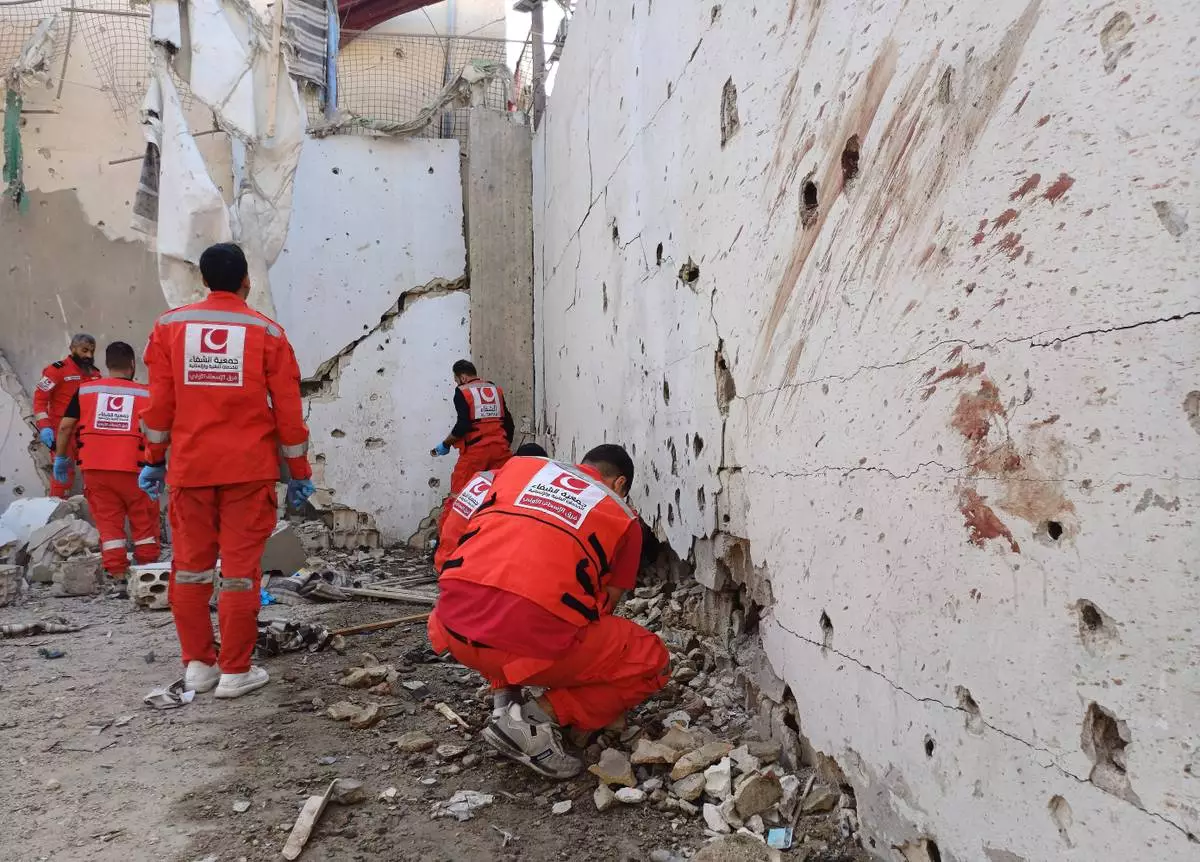
In Ein el-Hilweh refugee camp, just outside the port city of Sidon, life appeared normal Wednesday. Lebanese authorities prevented journalists from entering. At the scene of the strike, paramedics searched for human remains around a wall that was stained with blood. Several cars were burned and broken glass and debris littered the ground.

The Israeli military said it struck a Hamas training compound that was being used to prepare an attack against Israel and its army. It added that the Israeli army would continue to act against Hamas wherever it operates.

Hamas denied in a statement that the sports playground that was hit was its training compound.

Palestinian factions in Lebanon’s 12 refugee camps earlier this year began handing over their weapons to the Lebanese state. The government has said that it will also work on disarming Hezbollah, but Hezbollah has rejected it as long as Israel continues to occupy several hills along the border and carries out almost daily strikes.

The U.S. has recently increased pressure on Lebanon to work harder on disarming Hezbollah and canceled a planned trip to Washington this week by Lebanese army commander Gen. Rudolph Haikal.

A senior Lebanese army officer told The Associated Press that U.S. officials were angered by an army statement on Sunday that blamed Israel for destabilizing Lebanon and blocking the Lebanese military deployment in south Lebanon. The officer spoke on condition of anonymity because he wasn't authorized to speak publicly.

The latest Israel-Hezbollah war began Oct. 8, 2023, a day after Hamas attacked southern Israel, after Hezbollah fired rockets into Israel in solidarity with Hamas. Israel launched a widespread bombardment of Lebanon two months ago that severely weakened Hezbollah, followed by a ground invasion.

That war, the most recent of several conflicts involving Hezbollah over the past four decades, killed more than 4,000 people in Lebanon, including hundreds of civilians, and caused an estimated $11 billion worth of destruction, according to the World Bank. In Israel, 127 people died, including 80 soldiers.

Gaza's Ministry of Health said that Israeli strikes killed 25 Palestinians and injured 77 since the afternoon in one of the deadliest days since the Oct. 10 ceasefire took effect. Hospital officials who received the bodies said they came from on both sides of the yellow line established in last month’s ceasefire. The boundary splits the enclave in two, leaving the border zone under Israeli military control while the area beyond it is meant to serve as a safe zone.

Officials at al-Ahli, Shifa, Nasser and Kuwaiti hospitals reported they received the bodies of those killed from Gaza City, Khan Younis and the Muwasi area, the southern Gaza displacement camp. An Israeli strike also killed one person in Shijaiyah, a Gaza City neighborhood outside the safe zone where Israeli forces remain deployed.

The Israeli military said its strikes responded to militants who had opened fire on Israeli forces in Khan Younis earlier in the day. It said no soldiers were killed.

On Wednesday Hamas condemned the Israeli strikes across Gaza City and Khan Younis, calling them a “shocking massacre." In a statement, the group denied firing toward Israeli troops.

Israeli strikes have decreased since the ceasefire agreement took effect, according to Gaza’s Health Ministry, though they have not stopped entirely. After Wednesday evening's strikes, the ministry, which does not distinguish between civilians and combatants, has reported more than 300 deaths since the truce began, an average of more than seven per day. Each side has accused the other of violating its terms, which include increasing the flow of aid into Gaza and returning hostages — dead or alive — to Israel.

The deaths are among the more than 69,000 Palestinians killed since Israel launched its sweeping offensive more than two years ago in response to Hamas-led militants abducting 251 people and killing around 1,200 people, mostly civilians, in the Oct. 7, 2023, attack that triggered the war. Gaza's Health Ministry, part of the Hamas-run government and staffed by medical professionals, maintains detailed records seen as a reliable estimate by the U.N. and many independent experts.

Top Israeli officials including Netanyahu traveled Wednesday into a demilitarized buffer zone in Syria that Israel seized after the fall of President Bashar Assad last year. “We attach immense importance to our defensive and offensive capability here," Netanyahu said. “This is a mission that can develop at any moment.”

Its December 2024 operations drew swift condemnation, with critics accusing Israel of using Syria’s turmoil to expand its control of the Golan Heights, which it captured and annexed in 1967 in a move that is not recognized by most of the international community.

Israeli incursions in southern Syria have intensified in recent months, with residents reporting forest destruction, advances onto farmland and Israeli military checkpoints. The zone, which wraps the Golan Heights, has also attracted interest from Israeli settlers.

Syria's new authorities have condemned Israel's incursions but said they do not want to enter into a military confrontation. Syrian and Israeli officials have been negotiating on a potential security agreement to defuse tensions but the talks appear to have stalled.

The provocative visit by the prime minister drew fresh criticism from Syria and neighboring countries.

In a statement, Syria's Foreign Ministry said the visit was an attempt to entrench Israeli control and called it “a grave violation of Syria’s sovereignty and territorial integrity.”

Mroue reported from Beirut. Shurafa reported from Deir al-Balah, Gaza Strip. Melanie Lidman and Abby Sewell in Tel Aviv, Israel and Beirut, Lebanon contributed to this report.
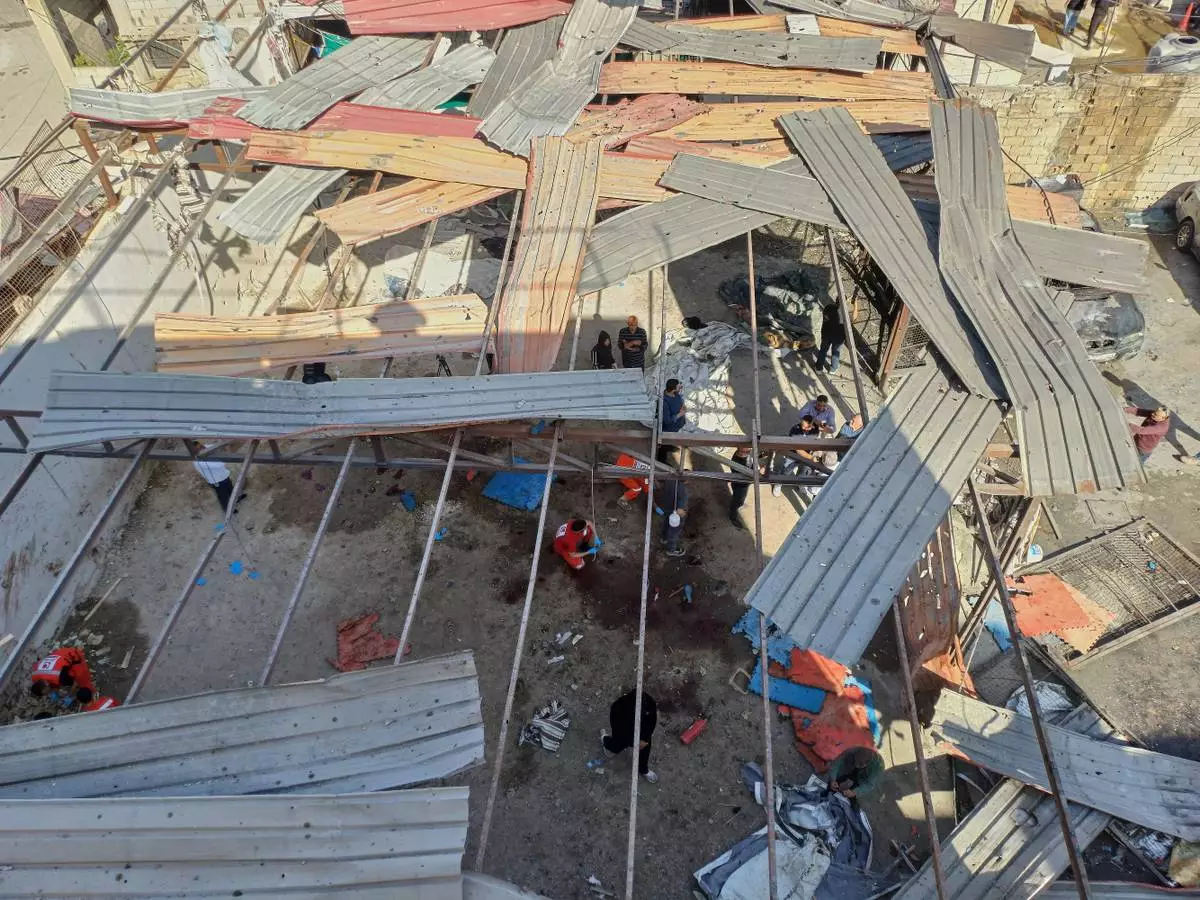
Palestinian rescue workers collect body remains at the scene where an Israeli strike on Tuesday night hit the Ein el-Hilweh Palestinian refugee camp, in the southern port city of Sidon, Lebanon, Wednesday, Nov. 19, 2025. (AP Photo/Mohammed Zaatari)
Palestinian rescue workers collect body remains at the scene where an Israeli strike on Tuesday night hit the Ein el-Hilweh Palestinian refugee camp, in the southern port city of Sidon, Lebanon, Wednesday, Nov. 19, 2025. (AP Photo/Mohammed Zaatari)
Palestinian rescue workers collect body remains at the scene where an Israeli strike on Tuesday night hit the Ein el-Hilweh Palestinian refugee camp, in the southern port city of Sidon, Lebanon, Wednesday, Nov. 19, 2025. (AP Photo/Mohammed Zaatari)
Palestinian rescue workers collect body remains at the scene where an Israeli strike on Tuesday night hit the Ein el-Hilweh Palestinian refugee camp, in the southern port city of Sidon, Lebanon, Wednesday, Nov. 19, 2025. (AP Photo/Mohammed Zaatari)
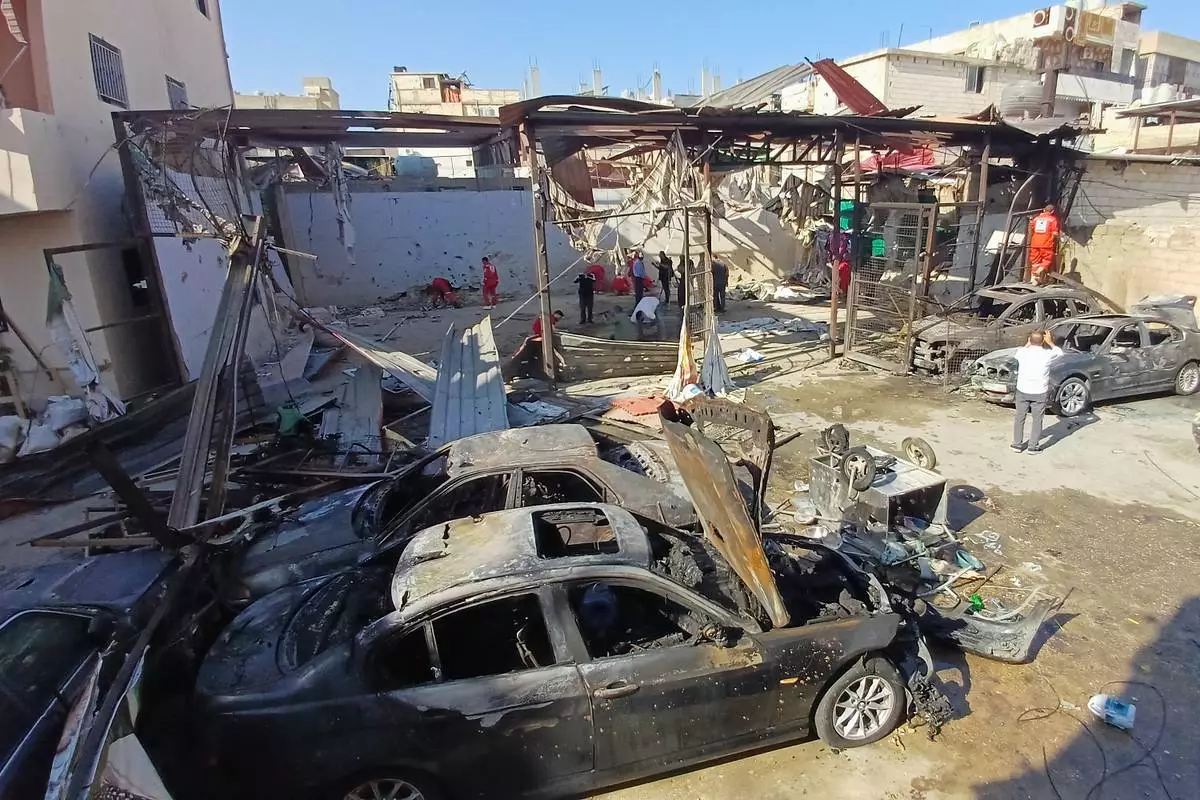
A Palestinian rescue worker checks cars that were damaged in an Israeli strike on Tuesday night at the Ein el-Hilweh Palestinian refugee camp, in the southern port city of Sidon, Lebanon, Wednesday, Nov. 19, 2025. (AP Photo/Mohammed Zaatari)
A Palestinian rescue worker checks cars that were damaged in an Israeli strike on Tuesday night at the Ein el-Hilweh Palestinian refugee camp, in the southern port city of Sidon, Lebanon, Wednesday, Nov. 19, 2025. (AP Photo/Mohammed Zaatari)
Palestinian rescue workers collect body remains at the scene where an Israeli strike on Tuesday night hit the Ein el-Hilweh Palestinian refugee camp, in the southern port city of Sidon, Lebanon, Wednesday, Nov. 19, 2025. (AP Photo/Mohammed Zaatari)
Palestinian rescue workers collect body remains at the scene where an Israeli strike on Tuesday night hit the Ein el-Hilweh Palestinian refugee camp, in the southern port city of Sidon, Lebanon, Wednesday, Nov. 19, 2025. (AP Photo/Mohammed Zaatari)
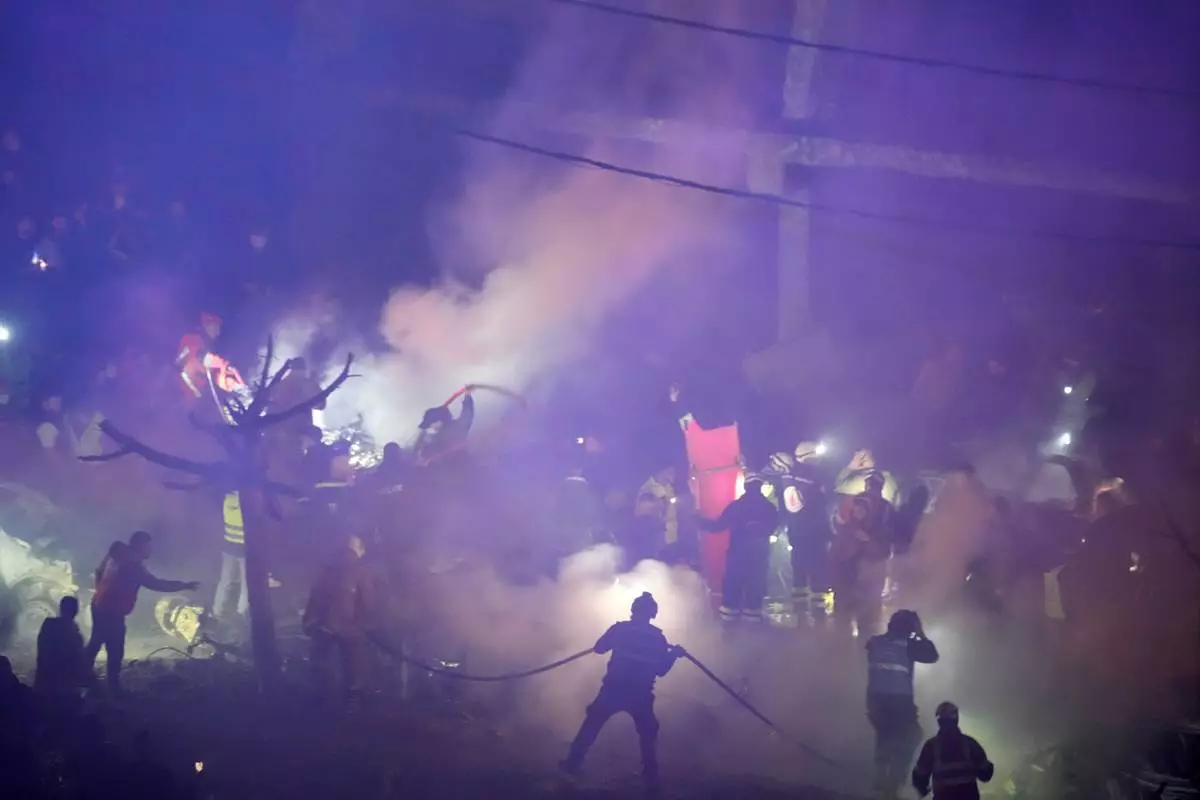
Palestinian rescue workers check the scene where an Israeli strike on Tuesday night hit the Ein el-Hilweh Palestinian refugee camp, in the southern port city of Sidon, Lebanon, Wednesday, Nov. 19, 2025. (AP Photo/Mohammed Zaatari)
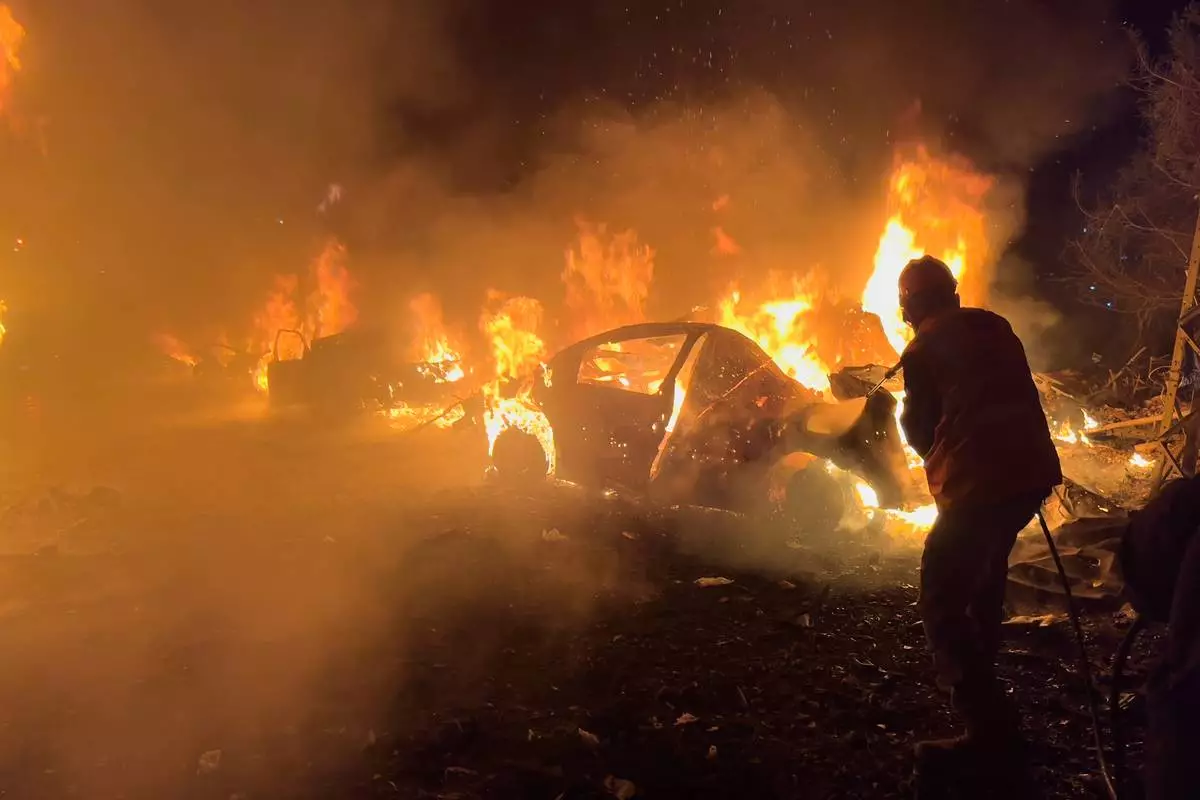
Palestinian rescue workers check the scene where an Israeli strike on Tuesday night hit the Ein el-Hilweh Palestinian refugee camp, in the southern port city of Sidon, Lebanon, Wednesday, Nov. 19, 2025. (AP Photo/Mohammed Zaatari)
DUBAI, United Arab Emirates (AP) — Iran kept up its attacks on Persian Gulf neighbors on Wednesday as airstrikes pounded Tehran, while U.S. President Donald Trump again made contradictory statements about whether he was ready to wind down the war or escalate it.

Trump struck a hard line Wednesday in a Truth Social post, demanding that Iran stop blocking the Strait of Hormuz — the waterway vital to global oil supplies — or the U.S. would bomb the Islamic Republic “back to the Stone Ages.” A day earlier, Trump said the U.S. “will not have anything to do with” ensuring the security of ships passing through Hormuz; that was an apparent backtrack from an earlier threat to attack Iran's power grid and other infrastructure if it didn't open the strait by April 6.

Trump, who is scheduled to give a televised address Wednesday evening, said Tuesday he could walk away from the war in two to three weeks once he felt confident Iran would not be able to build a nuclear weapon — even if Tehran does not agree to a ceasefire.

But his latest Truth Social post struck a more belligerent tone as more American troops move into the region for a possible ground offensive after weeks of airstrikes targeting Iran.

Trump also claimed Wednesday that “Iran's New Regime President” wanted a ceasefire. It wasn't clear to whom the U.S. president was referring since Iran still has the same president. Iran’s Foreign Ministry spokesman, Esmail Baghaei, called Trump's claim “false and baseless,” according to a report on Iranian state television.

Speaking earlier to Al Jazeera, Iranian Foreign Minister Abbas Araghchi signaled Tehran’s willingness to keep fighting. “You cannot speak to the people of Iran in the language of threats and deadlines,” he said. “We do not set any deadline for defending ourselves.”

Since the war began on Feb. 28, Trump has offered shifting objectives and repeatedly has said it could be over soon while also threatening to widen the conflict. Thousands of additional U.S. troops are currently heading to the Middle East, and speculation abounds about the purpose of their deployment.

Just days ago, Trump threatened to attack Iran’s Kharg Island oil export hub. And there has also been speculation about whether the U.S. could decide to send in military forces to secure Iran’s uranium stockpile — a complex and risky operation, fraught with radiation and chemical dangers, according to experts and former government officials.

Adding to the confusion is what role Israel - which has been bombing Iran alongside the U.S. — might play in any of these scenarios.

Trump has been under growing pressure to end the war as oil prices have skyrocketed, pushing up the cost of gasoline, food and other goods. The spot price of Brent crude, the international standard, was up more than 40% since the start of the war, trading at more than $103 a barrel on Wednesday.

A fifth of the world’s traded oil passes through the strait in peacetime, and even if it were to reopen quickly, some effects like higher food prices could persist for months or longer.

The U.S. has presented Iran with a 15-point plan aimed at bringing about a ceasefire, including a demand for the strait to be reopened and for its nuclear program to be rolled back.

Iran insists its nuclear program is peaceful. Its own five-point response includes retaining sovereignty over the strait.

In the interview with Al Jazeera, Araghchi acknowledged receiving direct messages from U.S. Mideast envoy Steve Witkoff. He insisted, however, that there were no direct negotiations and said Iran has no faith that talks with the U.S. could yield any results, saying “the trust level is at zero.”

He warned against any U.S. attempt to launch a ground offensive, saying “we are waiting for them.”

A cruise missile slammed into an oil tanker off Qatar’s coast Wednesday, the Defense Ministry said. The 21-member crew of the tanker, contracted by state-owned QatarEnergy, was evacuated and no casualties were reported.

A fully-loaded Kuwaiti oil tanker came under attack off Dubai the day before, one of more than 20 ships attacked by Iran during the war.

In the United Arab Emirates, a person was killed when he was hit by debris from an intercepted drone in Fujairah, one of the country’s seven emirates.

Bahrain sounded two alerts for incoming missiles, while Kuwait’s state-run KUNA news agency said a drone hit a fuel tank at Kuwait International Airport, sparking a large fire.

Jordan’s military said it intercepted a ballistic missile and two drones fired from Iran in the last 24 hours. No casualties were reported. Two drones were also intercepted in Saudi Arabia, and air raid sirens sounded in Israel though there were no immediate reports of damage or casualties.

An airstrike on Tehran, meanwhile, appeared to have hit the former U.S. Embassy compound, which has been controlled by Iran’s Revolutionary Guard since American diplomats were held hostage there in 1979.

Witnesses said buildings outside the massive compound had their windows blown out and that it appears the strike happened inside the walled facility.

Israel also said it hit a plant in Iran producing fentanyl, a synthetic opioid. Israel and the United States have alleged in recent years that Iran was experimenting with using fentanyl in chemical weapons.

Iran acknowledged a strike Tuesday on Tofigh Daru factory, but insisted it only supplied “hospital drugs.” Hospitals use fentanyl to treat severe pain but it can also be fatal.

In Lebanon, at least five people were killed in an Israeli strike on a Beirut neighborhood.

Israel invaded southern Lebanon after the Iran-linked Hezbollah militant group began launching missiles into northern Israel days after the outbreak of the war. Many Lebanese fear another prolonged military occupation.

More than 1,200 people have been killed in Lebanon and more than 1 million displaced, according to authorities. Ten Israeli soldiers have also died there.

In Iran, authorities say more than 1,900 people have been killed, while 19 have been reported dead in Israel. More than two dozen people have died in Gulf states and the occupied West Bank, while 13 U.S. service members have been killed.

Rising reported from Bangkok. Associated Press writers Giovanna Dell’Orto in Miami and Samy Magdy in Cairo contributed to this report.

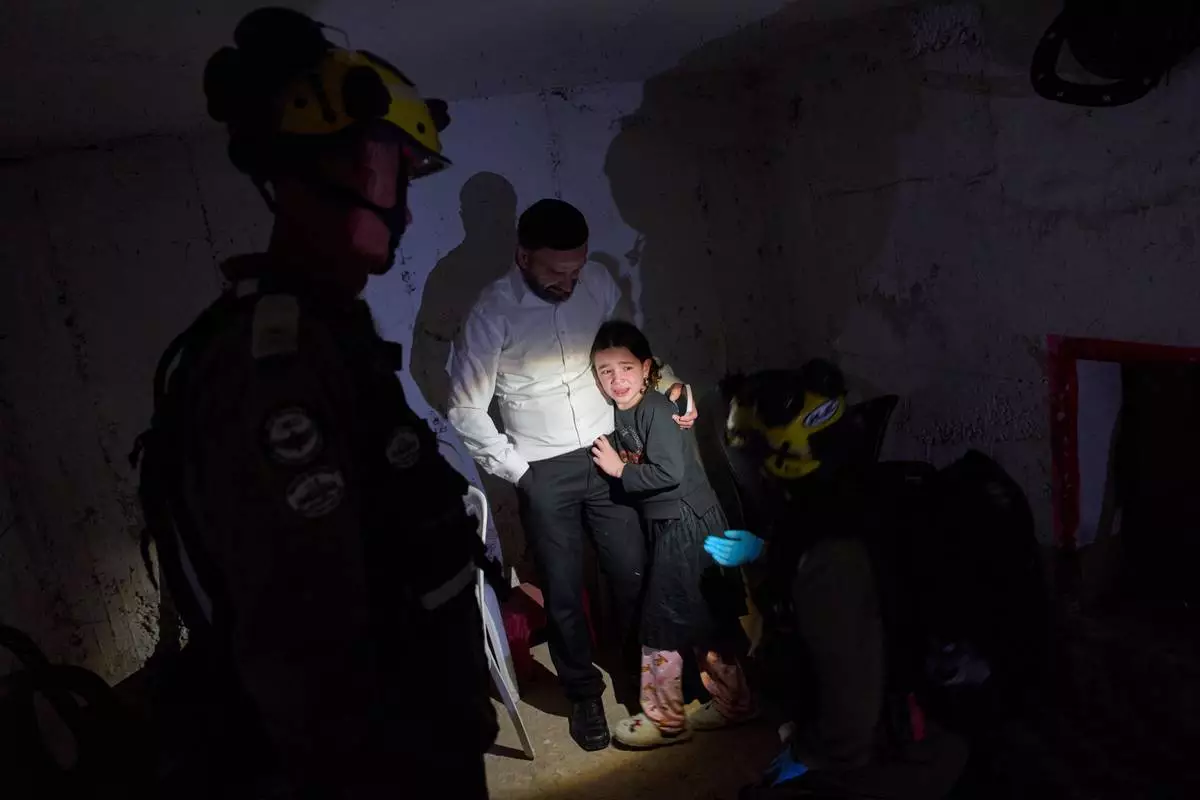
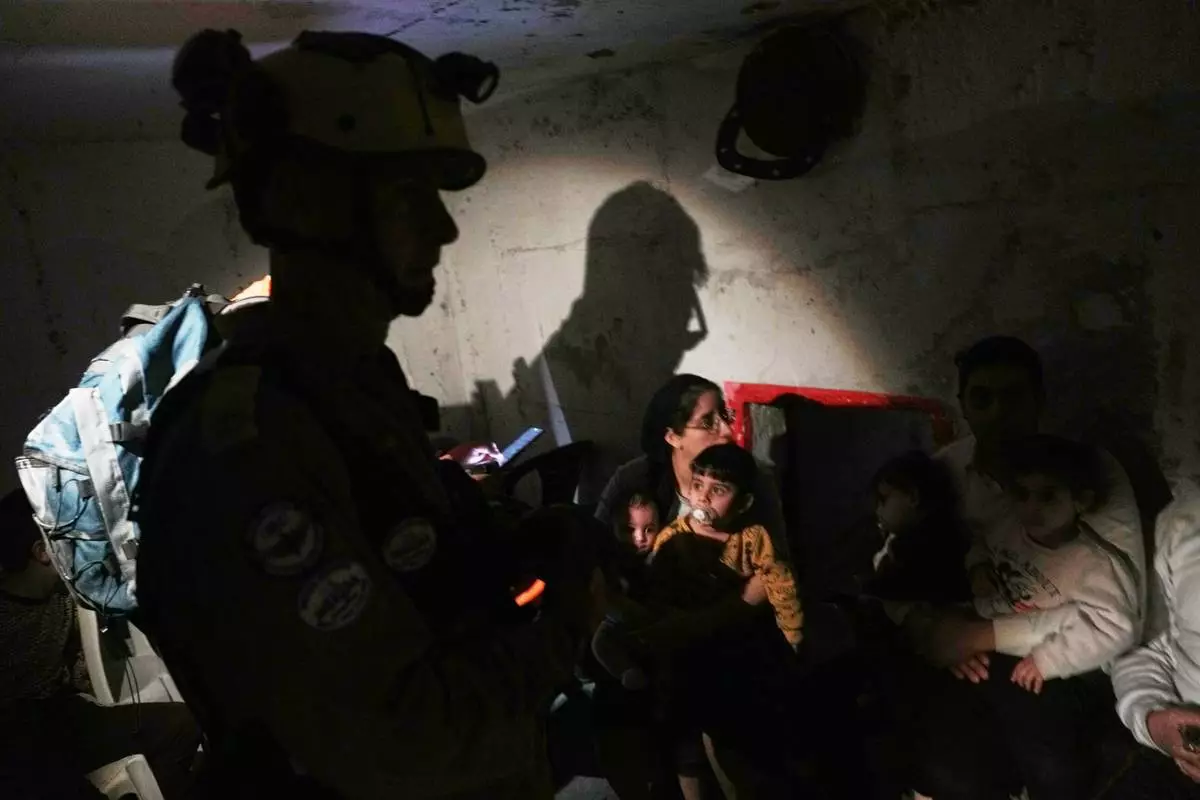
A young girl is comforted by her father and Israeli soldiers as they take cover in a bomb shelter during air raid sirens warning of incoming Iranian missile strikes in Bnei Brak, Israel, Wednesday, April 1, 2026. (AP Photo/Oded Balilty)

A young girl is comforted by her father and Israeli soldiers as they take cover in a bomb shelter during air raid sirens warning of incoming Iranian missile strikes in Bnei Brak, Israel, Wednesday, April 1, 2026. (AP Photo/Oded Balilty)

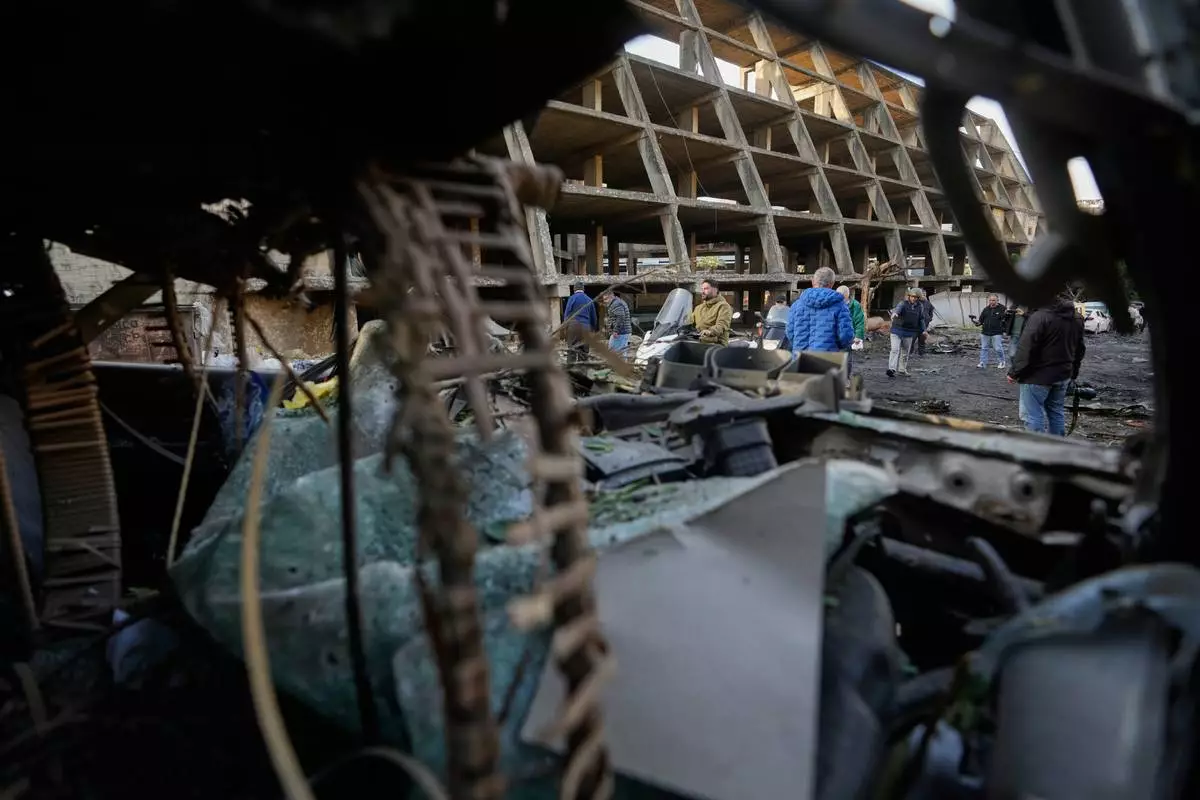
People inspect the site of an Israeli strike amid debris and damaged vehicles in Beirut, Lebanon, Wednesday, April 1, 2026. (AP Photo/Hassan Ammar)

People inspect the site of an Israeli strike amid debris and damaged vehicles in Beirut, Lebanon, Wednesday, April 1, 2026. (AP Photo/Hassan Ammar)

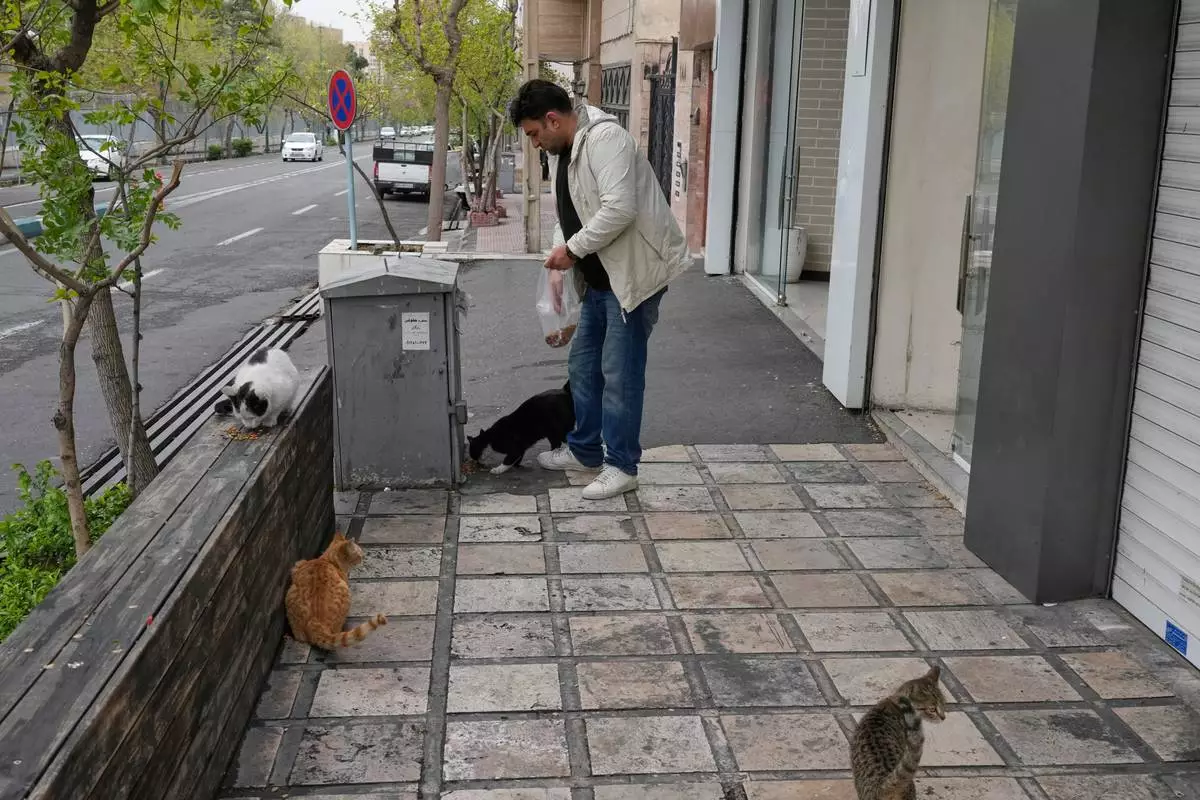
A man feeds stray cats in Tehran, Iran, Tuesday, March 31, 2026. (AP Photo/Vahid Salemi)

A man feeds stray cats in Tehran, Iran, Tuesday, March 31, 2026. (AP Photo/Vahid Salemi)

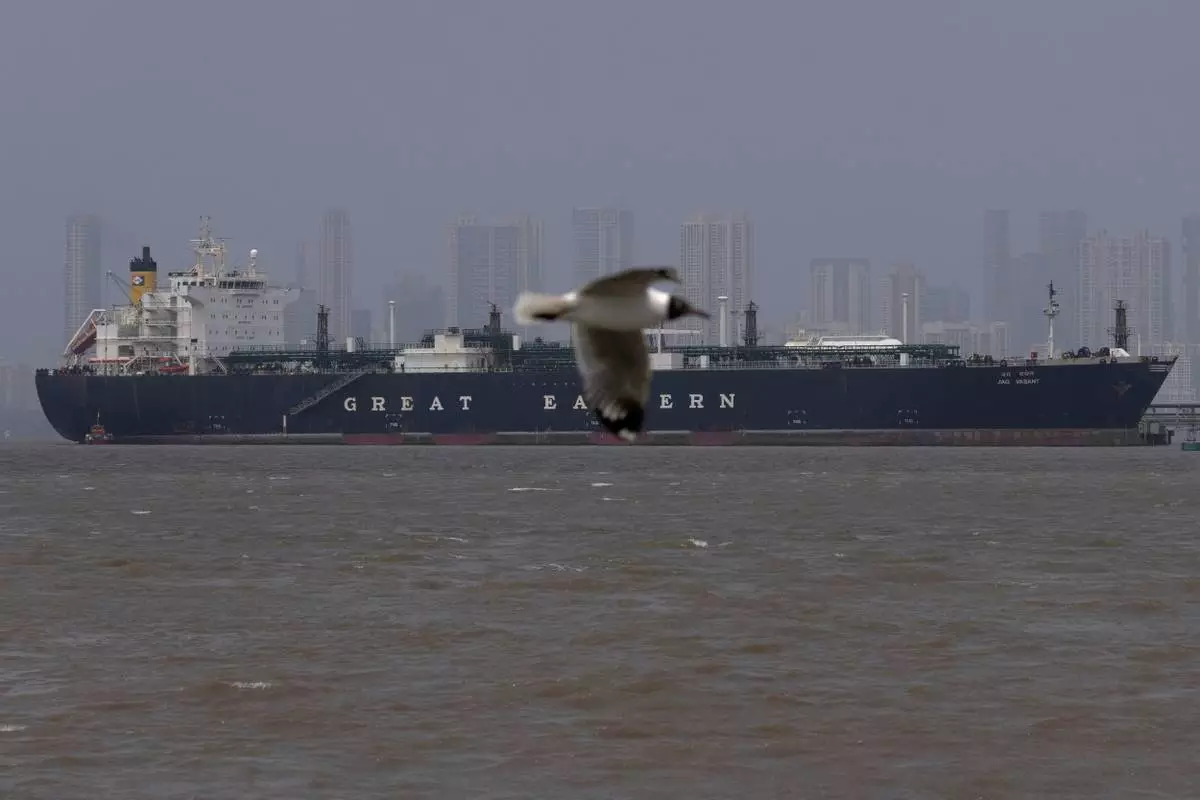
The Indian flagged LPG carrier Jag Vasant transporting liquefied petroleum gas, is seen at the Mumbai Port in Mumbai, India, after it arrived clearing the Strait of Hormuz, Wednesday, April 1, 2026. (AP Photo/Rafiq Maqbool)

The Indian flagged LPG carrier Jag Vasant transporting liquefied petroleum gas, is seen at the Mumbai Port in Mumbai, India, after it arrived clearing the Strait of Hormuz, Wednesday, April 1, 2026. (AP Photo/Rafiq Maqbool)

Firefighters and rescue workers work at the site of Israeli airstrikes, in Beirut, Lebanon, Wednesday, April 1, 2026. (AP Photo/Hussein Malla)

Firefighters and rescue workers work at the site of Israeli airstrikes, in Beirut, Lebanon, Wednesday, April 1, 2026. (AP Photo/Hussein Malla)

A firefighter extinguishes a car at the site of Israeli airstrikes, in Beirut, Lebanon, Wednesday, April 1, 2026. (AP Photo/Hussein Malla)

A firefighter extinguishes a car at the site of Israeli airstrikes, in Beirut, Lebanon, Wednesday, April 1, 2026. (AP Photo/Hussein Malla)

Israel's rescue teams and residents take shelter as sirens sounds next to a site struck by an Iranian missile in Bnei Brak, Wednesday, April 1, 2026. (AP Photo/Oded Balilty)

Israel's rescue teams and residents take shelter as sirens sounds next to a site struck by an Iranian missile in Bnei Brak, Wednesday, April 1, 2026. (AP Photo/Oded Balilty)

A police vehicle is seen through a shattered windshield at the site of an Israeli strike in Beirut, Lebanon, Wednesday, April 1, 2026. (AP Photo/Hassan Ammar)

A police vehicle is seen through a shattered windshield at the site of an Israeli strike in Beirut, Lebanon, Wednesday, April 1, 2026. (AP Photo/Hassan Ammar)

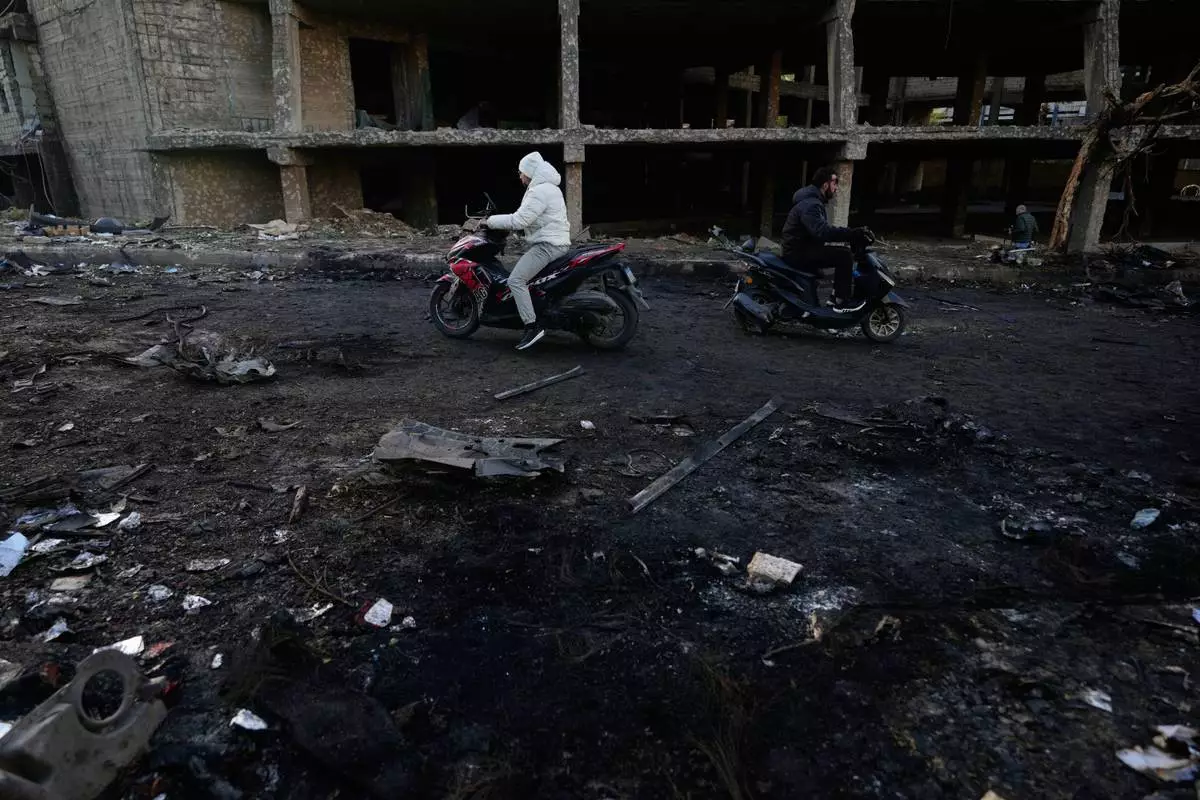
Two men ride scooters past charred debris at the site of an Israeli strike in Beirut, Lebanon, Wednesday, April 1, 2026. (AP Photo/Hassan Ammar)

Two men ride scooters past charred debris at the site of an Israeli strike in Beirut, Lebanon, Wednesday, April 1, 2026. (AP Photo/Hassan Ammar)

Recommended Articles