Skip to Content Facebook Feature Image

Dutch government relinquishes control of Chinese-owned chipmaker Nexperia

News

Dutch government relinquishes control of Chinese-owned chipmaker Nexperia
News

News

Dutch government relinquishes control of Chinese-owned chipmaker Nexperia

2025-11-20 04:27 Last Updated At:12:29

HONG KONG (AP) — The Dutch government said Wednesday it’s relinquishing control of Chinese-owned chipmaker Nexperia, easing a standoff between China and the Netherlands that threatened supplies of semiconductors vital for global auto manufacturing.

Economics Affairs Minister Vincent Karremans said he was suspending an earlier order to take control of Nexperia under a rarely invoked Cold War-era law.

The Dutch government had cited national security concerns and “serious governance shortcomings” when it took effective control of Nexperia, which is headquartered in the city of Nijmegen but owned by China’s Wingtech Technology. Officials said they were trying to prevent the loss of crucial tech know-how that could threaten Europe’s economic security.

Nexperia chips are widely used by carmakers in North America, Japan and South Korea. Automakers warned in recent weeks that they were running low on the chips, and Honda was forced to shut down a factory in Mexico producing its popular HR-V crossover for North American markets.

Karremans said he was suspending his order issued in late September as a “show of goodwill” in a decision that came after “constructive meetings” with Chinese authorities over the past few days.

“In light of recent developments, The Netherlands has considered it the right moment to take a constructive step by suspending my order under the Goods Availability Act,” he said in a statement.

“We are positive about the measures already taken by the Chinese authorities to ensure the supply of chips to Europe and the rest of the world."

China’s Commerce Ministry welcomed the decision, but said it's only a “first step” in resolving the issue.

A Dutch court decision limiting Wingtech’s control over Nexperia “remains a key obstacle to resolving the issue”, the ministry said. It added both countries should continue to work together on the matter.

The dispute is an example of how Europe is caught between Washington and Beijing in their rivalry over trade and tech. Netherlands issued its seizure order after the United States last year put Wingtech on its “entity list” of companies that face export controls, and then expanded it in September to include subsidiaries including Nexperia.

The boardroom battle included the ousting of Nexperia’s Chinese CEO, and Wingtech founder, Zhang Xuezheng. American officials had told the Dutch government he should be replaced to avoid trade restrictions, according to a court filing.

Beijing responded by blocking the export of Nexperia chips from its Chinese factory in early October, a ban it lifted in recent days as part of the U.S.-China trade truce following U.S. President Donald Trump’s meeting with Chinese leader Xi Jinping.

The White House said it would suspend the expansion clause that covers subsidiaries for a year effective November 10.

Still, the company’s Chinese unit and its Dutch headquarters have continued to spar over supply of wafers from fabrication plants in Europe to its assembly center in China.

Despite Karremans' announcement, the dispute is still not fully resolved, according to the companies.

Wingtech said that if the Dutch government has “the sincerity to solve the problem,” it should file a notice “explicitly withdrawing its support” for court proceedings that resulted in Zhang being suspended as CEO.

The court proceedings are a threat to Nexperia's continuity and “therefore for the economic security of the Netherlands and Europe - which is the exact same argument the Dutch government made previously in support of judicial intervention.”

Wingtech said it strongly rejects accusations from Karremans that Zhang was behind “various acts of alleged mismanagement," saying no proof has been provided.

Nexperia said the Dutch government's announcement is a sign of significant progress but "full restoration of the supply chain requires active further cooperation of Nexperia’s entities in China."

Nexperia was formerly part of Dutch electronics giant Philips and eventually purchased by Wingtech in 2018. It makes basic, standardized chips essential for running numerous automotive functions such as operating lights, airbag systems or anti-lock brakes. Modern cars can require hundreds of such components.

Kelvin Chan reported from London
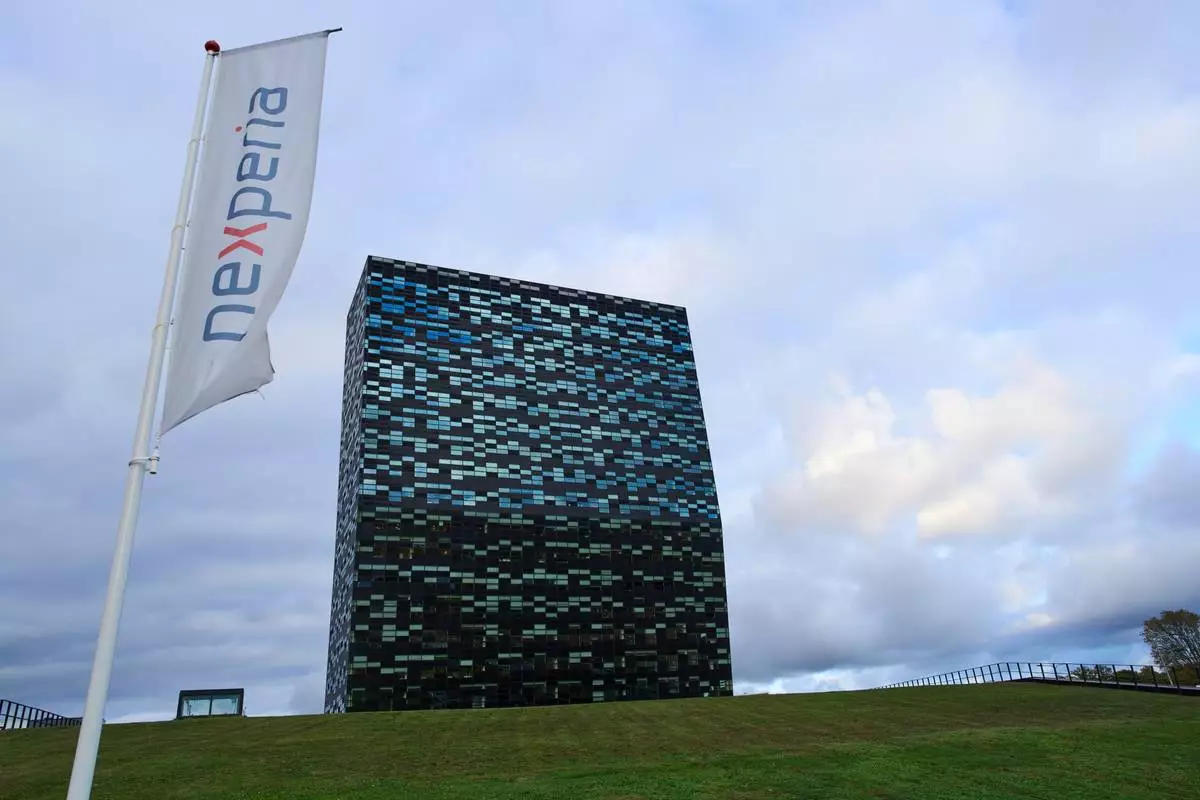
FILE - The head office of Chinese-owned chipmaker Nexperia is seen in Nijmegen, Netherlands, Tuesday, Oct. 14, 2025. (AP Photo/Peter Dejong, File)


FILE - The head office of Chinese-owned chipmaker Nexperia is seen in Nijmegen, Netherlands, Tuesday, Oct. 14, 2025. (AP Photo/Peter Dejong, File)

KUALA LUMPUR, Malaysia (AP) — Malaysia and Indonesia have become the first countries to block Grok, the artificial intelligence chatbot developed by Elon Musk's company xAI, as concerns grew among global authorities that it was being misused to generate sexually explicit and nonconsensual images.

The moves reflect growing scrutiny of generative AI tools that can produce realistic images, sound and text and concern that existing safeguards are failing to prevent their abuse. The Grok chatbot, which is accessed through Musk’s social media platform X, has been criticized for generating manipulated images, including depictions of women in bikinis or sexually explicit poses, as well as images involving children.

Last week, Grok limited image generation and editing to paying users following a global backlash over sexualized deepfakes of people, but critics say it didn’t fully address the problem.

An emailed request for comment by The Associated Press to xAI resulted in an automated reply from the media support email address which stated, “Legacy Media Lies.” This was the same message received from a different email when asked for comment regarding the global backlash.

Regulators in the two Southeast Asian nations said that existing controls weren't preventing the creation and spread of fake pornographic content, particularly involving women and minors. Indonesia’s government temporarily blocked access to Grok on Saturday, followed by Malaysia on Sunday.

"The government sees nonconsensual sexual deepfakes as a serious violation of human rights, dignity and the safety of citizens in the digital space,” Indonesian Communication and Digital Affairs Minister Meutya Hafid said in a statement Saturday.

The ministry said the measure was intended to protect women, children and the broader community from fake pornographic content generated using AI.

Initial findings showed that Grok lacks effective safeguards to stop users from creating and distributing pornographic content based on real photos of Indonesian residents, Alexander Sabar, director-general of digital space supervision, said in a separate statement. He said that such practices risk violating privacy and image rights when photos are manipulated or shared without consent, causing psychological, social and reputational harm.

In Kuala Lumpur, the Malaysian Communications and Multimedia Commission ordered a temporary restriction on Grok on Sunday, after what it said was “repeated misuse” of the tool to generate obscene, sexually explicit and nonconsensual manipulated images, including content involving women and minors.

The regulator said that notices issued this month to X Corp. and xAI demanding stronger safeguards drew responses that relied mainly on user reporting mechanisms.

“The restriction is imposed as a preventive and proportionate measure while legal and regulatory processes are ongoing,” it said, adding that access will remain blocked until effective safeguards are put in place.

Launched in 2023, Grok is free to use on X. Users can ask it questions on the social media platform and tag posts they’ve directly created or replies to posts from other users. Last summer, the company added an image generator feature, Grok Imagine, that included a so-called spicy mode that can generate adult content.

The Southeast Asian restrictions come amid mounting scrutiny of Grok elsewhere, including in the European Union, the United Kingdom, India and France.

On Monday, the U.K.'s media regulator said that it launched a formal investigation into whether Grok “complied with its duties to protect people in the U.K. from content that is illegal.”

The regulator, Ofcom, said that Grok-generated images of children being sexualized or people being undressed may amount to pornography or child sexual abuse material.

“The content created and shared using Grok in recent days has been deeply disturbing," Technology Secretary Liz Kendall said.

Edna Tarigan reported from Jakarta, Indonesia.

FILE - Workers install lighting on an "X" sign atop the company headquarters, formerly known as Twitter, in downtown San Francisco, July 28, 2023. (AP Photo/Noah Berger, File)

FILE - Workers install lighting on an "X" sign atop the company headquarters, formerly known as Twitter, in downtown San Francisco, July 28, 2023. (AP Photo/Noah Berger, File)

FILE - Elon Musk listens as President Donald Trump speaks during a news conference in the Oval Office of the White House, May 30, 2025, in Washington. (AP Photo/Evan Vucci, File)

FILE - Elon Musk listens as President Donald Trump speaks during a news conference in the Oval Office of the White House, May 30, 2025, in Washington. (AP Photo/Evan Vucci, File)

Recommended Articles