SNOHOMISH, Wash.--(BUSINESS WIRE)--Nov 19, 2025--
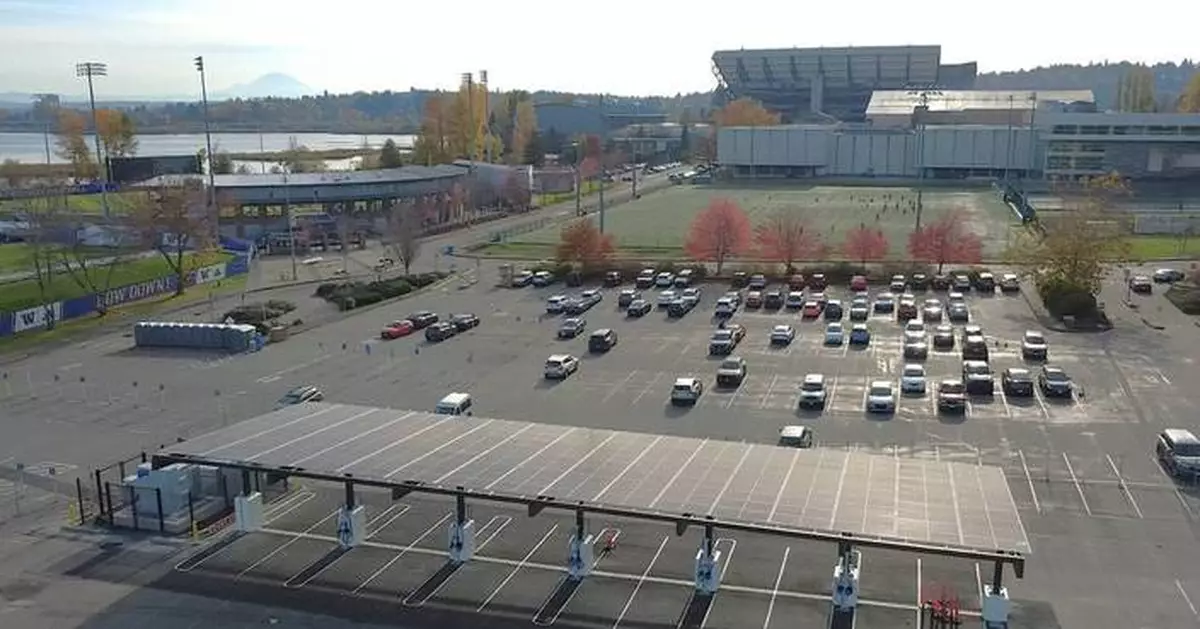
Trinity Energy (Trinity), a leading provider of turn-key sustainable energy solutions, has announced a strategic collaboration with University of Washington (UW) to deploy a solar canopy system in Parking Lot E18, located adjacent to the university’s athletic and campus infrastructure near the baseball stadium. The project underscores Trinity’s commitment to enabling institutions to generate clean energy on-site and demonstrates a scalable model for renewable infrastructure across higher-education and campus environments.
This press release features multimedia. View the full release here: https://www.businesswire.com/news/home/20251119394300/en/
The Lot E18 Solar Canopy can produce up to 93kW of power and will be connected to the City of Seattle and UW’s campus electrical grids. Designed to integrate with future electrification infrastructure, the system can support campus EV charging and fleet operations, transforming an existing parking area into a high-value, clean-energy asset without sacrificing parking capacity. By capturing avoided utility costs and producing on-site renewable energy, the project demonstrates how large campuses can turn available real estate into energy-producing infrastructure.
“Generating solar power from a parking lot may sound modest, but the strategic value is enormous,” said Darin Leonard, President of Trinity Energy. “With the Lot E18 project at UW, we’re turning underutilized space into a clean-energy asset while building the foundation for campus-wide electrification. This is how institutions redefine energy from a cost center into a strategic advantage.”
The Lot E18 project represents more than a single solar installation, it serves as a template for institutional scalability. The canopy’s modular design enables replication across other campus lots or similar environments, allowing universities and organizations to expand renewable power generation without major land-use tradeoffs. Beyond its immediate carbon-reduction and cost-saving benefits, the system’s grid-tied architecture also prepares UW for future energy resilience initiatives, including microgrid development and broader electrification goals.
As institutions like the University of Washington expand their reliance on digital infrastructure, electric mobility, and research facilities, energy independence and reliability have become critical priorities. Projects such as this allow campuses to generate on-site power, reducing dependence on the broader utility grid while mitigating exposure to outages or fluctuating energy costs. By producing renewable energy where it is consumed, the university strengthens its operational resilience and gains greater control over its energy future.
Nicole Bulgarino, president of federal solutions and utility infrastructure at Ameresco, reinforces this in an opinion piece published April 2025 stating, “Microgrids play a crucial role in facilitating energy conservation and decreasing overall emissions by optimizing the amount and timing of customer energy consumption. They not only support sustainability, but importantly, they can also be a key driver in securing our future of energy.”
Reliable on-site energy also supports a broader transition toward electrification, including fleet vehicles, building systems, and high-demand research equipment. Solar canopy installations provide a consistent, distributed source of electricity that complements grid power, ensuring uninterrupted operations while advancing sustainability goals. For Trinity Energy and its partners, these projects demonstrate how practical, scalable clean energy solutions can meet the dual demands of reliability and environmental responsibility.
About Trinity Energy
Trinity Energy is a leading provider of turnkey renewable energy solutions, enabling organizations to generate, store and manage clean power on-site. With a focus on modular infrastructure, rapid deployment and scalable design, Trinity partners with institutional and commercial clients to shift energy from an operational cost into a strategic asset.
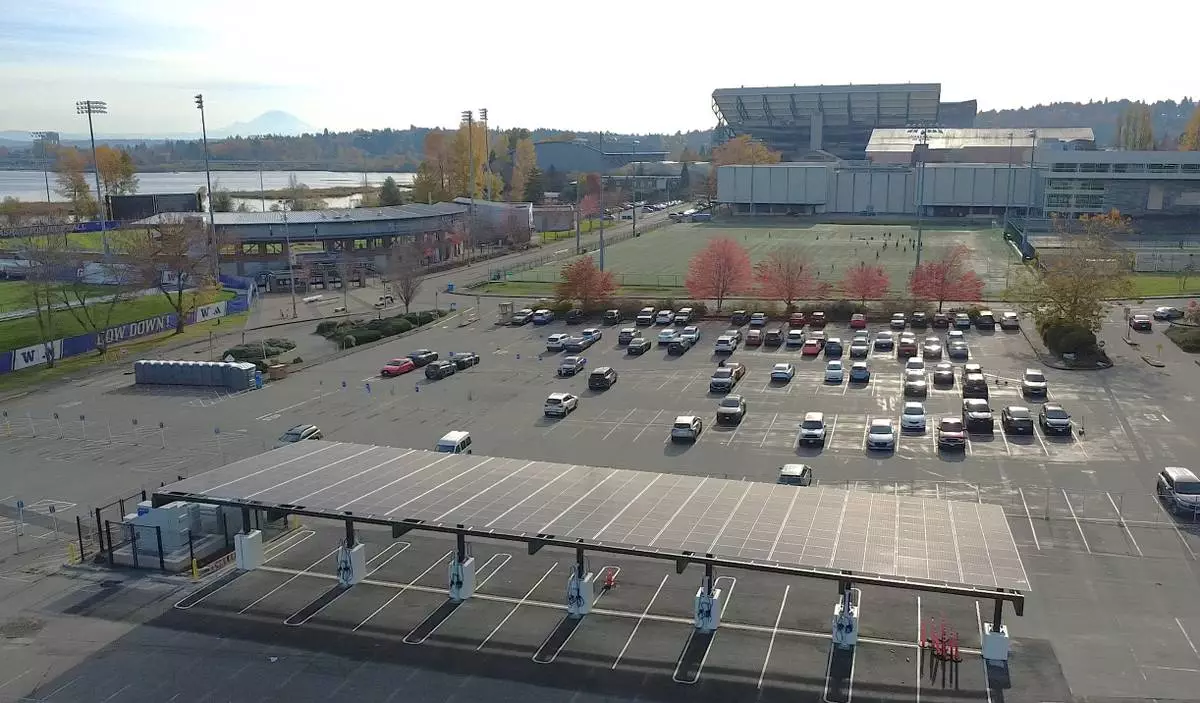
Washington University E-18 Parking Lot Solar Canopy Project
PESHAWAR, Pakistan (AP) — The roof of a private school collapsed in the northwestern Pakistani city of Peshawar on Thursday, killing at least 34 children and a teacher and injuring more than 50 other people in the deadliest incident of its kind in the country, authorities and a hospital official said.
The children killed or injured at Al-Khair school were between 6 and 12 years old, while the oldest was 14, Lady Reading Hospital spokesperson Mohammad Asim said. Some of the injured were in critical condition, he said. The hospital declared an emergency as medical staff treated the wounded.
Hours after the collapse in Peshawar, the capital of Khyber Pakhtunkhwa province, emergency services spokesperson Bilal Faizi said that everyone trapped beneath the rubble had been pulled out and crews had cleared debris.
He told The Associated Press that the roofs of two classrooms collapsed when second- and third-grade children were in them with their teachers. Faizi said ambulances and disaster management personnel arrived from a nearby facility within five minutes of being alerted.
Nearly 100 rescuers eventually joined the operation, he said. Panicked, grieving parents were trying to help when crews arrived, Faizi said. He credited the rapid evacuation with saving at least 40 lives. More than a dozen children suffered minor injuries, he said.
Building collapses are common in Pakistan, where construction standards are often poorly enforced. Many structures are built with substandard materials, and safety regulations are frequently ignored to reduce costs.
Hundreds of mourners later gathered at Rehman Baba cemetery for mass funeral prayers as grief gripped the neighborhood and announcements echoed from mosque loudspeakers, urging residents to join in prayers for those killed.
Residents said most of the children killed lived in the Dir Colony neighborhood, where the school is located, leaving them unsure which bereaved family to visit first to offer condolences.
Ambulances were seen leaving the hospital to bring the children’s bodies home as mourners wept and wailed.
Mahwish Zaman, an injured teacher speaking from a hospital bed, said the school had an estimated 1,200 students enrolled in nursery through fifth grade. She told The Associated Press that she was in her classroom when the roof collapsed and felt as if the sky had fallen. She regained consciousness in the hospital.
Khyber Pakhtunkhwa Gov. Faisal Karim Kundi expressed sorrow over the collapse and sought a report from the relevant authorities about the cause. He directed officials to provide the best possible medical care to the injured children.
According to witnesses, residents were among the first to reach the school in a congested neighborhood in central Peshawar. Rescue workers arrived within minutes of being alerted, according to accounts from the scene.
A resident, Samiullah Khan, said that he rushed to the school after learning of the collapse and helped rescue three girls. Khan said his son, who attends the school, survived because he had stepped out of his classroom for a drink of water.
Another resident, Mohammad Khan, said that rescuers carefully removed debris, trying to reach children and staff feared trapped beneath the collapsed roof. Outside the school and at the state-run Lady Reading Hospital, anguished parents sought information about their children, unsure whether they had survived.
Peshawar police chief Saeed Ahmed said that the school's owner had been arrested. He said that the building was structurally weak. However, following his arrest, the owner, Mohammad Khan, blamed this week’s rains for weakening one of the roofs, according to police, who said the investigation was still underway.
The provincial government said a committee had been formed to investigate the cause of the roof collapse of the three-story building.
The provincial government spokeswoman, Samar Haroon Bilour, praised rescue workers for their swift response. She said that the government was using all available resources to bring those trapped beneath the rubble to safety.
In Islamabad, President Asif Ali Zardari and Prime Minister Shehbaz Sharif expressed sorrow over the deaths and offered condolences to the bereaved families in separate statements.
“The entire nation shares the grief of the affected families in this hour of sorrow,” Zardari said.
He also called for a comprehensive investigation into the collapse and stressed the need to ensure school buildings meet safety standards to prevent similar tragedies.
In July, a roof collapsed at a tutoring center under construction in Lahore, killing four schoolchildren.
Munir Ahmed reported from Islamabad. Associated Press writer Rasool Dawar in Peshawar and Ishtiaq Mahsud in Dera Ismail Khan contributed to this story.
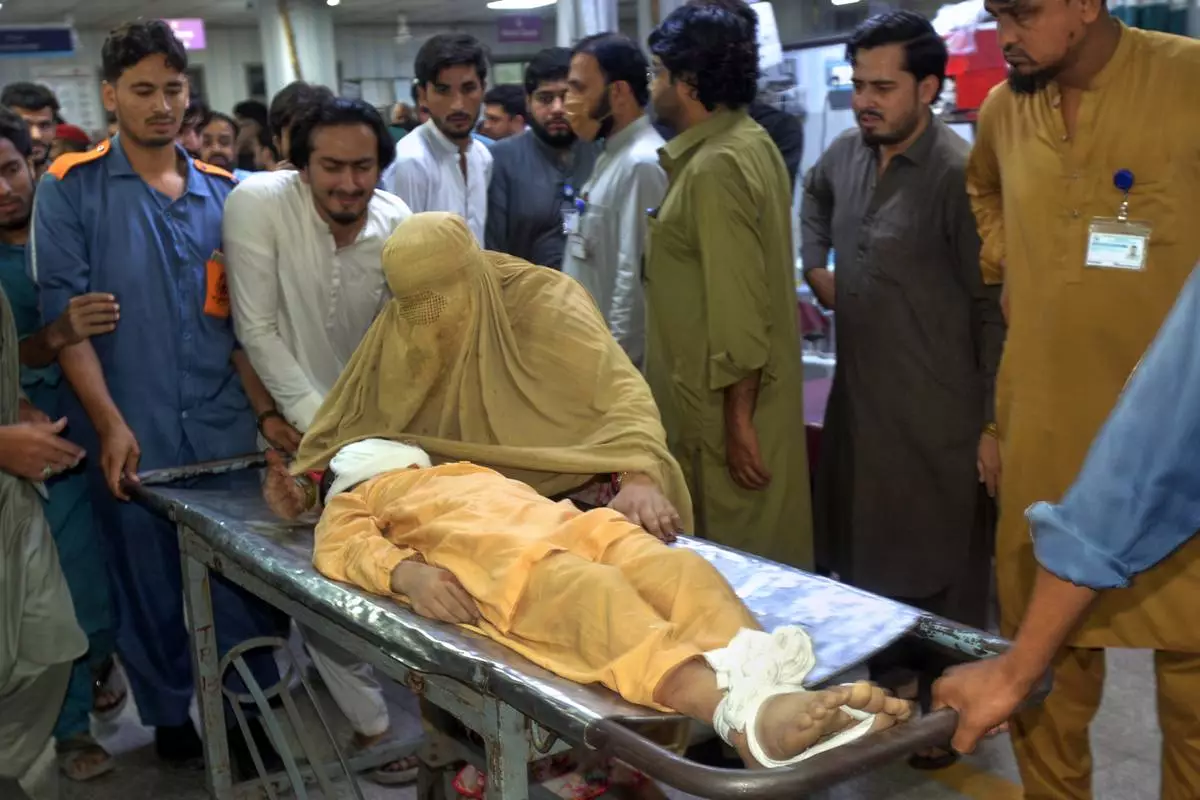
A woman mourns next to the body of a boy, who was killed in the roof collapse of a private school, at a hospital in Peshawar, Pakistan, Thursday, Oct. 15, 2026. (AP Photo/Muhammad Zubair)

Rescue workers carry an injured boy after rescuing him from the rubble of a roof collapse at a private school, in Peshawar, Pakistan, Thursday, Oct. 15, 2026. (AP Photo/Muhammad Zubair)

A rescue worker carries an injured child after rescuing him from the rubble of a roof collapse at a private school, in Peshawar, Pakistan, Thursday, Oct. 15, 2026. (AP Photo/Arif Khan)
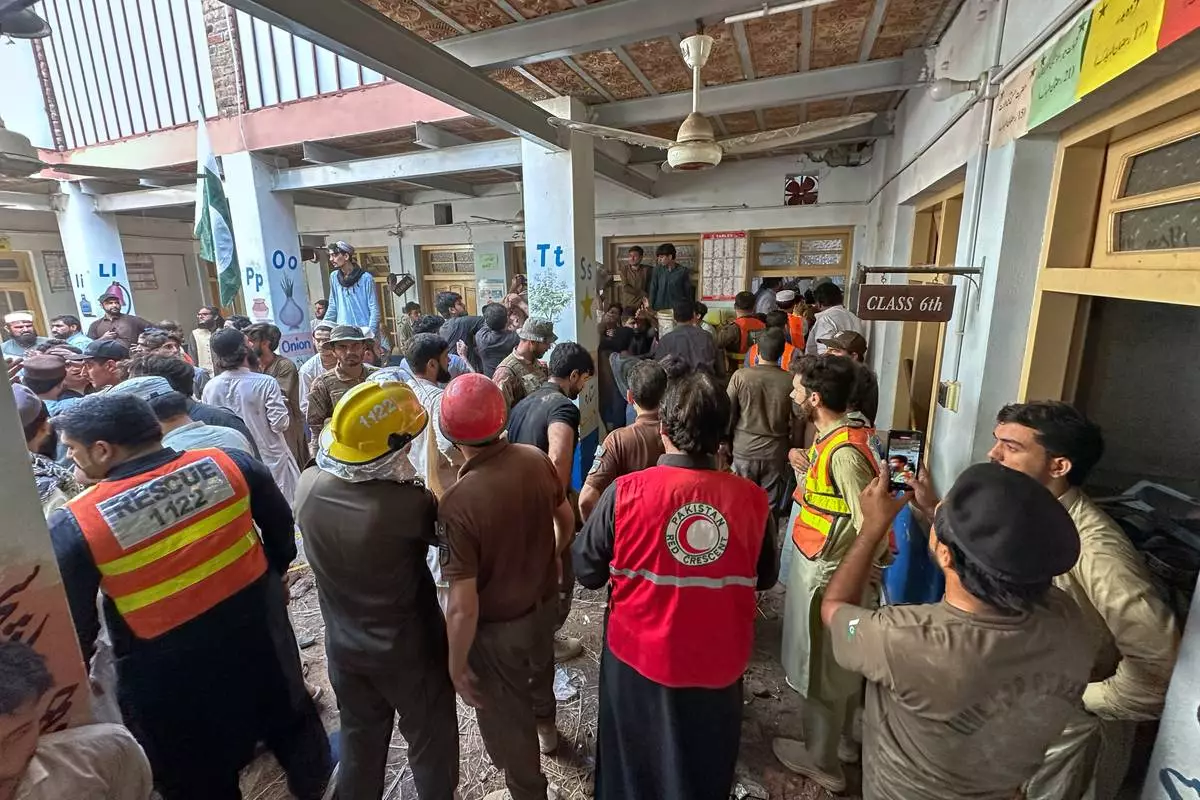
Rescue workers and volunteers take part in the rescue operation at the site of a roof collapse at a private school, in Peshawar, Pakistan, Thursday, Oct. 15, 2026. (AP Photo/Maaz Awan)
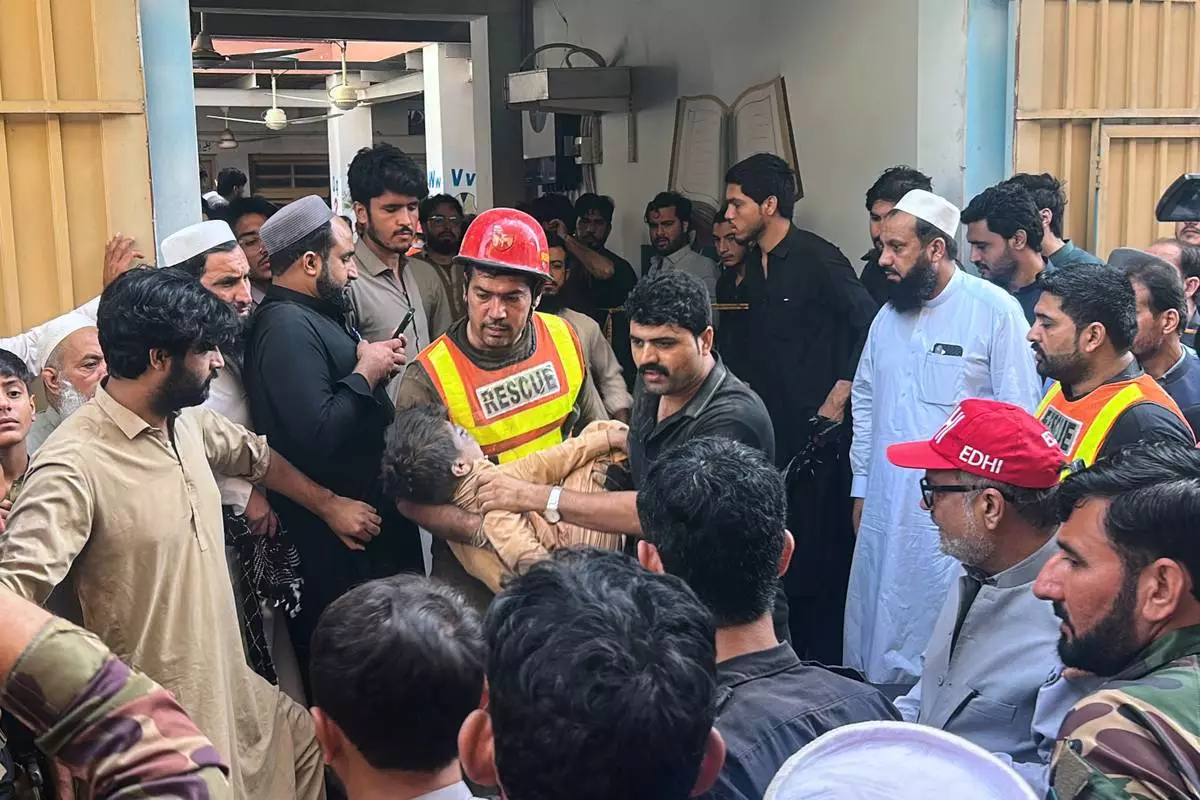
A rescue worker carries an injured child after rescuing him from the rubble of a roof collapse at a private school, in Peshawar, Pakistan, Thursday, Oct. 15, 2026. (AP Photo/Arif Khan)
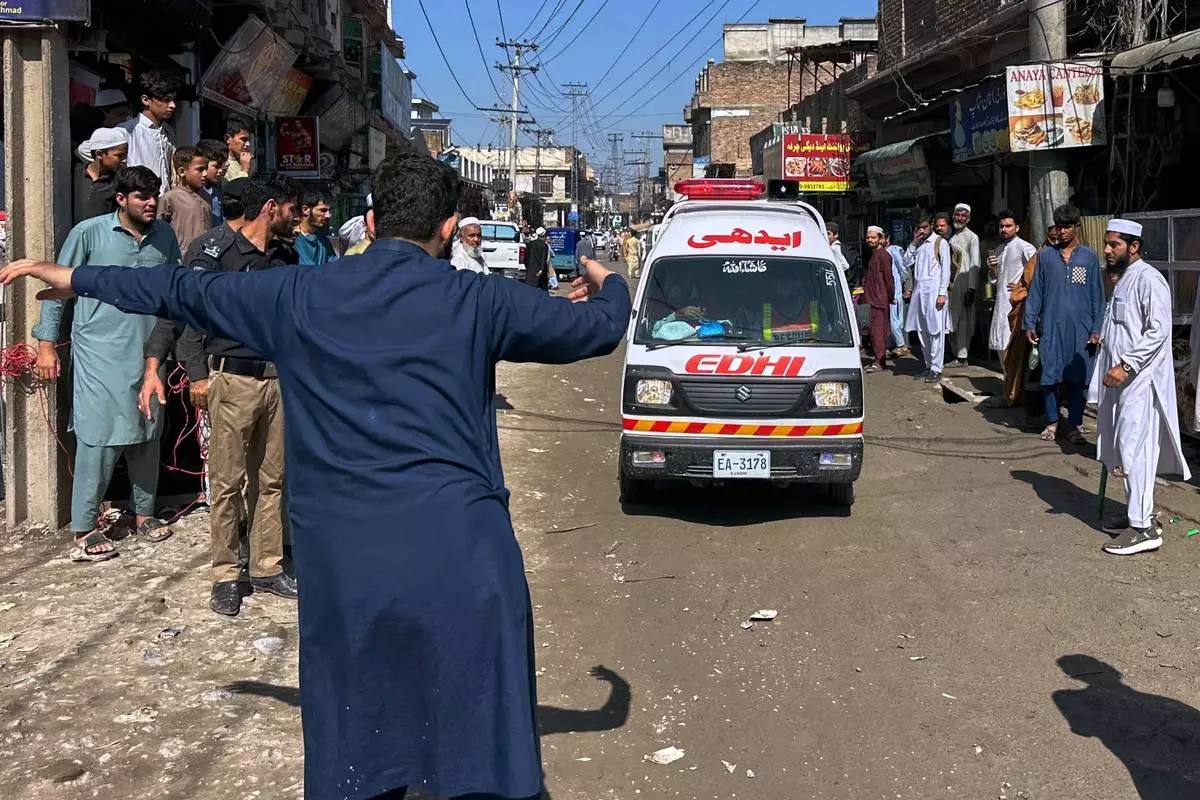
A volunteer clears the way for an ambulance transporting injured school children following a roof collapse at a private school in Peshawar, Pakistan, Thursday, Oct. 15, 2026. (AP Photo/Maaz Awan)