Skip to Content Facebook Feature Image

Finnish divers recover 2 of the dead Italians from an underwater cave in the Maldives

News

Finnish divers recover 2 of the dead Italians from an underwater cave in the Maldives
News

News

Finnish divers recover 2 of the dead Italians from an underwater cave in the Maldives

2026-05-19 16:54 Last Updated At:17:00

MALE, Maldives (AP) — Finnish divers on Tuesday recovered the bodies of two of the four remaining Italians who died deep inside an underwater cave in an atoll in the Maldives, an official said.

The bodies were located on Monday, when searches resumed after being suspended following the death of a local military diver during a perilous mission to try to reach them.

Five Italian divers went missing on Thursday, with one of the bodies recovered earlier. The plan is to recover the remaining two bodies on Wednesday.

The announcement that two bodies were recovered on Tuesday was made by presidential spokesperson Mohamed Hussain Shareef.

Maldives government spokesman Ahmed Shaam had earlier said that the three Finnish divers would retrieve the bodies, which were lying at a depth of around 60 meters (200 feet). The legal depth for recreational diving in the Maldives is 30 meters (nearly 100 feet).

The government of the Indian Ocean island nation on Monday said that the bodies were spotted in the innermost part of the cave by the three Finnish diving experts, supported by the Maldives police and the military.

“As was previously thought, the four bodies were found inside the cave, not only inside the cave, but well inside the cave into the third segment of the cave, which is the largest part,” Shaam said.

He said that the four bodies were found “pretty much together."

The Divers’ Alert Network Europe, which deployed the three Finnish divers, said on its website that they are technical and cave divers with international experience in search and recovery missions, including operations in “deep overhead environments, confined spaces and high-risk scenarios.”

The team used advanced technical systems, including closed-circuit rebreathers, a system that recycles exhaled breathing gas and removes carbon dioxide through a chemical scrubber, allowing for “significantly longer dives,” the organization said.

The body of a fifth Italian — a diving instructor — was found earlier outside the cave on the day they were reported missing. The five were exploring a cave at a depth of about 50 meters (160 feet) in Vaavu Atoll on Thursday, according to Italy’s Foreign Ministry.

Initial teams had already dived to identify and mark the entrance to the cave system where the Italians disappeared.
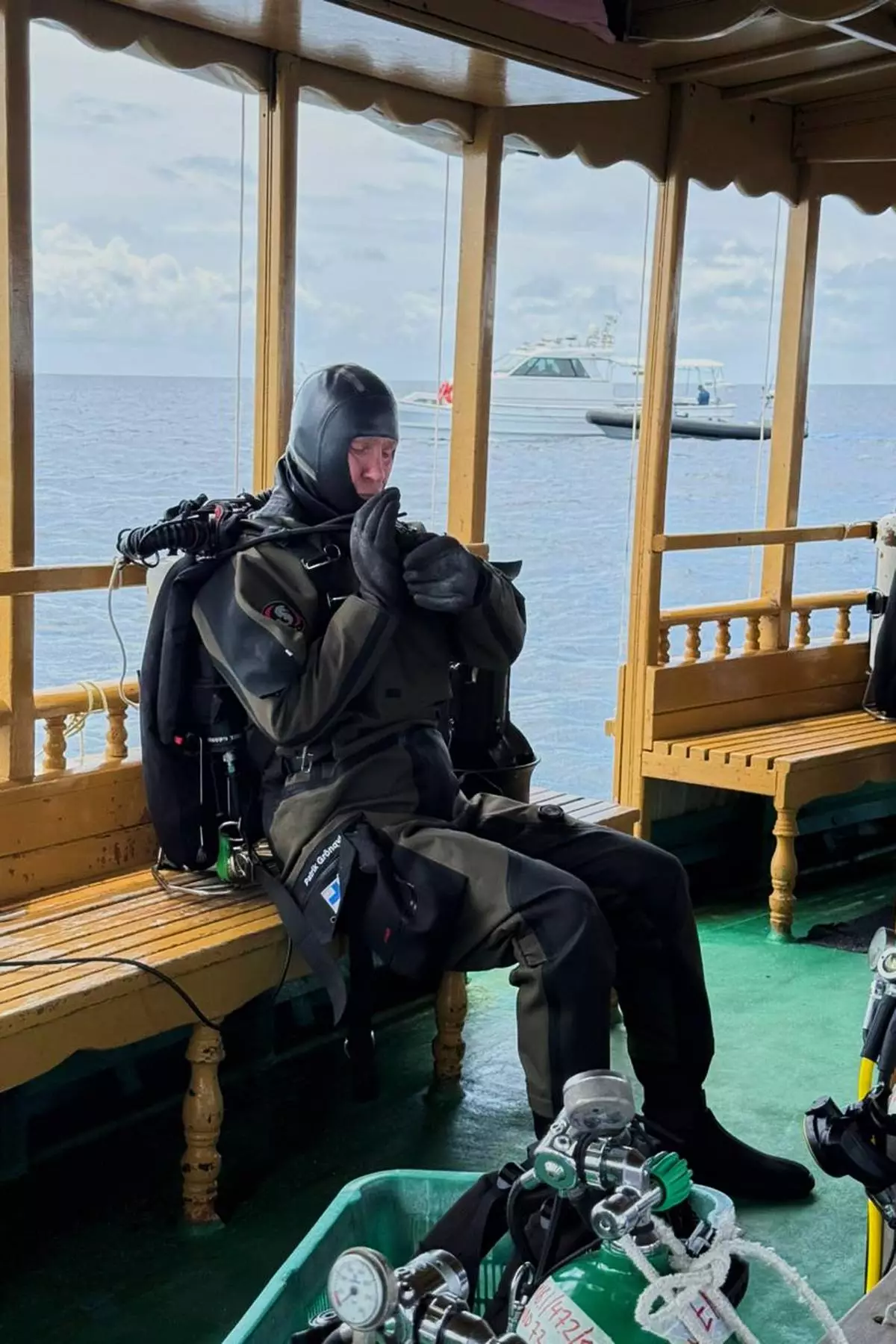
In this handout photo release by Maldives President Media Division, a Finnish diver gets ready to attempt to recover the bodies of two of the four Italians who died deep inside an underwater cave in an atoll earlier this month, at Alimathaa Island, in Vaavu Atoll, Maldives, Tuesday, May 19, 2026. (Maldives President Media Division via AP)
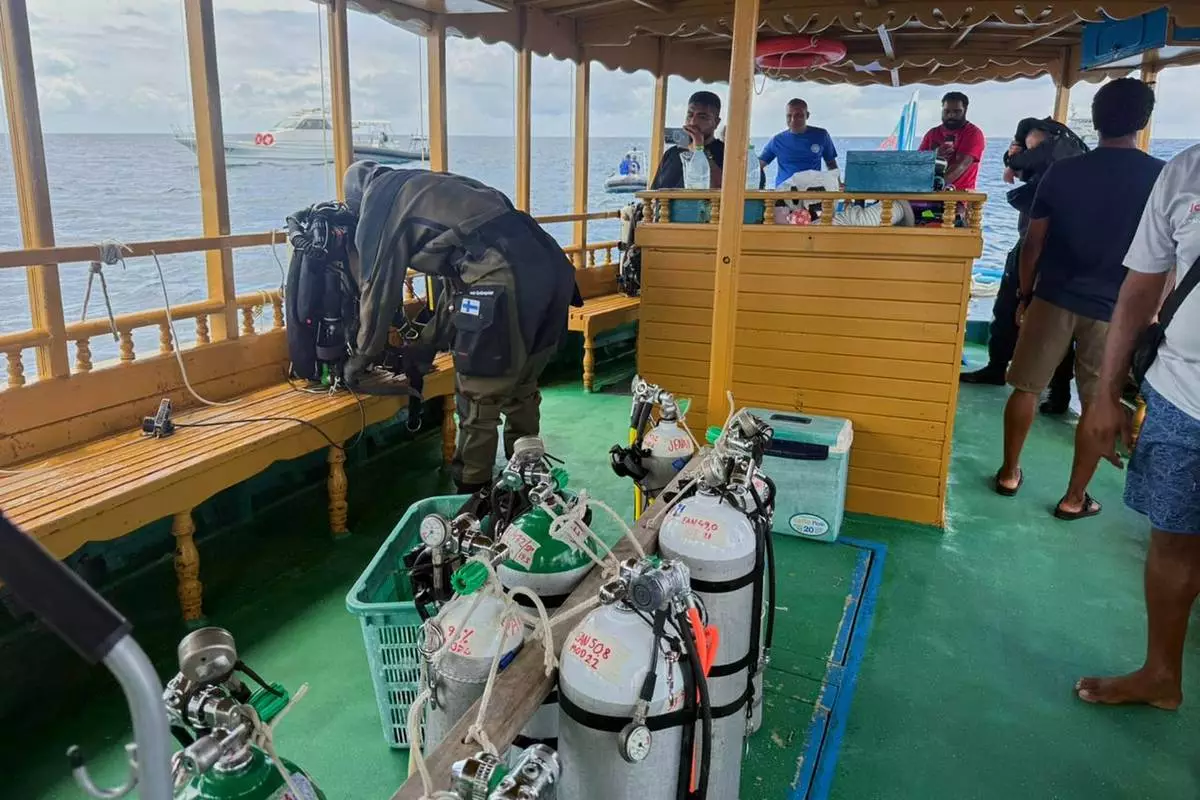
In this handout photo release by Maldives President Media Division, a Finnish diver gets ready to attempt to recover the bodies of two of the four Italians who died deep inside an underwater cave in an atoll earlier this month, at Alimathaa Island, in Vaavu Atoll, Maldives, Tuesday, May 19, 2026. (Maldives President Media Division via AP)
In this handout photo release by Maldives President Media Division, a Finnish diver, left, gets ready to attempt to recover the bodies of two of the four Italians who died deep inside an underwater cave in an atoll earlier this month, at Alimathaa Island, in Vaavu Atoll, Maldives, Tuesday, May 19, 2026. (Maldives President Media Division via AP)

In this handout photo release by Maldives President Media Division, a Finnish diver, left, gets ready to attempt to recover the bodies of two of the four Italians who died deep inside an underwater cave in an atoll earlier this month, at Alimathaa Island, in Vaavu Atoll, Maldives, Tuesday, May 19, 2026. (Maldives President Media Division via AP)

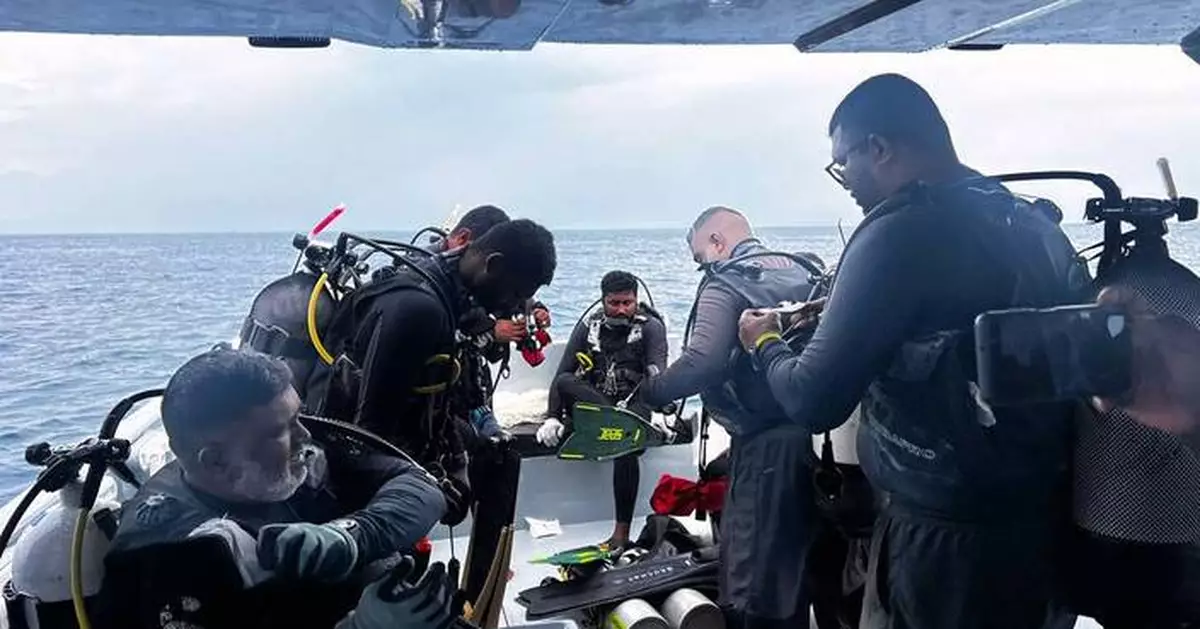
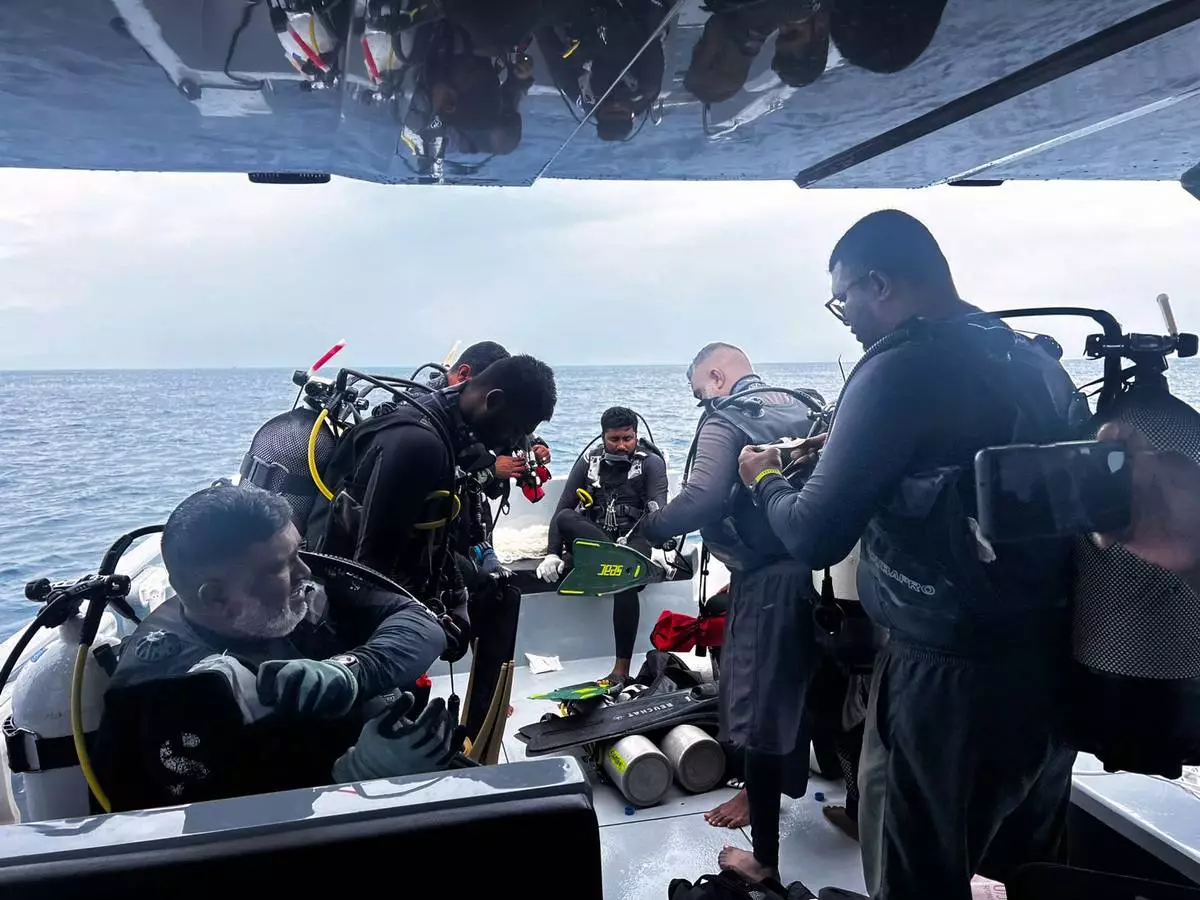
This image released by the Maldives President's Media Division, shows divers preparing to search for the four missing Italian divers near Alimathaa Island, Vaavu Atoll, Maldives, Saturday, May 15, 2026. (Maldives President's Media Division via AP)

This image released by the Maldives President's Media Division, shows divers preparing to search for the four missing Italian divers near Alimathaa Island, Vaavu Atoll, Maldives, Saturday, May 15, 2026. (Maldives President's Media Division via AP)

TOKYO--(BUSINESS WIRE)--May 19, 2026--

Axelspace Corporation, a leading developer and operator of microsatellites dedicated to realizing its vision of “Space within Your Reach,” announced today that GRUS-3, a set of seven next-generation Earth observation microsatellites, is scheduled to be launched no earlier than July 2026.

This press release features multimedia. View the full release here: https://www.businesswire.com/news/home/20260519449959/en/

The seven GRUS-3 microsatellites will launch aboard the Transporter-17 rideshare mission via Exolaunch, a global leader in launch mission management, satellite integration, and deployment services, from Vandenberg Space Force Base in California, USA.

We currently operate five optical Earth observation microsatellites, GRUS-1, under our Earth observation data service, AxelGlobe. With the launch of its successor, GRUS-3, it will expand its satellite constellation to more than 10 satellites.

Enabling Wide-Area, High-Frequency Observation

GRUS-3 will capture images of the Earth’s surface at the same location once per day for locations north of 25 degrees latitude from an orbit at an altitude of 585 km. It features a spatial resolution (GSD) of 2.2 meters, with each satellite having an effective swath of 28.3 km and a maximum capture length of 1,356km. A combined daily capture capacity is 2.3 million km² across seven satellites.

By enabling wide-area, high-frequency observation, GRUS-3 allows for more rapid and continuous monitoring of changes on the Earth's surface.

Expanding the Applications of Earth Observation Data

GRUS-3 is newly equipped with the “coastal blue” spectral band, which is effective for capturing information beneath the water surface. In addition to acquiring true color imagery and data for analyzing vegetation health, as with GRUS-1, GRUS-3 can also observe shallow coastal features such as seabed topography and seagrass beds.

By combining the enhanced observation frequency and performance of GRUS-3 with our satellite attitude control technology—enabling tasking (on-demand imaging of designated areas)—we will meet growing demand across a wide range of fields, environment and security, in addition to precision agriculture, forest monitoring, and map creation.

For the Full Article: https://www.axelspace.com/news/grus-3_launch/
Press Release on GRUS-3 Telescopes: https://www.axelspace.com/news/grus-3_nikon_telescopes/

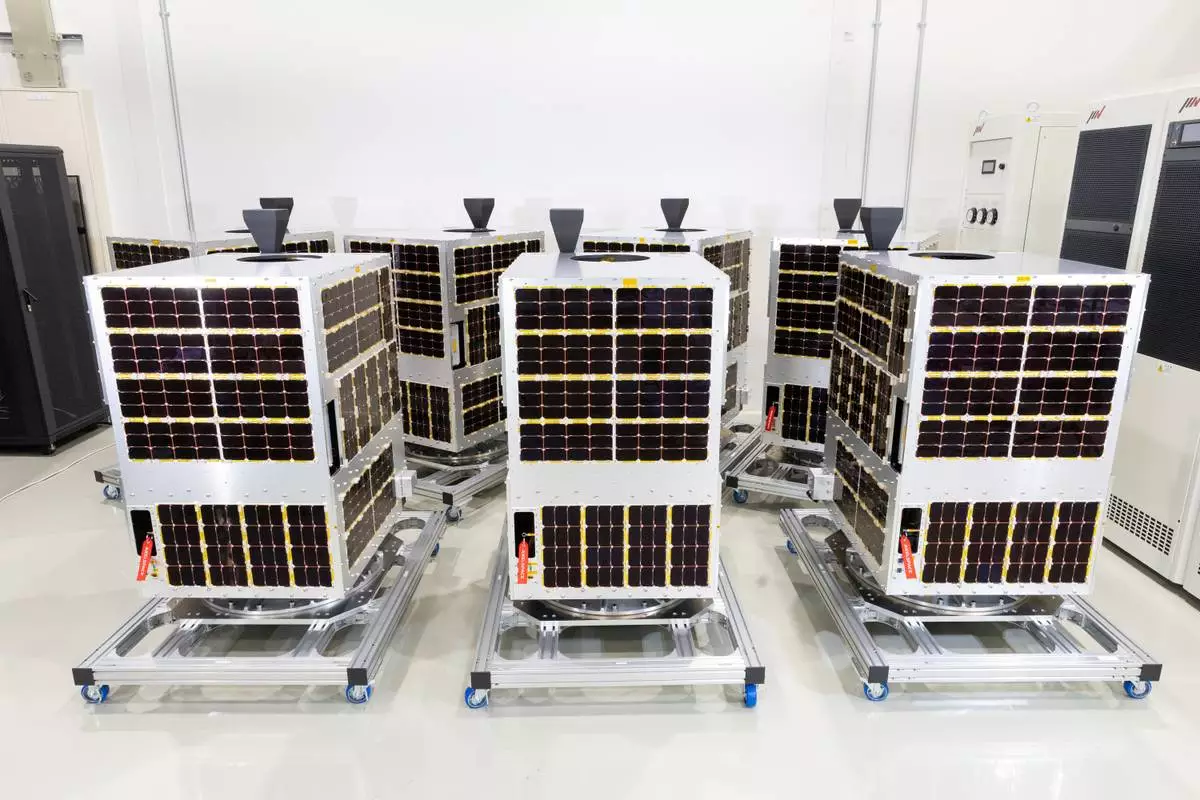
Seven flight model of GRUS-3 next-generation Earth observation microsatellites ©Axelspace

Seven flight model of GRUS-3 next-generation Earth observation microsatellites ©Axelspace

Recommended Articles