SEOUL, South Korea (AP) — South Korean President Lee Jae Myung and Japanese Prime Minister Sanae Takaichi were set to hold their fourth meeting in about six months on Tuesday, underscoring their push to deepen ties between the historical Asian rivals in the face of geopolitical challenges.
Lee will host Takaichi in his hometown of Andong, a southeastern South Korean city famous for a centuries-old traditional folk village that is a UNESCO World Heritage site. In January, the two met in Takaichi’s hometown of Nara, an ancient Japanese capital.
Click to Gallery
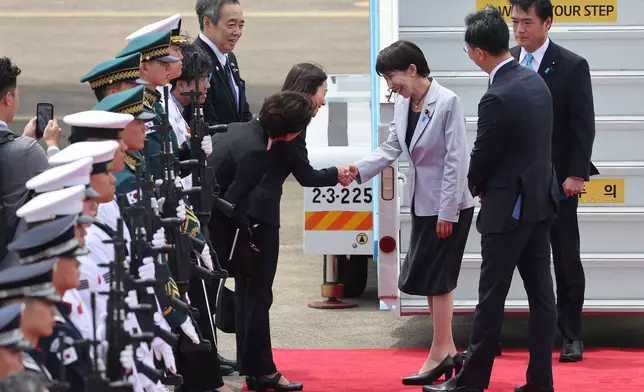
Japan's Prime Minister Sanae Takaichi, third from right, is greeted upon arrival at the Daegu International Airport in Daegu, South Korea, Tuesday, May 19, 2026. (Yoon Kwan-shick/Yonhap via AP)
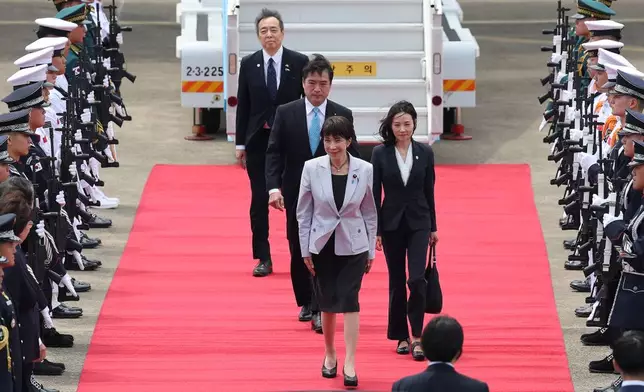
Japan's Prime Minister Sanae Takaichi, center, inspects an honor guard upon arrival at the Daegu International Airport in Daegu, South Korea, Tuesday, May 19, 2026. (Yoon Kwan-shick/Yonhap via AP)
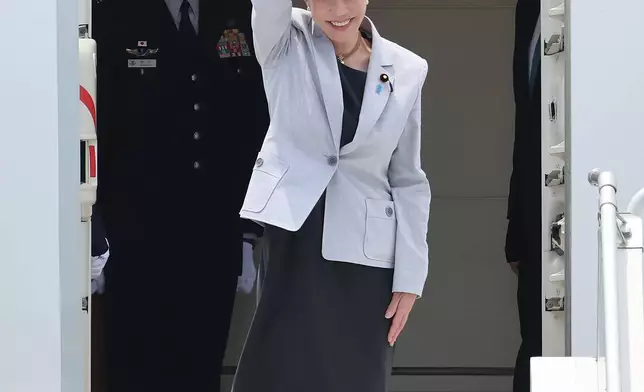
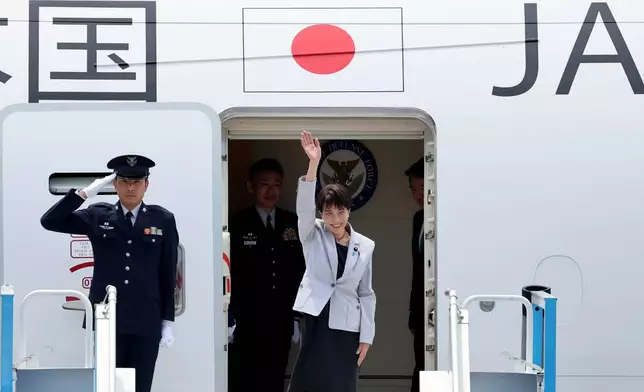
Japan's Prime Minister Sanae Takaichi waves upon arrival at the Daegu International Airport in Daegu, South Korea, Tuesday, May 19, 2026. (Yoon Kwan-shick/Yonhap via AP)
Japan's Prime Minister Sanae Takaichi waves upon arrival at the Daegu International Airport in Daegu, South Korea, Tuesday, May 19, 2026. (Yoon Kwan-shick/Yonhap via AP)
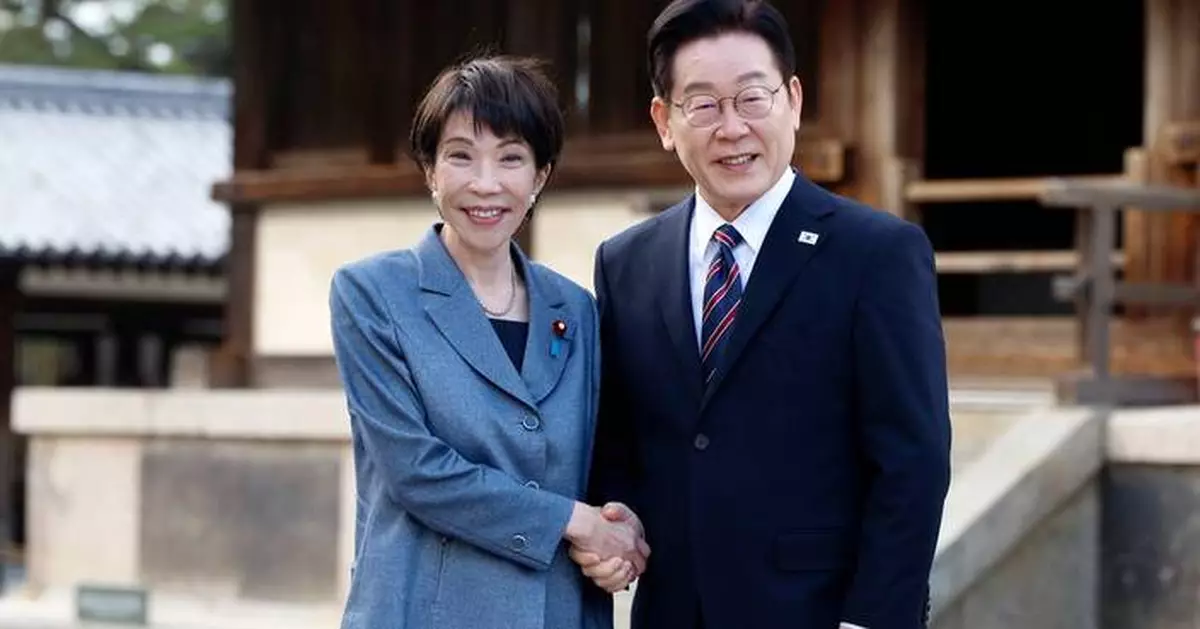
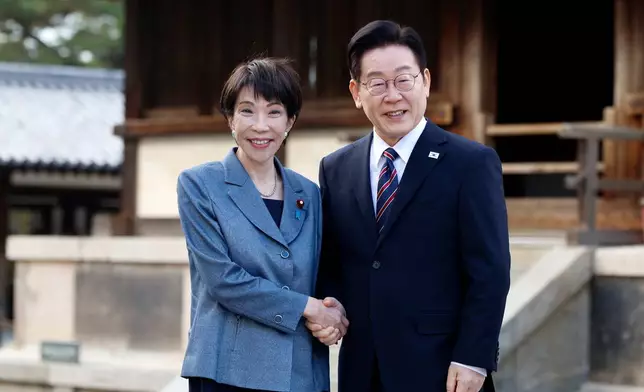
File - Japanese Prime Minister Sanae Takaichi, left, and South Korean President Lee Jae Myung pose as they visit the Western Precinct or Saiin Garan, at the Horyuji Temple in Ikaruga, Nara prefecture, western Japan, Jan. 14, 2026. (Franck Robichon/Pool Photo via AP, File)
The meetings mark the first time sitting leaders of the two countries have visited each other’s hometowns.
South Korea’s presidential office expressed hope that Tuesday’s summit would strengthen mutual trust between Lee and Takaichi. Takaichi told reporters Tuesday morning she hopes the talks will deepen cooperation “under the severe geopolitical conditions such as situations in the Middle East and the Indo-Pacific.”
The summit's official agenda includes economic and energy cooperation, the Iran war and development of their bilateral ties, which have no current sticking points. Experts say the meeting likely will proceed smoothly and the relationship will remain on a positive trajectory for now.
“The two countries put more emphasis on agenda for cooperation than contentious issues,” said Choi Eunmi, a Japan expert at the Seoul-based Asan Institute for Policy Studies. “They would now think scenes of constantly fluctuating relationship or eventually negative bilateral ties won’t be helpful to anyone now.”
South Korea and Japan are both key U.S. allies with vibrant democracies. But their relationship has long experienced severe ups and downs over grievances stemming from Japan’s 35-year colonization of the Korean Peninsula before the end of World War II.
Relations began improving in 2023 when Lee and Takaichi’s predecessors took steps to move beyond history disputes and strengthen cooperation, saying they faced common challenges like the U.S.-China strategic competition, supply chain vulnerabilities and North Korea’s advancing nuclear arsenal.
When Lee and Takaichi each took office as new leaders last year, observers worried about Takaichi’s reputation as a right-wing security hawk and anticipation that Lee, a political liberal, would tilt toward North Korea and China and away from the U.S. and Japan. But they have maintained cooperation, even in some unprecedented ways.
In August, two months before Takaichi’s inauguration, Lee became the first South Korean leader to choose Japan as his first destination for a bilateral summit. At the end of their meeting in January, Lee and Takaichi drummed to K-pop hits such as BTS’ “Dynamite” in a jam session arranged by the Japanese leader, a heavy metal fan who was a drummer in her college days.
Lee has said he and Takaichi share a view that national leaders must act differently than ordinary politicians. But many observers say the two leaders also likely feel the need to tighten cooperation because they have more grave geopolitical difficulties than their predecessors such as U.S. President Donald Trump’s America-first policy and global economic damage caused by the Iran war.
South Korea and Japan both have pledged hundreds of billions of dollars in U.S. business investments. Trump’s tariff war and his transactional approach to security threaten the trust in the U.S. held by many South Korean and Japanese.
Ties between Seoul and Tokyo are so delicate they could suffer unexpected setbacks if they fail to formulate coping measures for explosive issues such as Japan’s colonial-era mobilization of Koreans as forced laborers and sex slaves, according to experts, who say wrangling over those issues has eased as the two governments try to avoid public discussions.
“Both countries aren’t talking about how to resolve and prevent recurrences of conflicts over those issues and we don’t know when they could occur again,” Choi said.
Associated Press writer Mari Yamaguchi in Tokyo contributed to this report.
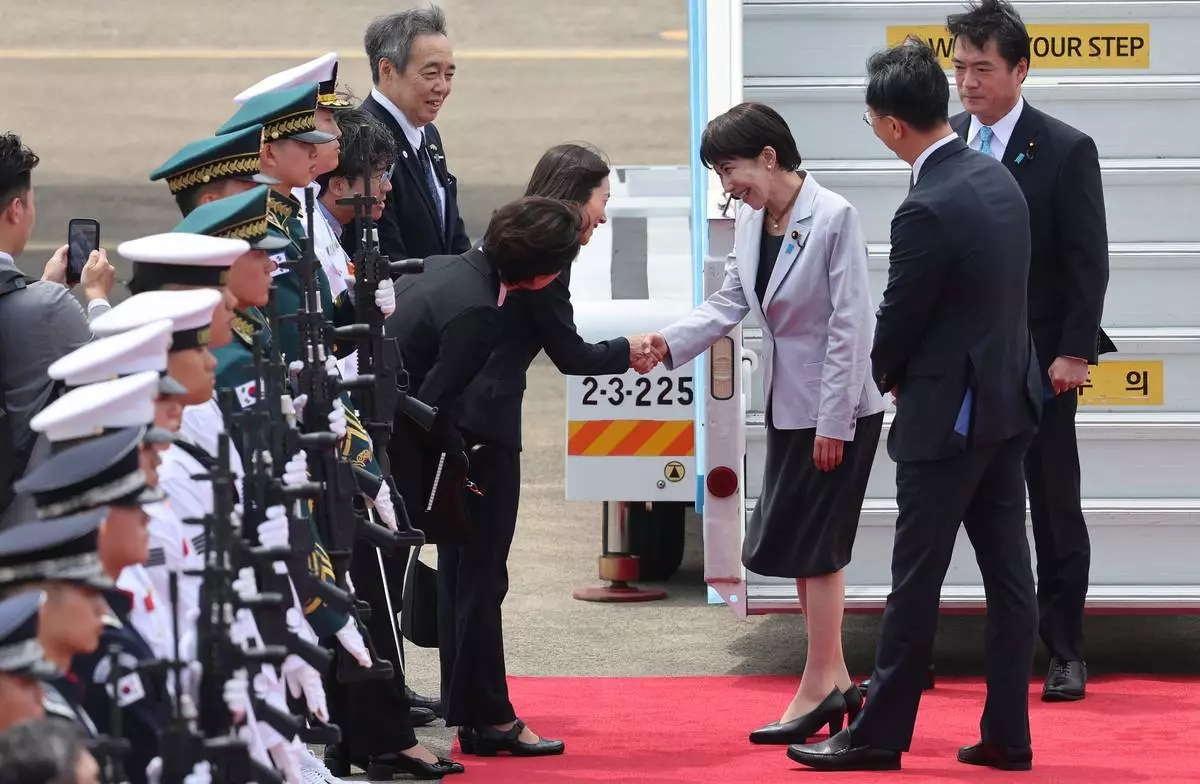
Japan's Prime Minister Sanae Takaichi, third from right, is greeted upon arrival at the Daegu International Airport in Daegu, South Korea, Tuesday, May 19, 2026. (Yoon Kwan-shick/Yonhap via AP)
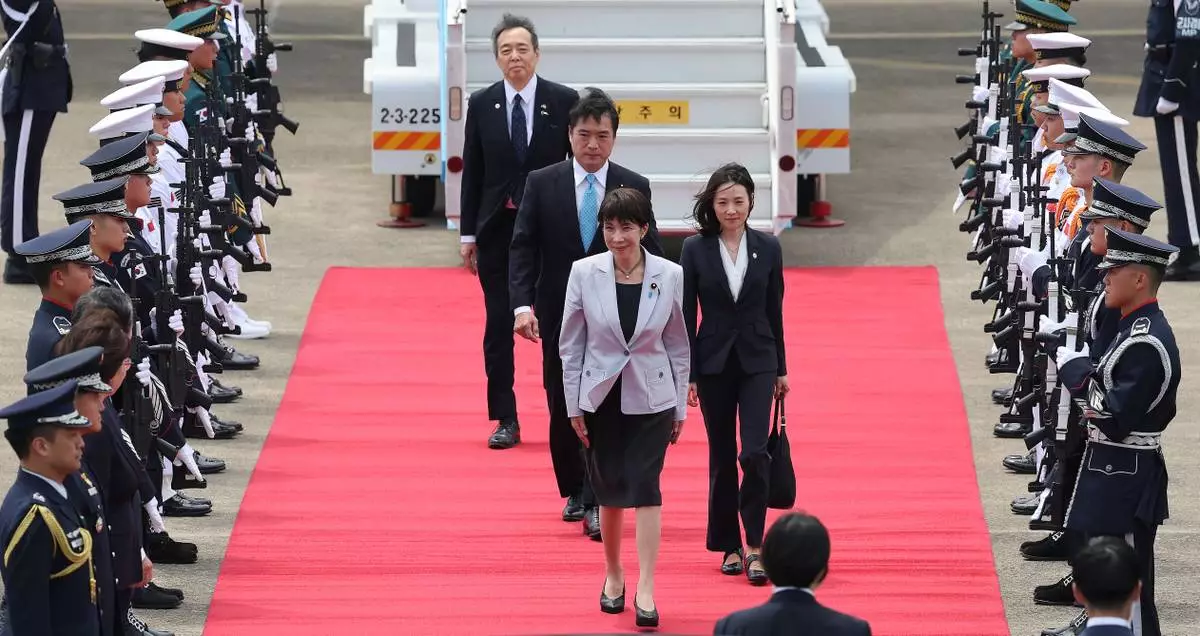
Japan's Prime Minister Sanae Takaichi, center, inspects an honor guard upon arrival at the Daegu International Airport in Daegu, South Korea, Tuesday, May 19, 2026. (Yoon Kwan-shick/Yonhap via AP)
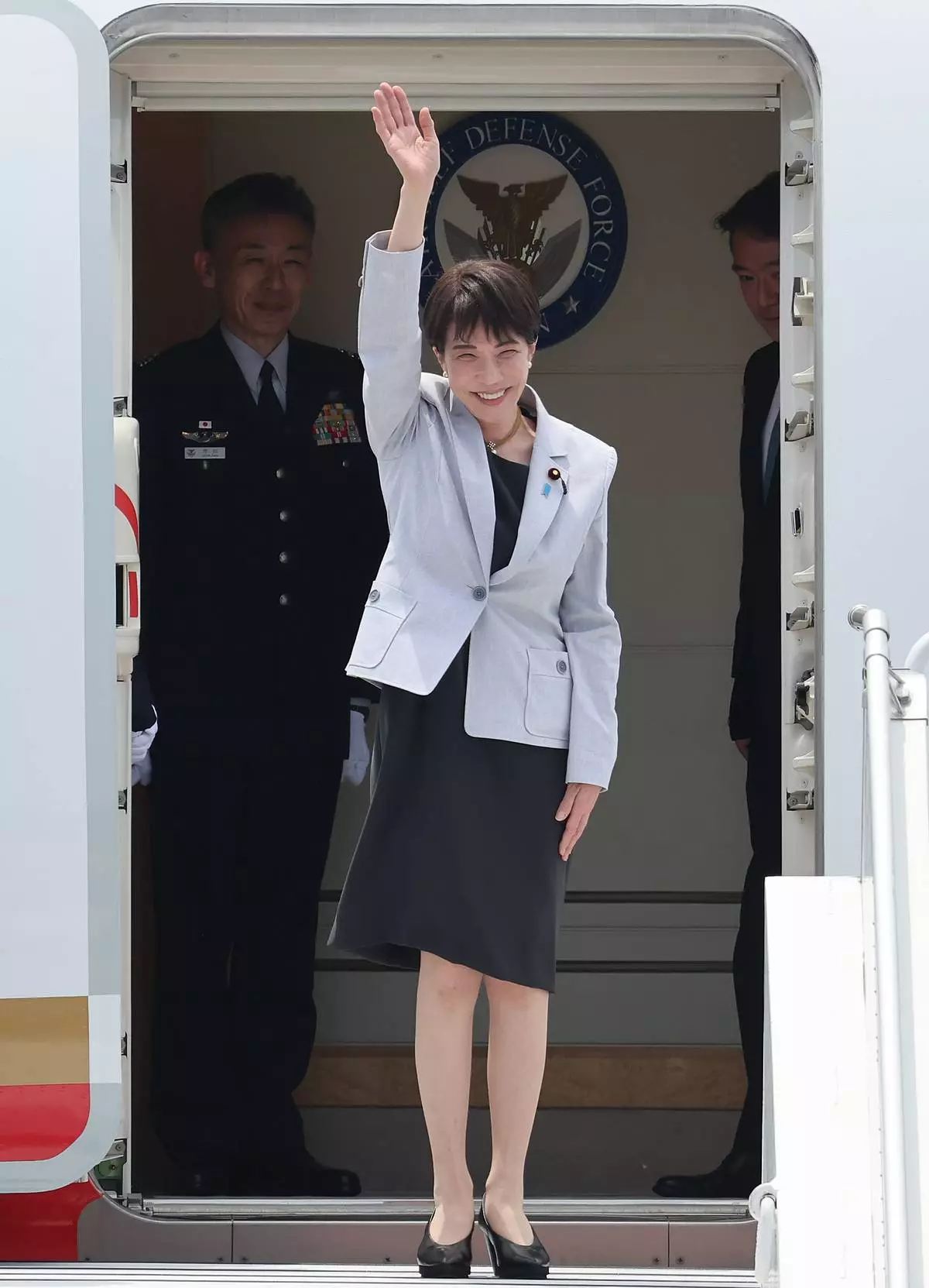
Japan's Prime Minister Sanae Takaichi waves upon arrival at the Daegu International Airport in Daegu, South Korea, Tuesday, May 19, 2026. (Yoon Kwan-shick/Yonhap via AP)
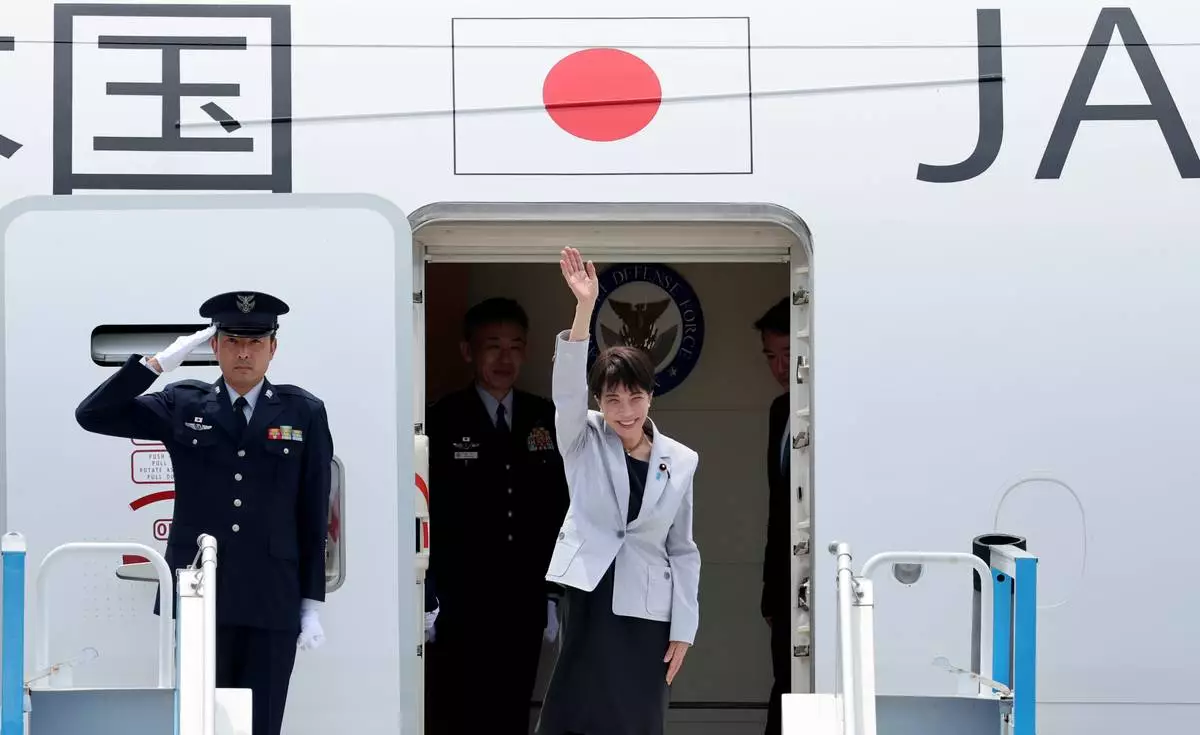
Japan's Prime Minister Sanae Takaichi waves upon arrival at the Daegu International Airport in Daegu, South Korea, Tuesday, May 19, 2026. (Yoon Kwan-shick/Yonhap via AP)
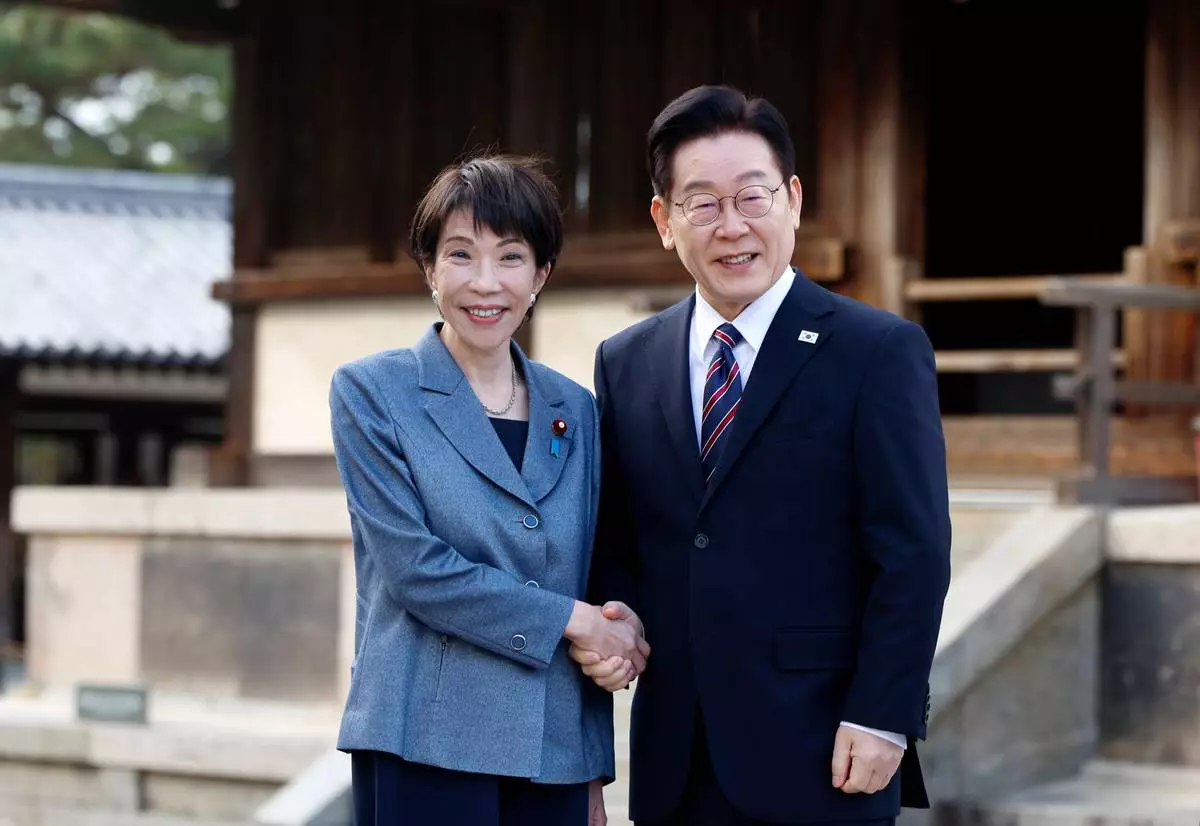
File - Japanese Prime Minister Sanae Takaichi, left, and South Korean President Lee Jae Myung pose as they visit the Western Precinct or Saiin Garan, at the Horyuji Temple in Ikaruga, Nara prefecture, western Japan, Jan. 14, 2026. (Franck Robichon/Pool Photo via AP, File)
RANCHO PALOS VERDES, Calif. (AP) — It’s no stretch to say that in the battle of wills, visions and, yes, national titles being waged across the college-sports landscape, the Big Ten has taken the lead.
Leaders in the conference currently holding the football, men’s and women’s basketball titles opened their annual spring meeting Monday with nothing more than the future of their business on the agenda.
“It seems like we’re paddling beneath the surface and we don’t really know what direction we’re going in,” said coach Dusty May, whose Michigan men’s basketball team won the championship a mere six weeks ago. “There’s no easy solution to this. There’s no logical solution. There’s going to have to be some give and take.”
A few big-ticket items have, in fact, been resolved over the past month:
— The NCAA expanded March Madness from 68 to 76 teams and opened a new $300 million revenue stream to fund it through beer and wine sponsorships.
— The College Sports Commission won the first big arbitration case in a test of its authority to enforce rules governing name-image-likeness payments to athletes that are now the norm — and are putting college sports programs in financial jeopardy.
Even those issues, however, aren’t fully resolved — For example, will the arbitration decision involving Nebraska football players lead to a lawsuit? — and they only scratch the surface of what's yet to be hashed out.
Whatever conclusions the Big Ten comes to this week will only be one piece of the puzzle. The SEC gathers next week in meetings that will direct their own league’s business with a view of the wider picture in mind.
The size of the College Football Playoff seems to be the most digestible of the thus-far intractable standoffs, but still, there’s no resolution on the horizon.
In this, the Big Ten also seems to have taken a step forward. A year ago, the conference stood alone in advocating for a move from 12 to 24 teams, while the SEC’s more-limited suggestion, a move to 16 teams, felt like a more plausible option, and one commissioner Greg Sankey is still standing by.
But in the past few weeks, the Atlantic Coast and Big 12 conferences, along with the American Football Coaches Association, have all signaled their preference for 24 teams, which would provide more access.
“If you’re going to ask presidents and chancellors and boards to continue to invest in their football programs, it’s really important that they have hope,” ACC commissioner Jim Phillips said last week.
Expansion would also likely bring about the need to abolish conference title games, which are increasingly meaningless and would be more so in, say, a world where the first- through fourth-place teams in every conference end up in the playoffs.
Another unchanged element: The Big Ten and SEC have all the power in this conversation and they do not agree. The upcoming season’s playoff will be a 12-team affair and the (plausibly movable) deadline to change for 2027 is Dec. 1.
The start of the Big Ten meeting came while debate continued in Washington about legislation that could provide stability.
The so-called SCORE Act was on the schedule in the House rules committee for Tuesday, but this bill has languished in Congress for more than a year. Opponents, mostly Democrats, don’t want to give the NCAA the limited-liability protection it seeks, along with other elements they fear will undercut the rights of players.
And on Monday, the Congressional Black Caucus added a new twist, pointing to the recent Supreme Court ruling that opened the door for Southern states to eliminate Black-majority voting districts as a reason to object.
“At the very moment those same communities face coordinated attacks on their democratic representation, too many leaders across college athletics have chosen silence,” the caucus said in a statement.
Meanwhile, negotiations continue between the two big-name policymakers on the issue in the Senate — Ted Cruz, R-Texas, and Maria Cantwell, D-Wash. If they come up with a bill that could garner the 60 votes needed to pass the upper chamber, it would likely be the closest thing anyone has seen to something that could actually become a law.
The NCAA is moving closer to changing eligibility rules as we know them by eliminating most redshirt seasons and giving most players five years to complete five seasons of eligibility.
In a world in which athletic departments are struggling to allocate a shifting amount of funds ($20.5 million in revenue sharing from the schools combined with untold millions from third parties), having a better gauge of how long players will be at their schools is seen as helpful.
“We probably all look out for our own self-interest too often,” said May, who won the title with a roster full of transfers. “But at Michigan, if we do take a transfer, that gives us a chance to almost assure them they’re going to get their degree while they’re still on scholarship.”
The NCAA would also like to stop getting sued over eligibility rules, though without action from Congress, this one would appear to open a whole new set of lawsuits.
Underpinning all this discussion is the future of NIL and the agency created to police it -- the CSC.
The “participation agreement” the commission sent out to Power 4 schools late last year hasn't been signed by all, which brings into question the commission's ability to function as a robust enforcement arm.
The CEO, Bryan Seeley, will be in town Tuesday to present to the conference athletic directors.
Last week, news of the arbitration win came as he was doing the same at the ACC. He called it a win, but hardly the final say on the matter, some of which revolves around schools unwilling or unable to sign away their ability to take legal action.
Get poll alerts and updates on the AP Top 25 throughout the season. Sign up here and here (AP News mobile app). AP college football: https://apnews.com/hub/ap-top-25-college-football-poll and https://apnews.com/hub/college-football
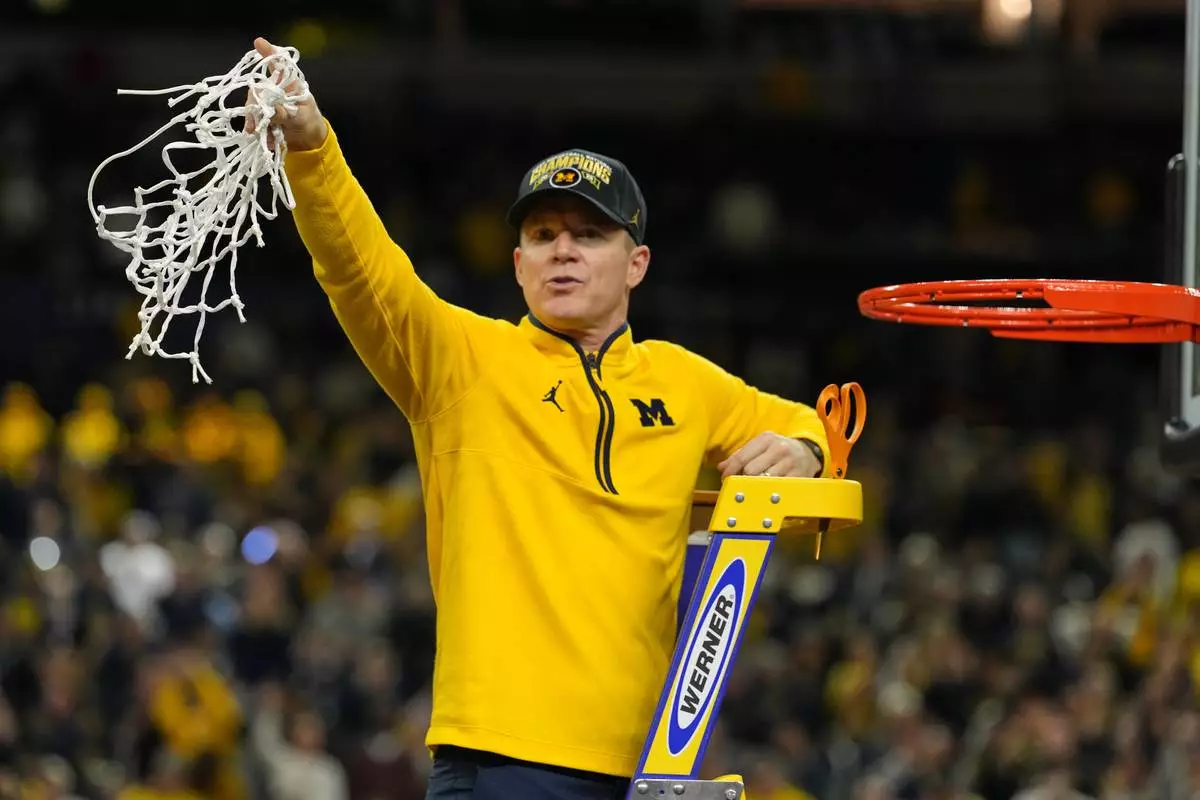
FILE - Michigan head coach Dusty May celebrates by cutting down the net after defeating UConn in the NCAA college basketball tournament national championship game at the Final Four, April 6, 2026, in Indianapolis. (AP Photo/Michael Conroy, File)

FILE - The Big Ten logo is seen on the field at Husky Stadium during an NCAA college football game, Oct. 25, 2025, in Seattle. (AP Photo/Lindsey Wasson, File)