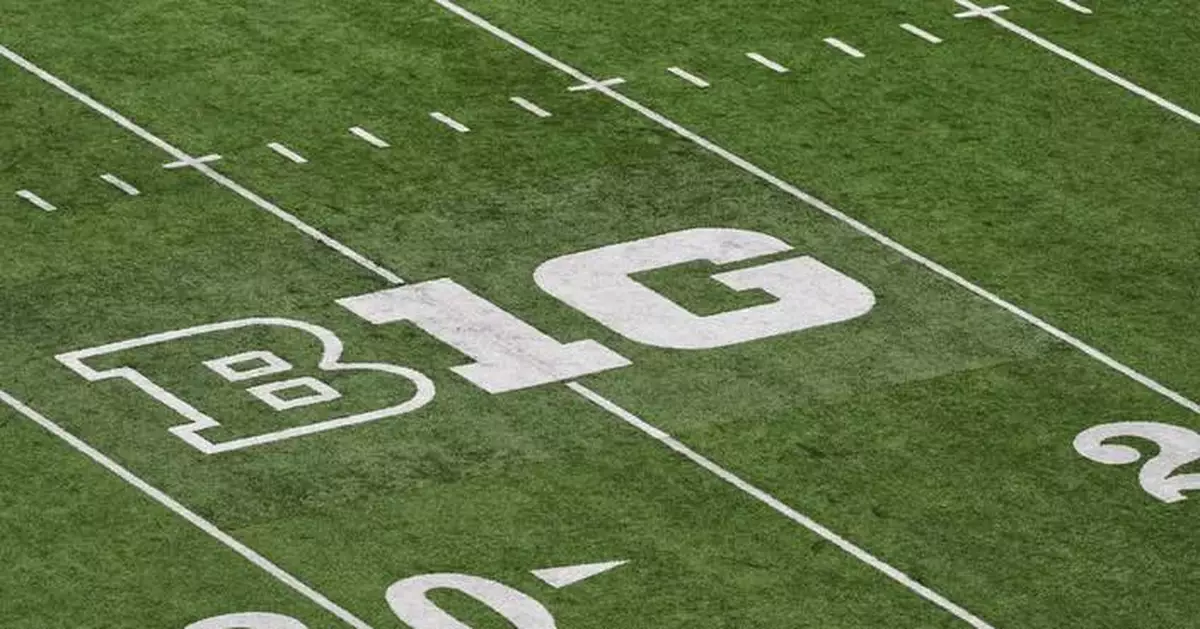
RANCHOS PALOS VERDES, Calif. (AP) — It’s no stretch to say that in the the battle of wills, visions and, yes, national titles being waged across the college-sports landscape, the Big Ten has taken the lead.
Leaders in the conference currently holding the football, men’s and women’s basketball titles opened their annual spring meeting Monday with nothing more than the future of their business on the agenda.
“It seems like we’re paddling beneath the surface and we don’t really know what direction we’re going in,” said coach Dusty May, whose Michigan men’s basketball team won the championship a mere six weeks ago. “There’s no easy solution to this. There’s no logical solution. There’s going to have to be some give and take.”
A few big-ticket items have, in fact, been resolved over the past month:
--The NCAA expanded March Madness from 68 to 76 teams and opened a new $300 million revenue stream to fund it through beer and wine sponsorships.
--The College Sports Commission won the first big arbitration case in a test of its authority to enforce rules governing name-image-likeness payments to athletes that are now the norm – and are putting college sports programs in financial jeopardy.
Even those issues, however, aren’t fully resolved (For example, will the arbitration decision involving Nebraska football players lead to a lawsuit?) and they only scratch the surface of what's yet to be hashed out.
Whatever conclusions the Big Ten comes to this week will only be one piece of the puzzle. The SEC gathers next week in meetings that will direct their own league’s business with a view of the wider picture in mind.
The size of the College Football Playoff seems to be the most digestible of the thus-far intractable standoffs, but still, there’s no resolution on the horizon.
In this, the Big Ten also seems to have taken a step forward. A year ago, the conference stood alone in advocating for a move from 12 to 24 teams, while the SEC’s more-limited suggestion, a move to 16 teams, felt like a more plausible option, and one commissioner Greg Sankey is still standing by.
But in the past few weeks, the Atlantic Coast and Big 12 conferences, along with the American Football Coaches Association, have all signaled their preference for 24 teams, which would provide more access.
“If you’re going to ask presidents and chancellors and boards to continue to invest in their football programs, it’s really important that they have hope,” ACC commissioner Jim Phillips said last week.
Expansion would also likely bring about the need to abolish conference title games, which are increasingly meaningless and would be more so in, say, a world where the first- through fourth-place teams in every conference end up in the playoffs.
Another unchanged element: The Big Ten and SEC have all the power in this conversation and they do not agree. The upcoming season’s playoff will be a 12-team affair and the (plausibly movable) deadline to change for 2027 is Dec. 1.
The start of the Big Ten meeting came while debate continued in Washington about legislation that could provide stability.
The so-called SCORE Act was on the schedule in the House rules committee for Tuesday, but this bill has languished in Congress for more than a year. Opponents, mostly Democrats, don’t want to give the NCAA the limited-liability protection it seeks, along with other elements they fear will undercut the rights of players.
And on Monday, the Congressional Black Caucus added a new twist, pointing to the recent Supreme Court ruling that opened the door for Southern states to eliminate Black-majority voting districts as a reason to object.
“At the very moment those same communities face coordinated attacks on their democratic representation, too many leaders across college athletics have chosen silence,” the caucus said in a statement.
Meanwhile, negotiations continue between the two big-name policymakers on the issue in the Senate – Ted Cruz, R-Texas, and Maria Cantwell, D-Wash. If they come up with a bill that could garner the 60 votes needed to pass the upper chamber, it would likely be the closest thing anyone has seen to something that could actually become a law.
The NCAA is moving closer to changing eligibility rules as we know them by eliminating most redshirt seasons and giving most players five years to complete five seasons of eligibility.
In a world in which athletic departments are struggling to allocate a shifting amount of funds ($20.5 million in revenue sharing from the schools combined with untold millions from third parties), having a better gauge of how long players will be at their schools is seen as helpful.
“We probably all look out for our own self-interest too often,” said May, who won the title with a roster full of transfers. “But at Michigan, if we do take a transfer, that gives us a chance to almost assure them they’re going to get their degree while they’re still on scholarship.”
The NCAA would also like to stop getting sued over eligibility rules, though without action from Congress, this one would appear to open a whole new set of lawsuits.
Underpinning all this discussion is the future of NIL and the agency created to police it -- the CSC.
The “participation agreement” the commission sent out to Power 4 schools late last year hasn't been signed by all, which brings into question the commission's ability to function as a robust enforcement arm.
The CEO, Bryan Seeley, will be in town Tuesday to present to the conference athletic directors.
Last week, news of the arbitration win came as he was doing the same at the ACC. He called it a win, but hardly the final say on the matter, some of which revolves around schools unwilling or unable to sign away their ability to take legal action.
Get poll alerts and updates on the AP Top 25 throughout the season. Sign up here and here (AP News mobile app). AP college football: https://apnews.com/hub/ap-top-25-college-football-poll and https://apnews.com/hub/college-football
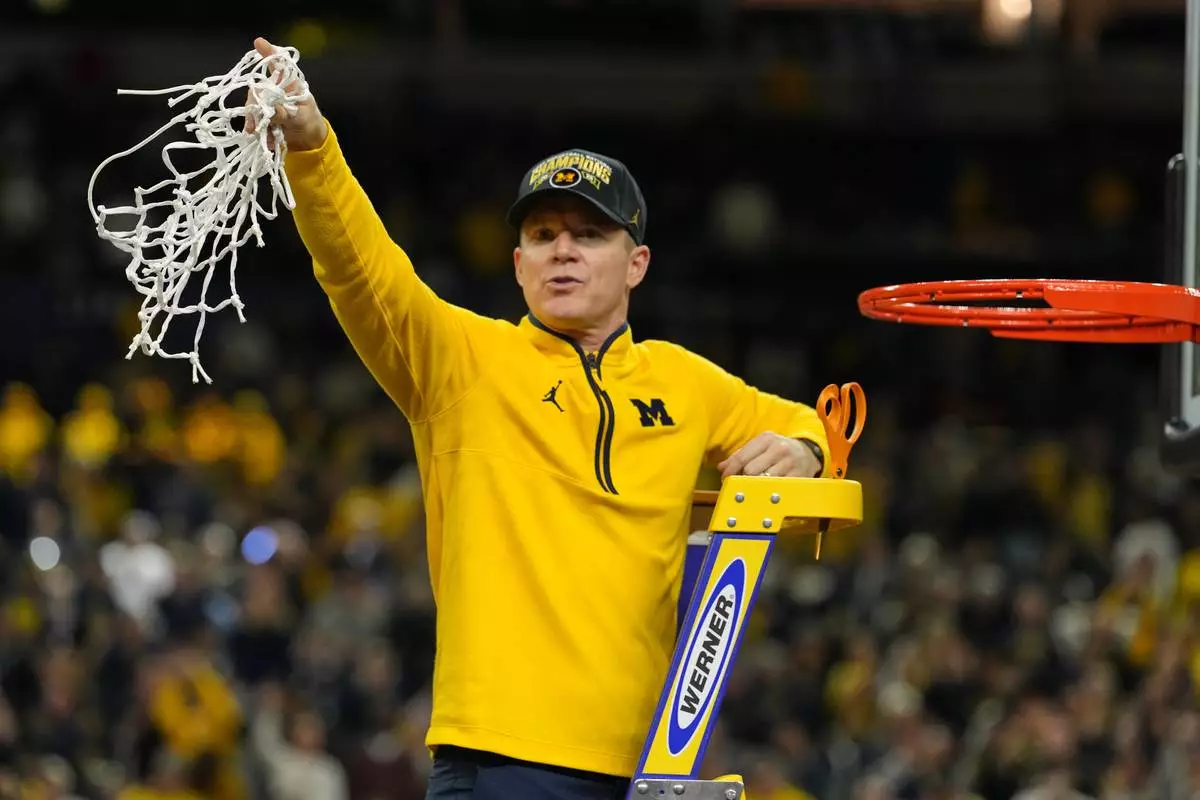
FILE - Michigan head coach Dusty May celebrates by cutting down the net after defeating UConn in the NCAA college basketball tournament national championship game at the Final Four, April 6, 2026, in Indianapolis. (AP Photo/Michael Conroy, File)

FILE - The Big Ten logo is seen on the field at Husky Stadium during an NCAA college football game, Oct. 25, 2025, in Seattle. (AP Photo/Lindsey Wasson, File)
KINSHASA, Congo (AP) — Congo will open three Ebola treatment centers in the eastern Ituri province, and the World Health Organization is sending a team of experts to the country, following an outbreak of a rare type of the virus that has killed nearly 120 people.
An American doctor in Congo is among the newly confirmed cases of the virus with no approved vaccines or medicines, Congolese officials said Monday, as details emerged about the government's delayed response to the outbreak.
The WHO on Sunday declared the Ebola outbreak a public health emergency of international concern. As of Monday, there were over 118 deaths and 300 suspected cases in Ituri and North Kivu provinces, and one death and one suspected case in neighboring Uganda. Experts say the number of cases is likely to rise as health officials conduct more surveillance.
The Bundibugyo virus spread undetected for at least a few weeks, health experts and aid workers said. Cases have now been confirmed in Bunia, North Kivu’s rebel-held capital of Goma, Mongbwalu, Butembo and Nyakunde.
“Because early tests looked for the wrong strain of Ebola, we got false negatives and lost weeks of response time,” said Matthew M. Kavanagh, director of the Georgetown University Center for Global Health Policy and Politics. “We are playing catch-up against a very dangerous pathogen.”
He criticized the Trump administration’s earlier decision to withdraw from the WHO and make deep cuts in foreign aid — “the exact surveillance system meant to catch these viruses early,” he said.
The severity of the symptoms and the rising caseload are fueling a growing sense of panic in the neighborhoods of Bunia.
“I know the consequences of Ebola, I know what it’s like,” said Noëla Lumo, a resident of Bunia. She previously lived in Beni, a region hit by former Ebola outbreaks. As soon as she heard about the latest outbreak, Lumo began making protective masks by hand.
Congo has said the first person died from the virus on April 24 in Bunia, and the body was repatriated to the Mongbwalu health zone, a mining area with a large population.
“That caused the Ebola outbreak to escalate,” said Congo’s health minister, Samuel Roger Kamba.
When another person fell ill on April 26, samples were sent to Kinshasa for testing, according to the Africa Centers for Disease Control. On May 5, the WHO was alerted of about 50 deaths in Mongbwalu, including four health workers. The first case was confirmed on May 14.
Samples from Bunia were initially tested for the more common type of Ebola, Zaire, Congolese officials said. They came back negative, said Dr. Richard Kitenge, the Health Ministry Incident Manager for Ebola.
The first confirmation of Ebola came on May 14, and Bundibugyo was confirmed the next day.
“The situation is quite worrying and is evolving pretty quickly,” Esther Sterk with the Medecins Sans Frontieres aid group told the AP. “It was detected quite late.” But she said that was often the case with outbreaks of Ebola, which has similar symptoms to other tropical diseases.
The American doctor is among the cases in Bunia, the capital of Ituri province in eastern Congo, said Dr. Jean-Jacques Muyembe, medical director of the country’s National Institute of Bio-Medical Research.
Dr. Peter Stafford had been treating patients at a hospital there when he developed symptoms, Serge, the organization he works for, said in a statement.
Three others employees of Serge were working at the same hospital — including Stafford’s wife — but are not showing symptoms.
Seven Americans, including the one who tested positive, are being transported to Germany for monitoring, Dr. Satish Pillai of the U.S. Centers for Disease Control and Prevention said in a call with reporters. Pillai said the American developed symptoms over the weekend.
CDC officials did not immediately respond to follow-up questions about the American doctor’s condition.
The CDC, which has said the risk to Americans was low, issued travel advisories urging Americans traveling in Congo and Uganda to avoid people with symptoms like fever, muscle pain and rash.
The CDC said that, for the next 30 days, the U.S. would ban entry of all foreign nationals who had visited Congo, Uganda and South Sudan over the past three weeks, and take measures to identify individuals with Ebola symptoms at ports of entry.
Ebola is highly contagious and can be contracted via bodily fluids such as vomit, blood or semen. The disease it causes is rare but severe and often fatal.
“Ebola is very much a disease of compassion in that it impacts the people who are more likely to be taking care of sick folks,” said Dr. Craig Spencer, an associate professor at the Brown University School of Public Health who survived Ebola more than a decade ago after contracting the disease in Guinea.
“I suspect that the number of cases is going to go up pretty dramatically in the coming weeks as we do better surveillance and end up finding there were a lot more cases and probably a lot more deaths than we recognized," he said.
Although more than 20 Ebola outbreaks have taken place in Congo and Uganda since 1976, this is only the third time that the Bundibugyo virus has been detected.
The U.S. CDC says it causes fever, headache, muscle pain, weakness, diarrhea, vomiting, stomach pain and unexplained bleeding or bruising.
The Bundibugyo virus was first detected in Uganda’s Bundibugyo district during a 2007-2008 outbreak that infected 149 people and killed 37. The second time was in 2012, in an outbreak in Isiro, Congo, where 57 cases and 29 deaths were reported.
The Africa CDC chief, Dr. Jean Kaseya, told Sky News on Sunday he is in “panic mode” due to a lack of medicines and vaccines, but some candidate treatments are anticipated in the coming weeks.
Ituri's Mongbwalu is in remote eastern Congo, with poor road networks more than 1,000 kilometers (620 miles) from the capital, Kinshasa.
Eastern Congo long has grappled with a humanitarian crisis and the threat of armed groups that have killed dozens and displaced thousands in Ituri in the past year.
U.N. staff have been asked to work from home and avoid physical contact and crowded areas, said a Bunia-based U.N. official, who spoke on condition of anonymity because they were not authorized to speak publicly on the subject.
Ituri has over 273,00 displaced people, according to the U.N.
Rwanda closed its land border with Congo on Sunday. Ugandan authorities said there was no evidence that Ebola was spreading within the country, and said that surveillance has been heightened along its border with Congo.
This corrects an earlier version of the story to note there is only one confirmed death in Uganda, not two.
For more on Africa and development: https://apnews.com/hub/africa-pulse
The Associated Press receives financial support for global health and development coverage in Africa from the Gates Foundation. The AP is solely responsible for all content. Find AP’s standards for working with philanthropies, a list of supporters and funded coverage areas at AP.org.

Medical supplies are stacked inside a World Health Organization (WHO) warehouse in Nairobi, Kenya, Monday, May 18, 2026. (AP Photo/Jackson Njehia)
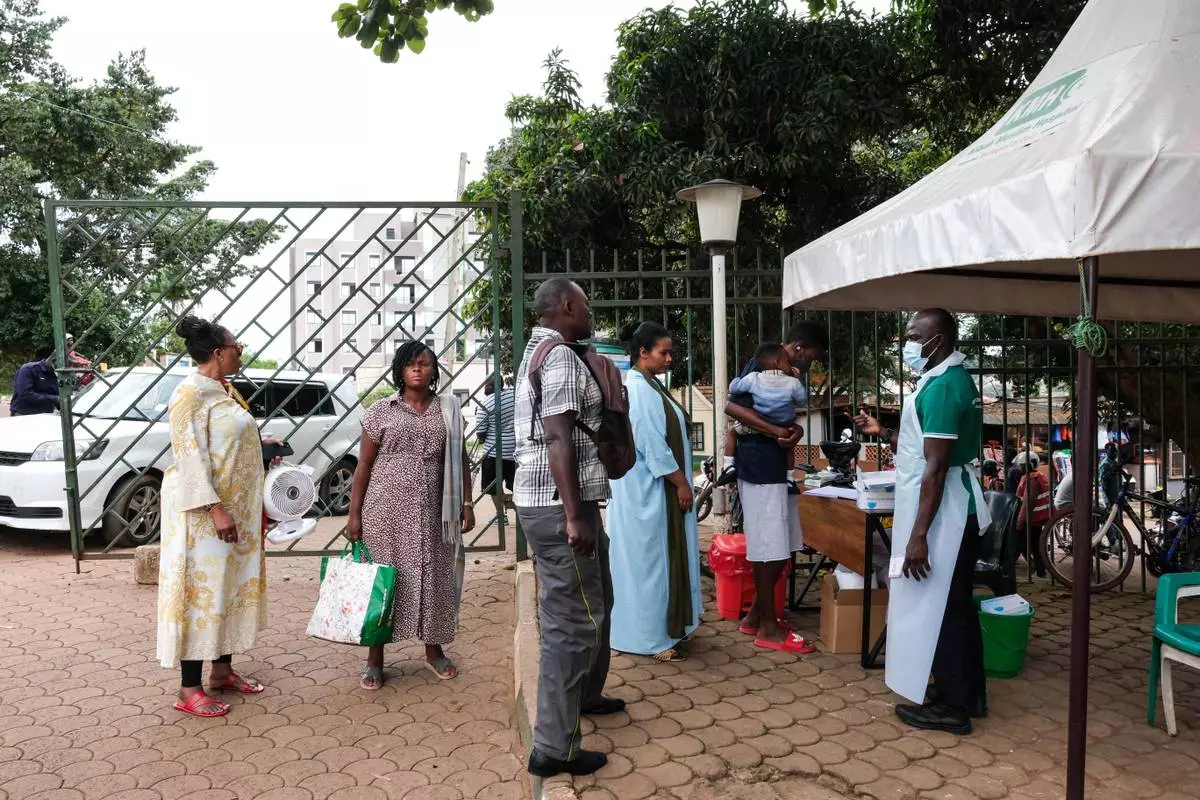
People wait to have their temperature taken in front of Kibuli Muslim Hospital in Kampala, Uganda, Saturday, May 16, 2026. (AP Photo/ Hajarah Nalwadda)
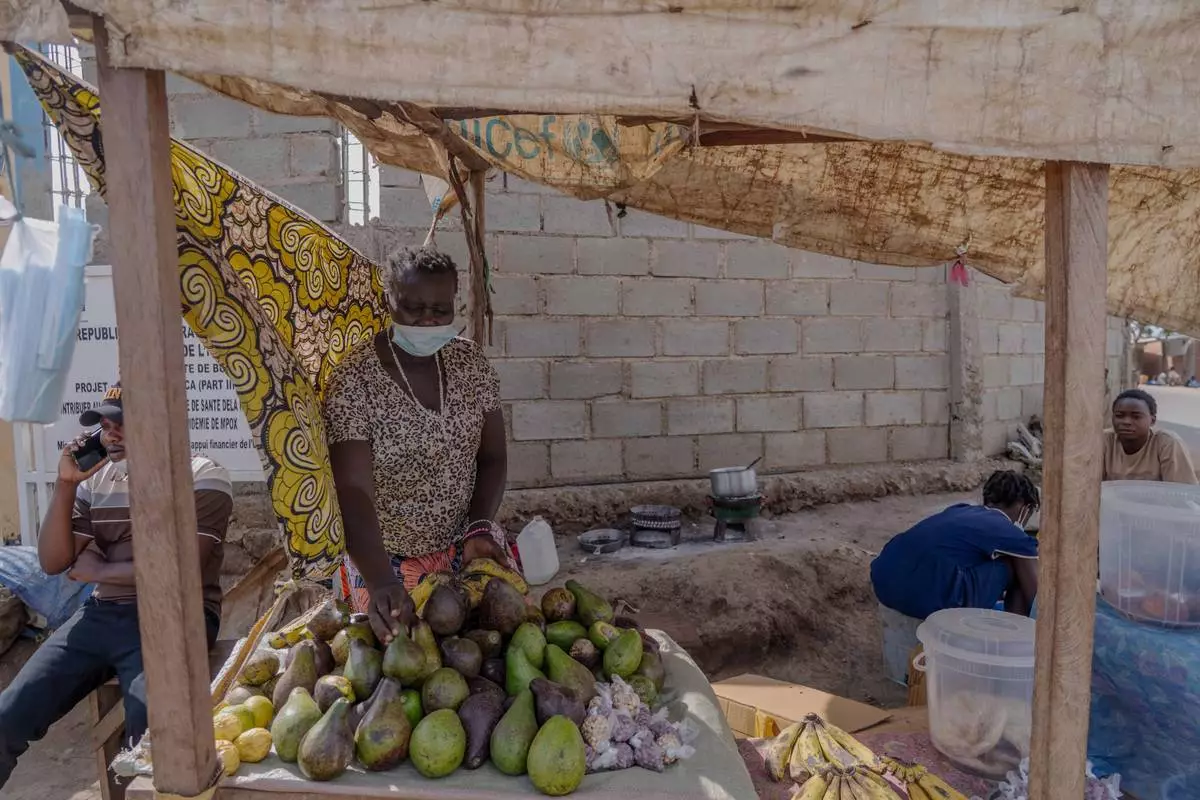
A woman wearing a protective mask sells fruit from a roadside stall in Bunia, Congo, Sunday, May 17, 2026. (AP Photo/Dirole Lotsima Dieudonne)
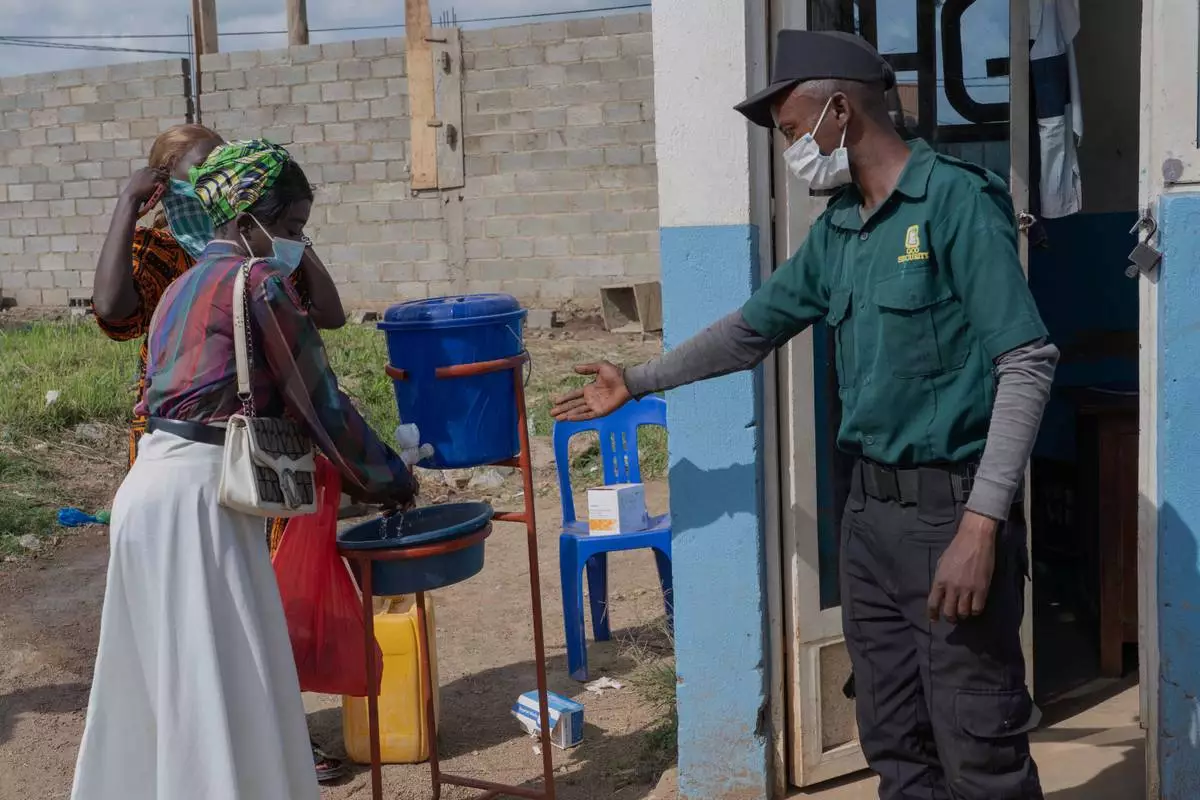
People wash their hands at the entrance to a hospital in Bunia, Congo, Sunday, May 17, 2026. (AP Photo/ Dirole Lotsima Dieudonne)
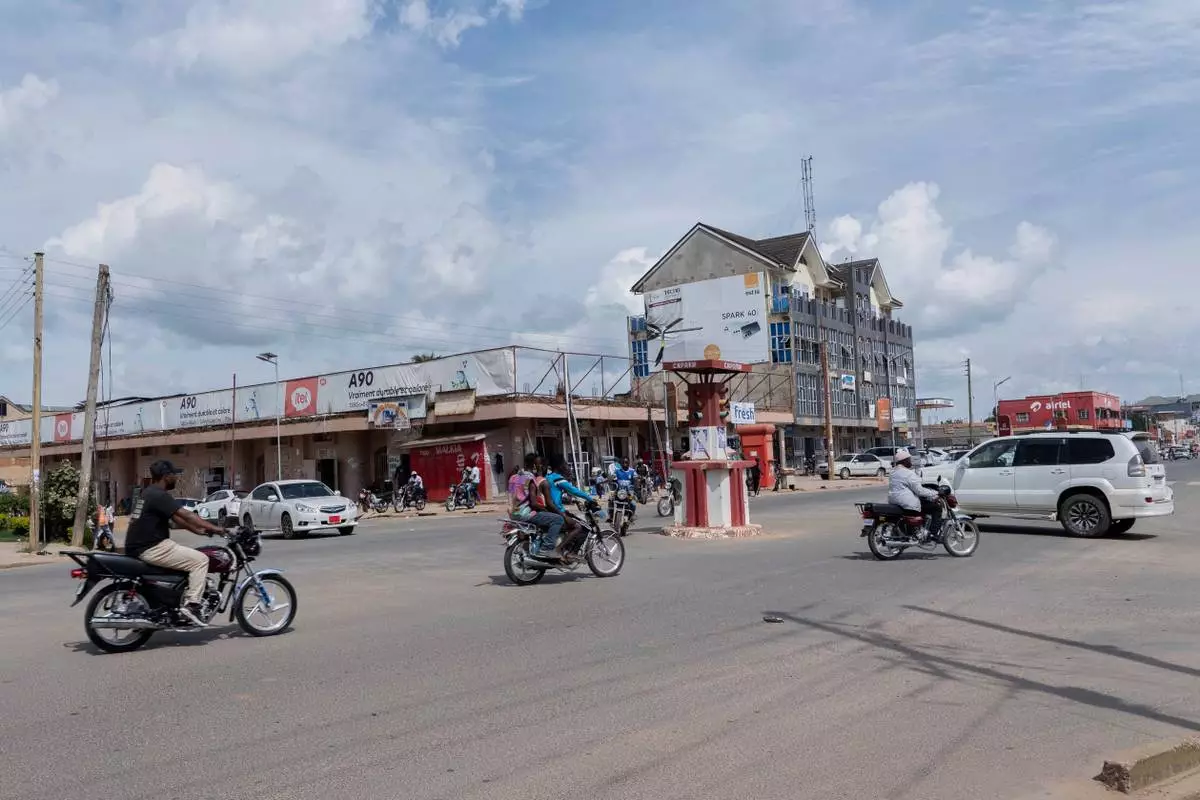
A general view is seen of Bunia where ebola outbreaks have been confirmed in Ituri province, Congo, Sunday, May 17, 2026. (AP Photo/ Dirole Lotsima Dieudonne)
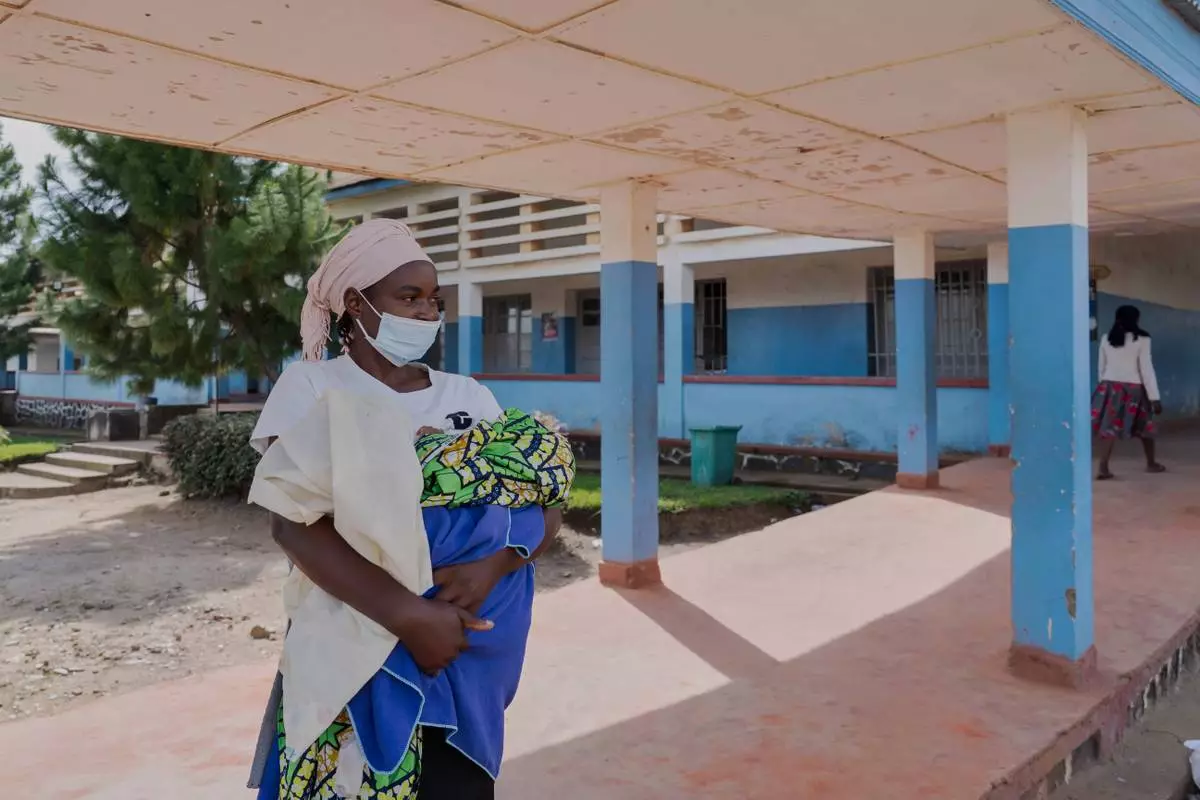
A woman wearing a protective mask stands in the corridor of a hospital in Bunia, Congo, Sunday, May 17, 2026. (AP Photo/ Dirole Lotsima Dieudonne)