DAKAR, Senegal (AP) — The Congolese health minister announced the opening of three treatment centers in the Ituri region of eastern Congo on Sunday evening as the country grapples with a new Ebola outbreak.
“We know that the hospitals are already under stress because of the patients,” the minister, Samuel Roger Kamba, said during a visit to Bunia, the capital and largest city in Ituri. "But we are preparing to have treatment centers at all three sites in order to be able to expand our capabilities.”
The World Health Organization declared the Ebola disease outbreak a public health emergency of international concern on Sunday, after more than 300 suspected cases and 88 deaths in Congo and two in neighboring Uganda. Although the outbreak is centered in Ituri, cases have been reported in the capital, Kinshasa, and in Goma, the largest city in eastern Congo.
The WHO Regional Office for Africa said Sunday on X that a team of 35 experts from the WHO and the Congolese Ministry of Health had arrived in Bunia, the capital of Ituri province, along with 7 tons of emergency medical supplies and equipment.
Rwanda closed its land border with Congo on Sunday, the U.S. State Department said on social media on Sunday evening. AP reporters tried to cross the border on Sunday and Monday morning, but were informed it was closed except for holders of international flight tickets. Rwandan authorities have not replied to a request for comments.
Ebola is highly contagious and can be contracted via bodily fluids such as vomit, blood, or semen. The disease it causes is rare, but severe and often fatal.
Health authorities say the current outbreak, first confirmed on Friday, is caused by the Bundibugyo virus, a rare variant of the Ebola disease that has no approved therapeutics or vaccines. Although more than 20 Ebola outbreaks have taken place in Congo and Uganda, this is only the third time that the Bundibugyo virus has been detected.
The Bundibugyo virus was first detected in Uganda’s Bundibugyo district during a 2007-2008 outbreak that infected 149 people and killed 37. The second time was in 2012, in an outbreak in Isiro, Congo, where 57 cases and 29 deaths were reported.
WHO’s emergency declaration is meant to spur donor agencies and countries into action. By WHO’s standards, it shows the event is serious, there is a risk of international spread and it requires a coordinated international response.
Jean Kaseya, Director-General of the Africa Centre for Disease Control and Prevention, told Sky News on Sunday that he is in “panic mode” due to a lack of medicines and vaccines as deaths rise, but there are some candidate treatments anticipated in the coming weeks.
The East African Community a regional bloc that includes Congo, said Monday that the new Ebola outbreak underscores the importance of regional solidarity and preparedness. Andrea Aguer Ariik Malueth, the deputy secretary general, said that given the high level of movement of people and goods across the region, coordinated preparedness and rapid information sharing are essential to preventing cross-border transmission.
In a statement he added that the bloc is committed to helping its members strengthen surveillance, laboratory diagnosis, infection prevention and control and other efforts, particularly in border areas.
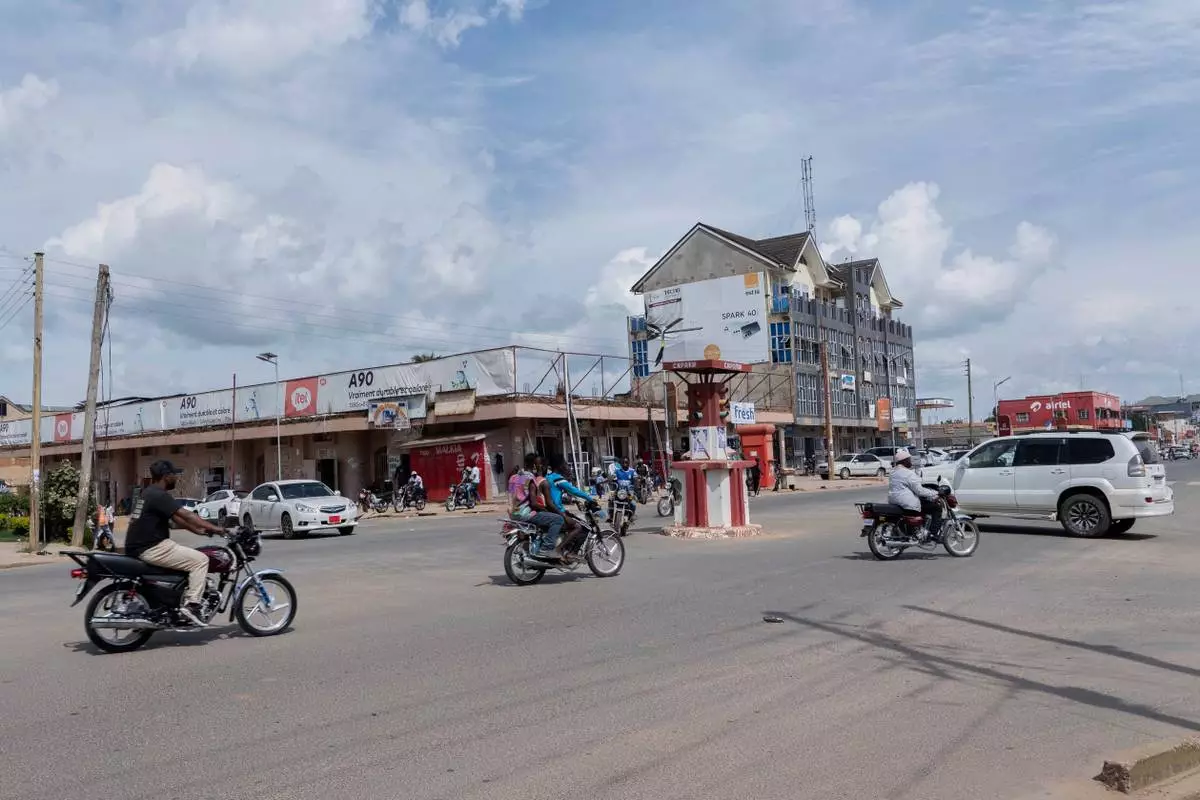
A general view is seen of Bunia where ebola outbreaks have been confirmed in Ituri province, Congo, Sunday, May 17, 2026. (AP Photo/ Dirole Lotsima Dieudonne)
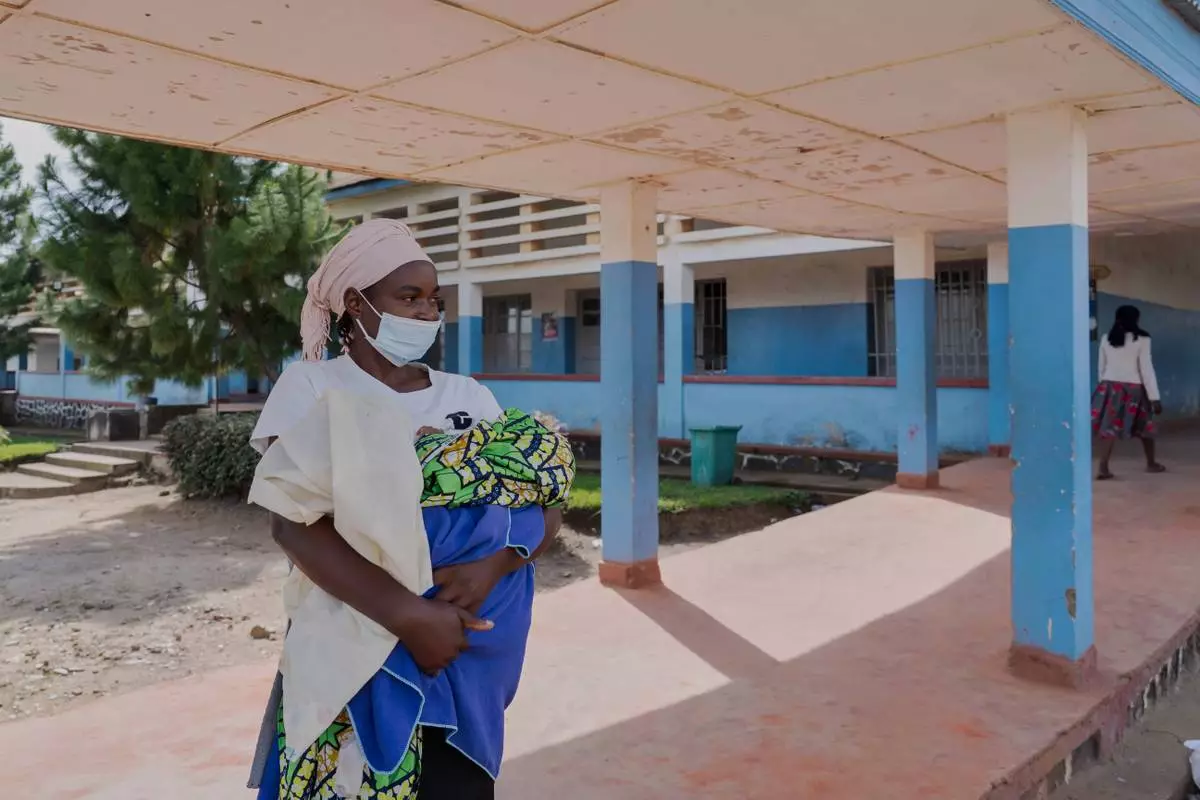
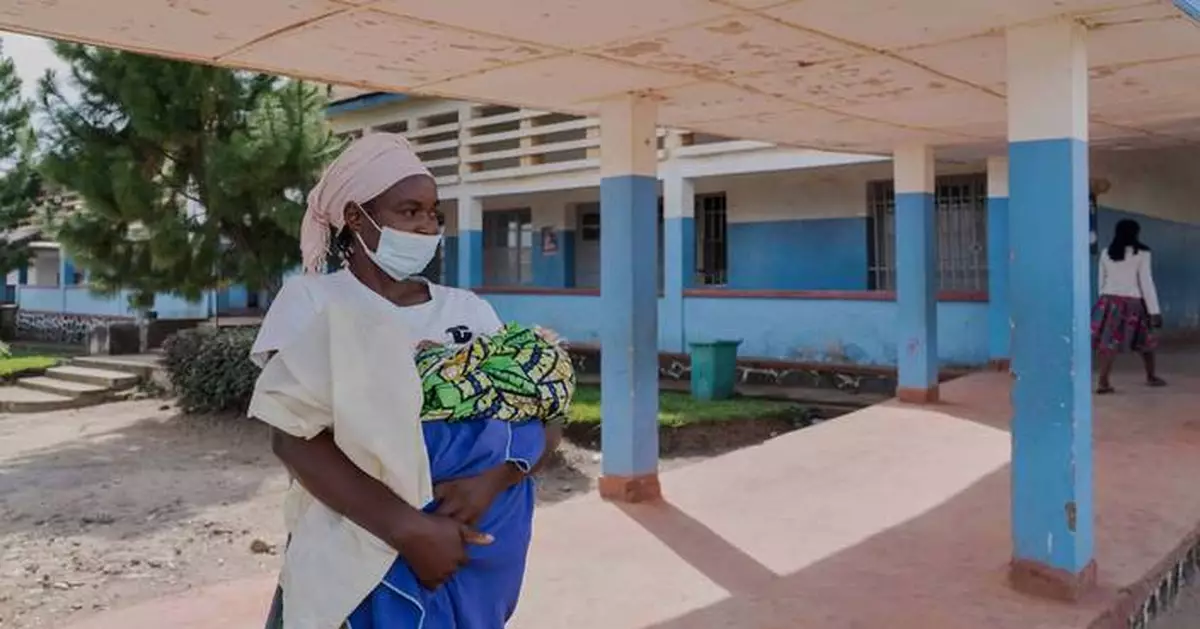
A woman wearing a protective mask stands in the corridor of a hospital in Bunia, Congo, Sunday, May 17, 2026. (AP Photo/ Dirole Lotsima Dieudonne)
KYIV, Ukraine (AP) — Russia targeted eight regions of Ukraine in its latest nighttime drone and missile barrage, Ukrainian President Volodymyr Zelenskyy said Monday, with local authorities reporting that the strikes wounded more than two dozen civilians, including three children.
Russian forces fired 524 attack drones and 22 ballistic and cruise missiles, Zelenskyy said. The city of Dnipro and the surrounding central region of Ukraine bore the brunt of the attack, officials said.
The barrage continued a recent spiral of long-range strikes that have grown in scale following a May 9-11 ceasefire that U.S. President Donald Trump said he asked Zelenskyy and Russian President Vladimir Putin to observe but which had little impact. There is no sign a peace deal is taking shape despite U.S. diplomatic efforts to end Russia's invasion.
Russia hammered Ukraine over several days last week, flattening a Kyiv apartment building where 24 people died.
One of Ukraine’s largest drone strikes on Russia killed at least four people, including three near Moscow, and wounded a dozen others, authorities said Sunday.
In more than four years of war, Ukraine has built up its own long-range capabilities. It has been hitting oil facilities that represent a vital part of the Russian economy, as well as other targets deep inside Russia, making the Russian public take notice. That has increased the pressure on Putin, whose army is struggling to make progress on the battlefield and who claimed earlier this month, without providing evidence, that the war is approaching its end.
On Sunday, the Russian Defense Ministry said that more than 1,000 Ukrainian drones had been shot down or jammed in the previous 24 hours, with around 80 on their way to Moscow.
In another significant enhancement of Ukraine’s long-range arsenal, Defense Minister Mykhailo Fedorov said Monday that the country has developed its first glide bomb — a powerful weapon that has regularly been deployed to devastating effect by Russia.
The Ukrainian version carries a 250-kilogram (550-pound) warhead and is designed to strike fortifications, command posts and other targets dozens of kilometers (miles) behind the front line, he said. Ukrainian pilots are currently training with the weapon under combat conditions.
Zelenskyy claims a significant shift is taking place.
“Our long-range capabilities are significantly changing the situation — and, more broadly, the world’s perception of Russia’s war,” Zelenskyy said on X late Sunday. “Many partners are now signaling that they see what is happening and how everything has changed — both in attitudes toward this war and in the reachability of Russian targets on Russian territory.”
At the same time, Russia’s aerial onslaughts are stretching Ukraine’s air defenses.
The Defense Ministry in Moscow said Monday it had dealt Ukraine a massive blow overnight with precision ground- and sea-based missiles and drones, striking weapons factories, oil and energy facilities, as well as transport and port infrastructure used by the Ukrainian armed forces. It said the goal of the strike had been achieved and all the designated targets had been hit.
Putin is due to meet with Chinese leader Xi Jinping in Beijing this week. Cooperation between the two countries has deepened in recent years as many Western countries have sought to isolate the Russian leader, with China growing to become Russia's main trading partner.
In the meantime, Ukraine’s navy claimed that a Russian drone struck a Chinese-owned cargo ship in the Black Sea near Odesa on Monday.
The drone hit the dry cargo vessel KSL Deyang, which was sailing under a Marshall Islands flag, the Ukrainian Navy said in a Telegram post. The ship’s owner is based in China, and the crew consists of Chinese nationals, the navy said. There was no immediate word on casualties or the extent of damage to the vessel.
In other developments Monday:
The bail for Andriy Yermak, Zelenskyy’s former chief of staff, has been paid in full, Ukraine’s High Anti-Corruption Court said Monday, according to Ukrainian media. The court last week set bail for Yermak at 140 million hryvnias (roughly $3.2 million)
Yermak was named by two Ukrainian anti-corruption watchdogs as a suspect in a major graft probe. The move was a step short of formally charging Yermak, who resigned in November.
Investigators say Zelenskyy is not under suspicion in the case.
Hatton reported from Lisbon, Portugal.
Follow the AP’s coverage of the war in Ukraine at https://apnews.com/hub/russia-ukraine
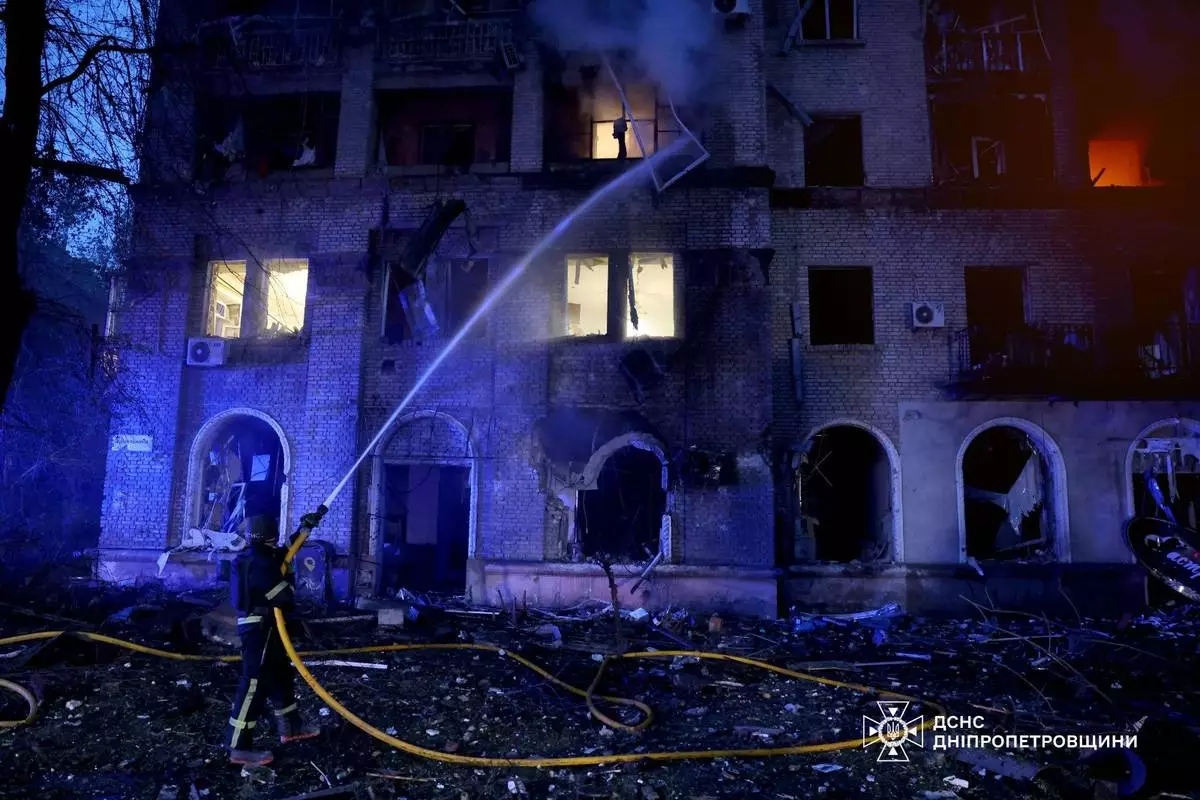
In this photo provided by the Ukrainian Emergency Services on Monday, May 18, 2026, a rescue worker puts out a fire of a residential building damaged after a Russian strike on Dnipro, Ukraine. (Ukrainian Emergency Service via AP)
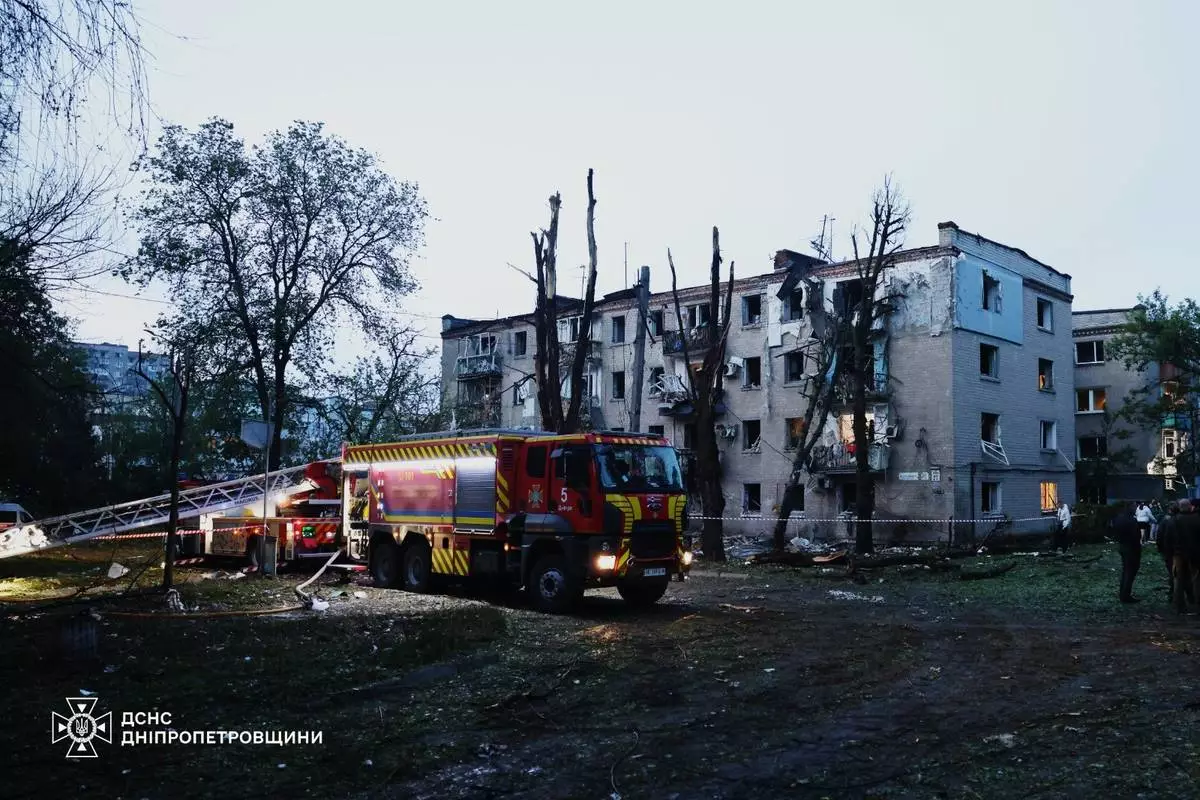
In this photo provided by the Ukrainian Emergency Services on Monday, May 18, 2026, a residential building is seen damaged after a Russian strike on Dnipro, Ukraine. (Ukrainian Emergency Service via AP)