Skip to Content Facebook Feature Image

Our Hong Kong Foundation: The Hong Kong-Shenzhen Inter-Airport Railway will be a Strategic Imperative for Hong Kong's Future

HK

Our Hong Kong Foundation: The Hong Kong-Shenzhen Inter-Airport Railway will be a Strategic Imperative for Hong Kong's Future
HK

HK

Our Hong Kong Foundation: The Hong Kong-Shenzhen Inter-Airport Railway will be a Strategic Imperative for Hong Kong's Future

2025-11-20 17:18 Last Updated At:18:05

Our Hong Kong Foundation (OHKF) has released a research report titled “Laying the Tracks to Future-Proof Hong Kong’s Status as an International Aviation Hub”, which advocates the construction of the Hong Kong-Shenzhen Inter-Airport Railway (IAR) to link Hong Kong International Airport to the national high-speed rail network, transforming Hong Kong into a core node of the air-rail intermodal in the Greater Bay Area and strengthening the geographical interaction between Central in Hong Kong and Qianhai in Shenzhen through the transport connection of key metropolitan areas.
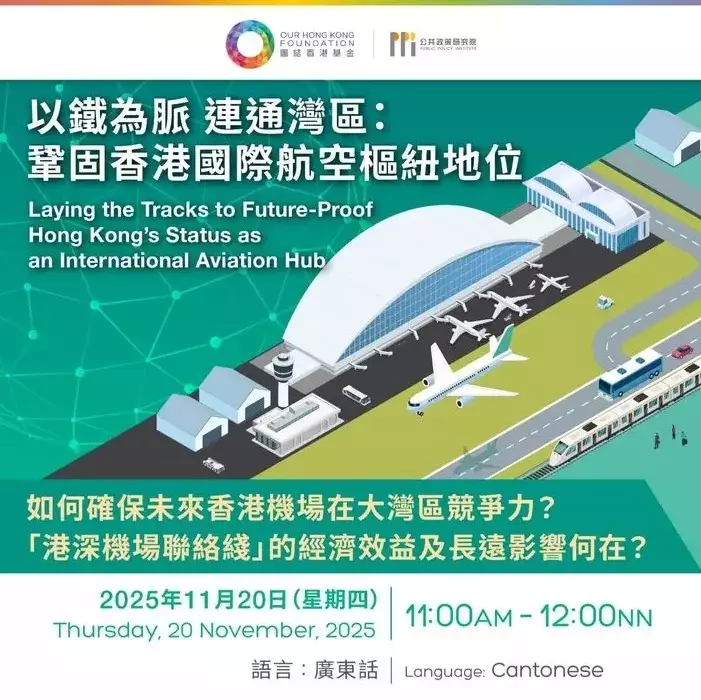
Our Hong Kong Foundation has released a research report titled “Laying the Tracks to Future-Proof Hong Kong’s Status as an International Aviation Hub”, Photo source: FB of OHKF

Our Hong Kong Foundation has released a research report titled “Laying the Tracks to Future-Proof Hong Kong’s Status as an International Aviation Hub”, Photo source: FB of OHKF

Riding on the imminent Hong Kong–Shenzhen Western Rail Link, which is expected to be open to traffic in 2035, the report proposes that the planned terminal in Qianhai can be extended to Shenzhen Bao'an International Airport, while the terminal in Hong Kong can be extended from Hung Shui Kiu to Hong Kong International Airport. The report holds that the key lies in the simultaneous advancement of the extension sections of the two cities, which is expected to be put into operation in 2035 to minimize the time gap with the commissioning of the Guangzhou-Shenzhen High-Speed Railway and improve Hong Kong's motivation in regional connectivity.

The report indicates that the IAR will pass through Shenzhen Bao'an International Airport, connecting Hong Kong International Airport to the national high-speed rail network, reducing the travel time between the two airports to approximately 40 minutes. The IAR will be on par with the Airport Link Line in Shanghai, which also connects airport hubs, and the future Guangzhou-Shenzhen High-Speed Railway, to build a stable, predictable, and round-the-clock dedicated lane between the airports in Hong Kong and Shenzhen. The report also suggests that the IAR can provide an alternate route to and from the Hong Kong International Airport through different station configurations, such as setting up a station at Sunny Bay to connect with the Tung Chung Line, and significantly enhance the connectivity of the railway network.

The report mentions that the passenger volume advantage of Hong Kong International Airport has been overtaken after the pandemic. If we solely rely on the runway capacity of the Three Runway System to maintain the current advantage, such a practice would not be advisable. The IAR can prevent Hong Kong from being marginalized in regional rivalry and leverage the extensive passenger base in the Greater Bay Area and the broader region to bring sustainable impetus for growth to Hong Kong International Airport and consolidate Hong Kong's status as an international aviation hub.
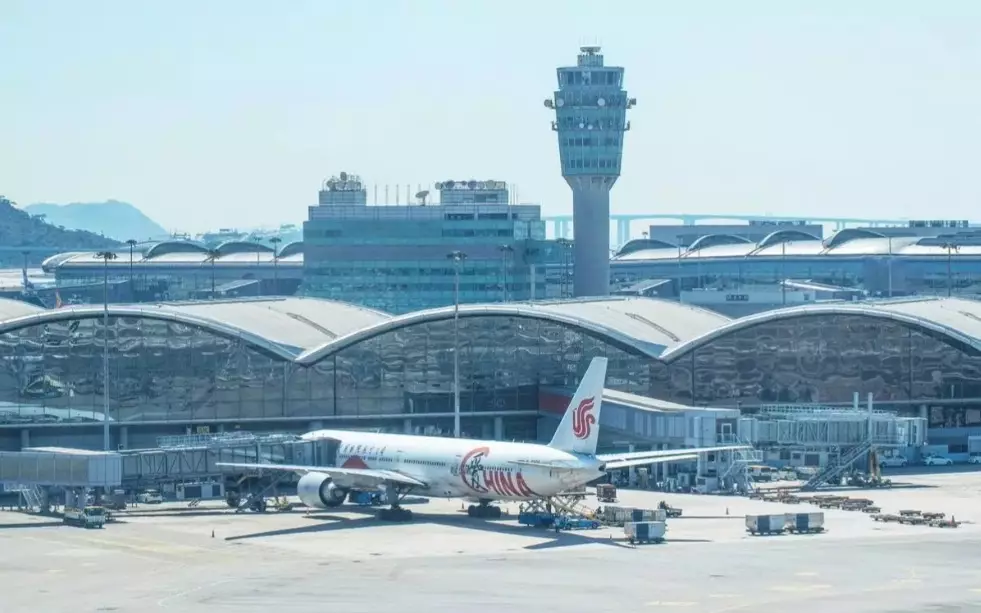
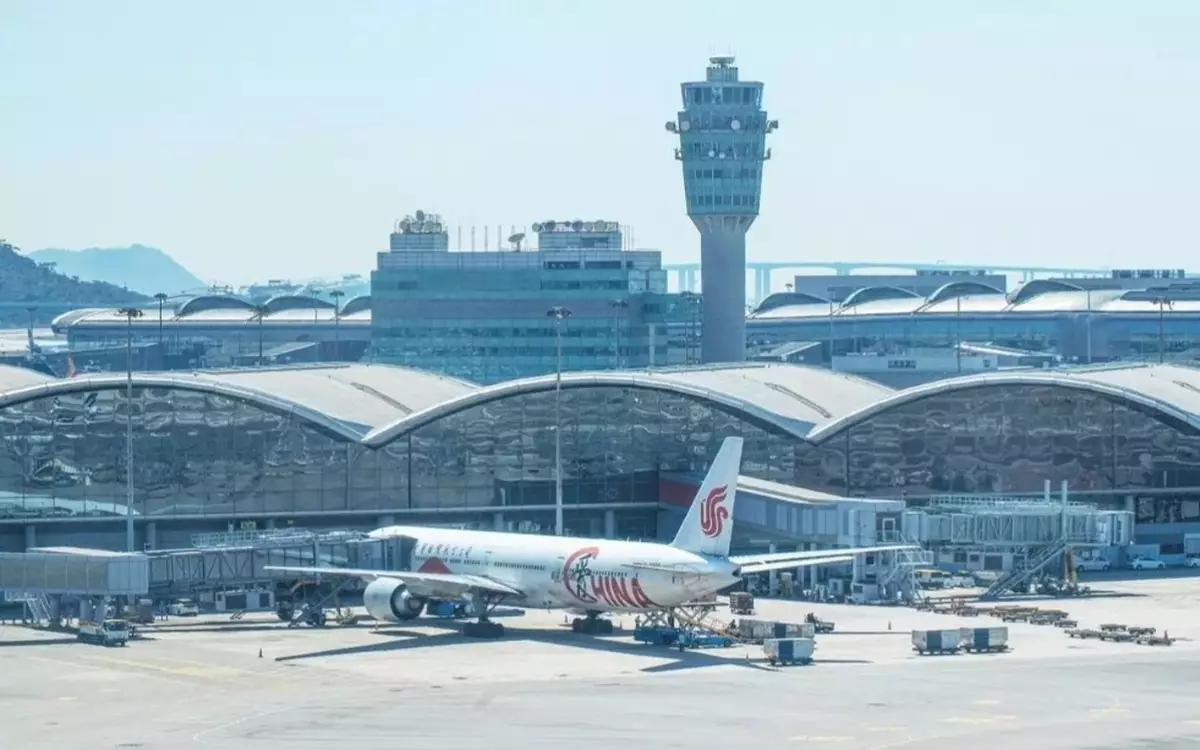
Hong Kong International Airport, Photo source: reference image

Hong Kong International Airport, Photo source: reference image
Travelers should expect delays when they fly through San Francisco International Airport after the Federal Aviation Administration this week cut a third of its arrivals because of safety concerns and runway construction.

A temporary runway project and permanent FAA rule change announced Tuesday means San Francisco’s airport will go from 54 plane arrivals an hour to 36 arrivals. It is not yet clear if any flights will be canceled.

A deadly runway crash between Air Canada jet and a fire truck at New York’s LaGuardia Airport in March is the latest air-traffic safety calamity. But the aviation administration said the rule change is not triggered by broader safety concerns and only affects the San Francisco airport.

Here's what to know:

FAA spokesman Ian Gregor said officials decided that SFO's longstanding practice of landing two planes at the same time on closely spaced parallel runways that are just 750 feet (228.60 meters) apart — along with congested airspace — was too dangerous. He could not say why the practice had been allowed.

The San Francisco safety concerns are unique to that airport because of how close the parallel runways are and how complicated the airspace is with several surrounding airports. The San Francisco Bay Area is served by three major airports, including San José Mineta International Airport and Oakland San Francisco Bay Airport, and smaller ones.

The airport operates on two sets of parallel runways. The north-south runways are out of commission for six months for a repaving project that is responsible for nine of the 18 flight-per-hour reductions. The rule change will affect the remaining nine flights.

Doug Yakel, an airport spokesman, said about 25% of arriving flights are expected to be delayed by 30 minutes or more. He said the airport is working with the FAA to improve arrival times but didn't provide more specifics on whether flights might be canceled.

United Airlines said it is reviewing the rule change to see if any changes need to be made to its flight schedule, a spokesperson said by email. United is the largest airline at SFO.

Alaska Airlines, the second-largest carrier, said in an email that the situation was changing by the day, with 15 flights delayed out of SFO on Monday and none experiencing delays on Tuesday.

The runway under construction is set to reopen on Oct. 2, which should alleviate some of the delays, Yakel said.

Associated Press writer Janie Har contributed reporting from San Francisco

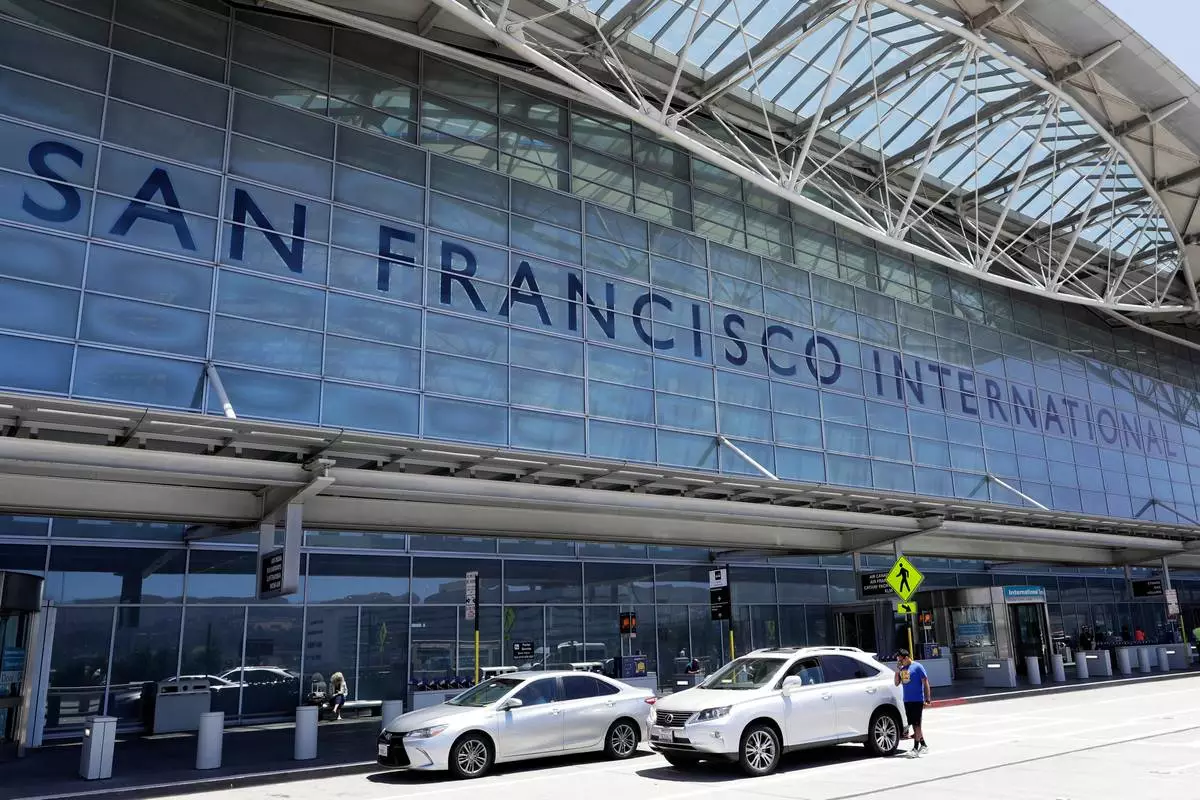
FILE - Vehicles wait outside the international terminal at San Francisco International Airport, in San Francisco, July 11, 2017. (AP Photo/Marcio Jose Sanchez, File)

FILE - Vehicles wait outside the international terminal at San Francisco International Airport, in San Francisco, July 11, 2017. (AP Photo/Marcio Jose Sanchez, File)

Recommended Articles