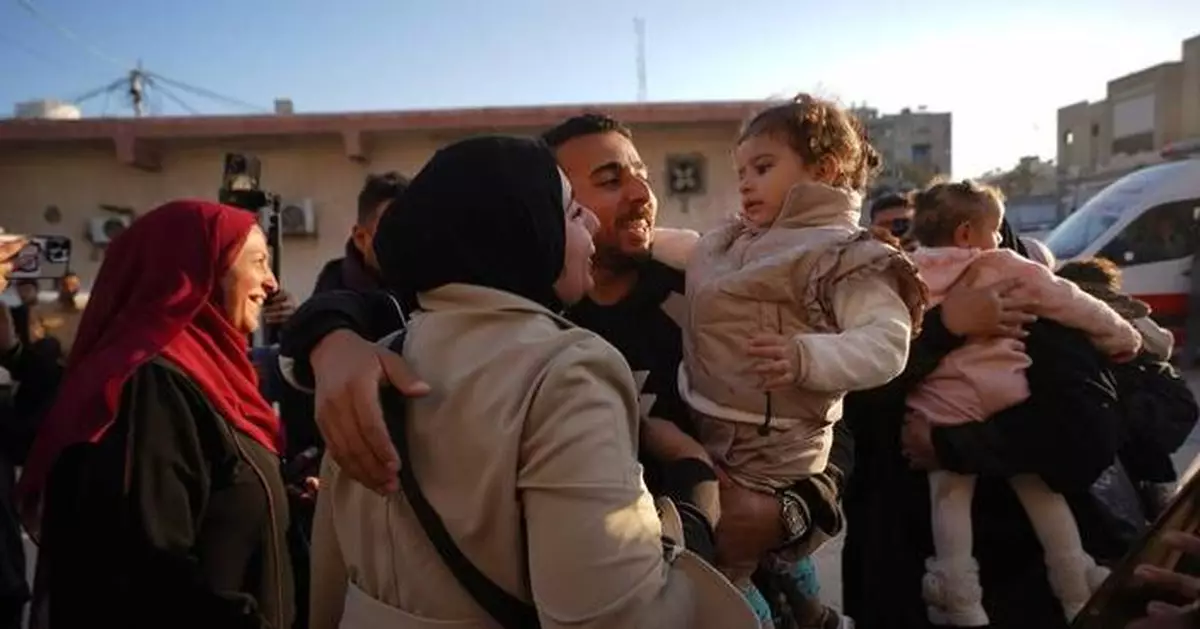
DEIR AL-BALAH, Gaza Strip (AP) — More than two years after his oldest daughter, Kinda, was evacuated from the neonatal intensive care unit at the Gaza Strip’s largest hospital, Samer Lulu beamed as he hoisted her into his arms.
The last time he saw Kinda was before she and a group of other newborns left Shifa Hospital in November 2023, after the electricity was cut, turning off the incubators keeping them warm enough to survive.
Click to Gallery
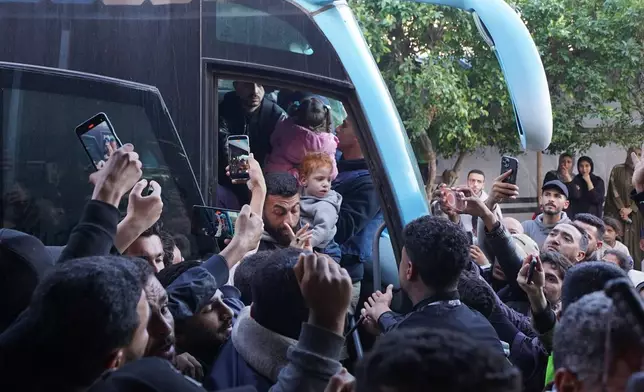
A group of toddlers return to Gaza more than two years after being evacuated as premature infants for medical treatment in Egypt, arriving at Nasser Hospital in Khan Younis, Gaza Strip, Monday, March 30, 2026. (AP Photo/Jehad Alshrafi)
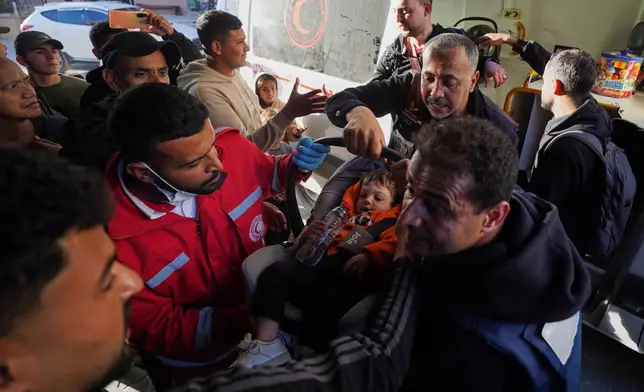
A group of toddlers return to Gaza more than two years after being evacuated as premature infants for medical treatment in Egypt, arriving at Nasser Hospital in Khan Younis, Gaza Strip, Monday, March 30, 2026. (AP Photo/Jehad Alshrafi)
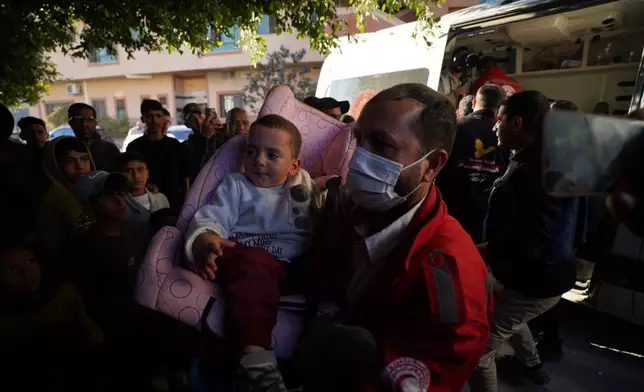
A group of toddlers return to Gaza more than two years after being evacuated as premature infants for medical treatment in Egypt, arriving at Nasser Hospital in Khan Younis, Gaza Strip, Monday, March 30, 2026. (AP Photo/Jehad Alshrafi)
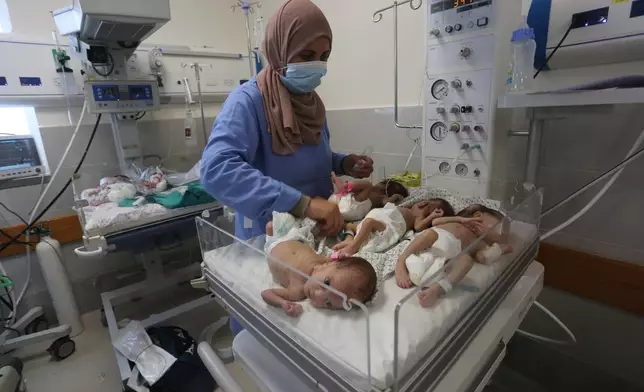
FILE - A nurse cares for prematurely born Palestinian babies that were brought from Shifa Hospital in Gaza City to the hospital in Rafah, Gaza Strip, Sunday, Nov. 19, 2023. (AP Photo/Hatem Ali, File)
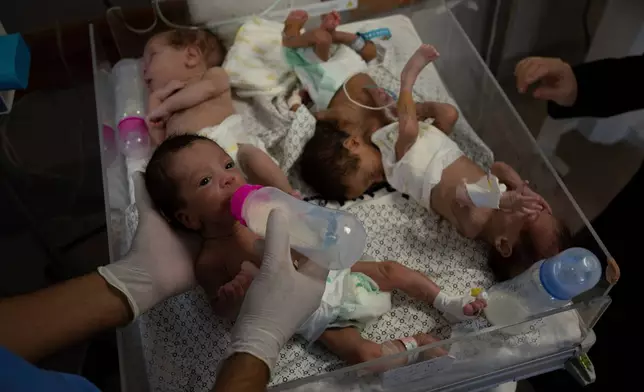
FILE - Medics prepare premature babies for transport to Egypt after they were evacuated from Shifa Hospital in Gaza City to a hospital in Rafah, Gaza Strip, Monday, Nov. 20, 2023. (AP Photo/Fatima Shbair, File)
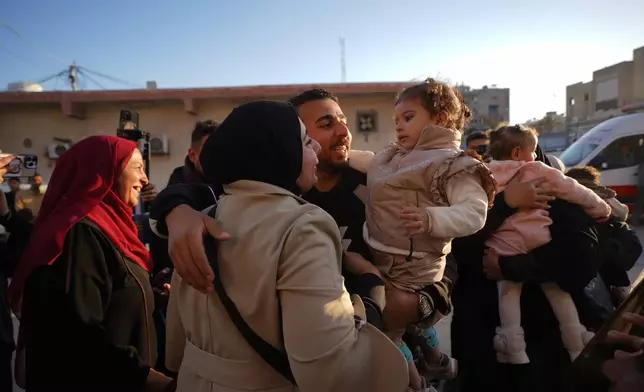
A group of toddlers return to Gaza more than two years after being evacuated as premature infants for medical treatment in Egypt, arriving at Nasser Hospital in Khan Younis, Gaza Strip, Monday, March 30, 2026. (AP Photo/Jehad Alshrafi)
The Gaza City hospital complex is among those damaged by nearly two years of fighting between Israel and Hamas and experienced blackouts in the first month of the war as it was besieged by Israeli troops, who stormed it just before the evacuation.
Born prematurely, the babies had thin skin, their weight was dangerously low and their bodies were too small to survive without constant care. When blackouts set in, medical staff swaddled them in blankets, took them from the shut-off incubators and laid them side by side to replicate the heat they needed.
There were 50 premature babies being cared for during the first week of the war, doctors told The Associated Press at the time. Thirty-one were evacuated to Egypt, some along with their caregivers, while three died, doctors said. Four others died after arriving in Egypt in critical condition and some parents said they still don’t know what happened after their newborns were evacuated. Eleven returned to Gaza on Monday
Hospital official Mohammad Zaqout said days before the evacuation that power cuts left Shifa unable to sanitize water, leading to a cascade of complications for the newborns, including diarrhea, sepsis and hypothermia.
Sundus Al-Kurd told the AP she initially thought her daughter had died in the early months after the newborns were evacuated to Egypt. She and Bissan, now 2 and a half, were reunited on Monday.
For Lulu and other parents, the toddlers’ return from Egypt brought a rare moment of joy. Monday was the most important moment of his life, he said, yet worries about the future tempered his rejoicing.
“Our feelings are mixed with pain because of the reality we live in,” he told the AP outside Nasser Hospital in Khan Younis. “We hope that the future of our children will not be filled with the tragedy or suffering they faced at the beginning of their lives.”
The infants were early symbols of the collateral damage facing civilians in Gaza after Israel launched an offensive on Oct. 8, 2023, the day after Hamas-led militants staged a deadly attack in which more than 1,200 people in Israel were killed and 250 others taken hostage.
Israel said the militants who orchestrated the attack used hospital complexes as military command centers. Hamas security men have often been seen inside hospitals, blocking access to some areas, although the group and hospital officials denied their presence at the time of the evacuations.
Early in the war, doctors and people sheltering inside them reported constant shelling and rapidly deteriorating conditions.
The Red Crescent and World Health Organization evacuated Shifa's neonatal intensive care unit in November 2023, when Israel invaded northern Gaza and besieged the complex.
“Most cases in the neonatal unit depend on electricity, and most of them depend on artificial respiration. In the event of a power outage, a disaster will occur within five minutes, and all cases dependent on ventilators will inevitably die due to the power outage,” Naser Bulbul of Shifa’s neonatal unit said at the time as doctors scrambled to keep the infants alive.
The toddlers are among a larger group of Palestinians returning to Gaza from Egypt through the partially reopened Rafah crossing, from where they were taken to Nasser Hospital to meet their families. Parents cradled the boys and girls in their arms and soothed their tears as crowds gathered around them.
The border reopened to a limited number of Palestinian returnees in February, though crossings have remained restricted, including during the opening weeks of the Iran war, when it was shut completely.
An Israeli official said the 11 toddlers, along with seven caregivers evacuated with them, were permitted to return with the help of the U.N. children’s agency UNICEF. They spoke on the condition of anonymity because they were not authorized to speak to the media.
The fate of most of the children in the group of 31 evacuees from November 2023 was unclear, though doctors said four died after arriving in Egypt in critical condition. Some parents told AP they still don’t know what happened after their newborns were evacuated.
Two-year-old Ibrahim Bader met his father and grandmother, but not his mother, who passed away from illness in December 2023 after most hospitals in Gaza had gone offline or scaled back services, the toddler’s father Jabr Bader said.
Ibrahim, Kinda and the other children are returning to a Gaza transformed by more than two years of war. Israel’s offensive has killed more than 72,000 Palestinians, according to local health authorities, and displaced the majority of the population, often multiple times. Cities and towns lie in ruins, parts of the strip experienced famine last year and airstrikes and shootings have continued beyond the October ceasefire between Israel and Hamas.
While a number of Gaza’s hospitals went out of service during the war, some have returned to partial functionality, though blackouts, fuel and supplies remain a concern, requiring backup generators and imperiling operations. Gaza’s Health Ministry, which records ages of those killed, has reported thousands of children among the dead. The ministry, which operates under the Hamas-led government, maintains detailed casualty records that are seen as generally reliable by U.N. agencies and independent experts.
Ahmed al-Farra, a doctor at Nasser Hospital’s pediatrics department, said the reunions were a bittersweet moment, “filled with many messages — sadness, and the joy of being reunited with their loved ones.” — Metz reported from Ramallah, West Bank. Melanie Lidman in Tel Aviv, Israel, contributed to this report.

A group of toddlers return to Gaza more than two years after being evacuated as premature infants for medical treatment in Egypt, arriving at Nasser Hospital in Khan Younis, Gaza Strip, Monday, March 30, 2026. (AP Photo/Jehad Alshrafi)
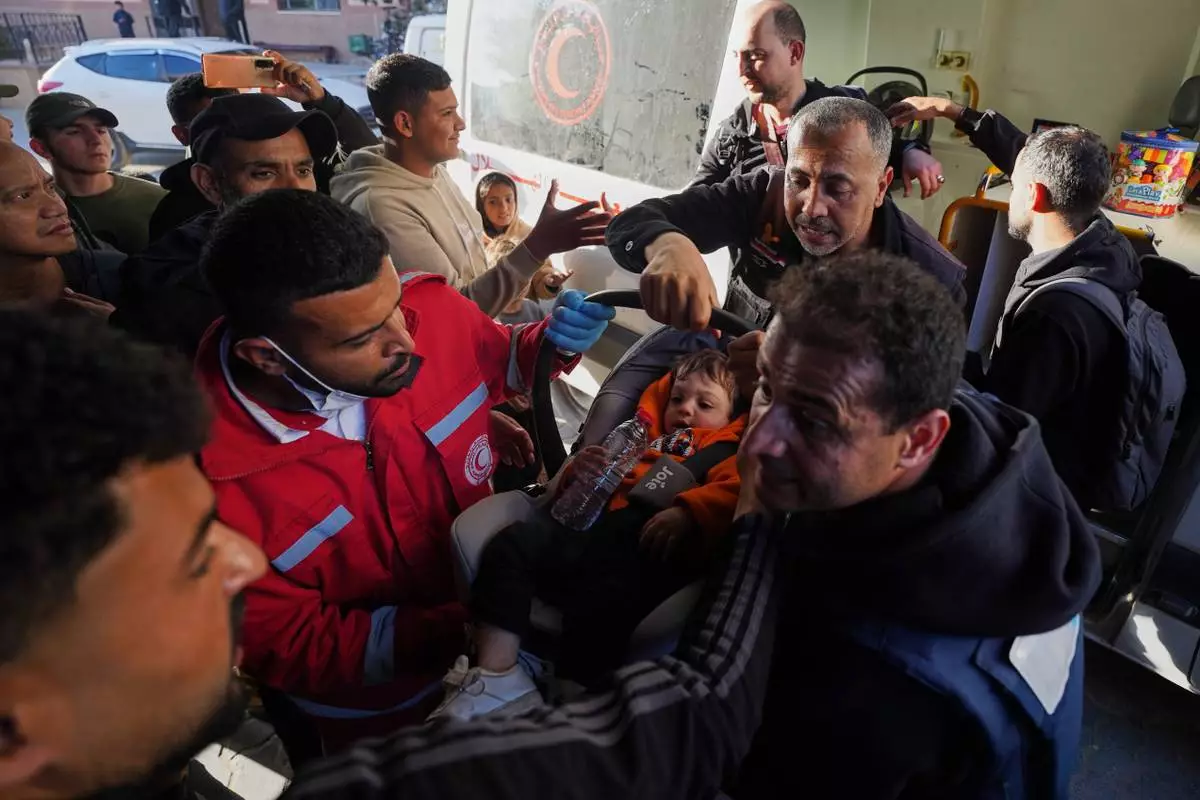
A group of toddlers return to Gaza more than two years after being evacuated as premature infants for medical treatment in Egypt, arriving at Nasser Hospital in Khan Younis, Gaza Strip, Monday, March 30, 2026. (AP Photo/Jehad Alshrafi)
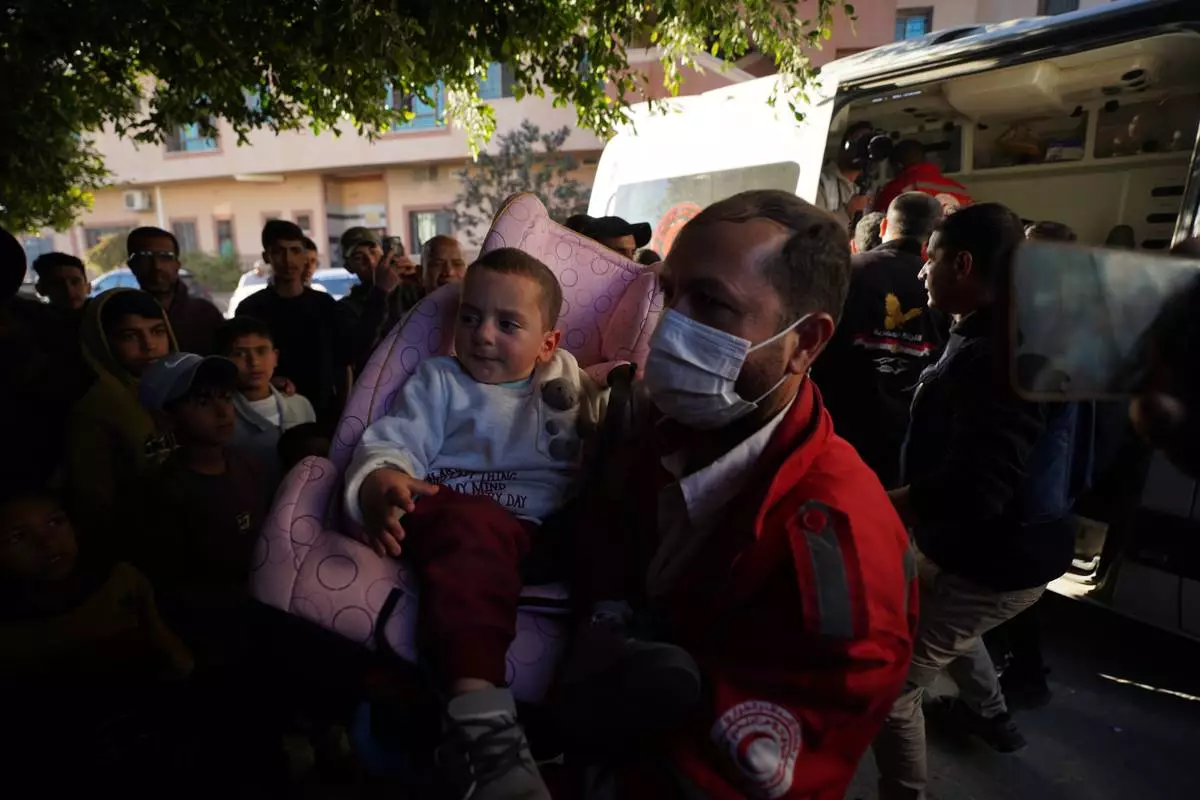
A group of toddlers return to Gaza more than two years after being evacuated as premature infants for medical treatment in Egypt, arriving at Nasser Hospital in Khan Younis, Gaza Strip, Monday, March 30, 2026. (AP Photo/Jehad Alshrafi)
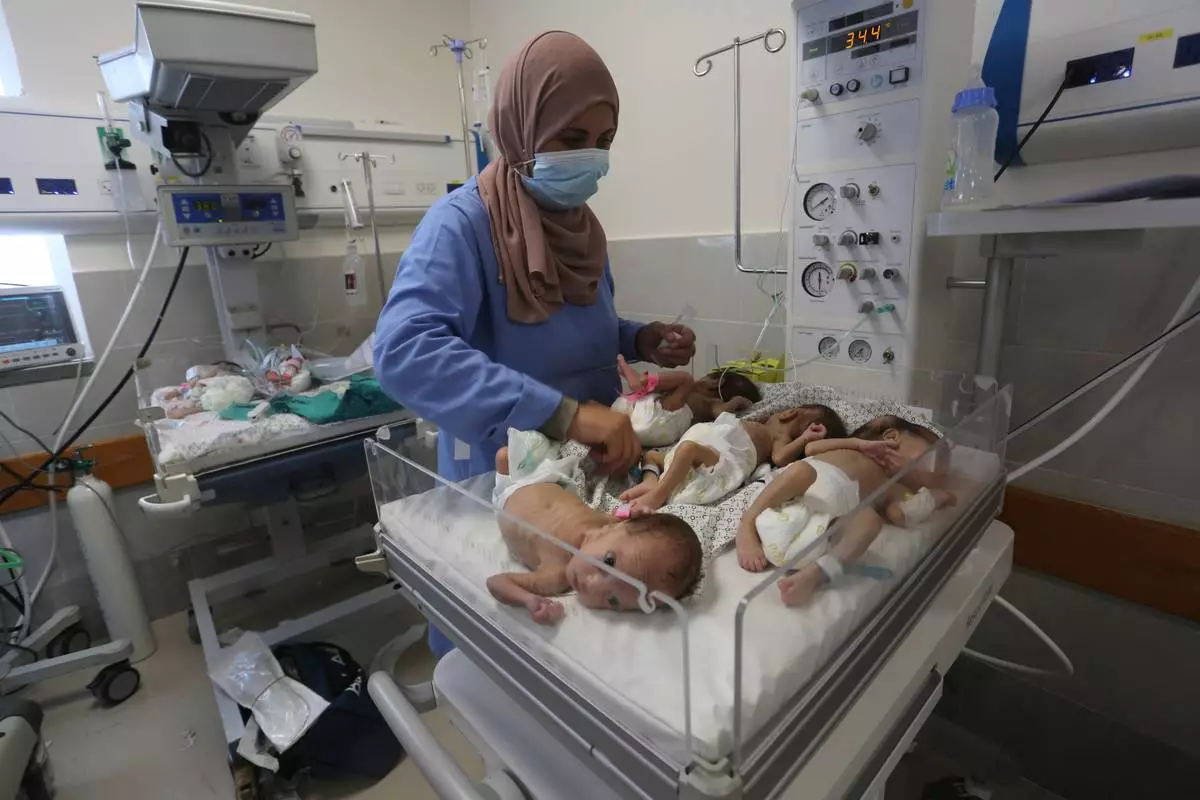
FILE - A nurse cares for prematurely born Palestinian babies that were brought from Shifa Hospital in Gaza City to the hospital in Rafah, Gaza Strip, Sunday, Nov. 19, 2023. (AP Photo/Hatem Ali, File)
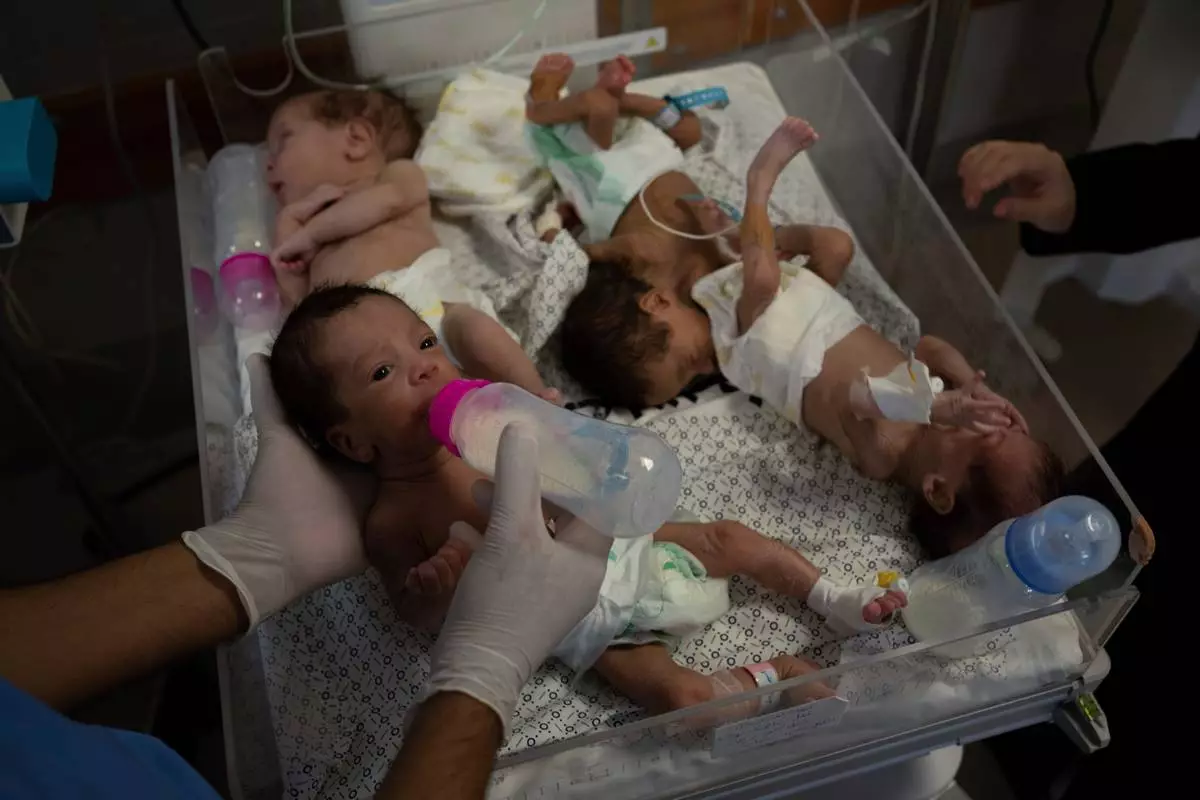
FILE - Medics prepare premature babies for transport to Egypt after they were evacuated from Shifa Hospital in Gaza City to a hospital in Rafah, Gaza Strip, Monday, Nov. 20, 2023. (AP Photo/Fatima Shbair, File)
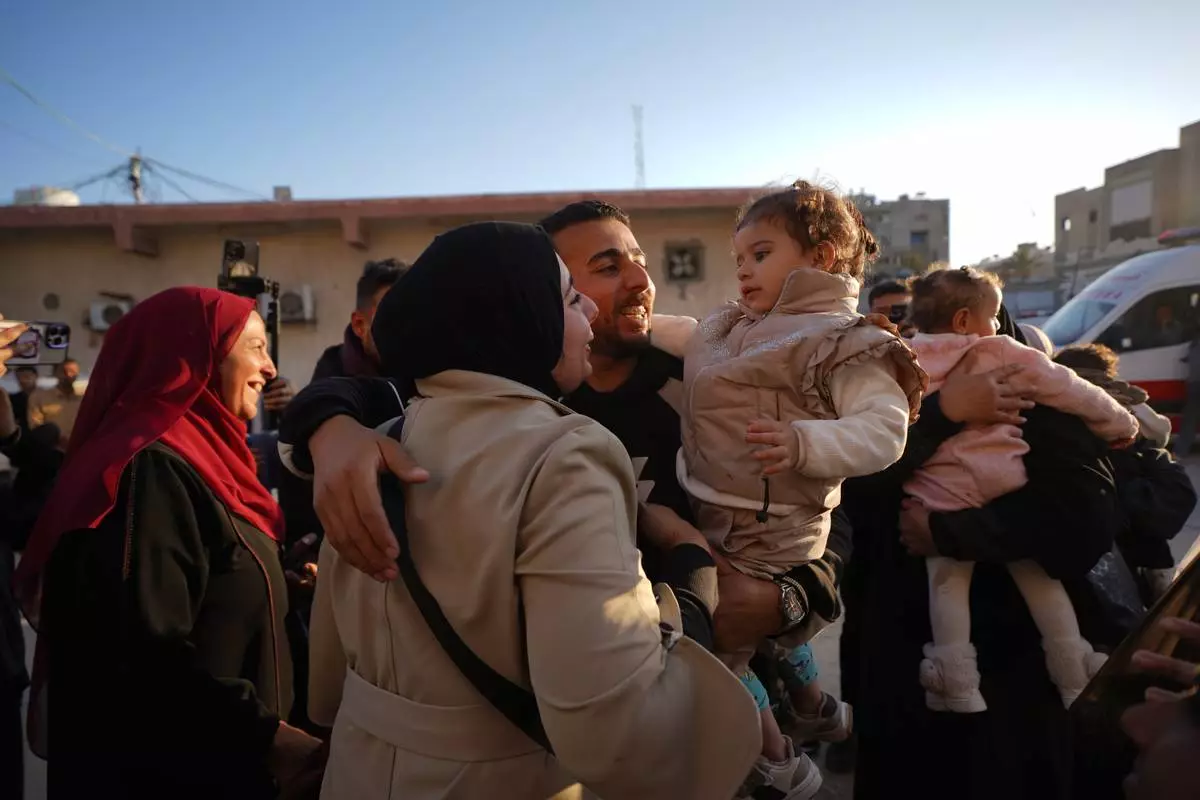
A group of toddlers return to Gaza more than two years after being evacuated as premature infants for medical treatment in Egypt, arriving at Nasser Hospital in Khan Younis, Gaza Strip, Monday, March 30, 2026. (AP Photo/Jehad Alshrafi)