Skip to Content Facebook Feature Image

12 Major Verification Trends in 2026: Regula on the Birth of a New Digital Identity

Business

12 Major Verification Trends in 2026: Regula on the Birth of a New Digital Identity
Business

Business

12 Major Verification Trends in 2026: Regula on the Birth of a New Digital Identity

2025-11-20 21:01 Last Updated At:11-21 15:58

RESTON, Va.--(BUSINESS WIRE)--Nov 20, 2025--

How we verify is changing — and so is who and what we verify. Are we dealing with real people, fraudsters, or machines acting on their behalf? A newRegula report on 12 identity verification trends examines how these shifts are forcing businesses to rebuild their verification processes to stay ahead of fraud, comply with regulations, and regain eroding customer confidence.

This press release features multimedia. View the full release here: https://www.businesswire.com/news/home/20251120373343/en/

The new face of fraud

The identity threat landscape has entered a new industrial phase, defined by three structural shifts:

As the line between human and machine identities fades, the purpose of verification is shifting. As Ihar Kliashchou, Chief Technology Officer at Regula puts it, “Trust now begins at the source, not at the checkpoint. The traceable origin of a document, image, or signal is becoming as important as the content itself.”

In essence, the fight against fraud is shifting from pattern recognition to origin verification: from asking just one question, “Is this real?” to adding context like “Where did this come from?”

The trust stack

Verification is evolving from a process that proves compliance to one that enforces accountability. As algorithms make more decisions, businesses must ensure that their systems are transparent, auditable, and explainable. Compliance is no longer a checklist — it’s an operating standard.

Unified verification systems. To meet these demands, organizations are consolidating fragmented tools into unified end-to-end IDV platforms that orchestrate document checks, biometrics, and screening under a single policy layer. “Disconnected verification tools are no longer a technical issue — they’re a compliance risk,” notes Ihar Kliashchou.

New types of customers. Identity is expanding beyond people to include machines, algorithms, and self-authenticating systems that act independently. The rise of these machine customers — capable of signing, transacting, or negotiating on their own — requires new frameworks to trace every digital actor back to a responsible entity.

Just like with programmable money, the same logic applies to finance. Every digital payment is now a verification event itself: it carries its own proof of who, what, and why.

Preparing for post-quantum trust. The shift to post-quantum cryptography encryption built to resist quantum computer hacks will reshape how authenticity and credentials are secured. Organizations that prepare early (e.g., by mapping dependencies and adopting agile, quantum-resistant frameworks) will treat this change as an upgrade of digital trust, not an emergency fix.

“The future of identity isn’t human or machine — it’s both, verified together,” says Henry Patishman, Executive Vice President for Identity Verification Solutions at Regula.

What it means for businesses

Identity verification is becoming a competitive edge, not a checkbox. As AI blurs the line between human and machine identity, companies need to verify faster and with greater transparency to limit fraud, meet regulations, and maintain trust. For sectors from banking to travel, stronger verification cuts fraud losses, speeds up onboarding, and keeps customers confident.

Businesses that treat identity as core infrastructure — not an add-on — will be better prepared for the next wave of digital risk and regulation.

Read the full report

Discover the complete IDV trends envisioned in Regula’s new report, 12 Trends Reshaping How We Verify, Trust, and Protect, which is available on the Regula website. The report dives deeper into the challenges and opportunities that will define identity verification in 2026 and beyond.

About Regula

Regula is a global developer of forensic devices and identity verification solutions. With our 30+ years of experience in forensic research and the most comprehensive library of document templates in the world, we create breakthrough technologies for document and biometric verification. Our hardware and software solutions allow over 1,000 organizations and 80 border control authorities globally to provide top-notch client service without compromising safety, security, or speed. Regula has been recognized in the 2025 Gartner® Magic Quadrant™ for Identity Verification.

Learn more at www.regulaforensics.com.
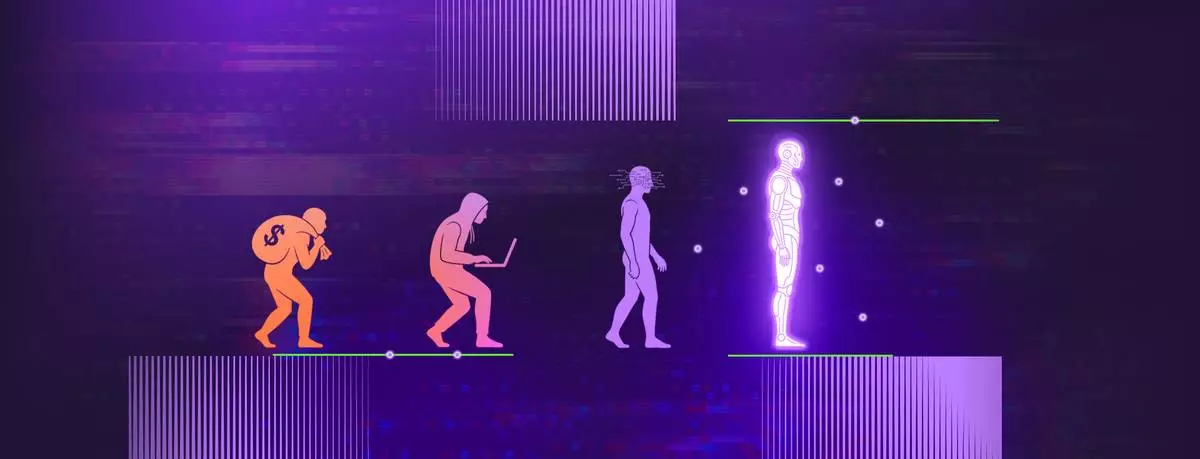
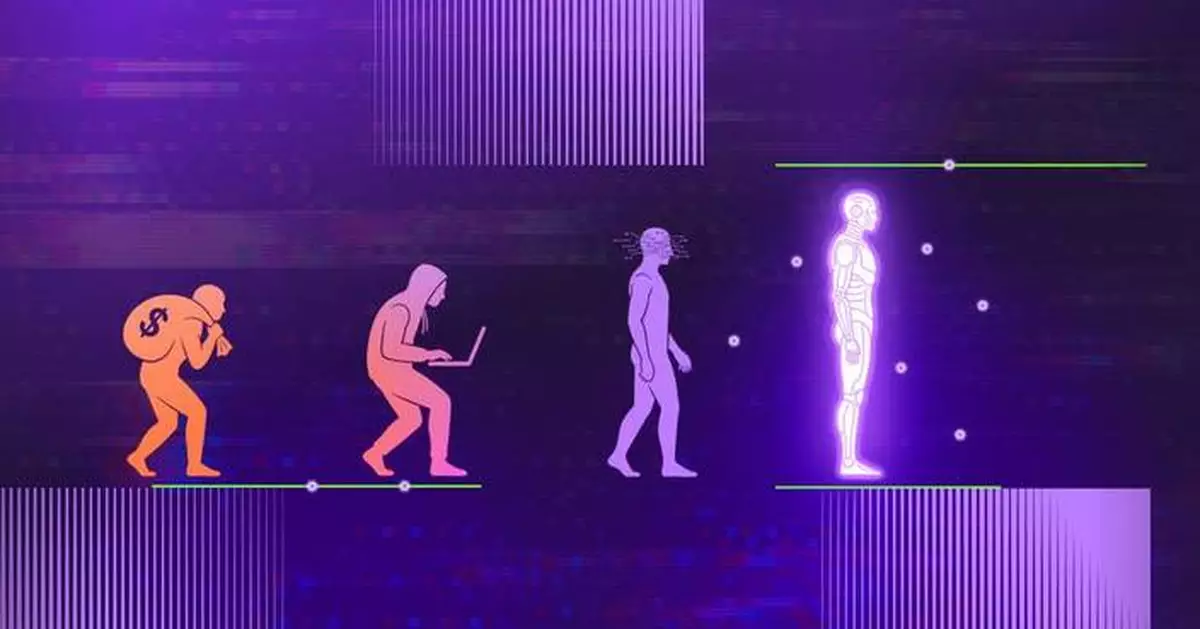
Identity is leaving the human domain: Regula’s forecast illustrates the emerging need to verify systems, autonomous agents, and machine customers.

Identity is leaving the human domain: Regula’s forecast illustrates the emerging need to verify systems, autonomous agents, and machine customers.

SEOUL, South Korea (AP) — Chang Ung, a former North Korean member of the International Olympic Committee who once led sports exchanges with rival South Korea, including joint marches of their athletes at the Olympics, has died, the IOC announced Wednesday. He was 87.

The IOC said on its website that it had learned with “extreme sadness” of Chang’s death on Sunday. It said the Olympic flag will be flown at half-mast for three days at the Olympic House in Lausanne, Switzerland.

The IOC statement didn't describe the cause of Chang's death. North Korea’s state media has not reported on his death.

Born in 1938, Chang was originally a basketball player who captained the North Korean national team. After retiring from the sport, he became an athletics administrator, serving as a vice sports minister, a vice chairman of North Korea’s national Olympic Committee and a vice president of the Olympic Council of Asia.

In 1996, Chang was elected to the IOC. As North Korea’s only-ever IOC member, he represented his country on international sports fields and headed numerous — if often rocky — talks with South Korea to promote sports exchange and cooperation programs between the rivals.

The most notable results of this diplomacy came at the 2000 Sydney Olympics, when athletes of the two Koreas marched together under a “unification flag” depicting their peninsula during the opening and closing ceremonies, the first joint parade since their division in 1945.

Athletes of the Koreas walked together at following Olympic Games and major international sports events, including the 2018 Pyeongchang Olympics in South Korea. After watching a joint march in Pyeongchang’s opening ceremony, Chang told reporters that he was deeply moved.

Chang played a key role in earlier reconciliation talks with South Korea, which led to the two countries sending their first unified male and female teams to the 1991 world table tennis championships in Chiba, Japan. In Pyeongchang, the two Koreas fielded their first combined Olympic team for women’s ice hockey.

In a 2004 interview with South Korea’s Chosun Ilbo newspaper, Chang said that organizing the 2000 joint march was “really a tough” job. He also said he strongly supported Pyeongchang’s earlier, failed bid to host the Winter Olympics.

South Korean Unification Minister Chung Dong-young expressed condolences over Chang’s death. In a Facebook post Wednesday, Chung, a staunch advocate of rapprochement with North Korea, recalled his 2007 meeting with Chang on taekwondo exchange programs and said he honors Chang's “noble dedication to (Korean) unity and peace.”

Sports ties between North and South Korea have suffered as political relations frayed.

There have been no sports or other exchange programs between the countries for years. North Korea has shunned talks with South Korea and the U.S. since its leader Kim Jong Un’s broader nuclear diplomacy with U.S. President Donald Trump collapsed in 2019. Kim also branded South Korea as a permanent enemy and rejected the idea of future unification.

The IOC said Chang’s contributions helped advance sports participation, cultural exchanges and the role of sport in society.

“His efforts to promote cooperation on the Korean Peninsula demonstrated the power of sport to build bridges and inspire hope,” IOC President Kirsty Coventry said.

The IOC said Chang served on several commissions, including Sport for All and the International Olympic Truce Foundation.

North Korea’s official news agency, KCNA, last mentioned Chang in 2023, when he was awarded the Olympic Order, an award given to those who have made extraordinary contributions to the Olympics, during an IOC session in Mumbai, India. Chang, then an honorary IOC member, joined the ceremony by video.

FILE - Then North Korea's International Olympic Committee, IOC, member Chang Ung, middle row left, waves with officials of International Taekwondo Federation for the media upon their arrival at Gimpo International Airport in Seoul, South Korea, on June 23, 2017. (AP Photo/Lee Jin-man, File)

FILE - Then North Korea's International Olympic Committee, IOC, member Chang Ung, middle row left, waves with officials of International Taekwondo Federation for the media upon their arrival at Gimpo International Airport in Seoul, South Korea, on June 23, 2017. (AP Photo/Lee Jin-man, File)

FILE - Then North Korea's IOC representative Chang Ung, left, arrives after a flight from Pyongyang at Beijing Capital International Airport in Beijing, on Jan. 16, 2018. (AP Photo/Mark Schiefelbein, File)

FILE - Then North Korea's IOC representative Chang Ung, left, arrives after a flight from Pyongyang at Beijing Capital International Airport in Beijing, on Jan. 16, 2018. (AP Photo/Mark Schiefelbein, File)

FILE - Then North Korea's IOC representative Chang Ung arrives after a flight from Pyongyang at Beijing Capital International Airport in Beijing on Jan. 16, 2018. (AP Photo/Mark Schiefelbein, File)

FILE - Then North Korea's IOC representative Chang Ung arrives after a flight from Pyongyang at Beijing Capital International Airport in Beijing on Jan. 16, 2018. (AP Photo/Mark Schiefelbein, File)

Recommended Articles