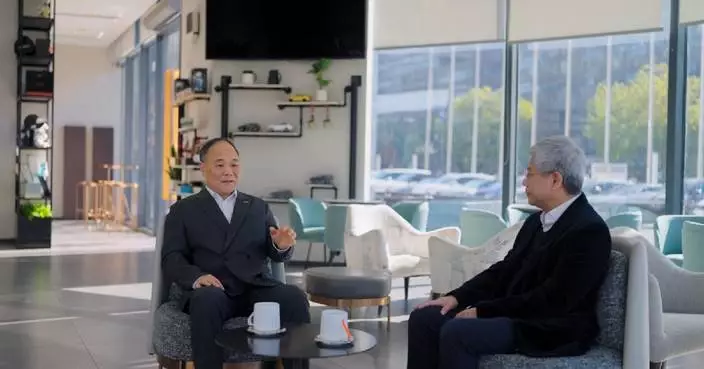
A leading Chinese software company specialized in spatial design has been expanding its digital twin products into the realm of embodied AI, with the vision of delivering even more advanced systems that better serve both humans and machines.
Founded in 2011, Manycore Tech has quickly risen to become a top tech success story, with its software solutions being widely used in the design sector. The company is one of the so-called "six little dragons" of successful start-up firms to be launched in the eastern Chinese tech hub of Hangzhou, with the group also including the AI developer DeepSeek and the robotics firm Unitree, all of which are prime examples of China's burgeoning technological prowess.
Manycore Tech's founder and chairman Huang Xiaohuang said his entrepreneurial idea was initially driven by a desire to advance the wider application of technology. After taking time to assess where their concept could best be applied, the firm finally decided to focus on the home decoration sector, and in 2013 they launched their groundbreaking Coohom software.
With a speedy rendering function time of just 10 seconds, the spatial design software has quickly attracted many designers for its slick usability and, given its widespread use across the industry, Manycore Tech has long been mistaken as being a decoration company itself.
Huang stressed that one of the key strengths is the software's data accumulation ability which allows it to build up a strong database and deliver a number of technical advantages when adopted in the industrial production sector.
He noted the adoption of digital twin technology enables this real-time data to be utilized in virtual settings which enables users to better envision and incorporate their ideas into real-world scenarios.
"We found that digital twins could solve this problem, so we further expanded our product and introduced the concept of flexible manufacturing. This means that after designers complete their designs, they can run simulations and modeling in the digital platform to see how the designs will be produced. The system then generates manufacturing instructions, which are sent to factories that have undergone digital transformation. In this way, the designs can be directly output — not only for people to view, but also for machines to execute. All these instructions are delivered to the machines, enabling them to produce exactly what was designed. Therefore, we have been continuously expanding our services for both people and machines, which so far has now included the embodied AI industry," Huang said.
The company has continued to innovate and earlier this month debuted its cloud-native industrial AI digital twin platform – SpatialTwin. The new platform effectively builds a digital training ground for robots, enabling them to conduct numerous cooperative training exercises and carry out tasks in simulated environments, before eventually being transfered over to work safely and efficiently in a real factory.
"Robots in the factories are engaged in extensive collaboration, and there are many different types — some are traditional robotic arms, some are AGVs (Automated Guided Vehicles), and some are other kinds of robots. All of them need to work together in a way that is both safe and optimal to complete tasks. To achieve this, the process can be managed within a digital twin system. That is why we have launched SpatialTwin, which is designed specifically to serve intelligent robots operating inside factories," said Huang.
Manycore Tech is one of many firms to tap into the AI revolution which is playing a huge role in the ongoing digital and intelligent industrial transformation across multiple industries, including in smart manufacturing.
According to the China Internet Development Report 2024, the country now has nearly 10,000 digitalized workshops and intelligent factories. Of these, more than 400 have been recognized as national-level benchmark factories in smart manufacturing, utilizing technologies such as AI and digital twins.
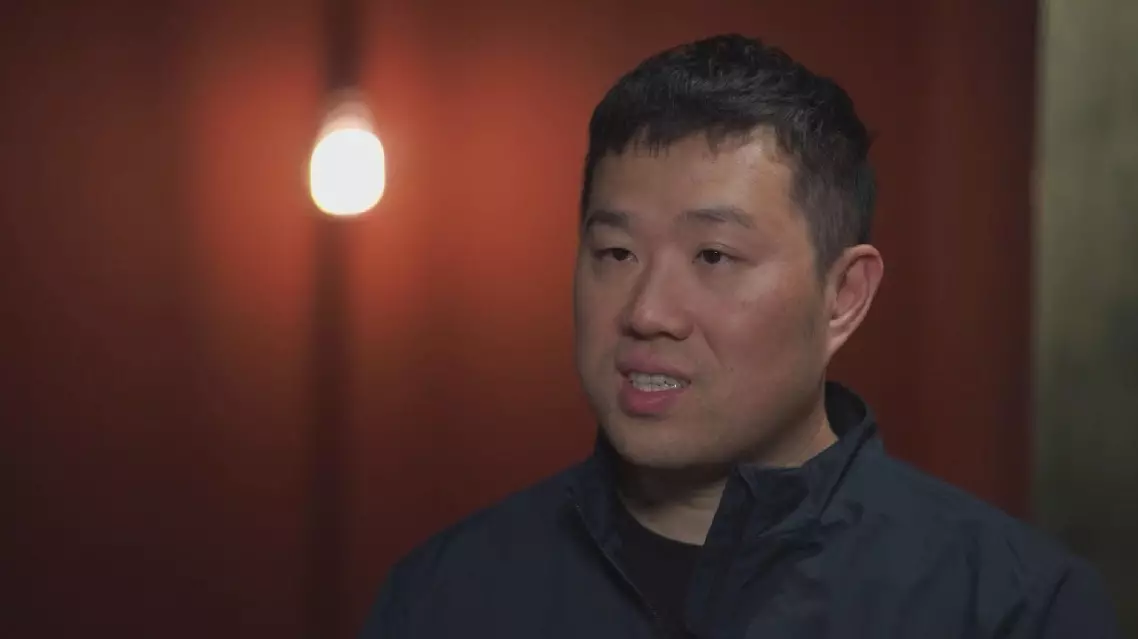
Chinese tech startup infuses digital twin technology with AI to bring virtual worlds to life