NEW YORK (AP) — Infielder Kazuma Okamoto and pitcher Kona Takahashi are entering Major League Baseball’s posting system and will be available for teams to sign as free agents from Friday through Jan. 4.
They join power-hitting corner infielder Munetaka Murakami, whose 45-day window to sign expires Dec. 22, and right-hander Tatsuya Imai, who can sign through Jan. 2.
Okamoto, 29, hit .327 with 15 homers and 49 RBIs in 69 games this year for the Central League’s Yomiuri Giants. He injured his left elbow while trying to catch a throw at first base on May 6 when he collided with the Hanshin Tigers’ Takumu Nakano, an injury that sidelined Okamoto until Aug. 16.
A six-time All-Star, Okamoto has a .277 average with 248 homers and 717 RBIs in 11 Japanese big league seasons, leading the Central League in home runs in 2020, 2021 and 2023. He homered off Colorado’s Kyle Freeland to help Japan beat the U.S. 3-2 in the 2023 World Baseball Classic final.
Takahashi, a right-hander who turns 29 on Feb. 3, was 8-9 with a 3.04 ERA this year for the Pacific League's Seibu Lions, striking out 88 and walking 41 in 148 innings. he had gone 0-11 with a 3.87 ERA in 2024 after compiling a 22-16 record in the prior two seasons.
Takahashi is 73-77 with a 3.39 ERA in 11 seasons with the Lions.
Under MLB’s posting agreement with Nippon Professional Baseball, the posting fee would be 20% of the first $25 million of a major league contract, including earned bonuses and options. The percentage drops to 17.5% of the next $25 million and 15% of any amount over $50 million. There would be a supplemental fee of 15% of any earned bonuses, salary escalators and exercised options.
AP MLB: https://apnews.com/hub/mlb

FILE - Yomiuri Giants' Kazuma Okamoto flies out in the fourth inning of a spring training baseball game against the Los Angeles Dodgers in Tokyo, Japan, Saturday, March 15, 2025. (AP Photo/Hiro Komae, File)
BERLIN (AP) — German growth forecasts for 2026 and 2027 were cut by experts on Wednesday as governments across Europe implement measures aimed at reducing the price impact of the Iran war.
A group of five economic institutes predict German gross domestic product will expand by 0.6% this year — less than half the 1.3% they forecast in September — and by 0.9% in 2027, down from 1.4%. The economic outlook was below the government's own forecast, issued two months ago, of 1% and 1.3% growth, respectively.
The Iran war has created an unwelcome new obstacle to growth across Europe. The annual inflation rate in the 21-nation euro area sped up to 2.5% in March from 1.9% the previous month. It was powered by a 4.9% increase in energy prices as the war and the blocking of the Strait of Hormuz sent fuel costs higher.
“This energy price shock is hitting a German economy in which a recovery set in last year after a several-year downturn,” said Timo Wollmershäuser, an expert with the Munich-based Ifo institute, one of those that issued the joint forecast for Europe’s biggest economy.
It “will dampen this recovery in Germany, but should not completely stop it,” he added, pointing to planned government spending on defense and infrastructure as one stabilizing factor. Germany's output grew 0.2% last year after shrinking for the two previous years.
Wollmershäuser argued against “short-term activism,” in particular a government-mandated cut to fuel prices, which he argued would be “costly, benefit many people who don't need relief, distort the signal of scarcity from the price and keep up demand for crude oil.”
Germany's response so far has been relatively cautious. On Wednesday, legislation took effect that allows gas stations to raise prices only once a day, at midday, an attempt to end cost gyrations at the pump. It also gives the national antitrust authority more powers to act against excessive fuel prices.
Some European countries have already gone further, even as the European Union's executive commission urges members to “consider the promotion of demand saving measures” and “refrain from taking measures that may increase fuel consumption.”
Poland has this week implemented temporary measures including maximum fuel prices set daily by authorities, with the threat of fines ranging up to 1 million zlotys ($268,000) for companies that sell above the price cap. It also is temporarily cutting taxes on fuel.
Cuts to taxes on fuel were due to go into effect Wednesday in Austria, reducing prices at the pump. Sweden's government is proposing lower taxes on gasoline and diesel starting May 1. It already took action on another front Wednesday, halving value-added tax on food and drinks in stores or bought to take away from restaurants from 12% to 6%.
Latvia and Lithuania plan to cut duties on diesel. Non-EU Norway on Wednesday implemented temporary cuts in fuel tax that the country's parliament forced in a vote last week.
Still, the EU's energy commissioner warned on Tuesday that oil and gas prices won't return to normal levels soon even if peace comes quickly in the Middle East.
Wollmershäuser said the German forecast was based on an assumption that the Strait of Hormuz will be passable again in the second quarter and energy prices will drop from summer onward, “but without reaching the prewar level.”
The disruption comes as Chancellor Friedrich Merz's governing coalition mulls far-reaching reforms to overcome Germany's deeper problems — such as high production costs, lagging private investment and increasingly costly health and pension systems — and boost long-term growth.
Economy Minister Katherina Reiche said the message from the latest growth forecast is clear: “The conflict in the Middle East is increasing the pressure on German politicians to tackle structural reforms forcefully.”
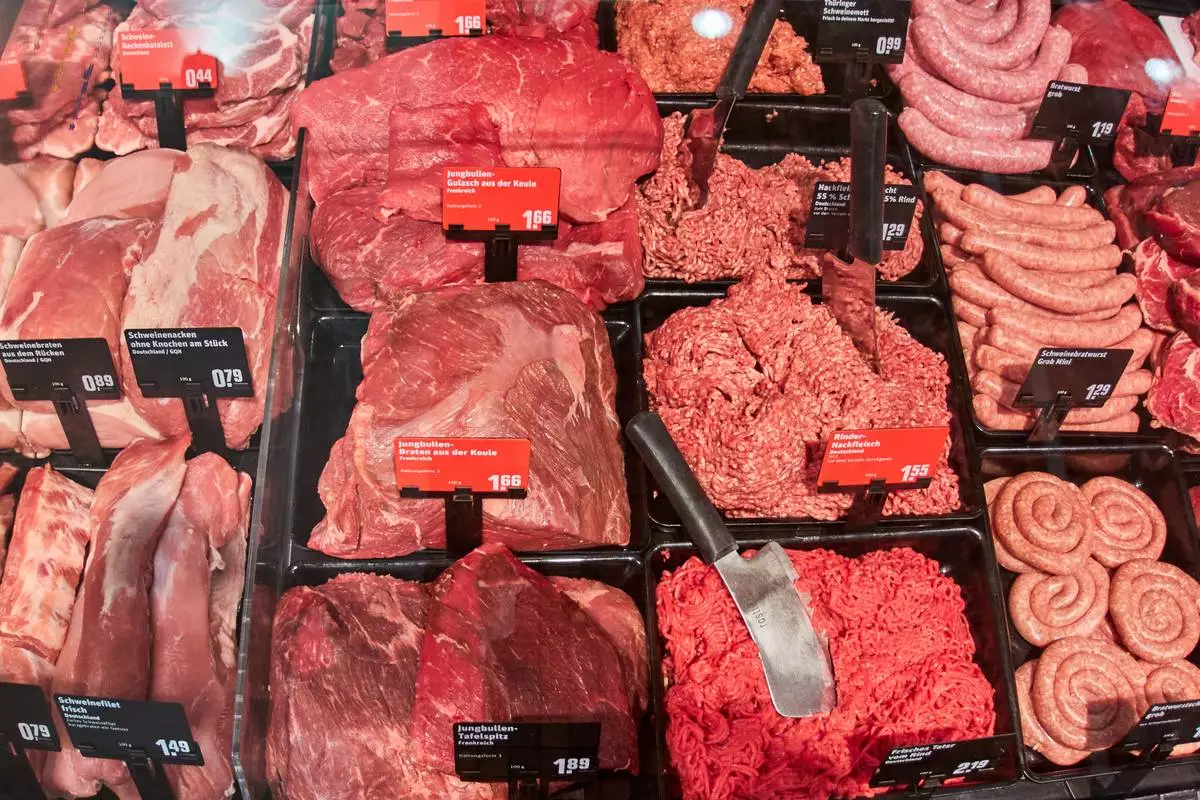
The meat counter of a super market is pictured in Wehrheim near Frankfurt, Germany, Tuesday, March 31, 2026. (AP Photo/Michael Probst)
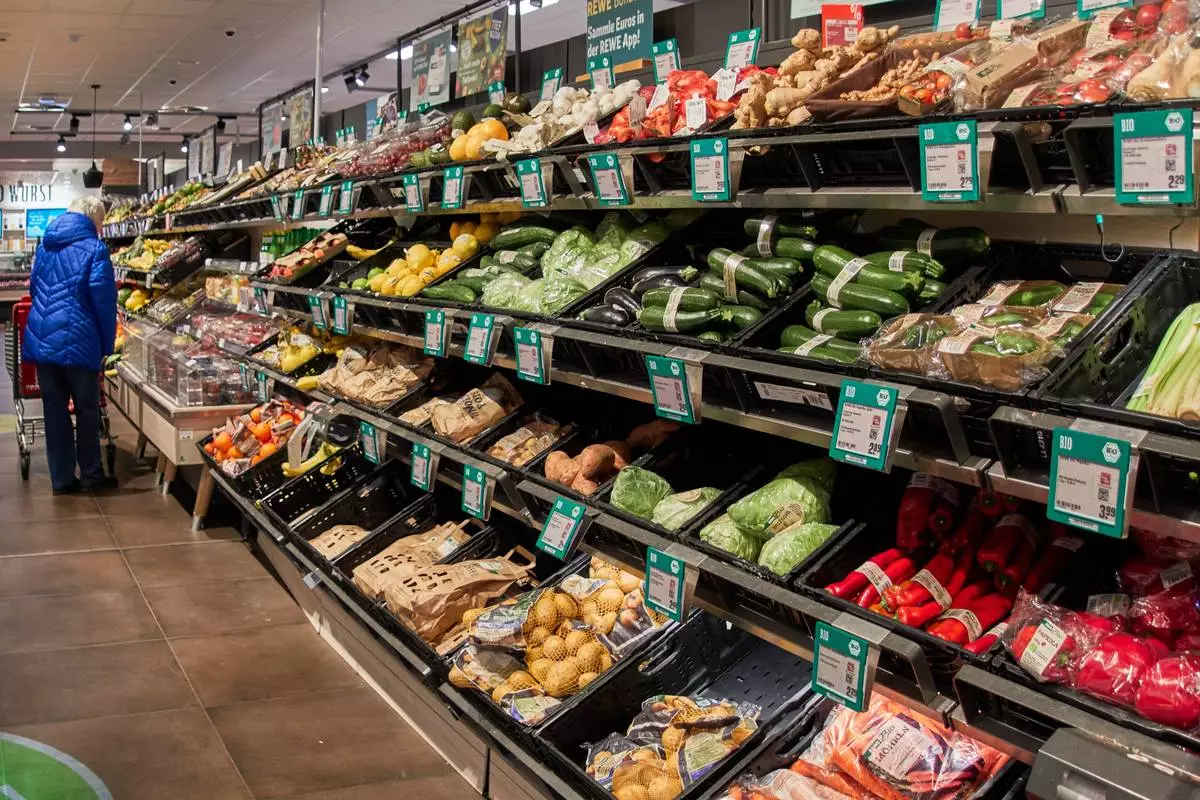
Vegetables in a super market are pictured in Wehrheim near Frankfurt, Germany, Tuesday, March 31, 2026. (AP Photo/Michael Probst)
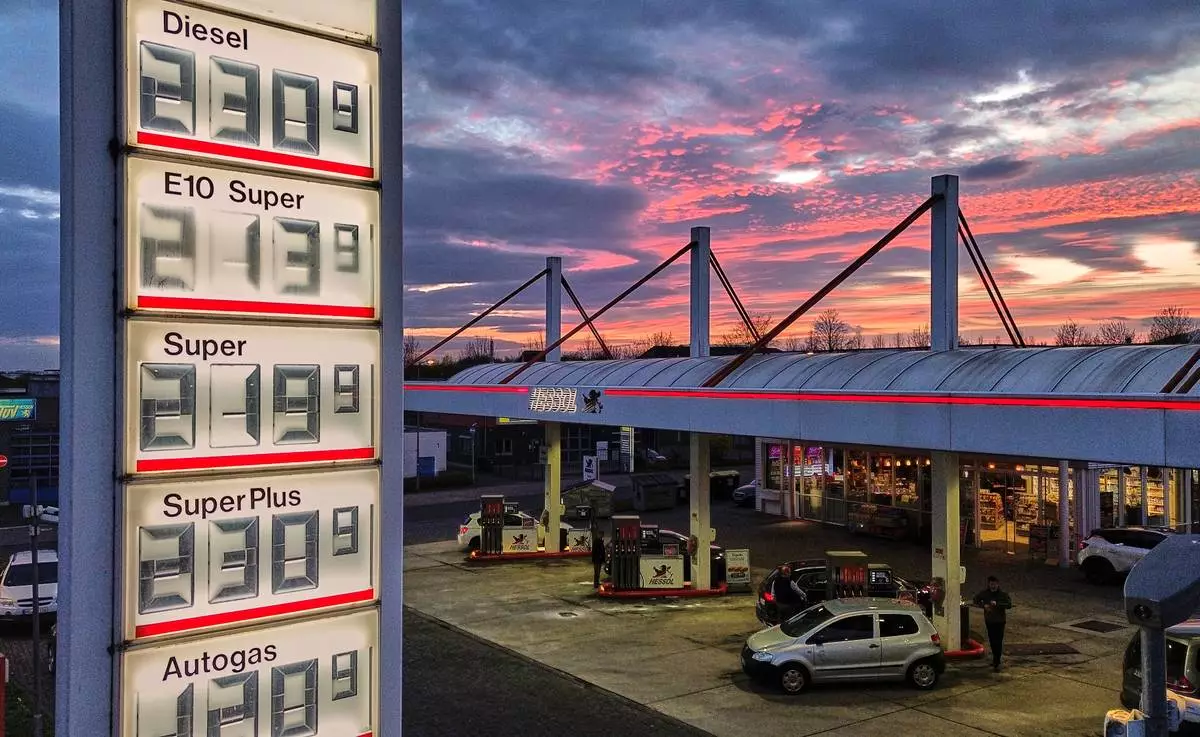
The sun has set behind a gas station in Frankfurt, Germany, Tuesday, March 31, 2026. (AP Photo/Michael Probst)