ROME (AP) — Pope Leo XIV opened a virtual meeting with American Catholic young people Friday by revealing a closely held pontifical secret: He uses a different Wordle start word each day.
Leo divulged his strategy for the popular New York Times online game before fielding questions via videoconference about artificial intelligence, social media and the future of the Catholic Church.
The Chicago-born pope was hooked up from the Vatican to speak remotely to the National Catholic Youth Conference, an annual Catholic rally held this year in Indianapolis, via a feed from U.S. Catholic broadcaster EWTN.
After Leo’s election in May, his brother John Prevost revealed that Leo plays Wordle every day and that the brothers compare scores, as many friends and family do.
Leo was asked about his strategy at the start of Friday’s Q&A, which was otherwise somewhat scripted. Playing along, Leo revealed "I use a different word for Wordle every day, so there’s no set starting word."
The simple, free online puzzle lets players guess a five-letter word in six tries with no hints and has millions of daily players around the world.
After the big reveal, Leo spent the hour-long encounter fielding prepared questions from a handful of the conference participants, who asked him specifically about technology's hold on young people. Leo, who himself was a Twitter user before his election, said social media was a great way to stay connected and to even deepen one's faith.
But he warned that it can never replace real human relationships. He urged young people to follow the example of St. Carlo Acutis, a teen-age Catholic influencer canonized earlier this year who set limits on his screen time to make sure video games didn't monopolize his free time.
“I encourage you to follow the example of Carlo Acutis," Leo said. "Be intentional with your screen time. Make sure technology serves your life and not the other way around.”
Leo also applied that lesson to artificial intelligence, a topic he has said is a priority concern for him. He told the young people it was a powerful tool but that they must learn to use it responsibly, and not let it interfere with their maturing into adults capable of making choices.
“Using AI responsibly means using it in ways that help you grow," he said. "AI can process information quickly, but it cannot replace human intelligence. And don’t ask it to do your homework for you,” he said to laughs.
Associated Press religion coverage receives support through the AP’s collaboration with The Conversation US, with funding from Lilly Endowment Inc. The AP is solely responsible for this content.
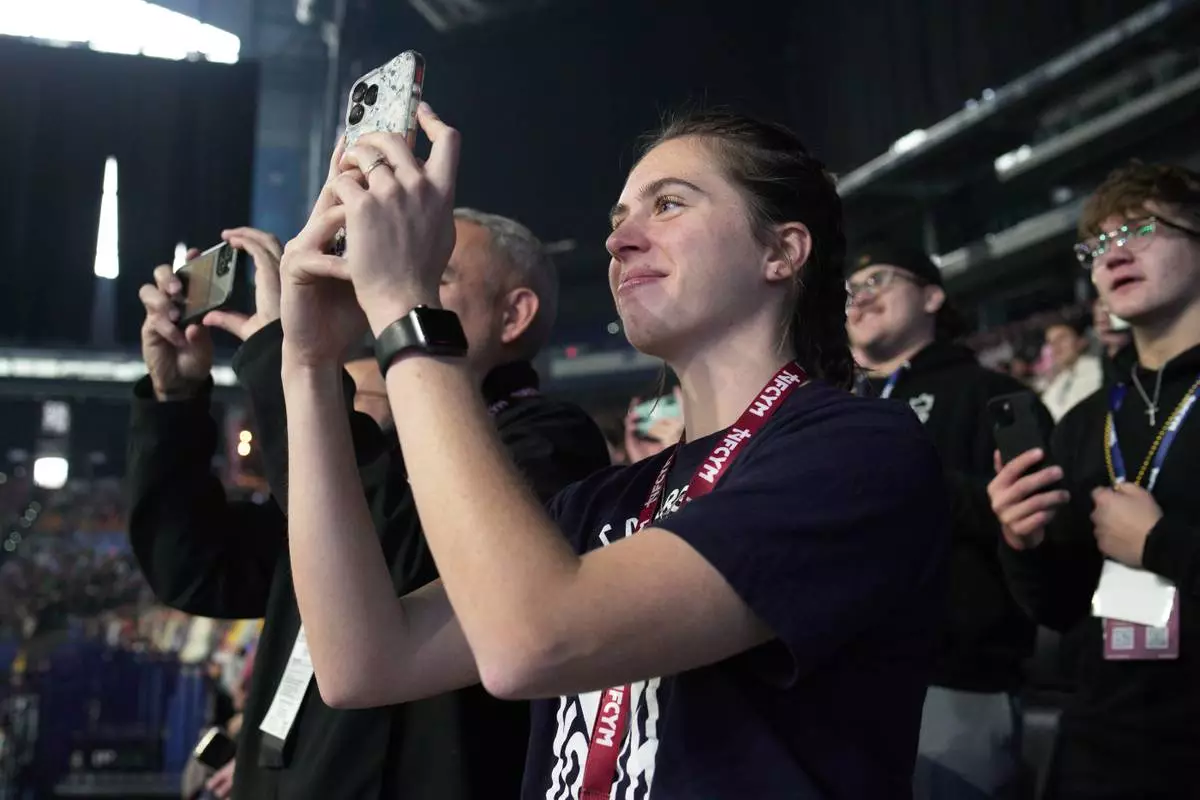
An attendee records Pope Leo XIV speaking remotely from the Vatican at the National Catholic Youth Conference on Friday, Nov. 21, 2025, in Indianapolis. (AP Photo/Obed Lamy)
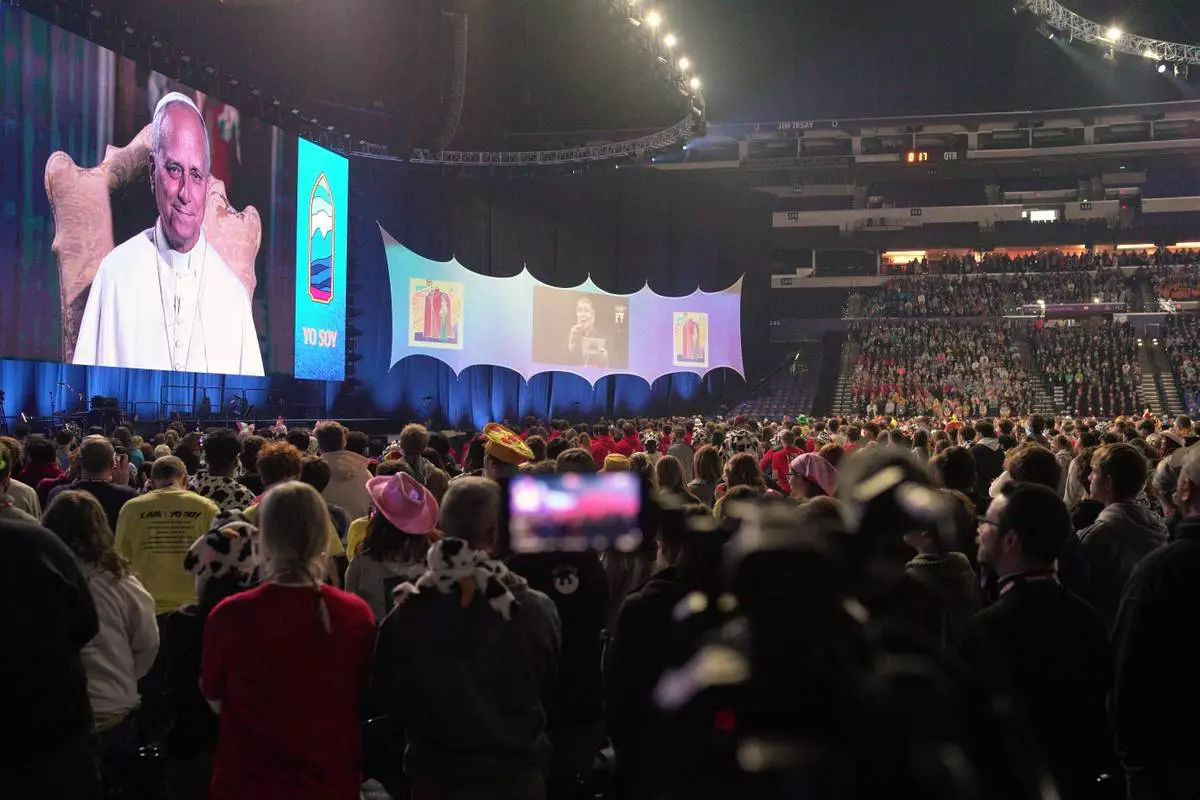
Pope Leo XIV speaks remotely from the Vatican to thousands of Catholics at the National Catholic Youth Conference on Friday, Nov. 21, 2025, in Indianapolis. (AP Photo/Obed Lamy)
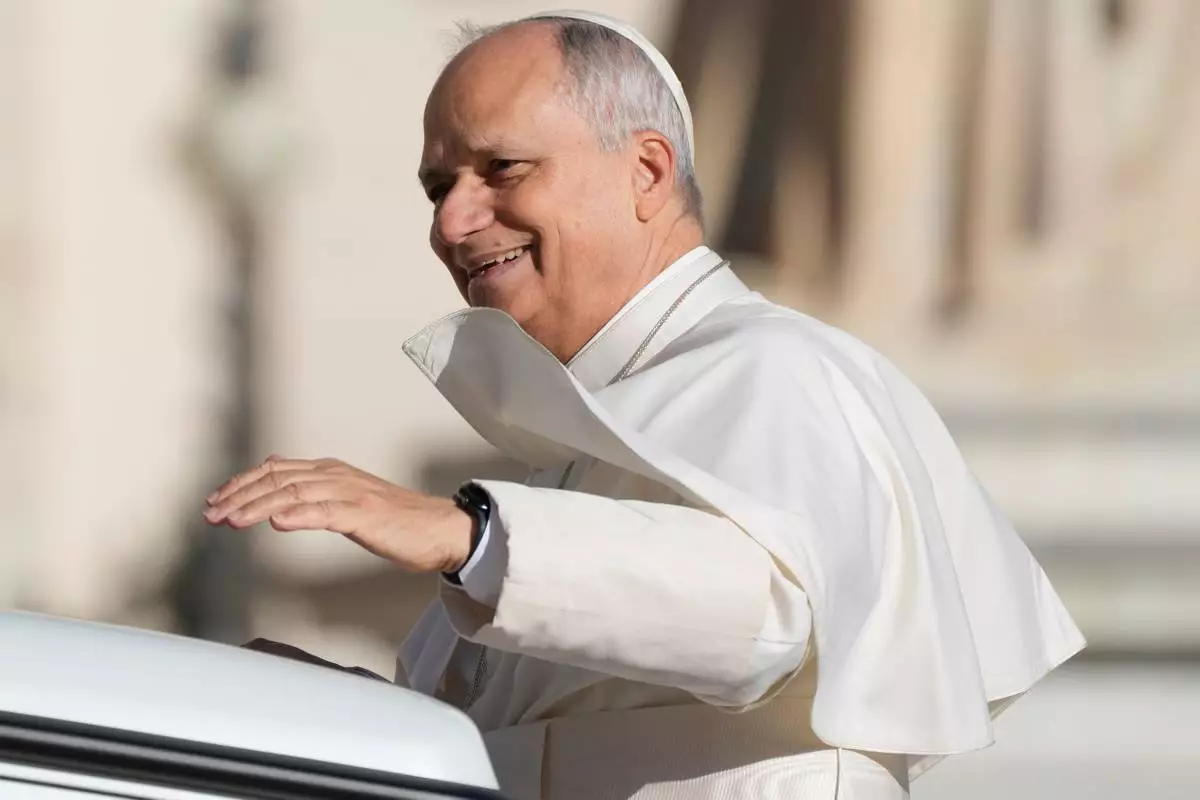
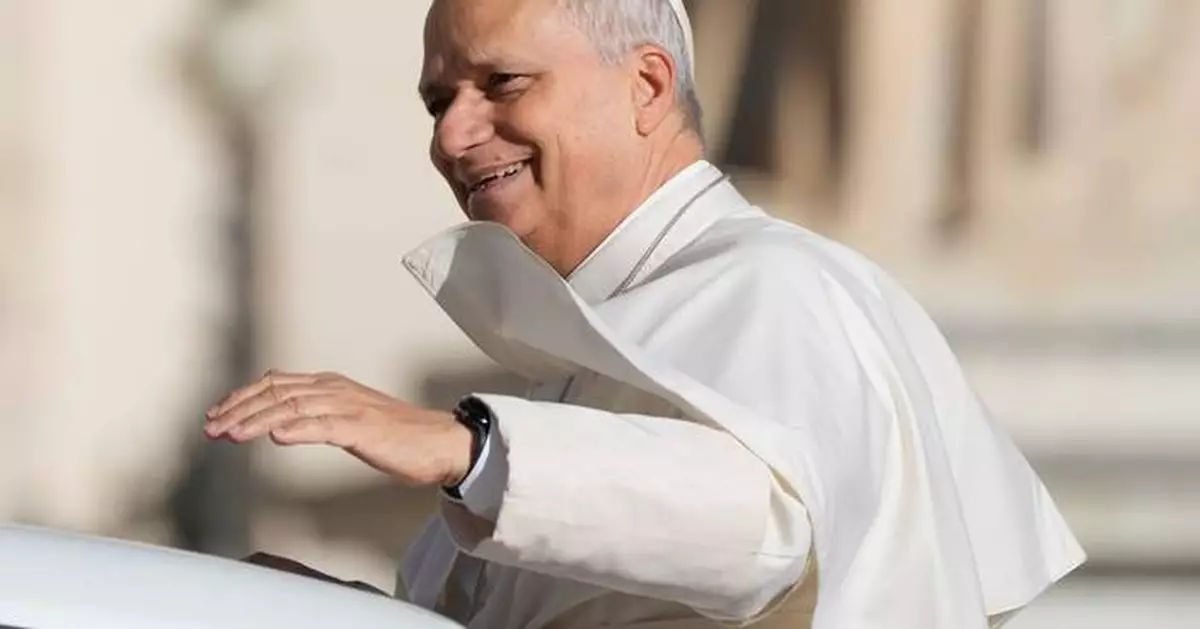
Pope Leo XIV arrives in St. Peter's Square on the occasion of the weekly general audience at the Vatican, Wednesday, Nov. 19, 2025. (AP Photo/Gregorio Borgia)
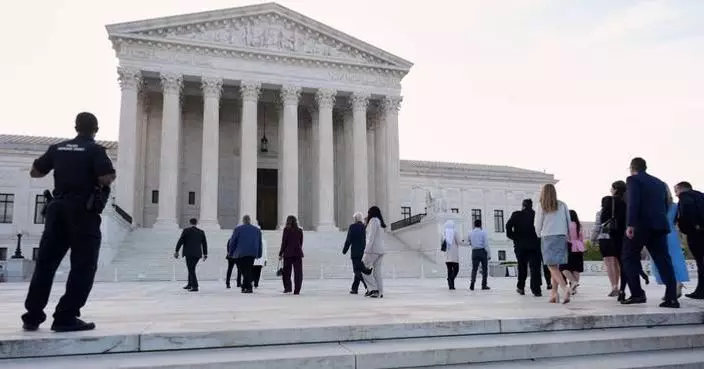
WASHINGTON (AP) — The Supreme Court seemed poised Wednesday to reject President Donald Trump’s restrictions on birthright citizenship in a consequential case that was magnified by his unparalleled presence in the courtroom.
Conservative and liberal justices questioned whether Trump's order declaring that children born to parents who are in the United States illegally or temporarily are not American citizens comports with either the Constitution or federal law.
Arguments lasted more than two hours in a crowded courtroom that included not only Trump, the first sitting president to attend arguments at the nation’s highest court, but also Attorney General Pam Bondi and Commerce Secretary Howard Lutnick, and in seats reserved for the justices' guests, actor Robert De Niro.
Trump spent just over an hour inside the courtroom for arguments made by the Republican administration's top Supreme Court lawyer, Solicitor General D. John Sauer. The president departed shortly after lawyer Cecillia Wang began her presentation in defense of broad birthright citizenship.
After court adjourned, Trump posted on Truth Social: “We are the only Country in the World STUPID enough to allow ‘Birthright’ Citizenship!” Actually, about three dozen countries, nearly all of them in the Americas, guarantee citizenship to children born on their territory.
Trump heard Sauer face one skeptical question after another. Justices asked about the legal basis for the order and voiced more practical concerns.
“Is this happening in the delivery room?” Justice Ketanji Brown Jackson asked, drilling down into the logistics of how the government would actually figure out who’s entitled to citizenship and who’s not.
Chief Justice John Roberts suggested that Sauer was relying on quirky exceptions to citizenship to make a broad argument about people who are in the country illegally. “I’m not quite sure how you can get to that big group from such tiny and sort of idiosyncratic examples,” Roberts said.
Justice Clarence Thomas sounded the most likely among the nine justices to side with Trump.
“How much of the debates around the 14th Amendment had anything to do with immigration?” Thomas asked, pointing out that the purpose of the amendment was to grant citizenship to Black people, including freed slaves.
The justices heard Trump’s appeal of a lower-court ruling from New Hampshire that struck down the citizenship restrictions, one of several courts that have blocked them. The restrictions have not taken effect anywhere in the country.
The case frames another test of Trump's assertions of executive power that defy long-standing precedent for a court that has largely ruled in the president's favor — but with some notable exceptions that Trump has responded to with starkly personal criticisms of the justices. A definitive ruling is expected by early summer.
The birthright citizenship order, which Trump signed the first day of his second term, is part of his Republican administration’s broad immigration crackdown.
Birthright citizenship is the first Trump immigration-related policy to reach the court for a final ruling. The justices previously struck down global tariffs Trump had imposed under an emergency powers law that had never been used that way.
Trump reacted furiously to the late February tariffs decision, saying he was ashamed of the justices who ruled against him and calling them unpatriotic.
He issued a preemptive broadside against the court on Sunday on his Truth Social platform. “Birthright Citizenship is not about rich people from China, and the rest of the World, who want their children, and hundreds of thousands more, FOR PAY, to ridiculously become citizens of the United States of America. It is about the BABIES OF SLAVES!,” the president wrote. “Dumb Judges and Justices will not a great Country make!”
Trump's order would upend the long-standing view that the Constitution’s 14th Amendment, ratified in 1868, and federal law since 1940 confer citizenship on everyone born on American soil, with narrow exceptions for the children of foreign diplomats and those born to a foreign occupying force.
The 14th Amendment was intended to ensure that Black people, including former slaves, had citizenship, though the Citizenship Clause is written more broadly. “All persons born or naturalized in the United States, and subject to the jurisdiction thereof, are citizens of the United States and of the State wherein they reside,” it reads.
In a series of decisions, lower courts have struck down the executive order as illegal, or likely so, under the Constitution and federal law. The decisions have invoked the high court's 1898 ruling in Wong Kim Ark, which held that the U.S.-born child of Chinese nationals was a citizen.
The Trump administration argues that the common view of citizenship is wrong, asserting that children of noncitizens are not “subject to the jurisdiction” of the United States and therefore are not entitled to citizenship.
The court should use the case to set straight “long-enduring misconceptions about the Constitution’s meaning,” Sauer wrote.
Appearing before the court, Sauer said unrestricted citizenship encourages illegal immigration and “birth tourism” by pregnant women who visit the U.S. only to give birth.
Roberts asked Sauer how significant “birth tourism” is.
No one knows for sure, he said, adding, “but of course, we’re in a new world now” where 8 billion people are a plane ride away “from having a child who’s a U.S. citizen.”
The chief justice replied, “It’s a new world. It’s the same Constitution.”
Justice Neil Gorsuch, a Trump appointee, also revealed his skepticism of Sauer's position when the solicitor general said the 1898 Supreme Court case should be read to endorse Trump's view of citizenship. "I’m not sure how much you want to rely on Wong Kim Ark,” Gorsuch said.
Yet another conservative justice appointed by Trump, Brett Kavanaugh, suggested to Wang that the court could resolve the case in Wang’s favor either with a “short opinion” saying that the Wong Kim Ark case was correctly decided and it means Trump’s order is unconstitutional.
Or, he said, the justices could avoid constitutional questions and find that the order is illegal under federal law.
No court has accepted the Trump administration's argument, and lawyers for pregnant women whose children would be affected by the order said the Supreme Court should not be the first to do so, Wang told the justices.
The most difficult questions Wang faced, from several justices, dealt with the repeated use of the word “domicile” in Wong Kim Ark, which the administration says indicates that the court's view of birthright citizenship excluded people in the country temporarily or illegally.
Roberts said the word is used 20 times in the 1898 decision. “Isn’t it at least something to be concerned about?” he asked.
Wang says it’s true that the Chinese parents in that case were domiciled in the U.S. but that the decision did not turn on that fact.
Generally, though, the intensity of the justices' questions dropped off during her presentation, often a signal of where the court will come out.
More than one-quarter of a million babies born in the U.S. each year would be affected by the executive order, according to research by the Migration Policy Institute and Pennsylvania State University’s Population Research Institute.
While Trump has largely focused on illegal immigration in his rhetoric and actions, the birthright restrictions also would apply to people who are legally in the United States, including students and applicants for green cards, or permanent resident status.
Associated Press writer Darlene Superville contributed to this report.
Follow the AP’s coverage of the U.S. Supreme Court at https://apnews.com/hub/us-supreme-court.
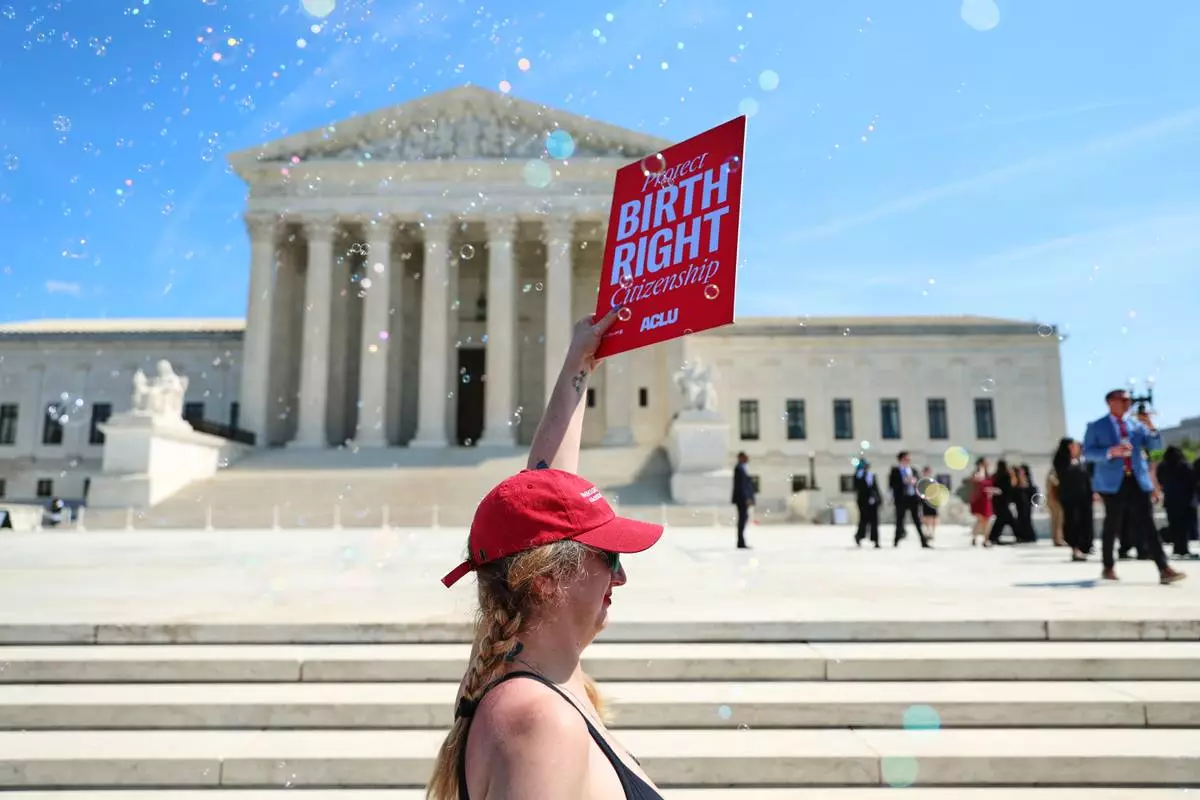
Demonstrators rally outside the U.S. Supreme Court after justices hear oral arguments on whether President Donald Trump can deny citizenship to children born to parents who are in the United States illegally or temporarily, on Capitol Hill in Washington, Wednesday, April 1, 2026. (AP Photo/Tom Brenner)
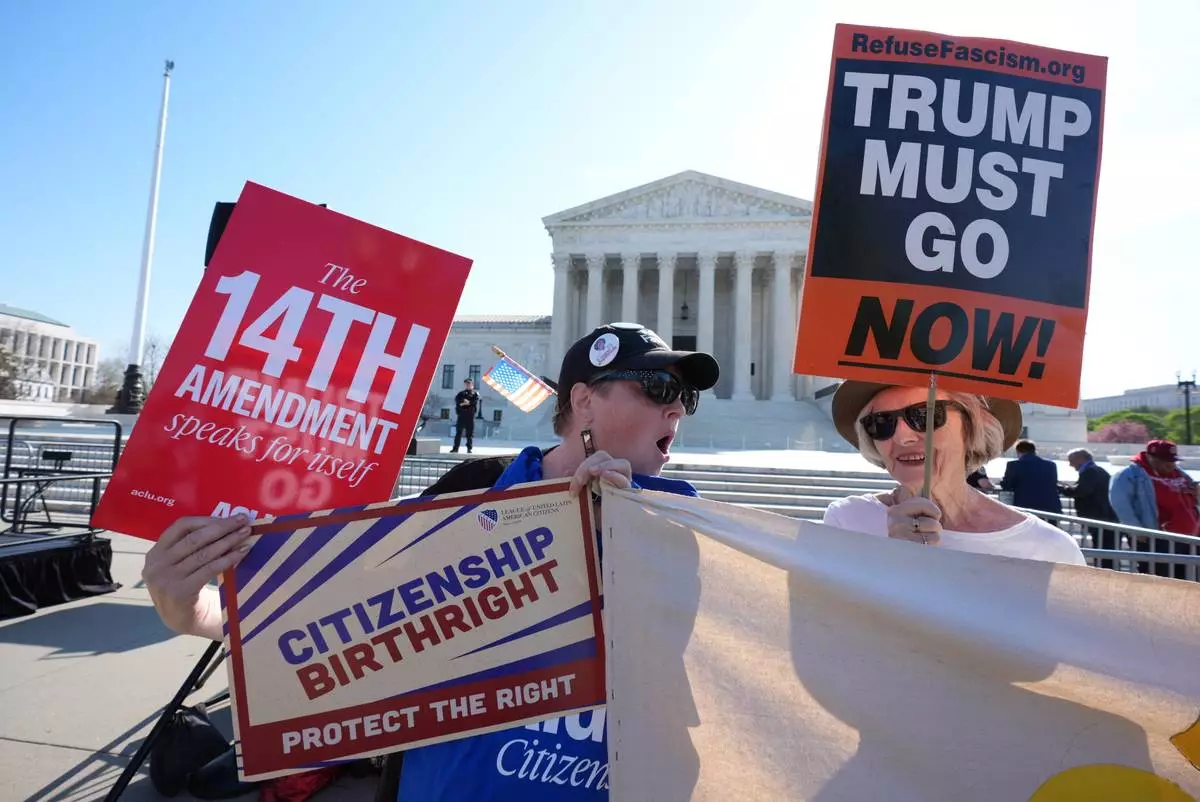
Pro and anti-Trump demonstrators rally outside the U.S. Supreme Court, before justices hear oral arguments on whether President Donald Trump can deny citizenship to children born to parents who are in the United States illegally or temporarily, on Capitol Hill, in Washington, Wednesday, April 1, 2026. (AP Photo/J. Scott Applewhite)
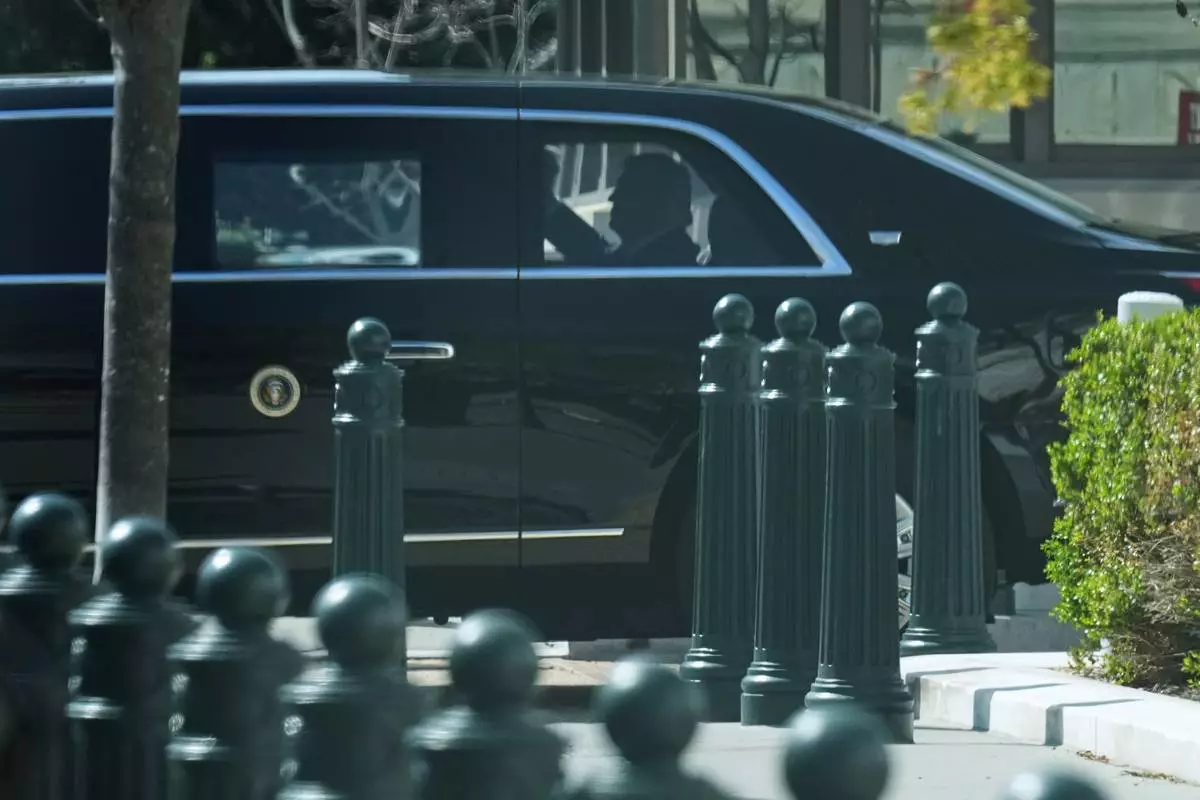
President Donald Trump leaves the U.S. Supreme Court, Wednesday, April 1, 2026, in Washington. (AP Photo/Mark Schiefelbein)
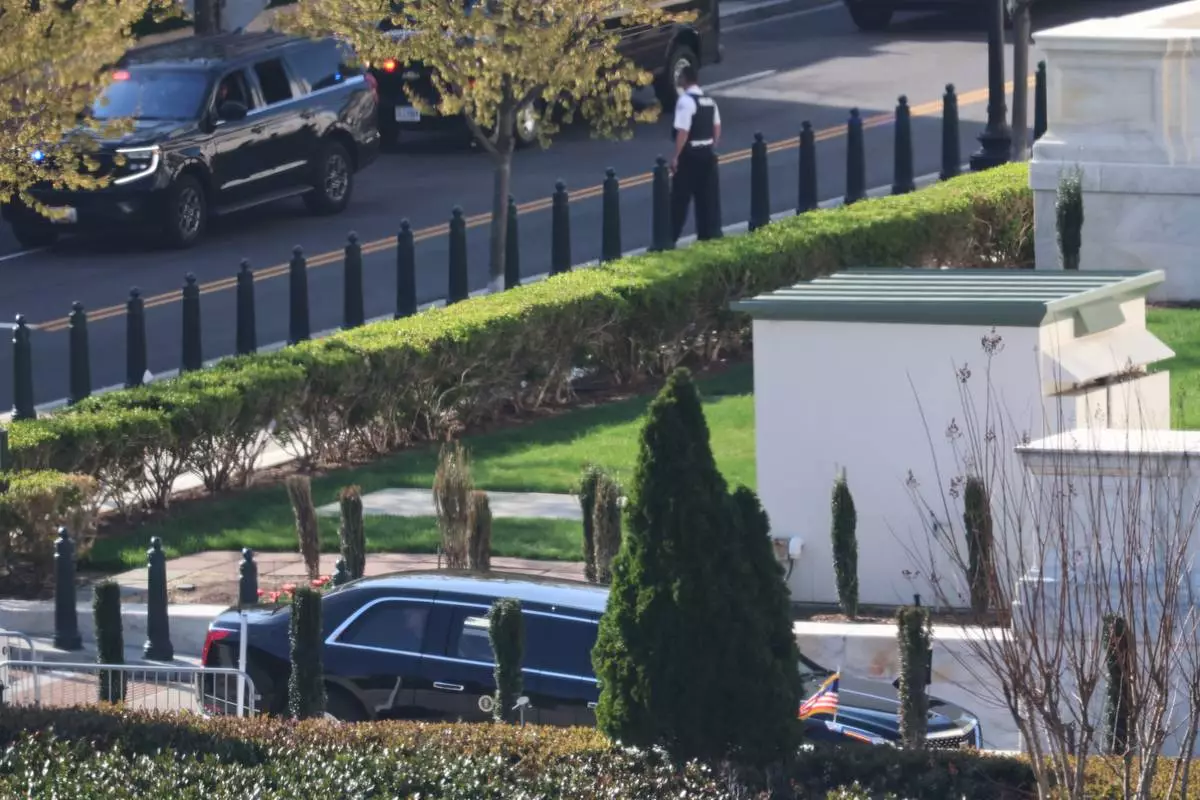
President Donald Trump's motorcade arrives at the U.S. Supreme Court, Wednesday, April 1, 2026, in Washington. (AP Photo/Tom Brenner)
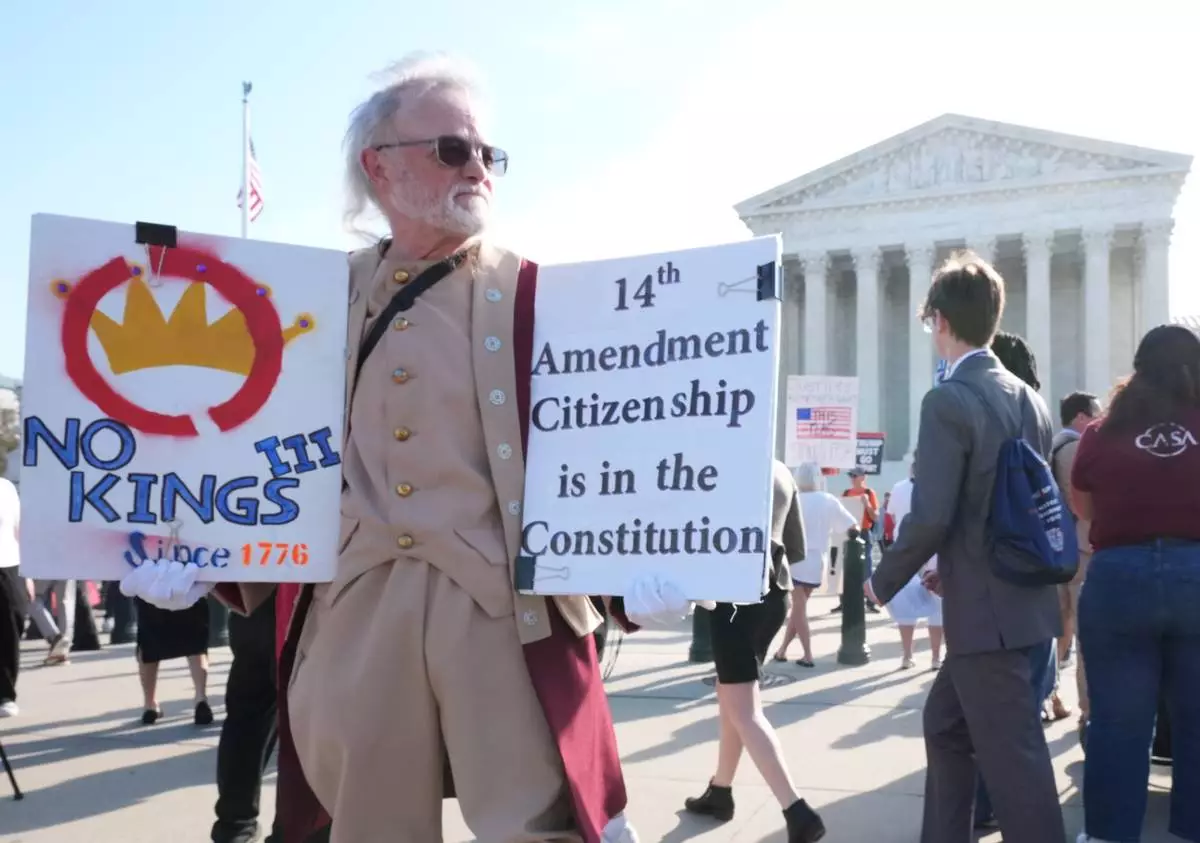
Pro and anti-Trump demonstrators rally outside the U.S. Supreme Court, before justices hear oral arguments on whether President Donald Trump can deny citizenship to children born to parents who are in the United States illegally or temporarily, on Capitol Hill, in Washington, Wednesday, April 1, 2026. (AP Photo/J. Scott Applewhite)
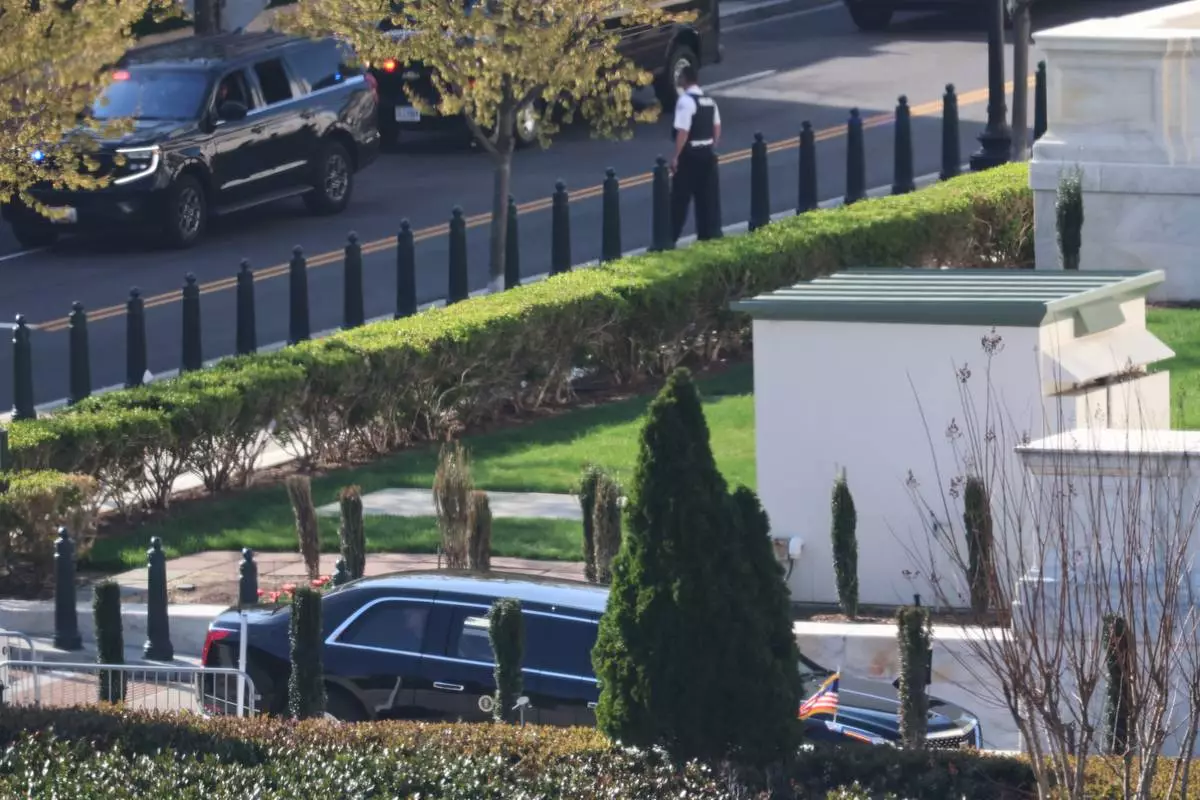
President Donald Trump's motorcade arrives at the U.S. Supreme Court, Wednesday, April 1, 2026, in Washington. (AP Photo/Tom Brenner)
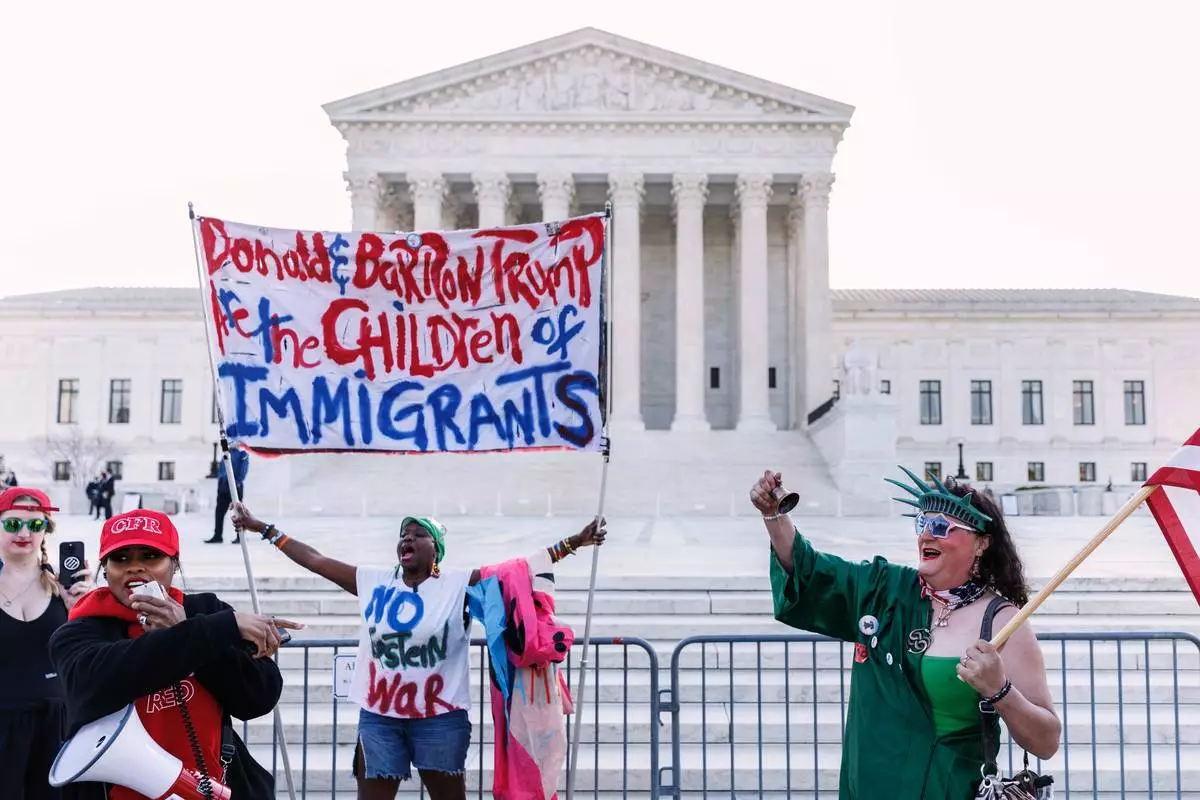
Demonstrators holding opposing views verbally engage ahead of President Donald Trump's arrival at the U.S. Supreme Court, Wednesday, April 1, 2026, in Washington. (AP Photo/Tom Brenner)
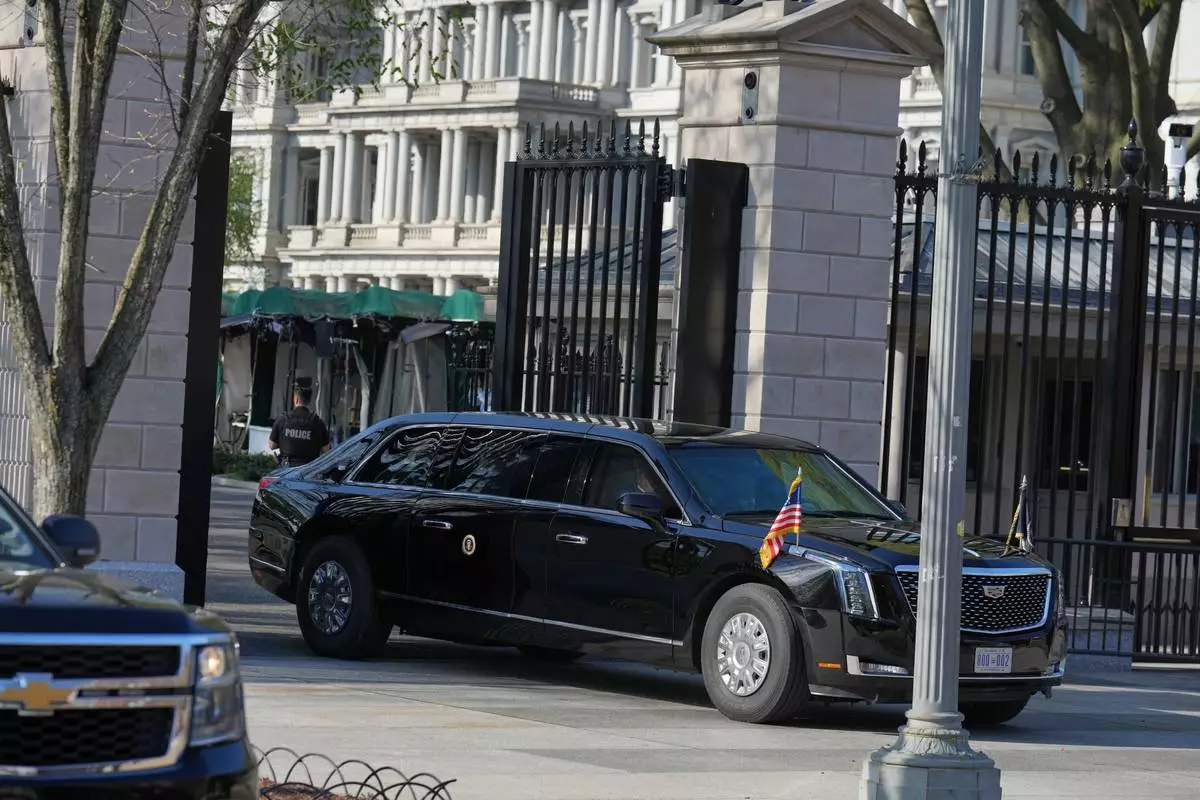
President Donald Trump's limo exits the White House en route to the Supreme Court, Wednesday, April 1, 2026, in Washington. (AP Photo/Mark Schiefelbein)
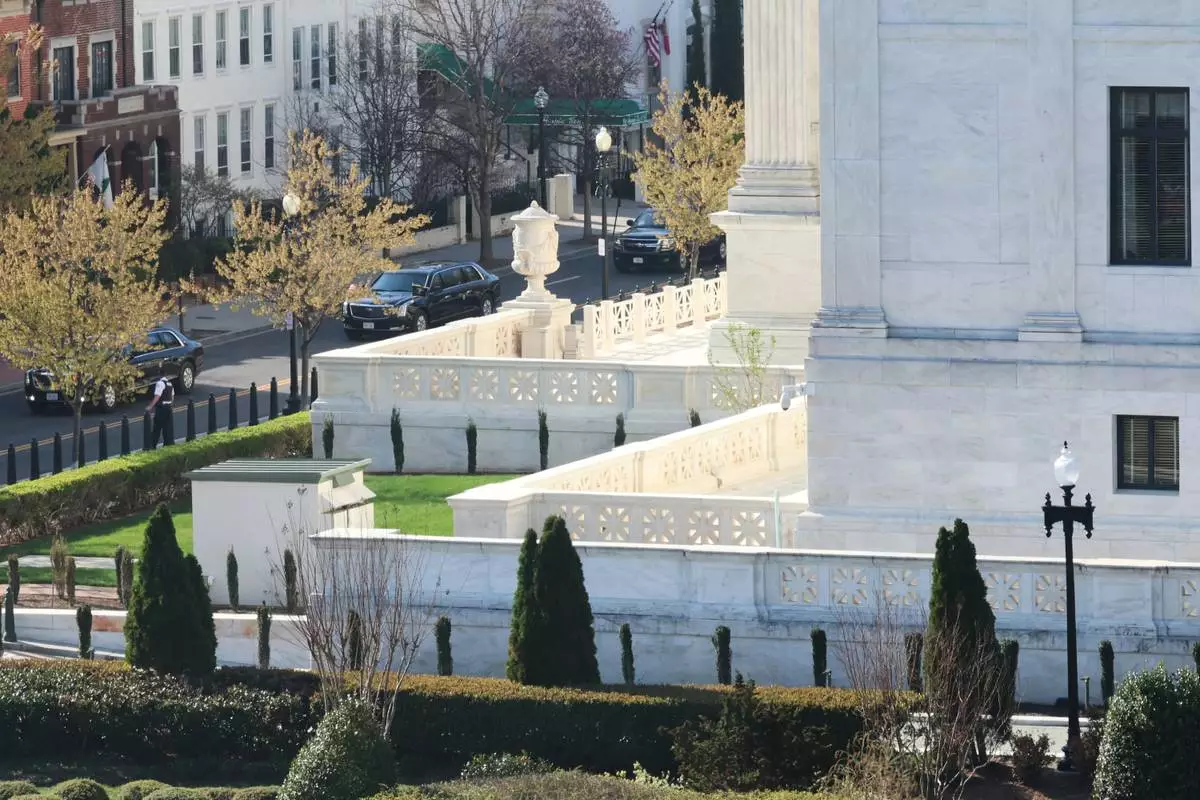
President Donald Trump's motorcade arrives at the U.S. Supreme Court, Wednesday, April 1, 2026, in Washington. (AP Photo/Tom Brenner)

Pro and anti-Trump demonstrators rally outside the U.S. Supreme Court, before justices hear oral arguments on whether President Donald Trump can deny citizenship to children born to parents who are in the United States illegally or temporarily, on Capitol Hill, in Washington, Wednesday, April 1, 2026. (AP Photo/J. Scott Applewhite)
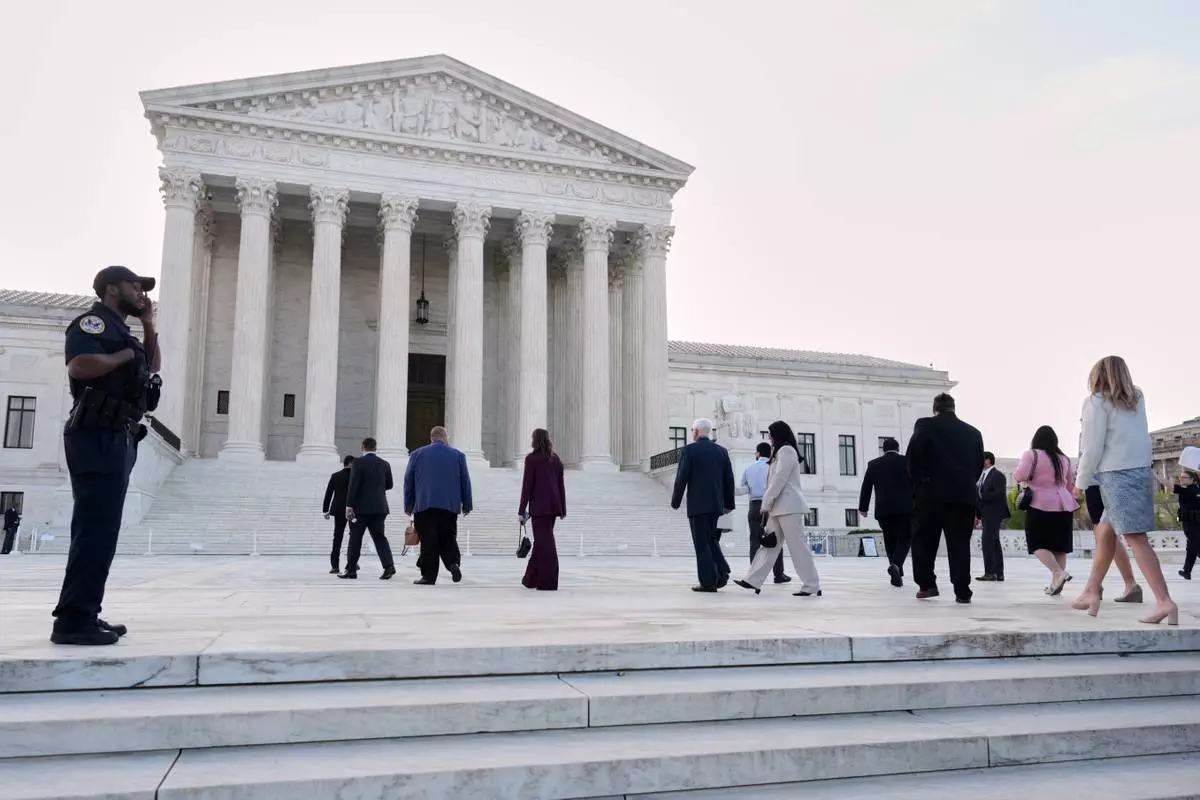
People arrive to walk inside the U.S. Supreme Court, on Capitol Hill in Washington, Wednesday, April 1, 2026. The Supreme Court justices will hear oral arguments today on whether President Donald Trump can deny citizenship to children born to parents who are in the United States illegally or temporarily. (AP Photo/J. Scott Applewhite)
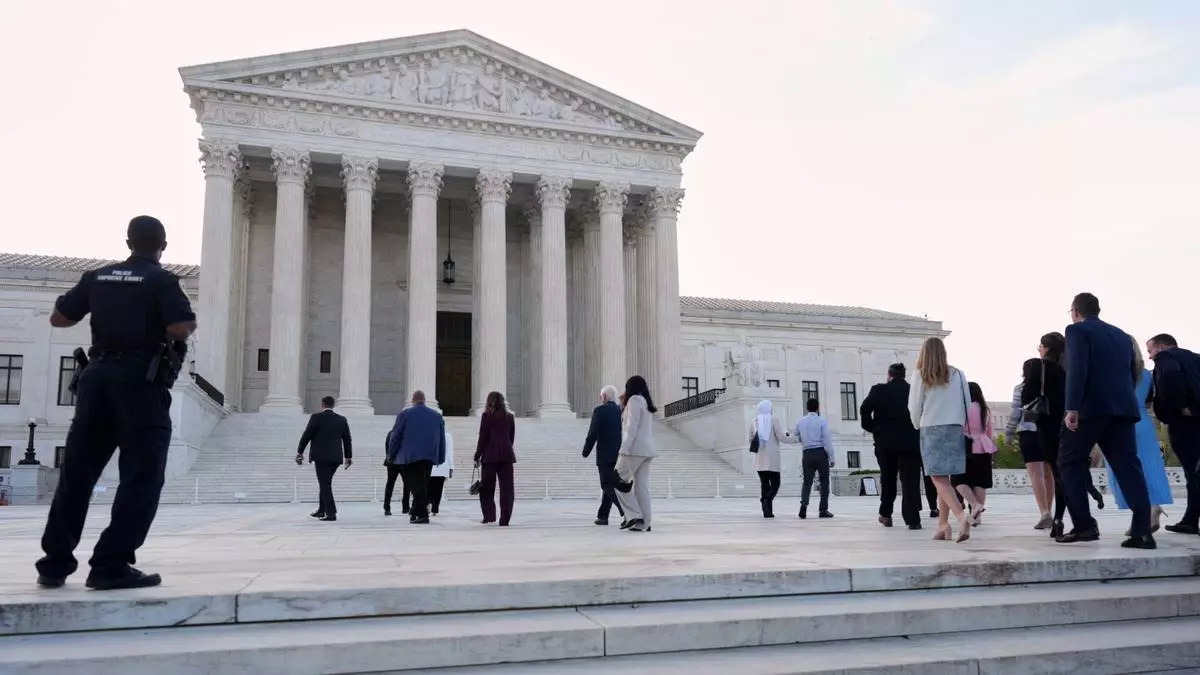
People arrive to walk inside the U.S. Supreme Court, on Capitol Hill in Washington, Wednesday, April 1, 2026. The Supreme Court justices will hear oral arguments today on whether President Donald Trump can deny citizenship to children born to parents who are in the United States illegally or temporarily. (AP Photo/J. Scott Applewhite)
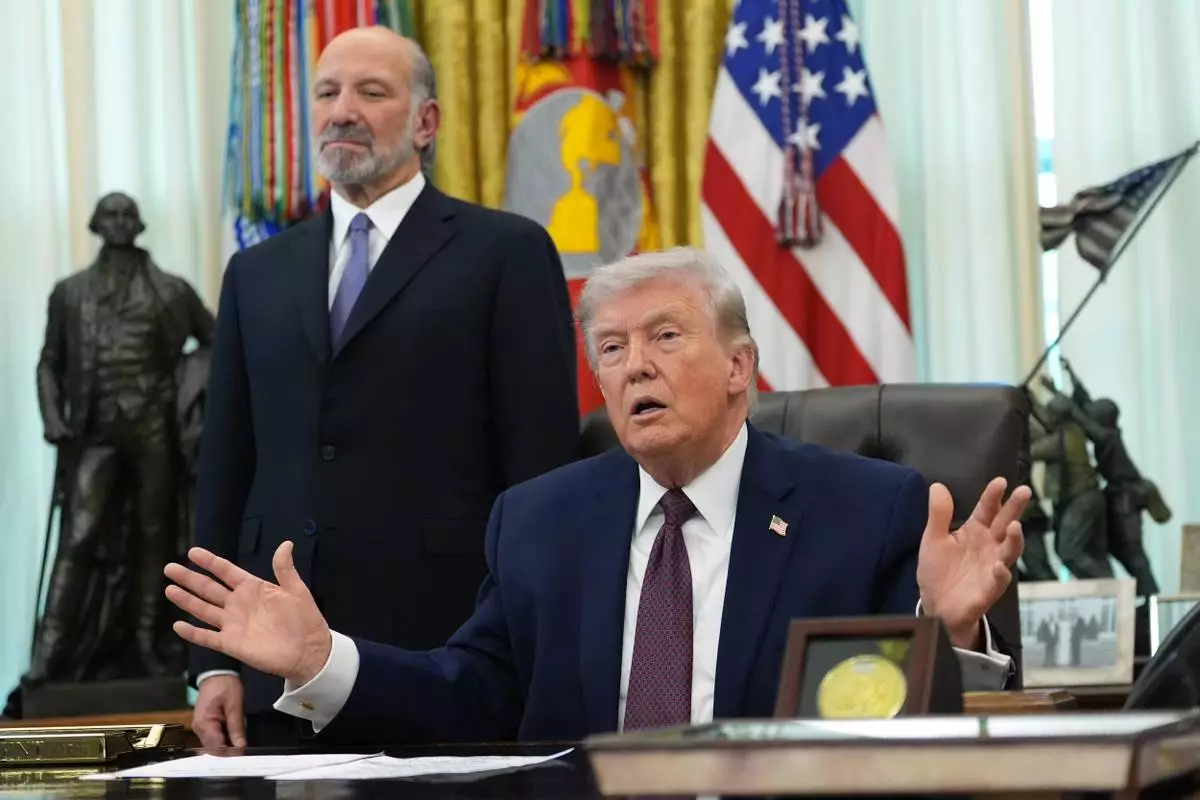
President Donald Trump answers questions from reporters after signing an executive order in the Oval Office of the White House Tuesday, March 31, 2026, in Washington, as Commerce Secretary Howard Lutnick listens. (AP Photo/Alex Brandon)
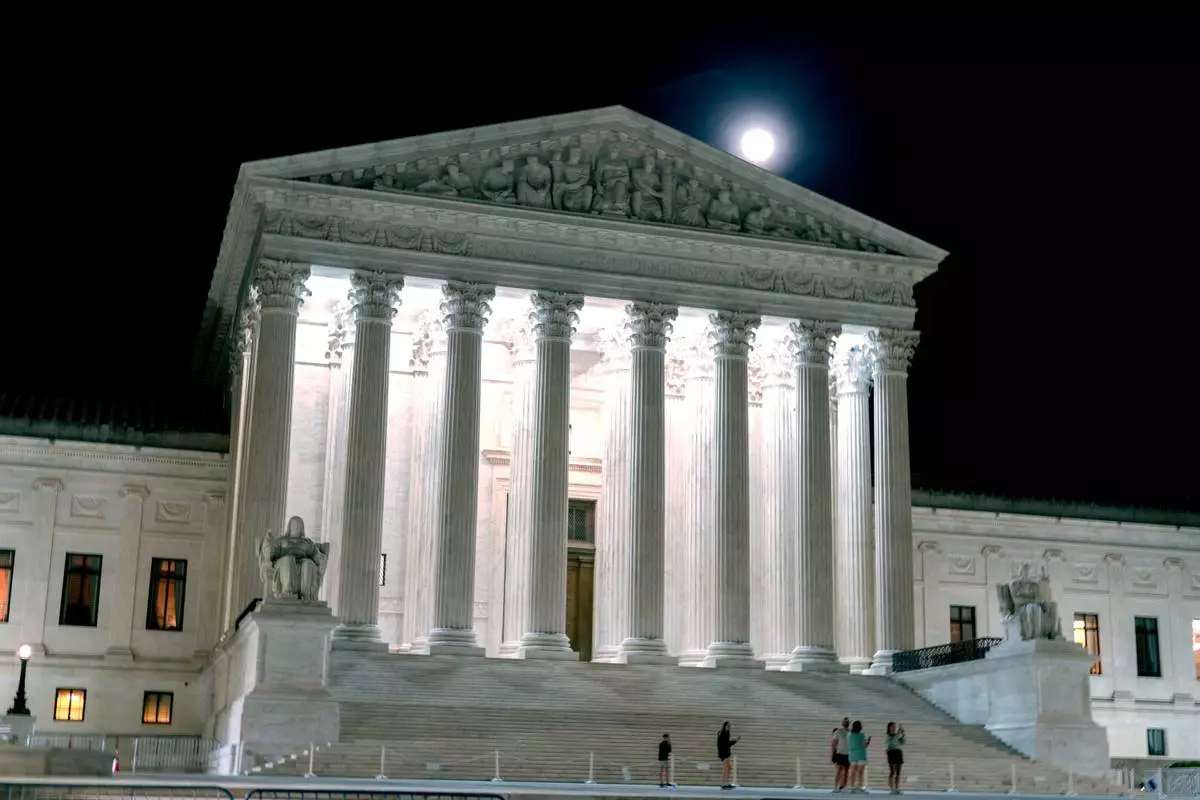
The U.S. Supreme Court is seen as the moon rises Tuesday, March 31, 2026, in Washington. (AP Photo/Jose Luis Magana)