Skip to Content Facebook Feature Image

Trump paints Zelenskyy into a corner with his new plan to end Russia's war on Ukraine

News

Trump paints Zelenskyy into a corner with his new plan to end Russia's war on Ukraine
News

News

Trump paints Zelenskyy into a corner with his new plan to end Russia's war on Ukraine

2025-11-23 11:08 Last Updated At:11:10

WASHINGTON (AP) — With his new 28-point plan to end Russia’s war in Ukraine, President Donald Trump is resurfacing his argument that Ukrainian President Volodymyr Zelenskyy doesn't “have the cards” to continue on the battlefield and must come to a settlement that heavily tilts in Moscow's favor.

Trump, who has demonstrated low regard for Zelenskyy dating back to his first term, says he expects the Ukrainian leader to respond to his administration's new plan to end the war by next Thursday.

The president said Friday of Zelenksyy, “He’s going to have to approve it,” though he was more reconciliatory a day later, saying, “I would like to get to peace.”

“We’re trying to get it ended. One way or the other, we have to get it ended,” Trump told reporters outside the White House on Saturday.

Hours later, senators critical of Trump’s approach to ending the Russia-Ukraine war said they spoke with Secretary of State Marco Rubio who told them that the peace plan Trump is pushing Kyiv to accept is actually a “wish list” of the Russians and not the actual proposal offering Washington’s positions.

The State Department called that account “false” and Rubio later took the extraordinary step Saturday night of insisting that the plan was U.S.-authored — but the incident raised still more questions about the plan's fate.

However, buffeted by a corruption scandal in his government, battlefield setbacks and another difficult winter looming as Russia continues to bombard Ukraine's energy grid, Zelenskyy says Ukraine is now facing perhaps the most difficult choice in its history.

Zelenskyy has not spoken with Trump since the plan became public this week, but has said he expects to talk to the Republican president in coming days. It's likely to be another in a series of tough conversations the two leaders have had over the years.

The first time they spoke, in 2019, Trump tried to pressure the then newly minted Ukrainian leader to dig up dirt on Joe Biden ahead of the 2020 election. That phone call sparked Trump's first impeachment.

Trump made Biden's support for Ukraine a central issue in his successful 2024 campaign, saying the conflict had cost U.S. taxpayers too much money and vowing he would quickly bring the war to an end.

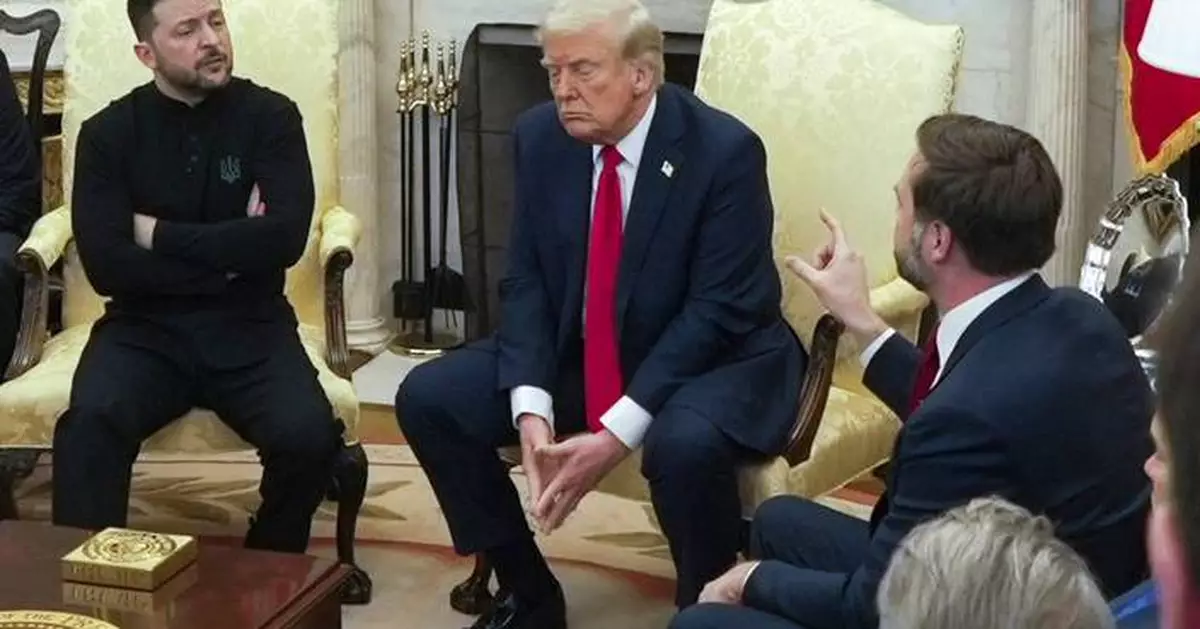
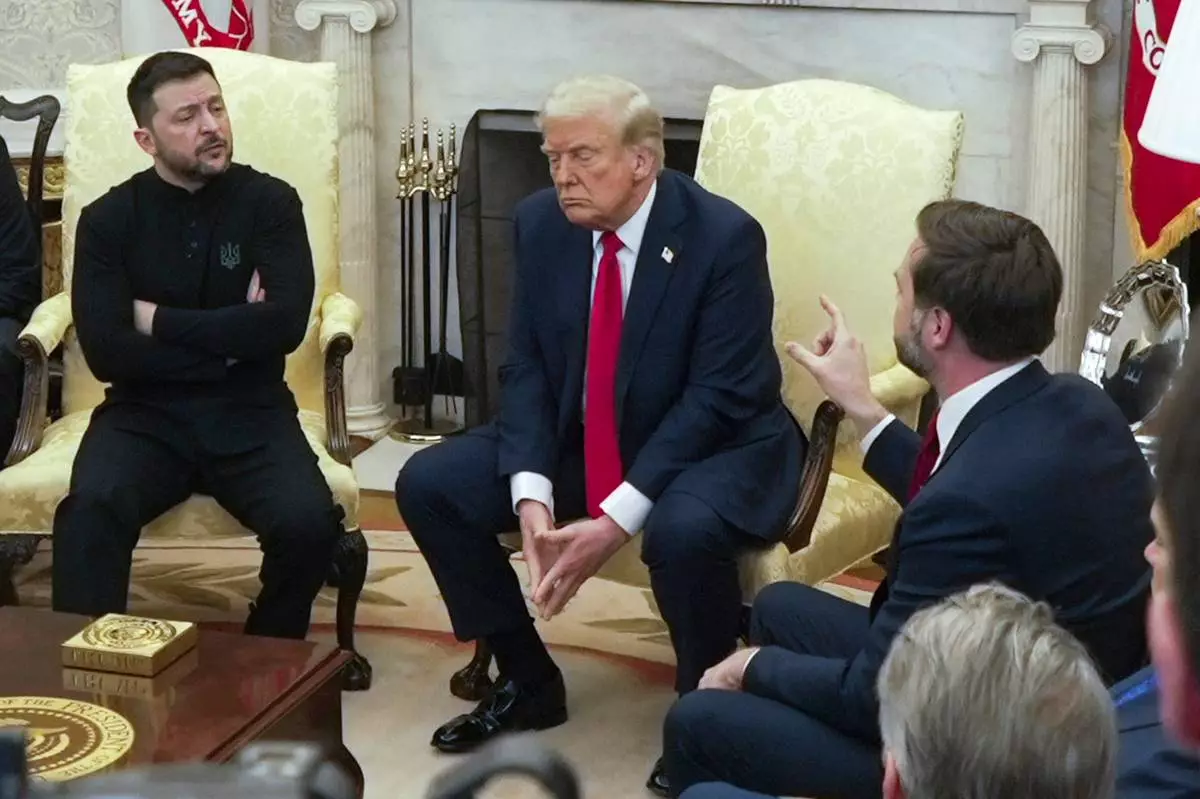
Then early this year in a disastrous Oval Office meeting, Trump and Vice President JD Vance tore into Zelenskyy for what they said was insufficient gratitude for the more than $180 billion the U.S. had appropriated for military aid and other assistance to Kyiv since the start of the war. That episode led to a temporary suspension of U.S. assistance to Ukraine.

And now with the proposal, Trump is pressing Zelenskyy to agree to concessions of land to Moscow, a massive reduction in the size of Ukraine’s army, and agreement from Europe to assert that Ukraine will never be admitted into the NATO military alliance.

“Now Ukraine may find itself facing a very difficult choice: either loss of dignity, or the risk of losing a key partner,” Zelenskyy said in a video address Friday.

At the center of Trump's plan is the call on Ukraine to concede the entirety of its eastern Donbas region, even though a vast swath of that land remains in Ukrainian control. Analysts at the independent Institute for the Study of War have estimated it would take several years for the Russian military to completely seize the territory, based on its current rate of advances.

Trump, nevertheless, insists that the loss of the region — which includes cities that are vital defense, industrial and logistics hubs for Ukrainian forces — is a fait accompli.

“They will lose in a short period of time. You know so,” Trump said Friday when asked during a Fox News Radio interview about his push on Ukraine to give up the territory. “They’re losing land. They’re losing land.”

The Trump proposal was formally presented to Zelenskyy in Kyiv on Thursday by Dan Driscoll, the U.S. Army secretary. The plan itself was a surprise to Driscoll’s staffers, who were not aware as late as Wednesday that their boss would be going to Ukraine as part of a team to present the plan to the Ukrainians.

Army officials walked away from that meeting with the impression that the Ukrainians were viewing the proposal as a starting point that would evolve as negotiations progressed, according to a U.S. official, who spoke on condition of anonymity to discuss the sensitive talks.

It's unclear how much patience Trump has for further negotiation. White House press secretary Karoline Leavitt said Thursday that Trump's new plan reflects “the realities of the situation” and offers the “best win-win scenario, where both parties gain more than they must give.”

Asked about Zelenskyy's initial hesitant response to the proposal, Trump recalled the February Oval Office blow-up with Zelenskyy: “You remember, right in the Oval Office, not so long ago, I said, ‘You don’t have the cards.’”

Trump, though, was also asked Saturday if the proposal was his final offer to end the Ukraine war and said it wasn't — leaving open the possibility of more negotiation. Still, asked what would happen if Ukraine and Zelenskyy ultimately reject the proposal, the president turned almost dismissive: “Then he can continue to fight his little heart out.”

The mounting pressure from Trump comes as Zelenskyy is dealing with fallout over $100 million in kickbacks for contracts with the state-owned nuclear energy company. The scandal led to the resignations of top Cabinet ministers and implicated other Zelenskyy associates.

Konstantin Sonin, a political economist and Russia expert at the University of Chicago, said, “what Donald Trump is certainly extremely good at is spotting weak spots of people.”

One of the 28 elements of Trump’s proposal calls for elections to be held within 100 days of enactment of the agreement.

“I think it’s a rationalistic assessment that there is more leverage over Zelenskyy than over Putin,” Sonin said. He added, “Zelenskyy’s back is against the wall” and “his government could collapse if he agrees” to the U.S. proposal.

All the while, Ukraine is increasingly showing signs of strain on the battlefield after years of war against a vastly larger and better-equipped Russian military. Ukraine is desperately trying to fend off relentless Russian aerial attacks that have brought rolling blackouts across the country on the brink of winter.

Kyiv is also grappling with doubts about the way ahead. A European plan to finance next year’s budget for Ukraine through loans linked to frozen Russian funds is now in question.

The Trump proposal in its current form also includes several elements that would cut deeply into Ukrainian pride, said David Silbey, a military historian at Cornell University.

One provision calls on Russia and Ukraine to abolish “all discriminatory measures and guarantee the rights of Ukrainian and Russian media and education,” and “all Nazi ideology and activities must be rejected and prohibited.” That element could be seen by the Ukrainian side as giving credence to Putin's airing of distorted historical narratives to legitimize the 2022 invasion.

Putin has said the war is in part an effort to “denazify” Ukraine and complained of the country's “neo-Nazi regime” as a justification for Russia’s invasion. In fact, in Ukraine’s last parliamentary election in 2019, support for far-right candidates was 2%, significantly lower than in many other European countries.

The plan's provision is “very clearly an attempt to build up Putin's claim to Russian cultural identity within Ukraine,” Silbey said. He added, “From territory loss to the substantial reduction of the Ukrainian military to cultural concessions that have been demanded, I just don’t think Zelenskyy could do this deal and look his public in the eye again.”

————

AP writers Michelle L. Price and Konstantin Toropin contributed.
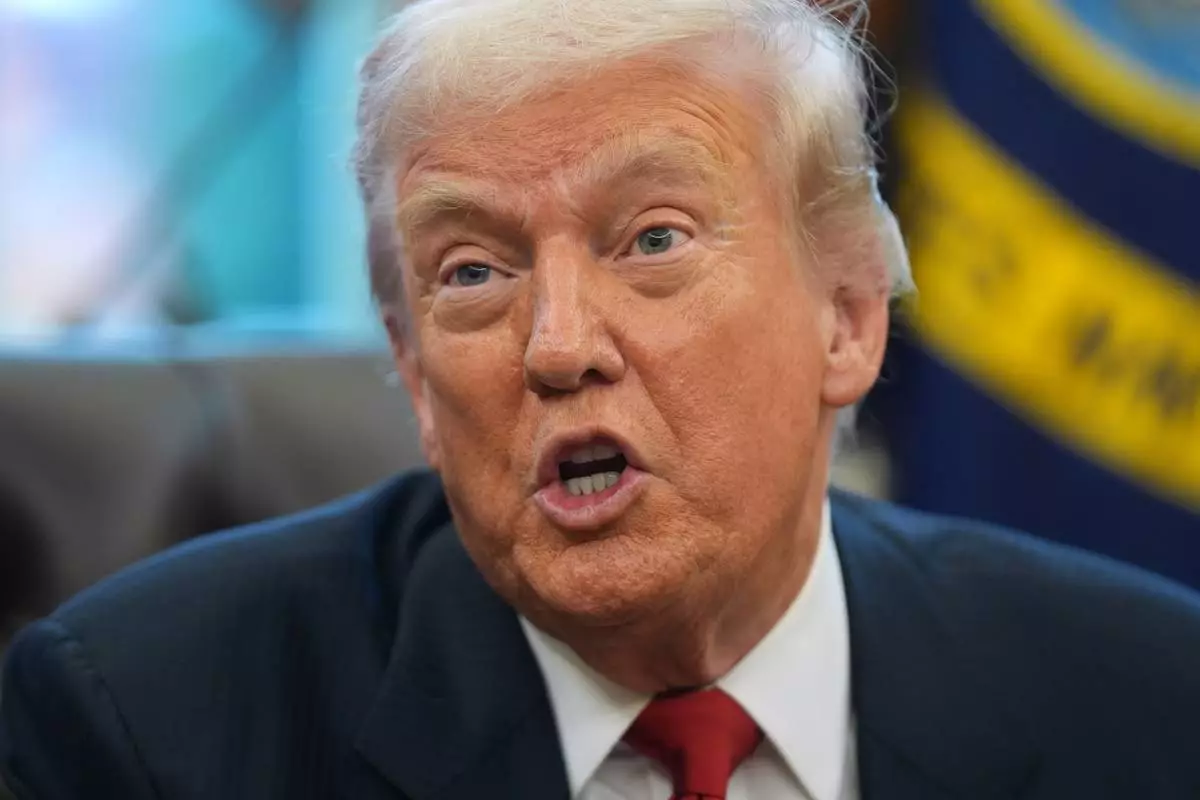
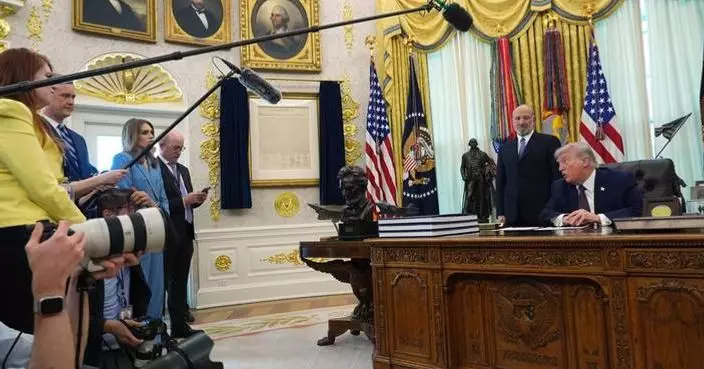
President Donald Trump talks after meeting with New York City Mayor-elect Zohran Mamdani in the Oval Office of the White House, Friday, Nov. 21, 2025, in Washington. (AP Photo/Evan Vucci)

President Donald Trump talks after meeting with New York City Mayor-elect Zohran Mamdani in the Oval Office of the White House, Friday, Nov. 21, 2025, in Washington. (AP Photo/Evan Vucci)

In this photo provided by the Ukrainian Presidential Press Office, Ukrainian President Volodymyr Zelenskyy, left, shakes hands with U.S. Secretary of the Army Dan Driscoll in Kyiv, Ukraine, Thursday, Nov. 20, 2025. (Ukrainian Presidential Press Office via AP)
In this photo provided by the Ukrainian Presidential Press Office, Ukrainian President Volodymyr Zelenskyy, left, shakes hands with U.S. Secretary of the Army Dan Driscoll in Kyiv, Ukraine, Thursday, Nov. 20, 2025. (Ukrainian Presidential Press Office via AP)

FILE - Vice President JD Vance, right, speaks with Ukrainian President Volodymyr Zelenskyy, left, as President Donald Trump listens in the Oval Office at the White House, Feb. 28, 2025, in Washington. (AP Photo/ Mystyslav Chernov, File)

FILE - Vice President JD Vance, right, speaks with Ukrainian President Volodymyr Zelenskyy, left, as President Donald Trump listens in the Oval Office at the White House, Feb. 28, 2025, in Washington. (AP Photo/ Mystyslav Chernov, File)

WASHINGTON (AP) — The Supreme Court is taking up one of the term’s most consequential cases, President Donald Trump’s executive order on birthright citizenship declaring that children born to parents who are in the United States illegally or temporarily are not American citizens, and he was in the courtroom on Wednesday for some of the arguments.

The justices are hearing Trump’s appeal of a lower-court ruling from New Hampshire that struck down the citizenship restrictions, one of several courts that have blocked them. They have not taken effect anywhere in the country.

Trump is the first sitting president to attend oral arguments at the nation’s highest court. He spent just over an hour inside the courtroom, hearing arguments by the government’s lawyer, Solicitor General D. John Sauer. He left shortly after Sauer wrapped up and the plaintiff was invited to present her case.

The case frames another test of Trump's assertions of executive power that defy long-standing precedent for a court that has largely ruled in the president's favor — but with some notable exceptions that Trump has responded to with starkly personal criticisms of the justices. A definitive ruling is expected by early summer.

The birthright citizenship order, which Trump signed the first day of his second term, is part of his Republican administration’s broad immigration crackdown.

Birthright citizenship is the first Trump immigration-related policy to reach the court for a final ruling. The justices previously struck down global tariffs Trump had imposed under an emergency powers law that had never been used that way.

Trump reacted furiously to the late February tariffs decision, saying he was ashamed of the justices who ruled against him and calling them unpatriotic.

He issued a preemptive broadside against the court on Sunday on his Truth Social platform. “Birthright Citizenship is not about rich people from China, and the rest of the World, who want their children, and hundreds of thousands more, FOR PAY, to ridiculously become citizens of the United States of America. It is about the BABIES OF SLAVES!,” the president wrote. “Dumb Judges and Justices will not a great Country make!”

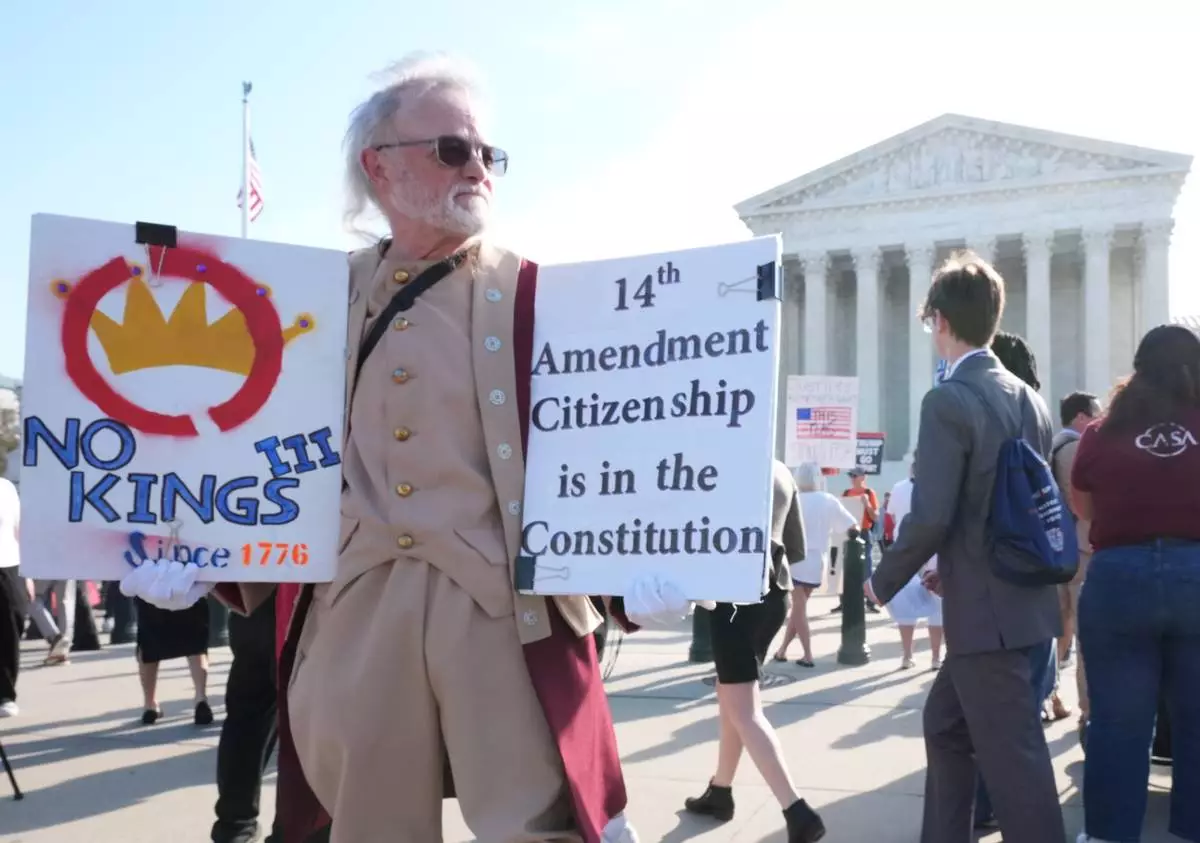
Trump's order would upend the long-standing view that the Constitution’s 14th Amendment, ratified in 1868, and federal law since 1940 confer citizenship on everyone born on American soil, with narrow exceptions for the children of foreign diplomats and those born to a foreign occupying force.

The 14th Amendment was intended to ensure that Black people, including former slaves, had citizenship, though the Citizenship Clause is written more broadly. “All persons born or naturalized in the United States, and subject to the jurisdiction thereof, are citizens of the United States and of the State wherein they reside,” it reads.

In a series of decisions, lower courts have struck down the executive order as illegal, or likely so, under the Constitution and federal law. The decisions have invoked the high court's 1898 ruling in Wong Kim Ark, which held that the U.S.-born child of Chinese nationals was a citizen.

The Trump administration argues that the common view of citizenship is wrong, asserting that children of noncitizens are not “subject to the jurisdiction” of the United States and therefore are not entitled to citizenship.

The court should use the case to set straight “long-enduring misconceptions about the Constitution’s meaning,” wrote Sauer, the solicitor general.

No court has accepted that argument, and lawyers for pregnant women whose children would be affected by the order said the Supreme Court should not be the first to do so.

“We have the president of the United States trying to radically reinterpret the definition of American citizenship,” said Cecillia Wang, the American Civil Liberties Union legal director who is facing off against Sauer at the Supreme Court.

More than one-quarter of a million babies born in the U.S. each year would be affected by the executive order, according to research by the Migration Policy Institute and Pennsylvania State University’s Population Research Institute.

While Trump has largely focused on illegal immigration in his rhetoric and actions, the birthright restrictions also would apply to people who are legally in the United States, including students and applicants for green cards, or permanent resident status.

Associated Press writer Darlene Superville contributed to this report.

Follow the AP’s coverage of the U.S. Supreme Court at https://apnews.com/hub/us-supreme-court.

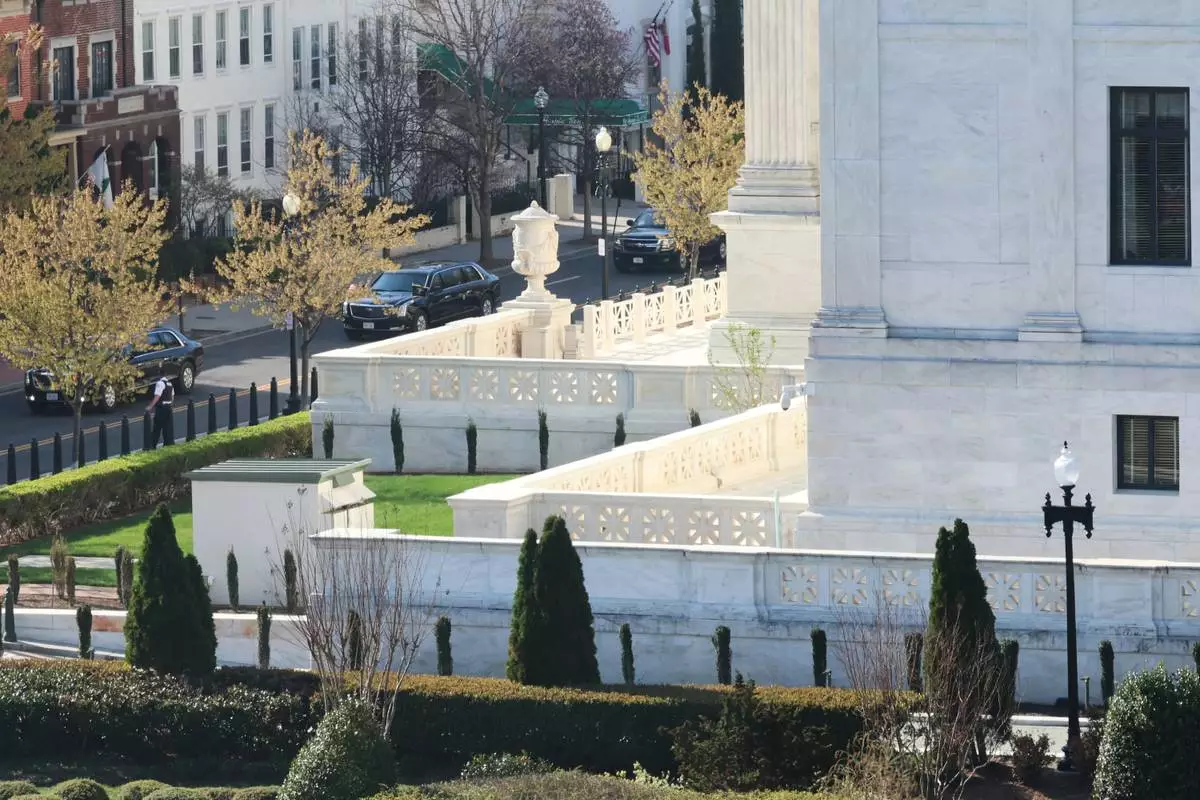
President Donald Trump's motorcade arrives at the U.S. Supreme Court, Wednesday, April 1, 2026, in Washington. (AP Photo/Tom Brenner)

President Donald Trump's motorcade arrives at the U.S. Supreme Court, Wednesday, April 1, 2026, in Washington. (AP Photo/Tom Brenner)

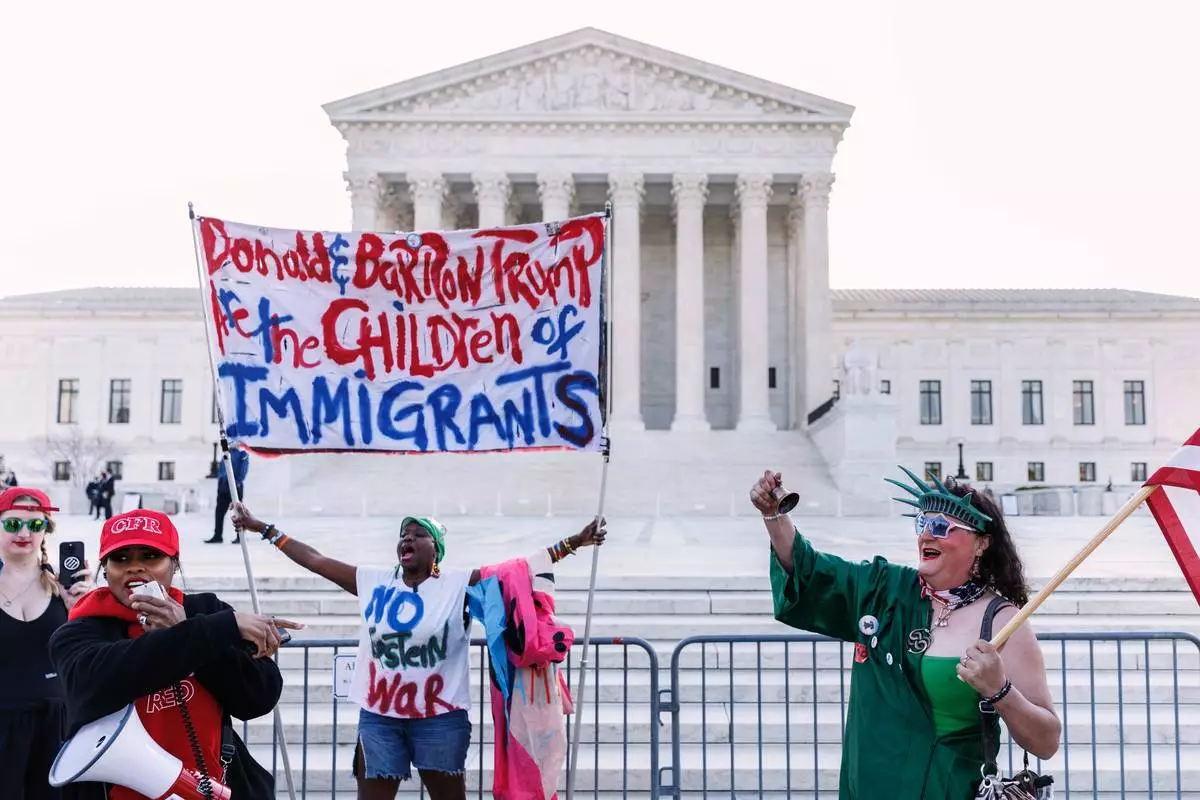
Pro and anti-Trump demonstrators rally outside the U.S. Supreme Court, before justices hear oral arguments on whether President Donald Trump can deny citizenship to children born to parents who are in the United States illegally or temporarily, on Capitol Hill, in Washington, Wednesday, April 1, 2026. (AP Photo/J. Scott Applewhite)

Pro and anti-Trump demonstrators rally outside the U.S. Supreme Court, before justices hear oral arguments on whether President Donald Trump can deny citizenship to children born to parents who are in the United States illegally or temporarily, on Capitol Hill, in Washington, Wednesday, April 1, 2026. (AP Photo/J. Scott Applewhite)

President Donald Trump's motorcade arrives at the U.S. Supreme Court, Wednesday, April 1, 2026, in Washington. (AP Photo/Tom Brenner)

President Donald Trump's motorcade arrives at the U.S. Supreme Court, Wednesday, April 1, 2026, in Washington. (AP Photo/Tom Brenner)

Demonstrators holding opposing views verbally engage ahead of President Donald Trump's arrival at the U.S. Supreme Court, Wednesday, April 1, 2026, in Washington. (AP Photo/Tom Brenner)

Demonstrators holding opposing views verbally engage ahead of President Donald Trump's arrival at the U.S. Supreme Court, Wednesday, April 1, 2026, in Washington. (AP Photo/Tom Brenner)

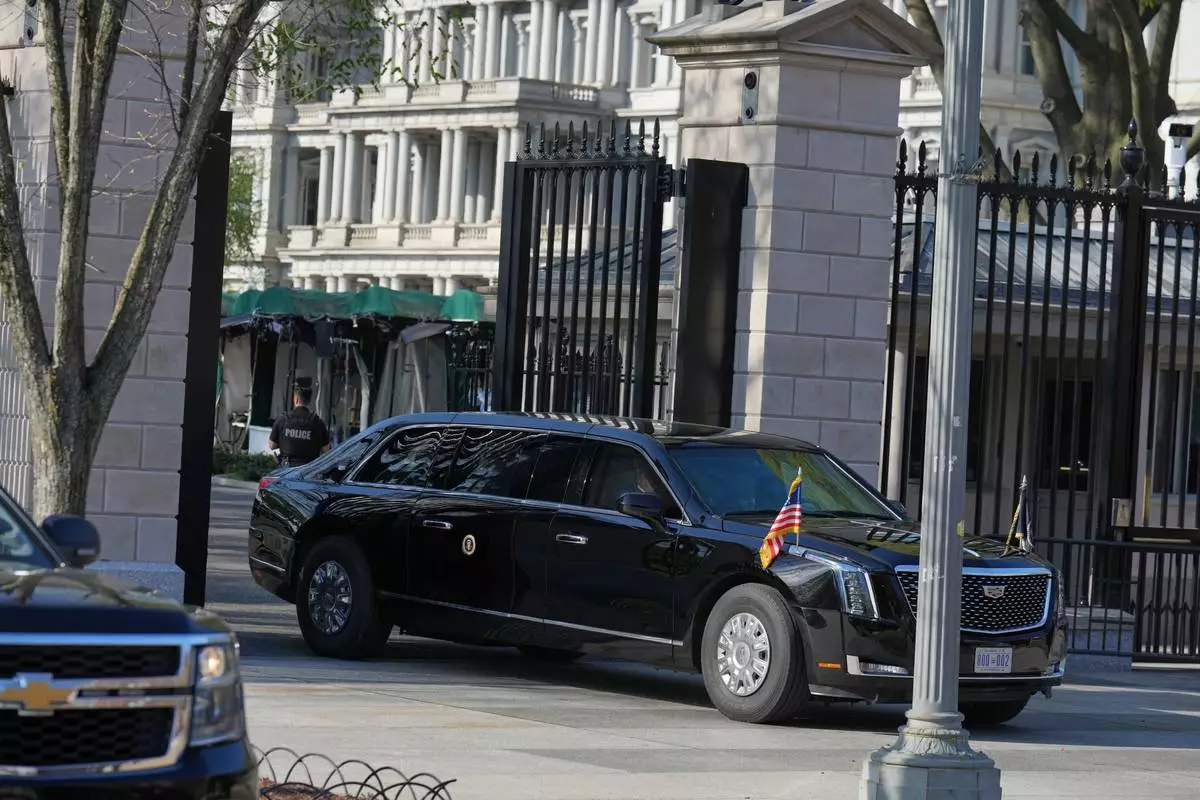
President Donald Trump's limo exits the White House en route to the Supreme Court, Wednesday, April 1, 2026, in Washington. (AP Photo/Mark Schiefelbein)

President Donald Trump's limo exits the White House en route to the Supreme Court, Wednesday, April 1, 2026, in Washington. (AP Photo/Mark Schiefelbein)

President Donald Trump's motorcade arrives at the U.S. Supreme Court, Wednesday, April 1, 2026, in Washington. (AP Photo/Tom Brenner)

President Donald Trump's motorcade arrives at the U.S. Supreme Court, Wednesday, April 1, 2026, in Washington. (AP Photo/Tom Brenner)

Pro and anti-Trump demonstrators rally outside the U.S. Supreme Court, before justices hear oral arguments on whether President Donald Trump can deny citizenship to children born to parents who are in the United States illegally or temporarily, on Capitol Hill, in Washington, Wednesday, April 1, 2026. (AP Photo/J. Scott Applewhite)

Pro and anti-Trump demonstrators rally outside the U.S. Supreme Court, before justices hear oral arguments on whether President Donald Trump can deny citizenship to children born to parents who are in the United States illegally or temporarily, on Capitol Hill, in Washington, Wednesday, April 1, 2026. (AP Photo/J. Scott Applewhite)

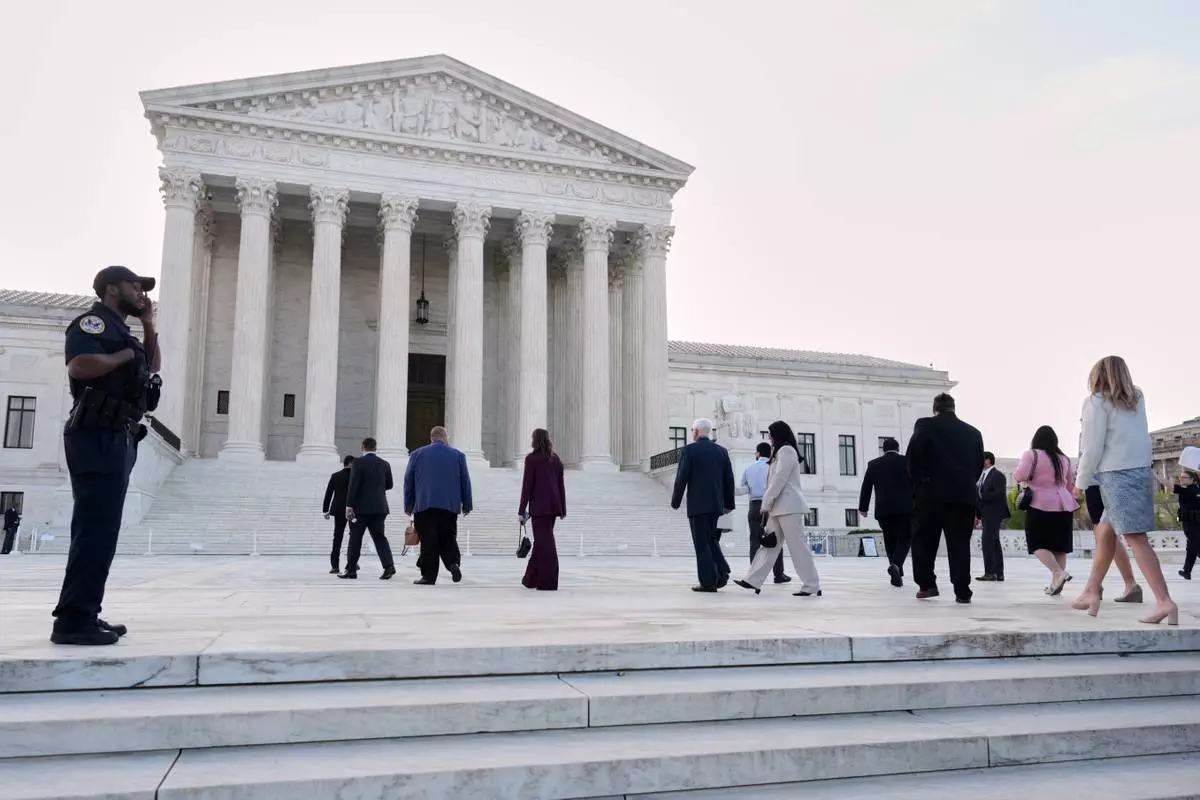
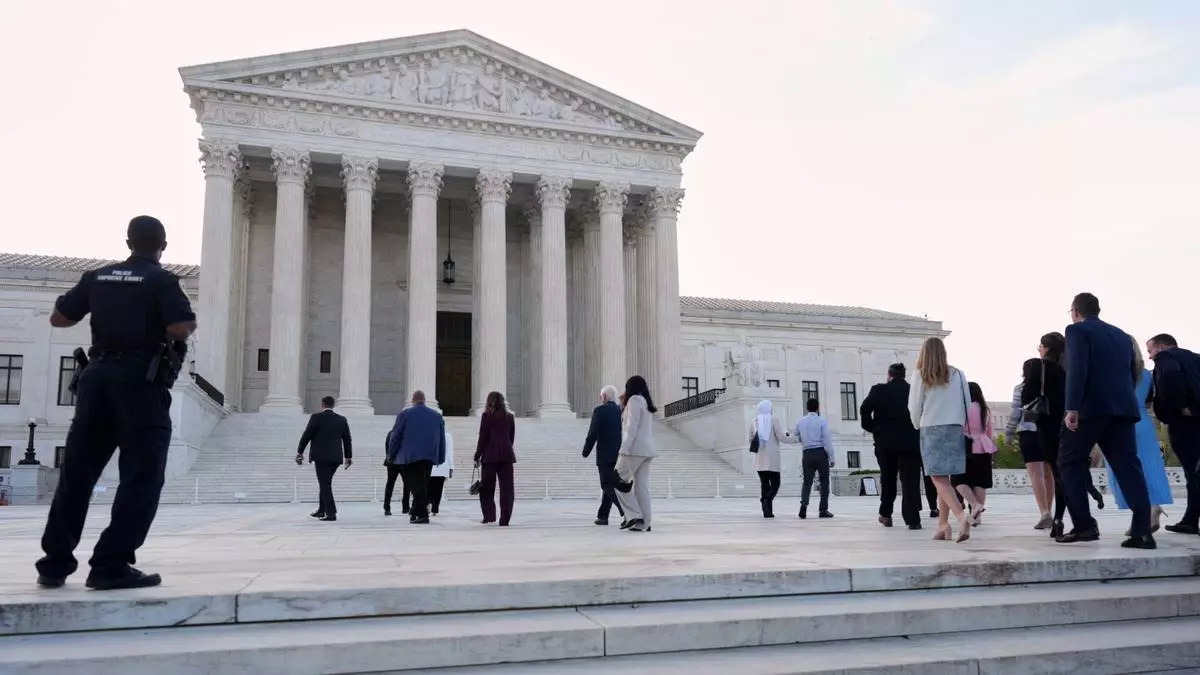
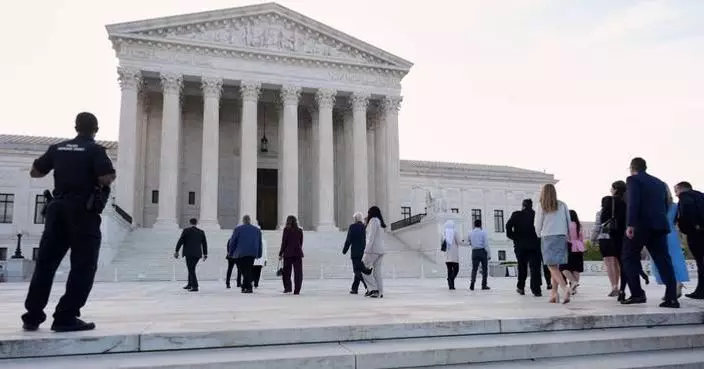
People arrive to walk inside the U.S. Supreme Court, on Capitol Hill in Washington, Wednesday, April 1, 2026. The Supreme Court justices will hear oral arguments today on whether President Donald Trump can deny citizenship to children born to parents who are in the United States illegally or temporarily. (AP Photo/J. Scott Applewhite)

People arrive to walk inside the U.S. Supreme Court, on Capitol Hill in Washington, Wednesday, April 1, 2026. The Supreme Court justices will hear oral arguments today on whether President Donald Trump can deny citizenship to children born to parents who are in the United States illegally or temporarily. (AP Photo/J. Scott Applewhite)

People arrive to walk inside the U.S. Supreme Court, on Capitol Hill in Washington, Wednesday, April 1, 2026. The Supreme Court justices will hear oral arguments today on whether President Donald Trump can deny citizenship to children born to parents who are in the United States illegally or temporarily. (AP Photo/J. Scott Applewhite)

People arrive to walk inside the U.S. Supreme Court, on Capitol Hill in Washington, Wednesday, April 1, 2026. The Supreme Court justices will hear oral arguments today on whether President Donald Trump can deny citizenship to children born to parents who are in the United States illegally or temporarily. (AP Photo/J. Scott Applewhite)

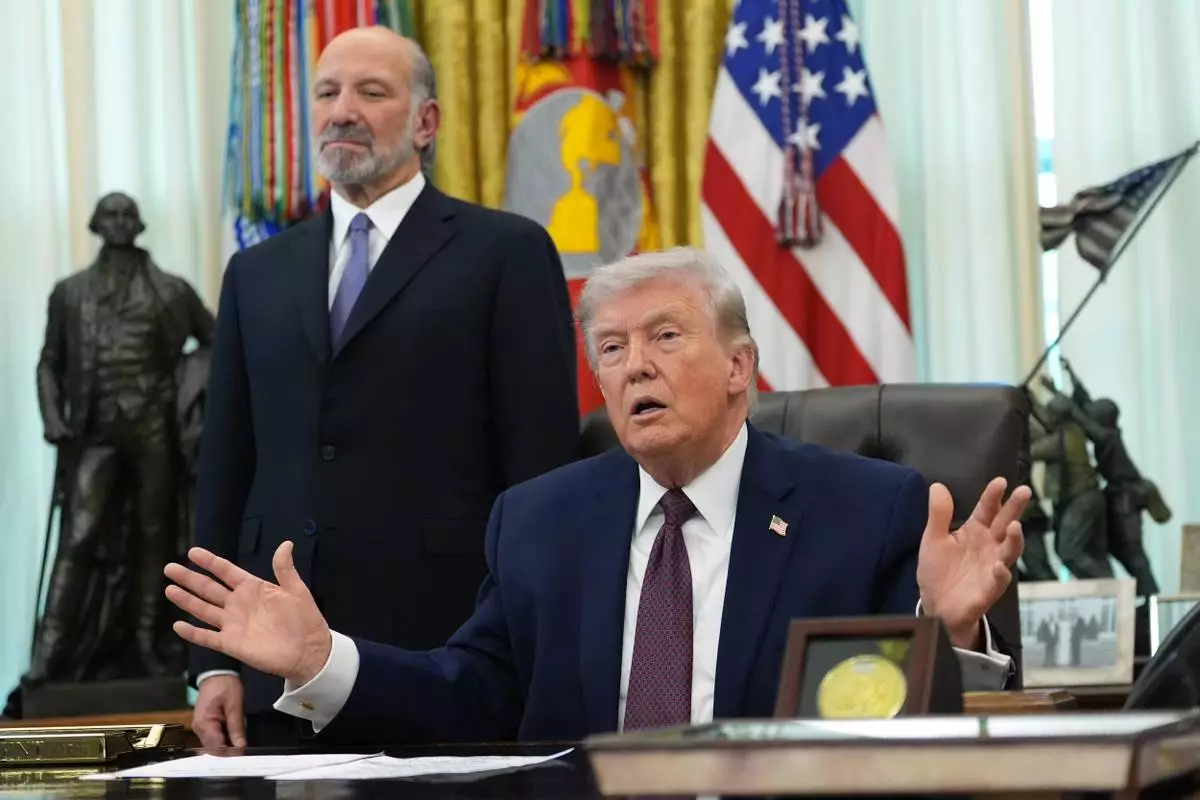
President Donald Trump answers questions from reporters after signing an executive order in the Oval Office of the White House Tuesday, March 31, 2026, in Washington, as Commerce Secretary Howard Lutnick listens. (AP Photo/Alex Brandon)

President Donald Trump answers questions from reporters after signing an executive order in the Oval Office of the White House Tuesday, March 31, 2026, in Washington, as Commerce Secretary Howard Lutnick listens. (AP Photo/Alex Brandon)

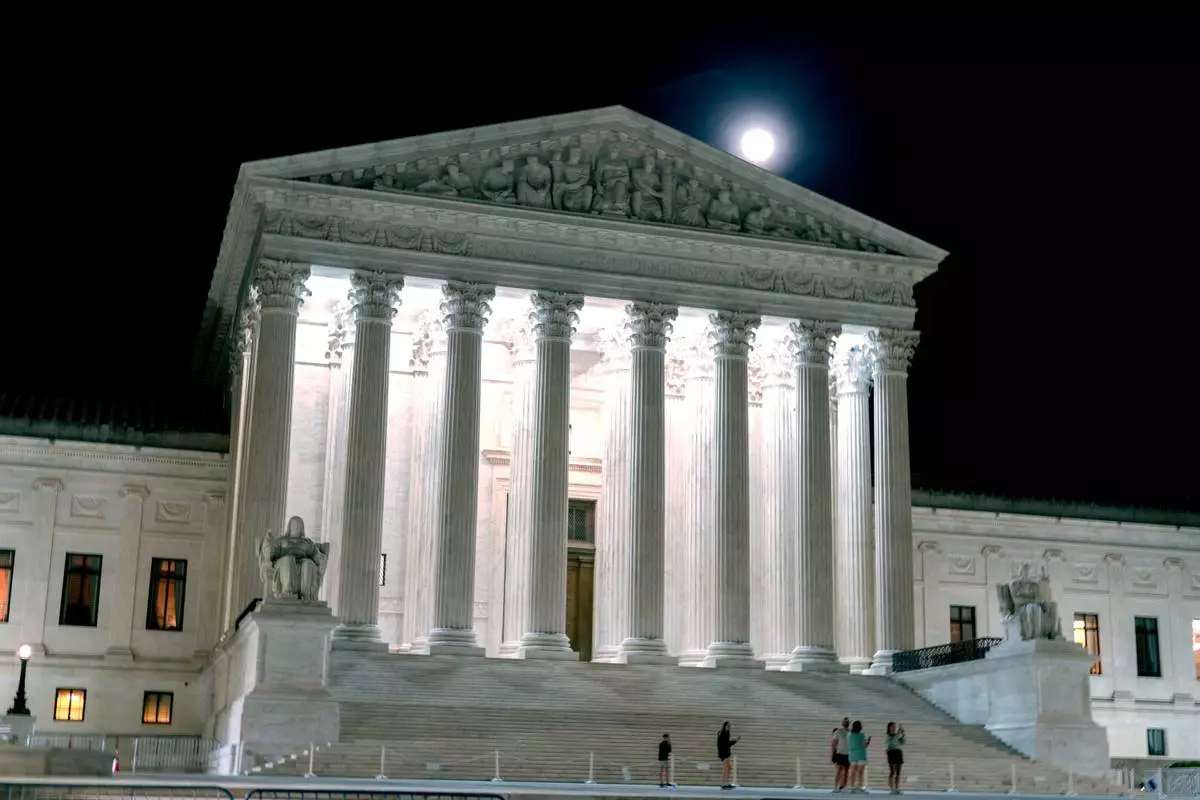
The U.S. Supreme Court is seen as the moon rises Tuesday, March 31, 2026, in Washington. (AP Photo/Jose Luis Magana)

The U.S. Supreme Court is seen as the moon rises Tuesday, March 31, 2026, in Washington. (AP Photo/Jose Luis Magana)

Recommended Articles