The navy forces of the Chinese People's Liberation Army (PLA) has recently carried out a round-the-clock flight training aimed at sharpening the Navy's capability to win battles.
In the dim morning light, following the command from the control tower, a batch of flight cadets from a base of the Naval Aviation University piloted multiple J-15 fighter jets, moving in formations toward designated training airspace for a red-blue confrontation exercise. J-15 is China's first fixed-wing carrier-based fighter dubbed the "flying shark".
During an intense engagement, pilots from the red side lured their "opponents" with deceptive maneuvers. Taking the bait, the blue side quickly closed in, only to be locked on by the radar of the red side. As the voice warning system sounded, pilots of the blue side swiftly rolled the aircraft and initiated an evasion.
Both sides repeatedly swapped offensive roles throughout the engagement, launching multiple rounds of attacks.
After the air combat session, all aircraft returned to base, executing precise simulated carrier landings under the guidance of officers and lighting guidance systems.
As preparations began for the next round of night training, the ground maintenance crew worked under the cover of darkness, performing checks and maintenance tailored to cold-weather conditions on electronic components and avionics systems.
Within minutes, the J-15s were airborne again -- this time for aerial refueling exercises. With precise control from the pilots, the tanker aircraft steadied its speed and altitude, deploying the refueling hose as receiver pilots extended their probes until successful contact was made.
"Flying at night presents obvious difficulties -- limited visibility and higher risks of disorientation. Pilots must rely heavily on airborne datalink and navigation systems to determine their flight status and position. It's a test of both skill and mental composure," said Luo Hao, a military instructor from the base.
By midnight, as the last aircraft completed its land-based simulated carrier landing, the base's cross-day-night flight training concluded successfully. While the experience was still fresh, pilots proceeded directly to the debriefing room, reviewing flight data and video to identify areas for improvement.
According to Wan Congnian, an officer from the Naval Aviation University, this high-intensity training was designed to closely mirror real combat environments.
"We focus on enabling carrier-based pilots not only to fly and land on the carrier, but also to transition toward combat readiness and joint operations. By integrating key skill sets including land-based simulated landings, air combat maneuvers, aerial refueling, and ground attack drills into high-intensity continuous day-night cycles, we aim to enhance operational capabilities and ensure what we practice here aligns with what we'll face in real warfare," said Wan.
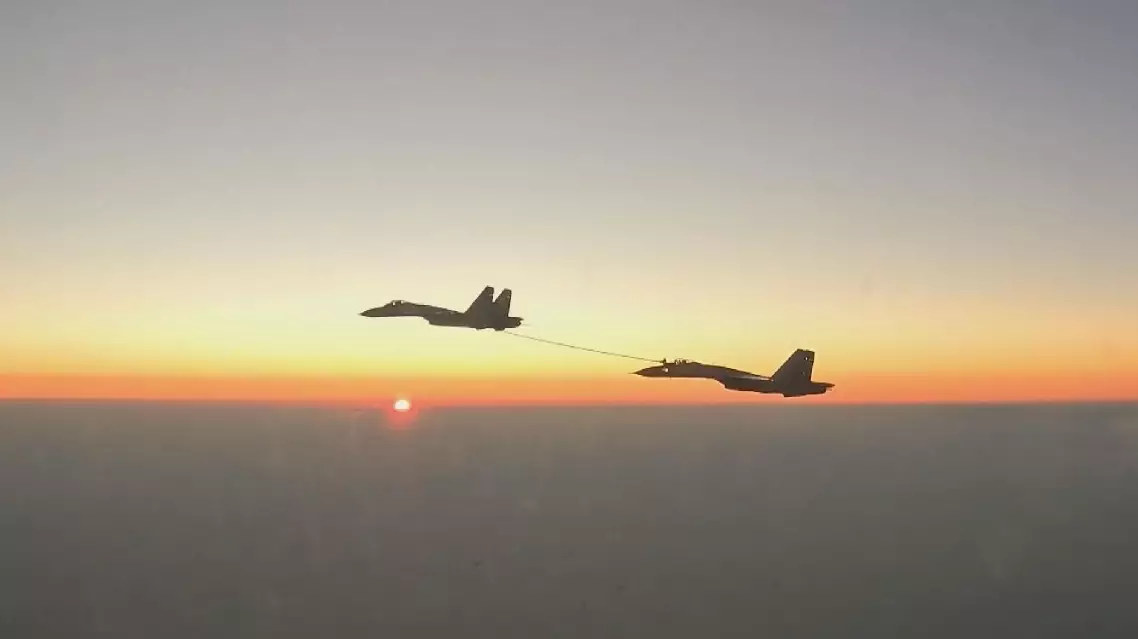
China's J-15 fighter jets hold round-the-clock flight training to hone combat skills