It’s the start of Thanksgiving week, the time when home cooks across America suddenly recognize the daunting task ahead.
More than 90% of people in the U.S. celebrate the food-centric holiday and more than 1 in 4 attend meals that include more than 10 other people, according to the Pew Research Center.
Under that kind of pressure, what host wouldn’t want the best tools to make sure the holiday dinner goes off without a hitch?
With that in mind, we asked national food safety experts which kitchen devices and aids are essential to ensure a safe and tasty Thanksgiving meal.
Here are their top four suggestions for aids that can make or break your holiday dinner, plus two bonus tips for after the meal:
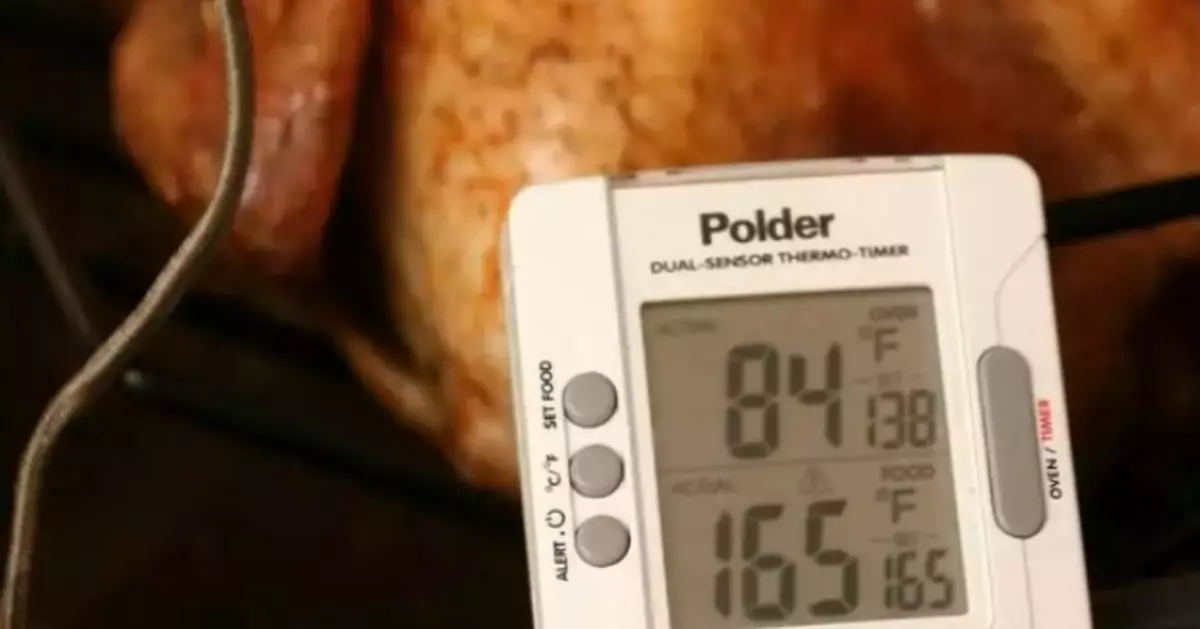
Our panel of experts unanimously agreed that an instant-read digital thermometer is vital to making sure roast turkey and other dishes reach 165 degrees Fahrenheit (74 degrees Celsius) to eliminate the risk of food poisoning from germs like salmonella and Campylobacter.
“This is non-negotiable,” said Darin Detwiler, a Northeastern University food safety expert. “A reliable thermometer ensures you’re not guessing, because guessing is not a food safety strategy.”
In the hustle of a holiday kitchen, the risk of cross-contamination is real. That’s when germs from one food, such as raw turkey, may be spread to other foods, such as fresh vegetables or fruits.
It’s best to use dedicated cutting boards for each type of food, and color-coding — red for meat, yellow for poultry, green for veggies — can help, said Barbara Kowalcyk, director of the Institute for Food Safety and Nutrition Security at George Washington University.
“I try not to use wooden cutting boards,” said Kowalcyk, noting that they can retain bacteria that thrive and grow to large enough quantities to cause illness.
As an emergency medicine doctor who has stitched up many Thanksgiving injuries, Dr. Tony Cirillo urges home cooks to make sure their kitchen knives are sharp.
A sharp knife cuts cleanly, while a dull knife requires more pressure that can cause dangerous slips, said Cirillo, president of the American College of Emergency Physicians.
Pulling a hot turkey out of the oven is tricky, especially if the pan you cook it in is flimsy, Cirillo added. Use a sturdy metal roasting pan or, in a pinch, stack two foil roasting pans together for strength.
“I’m a big fan of double-panning,” Cirillo said. “Dropping the turkey is generally not good on Thanksgiving.”
Just as important as getting food to the table is making sure it doesn’t sit out too long, said Don Schaffner, a food safety expert at Rutgers University.
Use a cooking timer or clock alarm to make sure to pack away leftovers within two hours to prevent bacterial growth that can cause illness.
And when you’re storing those leftovers, make sure to put them in shallow containers, Schaffner said.
Measure using a ruler — or even the short side of a credit card — to make sure that dense foods like stuffing and sweet potatoes reach a depth of no more than 2 inches (5 centimeters) to allow for quick and complete cooling in the refrigerator.
The Associated Press Health and Science Department receives support from the Howard Hughes Medical Institute’s Department of Science Education and the Robert Wood Johnson Foundation. The AP is solely responsible for all content.
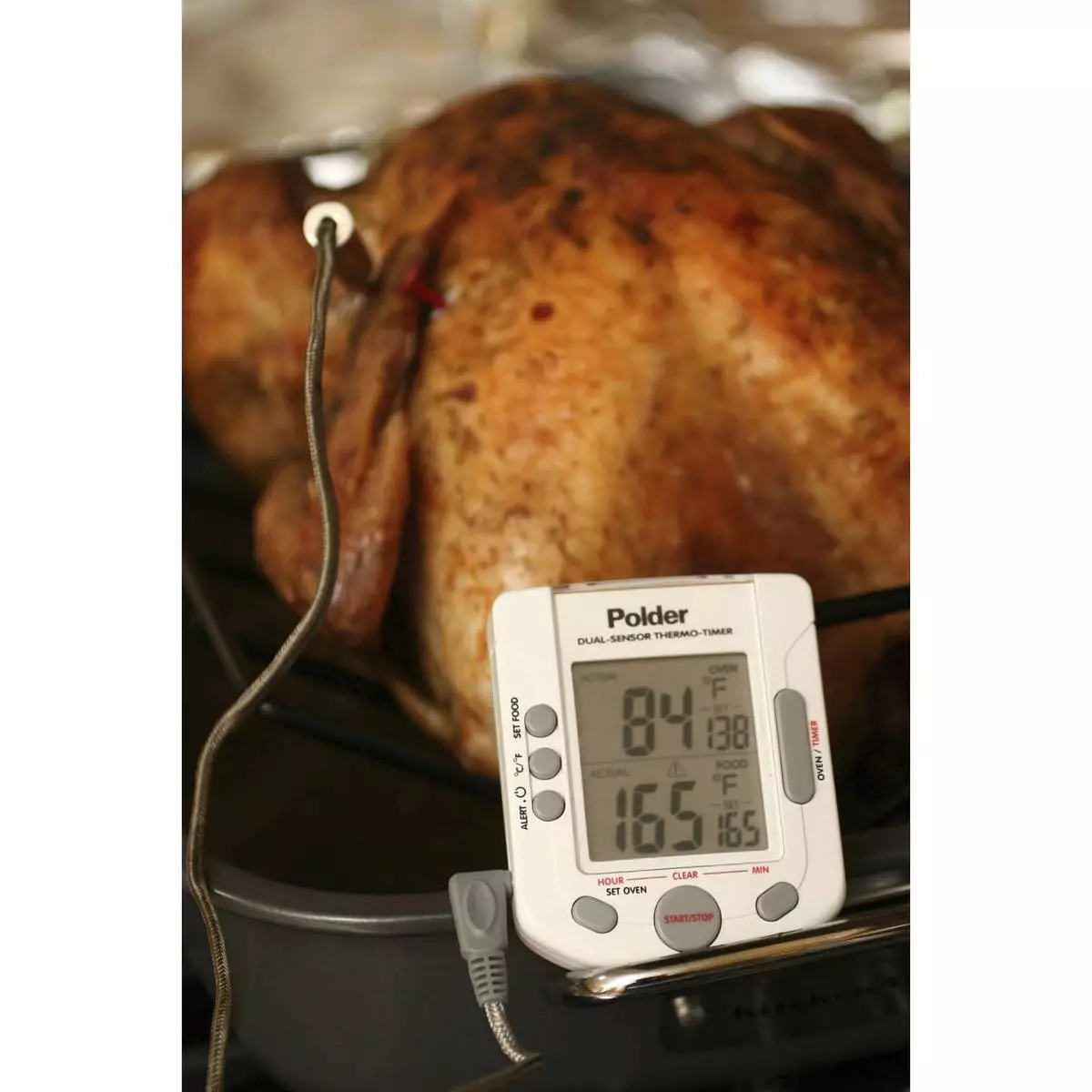
FILE - A turkey is roasted with the help of a thermometer on Oct. 18, 2007. (AP Photo/Larry Crowe, File)
WASHINGTON (AP) — President Donald Trump sought on Wednesday to explain his rationale for the war against Iran at a pivotal moment at home and abroad, but he offered few new details as he amasses extraordinary executive authority to prosecute the military operation.
The war is fast becoming a signature of his second-term agenda and the speech was a capstone to a remarkable day flexing presidential power.
Trump started the morning as the first sitting president to show up for a U.S. Supreme Court hearing, a stunning reach of the executive into the affairs of the judicial branch. He ended with his first primetime address from the White House about a war he launched on his own, bulldozing past Congress.
On an early spring night when many Americans may have been looking upward as Artemis II astronauts lifted off for NASA's return to the moon, Trump gave a nod to that historic milestone. Then he quickly refocused attention back to him — and to the conflict with Iran that has killed more than a dozen U.S. service members and appears to have no easy exit in sight.
"America, as it has been for five years under my presidency is winning — and now winning bigger than ever before," Trump said.
“We’re going to finish the job and were going to finish it very fast," he added.
The president said at the top of his address that he wanted to “discuss why Operation Epic Fury is necessary for the safety of America and the security of the free world,” showing that part of the goal for Wednesday’s speech was to take on the confusion that has persisted as he and his administration have shifted their reasons for launching the mission and its objectives.
But Wednesday night, Trump did not offer any new explanations.
He maintained that Iran cannot have a nuclear weapon, calling such a prospect “an intolerable threat.”
Though he and his administration insisted that the U.S. and Israel obliterated Iran’s nuclear program in strikes last summer, he said Wednesday that Iran sought to rebuild its nuclear program after those strikes at a new different location. He did not offer details but said it indicated Iran was not backing away from its nuclear ambitions. He also said Iran was building a vast arsenal of ballistic missiles that were a threat to America’s homeland.
While he said Iran’s ballistic missile capacity was greatly reduced, he didn’t explain how the operation had headed off Iran’s nuclear ambitions.
He instead painted the threats from Iran generally as having been wiped away, though he didn’t back up that assertion, especially as multiple competing factions of power remain within Iran’s theocracy.
Iran long has insisted its nuclear program was peaceful. It had, however, been enriching uranium up to 60% purity, a short, technical step away from weapons-grade levels. Before the war, U.S. intelligence agencies assessed that Iran had yet to begin a weapons program, but had “undertaken activities that better position it to produce a nuclear device, if it chooses to do so.”
Thousands of additional U.S. troops are heading to the Middle East. Gulf allies are urging Trump to finish the fight, arguing that Tehran hasn’t been weakened enough.
And yet Trump himself has predicted the U.S. will be done “within maybe two weeks."
He said the “core strategic objectives are nearing completion" and did not signal any preparations for a ground invasion by American troops — to retrieve Iran's enriched uranium or secure the Strait of Hormuz, where a chokehold by Iran has sent energy prices soaring.
But Trump offered few details about next steps. At one point he told allies to simply reopen the waterway critical to oil shipments themselves — “take it," he implored.
Trump is fast approaching the 60-day mark when he must seek approval from Congress under the War Powers Act to continue any military operations.
Trump did not announce the imminent start of peace talks or any other diplomatic effort to end the war.
Instead he recounted the long wars in Korea and Vietnam and vowed the U.S. would be better off because of this one.
“This is a true investment for your children and your grandchildren’s future,” he said.
Trump has berated U.S. allies for not doing their part in the conflict, even as British Prime Minister Keir Starmer said he would convene a diplomatic summit to help reopen the Strait of Hormuz after the fighting ends.
Trump and Secretary of State Marco Rubio have suggested that NATO will need to be reconsidered once the Iran war is over. But Trump did not mention NATO by name during the speech.
Trump has gone so far as to say he is “seriously considering” withdrawing from the military alliance, which has been a bulwark of transatlantic unity and security since the end of World War II.
But he cannot simply withdraw from NATO on his own without a legal fight.
“We’re going to have to re-examine the value of NATO and that alliance for our country,” Rubio said Tuesday in an interview with Fox News host Sean Hannity. “Ultimately, that’s a decision for the president to make, and he’ll have to make it.”
Trump, who ran as the “America First” president vowing not to drag the country into endless wars, has yet to fully address the political pushback he faces from his own base of supporters over the Iran conflict.
The U.S. economy is roiling, the financial markets are swinging with Trump's various pronouncements about the war effort, and Americans are facing pain at the pump as the cost of living rises.
While the president often describes the inflationary high prices as a momentary setback, it's all feeding into a rocky November midterm election.
Some of the sharpest criticism he’s faced in the early days of the Iran war has come from once-loyal media figures in the MAGA-universe, including Tucker Carlson.
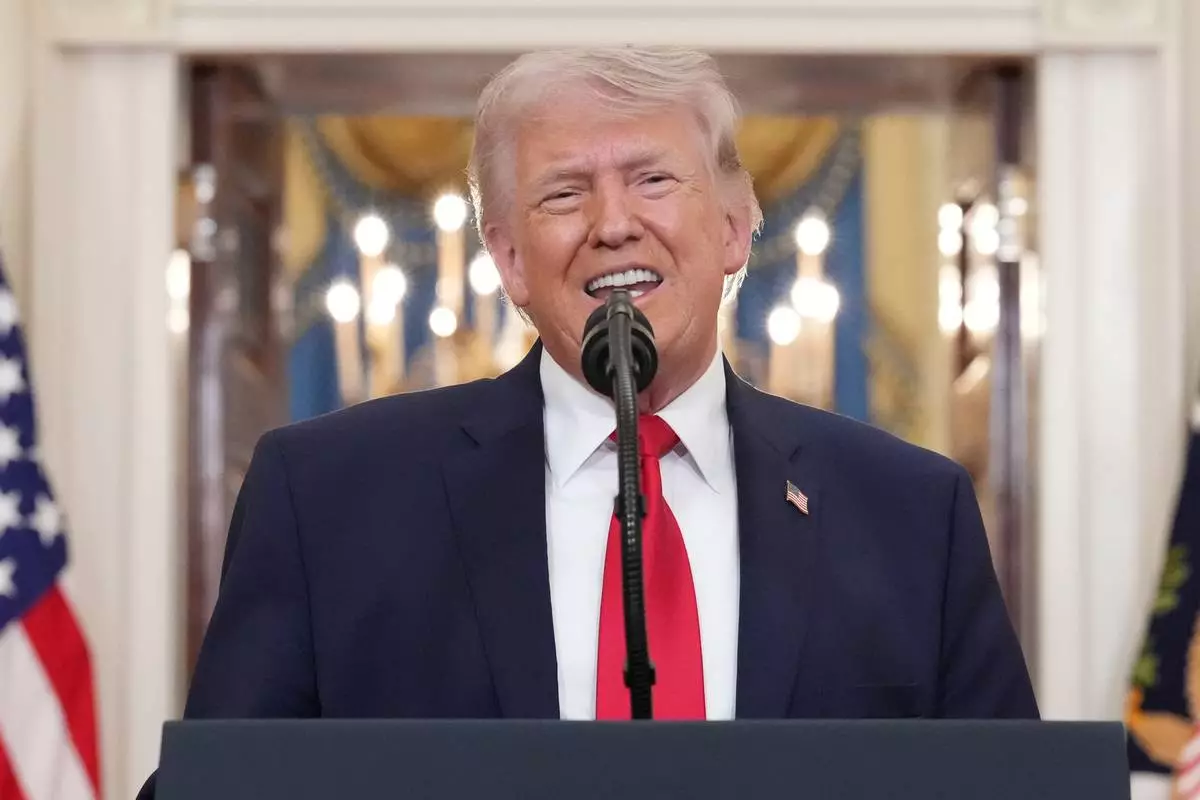
President Donald Trump speaks about the Iran war from the Cross Hall of the White House on Wednesday, April 1, 2026, in Washington. (AP Photo/Alex Brandon, Pool)
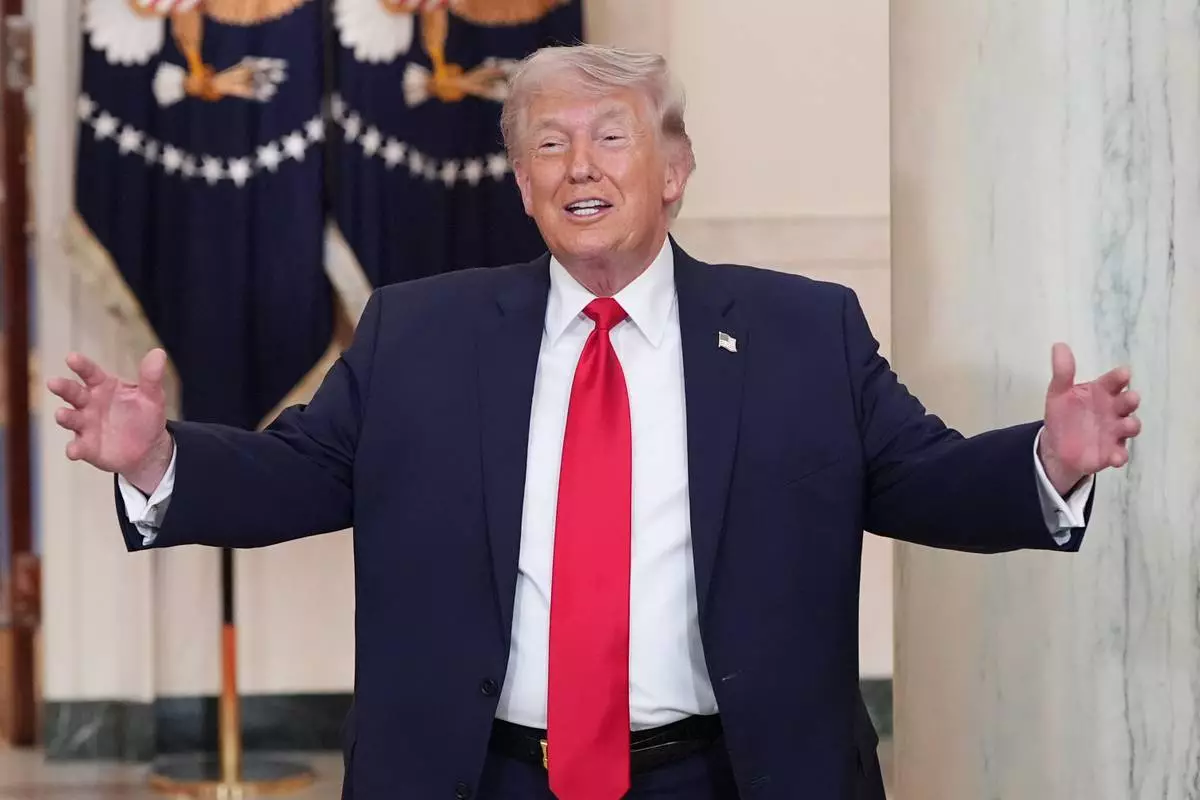
President Donald Trump gestures after speaking about the Iran war from the Cross Hall of the White House on Wednesday, April 1, 2026, in Washington. (AP Photo/Alex Brandon, Pool)
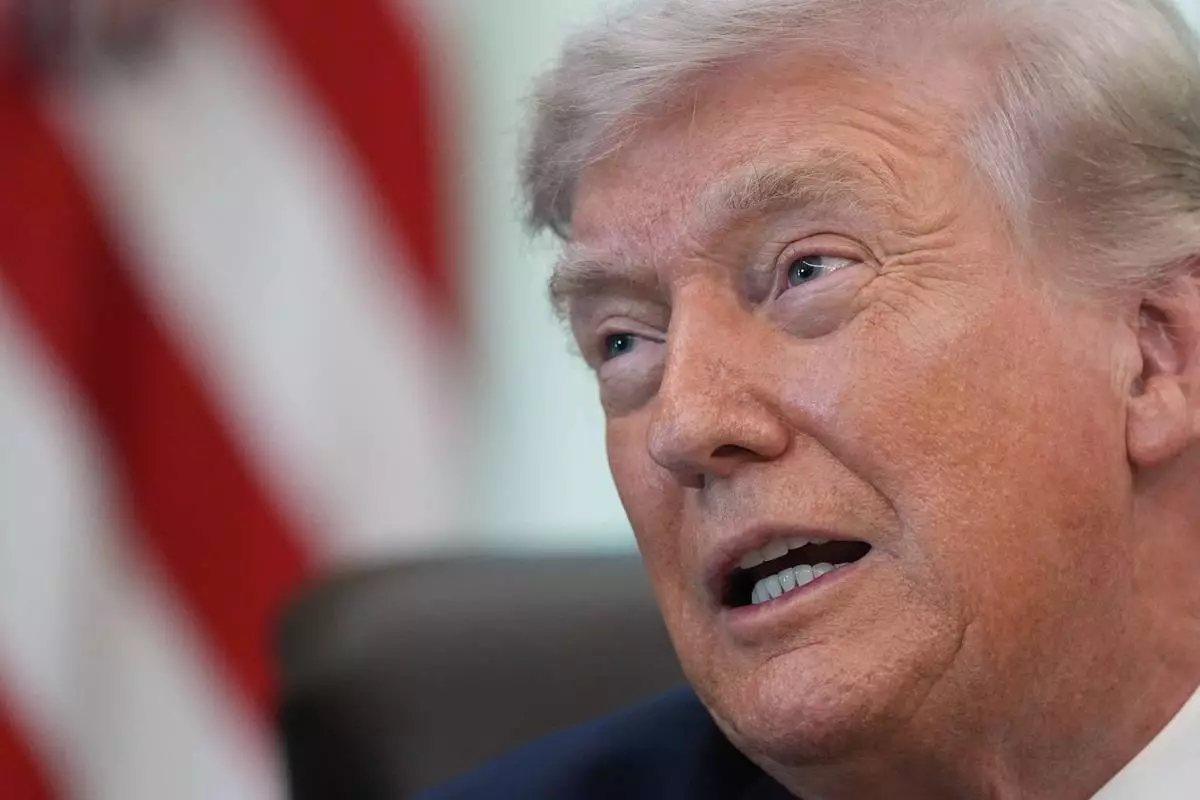
President Donald Trump speaks in the Oval Office of the White House before signing an executive order Tuesday, March 31, 2026, in Washington. (AP Photo/Alex Brandon)