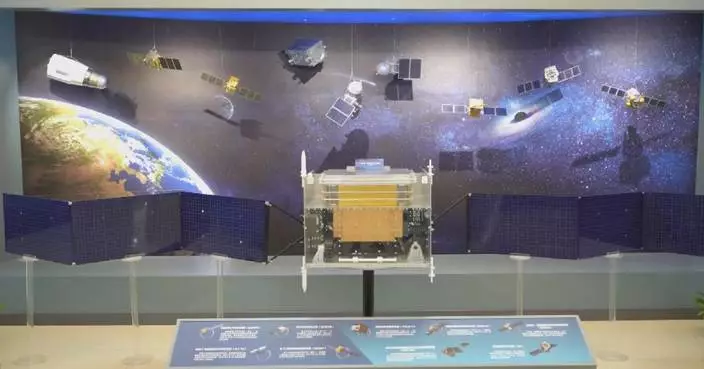
China has inched closer toward its ambitious goal of building infrastructure on the moon, as the first set of experimental "lunar soil bricks" returned to Earth after a year-long exposure to the harsh environment of space as part of a pioneering experiment aboard China's space station.
The specially-developed brick blocks arrived safely back in China last week aboard the Shenzhou-21 spacecraft, which returned three Chinese astronauts after they completed a mission that lasts over six months.
Experts have confirmed the sample unit was in good condition following initial inspections. The findings signal a potentially pivotal engineering breakthrough as China pushes ahead with its long-term lunar program, which includes the goal of landing astronauts on the moon by 2030 and constructing a basic model of the International Lunar Research Station by 2035.
"Upon opening the lid, we found that the samples were in good condition. There were no dents, holes, or other visible defects that we thought they might have because of impacts by meteorites or space debris. Besides, their colors looked slightly lighter than before. It requires further assessments to figure out the reason," said Zhou Yan, an associate professor at the Huazhong University of Science and Technology in central China's Wuhan.
The first batch of 34 brick blocks, weighing around 100 grams, were made of materials with the same composition as lunar soil and were compacted through a process of hot pressing, electromagnetic induction, and microwave sintering methods. They render a compressive strength three times higher than that of ordinary bricks, with the aim of making them more durable in the outer space environment.
"Some of the samples that we sent into space were complete, while some had 45-degree symmetrical seams that we made in advance. By doing so, we wanted to see what changes they will undergo in terms of their mechanical properties after a year on the space station," said Qin Yiheng, a graduate student at the university involved in the project.
In addition to the bricks' mechanical properties, the exposure experiment, which includes a control group on the ground, also aims to access their thermal properties and radiation resistance performances.
"The current research work on the ground, including into the 'lunar soil bricks' and involving some other components made of lunar soil, are all for the construction of the lunar base. So, what we are keen to know is how the different temperature cycles and impact of particle radiation may change these bricks' properties," Zhou said.
The experiment began in November last year, when the Tianzhou-8 cargo ship ferried the simulated lunar-soil samples up to China's orbiting Tiangong space station. A total of 74 small bricks were designed to be mounted on an external exposure platform on the station's exterior.
Planned as a three-year-long study, the project will bring back batches of the samples after each of the three years for detailed analysis into the feasibility of their use as part of a future lunar base.
"After the return of the third batch of samples, based on more horizontal comparisons, we may be able to discover a pattern and ultimately build a model, so that we can predict what they will look like after five, 10 or 20 years of service. And eventually, we can even forecast possible changes in a lunar environment through this analysis," Zhou said.
China plans to build its base using in-situ resources, including lunar soil, solar energy, and minerals on the lunar surface, given the logistical and cost challenges of transporting materials up from Earth. As the concept for a lunar base becomes closer to a reality, Chinese scientists have also innovatively suggested building "lunar soil bricks" that feature mortise-tenon joint structures to more easily aid the construction of buildings on the moon.
"Now it's just a 'lunar soil brick,' but years later, these very bricks might be what we use to build the planned Chinese lunar base, the 'Guanghan Palace,'" Zhou said.
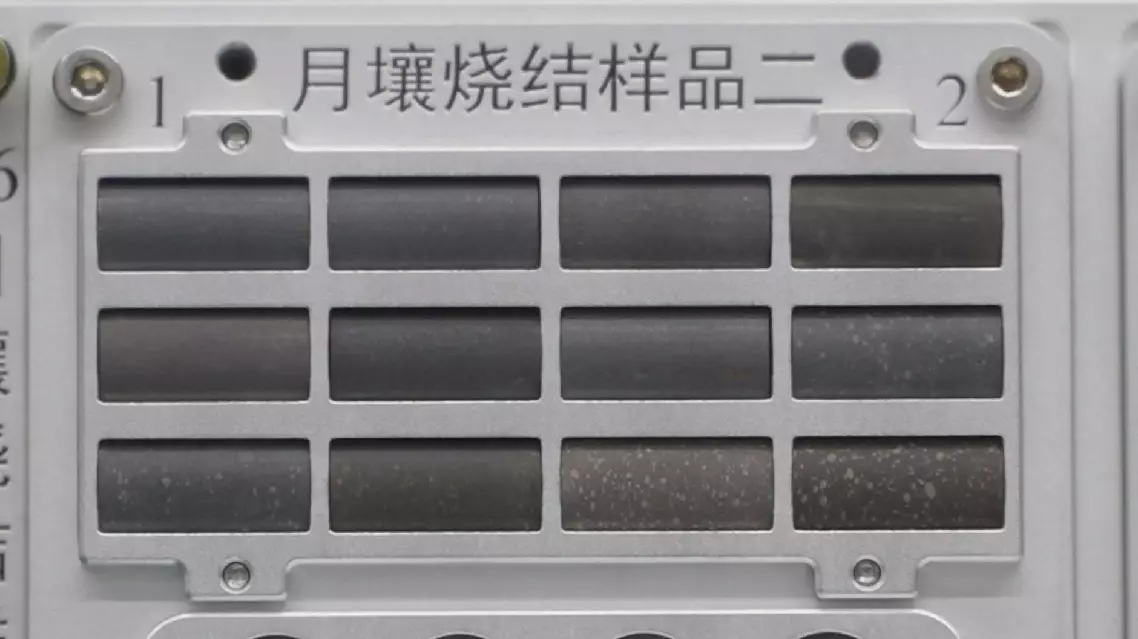
China safety returns first "lunar soil bricks" from space, paving way for building base on moon