SAN FRANCISCO--(BUSINESS WIRE)--Nov 25, 2025--
Worldly, the leading supply chain intelligence platform for the consumer goods industry, today announced new capabilities designed to make it easier for brands and suppliers to collect high-quality, primary data and turn it into stronger business and sustainability decisions. With advancements including the Worldly Collaboration Suite, enhanced platform performance in China, and the launch of the AI-driven Worldly Assistant, the company continues to redefine how supply chain intelligence drives impact, mitigates risk, and proves business value.
This press release features multimedia. View the full release here: https://www.businesswire.com/news/home/20251125493913/en/
Reducing Audit Burden with Shared Primary Data
Global supply chains continue to face rising expectations for transparency and risk management. Worldly brings brands, retailers, and manufacturers together around standardized primary data, allowing partners to share verified assessments, reduce duplication, and lessen audit fatigue. The need for a more aligned way of measuring issues such as energy, labor, and materials has never been more evident with supply chain partners exchanging more than 100,000 assessments over the past year.
“Everything starts with quality first-party data, and suppliers carry much of that burden,” said Scott Raskin, CEO of Worldly. “We want to make their job easier, clearer guidance, fewer steps, less frustration, while giving brands the accurate information they need to identify potential risks and make responsible decisions. These updates move us closer to that.”
Introducing Worldly Assistant: AI for Accuracy and Speed
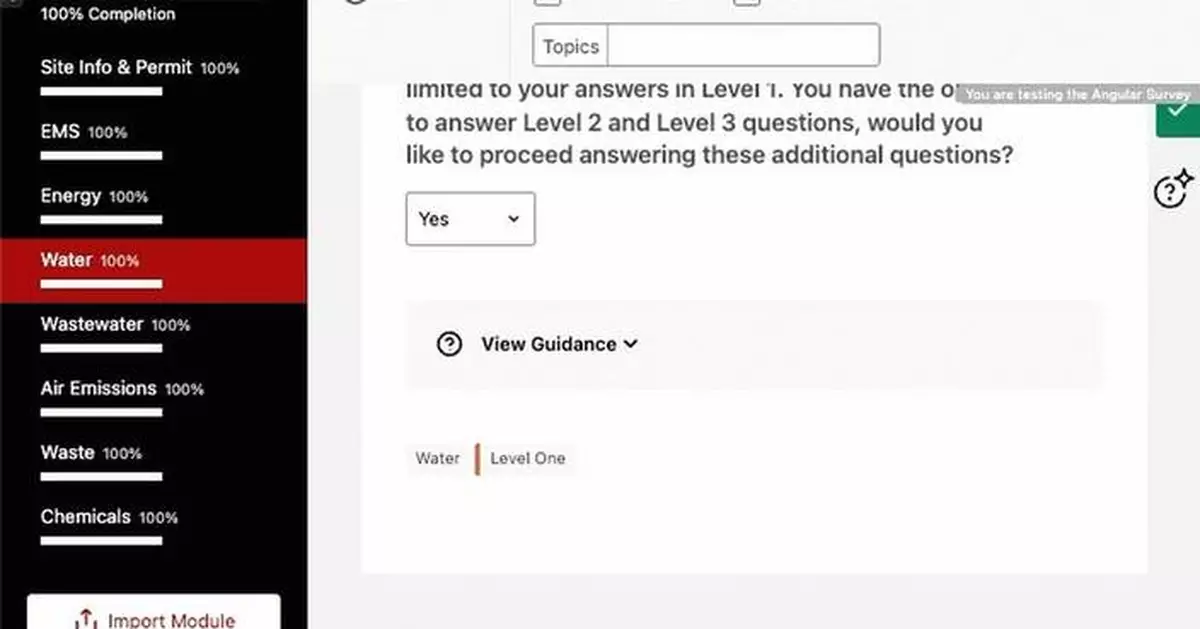
The new AI-powered Worldly Assistant, trained on Cascale’s Higg Index guidance and other relevant documentation, delivers real-time answers and support to facility users and verification bodies, dramatically improving accuracy and speeding up completion time. Businesses no longer have to hunt for data in long, complex documents. They can get instant, reliable guidance right within the assessment.
Improved Performance for Tens of Thousands of China-Based Users
China produces one-third of the world’s consumer goods and is home to a significant number of Worldly’s global users, making reliability and speed in the region essential. With this release, Worldly has delivered major performance upgrades across China, including faster load times, improved stability, and a smoother assessment experience for tens of thousands of facilities and supplier partners.
“We’re focused on giving suppliers the tools and performance they need to work quickly and accurately,” said John Armstrong, CTO. “These improvements help them complete assessments with greater confidence and significantly fewer delays.”
Higher Supplier Participation Through the Worldly Collaboration Suite
The enhanced Worldly Collaboration Suite provides brands with clearer workflows and suppliers with a more intuitive experience, leading to more complete and timely data submissions. Programs using the Collaboration Suite and Worldly’s recommended practices reach assessment completion rates above 90%, supporting stronger risk detection, better measurement, and more informed decision-making across the value chain.
Expanding a Connected Intelligence Ecosystem
Worldly’s recent innovations — including the Insights Hub for deeper insights and analytics and Worldly Axion, a solution to help companies manage supply chain risk and leverage decarbonization opportunities — establish it as the most comprehensive supply chain intelligence platform in consumer goods. The acquisition of sustainability platform GoBlu further strengthens Worldly’s role in unifying critical supply chain data, where sustainability, operational, and business performance converge.
“Empowering better business has always been our mission,” said Raskin. “Today that means giving every company the intelligence to make decisions that are responsible and profitable.”
About Worldly
Worldly is the leading sustainability and supply chain intelligence platform for the consumer goods industry, empowering brands, retailers, and manufacturers to turn primary data into strategic action. Trusted by over 40,000 companies across apparel, footwear, home furnishings, and sporting goods, Worldly provides deep visibility into environmental and social impact — from carbon and water to chemicals and labor — at the product, facility, and value-chain levels.
Built on the industry’s leading standards, including Cascale’s Higg Index tools, Worldly transforms raw data into actionable intelligence that helps businesses reduce risk, meet evolving regulations, and accelerate measurable impact.
www.worldly.io
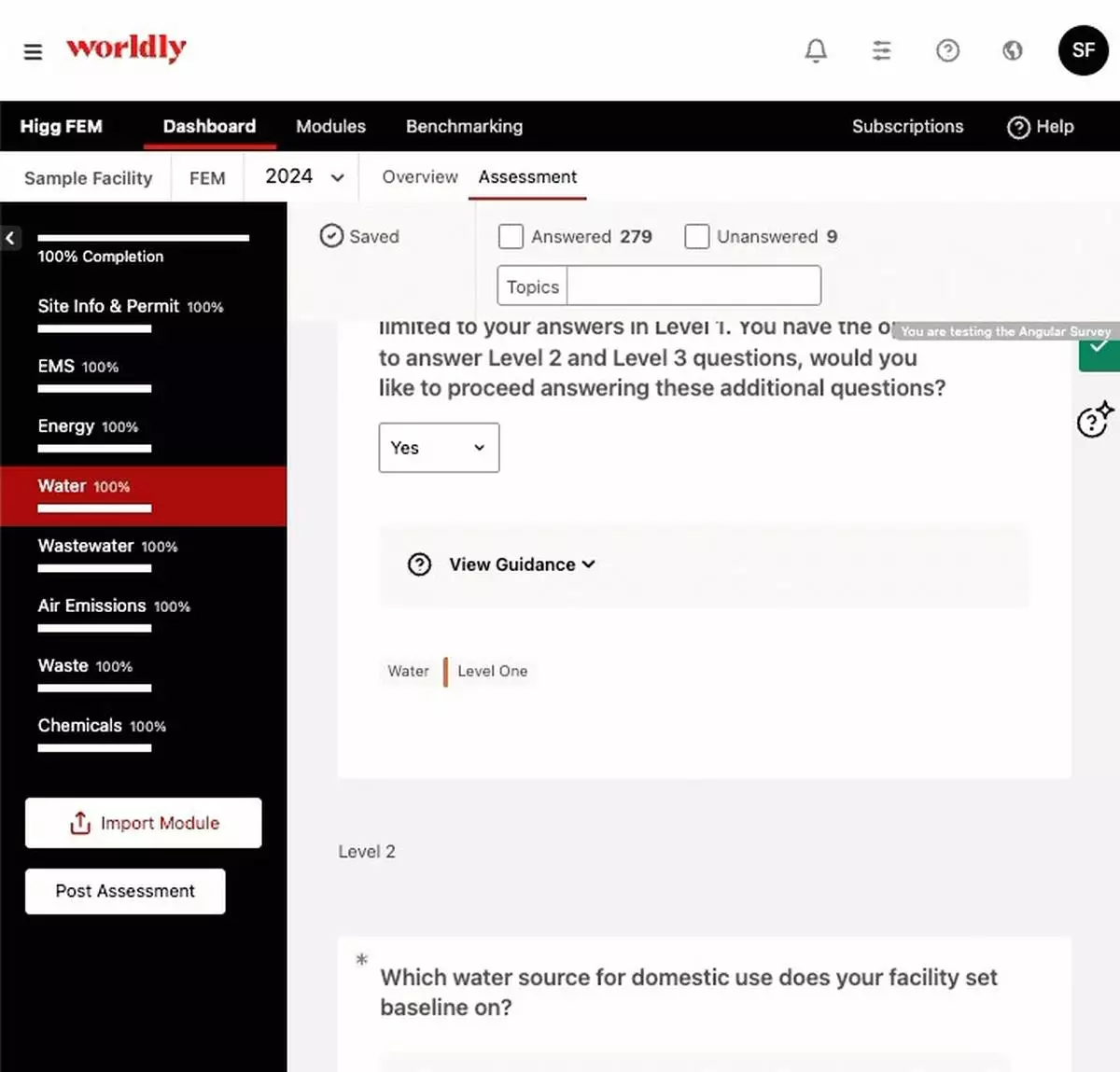
Worldly Assistant offers users instant, reliable AI guidance right within the assessment.
Launch preparations have begun for the Artemis II mission, NASA’s planned lunar fly-around by four astronauts that will be the first moon trip in 53 years.
Tensions were high as hydrogen fuel started flowing into the rocket hours ahead of the planned launch. Dangerous hydrogen leaks erupted during a countdown test earlier this year, forcing a lengthy flight delay.
The launch team needs to load more than 700,000 gallons of fuel (2.6 million liters) into the 32-story Space Launch System rocket on the pad before the Artemis II crew can board.
The 32-story Space Launch System rocket is poised to blast off Wednesday evening with a two-hour launch window beginning at 6:24 p.m. EDT at Kennedy Space Center in Florida.
Artemis astronauts Reid Wiseman, Victor Glover, Christina Koch and Jeremy Hansen will be on board. They’ll hurtle several thousand miles beyond the moon, hang a U-turn and then come straight back. No circling around the moon, no stopping for a moonwalk — just a quick out-and-back lasting less than 10 days. NASA promises more boot prints in the gray lunar dust, but not before a couple practice missions.
Unlike the Apollo missions that sent astronauts to the moonfrom 1968 through 1972, Artemis’ debut crew includes a woman, a person of color and a Canadian citizen.
Artemis II is the opening shot of NASA’s grand plans for a permanent moon base. The space program is aiming for a moon landing near the lunar south pole in 2028.
The Latest:
The wind is picking up at Cape Canaveral, more clouds are appearing and rain is expected in about two hours. But there is no lightning threat, NASA says, and there’s still an 80% chance the weather will be good enough to launch.
L-minus tracks the overall time to liftoff, counting down the days, hours and minutes away before the planned blastoff. It doesn’t include built-in holds, or pauses — that’s T-minus time.
The T-minus countdown in the final 10 minutes is where nerves tense up and hearts start pounding. Automated software kicks off a series of highly choreographed milestones. During this period, the clock can be stopped if a problem is spotted and restarted if it’s fixed in time.
T-0 is the moment of liftoff — zero — when the boosters ignite and the rocket begins its journey.
NASA has a narrow time frame each month to fly to the moon.
The Earth and moon must be aligned just so to achieve the proper trajectory for the mission. In any given month, there’s only about a week when Artemis II astronauts can lift off.
The Orion capsule needs to get a check of its life-support and other systems in near-Earth orbit. If that goes well, Orion will fire its main engine to hurtle toward the moon, taking advantage of the moon and Earth’s gravity to get there and back in a slingshot maneuver that requires little if any fuel.
Orion also needs sunlight for power and can’t be in darkness for more than 90 minutes at a time. Plus NASA wants to minimize heating during reentry at flight’s end.
The latest launch window runs through April 6. The next opportunity opens on April 30.
The hydrogen tank of the rocket’s core stage is 100% filled. NASA said no significant leaks have been observed so far in fueling. It was hydrogen leaks that prevented the rocket from flying in February.
The alarm clocks just went off in Kennedy Space Center’s crew quarters.
That means it’s rise and shine for the three Americans and one Canadian who are about to become the first lunar visitors in more than 53 years.
They have a long day ahead of them, whether they launch or not.
After breakfast, they’ll start suiting up. NASA’s launch window opens at 6:24 p.m. and lasts a full two hours.
Launch director Charlie Blackwell-Thompson is wearing green as are many of the controllers alongside her in the firing room.
Green represents “go” for NASA, a color symbolizing good luck.
The team is monitoring the fueling of the 322-foot moon rocket, set to blast off Wednesday evening.
A plush toy named Rise will ride with the Artemis II astronauts around the moon, carrying the names of more than 5.6 million people.
Rise is what’s known as a zero gravity indicator, which gives the astronauts a visual cue of when they reach space.
The design was inspired by the iconic “Earthrise” photo during Apollo 8, showing the planet as a shadowed blue marble from space in 1968.
Rise was selected from more than 2,600 contest submissions. It was designed by Lucas Ye of California.
Commander Reid Wiseman and his crew tucked a small memory card into Rise before the toy was loaded into the Orion capsule. The card bears the names of all those who signed up with NASA to vicariously tag along on the nearly 10-day journey.
“Zipping that little pocket on the bottom of Rise was kind of the moment that put it all together for me,” Wiseman said. “We are going for all and by all. It’s time to fly.”
NASA is fueling the new rocket that will send four astronauts to the moon.
Launch teams have begun pumping more than 700,000 gallons (2.6 million liters) of liquid hydrogen and liquid oxygen into the Space Launch System rocket at Kennedy Space Center in Florida.
It’s the latest milestone in the two-day countdown that kicked off on Monday when launch controllers reported to duty.
It will take at least four hours to fully load the rocket before astronauts climb aboard for humanity’s first flight to the moon since Apollo 17 in 1972.
The two-hour launch window opens at 6:24 p.m. EDT.
▶ Read more about Apollo vs. Artemis
The Americans who blazed the trail to the moon more than half a century ago were white men chosen for their military test pilot experience.
The Artemis II crew includes a woman, a person of color and a Canadian, products of a more diversified astronaut corps.
▶ Read more about Christina Koch, Victor Glover, Jeremy Hansen and Reid Wiseman
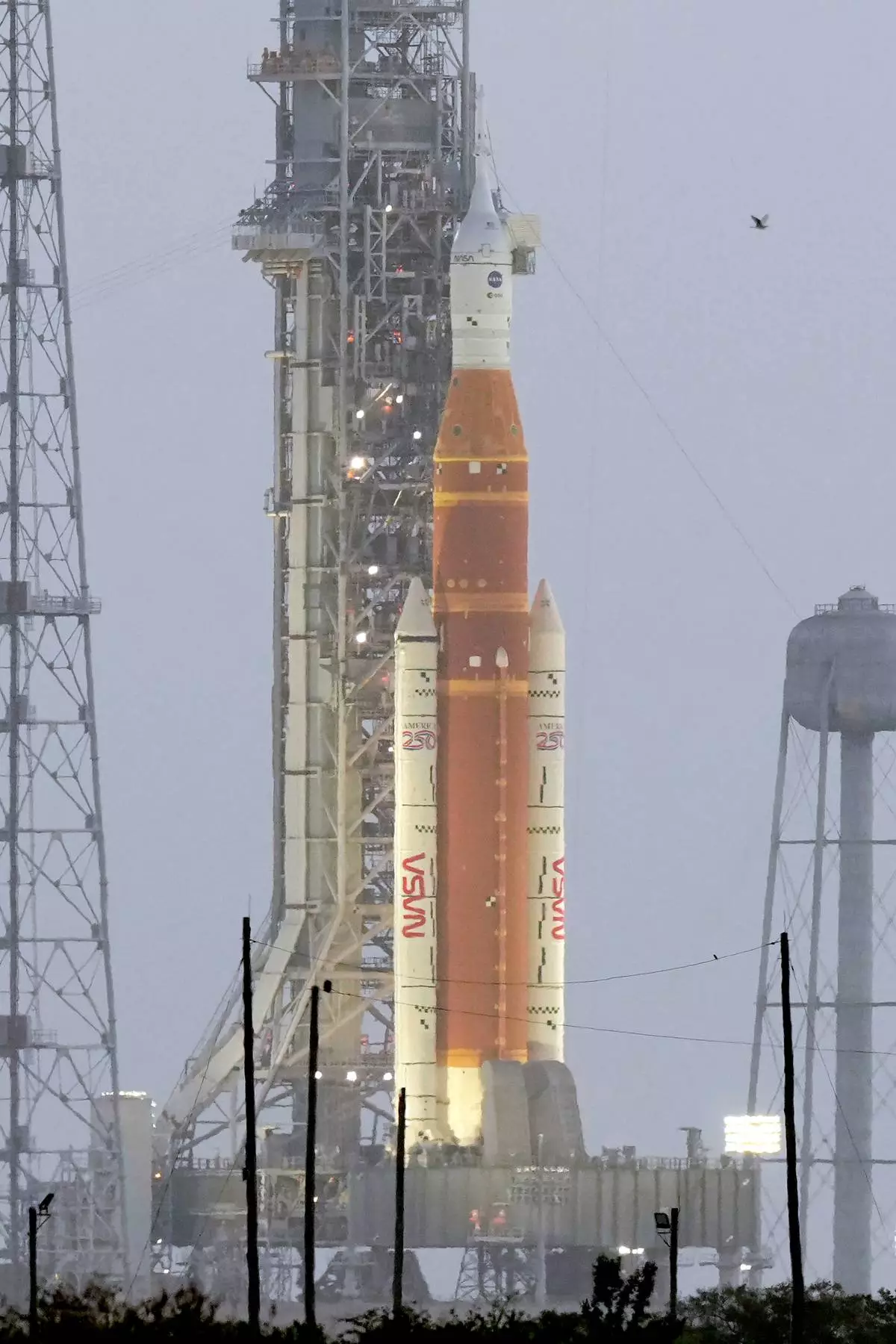
NASA's Artermis II moon rocket sits on Launch Pad 39-B at the Kennedy Space Center hours ahead of planned liftoff Wednesday, April 1, 2026, in Cape Canaveral, Fla. (AP Photo/Chris O'Meara)
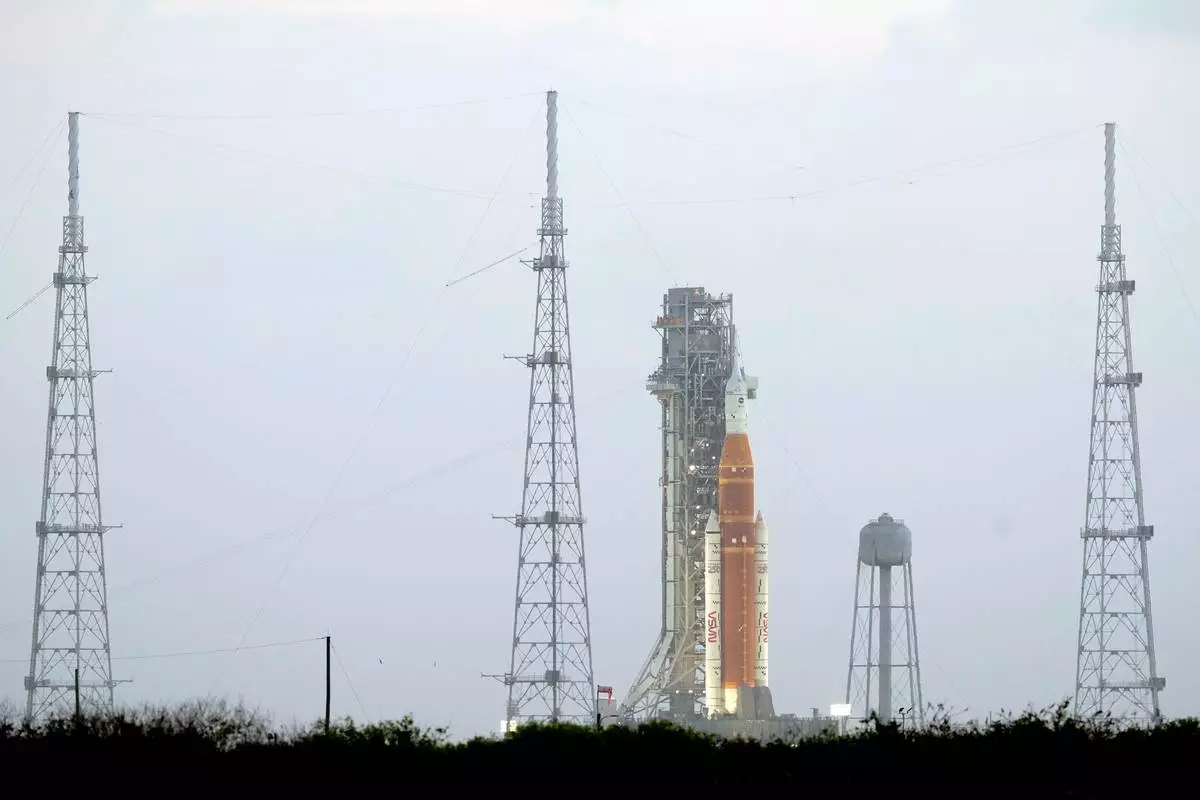
NASA's Artermis II moon rocket sits on Launch Pad 39-B at the Kennedy Space Center hours ahead of a planned launch attempt Wednesday, April 1, 2026, in Cape Canaveral, Fla. (AP Photo/Chris O'Meara)
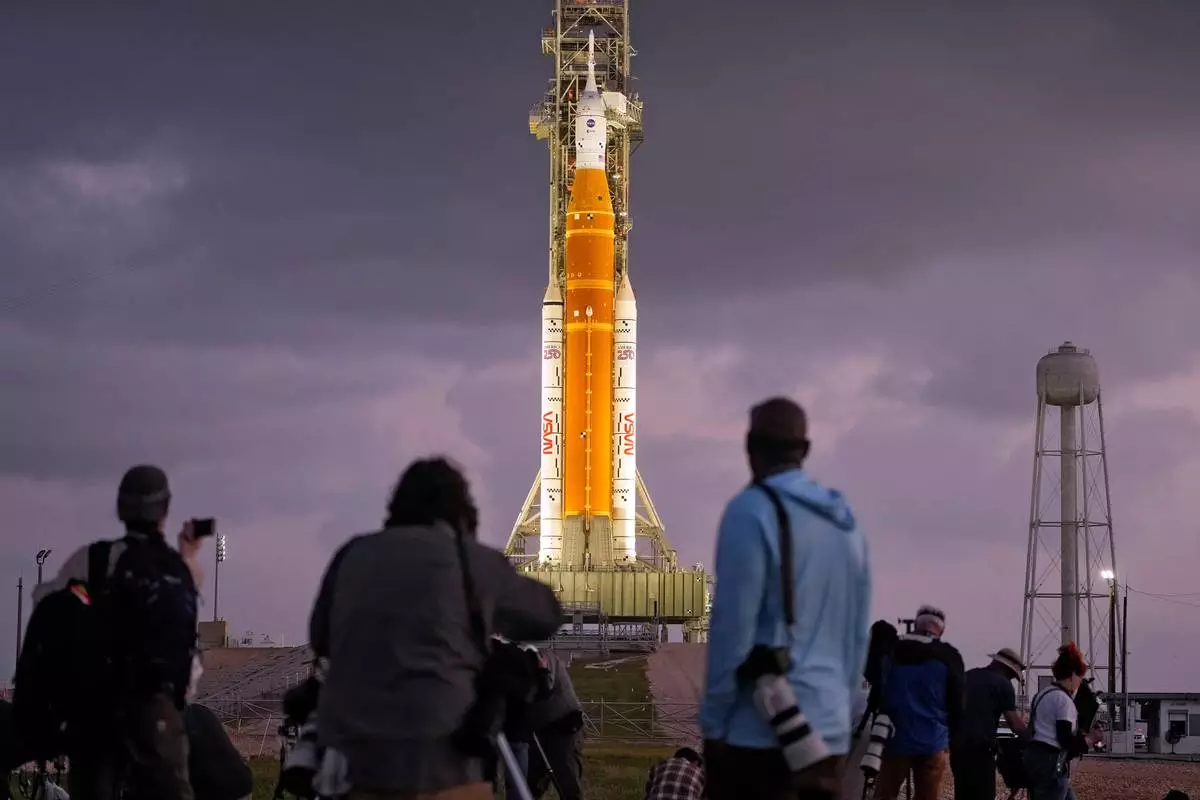
Photographers set up remote cameras near NASA's Artermis II moon rocket on Launch Pad 39-B just before sunrise at the Kennedy Space Center Tuesday, March 31, 2026, in Cape Canaveral, Fla. (AP Photo/Chris O'Meara)