China's Shenzhou-22 spaceship successfully docked with the space station combination on Tuesday after just over three hours of space flight, according to the China Manned Space Agency (CMSA).
The spaceship, atop the Long March-2F Y22 carrier rocket, blasted off at 12:11 Beijing Time (0411 GMT) from the Jiuquan Satellite Launch Center in northwest China.
About 10 minutes after the launch, the spaceship separated from the rocket and entered its designated orbit. The CMSA declared the launch mission a complete success. At 15:50 Beijing time (0750 GMT), the spaceship successfully docked with the front port of the Tiangong space station's Tianhe core module.
The spaceship, flying without a crew aboard, carried a cargo of space food, medical supplies, fresh fruit and vegetables, as well as devices for treating the cracked window on the Shenzhou-20 spaceship.
It will later serve as the return vessel for the three Shenzhou-21 astronauts currently in orbit.
Tuesday's launch followed the postponed return of the Shenzhou-20 crew aboard the Shenzhou-21 spacecraft on Nov. 14. The Shenzhou-20 spacecraft was struck by space debris, delaying its return originally scheduled to take place on Nov 5, according to CMSA. The Shenzhou-21 crew members are in good condition, and are fulfilling their tasks as planed, the CMSA said, adding that the damaged Shenzhou-20 spaceship will remain in orbit to continue relevant experiments.
Zhou Jianping, chief designer of China's manned space program, explained the significance of the launch, which is the first emergency launch mission under the program.
"The success of this mission fully demonstrated the strengths of China's new system for mobilizing resources nationwide, comprehensively interpreted the principle of 'prioritizing life and safety above anything else' in China's manned space program, comprehensively verified the scientific, reliable and safe nature of the 'one launch, one standby, rolling backup' strategy for China's space station missions, rigorously tested all personnel's rapid response and emergency handling capabilities in real-world scenarios, and vividly exemplified the spirit of the manned space program --one characterized by exceptional capabilities to overcome hardships, work with a fighting morale, solve technical bottlenecks, and remain dedicated," Zhou said.
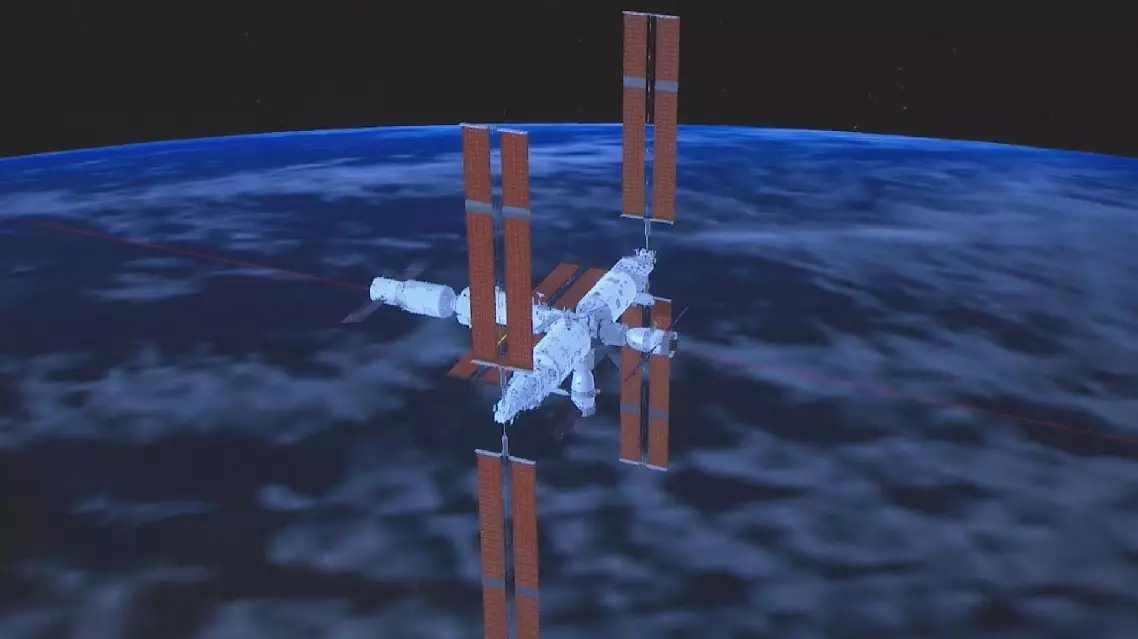
China's Shenzhou-22 spaceship docks with space station combination
China's Shenzhou-22 spaceship docks with space station combination
China's Shenzhou-22 spaceship docks with space station combination
The Japanese society should do soul-searching regarding its history of aggression and adhere to the pacifist constitution, said Shiradori Hiroshi, a professor of the Hosei University, in an interview with China Central Television (CCTV) in Tokyo on April 30.
He said the government's recent move to discuss revising the three security documents deserve particular attention as the country's foreign and security policies have already witnessed major changes.
"People outside of the country hold that Japan's post-war image as a 'peace state' is now facing a major shift. Against the backdrop of tremendous changes in its foreign and security policies, the revision of the three security documents deserves particular attention. There lacks public debate in terms of the procedure, with policy changes decided unilaterally at Cabinet meetings. It is necessary to fully explain to the public as to whether such a practice is proper," said Hiroshi.
The Japanese government held its first expert panel meeting to discuss revisions to the three security documents at the Prime Minister's Office on April 27, local media reported.
Japan's current National Security Strategy and two related documents, formulated in 2022, were designed to cover the next 10 years, but the government led by Prime Minister Sanae Takaichi has decided to move up the timetable to accelerate the revision process.
Increasing defense spending is one of the key topics of the meeting, according to Kyodo News.
Hiroshi said this year marks the 80th anniversary of the opening of the International Military Tribunal for the Far East, or Tokyo Trials, and the Japanese society must do soul-searching regarding its history of aggression in WWII, when it brought enormous catastrophes on Asian countries.
"Eighty years have passed since the opening of the Tokyo Trials. Japan inflicted enormous suffering on Asian countries during WWII, which should serve as an opportunity for the soul-searching. It is exact on the basis of countless sacrifices that Japan's post-war pacifism and its identity as a 'peace state' took shape. On this 80th anniversary, it is necessary for Japan to re-examine and do soul-searching regarding its history," said Hiroshi.
The Japanese government's effort to revise the pacifist constitution is widely opposed by the public.
On Sunday, around 50,000 people gathered at Tokyo Rinkai Disaster Prevention Park, chanting slogans and holding banners against the government's push for constitutional revision and military expansion, the largest turnout of its kind in recent years.
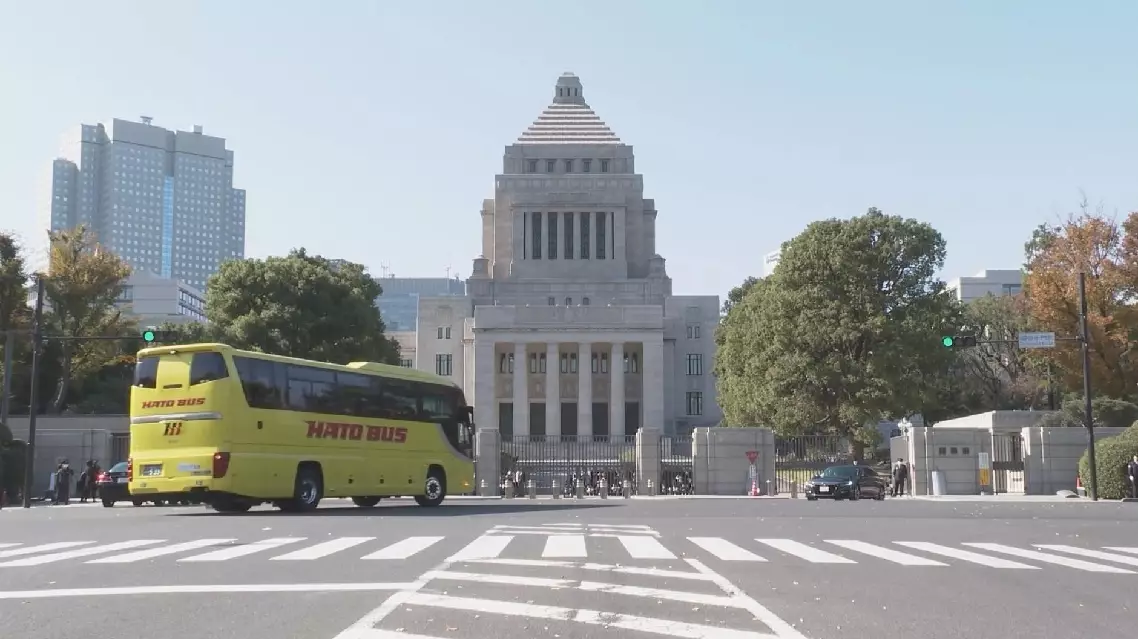
Japan should adhere to pacifist constitution: scholar