Skip to Content Facebook Feature Image

More people are addicted to marijuana, but fewer of them are seeking help, experts say

TECH

More people are addicted to marijuana, but fewer of them are seeking help, experts say
TECH

TECH

More people are addicted to marijuana, but fewer of them are seeking help, experts say

2025-11-25 22:15 Last Updated At:11-26 12:30

Megan Feller smoked pot several times a day and couldn’t eat, sleep or function without it. But at the time, she didn't see the need to reach out for help.

“I didn’t think cannabis was a big deal,” the 24-year-old said. “It was really socially accepted.”

This attitude is common. As more states legalize marijuana, use has become more normalized and products have become more potent. But fewer of those who are addicted seek help for it.

Pot use among young adults reached historic levels in recent years, according to a federally supported survey. Daily use even outpaced daily drinking, with nearly 18 million Americans reporting in 2022 that they use marijuana every day or nearly every day, up from less than 1 million three decades earlier.

Studies show a corresponding increase in cannabis use disorder — when people crave marijuana and spend lots of time using it even though it causes problems at home, school, work or in relationships. It’s a condition that researchers estimate affects about 3 in 10 pot users and can be mild, moderate or severe.

And it's an addiction — despite the common misconception that that's not possible with marijuana, said Dr. Smita Das, an addiction psychiatrist at Stanford University.

Meanwhile, the drug’s widespread acceptance has fueled a stigma about seeking treatment, said Dr. Jennifer Exo of the Hazelden Betty Ford Foundation in Minnesota.

“There’s this pervasive belief that you can’t become addicted, it can’t actually be a problem,” she said. “It has to do with this myth that cannabis is safe, natural and benign.”

While pot isn’t as harmful as harder drugs, frequent or heavy use has been linked to problems with learning, memory and attention as well as chronic nausea, vomiting and lung problems among those who smoke it. Some evidence has also linked it to earlier onset of psychosis in people with genetic risk factors for psychotic disorders like schizophrenia.

And today’s pot is not the same as that of the past.

Many people recall older relatives who “smoked a few doobies and ate some food and fell asleep,” Exo said. “But it’s absolutely different.”

In the 1960s, most pot that people smoked contained less than 5% THC, the ingredient that causes a high. Today, the THC potency in cannabis flower and concentrates sold in dispensaries can reach 40% or more, according to the National Institute on Drug Abuse.

Teens are often vaping potent marijuana concentrates, Exo said, rather than eating brownies made with cannabis flower or taking a hit from a bong.

Pot is also increasingly available. Though it’s still a federal crime to possess it, 24 states allow recreational use by adults and 40 allow medical use as of late June, the National Conference of State Legislatures said. Dispensaries abound and more people are able to keep pot at home.

Research links the legalization of recreational marijuana with rising emergency room visits for “acute cannabis intoxication,” in which patients may experience a rapid heartbeat or feel dizzy, confused or paranoid.

A study last year focused on Michigan found that legalization was associated with an immediate increase in the rate of ER visits for this condition among people of all ages, especially middle-aged adults.

Das said increased access to cannabis, along with a growing number of cannabis products and with higher potency all contribute to rising ER visits. Edibles such as gummies can pose a particular problem because they take a little while to kick in so people may keep taking more because they don’t yet feel the drug’s effects.

“Then, suddenly, they’re suffering from cannabis toxicity,” she said.

Feller first tried pot at 16 and quickly went from smoking the plant to using vape cartridges that were easy to hide in her pocket. Soon, she could barely get by without it.

“I would wake up every morning for years, and until I smoked weed, I would throw up,” she said. Instead of trying to get high, she used it “to make these other symptoms go away.”

Feller was also drinking a lot and her parents sent her to a treatment center when she was around 18. It didn’t help because she wasn’t ready to get well. After her mother died, her substance use worsened.

At 22, Feller entered Hazelden on her own — but only to get sober from alcohol, which she did.

She kept using pot on and off, then finally sought treatment for cannabis use disorder and has been sober from marijuana for almost a year.

“I’m so much happier now,” she said. “I don’t feel, like, shackled to a substance.”

Such treatment is often overlooked, said Brian Graves, a researcher at Florida Atlantic University.

He and his colleagues published a study this year showing that the share of people who got treatment for cannabis use disorder from their nationally representative sample dropped from 19% in 2003 to 13% in 2019. An earlier study also found a marked decline and pointed to reasons that include “expanding cannabis legalization and more tolerant attitudes.”

Experts said people need to be educated that pot, like alcohol, can be misused and can cause real harm.

“Another important piece is helping people understand the risk before they start,” Exo said, “and then to feel safe enough to say, ‘Hey, I need help managing this.’”

Many people wait until their marijuana use causes problems in multiple parts of their lives before they seek treatment — if they ever do.

“If you’re changing your life because of weed, there might be an issue,” Feller added. “There are resources to get help and you are not alone.”

The Associated Press Health and Science Department receives support from the Howard Hughes Medical Institute’s Department of Science Education and the Robert Wood Johnson Foundation. The AP is solely responsible for all content.

Megan Feller arranges bouquets for a Halloween party at her apartment in Edina, Minn. on Saturday, Oct. 25, 2025. (AP Photo/Mark Vancleave)
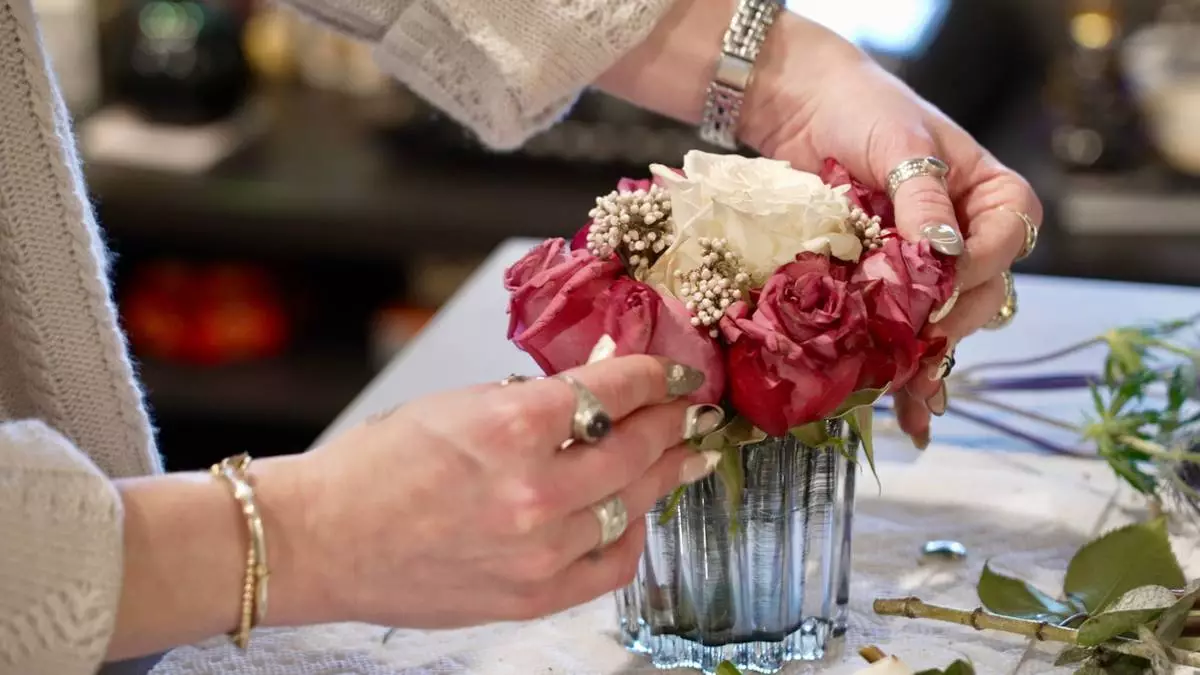
Megan Feller arranges bouquets for a Halloween party at her apartment in Edina, Minn. on Saturday, Oct. 25, 2025. (AP Photo/Mark Vancleave)

Megan Feller arranges bouquets for a Halloween party at her apartment in Edina, Minn. on Saturday, Oct. 25, 2025. (AP Photo/Mark Vancleave)
Megan Feller arranges bouquets for a Halloween party at her apartment in Edina, Minn. on Saturday, Oct. 25, 2025. (AP Photo/Mark Vancleave)
Megan Feller arranges bouquets for a Halloween party at her apartment in Edina, Minn. on Saturday, Oct. 25, 2025. (AP Photo/Mark Vancleave)
Megan Feller arranges bouquets for a Halloween party at her apartment in Edina, Minn. on Saturday, Oct. 25, 2025. (AP Photo/Mark Vancleave)

SALT LAKE CITY (AP) — New DNA testing has definitively linked the unsolved death of a Utah teenager in 1974 to the infamous serial killer Ted Bundy, the local sheriff’s office said Wednesday.

Laura Ann Aime, 17, went missing Halloween night 51 years ago after she left a party alone to go to a convenience store. About a month later, her body was found on the side of a highway in American Fork Canyon. She was bound, beaten and without clothing. Authorities said she had likely been kept alive for several days after her abduction.

Investigators long suspected that Bundy was responsible — police said he verbally acknowledged his culpability before his execution in Florida in 1989 — but the case remained open until they could be certain.

“It's really quite amazing that people are even still interested in Laura's case,” her sister, Michelle Impala, said at a news conference Wednesday. “Know I speak for my family when I thank you, and thank you media, too, for even caring.”

Bundy was one of the nation’s most prolific serial killers, with at least 30 women and girls’ deaths linked to him in several states in the 1970s. His murders — which occurred in sorority houses, parks and elsewhere — set the nation on edge. Bundy’s arrest drew widespread fascination, in part because many considered him to be charming and handsome.

Investigators had carefully preserved the evidence from Aime’s case, and forensic analysts were able to identify portions that seemed most likely to have usable DNA samples, Utah Department of Public Safety Commissioner Beau Mason said.

The state crime lab got new technology in 2023 that allows investigators to extract DNA from samples even if they are small, degraded from age or contain DNA from multiple people, he said. That technology allowed them to identify a single male DNA profile, which they submitted to a national law enforcement database.

Bundy’s DNA was a match, Mason said.

That profile can now be used by other law enforcement agencies who have long suspected Bundy of additional unsolved killings, he said, adding that more families could get similar closure.

“Laura Aime is the quintessential daughter of Utah County,” Sgt. Mike Reynolds said. “We felt the pain the family feels when she was taken. We felt the pain that you felt this whole entire time, and we’ve had the desire to deliver to you some type of healing.”

Impala was only 12 when her older sister died. Even with a five-year age gap, she said they were very close and did everything together. They shared a bedroom on the family's farm in Fairview, Utah, about 50 miles (80 kilometers) southeast of Provo.

“I'm a little kid just following her around, but we had a lot in common," Impala said.

Impala reminisced about about riding horses with her sister and watching Aime feed her horse licorice nibs.

“When she died, he would not eat those anymore,” she said.

It’s not known when Bundy first began his attacks, but by 1974, young women — many of them college students — began disappearing in Washington state. Authorities were still investigating those cases when Bundy moved to Salt Lake City and began killing people in Utah, Idaho and Colorado.

At the time of Aime’s killing, Bundy was studying law at the University of Utah.

In August 1975, he was arrested for the first time in connection with the attacks. Police pulled him over and found incriminating items in his vehicle including rope, handcuffs and a ski mask.

He was found guilty the following year of kidnapping and assaulting a teen in Utah who had managed to get away. Bundy was sentenced to 15 years in prison for that crime, and while imprisoned he was charged in connection with the earlier death of a nursing student.

He was brought to Aspen, Colorado, for a hearing in that case in 1977, and he escaped custody by climbing out a second-story courthouse window when he was left alone for a time. He was caught after about a week, but escaped again six months later by breaking through the ceiling of a jail.

Bundy fled across the country, eventually making his way to Tallahassee, Florida. On Jan. 15, 1977, he entered the Chi Omega sorority house at Florida State University, bludgeoning two women to death with a large branch and leaving two more badly injured. He then went to another house nearby, badly injuring another woman.

Less than a month later, he abducted, sexually assaulted and killed a 12-year-old girl in Lake City, Florida. Kimberly Leach was believed to be his last victim before he was arrested again and executed years later.

Boone reported from Boise, Idaho.

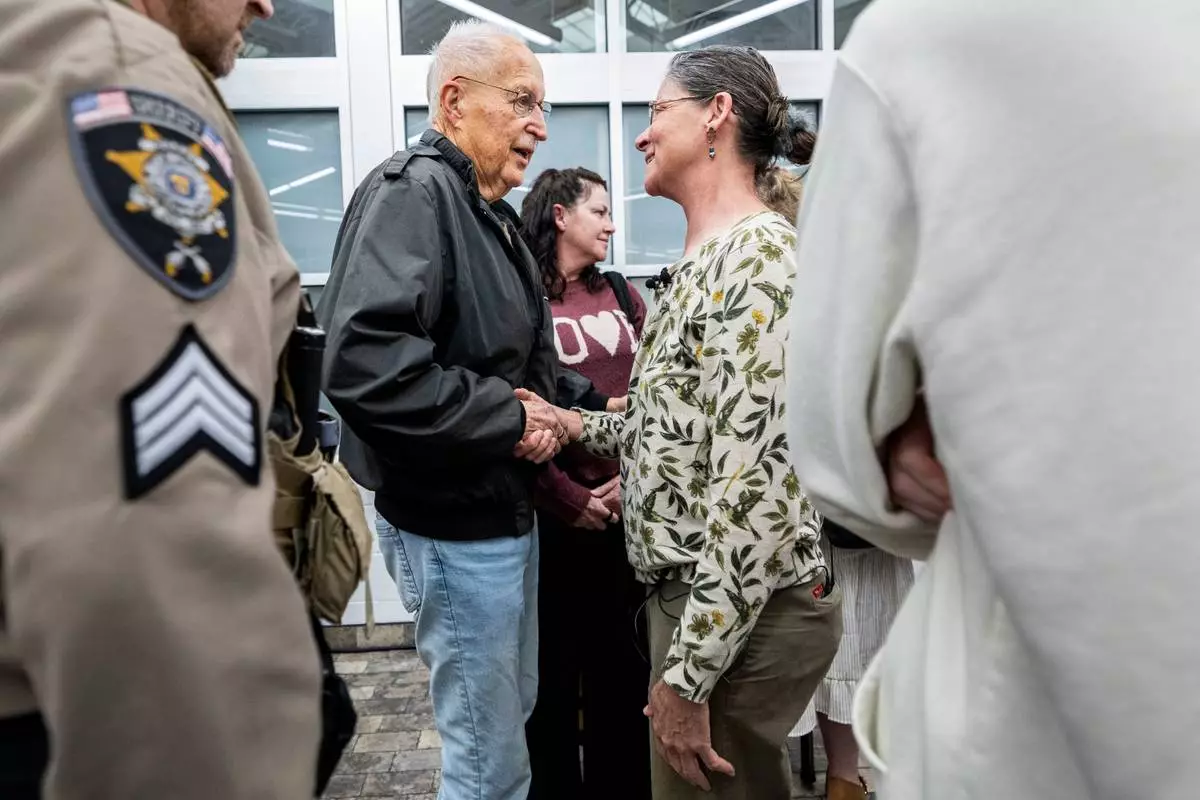
Brent Bullock, center left, who led investigations at the Utah County Attorney's Office around the time of Laura Ann Aime's murder, shakes hands with Michelle Impala, Aime's younger sister, after a news conference at the Utah County Sheriff's Office in Spanish Fork, Utah, Wednesday, April 1, 2026, announcing definitive evidence linking Ted Bundy to Aime's murder. (Isaac Hale/The Deseret News via AP)

Brent Bullock, center left, who led investigations at the Utah County Attorney's Office around the time of Laura Ann Aime's murder, shakes hands with Michelle Impala, Aime's younger sister, after a news conference at the Utah County Sheriff's Office in Spanish Fork, Utah, Wednesday, April 1, 2026, announcing definitive evidence linking Ted Bundy to Aime's murder. (Isaac Hale/The Deseret News via AP)

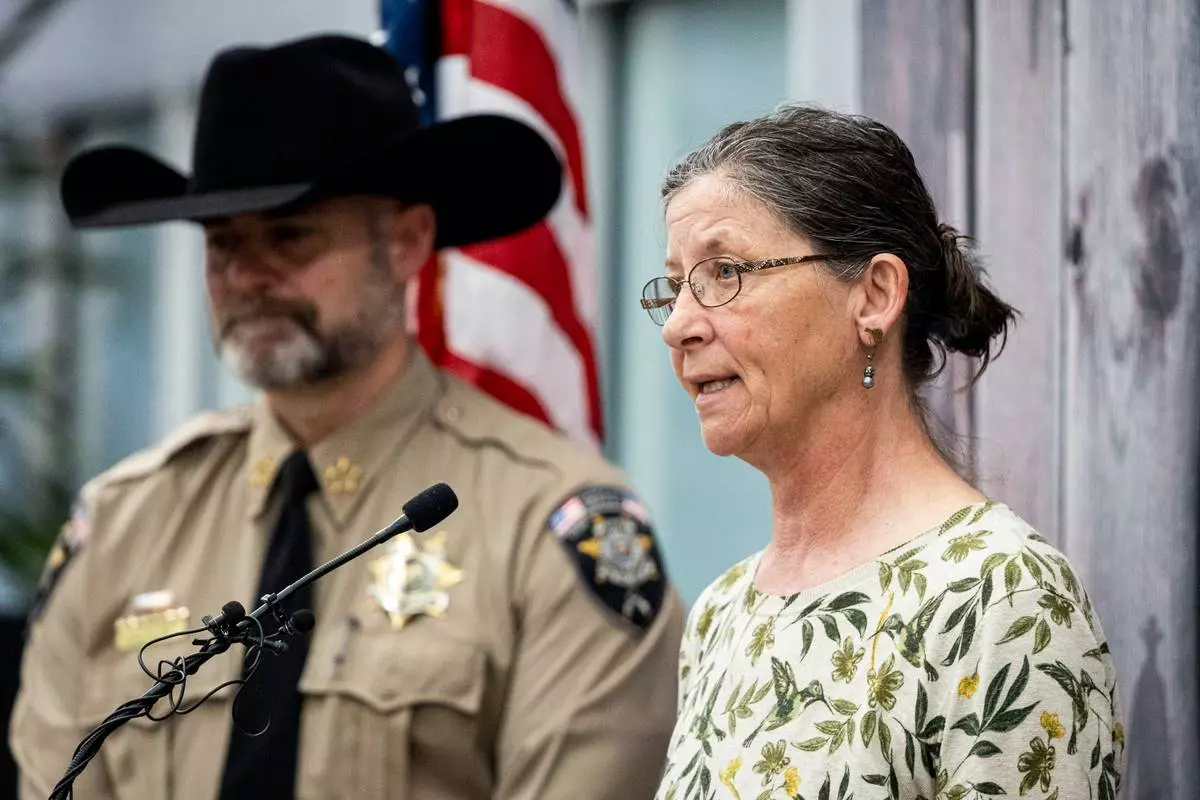
Michelle Impala, right, sister of Laura Ann Aime, speaks, joined by Utah County Sheriff Mike Smith, during a news conference announcing that definitive evidence has linked Ted Bundy to Aime's murder, at the Utah County Sheriff's Office, in Spanish Fork, Utah, Wednesday, April 1, 2026. (Isaac Hale/The Deseret News via AP)

Michelle Impala, right, sister of Laura Ann Aime, speaks, joined by Utah County Sheriff Mike Smith, during a news conference announcing that definitive evidence has linked Ted Bundy to Aime's murder, at the Utah County Sheriff's Office, in Spanish Fork, Utah, Wednesday, April 1, 2026. (Isaac Hale/The Deseret News via AP)

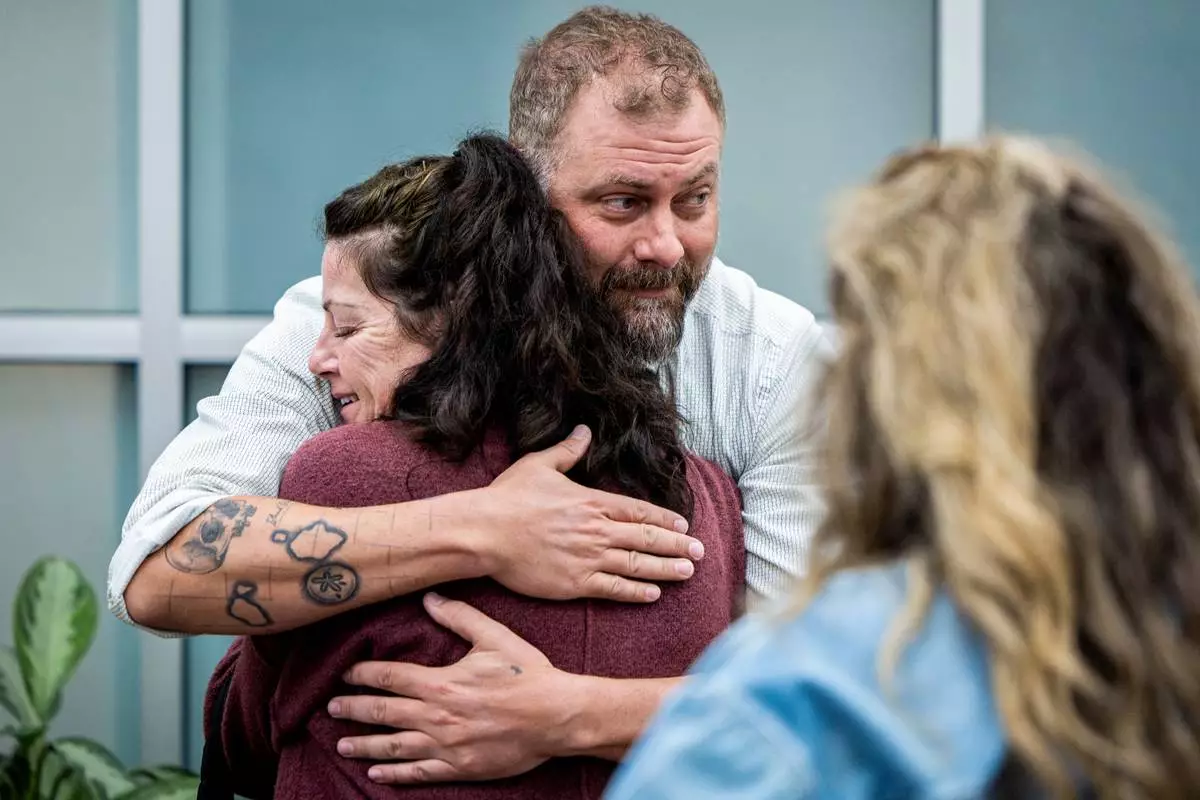
Utah County Sheriff's Deputy Jake Hall, lead detective on the case, looks to other family members as he hugs Tommi Aime, youngest sister of Laura Ann Aime, after announcing that definitive evidence has linked Ted Bundy to Laura's murder at a news conference at the Utah County Sheriff's Office, in Spanish Fork, Utah, Wednesday, April 1, 2026. (Isaac Hale/The Deseret News via AP)

Utah County Sheriff's Deputy Jake Hall, lead detective on the case, looks to other family members as he hugs Tommi Aime, youngest sister of Laura Ann Aime, after announcing that definitive evidence has linked Ted Bundy to Laura's murder at a news conference at the Utah County Sheriff's Office, in Spanish Fork, Utah, Wednesday, April 1, 2026. (Isaac Hale/The Deseret News via AP)

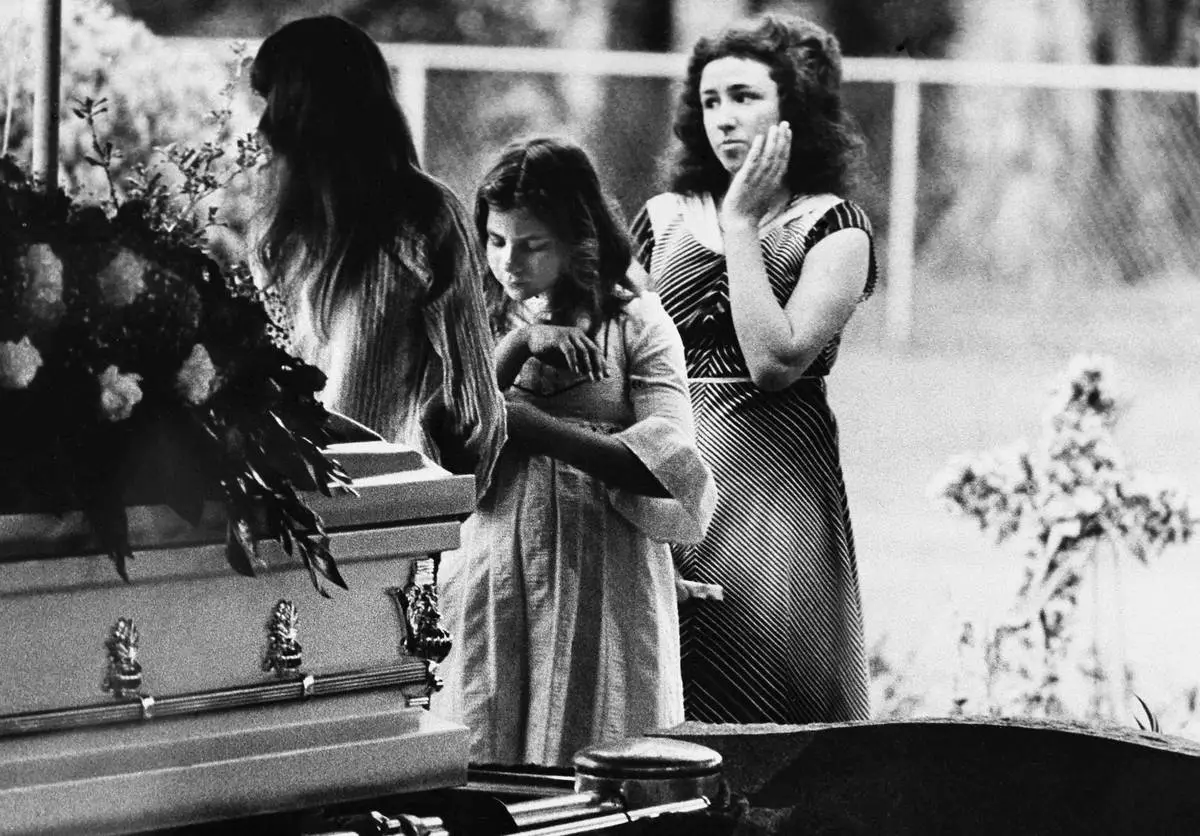
FILE - Mourners say goodbye to Kimberly Leach at her funeral, April 13, 1978, in Lake City, Fla. (AP Photo, File)

FILE - Mourners say goodbye to Kimberly Leach at her funeral, April 13, 1978, in Lake City, Fla. (AP Photo, File)

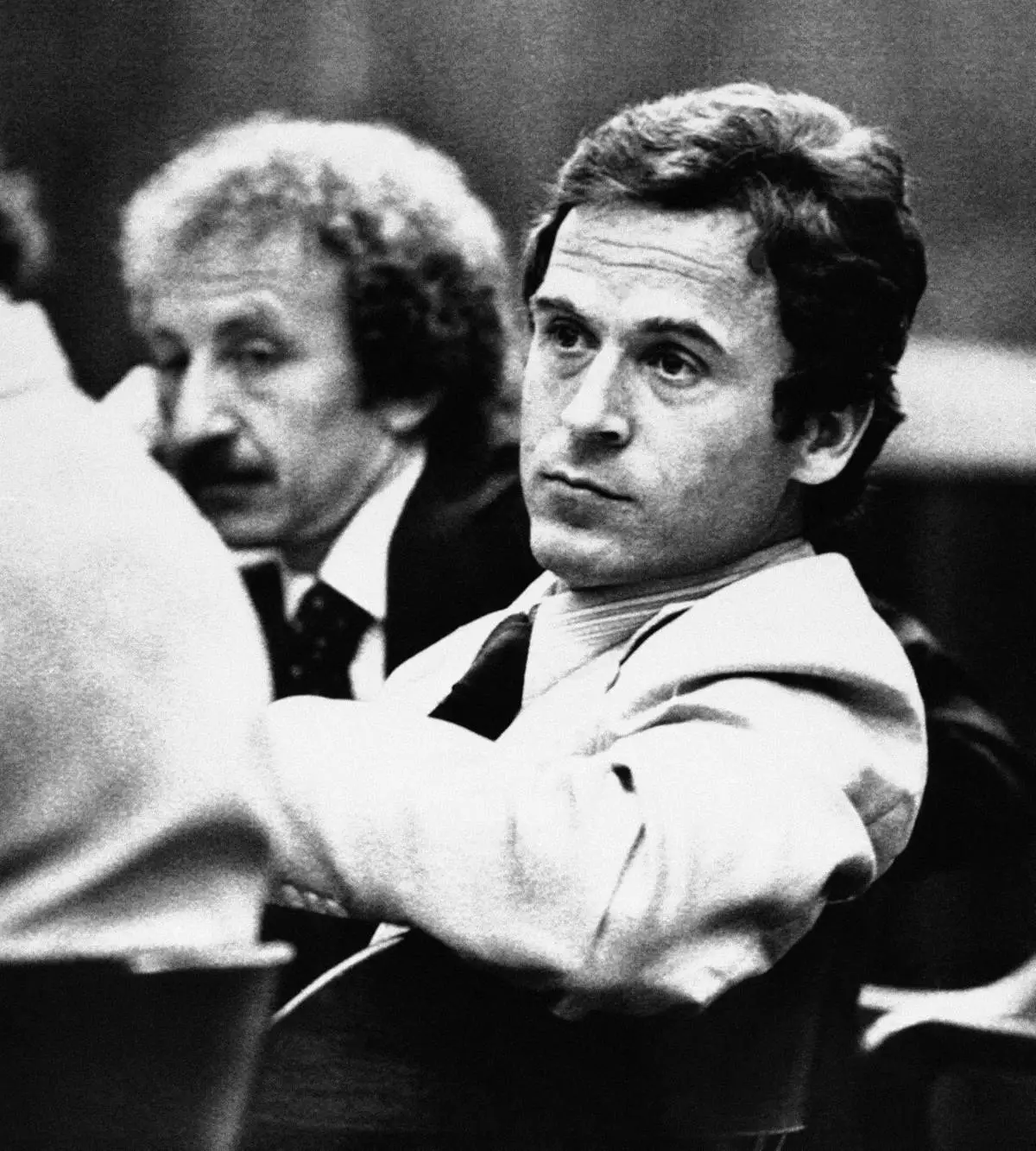
FILE - Accused murderer Ted Bundy attends the second day of jury selection in his murder trial, June 27, 1979, in Miami, Fla. (AP Photo,File)

FILE - Accused murderer Ted Bundy attends the second day of jury selection in his murder trial, June 27, 1979, in Miami, Fla. (AP Photo,File)

FILE - Accused murderer Ted Bundy leans back in his chair as trial judge Edward Cowart speaks, in Tallahassee, Fla., April 26, 1979. (AP Photo/Mark Foley, File)

FILE - Accused murderer Ted Bundy leans back in his chair as trial judge Edward Cowart speaks, in Tallahassee, Fla., April 26, 1979. (AP Photo/Mark Foley, File)

Recommended Articles