CHAMPAIGN, Ill. (AP) — Andrej Stojakovic scored 24 points for his fourth 20-point performance in five games, leading No. 13 Illinois to an 87-73 victory over Texas Rio Grande Valley on Monday night.
Mihailo Petrovic had 12 points, and David Mirkovic and twins Zvonimir and Tomislav Ivisic each added 10 for the Illini (6-1). They are 6-0 at home.
Illinois has started the season scoring 80 or more points in all seven games. The Illini haven’t done that since the 1988-89 team dubbed the Flyin' Illini opened with 12 consecutive games of 80 or more points.
Kye Dickson scored 21 points and Filip Brankovic had 15 for the Rio Grande Valley (2-4), which trailed 42-31 at halftime and cut the Illinois lead to six points twice early in the second half but didn't get any closer.
Stojakovic scored 14 points in the first half.
Illinois, the top rebounding team in the Big Ten, outrebounded the Vaqueros, 44-32. Keaton Wagler and Ben Humrichous each had eight rebounds, Zvonimir Ivisic had seven and Stojakovic had six.
The Vaqueros went 16-15 last season. It was their first winning season since 2018-19.
Rio Grande Valley is a second-year member of the Southland Conference after spending 11 years in the Western Athletic Conference.
Illinois coach Brad Underwood went 53-1 against Southland Conference teams while winning three regular-season and three conference tournament championships from 2013-2016, when he at Stephen F. Austin.
Texas Rio Grande Valley: At Stephen F. Austin on Dec. 3.
Illinois: Vs. No. 5 UConn at Madison Square Garden in New York on Friday.
This story has been corrected to show that Illinois' nickname is the Fighting Illini, not Flyin’ Illini.
Get poll alerts and updates on the AP Top 25 throughout the season. Sign up here and here (AP News mobile app). AP college basketball: https://apnews.com/hub/ap-top-25-college-basketball-poll and https://apnews.com/hub/college-basketball

Texas Rio Grande Valley forward Kye Dickson, right, drives against Illinois' Zvonimir Ivisic (44) during an NCAA college basketball game Monday, Nov. 24, 2025, in Champaign, Ill. (AP Photo/Craig Pessman)
WASHINGTON (AP) — Supreme Court Justice Samuel Alito says the escalating volume of emergency appeals before the court isn't a good thing, but he adds there's little the court can do to change the trajectory.
The number of petitions asking the justices to intervene quickly has skyrocketed during President Donald Trump's second administration, putting the court at the center of hotly debated issues such as the Republican president's new ballroom construction and his proposed restrictions on mail ballots in the midterm elections.
The number of emergency applications now rivals the annual tally of cases the justices consider with full briefing and oral arguments, Alito wrote in a new book released Tuesday.
The justice told The Associated Press in a rare interview that the rhetoric about the court from Trump and his administration doesn't sit well with him.
“I personally am not pleased with that," he said. “Everybody in this country has the right to criticize what we do. The substance of their criticism can be quite harsh. If we deserve it, then that’s fine. But rhetoric is a different story."
Alito spoke in connection with his first book, “So Ordered: An Originalist’s View of The Constitution, The Court and Our Country.”
Coming 20 years after he was confirmed to the court after his nomination by President George W. Bush, a Republican, the book is a collection of speeches the 76-year-old has given over the years on religious liberty, his judicial philosophy and constitutional rights.
Alito is perhaps best known for writing the decision that reversed Roe v. Wade and ended abortion as a nationwide right, and he has been one of the most consistent members of the court’s conservative bloc. He’s also voted in favor of some of Trump’s signature policies, even those the rest of the conservative wing has struck down. But he rejects the idea that his decisions are in the “Make America Great Again” camp.
“It’s offensive," he said. “I honestly try to decide every single case on the merits, every single application on the merit. And that’s true whether the president is Donald Trump or Joe Biden or Barack Obama or anybody else.”
Trump, for his part, has cheered Alito as “one of the Greatest of All Time” even as he maligned justices whom he appointed as “unpatriotic” and “merely a shell of their original selves." Alito said the harsh rhetoric from across the spectrum doesn’t affect how the justices rule but does play a role in the public’s declining trust in the court.
“The terms used by presidents and by members of their administration, Cabinet officers, other high-ranking officers in describing the Supreme Court and their decisions, and sometimes individual justices, is far different from what we saw 15 years ago," Alito said.
Much of the president’s frustration has come after the court ruled against him on some of his central initiatives, including tariffs and birthright citizenship. Those decisions have been handed down after months of consideration, including oral arguments.
In emergency decisions, by contrast, the president has a much stronger track record of wins.
Typically made in days or weeks, emergency orders are designed to be temporary, lasting only as cases continue to play out in lower courts. But since that process can take years, those decisions can still have important real-world consequences.
Critics, including Alito's liberal-leaning colleague Justice Ketanji Brown Jackson, have complained about the court's recent handling of the emergency docket and outlined proposed steps the justices could take.
Alito, though, said there's little the court can do to stem the tide. Presidents have increasingly used executive orders to enact their policies rather than passing laws through Congress, leading to lawsuits and “robust” decisions from lower-court judges that send a case quickly to the Supreme Court, he said.
“Unless something changes there, and I don’t foresee it right now, I’m afraid this is going to continue,” he said. “An application is something that I think we have to rule on."
Alito also detailed his decision to step away from hearing a climate change case that opened the term. Dozens of similar lawsuits have been filed on whether cities can sue oil and gas companies over damage linked to global warming. Billions of dollars could be at stake, a potentially serious threat to the industry, according to court documents.
Alito had faced calls to recuse himself because he owns stock in oil companies. He told the AP that the stock came from an inheritance his wife received from her father that she doesn’t want to sell.
He initially stayed on the case because he doesn't have stock in the companies involved, he said, adding that the court’s legal office agreed that he could hear the case under its ethics code.
But as he delved deeper into the substance of the case, he decided to step aside.
“This particular decision was a judgment call,” he said. “I gave it very, very serious consideration.”
Follow the AP’s coverage of the U.S. Supreme Court at https://apnews.com/hub/us-supreme-court.
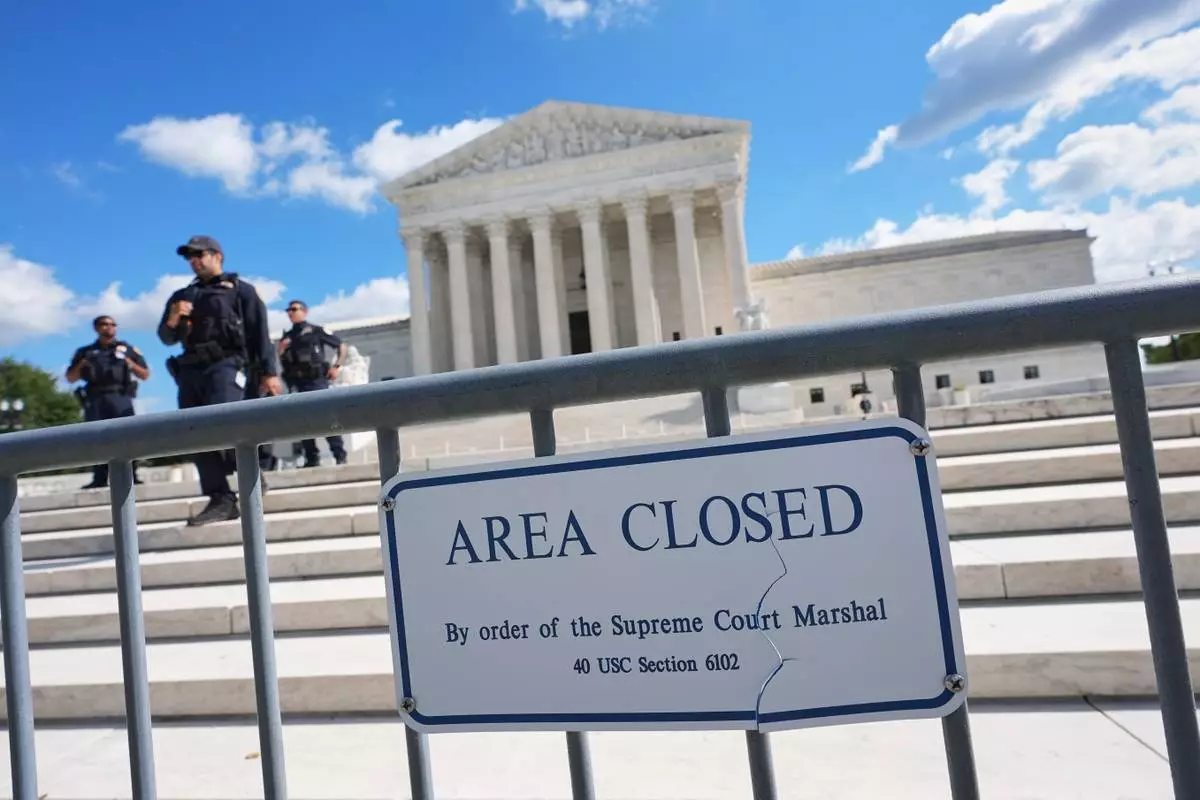
The Supreme Court is pictured, Monday, Oct. 5, 2026, in Washington. (AP Photo/Mariam Zuhaib)
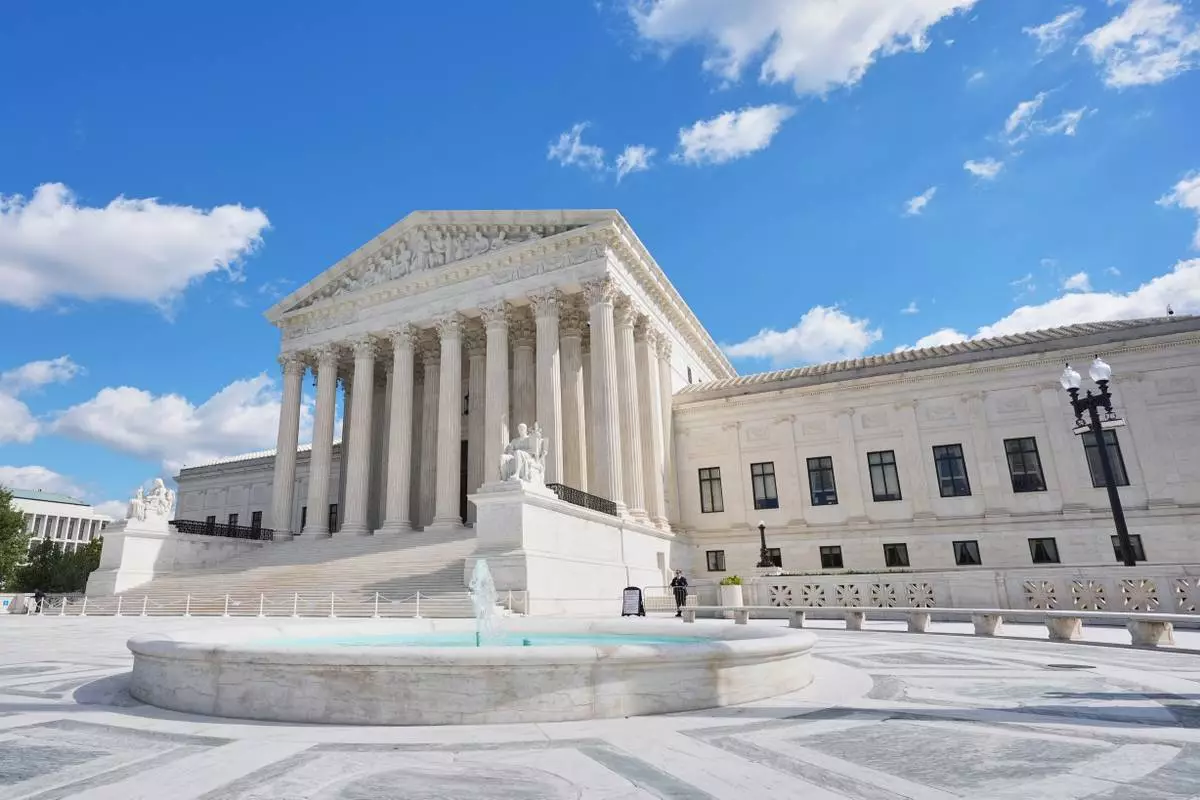
The Supreme Court is pictured Monday, Oct. 5, 2026, in Washington. (AP Photo/Mariam Zuhaib)
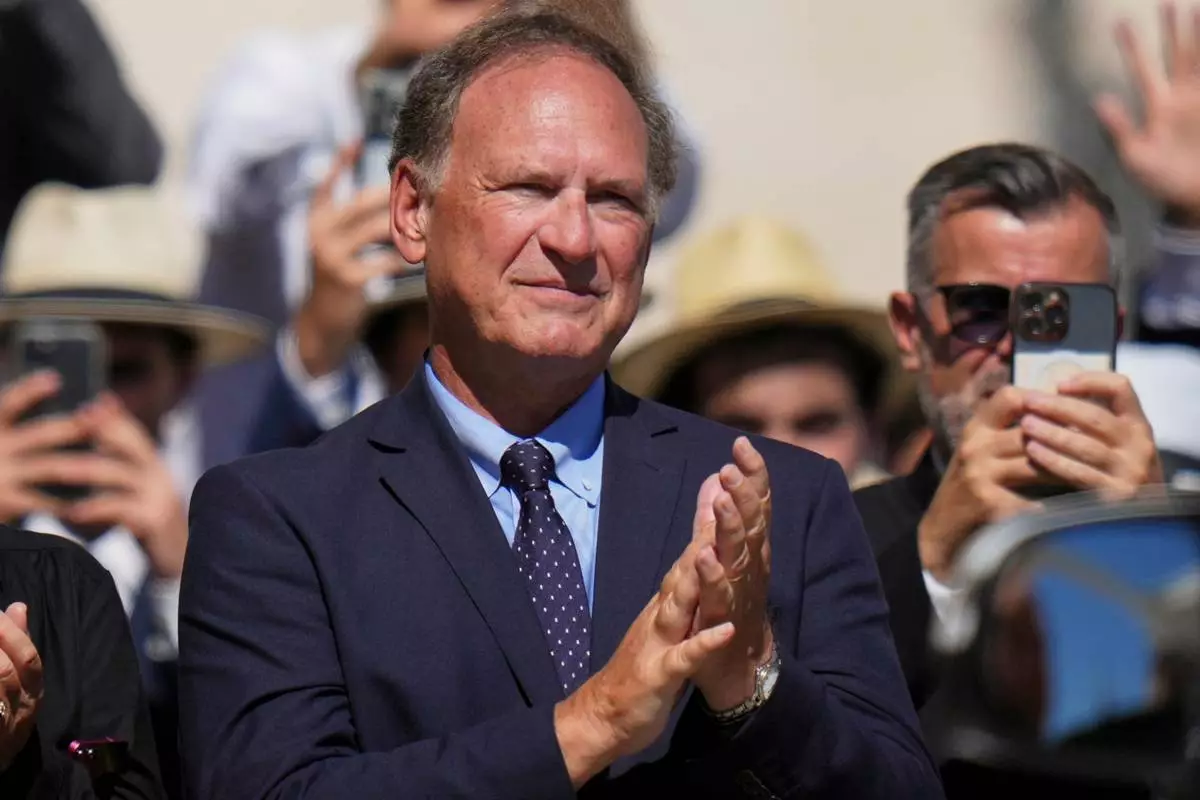
FILE - Supreme Court Justice Samuel Alito attends Pope Leo XIV's audience for operators of justice in St. Peter's Square at the Vatican, Sept. 20, 2025. (AP Photo/Alessandra Tarantino, File)