

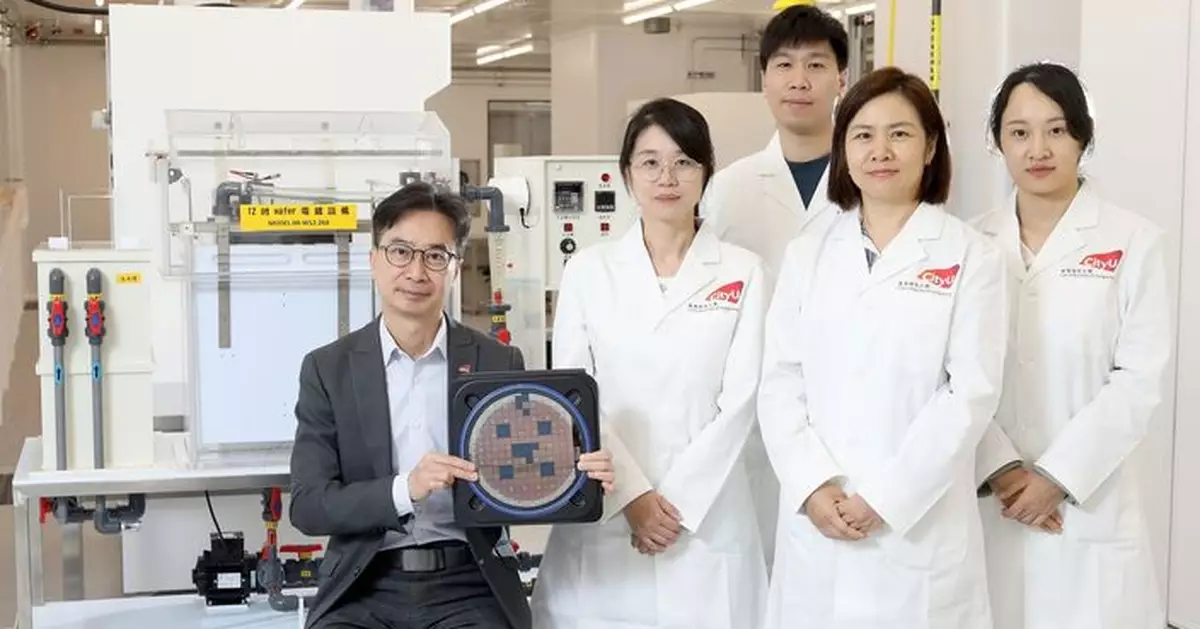
With the rapid rise of emerging technologies such as AI, high-performance computing (HPC) and 5G,demand for improved chip performance and reliability continues to grow. A research team from CityUniversity of Hong Kong (CityUHK) has been awarded funding under the “RAISe+ Scheme” toaddress the complex metallisation challenges in the packaging of 3D integrated circuit (3DIC)semiconductor chips.
This groundbreaking research leverages patented chemical additives in the copper electroplating process, ensuring chip performance by achieving more stable connections in stacked chips. The teamplans to build an automated intelligent manufacturing line by 2026.
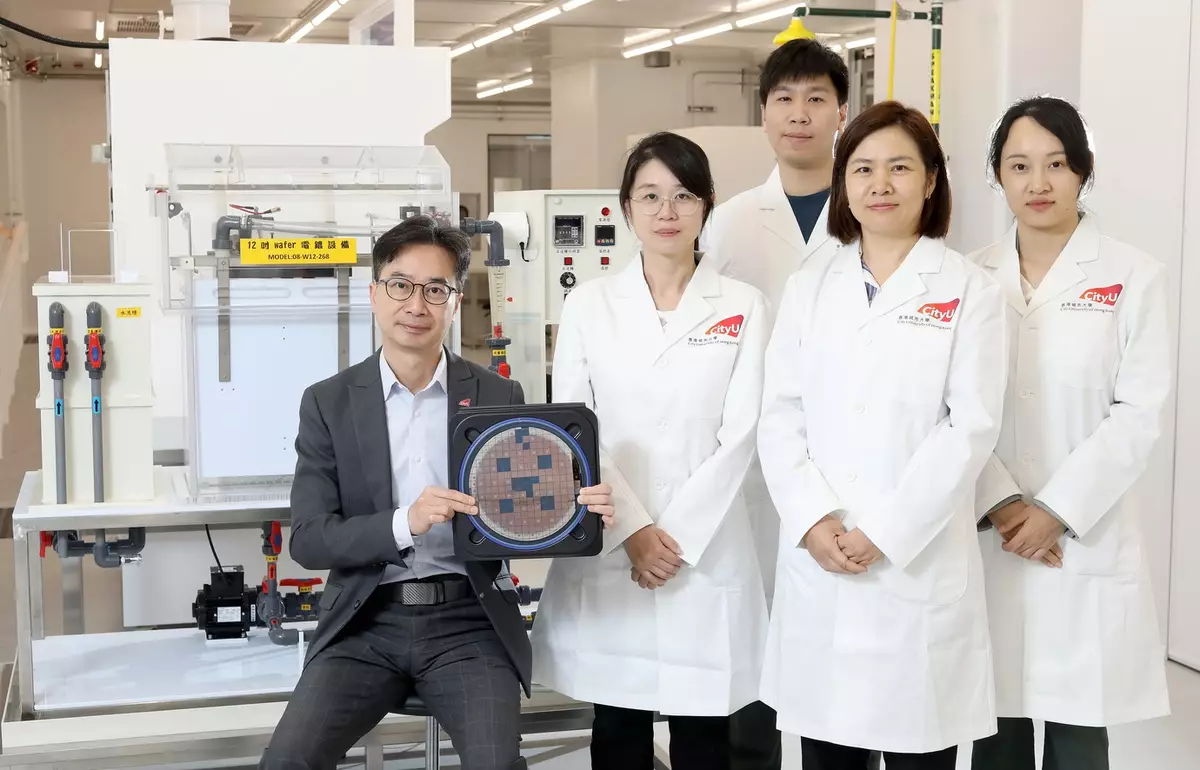
Caption: Led by Professor Tony Feng Shien-Ping from the Department of Systems Engineering at CityUHK, the research team developed a novel material to address the complex metallisation challenges in the packaging of 3D integrated circuit (3DIC) semiconductor chips. From right: Dr Mu Kaiyu, R&D Manager of Doctech, Ms Chang Yuhsueh, Research Assistant at CityUHK, Dr Yuen Muk-fung, R&D Manager, and Dr Huang Yu-Ting, CEO of Doctech. Photo credit: City University of Hong Kong
Led by Professor Tony Feng Shien-Ping, from the Department of Systems Engineering at CityUHK , the project is titled “Chemical Additive-Enabled Advancements in Electroplated Copper for Advanced Electronic Packaging and 3DIC Applications”. With the support of the “RAISe+ Scheme”, launched by the Government of the Hong Kong Special Administrative Region of the People’s Republic of China, the team seeks to accelerate the commercialisation of research outcomes,strengthen industrial applications, and solidify Hong Kong’s prominent position in the global advanced semiconductor supply chain.
Challenges in 3DIC semiconductor chip packaging
In the semiconductor industry, the number of transistors is a crucial indicator of enhanced computing power and performance. However, as the number of transistors increases, chip design encounters several challenges, including limitations in space, power consumption, heat dissipation and signal delays.
3DIC technology is regarded as a key approach to overcoming the limitations of traditional planar designs through vertical integration. This approach transforms the IC architecture from two dimensions to three, thereby enhancing performance, reducing power consumption and increasing the number of transistors per unit area.
The key components of 3DIC technology include Through Silicon Via (TSV), redistribution layer (RDL), and direct copper-to-copper bonding (Cu-Cu bonding), which are essential for facilitating signal communication and power distribution between layers. To continue scaling down, challenges such as high bonding temperatures, copper surface oxidation and limited electromigration lifespan remain significant obstacles.
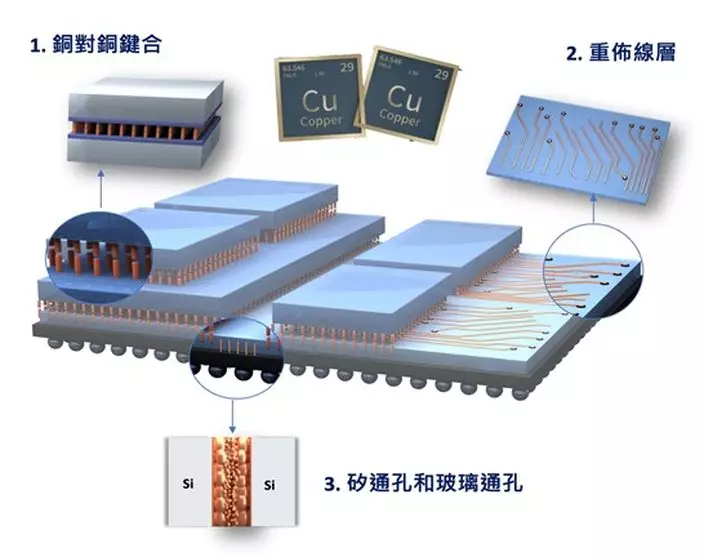
Caption: An illustration of 3DIC advanced packaging, showing key metal interconnect structures, including Cu-Cu bonding, RDL and TSV/TGV. The team aims to develop electroplating copper solutions to control material microstructures to address the metallisation challenges in 3DIC packaging. Photo credit: City University of Hong Kong
Four core innovations to enhance stability and efficiency
To address these challenges, the team aims to develop innovative packaging material solutions, including electroplating copper solutions that control material microstructures using patented chemical additives. This approach aims to enhance the performance and production efficiency of advanced 3DIC packaging.
The four technologies targeting the key issues of metal interconnection in 2.5D and 3DIC stacking are:
1. Metastable copper (MS-Cu): This enables Cu-Cu bonding at lower temperatures through nanograined Cu structures. This feature helps protect temperature-sensitive components, making it suitable for 3D stacking of such devices.
2. Dynamic covalent bond (DCB)-based coating material (DCB-coating): This coating provides temporary anti-oxidation protection for copper surfaces. It can be easily removed prior to Cu-Cu bonding to ensure clean, high-quality bonding interfaces.
3. Structural stable copper (SS-Cu): This technology improves resistance to surface corrosion and electromigration through composite Cu microstructures. Electromigration refers to the movement of atoms based on the flow of current through a material, which may cause a conductor to fail by forming voids. SS-Cu ensures the long-term reliability of high-density RDLs.
4. Nanoparticle with sulfur-bridge treatment (NP-S): This method enhances copper adhesion on glass substrates for Through-Glass Via (TGV) fabrication to achieve metallisation on glass substrates, paving the way for glass as a next-generation substrate for high-frequency device applications.
Over the next three years, the team aims to establish an automated intelligent production line and increase the capacity of existing additives and specialty chemicals to two tons per month. Professor Feng explained, “Our work introduces a new way to approach copper interconnection in 3DIC packaging. Instead of relying on high temperatures and conventional processes, we have developed materials and coatings that make bonding cleaner, faster and more reliable. This is not just an incremental improvement. It changes how sensitive devices can be stacked and protected, and it makes today’s breakthrough 3DIC technologies even more powerful for next-generation applications in advanced semiconductors.”
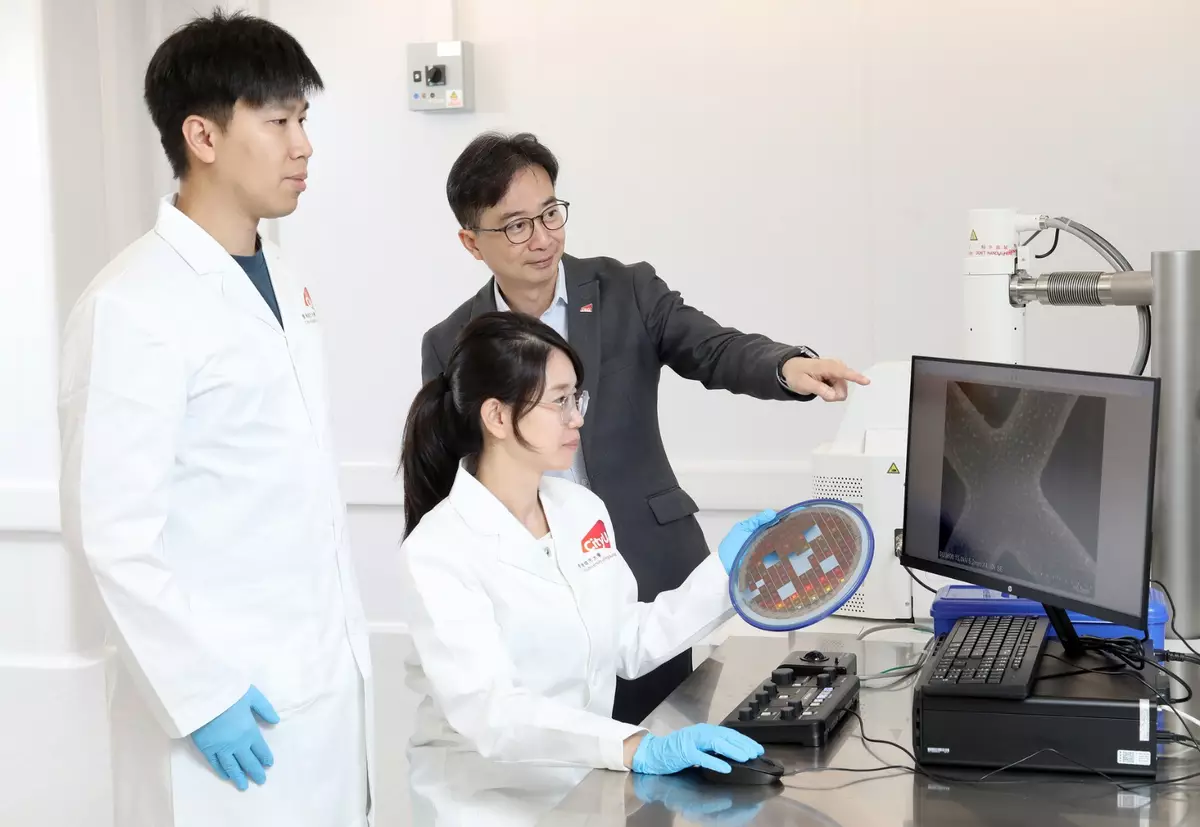
Caption: The project, led by Professor Tony Feng Shien-Ping (rear) from the Department of Systems Engineering at CityUHK has been awarded funding under the “RAISe+ Scheme”. Photo credit: City University of Hong Kong
Driving talent development, patents and industry impact
In addition to scientific innovation, the team plans to collaborate with local and international companies to expand applications in AI, telecommunications, automobiles and consumer electronics.
They aim to file from four to ten patents, ensuring that innovative solutions quickly translate into tangible contributions for society and the semiconductor industry.
“Our team has long been dedicated to research on advanced semiconductor packaging materials,”said Professor Feng. “Through this initiative, we aim to establish patents and production capacity and to nurture young research talent and deliver truly competitive solutions for both local and global markets.”
With the support of HK Tech 300, the innovation and entrepreneurship programme at CityUHK, the team established “Doctech HK Limited” and was awarded HK$1 million from HK Tech 300’s angel fund in 2023. It aims to become a supplier of next-generation electroplating chemicals and technologies for the semiconductor manufacturing and packaging industries, exemplifying how CityUHK’s research is being successfully translated into impactful commercial applications.