According to government statistics, approximately one in five pregnant women in Hong Kong has experienced a pregnancy loss. In recent years, an average of about 8,000 parents annually have endured this loss.
During an interview with Bastille Post, Ms. Ip Ka Man, Unit in Charge of the YWCA Family Wellness Centre (YYC), and Ms. Elaine Chan, Social Work Supervisor of the Grace Port - Caritas Miscarriage Support Service, shared their insights on how bereaved parents in Hong Kong find solace in what is often called "disenfranchised grief." Both emphasized that support is not just about offering comfort. It is about ensuring that the existence of their angel baby is seen and acknowledged, through rituals and commemorations.
Click to Gallery
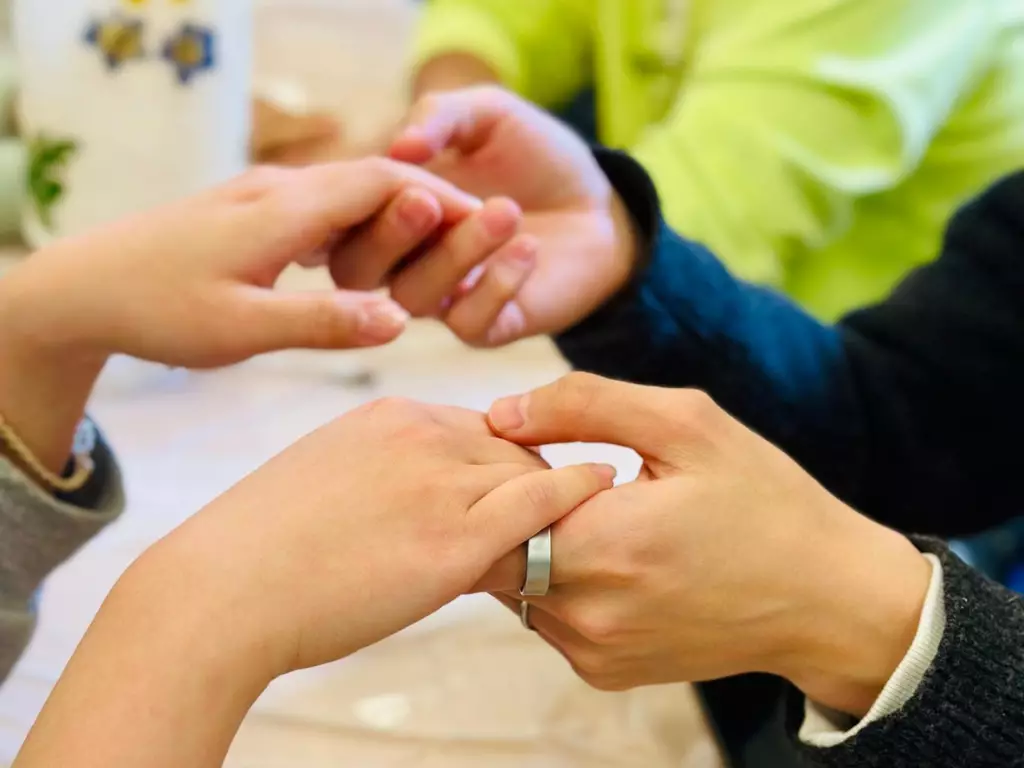
According to government statistics, approximately one in five pregnant women in Hong Kong has experienced a pregnancy loss. In recent years, an average of about 8,000 parents annually have endured this loss. Photo source: The Grace Port - Caritas Miscarriage Support Service
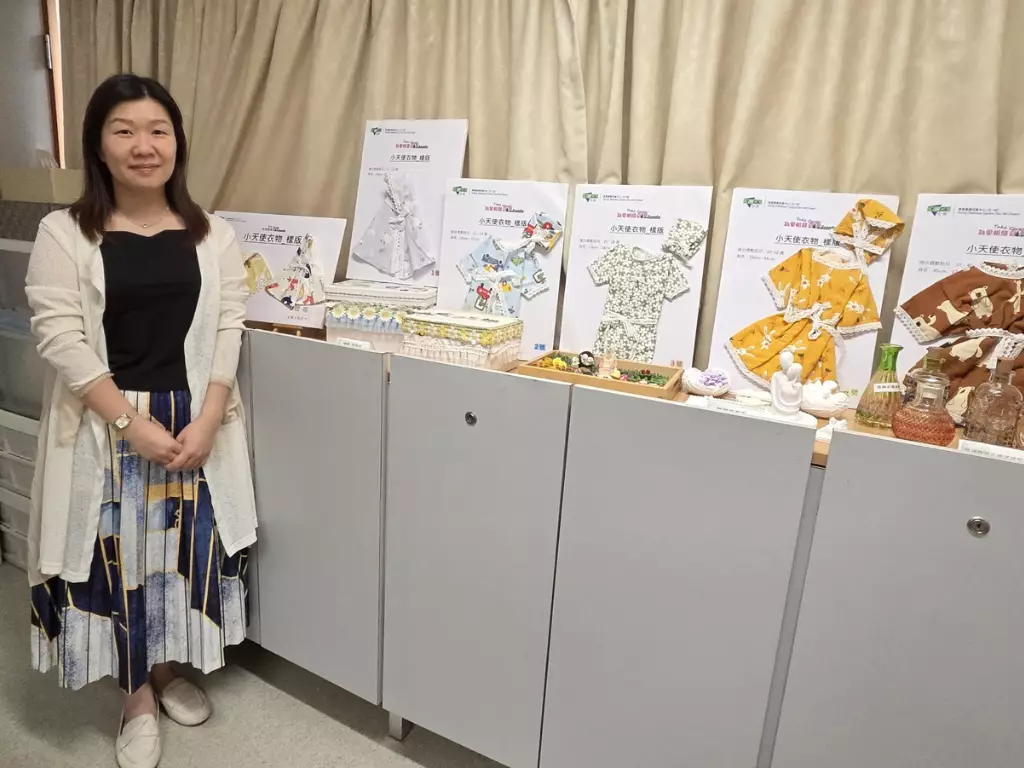
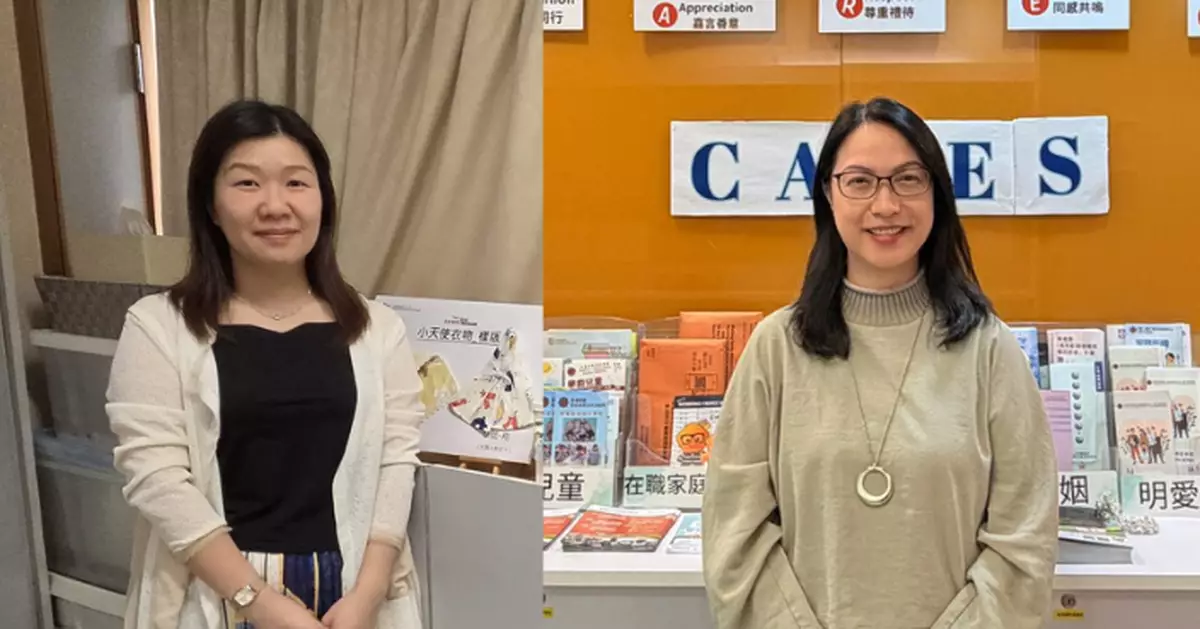
Ms. Ip Ka Man, Unit in Charge of the YWCA Family Wellness Centre (YYC), Photo source: YWCA
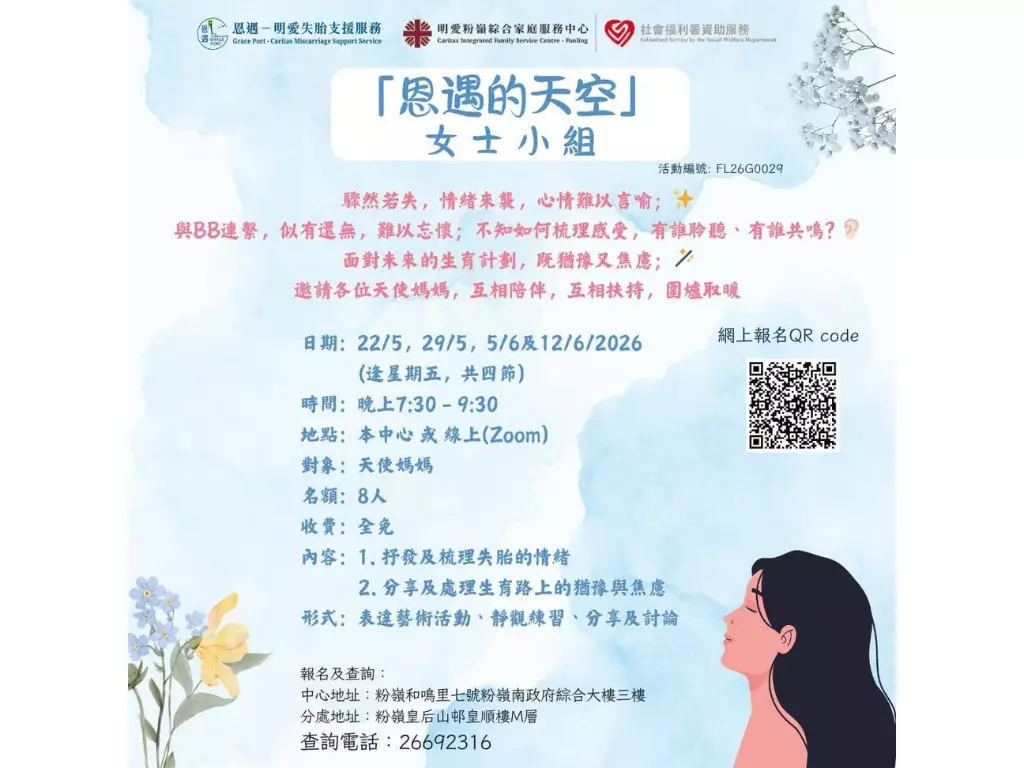
The counselling activities provided to bereaved mothers from May to June by the Grace Port - Caritas Miscarriage Support Service. Photo source: The Grace Port - Caritas Miscarriage Support Service
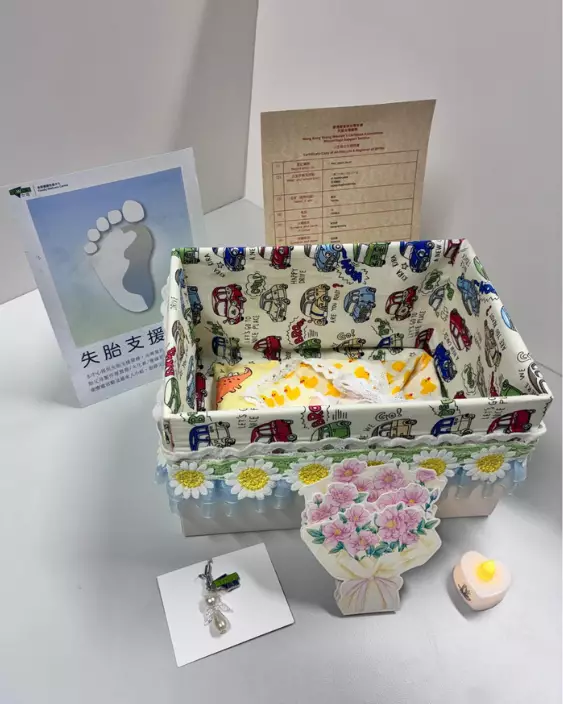
Bereaved parents can create their own "foot blessing box" to remember their lost babies. Photo source: YWCA
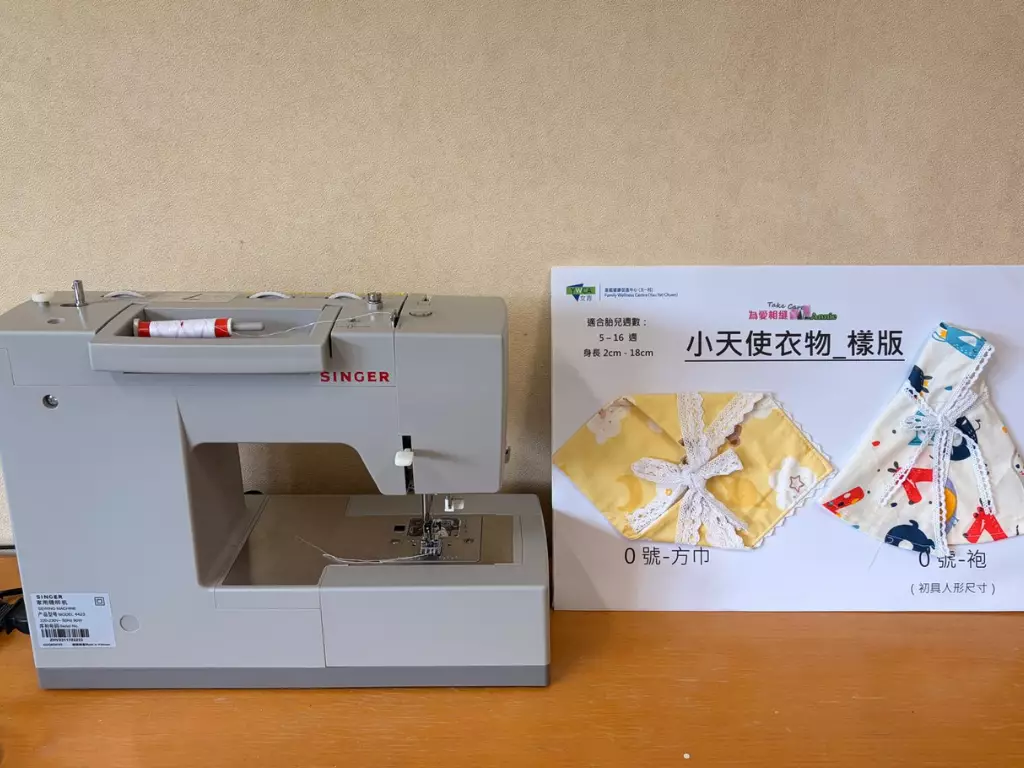
Ms. Ip stated that YWCA collaborates with parents of kindergarten and secondary school students through volunteer services, especially making clothes for lost babies. The completed clothes are sent to the eight maternity wards of Hong Kong's public hospitals for nurses to dress the angel infants, ensuring that they leave with dignity, grace, and warmth, and providing great emotional comfort to bereaved parents. Photo by Bastille Post
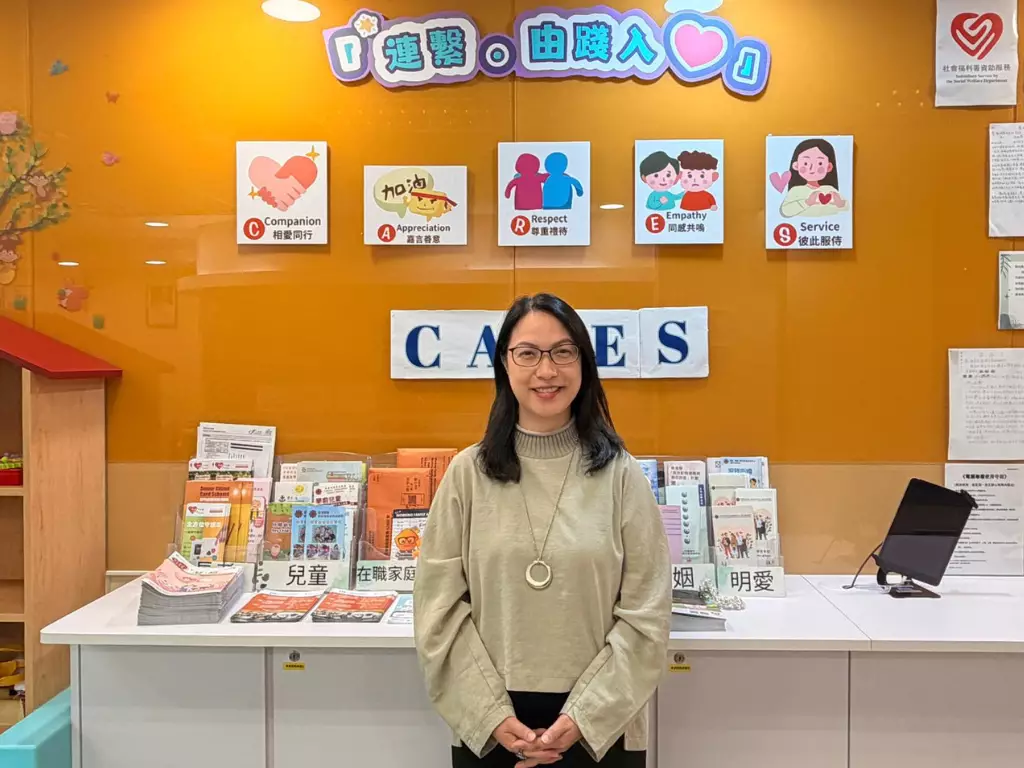
Ms. Elaine Chan, Social Work Supervisor of the Grace Port - Caritas Miscarriage Support Service, Photo by Bastille Post
According to government statistics, approximately one in five pregnant women in Hong Kong has experienced a pregnancy loss. In recent years, an average of about 8,000 parents annually have endured this loss. Photo source: The Grace Port - Caritas Miscarriage Support Service
Grief in Couples Differs: Intuitive vs. Instrumental
Ms. Ip Ka Man, Unit in Charge of the YWCA Family Wellness Centre (YYC), pointed out that the most common emotional struggle for bereaved parents is the mother's intense sense of self-blame. After a pregnancy loss, mothers often internalize the question: "What did I do wrong?" Another challenge is the tension that arises from differences in how couples express grief.
Ms. Ip explained that women tend to experience intuitive grief. They prefer to express emotions directly (e.g., crying) and actively seek help and companionship from others. Men, on the other hand, tend toward instrumental grief. They process emotions through actions, such as researching, organizing tasks, or distracting themselves with running or hiking. They may not cry in front of their partners or others.
Ms. Ip emphasized that men who lean toward instrumental grief are not necessarily less sad. Many fathers choose to suppress their grief and handle it alone, partly because they worry about burdening their wives. In the context of Chinese culture, expressing emotions is often seen as heavy and difficult. Because of these differences, wives may feel that "my husband doesn't seem to react", which can lead to anger or resentment between couples.
Ms. Ip Ka Man, Unit in Charge of the YWCA Family Wellness Centre (YYC), Photo source: YWCA
She described the grief of pregnancy loss as "disenfranchised grief", one that is not necessarily publicly acknowledged and does not receive sufficient social support. She pointed out that the general public tends to underestimate the severity of early pregnancy loss, with some believing that "the fetus is not fully formed" and therefore not a true loss. Such a perception leaves bereaved parents feeling that their pain is unseen.
Ms. Elaine Chan, Social Work Supervisor of the Grace Port - Caritas Miscarriage Support Service, cited a 2024 study by the Department of Social Work and Social Administration at the University of Hong Kong: 34% of bereaved parents experience moderate to severe depressive symptoms, while 54% experience complicated grief. She warned that if emotions are not properly managed, they may gradually evolve into depression-related symptoms, such as persistent unhappiness, poor appetite, poor sleep, and feelings of worthlessness. She also noted that some male participants in her support groups have admitted to having suicidal thoughts. To provide truly comprehensive supportive service, Ms. Chan goes beyond standard protocols. She incorporates each client's pregnancy history into her understanding and care, a practice she believes is essential to addressing their unique needs.
The counselling activities provided to bereaved mothers from May to June by the Grace Port - Caritas Miscarriage Support Service. Photo source: The Grace Port - Caritas Miscarriage Support Service
Power of Connection for Bereaved Parents
Ms. Chan explained that support from the Grace Port - Caritas Miscarriage Support Service can be divided into several aspects.
First, proactive outreach. Most people contact the service proactively through social media, WhatsApp, or Google searches, not through referrals. The ratio of proactive requests to referrals is approximately 9:1. Ms. Chan believes the hospital referral system is not ideal at present. Many bereaved parents were not existing users of any social welfare services before seeking help and were unfamiliar with organizations such as Integrated Family Service Centres.
Second, peer support and commemorative events. The Grace Port - Caritas Miscarriage Support Service organizes commemorative events and small group discussions (four to six people), providing couples with space to express their anxieties about "trying to conceive again."
Besides, an "Angel Box" delivery service is also provided, which contains a birth certificate, a greeting card, a baby gown, a bib, a baby blanket, and a small funeral box made from eco-friendly materials.
In the interview, Ms. Chan specifically highlighted the "Angel Baby Parents' Association" WhatsApp group, the first of its kind in Hong Kong, established by them. It offers a platform for parents who have healed but still miss their angel babies to connect. It also ensures they receive timely information about activities and counseling on special occasions such as Mother's Day, Father's Day, and anniversaries.
As for professional counseling and clinical support, Ms. Chan said the Grace Port - Caritas Miscarriage Support Service provides individual counseling, marriage counseling, psychological care, and sex therapy services to residents in eight Integrated Family Service Centers across Hong Kong Island, Kowloon, and the New Territories. For service recipients outside these areas, the staff would assess whether the person is in immediate crisis. If not, it provides a one-time detailed consultation, followed by a referral to a suitable institution, along with information on pregnancy loss support or corresponding Integrated Family Service Center options.
Bereaved parents can create their own "foot blessing box" to remember their lost babies. Photo source: YWCA
'Ritual for the Bereaved Parents Is Important'
Ms. Ip noted that the YWCA's pregnancy loss support service operates on three levels: individual, group as well as community support and life education.
At the individual level, the service provides support to couples who have lost a baby. This includes the option for parents to create their own "foot blessing box." YWCA also provides personalized birth certificates, clothing for lost babies, and art therapy.
In Ms. Ip's view, ritual is very important. The foot blessing box, made by the parents themselves, embodies remembrance and cherishing, while the personalized birth certificate is equally important.
"This birth certificate helps parents confirm their identity," she said. "They no longer question, 'Am I really a mom and dad?' It also addresses the common issue of 'not being seen' after a pregnancy loss." The certificate acknowledges the existence of the angel baby, rather than leaving only the emptiness of loss.
Ms. Ip explained that the ritual of creating the foot blessing box allows parents to seemingly "reunite" with their angel baby, helping them reorganize and re-establish their relationship. Whether parents ultimately choose to bury the box or place it in a corner of their home as a keepsake, the memory can be sweet.
Ms. Ip stated that YWCA collaborates with parents of kindergarten and secondary school students through volunteer services, especially making clothes for lost babies. The completed clothes are sent to the eight maternity wards of Hong Kong's public hospitals for nurses to dress the angel infants, ensuring that they leave with dignity, grace, and warmth, and providing great emotional comfort to bereaved parents. Photo by Bastille Post
At the group level, monthly gatherings for those who have experienced the same loss will be held, along with meetings and online lectures on special occasions such as International Memorial Day for Pregnancy Loss or Mother's Day. These allow participants to share their experiences and realize: "I'm not alone." Through mutual inspiration, they rediscover their own ways of loving and commemorating their lost babies.
In terms of community support and life education, Ms. Ip stated that YWCA collaborates with parents of kindergarten and secondary school students through volunteer services, especially making clothes for lost babies. The completed clothes are sent to the eight maternity wards of Hong Kong's public hospitals for nurses to dress the angel infants, ensuring that they leave with dignity, grace, and warmth, and providing great emotional comfort to bereaved parents. Ms. Ip also noted that some bereaved parents who wish to support other families will attend lectures or give interviews. Those who are not comfortable sharing publicly may take time to accompany parents in urgent need of support to make keepsakes.
Society's Unspoken Taboo: Discussing Death
When asked about the secondary trauma often faced by bereaved parents in Hong Kong within the context of Chinese culture, Ms. Ip observed that Hong Kong society is averse to discussing death and expressing emotions, making it even harder for bereaved parents to receive support during their most vulnerable time. Some well-intentioned interactions can trap them in a cycle of denial: urging them to "get better quickly," "make a decision quickly," or "return to normal quickly."
Ms. Ip specifically addressed the common phrase: "You're still young. You have a chance to have another child." While often well-intentioned, this does not address the immediate needs of bereaved parents. Prioritizing "future possibility" over "current loss" diminishes their grief and can even be seen as inappropriate.
Ms. Chan added that Chinese society tends to report good news and discourage discussing pain. If a couple has lost a child, it may be considered unlucky by some elders. She noted that elders and husbands might advise wives not to keep the baby's belongings because "seeing them will be heartbreaking" or considered unlucky. The underlying logic is: "It will trigger painful memories, so not mentioning it will make it not happen." She stated that such an approach often forces the grieving person to remain silent.
Ms. Elaine Chan, Social Work Supervisor of the Grace Port - Caritas Miscarriage Support Service, Photo by Bastille Post
Bereaved Parents Need More Than Sympathy
Regarding how to improve support for bereaved parents in Hong Kong, Ms. Chan emphasized that this is not a single-point service. It requires understanding from the social welfare sector, the medical sector, and even the funeral industry, so they can better refer or provide information. In her view, "information delivery" is not just about brochures. It also includes the attitude and communication style these industries display when dealing with bereaved parents, to avoid causing secondary harm.
Ms. Ip believes community support for bereaved parents has improved significantly compared to the past. However, information remains fragmented. She suggested that some services, such as funeral or hospital packages, would ideally if they become more "one-stop."
On training for midwives, Ms. Ip noted that midwifery courses have reportedly incorporated relevant teaching about supporting bereaved parents, but gaps remain in implementation and hospital culture. Some bereaved parents speak positively about midwifery care in certain hospitals. Nevertheless, she stated that some doctors' statements about "when you can have another child", based purely on medical and physiological perspectives, can be offensive to grieving mothers.
Ms. Ip also mentioned that hospitals mostly distribute leaflets, leaving bereaved parents to find community resources and supportive services on their own. But this, she said, is no substitute for a formal referral system. She hopes hospitals and community support services can establish a more formal connection, as well as receive government recognition and support, with more resources invested in bereaved parent support services.