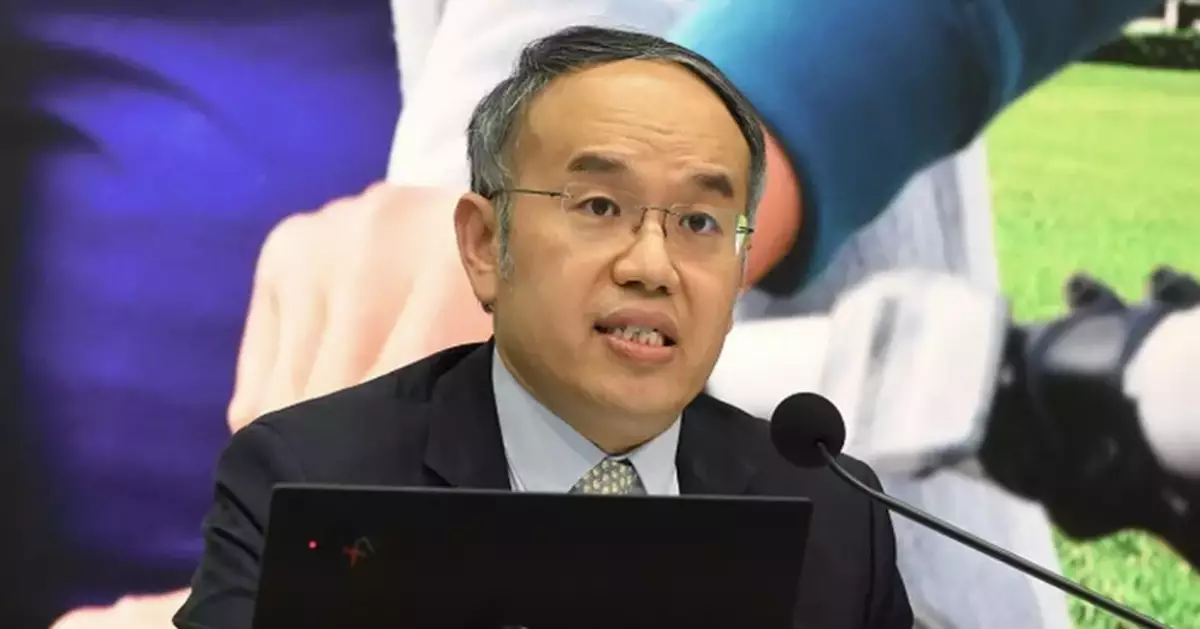
Speech by SFST at Bloomberg's Greater Bay Area FinTech Talent Initiative Summit
Following is the speech by the Secretary for Financial Services and the Treasury, Mr Christopher Hui, at Bloomberg's Greater Bay Area (GBA) FinTech Talent Initiative Summit today (November 26):
Bing (Head of Asia Pacific, Bloomberg, Mr Bing Li), Howard (Deputy Chief Executive of the Hong Kong Monetary Authority (HKMA), Mr Howard Lee), distinguished guests, ladies and gentlemen, and fellow colleagues in the fintech sectors,
Good afternoon. It is a great honour and pleasure to join you today at the GBA FinTech Talent Initiative Summit, organised by Bloomberg. I would like to extend my sincere thanks to Bloomberg for your continued commitment to fostering dialogue and collaboration in the fintech space. Our co-operation with Bloomberg has been exemplary, extending across various initiatives that strengthen Hong Kong's position as a global financial centre. For example, we recently marked the first anniversary of the Hong Kong Family Office Nexus - a strategic partnership between my bureau and Bloomberg. This collaboration integrates Bloomberg's global resources and technological expertise to provide a digital knowledge hub, professional insights, and exchange platforms for family offices. Such partnerships underscore our shared dedication to innovation and ecosystem building.
On today's summit, it is particularly fitting that it places a special emphasis on artificial intelligence (AI) and our synergies with Shenzhen. These themes align closely with our shared vision of building a dynamic, innovative, and interconnected fintech ecosystem. I also wish to acknowledge the presence of esteemed speakers and participants, including representatives from our regulator, leading financial institutions, and technology firms. Your insights and expertise will undoubtedly enrich our discussions on empowering the GBA (Guangdong-Hong Kong-Macao Greater Bay Area) for an AI-driven future.
Hong Kong has long been recognised as a global financial centre, underpinned by a robust regulatory framework, free flow of capital, and a deep pool of talent. In recent years, we have redoubled our efforts to promote fintech development, recognising its pivotal role in enhancing the competitiveness of our financial services sector and driving economic growth. Our multipronged approach encompasses upgrading financial infrastructure, nurturing a vibrant ecosystem, cultivating talent, and strengthening cross-boundary co-operation - particularly within the GBA.
The fintech landscape in Hong Kong is thriving. Today, we host over 1 200 fintech companies, including eight digital banks, four virtual insurers, and 11 licensed digital asset trading platforms. This ecosystem is not only diverse but also innovative, attracting entrepreneurs, investors, and professionals from around the world. To further accelerate this momentum, the Government issued a policy statement in October last year on the responsible application of AI in the financial market. This statement underscores our commitment to an open-minded approach, where we closely monitor market developments, draw on international best practices, and promote the ethical use of AI to foster new quality productive forces in finance.
Talent is the cornerstone of any successful innovation hub, and this is especially true for fintech. The GBA FinTech Talent Initiative Summit provides an invaluable platform to address this critical element. In Hong Kong, we have implemented a series of targeted measures to nurture and attract fintech talent. For instance, in October 2023, my bureau launched the GBA FinTech Two-way Internship Scheme for Post-secondary Students. This scheme subsidises students from the Mainland and Hong Kong to undertake short-term internships in fintech companies, enhancing talent exchange and expanding our talent pool. In April this year, we had provided around 50 positions in our summer programme, with over 100 students participating across four rounds to date.
Complementing this, in September 2022, we introduced the Pilot Scheme on Training Subsidy for Fintech Practitioners, which reimburses training costs for those attaining professional qualifications. As of October this year, around 730 practitioners have enrolled in relevant courses, equipping them with the skills needed to thrive in this rapidly evolving field.
Our focus on AI talent is equally robust. In August last year, the HKMA and Cyberport launched the Generative AI Sandbox, providing banks with a risk-managed environment to test innovative AI use cases. The first cohort, announced in December last year, explored applications in risk management, anti-fraud measures, and customer experience. This was followed by a second cohort in April this year, selecting 27 use cases from 20 banks and 14 technology partners. These initiatives not only build technical capabilities but also ensure that our workforce is prepared for the responsible deployment of AI technologies.
Turning to cross-boundary collaboration, which is central to the GBA's success, Hong Kong is actively deepening ties with our Mainland counterparts, particularly Shenzhen. Just this month, the FSTB (Financial Services and the Treasury Bureau) and the Shenzhen Municipal Financial Regulatory Bureau jointly promulgated the Action Plan for Jointly Building Hong Kong-Shenzhen Global Fintech Hub (2025-2027). This plan leverages Hong Kong's strengths in fintech innovation and Shenzhen's prowess in industrial finance, covering key areas such as digital finance, techfin, green finance, inclusive finance, and pension finance. It aims to establish a world-class fintech centre through enhanced co-operation.
These efforts are part of a broader strategy to integrate fintech into the GBA's economic fabric. Furthermore, in June this year, the People's Bank of China and the HKMA launched Payment Connect, linking the Mainland's Internet Banking Payment System with Hong Kong's Faster Payment System (FPS). This initiative enables secure, real-time cross-boundary remittances using just mobile and an account number. By July this year, it had processed over 700 000 transactions worth RMB4 billion. Meanwhile, our FPS has seen remarkable growth, with 18.31 million registrations and an average daily turnover of 2.17 million transactions worth HK$16.9 billion as of October 2025.
Also, our commitment extends to green and sustainable fintech. In June last year, the Government launched the Green and Sustainable Fintech Proof-of-Concept Funding Support Scheme, approving 60 projects to date. This initiative aims to position Hong Kong as a green fintech hub by funding solutions with potentials to be commercialised.
Looking ahead, the Government will continue to provide an enabling environment for fintech to flourish. We will work closely with regulators, industry players, and our GBA partners - including valued collaborators like Bloomberg - to address challenges and seize opportunities, particularly in AI-driven innovations. Events like this summit are crucial for exchanging ideas and forging partnerships that will shape the future of finance in the region.
In closing, I am confident that the discussions today - from the fireside chat with industry leaders to the panel on empowering the GBA for an AI-driven future - will inspire actionable insights. Let us harness the collective wisdom here to build a more innovative, inclusive, and sustainable fintech ecosystem.
Thank you once again to Bloomberg and all participants. I wish the summit every success.
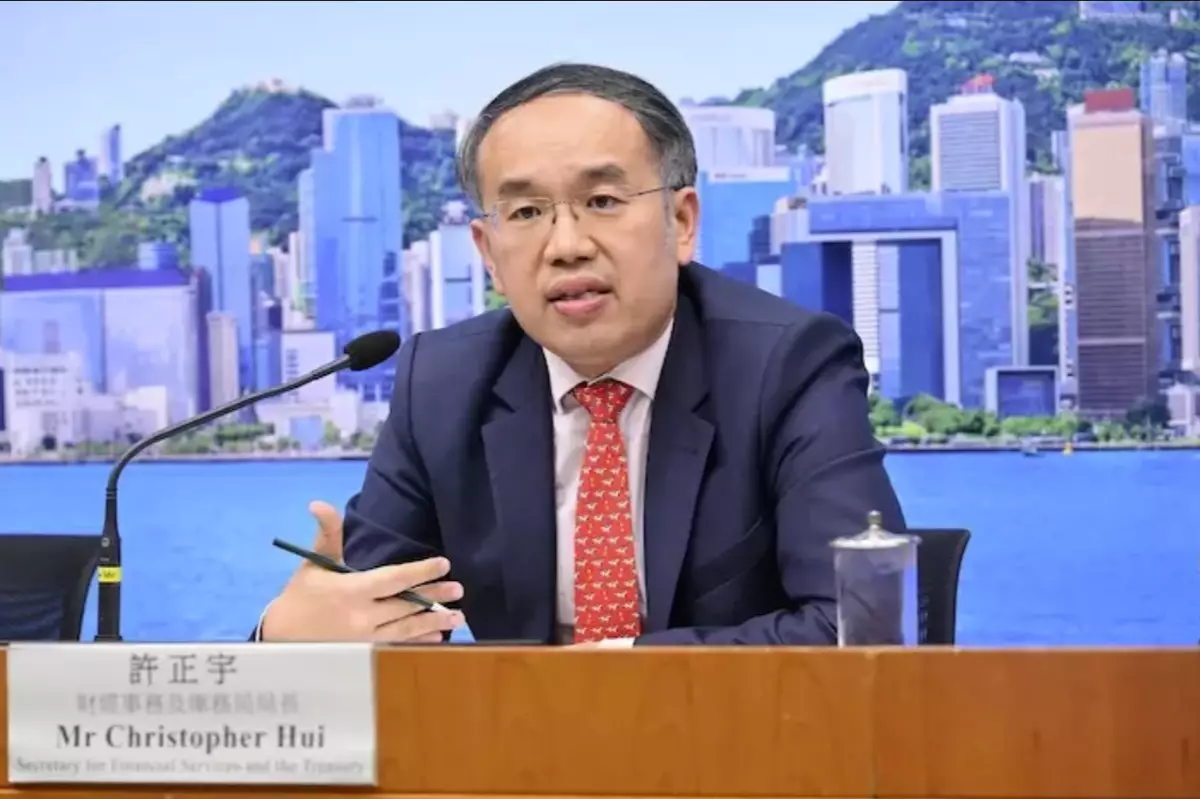
Mr Christopher Hui, Photo source: FB of Financial Services and the Treasury Bureau