China's space agency has released an action plan to promote high-quality development and high-level security in commercial aerospace over the next two years.
The document, released by China National Space Administration (CNSA) on Tuesday, specifically provides for the development of an efficiently coordinated commercial aerospace industry ecosystem by 2027, featuring secure and orderly scientific-technological research and production, a remarkably enlarged industrial scale, remarkably enhanced vigor and vitality of innovation and creativity, realization of coordinated capacity building and efficient utilization of resources, and a remarkably upgraded industrial governance capacity, to basically realize high-quality development of the commercial aerospace undertaking.
To achieve these goals, the action plan sets out a package of 22 key measures in five aspects, including enhancing the driving forces for innovation and creativity, efficiently utilizing capacities and resources, promoting the development and expansion of industries, doing a good job of industry management service provision, and strengthening security supervision over the entire chain.
The agency will open civil aerospace research plans and basic research projects to commercial players, and encourage them to actively participate in civil aerospace projects and in research and development under national-level major projects.
In the action plan, the agency pledges to expand commercial access to its national network of civilian tracking, telemetry and control (TT and C) stations, data-receiving sites, calibration ranges and validation fields, as well as to large test assets such as rocket-engine test stands and space-environment simulation facilities, under the premise of guaranteeing security.
The document also encourages commercial entities to expand in corresponding links in the aerospace industry chain, such as the manufacturing of satellites and rockets, application services, and measurement and control operation, so as to promote high-quality development of the aerospace industry.
Priority support will be given to commercial firms in exploring new technologies, new products, and new application scenarios, the agency said.
Notably, the action plan calls for efforts to cultivate patient capital. The CNSA said it will improve the investment and financing system and mechanism for the commercial space sector, and establish a national development fund. It also urges local governments, financial institutions and private capital to jointly set up platforms to guide long-term, strategic and value investment.

China unveils plan to boost commercial space development
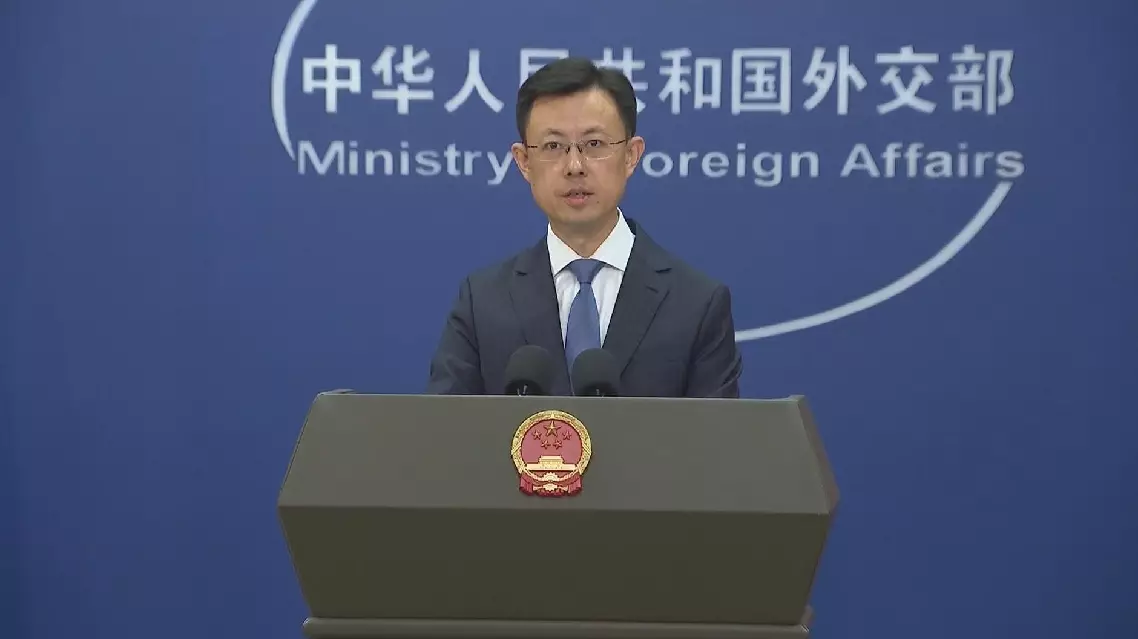
A new Type 055 guided-missile destroyer, the Dongguan (Hull 109), recently completed its first maritime training at the waters of the East China Sea after commissioning to the Chinese People's Liberation Army (PLA) Navy.
During this combat-oriented training exercise, the Dongguan not only completed single-vessel training subjects such as navigating through narrow waterways and damage control, but also coordinated with other warships in the formation to conduct joint operation drills, including maritime assault missions, at-sea replenishment, and multi-domain coordinated strikes.
With the improved performance of weaponry and equipment, the software and hardware of the Dongguan are vastly different from those of previous vessels. Sailors onboard the warship said that it's much more well-equipped and responsive.
"The Dongguan can now observe farther and hear more clearly. From detecting the target to launching strikes, it may take only a few seconds. However, seeing farther and wider also brings exponentially more interference factors. This requires us to practice and observe more frequently to accumulate experience, so as to enable rapid identification and efficient response," said Guo Tian, a lieutenant onboard the Gongguan.
In addition to diversified subjects with a clear combat focus, the Dongguan also faced challenges posed by harsh weather conditions during the training exercise. The crew remained at their posts throughout the process, demonstrating exceptional skills in maneuvering the vessel.
"To accelerate the combat readiness of the vessel, we participated fully in the testing and trial navigation missions from the very beginning of taking over the ship. The very first power trial navigation was independently completed by our own crew. Throughout this process, we not only learned how to operate the ship, but also understood the working principles behind its operation. This has laid a solid foundation for our combat-oriented training and equipment maintenance," said Zhang Chen, a helmsman onboard the Dongguan.
"During this maritime training exercise, we adhered to a problem-oriented approach. By creating complex settings and simulating real combat scenarios, we thoroughly tested the quality and effectiveness of the integration of trial and training during the equipment handover period, while systematically validating the combat effectiveness of the new equipment. Next, we will further optimize deployment, consolidate our foundation, strengthen coordination and cooperation, actively integrate into formation and group training, and continuously enhance the vessel’s comprehensive combat capabilities," said Shen Kai, commanding officer onboard the Dongguan.
The Type 055 destroyer is the fourth-generation destroyer independently developed and built by China. As one of the Chinese PLA Navy's most advanced surface warships, it carries advanced radar, universal vertical launch systems, and comprehensive radio frequency system, serving as the core the naval fleets for far-sea missions.
The Dongguan was commissioned to the PLA Navy together with another Type 055, the Anqing (Hull 110). With these additions, the number of China's Type 055 10,000-ton-class destroyers has risen to 10 since the first Type 055 destroyer Nanchang (Hull 101) was commissioned in 2020.
China's newly commissioned Type 055 destroyer Donggaun completes 1st maritime training