Skip to Content Facebook Feature Image

FACT FOCUS: It is not illegal for voters to show ID in New York and California

News

FACT FOCUS: It is not illegal for voters to show ID in New York and California
News

News

FACT FOCUS: It is not illegal for voters to show ID in New York and California

2025-11-27 04:21 Last Updated At:04:30

As the leadup to the 2026 midterm elections begins, social media users — among them billionaire X owner Elon Musk, who briefly served as a top advisor to President Donald Trump — are using false information to advocate for more voter ID laws in the U.S.

“America should not have worse voter ID requirements than every democratic country on Earth,” Musk wrote in a recent X post, which had been liked and shared approximately 310,000 times as of Wednesday. “California and New York actually banned use of ID to vote! It is illegal to show your ID in those states. The only reason to do this is fraud.”

But voter registration requirements and guidance for poll workers paint a different picture.

Here's a closer look at the facts.

CLAIM: It is illegal for voters to show ID when casting a ballot in New York and California.

THE FACTS: This is false. Voters in both states need to show ID when it is necessary to complete their registration, but it is not required otherwise. Poll worker guidance published by New York and California instructs workers not to ask voters for ID unless records indicate that it is needed.

“There is nothing unlawful about that voter presenting a form of photo identification at a poll site in addition to fulfilling the signature verification requirement outlined in the state's consitution,” Kathleen McGrath, a spokesperson for the New York State Board of Elections, said of voters whose identity has already been verified. “In fact, in some counties, voters are allowed to scan their license in an effort to expedite the looking up of their voter record on the e-pollbook, but this cannot be legally required.”

The California secretary of state's office similarly said that “California law does not prohibit a voter from voluntarily presenting their identification.”

In New York, voters provide their Department of Motor Vehicles number or the last four digits of their social security number when registering to vote. They may also use another form of valid photo ID or a government document that shows their name and address, such as a utility bill or a bank statement. Voters will be asked for ID at the polls if their identify cannot be verified before Election Day, according to the state's registration form.

Recent guidance for New York poll workers states: “Do not ask the voter for ID unless ‘ID required’ is next to their name in their voter records.”

California has similar identification processes. If voters do not provide a driver's license number, a state ID number or the last four digits of their social security number when registering, another form of ID must be provided if they are voting for the first time in a federal election and registered by mail or online, according to the secretary of state's office.

“Poll workers must not ask a voter to provide their identification unless the voter list clearly states identification is required,” reads recent guidance for California poll workers released by the state.

County election officials automatically mail ballots to all active registered voters. In the 2024 general election, 80.76% of voters voted by mail. Some counties in California do not offer in-person voting at all.

Musk's post also includes an image that lists 114 countries under the title, “Full or partially democratic countries that require ID to register to vote or cast a ballot on election day in all districts.” All of them have a green checkmark to their left except for the U.S., which has a red “x.”

Although many countries listed in the image require ID for one or both of these actions, there are at least two exceptions — New Zealand and Australia. In New Zealand, voters can register without ID by filling out a signed enrollment form and do not need to present ID at the polls. Australian voters do not need ID to cast a ballot and may have someone who is already registered confirm their identity when submitting an enrollment form.

Representatives for Musk did not respond to a request for comment.

Find AP Fact Checks here: https://apnews.com/APFactCheck.
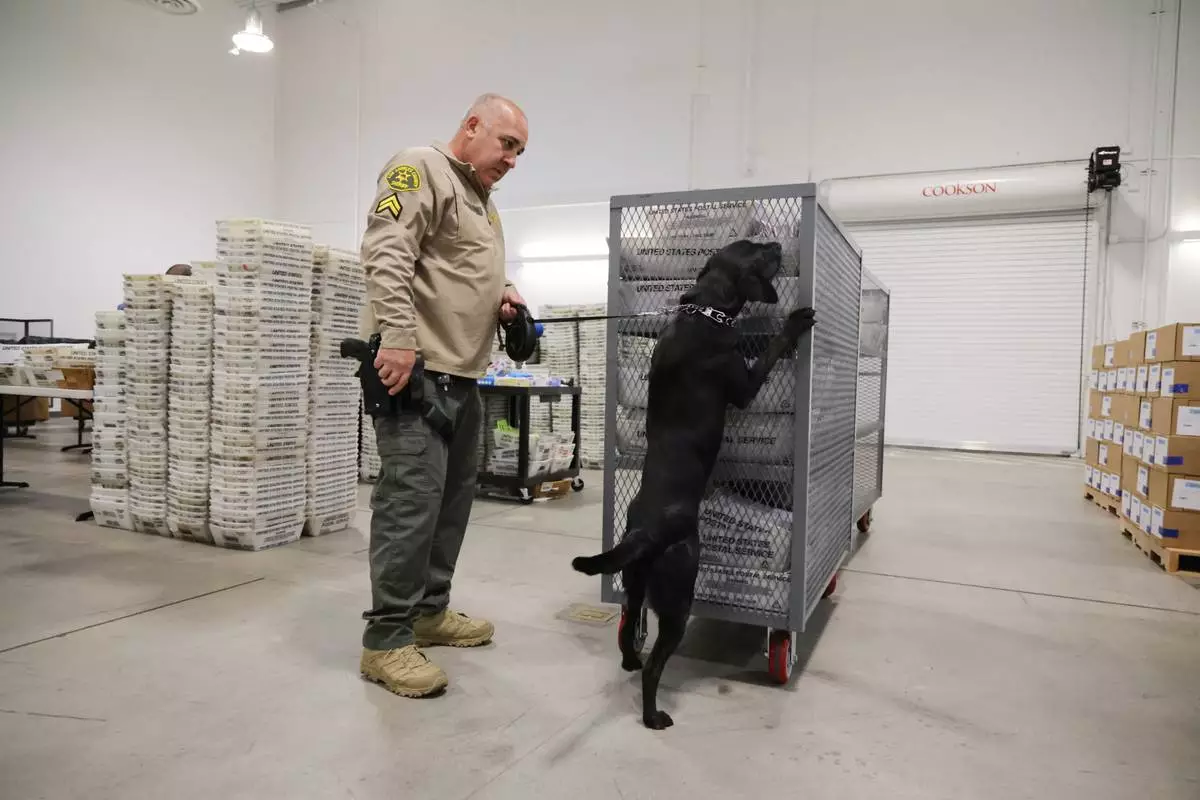
FILE - A sheriff's deputy inspects ballots with the aid of a dog at the L.A. County Ballot Processing Center Nov. 4, 2025, in City of Industry, Calif. (AP Photo/Ethan Swope, File)
FILE - A sheriff's deputy inspects ballots with the aid of a dog at the L.A. County Ballot Processing Center Nov. 4, 2025, in City of Industry, Calif. (AP Photo/Ethan Swope, File)

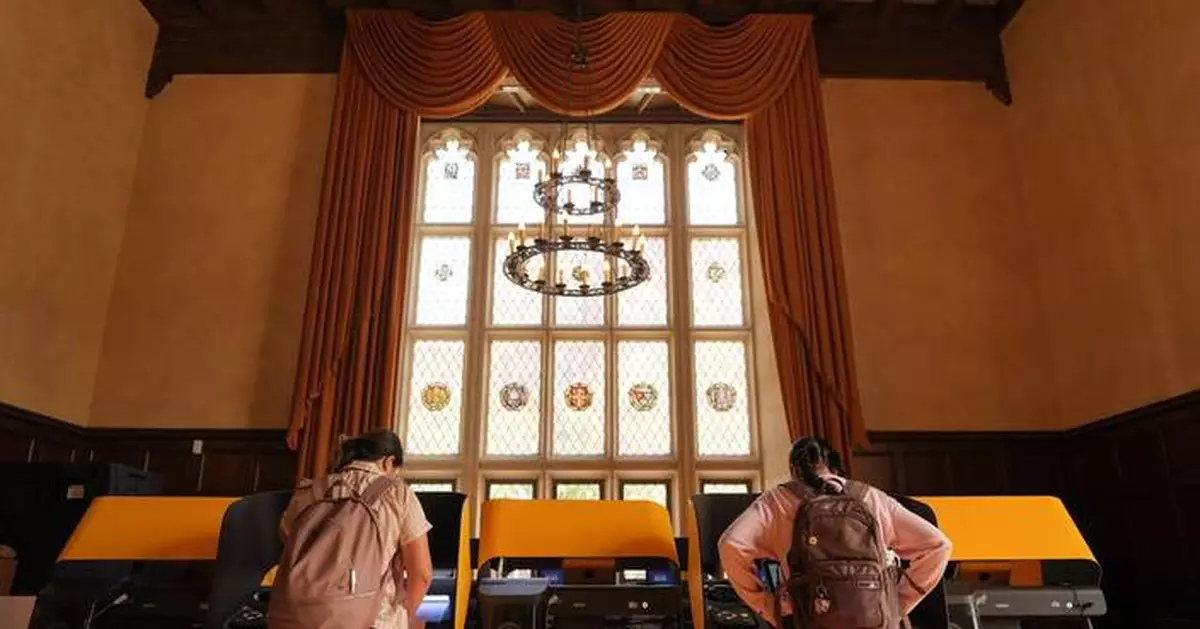
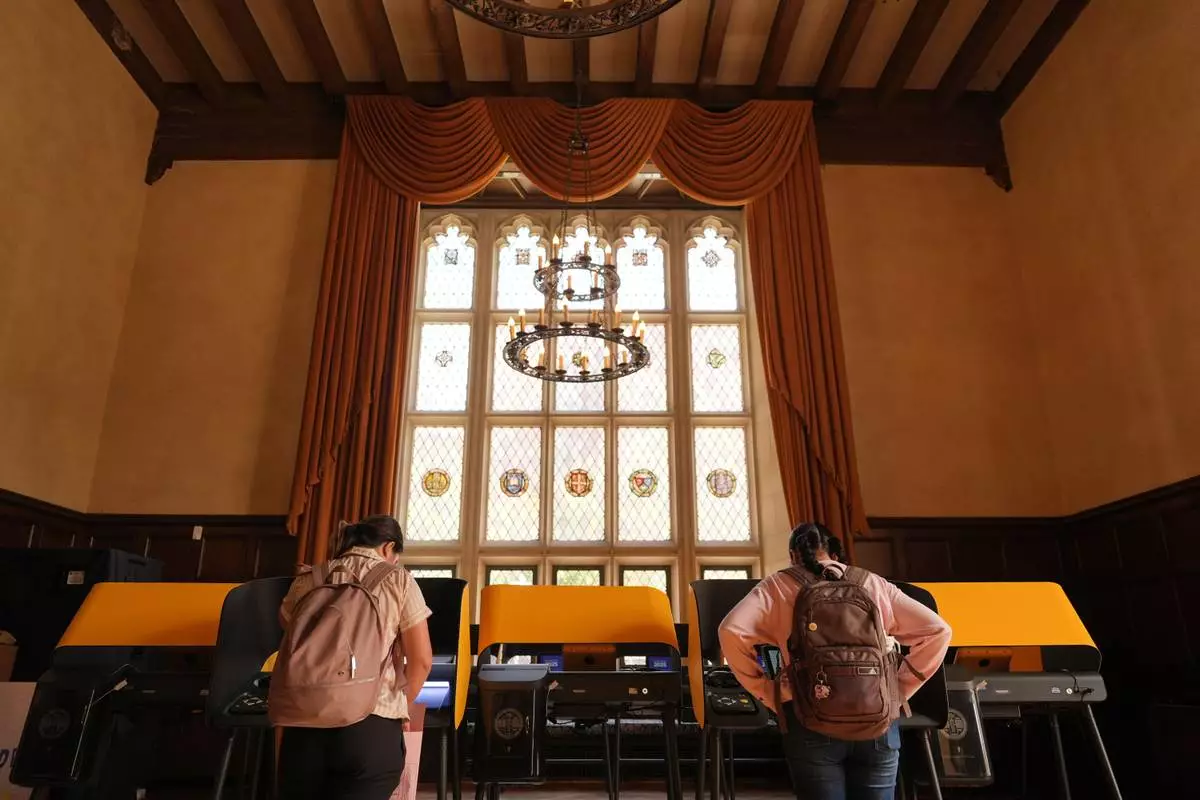
FILE - Voters cast their ballots on the UCLA campus Nov. 4, 2025, in Los Angeles. (AP Photo/Jae C. Hong, File)

FILE - Voters cast their ballots on the UCLA campus Nov. 4, 2025, in Los Angeles. (AP Photo/Jae C. Hong, File)
SEOUL, South Korea (AP) — South Korea’s Constitutional Court on Thursday formally removed the country’s impeached police chief for deploying hundreds of officers to support ousted former President Yoon Suk Yeol's brief imposition of martial law in December 2024.

The court said Cho Ji-ho “actively disrupted” legislative activities by sending police forces to the National Assembly and trying to block lawmakers from reaching the main chamber to vote to lift Yoon’s decree.

Cho also infringed upon the independence of the National Election Commission, the court said, by dispatching police to help the military’s seizure of two NEC offices. Yoon said the actions were intended to investigate unsubstantiated claims of election fraud.

Cho, who was impeached by lawmakers and arrested a week after Yoon’s power grab, is the first commissioner general of the National Police Agency to be removed by the Constitutional Court. He was granted bail in January after a Seoul criminal court cited his need for cancer treatment and faces a separate criminal trial on charges of assisting a rebellion.

Yoon imposed martial law on Dec. 3, 2024, describing the action as necessary to suppress an “anti-state” liberal opposition controlling the legislature. Hours later a quorum of lawmakers managed to break through the military and police blockade and unanimously voted to revoke the order.

Lawmakers later in December voted to impeach Yoon, suspending his powers and placing his fate with the Constitutional Court, which formally removed him from office in April. He was rearrested in July and faces a slew of serious charges including rebellion, which is punishable by life imprisonment or the death penalty.

In its ruling on Cho’s impeachment motion, the Constitutional Court said he cannot remain as the national police chief when he carried out Yoon’s orders despite being clearly aware they were “unconstitutional, unlawful.”

The ruling noted Cho and the Seoul metropolitan police chief were summoned by Yoon to a safe house hours before the declaration of martial law, where they discussed plans to carry it out with Yoon’s then defense minister.

Following Yoon’s declaration, Yoon and the Seoul police chief deployed about 300 officers around the entrances of the National Assembly, which also was swarmed by heavily armed troops, including special operations units with Blackhawk helicopters, in what the court described as an effort to block the legislative vote.

After protests by lawmakers and civilians at the National Assembly, police briefly allowed lawmakers and legislative staff to enter before sealing the grounds for more than two hours later that night after the military’s martial law command announced the suspension of political activities. A quorum of lawmakers still managed to enter with some, including current President Lee Jae Myung, climbing fences to reach the main chamber.

Cho argued his actions did not constitute support for Yoon’s martial law, claiming he sent police to the Assembly to maintain order and prevent accidental clashes.

“Considering that lawmakers and others had no choice but to enter the National Assembly by abnormal means, such as climbing over fences, due to the respondent’s order to block the entrances, the respondent’s claim is not acceptable,” the court said in a statement.

FILE - South Korea's National Police Agency Commissioner General Cho Ji Ho speaks at the National Assembly in Seoul, South Korea, Dec. 9, 2024. (Ryu Hyung-seok/Yonhap via AP, File)

FILE - South Korea's National Police Agency Commissioner General Cho Ji Ho speaks at the National Assembly in Seoul, South Korea, Dec. 9, 2024. (Ryu Hyung-seok/Yonhap via AP, File)

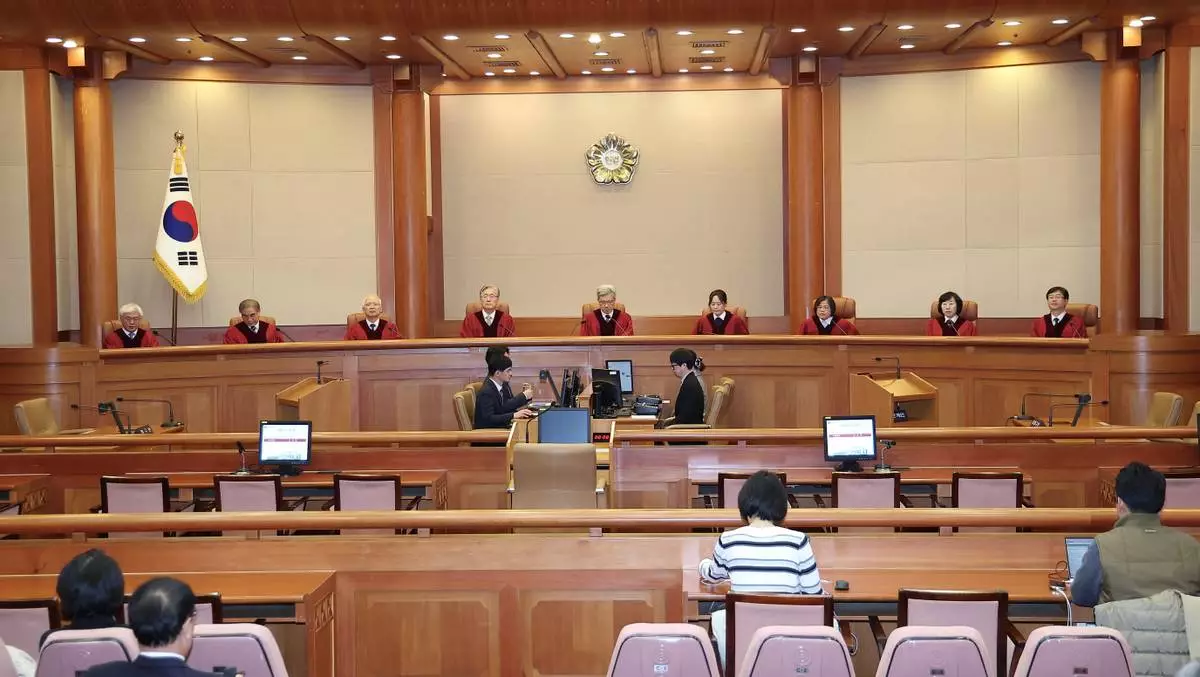
Kim Sang-hwan, top center, chief justice of the Constitutional Court and the court's other justices attend a hearing to deliver a verdict on impeached police chief Cho Ji-ho at the court in Seoul, South Korea, Thursday, Dec. 18, 2025. (Kim Sung-min/Yonhap via AP)

Kim Sang-hwan, top center, chief justice of the Constitutional Court and the court's other justices attend a hearing to deliver a verdict on impeached police chief Cho Ji-ho at the court in Seoul, South Korea, Thursday, Dec. 18, 2025. (Kim Sung-min/Yonhap via AP)

Recommended Articles