RIO DE JANEIRO (AP) — Rio de Janeiro police officers and soccer fans clashed Wednesday near the city's international airport as Flamengo's squad prepared to travel to Peru to face Palmeiras in an all-Brazilian Copa Libertadores final.
Local media reported about a dozen fans entered the Flamengo bus from the ceiling as thousands cheered outside. Footage captured by The Associated Press shows officials using tear gas and rubber bullets amid the clashes, with some fans fighting back.
Flamengo midfielder Saúl Niguez joked about the incident in his social media channels, showing fans entering the bus from the top.
“We have some new signings,” the former Atletico Madrid player wrote.
The Brazilian club did not comment about the incident.
Authorities have not commented on injuries or arrests.
The teams will square off for the South American club crown Saturday at the Monumental Stadium of Lima.
Brazilian teams have won every Copa Libertadores title since 2019, with Saturday’s finalists winning two each in that period.
AP soccer: https://apnews.com/hub/soccer

A Flamengo soccer fan sits injured in the head during clashes with police as the team arrives at the airport ahead of the Copa Libertadores final, in Rio de Janeiro, Wednesday, Nov. 26, 2025. (AP Photo/Bruna Prado)

Police clash with Flamengo soccer fans as the team arrives at the airport ahead of the Copa Libertadores final, in Rio de Janeiro, Wednesday, Nov. 26, 2025. (AP Photo/Bruna Prado)

Flamengo soccer fans see their team off as it arrives to the airport ahead of the Copa Libertadores final, in Rio de Janeiro, Wednesday, Nov. 26, 2025. (AP Photo/Bruna Prado)
WASHINGTON (AP) — The Environmental Protection Agency is expected to repeal rules that limit planet-warming greenhouse gas emissions from power plants fueled by coal and natural gas, an action that Administrator Lee Zeldin has said would remove billions of dollars in costs for the industry and help “unleash” American energy.
The rule change, proposed last year, could be announced as soon as Monday, according to two people familiar with the proposal, and represents a fundamental shift from efforts by Democratic Presidents Joe Biden and Barack Obama to address climate change and clean up industrial pollution, often in low-income and majority Black or Hispanic communities.
The rule, which is expected to face immediate legal challenges, also could prevent future administrations from regulating greenhouse gas emissions from power plants, the people familiar with the proposal said. They spoke on condition of anonymity because the final rule had not yet been made public.
The EPA did not immediately respond to a request for comment.
Zeldin, Interior Secretary Doug Burgum and Energy Secretary Chris Wright are hosting a G20 ministerial meeting on “energy abundance” in Houston, where the rule change is set to be announced. The site is both a nod to the important role the oil-rich state plays in the energy industry and a potential snub of European and other international allies in attendance who have pursued environmentally friendly policies that the Trump administration has moved to undo.
Republican President Donald Trump called climate change “the greatest con job ever perpetrated on the world” at a speech to the United Nations last year, and his administration withdrew the U.S. — for the second time — from the 2015 Paris climate accord that sets voluntary goals to curb planet-warming emissions.
Trump has boasted of U.S. energy abundance even as the Iran war continues to disrupt global fuel markets and gas prices top $4.31 a gallon, up more than a dollar from a year ago.
The plan to make the power plant rule final was first reported by the New York Times.
The rollbacks are meant to fulfill Trump’s repeated pledge to “ unleash American energy ” and make it easier for utilities to supply electricity for homes and businesses.
The power plant rule is among nearly three dozen environmental regulations that Zeldin targeted in early 2025 when he announced what he called the “most consequential day of deregulation in American history.”
Zeldin said in proposing the new rules last year that they were meant to end the Biden and Obama administrations’ “war on so much of our U.S. domestic energy supply.”
Environmental and public health groups called the rollbacks dangerous and vowed to challenge the rules in court.
“Tearing down our national protections against climate pollution from power plants will have enormous costs for the health, safety and well-being of families across the country,” said Vickie Patton, general counsel for the Environmental Defense Fund. “Americans everywhere are already suffering from record-breaking heat, more dangerous floods and storms, and skyrocketing insurance costs.”
The EPA has a legal responsibility to protect the public from harmful pollution, Patton said, adding that “clean, affordable and reliable technologies are widely available to power our homes and businesses.”
Coal, gas and oil-fired power plants are responsible for about one-quarter of the nation’s total climate pollution, second only to the transportation sector. Pollution from power plants is one of the largest sources of climate-changing pollution in the world.
The rules targeted by Trump’s EPA could prevent an estimated 30,000 deaths and save $275 billion each year they are in effect, according to an Associated Press examination last year that included the agency’s own prior assessments and a wide range of other research.
Even a partial dismantling of the rules would mean more pollutants such as smog, mercury and lead — and especially more tiny airborne particles that can lodge in lungs and cause health problems, the AP analysis found. It would also mean higher emissions of greenhouse gases, driving Earth’s warming to deadlier levels.
Biden, a Democrat, had made fighting climate change a hallmark of his presidency. Coal-fired power plants would have been forced to capture smokestack emissions or shut down under a strict EPA rule issued in 2024. Those rules are now being upended.
In its proposal last year, the Trump EPA argued that carbon dioxide and other greenhouse gases from fossil fuel-fired power plants “do not contribute significantly to dangerous pollution” or climate change and therefore do not meet a threshold under the Clean Air Act for regulatory action. Greenhouse gas emissions from coal and gas-fired plants “are a small and decreasing part of global emissions,″ the EPA said.
Zeldin, a Republican and former New York congressman, said the Biden-era rules were designed to “suffocate our economy in order to protect the environment,” with the intent to regulate the coal industry “out of existence” and make it “disappear.”
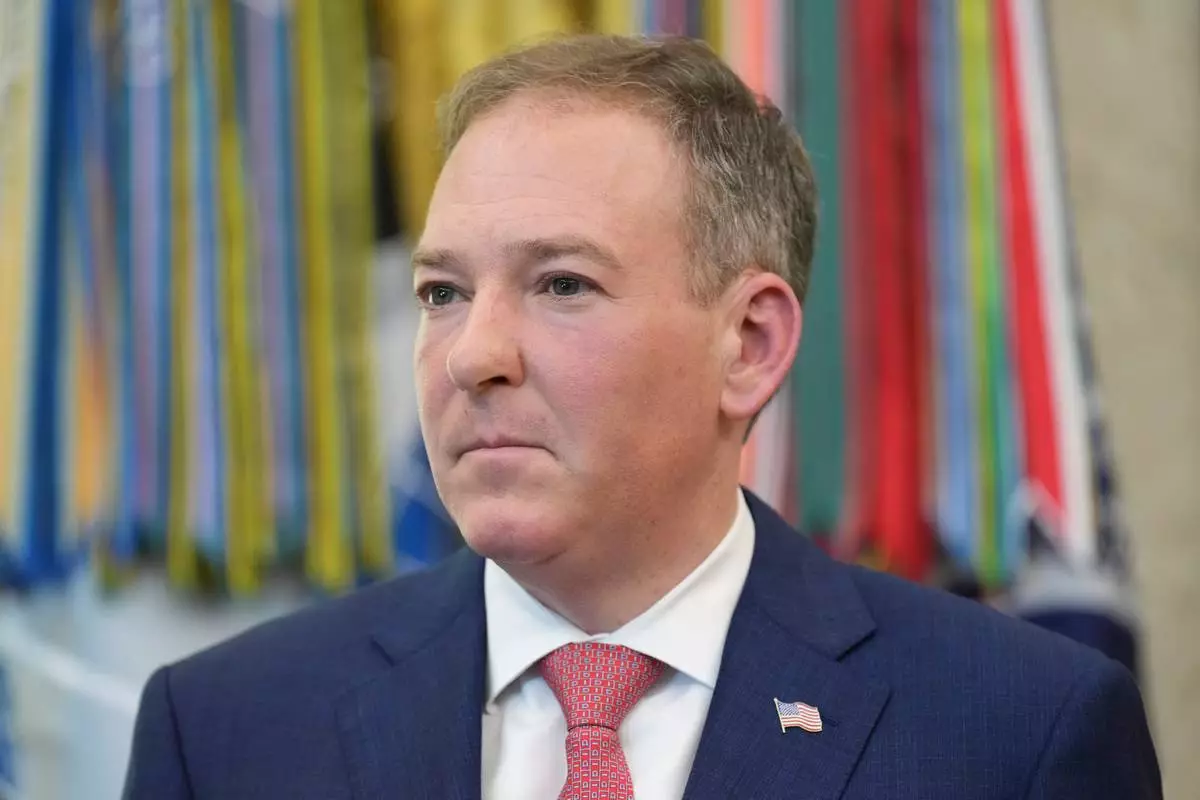
FILE - Environmental Protection Agency administrator Lee Zeldin listens as President Donald Trump speaks in the Oval Office of the White House, June 29, 2026, in Washington. (AP Photo/Jacquelyn Martin, File)