China unveiled its first batch of pioneering smart factories at the 2025 World Intelligent Manufacturing Conference on Thursday in east China's Nanjing City, marking another push to advance smart manufacturing. A total of 15 factories made the inaugural list, covering key sectors including equipment manufacturing, raw materials, electronic information, and consumer goods.
According to officials from the Ministry of Industry and Information Technology, these factories integrate next-generation information technology, advanced manufacturing technology, and lean management concepts, representing the highest benchmark for intelligent manufacturing in China.
"The 15 pioneering smart factories, leveraging their respective strengths, have explored future manufacturing models of research and development, production, management, and services, developing new models and business forms such as shared manufacturing, extreme manufacturing, and island manufacturing," said Ao Li, chief engineer with the China Academy of Information and Communications Technology.
So far, China has built over 7,000 advanced smart factories. With intelligent upgrading completed, hundreds of factories have seen average product development cycle shortened by 29 percent, production efficiency increased by nearly 22 percent, and carbon emissions reduced by around 20 percent.
"In the future, persistently advancing the cultivation and development of smart factories will remain a key priority for a considerable period ahead, driving the intelligent and digital transformation of the entire manufacturing sector," said Su Bo, chair of the National Expert Committee on Intelligent Manufacturing.
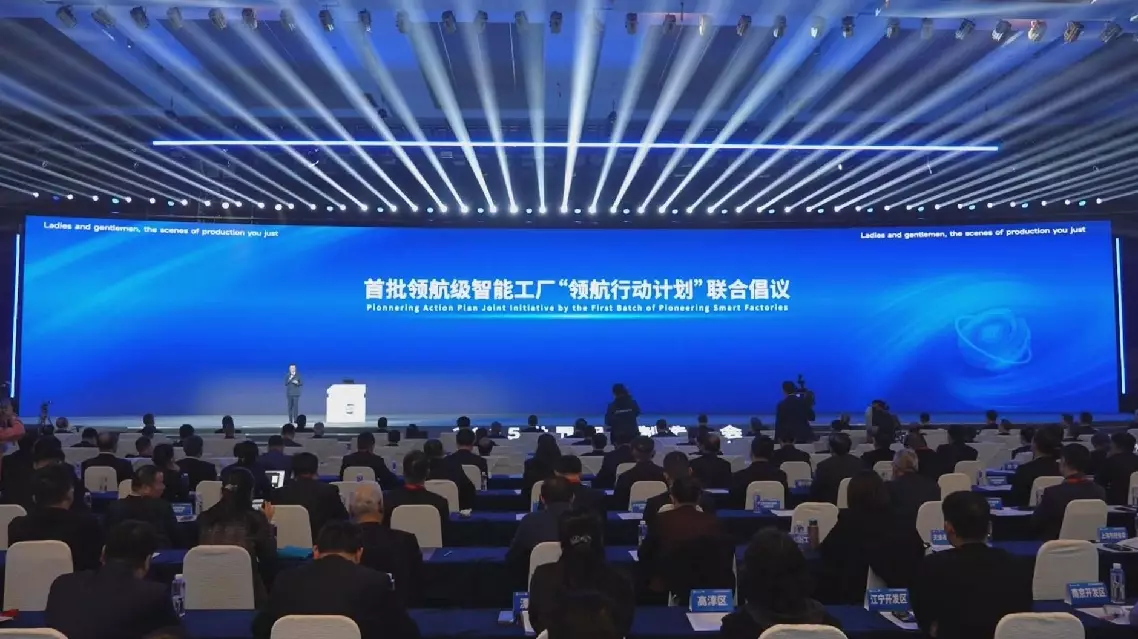
China announces first patch of pioneering smart factories
The 32nd Asia-Pacific Economic Cooperation (APEC) Ministers Responsible for Trade Meeting concluded in east China's Suzhou on Saturday, yielding fruitful results and laying significant groundwork for the APEC Economic Leaders' Meeting in November.
The trade ministers' meeting focused on "building an open and predictable regional and multilateral economic and trade order" and "fostering new engines of innovative and dynamic trade and investment cooperation."
Chinese Commerce Minister Wang Wentao briefed the media on the meeting's outcomes at a press conference.
Wang said the meeting issued a joint statement titled the Suzhou Statement, and approved the latest edition of the APEC Roadmap for Innovative, Competitive and Resilient Services.
All parties agreed to advance policy innovation and reform in services trade, build an open and predictable investment environment, improve regional trade facilitation and supply chain resilience, strengthen standards coordination, and enhance intellectual property protection, Wang told the media.
He also said that substantial progress was made on a framework document for regional digital trade cooperation and the ministers emphasized promoting inclusive AI development, strengthening AI-related trade, and bridging the digital divide to ensure shared benefits from digital transformation.
The minister noted that the outcomes of the meeting demonstrated strong cooperation willingness, highlighted an innovation-oriented approach, and reflected inclusiveness and shared benefits. "The fact that Asia-Pacific economies can come together, uphold the original aspiration of promoting trade and investment liberalization and facilitation while supporting economic growth and prosperity, and engage in in-depth discussions on the important issue of 'where multilateral and regional economic and trade cooperation is headed,' fully demonstrates that open regionalism and true multilateralism enjoy broad support, and that mutual success and shared development serve the fundamental interests of all economies," Wang said.
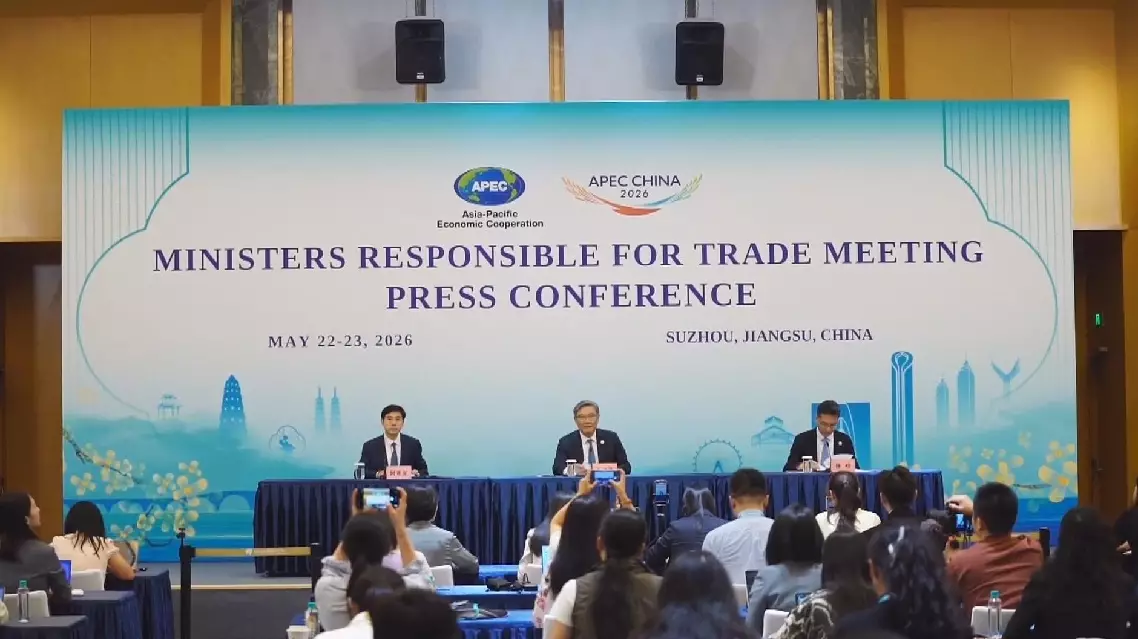
2026 APEC trade ministers' meeting concludes with fruitful results