Skip to Content Facebook Feature Image

How Russian drones targeting civilians are turning one Ukrainian city into a 'human safari'

News

How Russian drones targeting civilians are turning one Ukrainian city into a 'human safari'
News

News

How Russian drones targeting civilians are turning one Ukrainian city into a 'human safari'

2025-11-28 22:24 Last Updated At:11-30 14:21

KHERSON, Ukraine (AP) — When Olena Horlova leaves home or drives through town outside the southern Ukrainian city of Kherson, she fears that she's a target. She believes that Russian drones could be waiting on a rooftop, along the road or aiming for her car.

To protect herself and her two daughters, the girls stay indoors, and she stays alert — sometimes returning home at night along dark roads without headlights so as not to be seen.

More Images
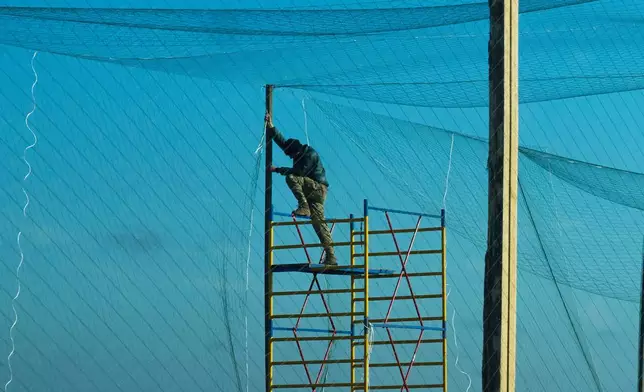
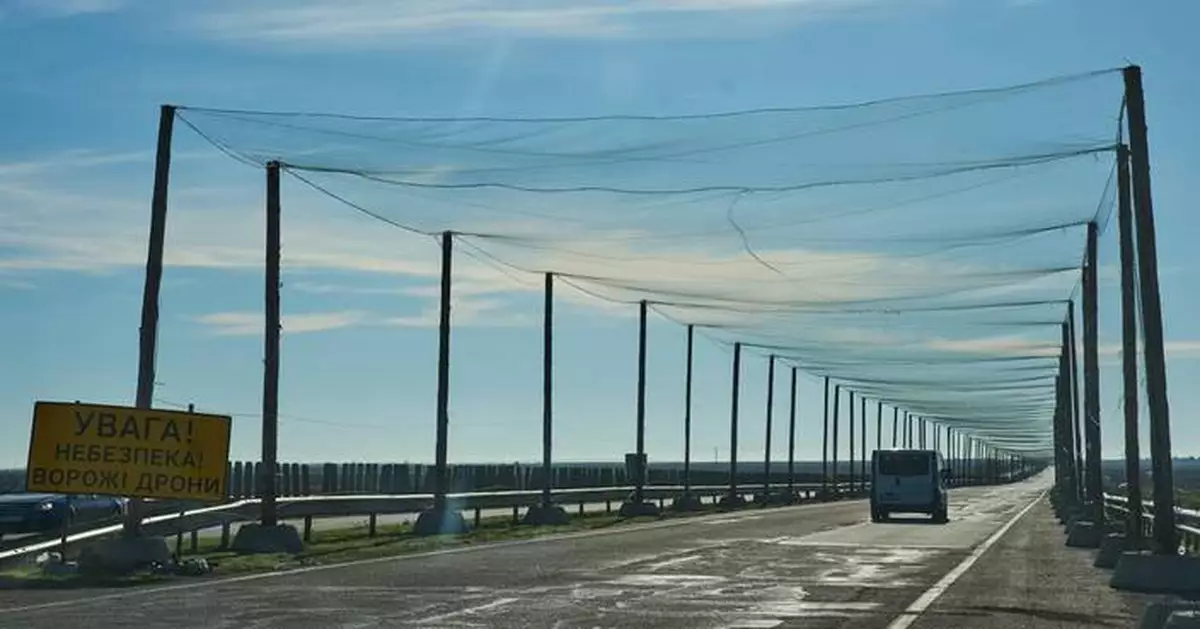
A worker installs an anti-FPV-drone net above the road at the approaches to the frontline city of Kherson, Southern Ukraine, Monday, Nov. 3, 2025. (AP Photo/Efrem Lukatsky)
A worker installs an anti-FPV-drone net above the road at the approaches to the frontline city of Kherson, Southern Ukraine, Monday, Nov. 3, 2025. (AP Photo/Efrem Lukatsky)

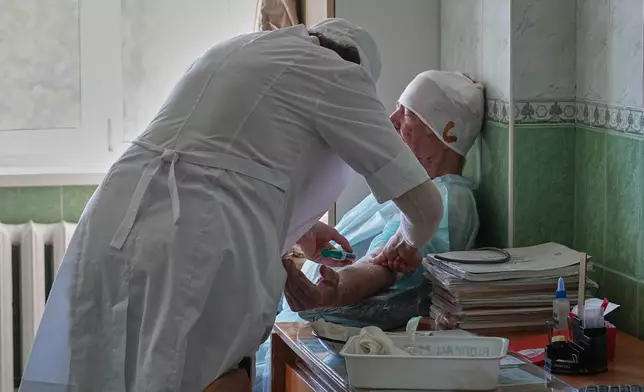
A wounded local resident gets treatment at one of the city main hospitals treating drone victims in the frontline city of Kherson, Southern Ukraine, Monday, Nov. 3, 2025. (AP Photo/Efrem Lukatsky)
A wounded local resident gets treatment at one of the city main hospitals treating drone victims in the frontline city of Kherson, Southern Ukraine, Monday, Nov. 3, 2025. (AP Photo/Efrem Lukatsky)
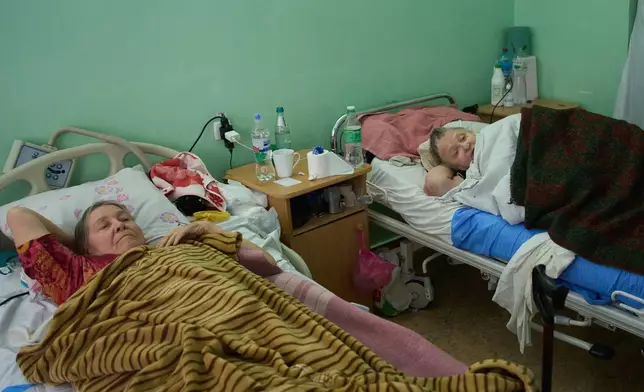
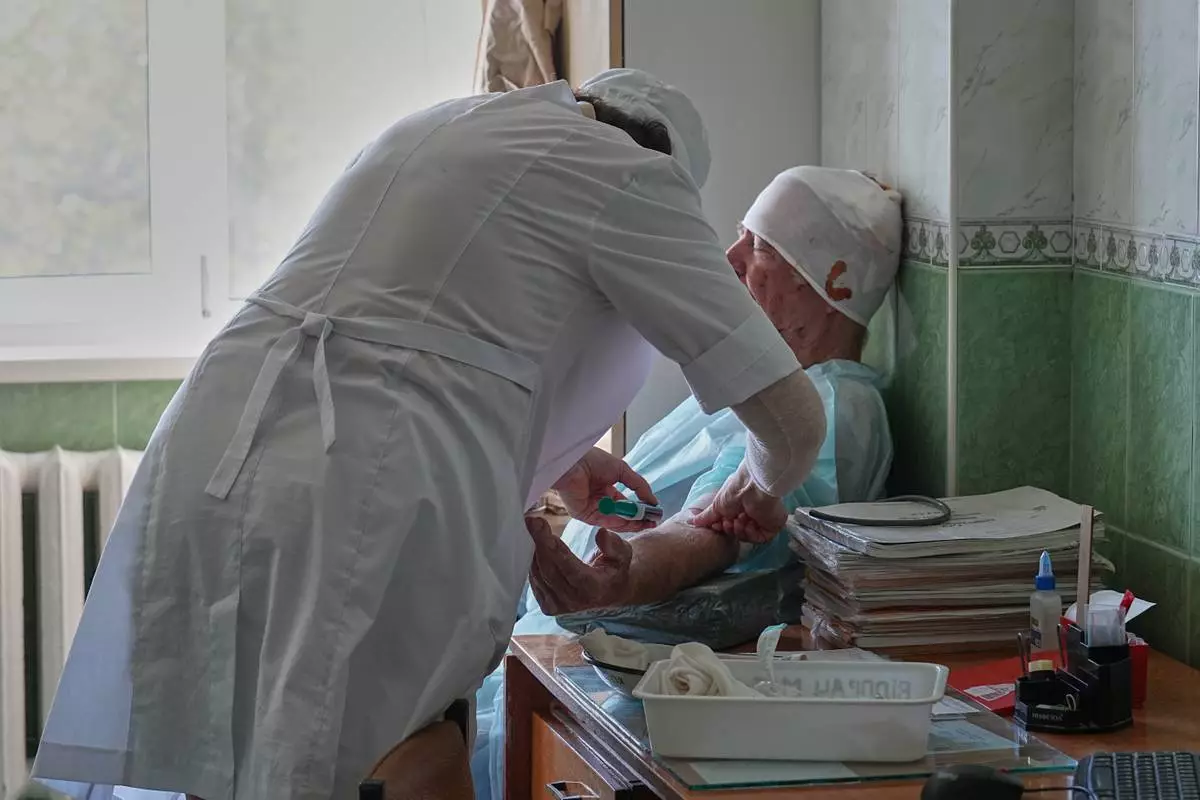
Nataliia Naumova, 70, right, recovers after a Shahed drone blasted her left leg at one of the city main hospitals treating drone victims in the frontline city of Kherson, Southern Ukraine, Monday, Nov. 3, 2025. (AP Photo/Efrem Lukatsky)

Nataliia Naumova, 70, right, recovers after a Shahed drone blasted her left leg at one of the city main hospitals treating drone victims in the frontline city of Kherson, Southern Ukraine, Monday, Nov. 3, 2025. (AP Photo/Efrem Lukatsky)

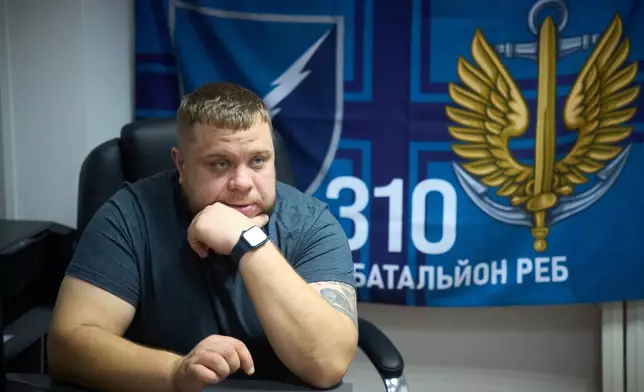
Commander of the 310th Battalion, Dmytro Liashok, a 16-year military veteran and one of Ukraine's early pioneers in electronic warfare, talks with the Associated Press in the frontline city of Kherson, Southern Ukraine, Sunday, Nov. 2, 2025. (AP Photo/Efrem Lukatsky)
Commander of the 310th Battalion, Dmytro Liashok, a 16-year military veteran and one of Ukraine's early pioneers in electronic warfare, talks with the Associated Press in the frontline city of Kherson, Southern Ukraine, Sunday, Nov. 2, 2025. (AP Photo/Efrem Lukatsky)

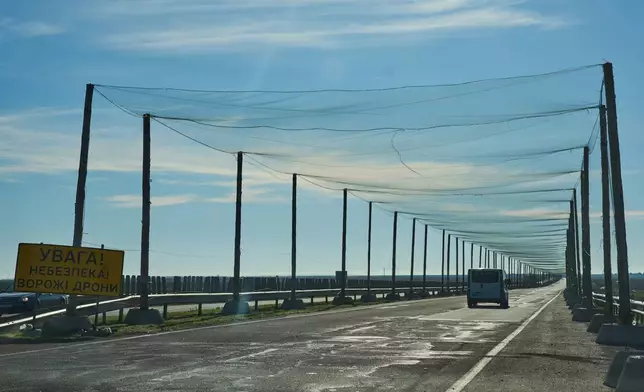
A car drives on a road covered with an anti-FPV-drone net, a road sign reading "Attention/Danger/Enemy drones", at the approaches to the frontline city of Kherson, Southern Ukraine, Sunday, Nov. 2, 2025. (AP Photo/Efrem Lukatsky)

A car drives on a road covered with an anti-FPV-drone net, a road sign reading "Attention/Danger/Enemy drones", at the approaches to the frontline city of Kherson, Southern Ukraine, Sunday, Nov. 2, 2025. (AP Photo/Efrem Lukatsky)

After living through the occupation, refusing to cooperate with Russian forces and hiding from them, Horlova, like so many other residents, found that even after her town was liberated in 2022, the ordeal didn't end.

Kherson was among the first places where Russian forces began using short-range, first-person view, or FPV, drones against civilians. The drones are equipped with livestreaming cameras that let operators see and select their targets in real time. The tactic later spread more than 300 kilometers (185 miles) along the right bank of the Dnipro River, across the Dnipropetrovsk, Kherson and Mykolaiv regions.

The United Nations' Independent International Commission of Inquiry on Ukraine says the attacks leave little doubt about their intent. In an October report, the commission said that the attacks have repeatedly killed and wounded civilians, destroyed homes and forced thousands to flee, concluding that they amount to the crimes against humanity of murder and forcible transfer.

“We live with the hope that one day this will finally end,” Horlova said, her voice trembling. “What matters for us is a cease-fire, or for the front line to be pushed further away. Then it would be easier for us.”

Horlova lives in Komyshany, a village just outside Kherson and only 4 kilometers (2½ miles) from the Dnipro River, where the level of intense attacks has remained the same, despite Ukrainian forces retaking the city from Russian occupation in November 2022 — about nine months after Russia launched its full-scale invasion on Feb. 24 of that year.

But the war didn't end there. Instead, it shifted into a phase in which the area has effectively become what locals and the military term a “human safari,” describing it as a testing ground where people are often the target of drone attacks.

Horlova says that FPVs often land on rooftops when their batteries run low and then wait out.

“When people, cars or even a cyclist appear, the drone suddenly lifts off and drops the explosive,” she said. “It’s gotten to the point where they even drop them on animals — cows, goats.”

She believes that civilians are hunted as “revenge” for the celebrations that broke out when Kherson was liberated.

The report from the Independent International Commission of Inquiry on Ukraine says the attacks have spread terror among civilians and violated their right to life and other fundamental human rights. Investigators found that Russian units on the occupied left bank of the Dnipro carried out the strikes and identified specific drone units, operators and commanders involved. They also noted that Russian Telegram channels routinely share videos of the attacks, often with mocking captions and threats of more.

The U.N. commission said that it examined Russian claims that Ukrainian forces had launched drone attacks on civilians in occupied areas, unable to conclude its investigation because it lacked access to the territory, couldn't ensure witness safety and didn't receive answers from Russian authorities.

Interceptions obtained by The Associated Press from the 310th Separate Marine Electronic Warfare Battalion show Russian FPV drones that appear to be hunting for vehicles. The videos capture drones flying low over roads and locking onto moving or parked cars — often pickups, supply vehicles, sedans and even clearly marked ambulances — before diving for a strike.

The commander of the 310th Battalion, which protects the skies over 470 kilometers (nearly 300 miles) of southern Ukraine, including Kherson, says at least 300 drones fly toward the city every day. In October alone, the number of drones that flew over Kherson was 9,000.

“This area is like a training ground,” said the battalion’s commander, Dmytro Liashok, a 16-year military veteran and one of Ukraine’s early pioneers in electronic warfare. “They bring new Russian crews here to gain experience before sending them elsewhere.” The AP couldn't independently verify the claim.

Despite the sheer volume of drones — a figure that excludes other types of weapons like artillery and glide bombs — his forces manage to neutralize more than 90%, he said.

According to the U.N. human rights office, short-range drone attacks have become the leading cause of civilian casualties near the front line. Local authorities say that since July 2024, more than 200 civilians have been killed and more than 2,000 wounded in three southern regions, with most victims being men. Nearly 3,000 homes have been damaged or destroyed.

During a surprise visit to Kherson in November, Angelina Jolie described the constant overhead threat as “a heavy presence.”

“There was a moment when we had to pause and wait while a drone flew overhead,” she wrote on Instagram. “I was in protective gear, and for me it was just a couple of days. The families here live with this every single day.”

At one of Kherson’s main hospitals treating drone victims, 70-year-old Nataliia Naumova is recovering after a strike by a Shahed drone, which carries a heavier explosive than FPV drones, left her with a blast injury to her left leg on Oct. 20.

She says the strike hit during the night as she waited at a school in the village of Inzhenerne, where she had been temporarily sheltered, for an evacuation bus that was due to arrive the next morning.

“There were so many drones flying over us,” she said, adding that she rarely left home even after its windows were shattered and boarded up. “People there survive, not live. I never thought such a tragedy would happen to me.”

Dr. Yevhen Haran, the hospital’s deputy medical chief, says the injuries from drone strikes range from amputations to fatal wounds.

“It’s simply hunting for people. There’s no other name for it,” he said.

He says patients wounded in Russian attacks, including drone strikes, arrive at the hospital every day. Last month alone, it treated 85 inpatients and 105 outpatients with blast injuries, all from shelling and drone strikes. It's also the only hospital in the area equipped to handle the most serious cases.

Haran himself came under FPV drone fire on Aug. 26 while driving from nearby Mykolaiv with his wife. Rescuers stopped their car on the highway, warning that a drone was overhead.

“I pulled in behind them. The drone circled and, on the next pass, flew straight into their vehicle — the driver’s door,” he recalled. Shrapnel tore through the front car, while his, parked behind, shielded him.

He reached the hospital with a hypertensive crisis and was later treated for a concussion. “Sometimes I still lose words and feel unsteady,” he said. “It all happened in less than 10 minutes.”

For people in Kherson, the experience of occupation, and the moment the city was freed, still shapes how they endure the constant drone attacks.

“We held out until liberation — we’ll hold out until peace as well,” he said.

Associated Press reporters Yehor Konovalov and Volodymyr Yurchuk in Kyiv, Ukraine, contributed to this report.

A worker installs an anti-FPV-drone net above the road at the approaches to the frontline city of Kherson, Southern Ukraine, Monday, Nov. 3, 2025. (AP Photo/Efrem Lukatsky)
A worker installs an anti-FPV-drone net above the road at the approaches to the frontline city of Kherson, Southern Ukraine, Monday, Nov. 3, 2025. (AP Photo/Efrem Lukatsky)

A wounded local resident gets treatment at one of the city main hospitals treating drone victims in the frontline city of Kherson, Southern Ukraine, Monday, Nov. 3, 2025. (AP Photo/Efrem Lukatsky)

A wounded local resident gets treatment at one of the city main hospitals treating drone victims in the frontline city of Kherson, Southern Ukraine, Monday, Nov. 3, 2025. (AP Photo/Efrem Lukatsky)

Nataliia Naumova, 70, right, recovers after a Shahed drone blasted her left leg at one of the city main hospitals treating drone victims in the frontline city of Kherson, Southern Ukraine, Monday, Nov. 3, 2025. (AP Photo/Efrem Lukatsky)

Nataliia Naumova, 70, right, recovers after a Shahed drone blasted her left leg at one of the city main hospitals treating drone victims in the frontline city of Kherson, Southern Ukraine, Monday, Nov. 3, 2025. (AP Photo/Efrem Lukatsky)

Commander of the 310th Battalion, Dmytro Liashok, a 16-year military veteran and one of Ukraine's early pioneers in electronic warfare, talks with the Associated Press in the frontline city of Kherson, Southern Ukraine, Sunday, Nov. 2, 2025. (AP Photo/Efrem Lukatsky)

Commander of the 310th Battalion, Dmytro Liashok, a 16-year military veteran and one of Ukraine's early pioneers in electronic warfare, talks with the Associated Press in the frontline city of Kherson, Southern Ukraine, Sunday, Nov. 2, 2025. (AP Photo/Efrem Lukatsky)

A car drives on a road covered with an anti-FPV-drone net, a road sign reading "Attention/Danger/Enemy drones", at the approaches to the frontline city of Kherson, Southern Ukraine, Sunday, Nov. 2, 2025. (AP Photo/Efrem Lukatsky)


A car drives on a road covered with an anti-FPV-drone net, a road sign reading "Attention/Danger/Enemy drones", at the approaches to the frontline city of Kherson, Southern Ukraine, Sunday, Nov. 2, 2025. (AP Photo/Efrem Lukatsky)
NEW YORK (AP) — The U.S. stock market is holding steadier Tuesday as Wall Street waits for the next signal on when the war with Iran may end.

The S&P 500 was down 0.1% in late trading after having been up as much as 0.7% earlier in the day. The benchmark index had reacted with wild swings a day earlier following extreme moves in the oil market. The Dow Jones Industrial Average slipped 42 points, or 0.1%, as of 3:30 p.m. Eastern time, and the Nasdaq composite was essentially flat.

Oil prices, meanwhile, continued to fall further below where they were late Monday. Spikes there have been rocking financial markets worldwide because of worries that the war could block the global flow of oil and natural gas for a long time.

The price for a barrel of Brent crude, the international standard, settled at $87.80. That’s down 11.3% from its settlement price the day before. Much of that decline happened before the U.S. stock market finished trading on Monday. That's why the drop did not give much of a boost to U.S. stocks Tuesday.

A barrel of benchmark U.S. crude also closed lower, settling 11.9% below where it was late Monday, at $83.45.

Oil prices plunged Monday afternoon from a high of nearly $120 per barrel, its most expensive level since 2022, after President Donald Trump told CBS News he thinks “the war is very complete, pretty much.” That raised hopes that the war may end sooner than later, which could allow oil to flow freely again from the Middle East to customers around the world.

But Trump’s comments later Monday, after the U.S. stock market finished trading, were not as clear. And a spokesperson for Iran’s paramilitary Revolutionary Guard said that “Iran will determine when the war ends.” Iran launched new attacks Tuesday at Israel and Gulf Arab countries, keeping pressure on the Middle East in a war started by Israel and the United States.

That has Wall Street waiting for the next clue about how long the war may last.

One point where Trump remained clear was his desire to keep the Strait of Hormuz open. The war has effectively blocked much of the waterway off Iran’s coast, where a fifth of the world’s oil sails on a typical day. That's been a central reason for oil prices' extreme swings recently, which have dominated other financial markets and raised worries about the global economy.

“If Iran does anything that stops the flow of Oil within the Strait of Hormuz, they will be hit by the United States of America TWENTY TIMES HARDER than they have been hit thus far,” Trump said in a posting on his social media network late Monday.

“The outlook for oil right now is about as binary as it gets,” according to Hakan Kaya, senior portfolio manager at Neuberger Berman.

“Either the Strait of Hormuz reopens and you see a massive unwind of the risk premium, or it stays shut and we are looking at the largest supply disruption in modern history. There is no middle ground, and that is why putting a number on it is almost irresponsible.”

The International Energy Association said it will hold a meeting on Tuesday to discuss whether the 32 countries that are members should release some of their oil stockpiles to push downward on the price of oil.

The U.S. stock market has a history of bouncing back relatively quickly from past military conflicts, as long as oil prices don’t stay too high for too long. Uncertainty about whether that may happen this time around has led to stunning swings up and down for markets worldwide, often hour-to-hour.

If oil prices do stay high for long, household budgets already stretched by high inflation could break under the pressure. Companies would see their own bills jump for fuel and to stock items on their store shelves or in their data warehouses. It all raises the possibility of a worst-case scenario for the global economy, “stagflation,” where growth stagnates and inflation remains high.

On Wall Street, Vertex Pharmaceuticals leaped 8% for the biggest gain in the S&P 500 after reporting encouraging trends from a trial for its treatment for a life-threatening kind of kidney disease.

Stock markets in Asia and Europe jumped in their first chances to react to Trump’s comments from late Monday and the subsequent easing of oil prices. Indexes leaped 5.3% in South Korea, 2.2% in Hong Kong and 1.8% in France.

Tokyo’s Nikkei 225 rose 2.9% after the government also released revised economic data showing Japan’s economy grew faster in the final quarter of last year than initially estimated.

In the bond market, the yield on the 10-year Treasury rose to 4.14% from 4.12% late Monday.

AP Business Writers Yuri Kageyama and Matt Ott and AP Videographer Ayaka McGill contributed.

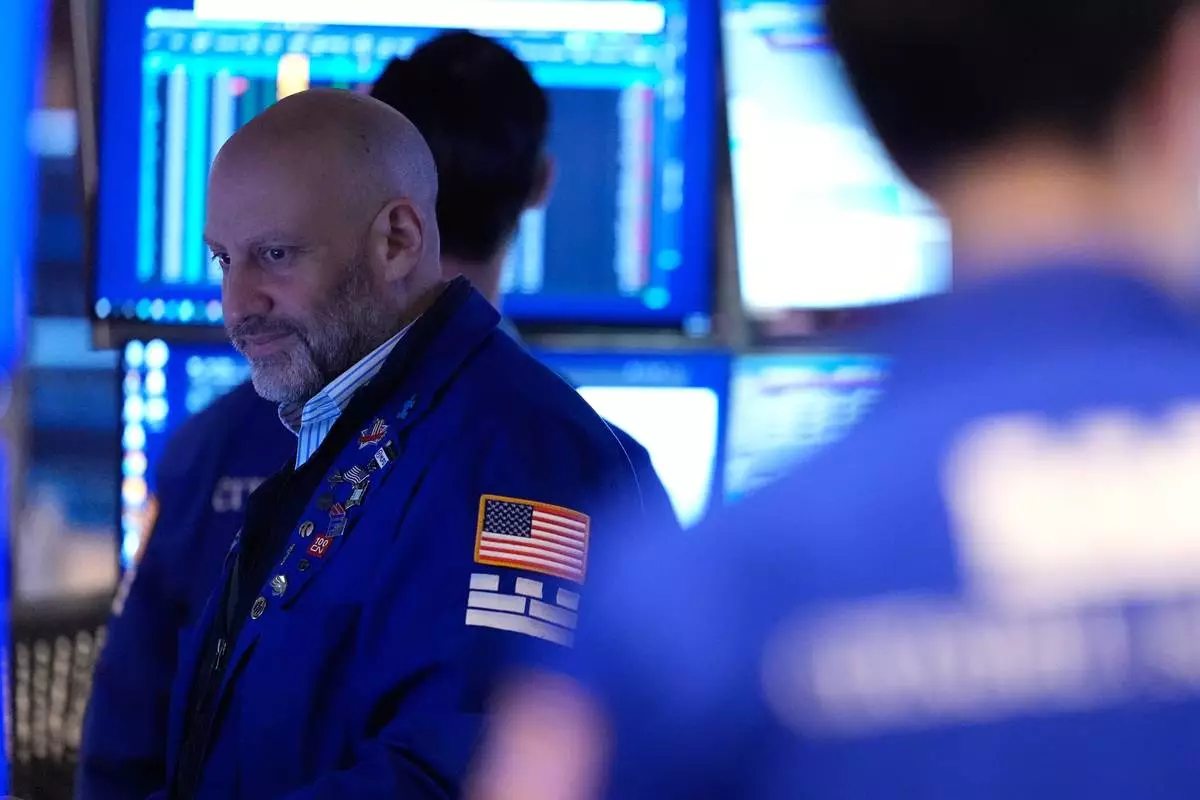
Traders work on the floor at the New York Stock Exchange in New York, Tuesday, March 10, 2026. (AP Photo/Seth Wenig)

Traders work on the floor at the New York Stock Exchange in New York, Tuesday, March 10, 2026. (AP Photo/Seth Wenig)

Traders work on the floor at the New York Stock Exchange in New York, Tuesday, March 10, 2026. (AP Photo/Seth Wenig)

Traders work on the floor at the New York Stock Exchange in New York, Tuesday, March 10, 2026. (AP Photo/Seth Wenig)

Meric Greenbaum works on the floor at the New York Stock Exchange in New York, Friday, March 6, 2026. (AP Photo/Seth Wenig)

Meric Greenbaum works on the floor at the New York Stock Exchange in New York, Friday, March 6, 2026. (AP Photo/Seth Wenig)

The New York Stock Exchange is seen in New York, Friday, March 6, 2026. (AP Photo/Seth Wenig)

The New York Stock Exchange is seen in New York, Friday, March 6, 2026. (AP Photo/Seth Wenig)

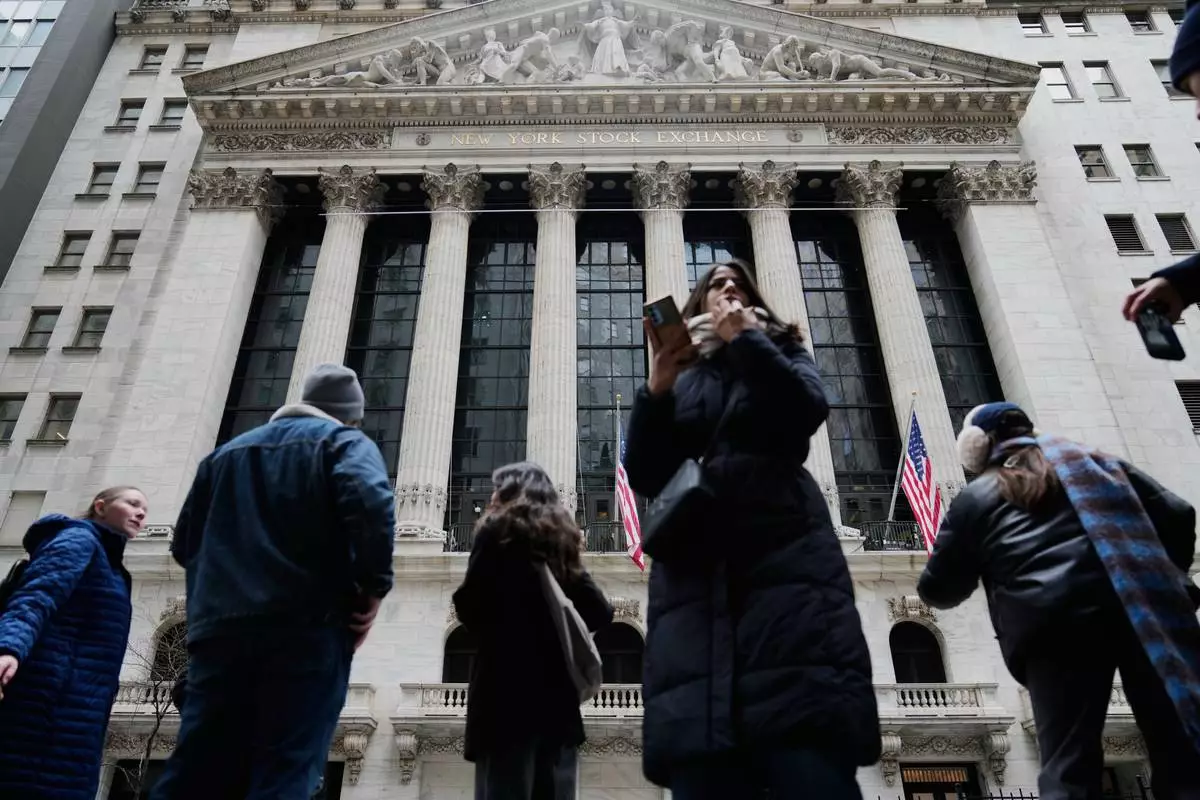
Pedestrians mill about outside the New York Stock Exchange in New York, Friday, March 6, 2026. (AP Photo/Seth Wenig)

Pedestrians mill about outside the New York Stock Exchange in New York, Friday, March 6, 2026. (AP Photo/Seth Wenig)

Currency traders watch monitors near a screen showing the Korea Composite Stock Price Index (KOSPI), right, and the foreign exchange rate between U.S. dollar and South Korean won at the foreign exchange dealing room of the Hana Bank headquarters in Seoul, South Korea, Tuesday, March 10, 2026. (AP Photo/Ahn Young-joon)

Currency traders watch monitors near a screen showing the Korea Composite Stock Price Index (KOSPI), right, and the foreign exchange rate between U.S. dollar and South Korean won at the foreign exchange dealing room of the Hana Bank headquarters in Seoul, South Korea, Tuesday, March 10, 2026. (AP Photo/Ahn Young-joon)

Currency traders work at the foreign exchange dealing room of the Hana Bank headquarters in Seoul, South Korea, Tuesday, March 10, 2026. (AP Photo/Ahn Young-joon)

Currency traders work at the foreign exchange dealing room of the Hana Bank headquarters in Seoul, South Korea, Tuesday, March 10, 2026. (AP Photo/Ahn Young-joon)

U.S. President Donald Trump is seen on a screen as traders work at the foreign exchange dealing room of the Hana Bank headquarters in Seoul, South Korea, Tuesday, March 10, 2026. (AP Photo/Ahn Young-joon)

U.S. President Donald Trump is seen on a screen as traders work at the foreign exchange dealing room of the Hana Bank headquarters in Seoul, South Korea, Tuesday, March 10, 2026. (AP Photo/Ahn Young-joon)

Currency trader react near a screen showing the Korea Composite Stock Price Index (KOSPI), rear left, at the foreign exchange dealing room of the Hana Bank headquarters in Seoul, South Korea, Tuesday, March 10, 2026. (AP Photo/Ahn Young-joon)

Currency trader react near a screen showing the Korea Composite Stock Price Index (KOSPI), rear left, at the foreign exchange dealing room of the Hana Bank headquarters in Seoul, South Korea, Tuesday, March 10, 2026. (AP Photo/Ahn Young-joon)

A currency trader passes by a screen showing the Korea Composite Stock Price Index (KOSPI), rear center, and the foreign exchange rate between U.S. dollar and South Korean won, rear left, at the foreign exchange dealing room of the Hana Bank headquarters in Seoul, South Korea, Tuesday, March 10, 2026. (AP Photo/Ahn Young-joon)

A currency trader passes by a screen showing the Korea Composite Stock Price Index (KOSPI), rear center, and the foreign exchange rate between U.S. dollar and South Korean won, rear left, at the foreign exchange dealing room of the Hana Bank headquarters in Seoul, South Korea, Tuesday, March 10, 2026. (AP Photo/Ahn Young-joon)

Recommended Articles