China unveiled a program on Wednesday for a new-generation space situational awareness constellation, aimed at creating a globally covered and rapidly responsive monitoring network in near-Earth orbit to enhance space environment safety.
The constellation, named "EYESAT", will consist of 156 satellites, with launches scheduled to begin in the first half of 2026.
The satellites will be equipped with wide-field cameras, infrared cameras, imaging cameras, electromagnetic monitoring devices, multispectral cameras, computing units, and intelligent processing software.
Once fully operational, the system will detect, track, identify and catalog on-orbit satellites, while also monitoring space debris. By analyzing satellite orbital data and predicting collision risks, it will provide precise and efficient data services for space traffic management .
This capability is designed to effectively address the growing challenges of space traffic congestion and debris risks, thereby ensuring greater safety for space operations.
"The primary function of the space awareness constellation is to collect data from both space debris and operating satellites. The data will be analyzed and offered to active satellites in orbit to prevent them from colliding with one another, or with debris," said Hu Yu, head of the EYESAT space situational awareness constellation program.
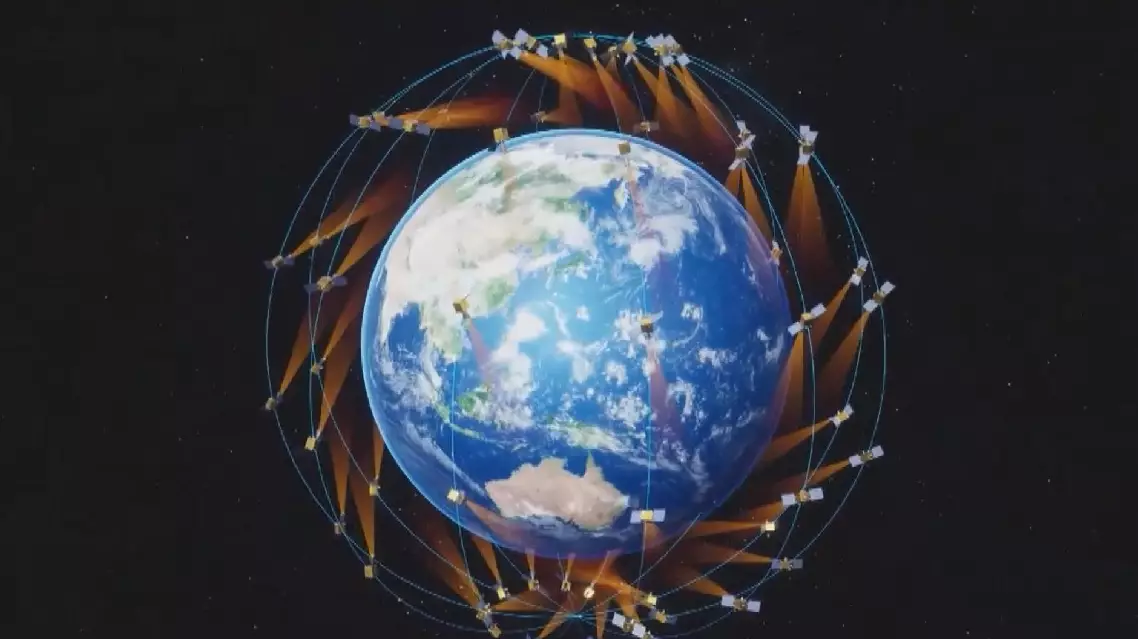
China unveils new-gen space situational awareness constellation for space traffic management
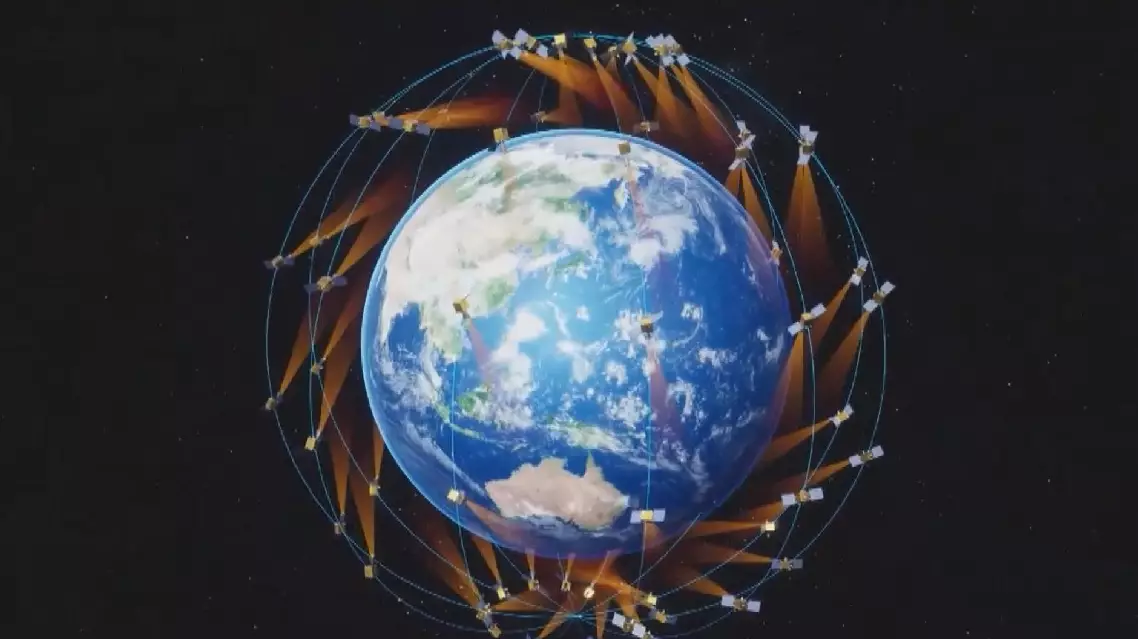
China unveils new-gen space situational awareness constellation for space traffic management
Unmanned and counter-unmanned systems have taken the center stage at the ongoing 14th China International Defense Electronics Exhibition (CIDEX) in Beijing, showcasing their expanding applications in rescue, security and multi-domain operations.
Running from Tuesday to Thursday, the event has drawn nearly 300 exhibitors and showcased nearly 1,000 innovative achievements in information-based defense equipment.
While attaching importance to showcasing traditional electronic information foundation equipment, this year's exhibition has focused on emerging fields such as unmanned combat, counter-unmanned systems, communications and information security, commercial aerospace, underwater equipment and the optoelectronics industry.
A high-speed unmanned vessel on show demonstrates its potential for emergency rescue and other scenarios.
"We designed it as a high-speed unmanned boat, and both its designed speed and verified speed can reach 60 kilometers per hour. On the bow, we can cut an opening there to install the camera, with a waterproof cover on top. The electro-optical pod at the front has visual and infrared recognition functions, a four-in-one system, and also provides electronic zoom. At the same time, it can provide some obstacle avoidance capability for the hull. At present, it is used in emergency rescue. The vessel can reach the front line of a disaster very quickly and send back data. Most importantly, it can replace people in dangerous places," said Wang Jiexuan, an exhibitor.
Unmanned and counter-unmanned systems have become the hallmark of the new-domain and new-quality exhibition area, shifting from individual equipment performance to system coordination featuring integrated air-space-ground operations and combined reconnaissance, jamming, strike and decoy capabilities.
In the field of urban low-altitude security, a new radar on show at the exhibition demonstrates its ability to detect low-altitude targets in complex urban environments.
"In fact, our radar mainly addresses the needs of urban low-altitude security protection. Because it is used in urban environments, the requirements for clutter filtering are relatively high. This involves an indicator called the ground clutter improvement factor. We have now achieved 70 decibels for this indicator, which allows it to excellently meet low-altitude detection needs in complex urban environments," said Yuan Jia, an exhibitor.
The exhibition has also attracted international visitors, who show strong interest in unmanned aerial vehicles (UAVs) and counter-unmanned systems.
"There are [advanced] things from the UAVs, especially for anti-firing systems, and for rescue UAVs, which are for search and rescue," said a visitor from United Arab Emirates (UAE).
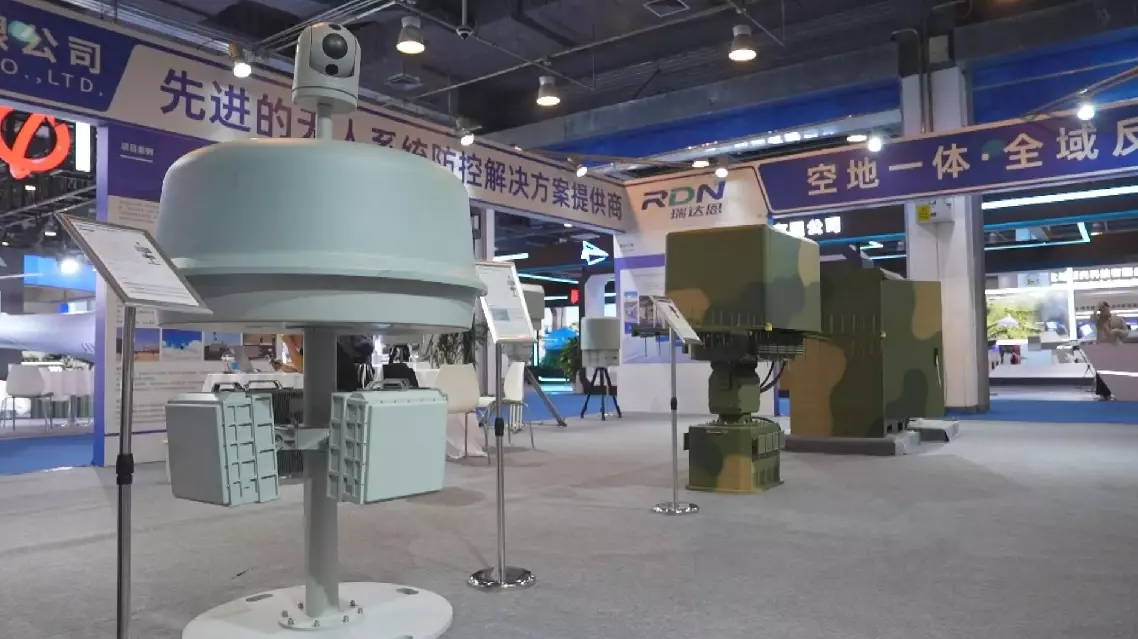
Unmanned systems take spotlight at China int'l expo for defense electronics