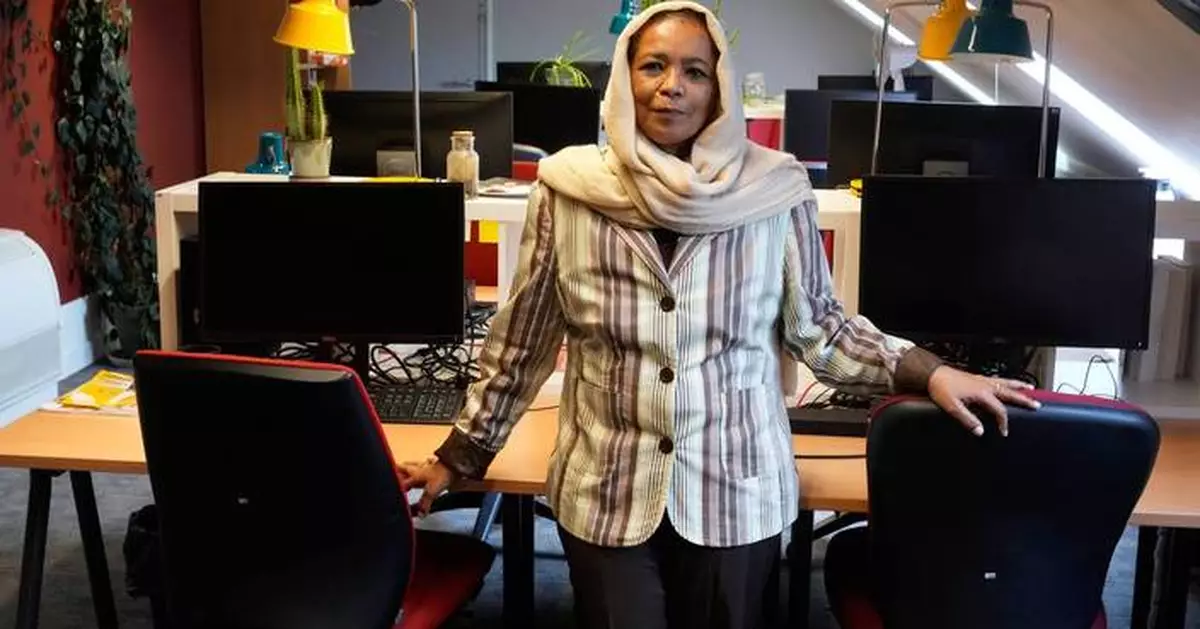
PARIS (AP) — In a dimly lit office in a corner of the French National Institute for Art History, Sudanese archaeologist Shadia Abdrabo studies a photograph of pottery made in her country around 7,000 B.C. She carefully types a description of the Neolithic artifact into a spreadsheet.
As the war between the Rapid Support Forces (RSF) and the Sudanese Armed Forces (SAF) rages on, the curator from Sudan’s National Corporation for Antiquities and Museums (NCAM) is on a yearlong research grant in France with one mission: to build an online database of the African nation’s archaeological sites, museum collections and historical archives.
Soon after the war in Sudan started, in April 2023, museums were looted and destroyed. It’s unclear what exactly went missing, but Abdrabo says her task is to find out — and time is of the essence.
“We have to work fast to secure our collections. We’ve already lost two museums and we don’t want to lose more,” Abdrabo told The Associated Press.
She says two regional museums in El Geneina and Nyala were almost completely destroyed, while in Khartoum, the National Museum — which held an estimated 100,000 objects before the war — was ransacked by militias who posted videos online of their fighters inside the storeroom.
The National Museum had pieces dating back to prehistoric times, including from the Kerma Kingdom and the Napatan era when Kushite kings ruled the region as well as from the Meroitic civilization that built Sudan’s pyramids. Other galleries displayed later Christian and Islamic objects.
Among its most valuable items were mummies dating back to 2,500 B.C., some of the oldest and most archaeologically significant in the world as well as royal Kushite treasures.
UNESCO raised the alarm on reports of plundering saying the “threat to culture appears to have reached an unprecedented level.”
“My heart was broken, you know? It’s not just objects that we lost. We lost research, we lost studies, we lost many things,” Abdrabo said.
Last month, hundreds of people were left dead and more than 80,000 others forced into displacement after the capture of North Darfur’s capital, El Fasher, by the RSF. For Abdrabo the work is deeply personal.
“I’m from Nubia, from the north, an area filled with monuments, archaeological sites and ancient life,” she said. The region was home to some of the world’s earliest kingdoms that rivaled ancient Egypt in power and wealth.
She was working at the national museum in the capital Khartoum when the war started.
“We thought it would finish soon … but then life started getting really difficult: not just the bombing, but there was no electricity, no water,” she said. With her three sisters, she fled north — first to Atbara, then to Abri, and eventually to Port Sudan.
During that time, Abdrabo and her NCAM colleagues worked tirelessly to try and protect Sudan’s 11 museums and sites — some designated with UNESCO World Heritage status — moving pieces to safe rooms and secret locations.
But efforts to protect Sudan’s art were too slow, said Ali Nour, a Sudanese cultural heritage advocate.
“While applications were being drafted, sites were being emptied. While risk assessments were reviewed, entire archives vanished,” Nour wrote in an article for the U.K.-based International Institute for Conservation of Historic and Artistic Works.
UNESCO said it carried out inventories, trained police and customs officers to recognize stolen antiquities, while appealing to collectors “to refrain from acquiring or taking part in the import, export or transfer of ownership of cultural property from Sudan.”
But, unlike similar cultural emergencies that followed wars in Afghanistan and Iraq, "Sudan has not benefited from strong media coverage denouncing the degradation and plundering of its cultural heritage,'' according to researcher Meryam Amarir. ‘’This lack of visibility has reduced the international response.”
Ancient Sudan was connected, through trade and military activity, with Egypt, the Mediterranean world and Mesopotamia, and was the source of much of the gold available in the region, according to Geoff Emberling of the Kelsey Museum of Archaeology at the University of Michigan.
“If we’re interested in these ancient cultures, then we have to be interested in Sudan,” said Emberling, who is involved with the recently established Sudan Cultural Emergency Recovery Fund.
The task force, requested by NCAM, aims to unite institutions, scholars, and donors around the urgent recovery efforts of Sudan’s heritage.
“What Shadia Abdrabo is doing is urgently essential — establishing what’s missing,” Emberling told the AP. “And with a team of about 15 Sudanese now working in the museum in Khartoum to clean and restore what has been damaged, they will soon be able to compare what remains there now.”
Abdrabo has funding until April 2026 to finish compiling the data and building a platform, but she worries it won’t be enough time.
The work is painstaking. Some datasets arrive as spreadsheets, others as handwritten inventories or photographs taken decades ago. Colleagues at the Louvre, the British Museum and others lend support but she works mostly alone.
“I’m trying to finish this database but it’s a lot. I’ve done about 20% of the work. Just for the national museums, I’ve recorded 1,080 objects so far … and then I have to do other museums, sites, archives… I need to add pictures, ID numbers, coordinates …”
As the winter settles over Paris, the crisis in Sudan drives Abdrabo.
“We are working on tracking what has been looted,” she said. “I cry when I talk about this. My only goal and message is to bring back as much as possible, to do as much as I can for Sudan, but it’s not easy for us.”
It’s not just the war itself, but the consequences of it that could affect the country’s heritage: “militias, people displaced… it’s not safe for the art to be in unsecure locations,” she added.
“Until the war finishes we just don’t know what is going to happen.”
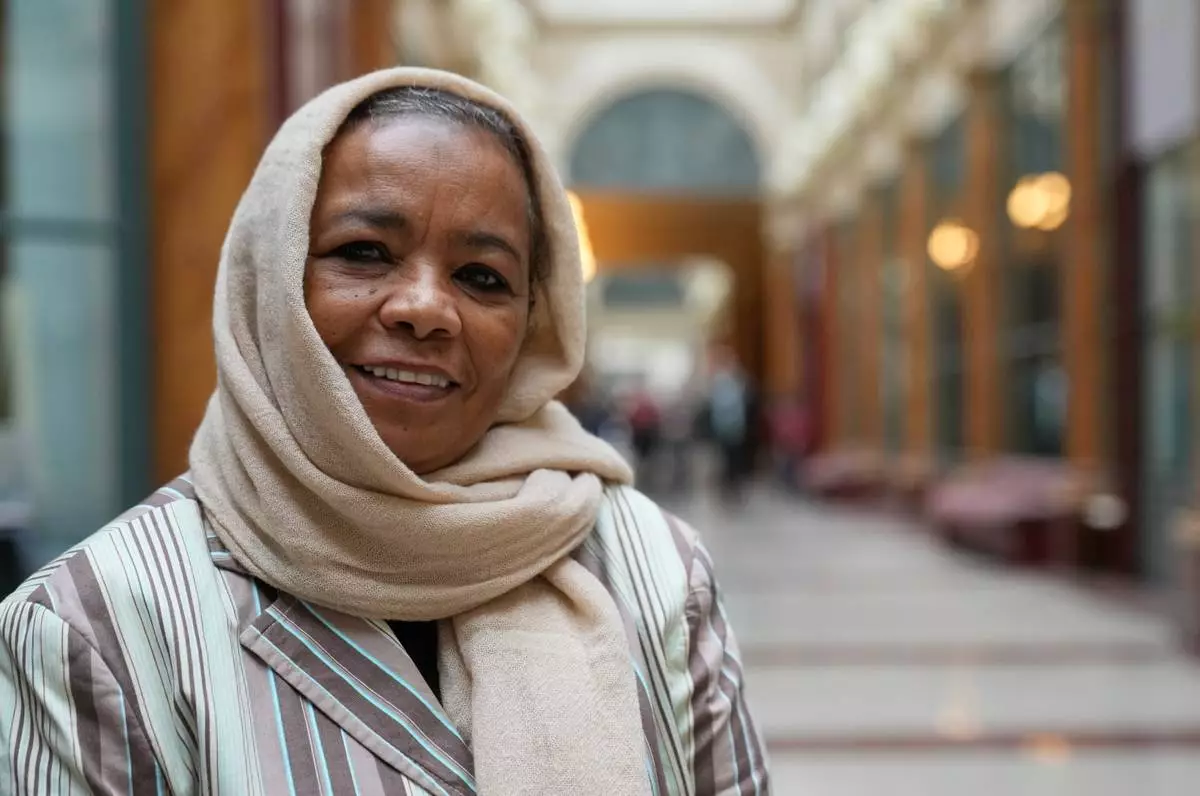
Archaeologist from Sudan's National Museum Dr Shadia Abdrabo, poses in the hall of the French National Institute for Art History (INHA) in Paris, Wednesday, Oct. 29, 2025. (AP Photo/Michel Euler)
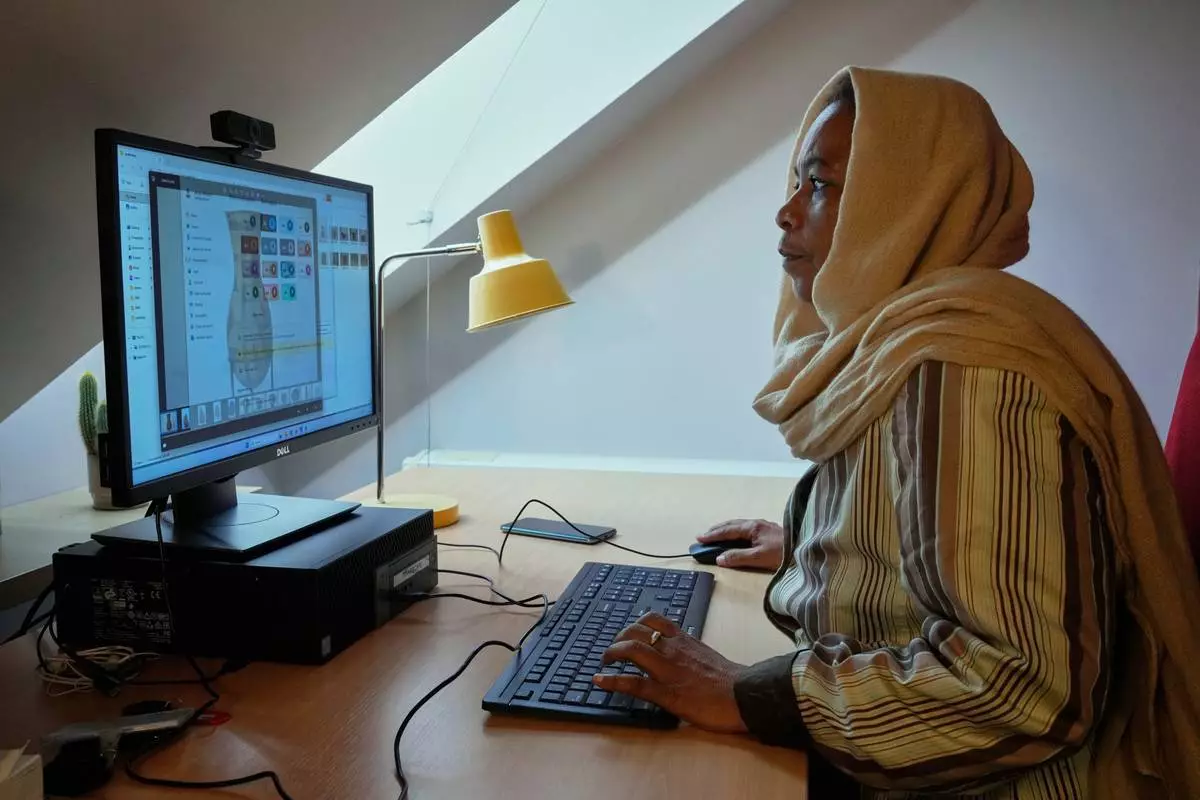
Archaeologist from Sudan's National Museum Dr Shadia Abdrabo, poses at her office at the French National Institute for Art History (INHA) in Paris, Wednesday, Oct. 29, 2025. (AP Photo/Michel Euler)
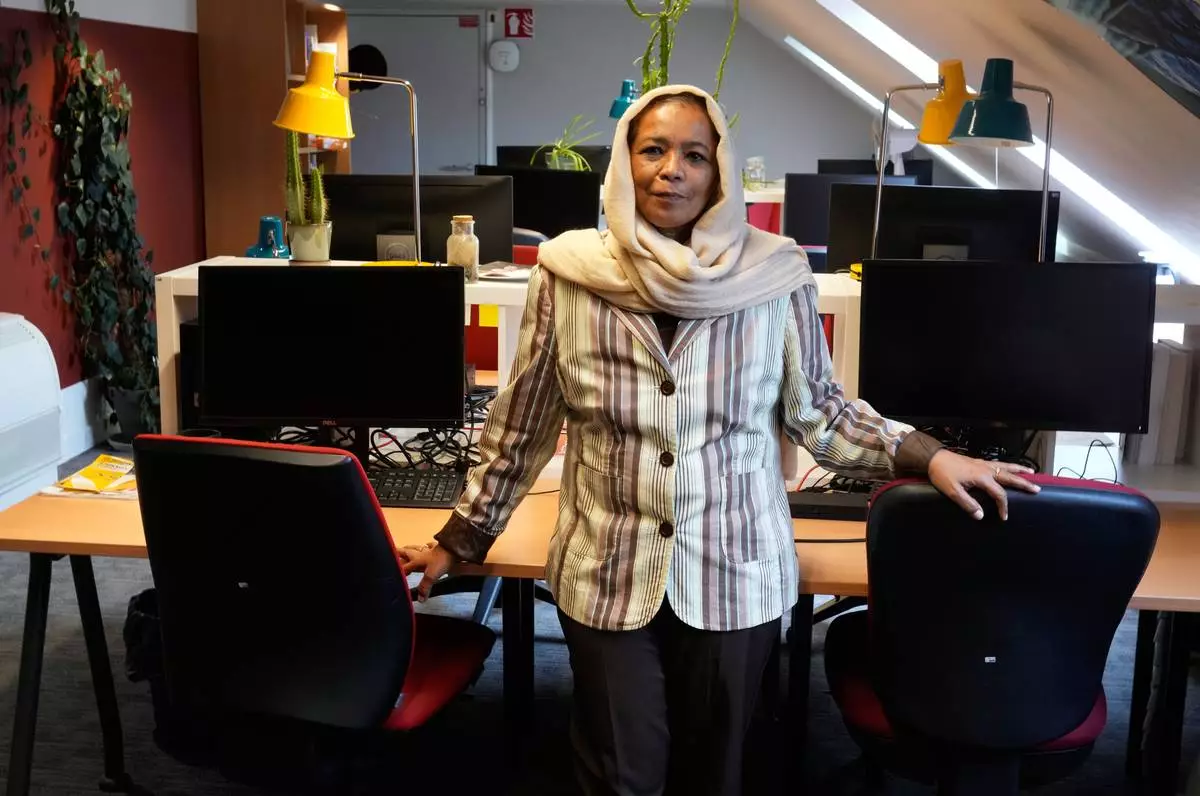
Archaeologist from Sudan's National Museum Dr Shadia Abdrabo, poses at her office at the French National Institute for Art History (INHA) in Paris, Wednesday, Oct. 29, 2025. (AP Photo/Michel Euler)
LONDON (AP) — British Prime Minister Keir Starmer pledged to revive his struggling government but faced growing calls to resign after a disastrous set of local and regional elections for his Labour Party.
As the final results came in Saturday, Labour suffered a net loss of more than 1,100 local council seats across England, lost control of several local authorities it had held for decades and was booted from power in Wales after 27 years. Anti-immigration party Reform UK gained over 1,300 seats across England and made significant gains in legislative elections in Wales and Scotland.
It was a blunt verdict from voters in elections widely seen as an unofficial referendum on Starmer, whose popularity has plummeted since he led the center-left party to power less than two years ago.
Here are five things we’ve learned from the elections.
Starmer insisted he would not walk away and "plunge the country into chaos,” and the dire election results did not produce an immediate challenge to his leadership.
"The right thing to do is rebuild and show the path forward,” Starmer said Saturday. “That’s what I’m going to do in the coming days.”
Starmer’s Cabinet colleagues expressed support, and none of the high-profile Labour politicians considered potential challengers has made a move. Health Secretary Wes Streeting, former Deputy Prime Minister Angela Rayner and Greater Manchester Mayor Andy Burnham are keeping quiet for now.
But a growing number of Labour lawmakers urged the prime minister to set a timetable for his departure this year. British politics allows parties to change leader midterm without the need for a new election.
“There has to be a timetable,” legislator Clive Betts told the BBC. Another lawmaker, Tony Vaughan, said there should be an “orderly transition of leadership.”
Starmer tried to demonstrate change on Saturday by bringing back two figures from past Labour governments. He made former Prime Minister Gordon Brown a special envoy on global finance, and appointed the party's ex-deputy leader Harriet Harman an adviser on women and girls.
Starmer is due to make a speech on Monday in an attempt to regain momentum, before the government sets out its legislative plans on Wednesday in a speech delivered by King Charles III at the State Opening of Parliament.
The elections were a breakthrough for Reform UK, the latest hard-right party led by the veteran nationalist politician Nigel Farage.
Running on an anti-establishment and anti-immigration message, the party won hundreds of local council seats in working-class areas in England’s north, such as Sunderland, that were solid Labour turf for decades. It also made gains from the Conservatives in areas like the county of Essex, east of London, and increased its vote share in Wales and Scotland, new terrain for the party.
Farage said the results marked a “historic change in British politics.” He said he's confident that “voters who have come to us are not doing it as a short-term protest.”
Reform UK currently holds just eight of the 650 seats in the House of Commons and it’s unclear whether it could repeat its success in a national election.
The elections produced semiautonomous administrations in Scotland and Wales led by parties devoted to independence and the breakup of the United Kingdom — though neither has that policy on the front burner.
The Scottish National Party, which has governed in Edinburgh since 2007, won another term but fell short of a majority, meaning an independence referendum is unlikely. Labour and Reform tied in a distant second place.
Plaid Cymru (The Party of Wales) won the most seats in the Cardiff-based legislature, the Senedd. The party, which has an ambition for Wales to leave the U.K. but no plan to do so anytime soon, fell short of a majority but will likely form the new government. Reform came second and Labour a distant third in one of its most historic heartlands, with outgoing First Minister Eluned Morgan losing her seat.
The economy lies at the heart of Labour’s troubles, as it does for many incumbent governments.
Since ending 14 years of Conservative rule roiled by austerity and the COVID-19 pandemic, Labour has struggled to ease the cost of living and jump-start a sluggish economy against the tough economic backdrop of war in Ukraine and, more recently, Iran. Starmer also has angered supporters with attempts to cut welfare spending, some of which were reversed after Labour revolts.
Some in Labour say the government's achievements, including protections for renters and a higher minimum wage, are going unnoticed. Many blame Starmer, an uninspiring leader distracted by scandals including his disastrous decision to appoint Peter Mandelson, a scandal-tarnished friend of Jeffrey Epstein, as Britain’s ambassador to Washington.
But Stephen Houghton, the outgoing leader of Barnsley council in northern England, where Labour lost to Reform, said the problem “goes deeper than the prime minister.”
“This has been coming for 30 years around the country, in post-industrial communities, coastal communities, that have been left behind,” he said. “You can change prime ministers all day long. If you don’t change policy, it’s not going to change.”
The results reflect a fragmentation of U.K. politics after decades of domination by Labour and the Conservative Party, which also suffered major losses on Thursday.
The elections offered voters a rainbow of choices, including the centrist Liberal Democrats and the nationalist parties in Scotland and Wales.
But the big winners were populist insurgents, Reform UK and the Green Party, whose focus has expanded from the environment to social justice and the Palestinian cause under self-described “eco populist” leader Zack Polanski. The Greens won hundreds of council seats from Labour in urban centers and university towns and took control of several local authorities.
Tony Travers, professor of government at the London School of Economics, said the results suggest the next national election, due by 2029, won’t produce a majority for any party.
“So then you’re in the world of, after the election, two or three big minority parties trying to work out how they would govern,” he said — something traditionally considered “very un-British.”
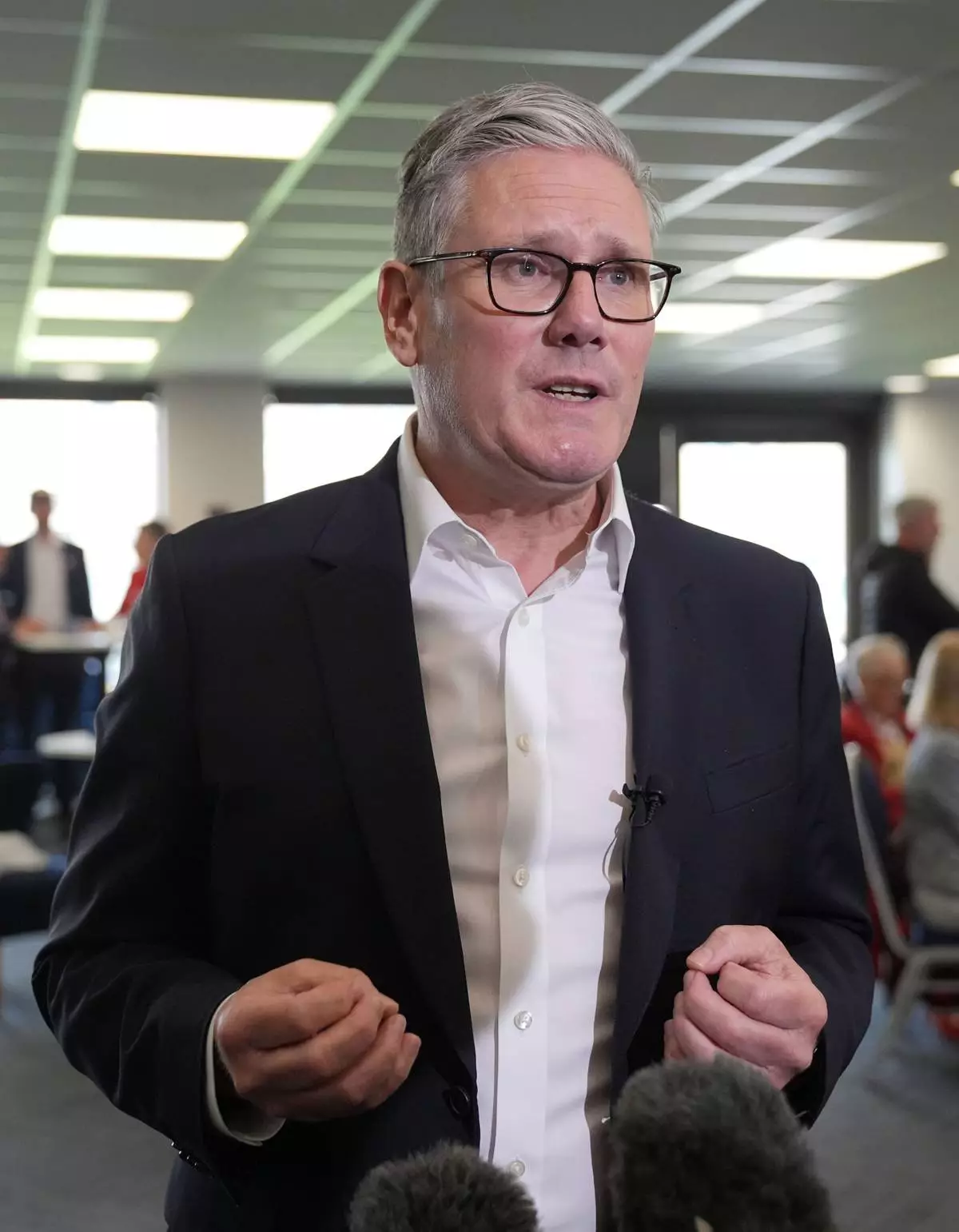
British Prime Minister Sir Keir Starmer speaking to the media after meeting Labour Party members during a visit to AFC Wimbledon in south London, Saturday May 9, 2026. (Maja Smiejkowska/PA via AP)
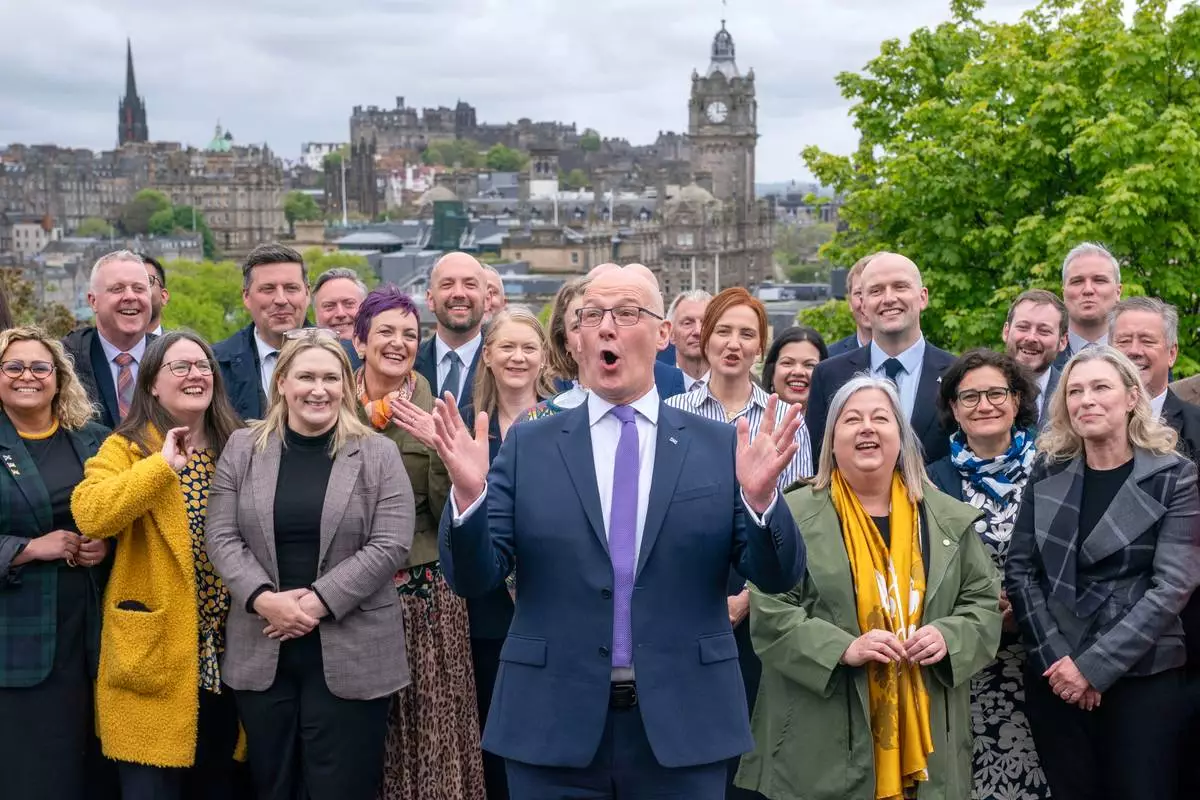
First Minister and SNP leader John Swinney with some of the newly elected SNP MSPs in Edinburgh, Saturday May 9, 2026, following the 2026 Holyrood elections. (Jane Barlow/PA via AP)
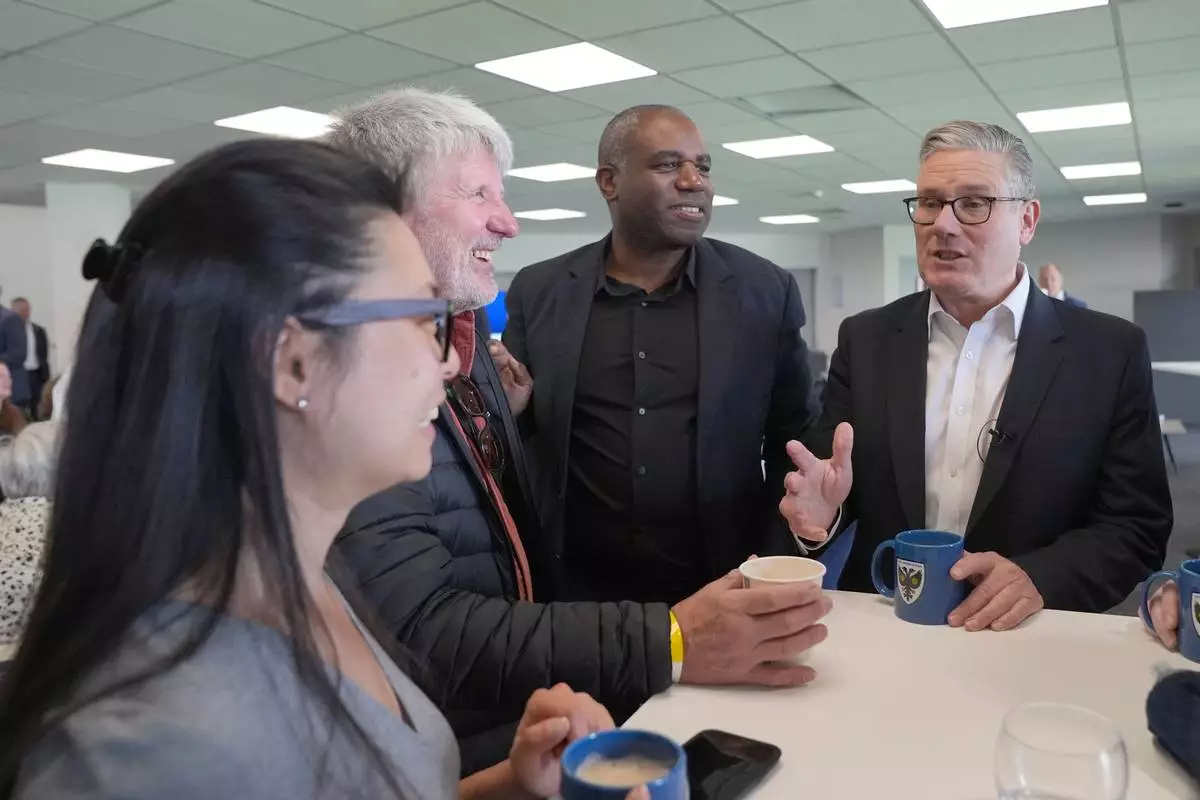
British Prime Minister Sir Keir Starmer and Foreign Secretary David Lammy meeting Labour Party members during a visit to AFC Wimbledon in south London, Saturday May 9, 2026. (Maja Smiejkowska/PA via AP)
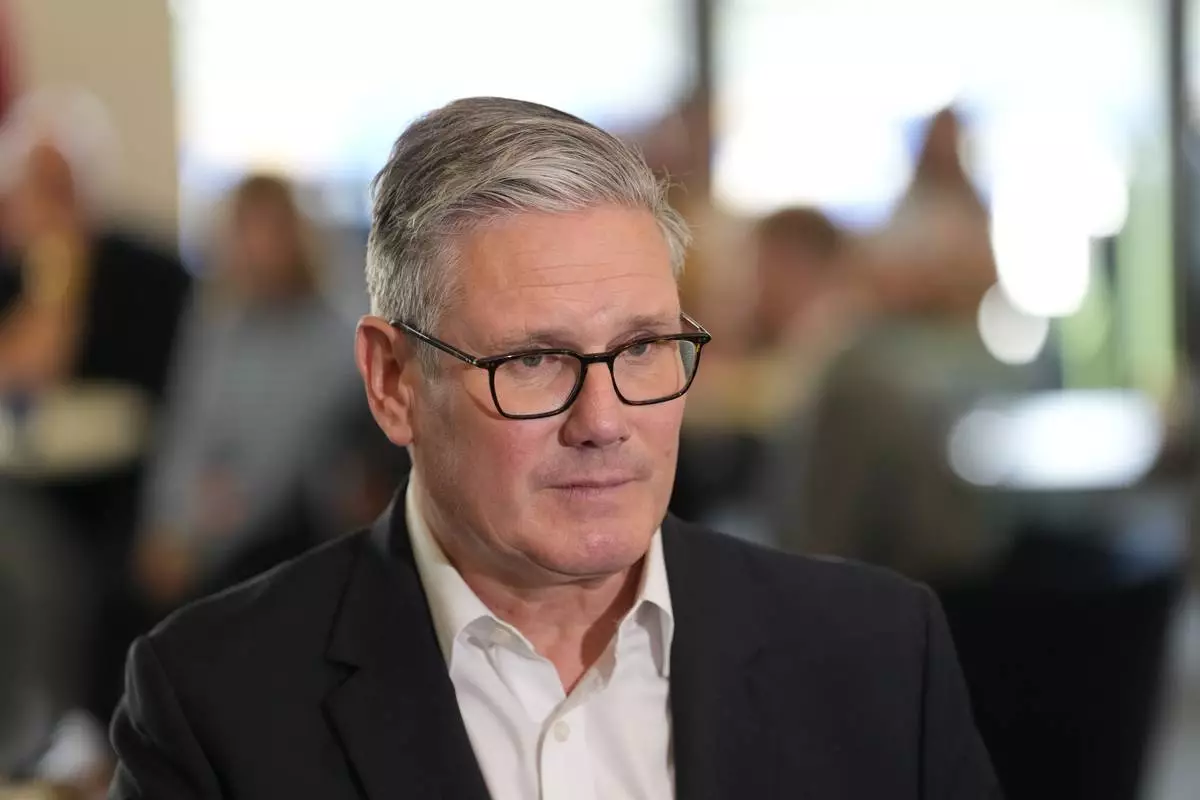
British Prime Minister Sir Keir Starmer speaking to the media after meeting Labour Party members during a visit to AFC Wimbledon in south London, Saturday May 9, 2026. (Maja Smiejkowska/PA via AP)
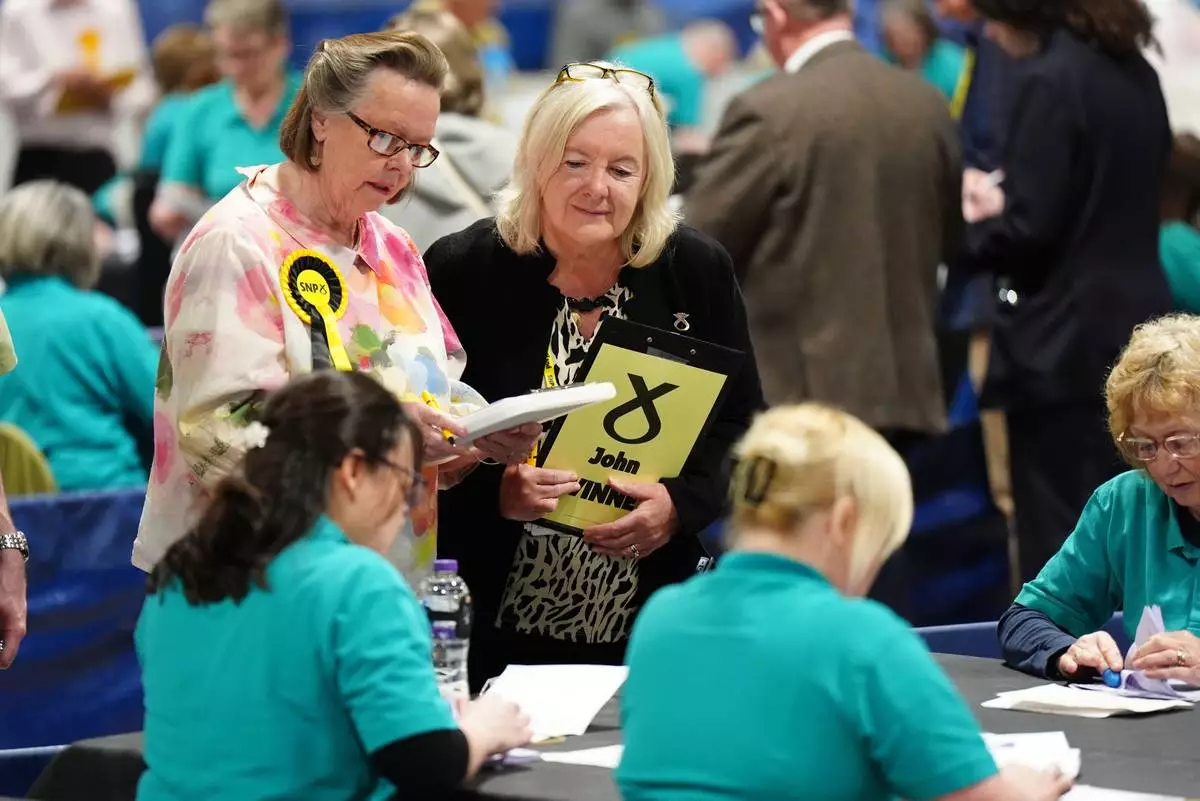
Observers from the Scottish National Party (SNP) watch as votes are counted for the 2026 Holyrood elections, at Dewars Centre in Perth, Scotland, Friday May 8, 2026. (Jane Barlow/PA via AP)
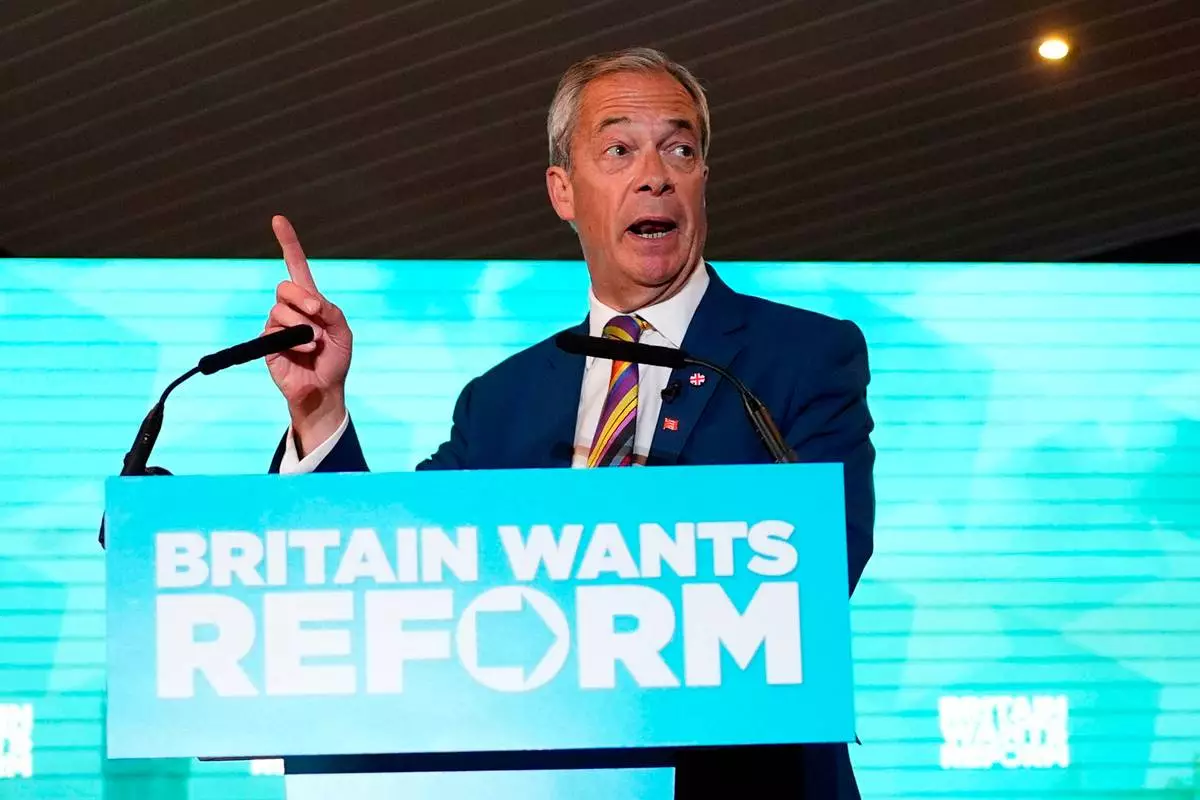
Reform UK leader Nigel Farage speaks to supporters at Chelmsford City Racecourse, Friday May 8, 2026, in Essex, England, following the 2026 local election results. (Jordan Pettitt/PA via AP)
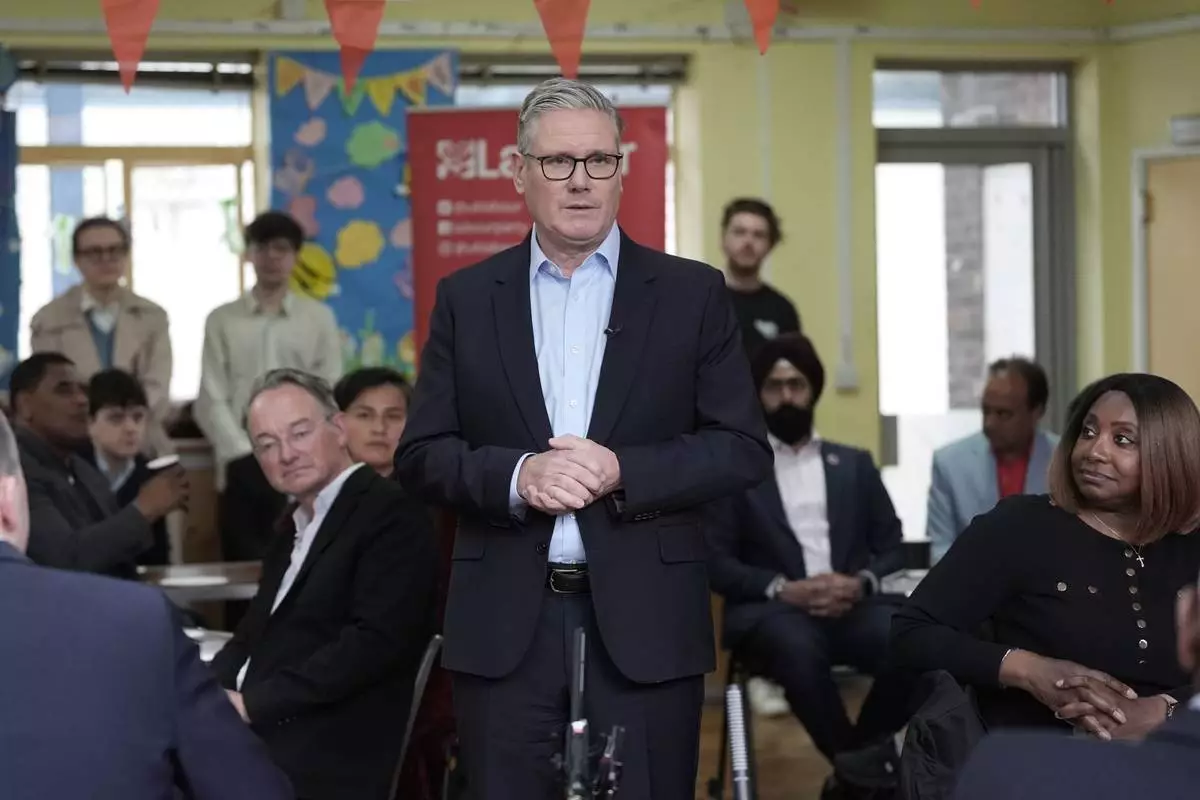
Britain's Prime Minister Sir Keir Starmer speaks to Labour Party members at Kingsdown Methodist Church Hall, in Ealing, west London, Friday May 8, 2026, a day after the local elections. (Stefan Rousseau/PA via AP)