LOS ANGELES (AP) — When an AI-generated country song called “Walk My Walk” hit No. 1 on Billboard's country digital song sales chart this month, it was credited to a fictional artist named Breaking Rust — a white, digitally generated avatar that didn't exist two months ago.
But the song's vocal phrasing, melodic shape and stylistic DNA came from someone who does exist: Grammy-nominated country artist Blanco Brown, a Black music artist who has worked with Britney Spears, Childish Gambino and Rihanna.
And he had no idea.
“I didn't even know about the song until people hit me up about it,” said Brown, whose 2019 country rap hit “The Git Up” helped usher in a new, hybrid era of country crossover. He didn't learn about the chart-topping AI track until his phone was flooded with messages from friends.
“My phone just kept blowing up,” he said. “Somebody said: 'Man, somebody done typed your name in the AI and made a white version of you. They just used the Blanco, not the Brown.”
The moment is the latest example of how generative AI is upending the music industry, giving anyone the ability to instantly create seemingly new songs by typing prompts into a chat window, often using models trained on real artists' voices and styles without their knowledge.
The credits for the grit-filled, chant-heavy track “Walk My Walk” list Aubierre Rivaldo Taylor as one of the song's creators, with streaming platforms such as Apple Music and Spotify identifying him as both the songwriter and producer. In recent months, Taylor has also been credited on streaming platforms as the songwriter and producer behind Defbeatsai — one of several X-rated, AI-generated country artists that exploded across social media last year.
The Defbeatsai ecosystem, however, connects back to another figure in Brown's past: Abraham Abushmais, a collaborator Brown once jokingly called “Abe Einstein” for his sharp studio instincts. Abushmais co-wrote a couple of songs on Brown's 2019 album “Honeysuckle & Lightning Bugs” and is listed as the developer of Echo, an obscure AI-powered music generator app promoted on one of Defbeats.ai's Instagram pages with a link encouraging users to “make your own hit country song.”
Brown said he wasn't notified about their involvement in the AI hit, and the collaborator he once mentored has since become unreachable.
“Abe’s number changed,” Brown said. “We used to talk. I ain’t heard from him in a year or two.”
The AP reached out to Abushmais for comment but did not receive a response.
The digital avatar fronting “Walk My Walk," a white, AI-generated country singer built with a vocal approach modeled on Brown's sound, is where the moment shifted from eerie to uncomfortable.
“It’s a white AI man with a Black voice,” Brown said. “And he’s singing like a Negro spiritual.”
For Brown, the shock quickly gave way to action. He went into the studio and recorded his cover of the song, which was released last week. He's also putting out a reworked derivative of the track on Monday with new lyrics and a new arrangement.
Brown's management said his response to the song is a direct challenge to the legal, ethical and policy void surrounding AI-generated music. He wants to use his own lived experience to force the industry and lawmakers to confront who owns art and what happens when technology outpaces the rights of the human creators it imitates.
“If someone is going to sing like me, it should be me,” he said.
For musicians and educators, the success of “Walk My Walk” made one thing clear: AI-generated music has leapt from internet experiment to commercial disruptor.
“We are entering a very strange and unprecedented period of both creation and industry,” said Josh Antonuccio, director of the Ohio University Music Industry Summit. “AI has essentially democratized the act of music creation itself.”
That democratization has come with no guardrails. Major record labels sued Suno and Udio — two most popular AI song generators — accusing them of training their models on copyrighted recordings without permission.
“These companies trained their platforms on a volume of recorded music without permission,” Antonuccio said. “It leaves creators in this strange purgatory where they're not getting compensated.”
Some labels have now shifted from lawsuits to negotiation. Universal Music Group recently settled a copyright infringement lawsuits with Udio and signed a new licensing agreement with the platform. Warner Music Group followed with its own deal on Tuesday, partnering with Suno in what the companies called a “first-of-its-kind” agreement to develop licensed AI music that both compensates and protects artists.
“There's no accountability mechanism at the moment,” he said.
The sudden success of “Walk My Walk” also raises questions about the tools enabling it. Educators say most chart-ready AI vocals today are generated through systems like Suno and Udio, which let users create full songs by prompting musical genres, vocal styles and lyrical ideas.
For Brown, this situation is a legal and cultural issue.
He spent years navigating country music as a Black artist who blends gospel, hip-hop, pop and twang. He's been nominated for a Grammy and embraced by the Recording Academy, but country radio hasn't given him consistent traction.
Meanwhile, an AI song built on his vocal identity and paired with a white avatar went straight to No. 1, a dynamic he says reflects a familiar pattern in Nashville: innovation from Black artists being reattributed.
“He created something with my tone and gave it a white face,” Brown said. “(Race) is an understatement in Nashville.”
Music educators say the issue goes beyond authorship. While AI tools can convincingly approximate sound, they aren’t able to capture the source of it.
“There are things a real artist conveys that the digital part never will,” said Shelton “Shelly” Berg, dean of the University of Miami's Frost School of Music and a Grammy-nominated pianist. He spoke shortly after appearing on on a Future of Music panel at the Grammy Museum in Los Angeles last week. “They occupy fundamentally different spaces.”
Berg said AI tracks can sometimes be polished in an eerie manner, but the intangible elements of performance remain out of reach.
“There's an energy between an artist and an audience that happens in real time that you can't see but you can feel,” he said. “We are so many light years away from that happening in an AI environment.”
Brown insists he's not anti-AI. He's not even angry with Abushmais. He's proud that his sound inspired someone, but he understands what the moment exposes.
For him, the arrival of an AI artist built on his tone only underscored something he has learned repeatedly in Nashville: talent is one thing, but how the industry assigns value is often something else.
“I go through this every day with real people who steal and borrow from what I do,” Brown said. “So I don't care if it's a robot or a human. They're not giving me credit anyway.”
In a fast-changing landscape, Brown said artists will have one final advantage that machines can't mimic.
“Real artists are always going to prevail,” he said. “Purpose lives where greed can't.”

FILE - Blanco Brown performs during CMA Fest, Saturday, June 8, 2024, in Nashville, Tenn. (Photo by Amy Harris/Invision/AP, File)
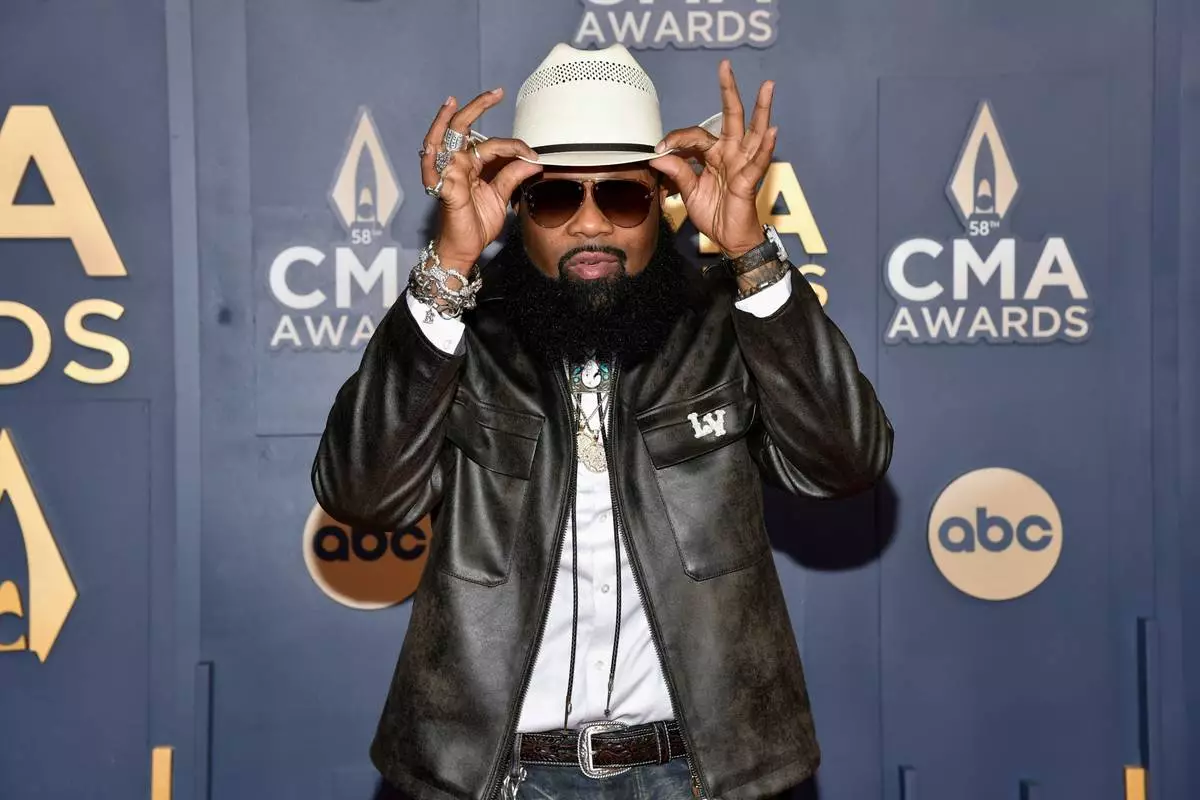
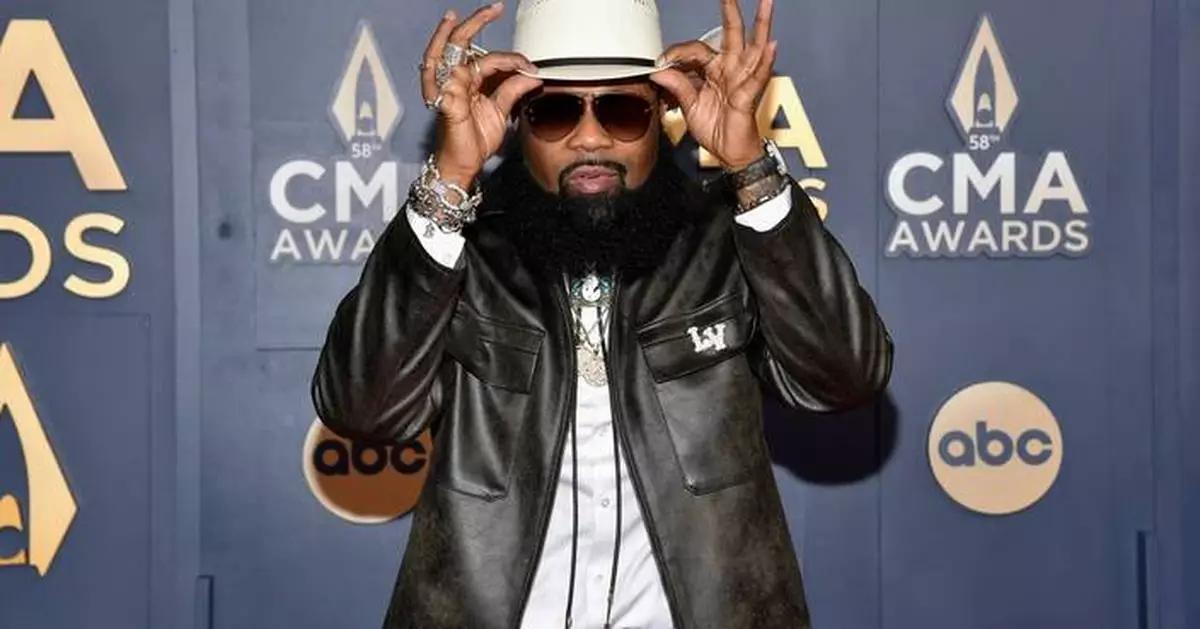
FILE - Blanco Brown arrives at the 58th Annual CMA Awards on Wednesday, Nov. 20, 2024, at Bridgestone Arena in Nashville, Tenn. (Photo by Evan Agostini/Invision/AP, File)