The Shenzhou-21 crew members on board China's Tiangong space station carried out multiple science experiments and their first full-system emergency response drills, among other tasks, in orbit over the past week.
The three astronauts -- Zhang Lu, Wu Fei, and Zhang Hongzhang -- have been in orbit for a month as of Sunday.
Using laptops aboard the space station, the astronauts conducted microgravity experiments on intuitive physical behavior, collecting relevant behavioral data to explore the impact of long-term spaceflight on human's intuitive physical representations and the mechanisms of their recovery.
They used space Raman spectrometer to analyze metabolic components in urine samples, with the collected information to be used for further refinement and improvement of the relevant characteristic metabolite indicator system and evaluation criteria.
Additionally, the crew completed the installation of new software for space medical experiments. In microgravity physics science, the crew completed scheduled tasks including replacing the high-speed image storage unit in the two-phase system experiment cabinet and disassembling and assembling experimental modules.
Besides, per experimental schedule, they cleaned and replaced samples within the containerless cabinet's experimental chamber, cleaned window cover lenses and conducted other relevant missions.
The crew also conducted their first full-system emergency pressure response drills in orbit as planned, which simulated the full emergency response process for an internal depressurization scenario, reinforcing and enhancing the crew's emergency handling capabilities and ground-space coordination.
In equipment inspection and maintenance, the crew performed patrols of the cryogenic storage units and the minus 80-degree space refrigerator, checked pressures in the environmental control gas cylinder, and conducted maintenance on the regenerative life support system equipment.
In station management, the crew organized supplies and cleaned the cabin, keeping their orbiting home tidy. In addition, they underwent multiple medical examinations, including non-invasive cardiac function tests, providing data for ground teams to closely monitor their health in orbit.
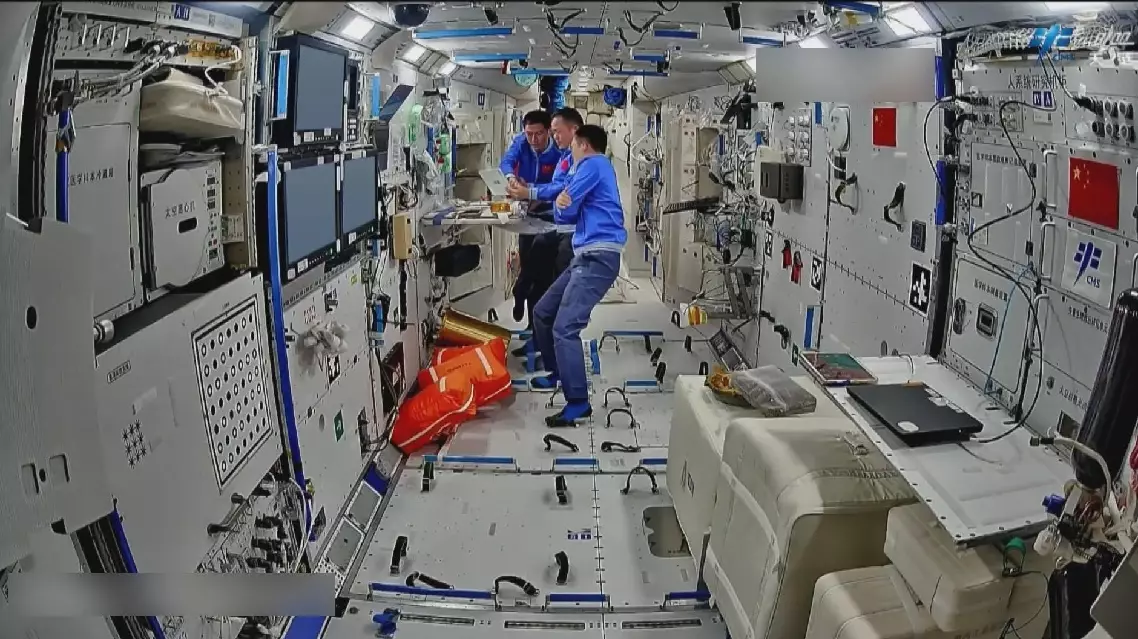
Shenzhou-21 astronauts conduct science experiments, emergency drills in orbit
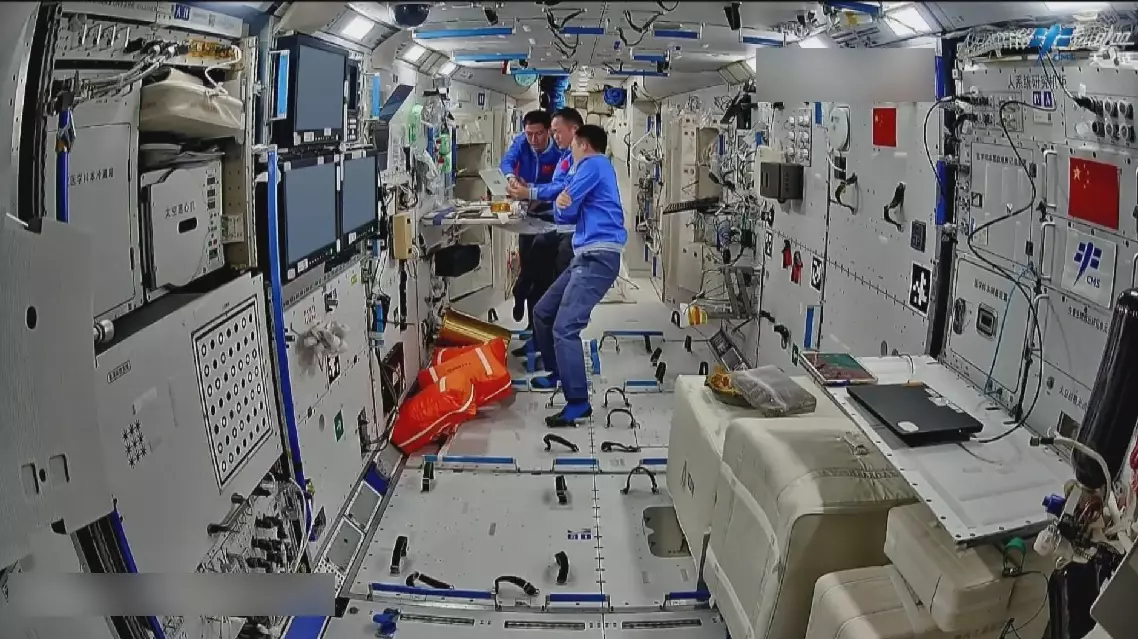
Shenzhou-21 astronauts conduct science experiments, emergency drills in orbit