A freight train bound for Budapest, Hungary, departed from southwest China's Chongqing Municipality on Sunday, marking the launch of a new fixed-schedule China-Europe freight train service, also known as China Railway Express.
The train, carrying automotive and motorcycle parts, electronic products and other consumer goods, is expected to take about 11 days to reach Budapest -- a major transport hub serving Central and Eastern Europe. The train will exit China via the Alataw Pass in its northwestern Xinjiang Uygur Autonomous Region and travel through countries including Kazakhstan, Poland, the Czech Republic and Slovakia, before arriving in Hungary.
The new route is Chongqing's second fixed-schedule China–Europe freight train service, after the one connecting the municipality with Duisburg, Germany.
Compared with traditional freight trains, fixed-schedule trains follow set timetables and routes -- significantly improving efficiency and reliability. According to China Railway Chengdu Group Co., Ltd., the Chongqing-Budapest route will reduce travel time by around 30 percent.
Data released by China State Railway Group Co., Ltd. earlier this week showed that China-Europe freight trains had made a cumulative 120,000 trips and transported goods worth more than 490 billion U.S. dollars.
As a flagship project and a landmark brand of the Belt and Road Initiative, the China Railway Express has established a comprehensive logistics network across Eurasia -- now reaching 232 cities in 26 European countries and more than 100 cities in 11 Asian countries.
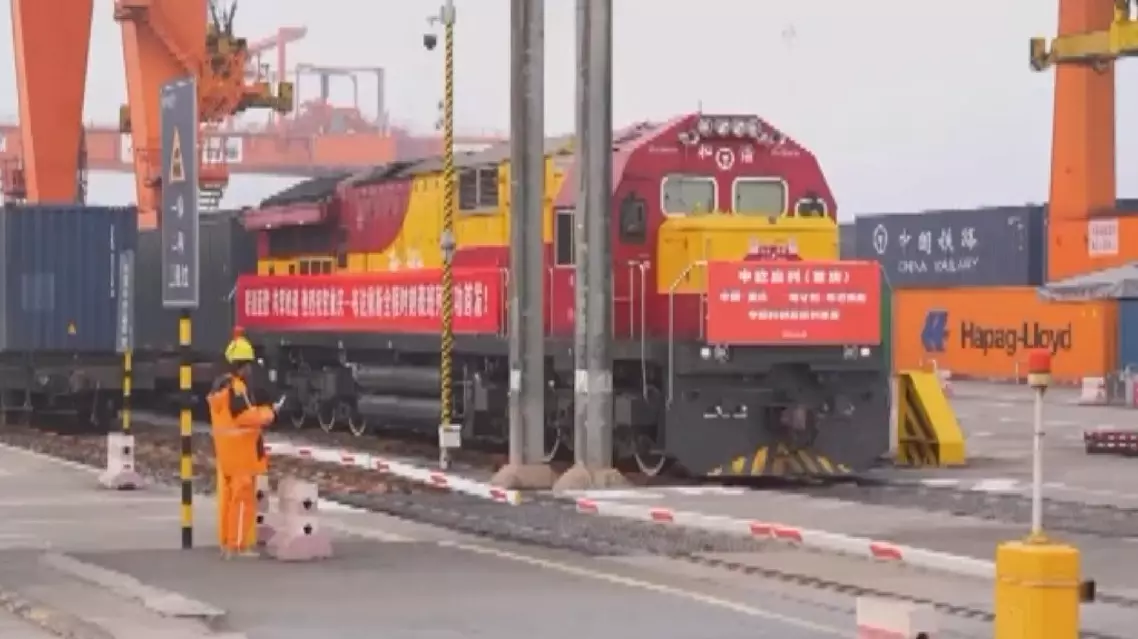
Southwest China's Chongqing launches fixed-schedule freight train service to Budapest
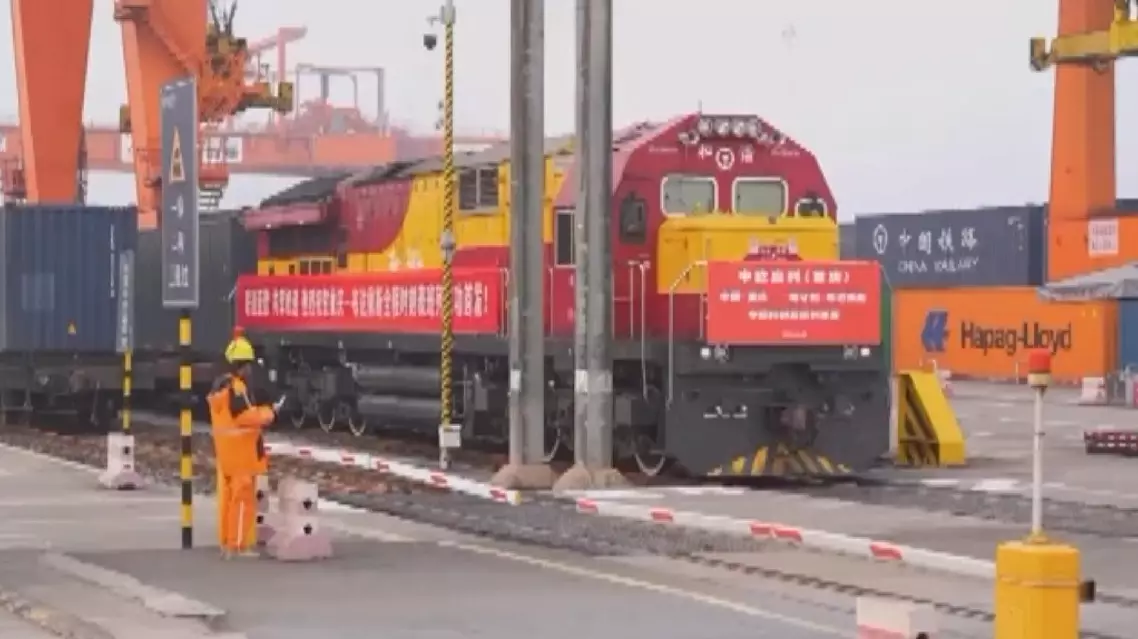
Southwest China's Chongqing launches fixed-schedule freight train service to Budapest
Iran's Foreign Ministry on Wednesday dismissed U.S. President Donald Trump's remarks about Iran seeking a ceasefire as "false and baseless," according to state-run Press TV.
Foreign Ministry spokesman Esmaeil Baghaei pushed back against Trump's remarks on social media platform Truth Social that the Iranian president "has just asked the United States of America for a ceasefire."
Trump added, "We will consider when the Hormuz Strait is open, free, and clear. Until then, we are blasting Iran into oblivion or, as they say, back to the Stone Ages!"
Trump has repeatedly claimed in recent days that Iran is seeking negotiations to end the war.
Iranian Foreign Minister Seyed Abbas Araghchi acknowledged that messages have been exchanged between Iran and the United States through intermediaries over the past few days, but stressed that no negotiations have taken place.
On the same day, Masoud Pezeshkian, Iran's President, released a letter addressed to the American people, saying the Iranian people harbor no enmity toward American people, accusing the U.S. administration of fighting Iran as a "proxy for Israel."
"The Iranian people harbor no enmity toward other nations, including the people of America, Europe, or neighboring countries," Pezeshkian said, adding, "Even in the face of repeated foreign interventions and pressures throughout their proud history, Iranians have consistently drawn a clear distinction between governments and the peoples they govern."
In response to Trump's threats of conducting large-scale strikes on Iranian energy facilities, he said attacking the country's vital infrastructure directly targets the Iranian people, stressing that such actions constitute "war crimes" and involve consequences extending beyond Iran's borders.
Israel and the United States launched joint attacks on Tehran and several other Iranian cities on Feb. 28, killing Iran's then Supreme Leader Ali Khamenei, along with senior military commanders and civilians. Iran responded with waves of missile and drone strikes against Israel and U.S. assets in the Middle East, while tightening control over the Strait of Hormuz by restricting passage to vessels belonging to or affiliated with Israel and the United States.
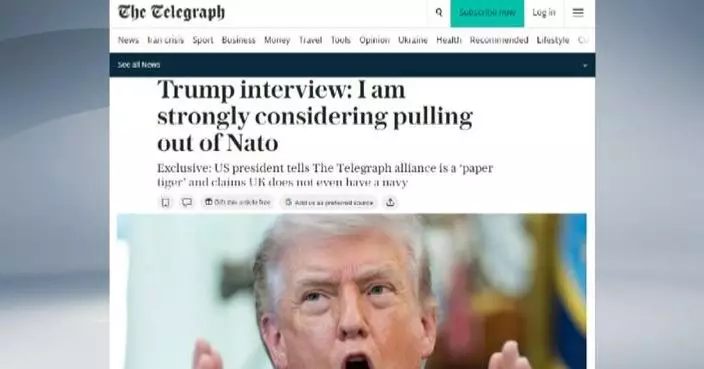
Wednesday's report by The Telegraph quoted Trump as saying he was strongly considering pulling the United States out of the North Atlantic Treaty Organization (NATO) after the alliance failed to join the attacks on Iran.
Trump expressed dissatisfaction with NATO for "not being there," saying it was "actually hard to believe."
Responding to the U.S. president's remarks, British Prime Minister Keir Starmer said at a press conference at 10 Downing that Street Britain would act in its national interest and would not change its position on the Iran war.
French President Emmanuel Macron said on Wednesday that France is not taking part in the U.S.-Israel military action. The Elysee Palace also reaffirmed that France's position remains unchanged.
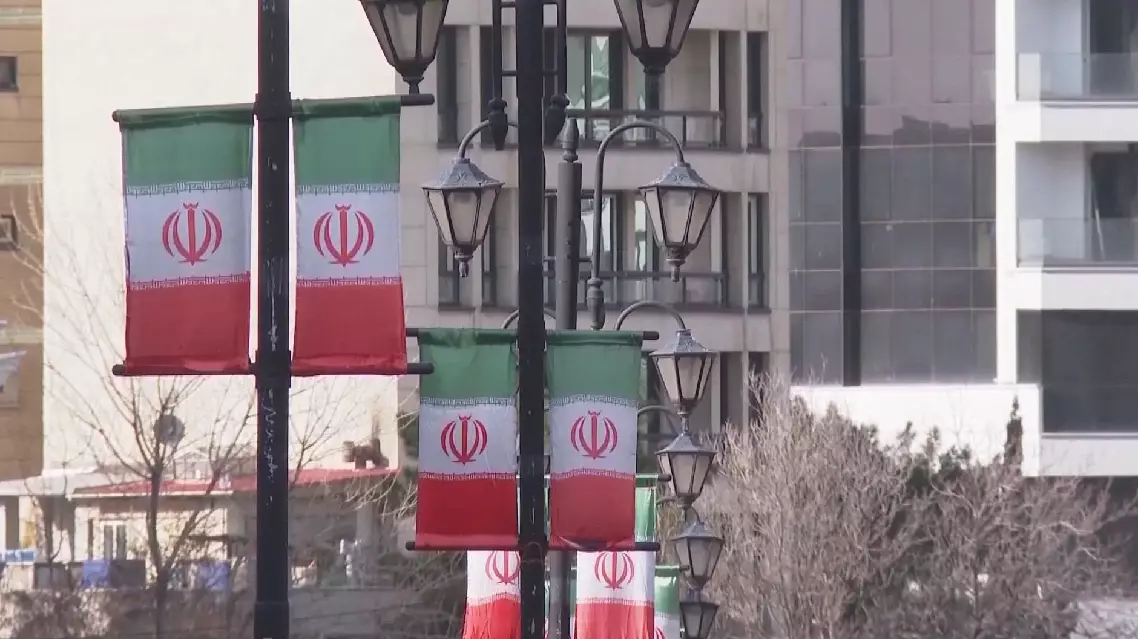
Iran rejects Trump's ceasefire claim as "false and baseless"