Engineers and archeologists working on Rome's new Metro C line are working to incorporate discoveries made during deep excavations into world-first "museum stations", allowing commuters to experience a journey through time.
At the heart of the project is Piazza Venezia, now a vast construction site, where some of the most significant archeological finds have been uncovered in recent years.
Andrea Sciotti, technical director and C line project manager, said that the team is acutely aware of its responsibility.
"I am very proud to be overseeing this project, both as a technician and as a Roman, because as we excavate and travel back in time, we consider the metro as a kind of connection with the Roman architects and engineers who came before us," said Sciotti.
Sciotti describes the Piazza Venezia stop as an engineering challenge unlike any other in the city. Excavation reaches 85 meters below ground, exposing layers of Rome's 2,800-year history.
"Rome is a particular city because it is not only long and wide but also deep. In its 2,800 years, it has been built layer upon layer, so obviously, it is a very delicate engineering operation to also protect its archaeological heritage," said Sciotti.
Archeologists at the site have uncovered homes, shops and workshops dating back to the early Roman Empire, which will form part of the museum-station's exhibitions.
The San Giovanni "archeostation" is already open to the public, where glass cases exhibit remnants of a 1st-century CE farm, including peach stones and irrigation systems.
Archeologist Simona Moretta, who oversees excavations for three Metro C stations, said that cooperation between engineers and archeologists has strengthened over time.
"I have to say that in the beginning the archaeologists and the engineers were on opposing fronts - we clashed. Then when important discoveries emerged, the engineers understood the 'slowness' of the archaeological process and the need for preservation," said Moretta.
When complete, Metro C will stretch 26 kilometers and include 29 stations, linking the southeastern suburbs with Rome's historic center. Construction began in 2006 and is expected to continue until 2035, at a cost of around 8 billion U.S. dollars.
For Moretta, the goal is not only to safeguard artifacts but to make them accessible.
"We found many precious and unique artifacts, but above all we wanted to make the archaeology public, so that in exchange for years of construction sites, residents can connect with their history. Every station is a journey through time, not just a physical journey," she said.
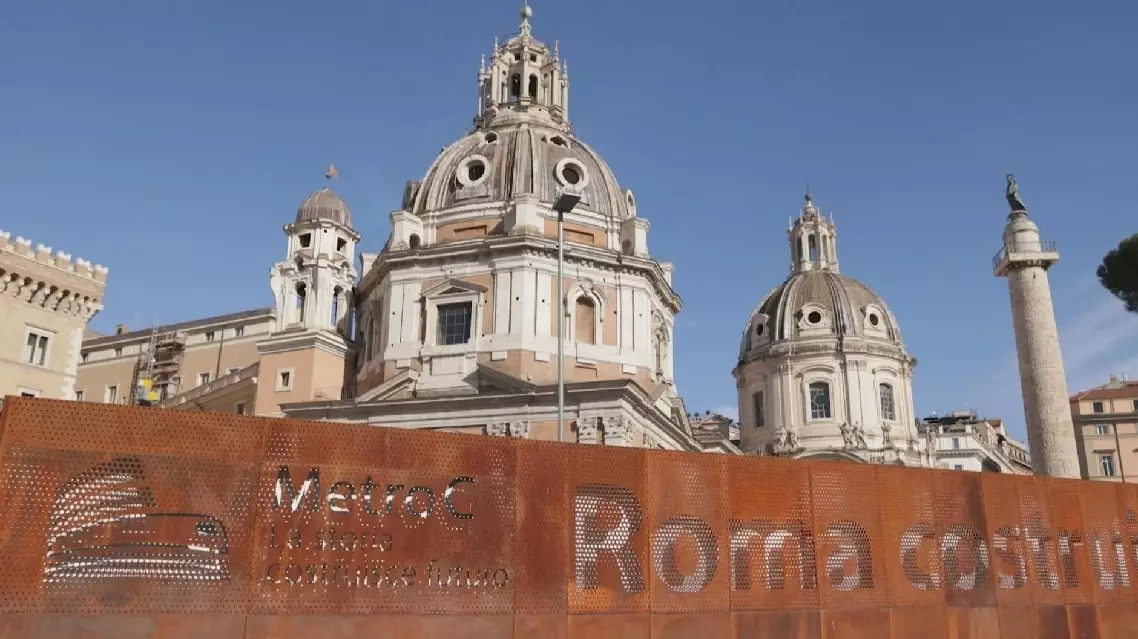
Rome's new Metro line showcases its deep past in 'museum stations'