PHILADELPHIA (AP) — President Donald Trump’s former personal lawyer Alina Habba is disqualified from serving as New Jersey’s top federal prosecutor despite his administration’s maneuvers to keep her in the role, an appeals court said Monday.
A panel of judges from the 3rd U.S. Circuit Court of Appeals sitting in Philadelphia sided with a lower-court judge's ruling after hearing oral arguments at which Habba was present on Oct. 20.
“It is apparent that the current administration has been frustrated by some of the legal and political barriers to getting its appointees in place. Its efforts to elevate its preferred candidate for U.S. Attorney for the District of New Jersey, Alina Habba, to the role of Acting U.S. Attorney demonstrate the difficulties it has faced — yet the citizens of New Jersey and the loyal employees in the U.S. Attorney’s Office deserve some clarity and stability,” the court wrote in a 32-page opinion.
It concluded: “We will affirm the District Court’s disqualification order.”
The ruling comes amid the push by Trump's Republican administration to keep Habba as the acting U.S. attorney for New Jersey, a powerful post charged with enforcing federal criminal and civil law. It also comes after the judges questioned the government's moves to keep Habba in place after her interim appointment expired and without her getting Senate confirmation.
Habba said after that hearing in a statement posted to X that she was fighting on behalf of other candidates to be federal prosecutors who have been denied a chance for a Senate hearing.
The White House had no immediate comment on Habba and referred questions to the Justice Department. Messages were left Monday seeking comment from the U.S. attorney's office in New Jersey, Habba’s personal staffer and the Justice Department.
The decision affirmed Habba is serving unlawfully, attorneys for the appellees said in an emailed statement.
"We will continue to challenge President Trump’s unlawful appointments of purported U.S. Attorneys wherever appropriate,” said attorneys Abbe Lowell, Gerry Krovatin and Norm Eisen in the statement.
Habba is hardly the only Trump administration prosecutor whose appointment has been challenged by defense lawyers.
Last week, a federal judge dismissed criminal cases against former FBI Director James Comey and New York Attorney General Letitia James after concluding that the hastily installed prosecutor who filed the charges, Lindsey Halligan, was unlawfully appointed to the position of interim U.S. attorney for the Eastern District of Virginia. The Justice Department has said it intends to appeal the rulings.
The judges on the panel were two appointed by Republican President George W. Bush, D. Brooks Smith and D. Michael Fisher, as well as one named by Democratic President Barack Obama, Luis Felipe Restrepo.
It wasn't immediately clear how the ruling would affect prosecutions. Jacob Elberg, a Seton Hall Law School professor, said the decision would have “real implications."
“This is an office that has a lot of responsibility for protecting citizens from all types of criminal conduct as well as issues that are civil in nature, but real significant consequences,” he said. “And this is a real challenge to that office’s ability to do its work.”
A lower-court judge, Matthew Brann, said in August that Habba's appointment was done with a “novel series of legal and personnel moves” and that she was unlawfully serving as U.S attorney for New Jersey.
That order said Habba's actions since July could be invalidated, but the judge stayed the order pending appeal.
The government argued Habba is validly serving in the role under a federal statute allowing the first assistant attorney, a post she was appointed to by the Trump administration.
A similar dynamic is playing out in Nevada, where a federal judge disqualified the Trump administration’s pick to be U.S. attorney there.
The Habba case comes after several people charged with federal crimes in New Jersey challenged the legality of her tenure. They sought to block the charges, arguing she didn’t have the authority to prosecute their cases after her 120-day term as interim U.S. attorney expired.
Habba was Trump’s attorney in criminal and civil proceedings before he was elected to a second term. She served as a White House adviser briefly before Trump named her as a federal prosecutor in March.
Shortly after her appointment, she said in an interview that she hoped to help “turn New Jersey red,” a rare overt political expression from a prosecutor.
She then brought a trespassing charge, eventually dropped, against Democratic Newark, New Jersey, Mayor Ras Baraka stemming from his visit to a federal immigration detention center.
Habba later charged Democratic U.S. Rep. LaMonica McIver with assault stemming from the same incident, a rare federal criminal case against a sitting member of Congress other than for corruption. McIver denied the charges and pleaded not guilty. The case is pending.
Questions about whether Habba would continue in the job arose in July when her temporary appointment was ending and it became clear New Jersey’s two Democratic U.S. senators, Cory Booker and Andy Kim, would not back her appointment.
Earlier this year as Habba's appointment was expiring, federal judges in New Jersey exercised their power under the law to replace her with a career prosecutor who had served as her second-in-command.
Attorney General Pam Bondi then fired the prosecutor installed by the judges and renamed Habba as acting U.S. attorney. The Justice Department said the judges acted prematurely and said Trump had the authority to appoint his preferred candidate to enforce federal laws in the state.
Brann’s ruling said the president’s appointments are still subject to the time limits and power-sharing rules laid out in federal law.

FILE - President Donald Trump speaks during a swearing-in for Alina Habba as interim US Attorney General for New Jersey, in the Oval Office of the White House in Washington, March 28, 2025. (Pool via AP, file)

FILE - Alina Habba, President Donald Trump's pick to be the interim U.S. Attorney for New Jersey, speaks with reporters outside the White House, March 26, 2025, in Washington. (AP Photo/Mark Schiefelbein, File)
CLEVELAND, Miss. (AP) — A sparse crowd drifted into Walter Sillers Coliseum for Delta State’s first women’s basketball game in 1973.
It was a 4 p.m. tipoff against Holmes Community College — announced only in the local paper in rural Cleveland, Mississippi. There were no tickets, no concessions or buzz. Just a handful of curious women's basketball fans with no clue what this team led by a former high school coach named Margaret Wade could be.
“We had no expectations because, see, the coach came from the high school, and she had never coached college ball," said Dot Bright, a 1962 Delta State graduate who still lives just a few blocks from the school. "So we thought, 'Oh, OK. It’s all in the family. We thought it was just little hometown people.”
What Bright and a few others saw that day was the beginning of something bigger. Within a couple of years, Delta State became one of women's basketball's early powerhouses. The Lady Statesmen were the first No. 1 team when the women's college basketball poll debuted 50 years ago and won three straight national championships in the Association for Intercollegiate Athletics for Women (AIAW) from 1975-1977.
The Lady Statesmen will be recognized during “The AP Top 25 Fan Poll Experience” being held Thursday-Saturday at Arizona State’s First Amendment Forum in the Walter Cronkite School of Journalism and Mass Communication. The poll has served as a road map for the rise of the sport, though a lot has changed since the NCAA took over in 1982.
The women's basketball spotlight has since shifted elsewhere as money reshaped the sports landscape and large programs with big budgets — like the powerhouses in this weekend’s Final Four including UConn and South Carolina — began to dominate.
In Cleveland, Delta States' rich legacy still resonates.
“People still support it," Delta State athletic director Mike Kinnison said. "While we’ve had some ups and downs with it, it’s still a good program. That's still very important to me that we keep that tradition and keep that history and heritage out front.”
Reminders of that history are scattered across Delta State's campus. The basketball court is named after coach Lloyd Clark, who led the program to three national titles in 1989, 1990 and 1992 after its move to the NCAA's Division II. The jerseys of star players including women's basketball pioneer Lusia Harris are hanging in the gym. A “Hall of Fame” room of photos and trophies is set up in the athletic building chronicling those dominant days.
Current Delta State women's basketball coach Tracy Stewart-Lange makes sure prospective players are aware of the program's legacy when they arrive on campus.
Stewart-Lange, who just led the Lady Statesmen to an 18-11 record in her fourth season, stops recruits by the stadium's concourse to see a replica of the Wade Trophy given each year to the best player in women's basketball, which is encased near the front door, as well as a display of Delta State's national championship trophies under Wade and Clark.
Even Delta State football coaches bring up Wade, Clark and Harris when selling recruits on the school.
“You try to give them little snippets of, ‘Guys, this is where you are now,’” Stewart-Lange said. “'Don’t take it for granted. Step into those shoes and shine and push it forward. Get it back to the top.'”
Wade, who had coached at nearby Cleveland High School years before taking over at Delta State ahead of the 1973 season, had a roster that included the future Hall of Famer, Harris, who became one of the greatest women's players ever.
But publicity was scarce that first year. Former sports information director Langston Rogers recalled that many local and regional papers mostly ran box scores — until the wins and crowds became impossible to ignore.
The Lady Statesmen went undefeated in 1974, upsetting Philadelphia powerhouse Immaculata to win the AIAW national title and quickly building national credibility with wins over teams like Ole Miss and Auburn. They eventually drew thousands to venues like Madison Square Garden and UCLA's Pauley Pavilion, a rarity in women's hoops during that time.
Demand at home far exceeded the 3,000-seat Walter Sillers Coliseum, so portable bleachers were brought in and students sat along stage railings to squeeze inside.
"Everybody in Cleveland knew us and knew our names," said Debbie Brock, starting point guard from 1974-78. “You would drive up to the Sonic — and we didn’t have many restaurants or anything then — but I’d go to the Sonic, and the man would say, ‘Great game tonight.’”
Kinnison, athletic director since 2019, is now trying to recapture those times.
After the NCAA replaced the AIAW as the governing body for women's college sports, Delta State and other small colleges faced a major challenge to stay competitive on a national scale.
Recruiting advantages and national media attention have since dwindled, and for a while it was hard to bring in the same caliber of coaches.
“People don’t jump up and down when they find out they’re moving to the Mississippi Delta,” Bright said. “It’s hard to recruit here. I think the coach we have now, Coach Lange, she is doing an awesome job ... We have a very good record this year, some of the best since Lloyd Clark.”
Bright, 82, still never misses a game — though they're much quieter than they were 50 years ago.
Stewart-Lange runs into people around the Cleveland area who talk of their memories from those days. That gives her hope that local support can still remain even as the national spotlight has faded.
“I do feel like the undercurrent is there within the community,” Stewart-Lange said. “It’s been done before. And it can be done again.”
AP Top 25 Fan Poll Experience: https://apnews.com/https:/apnews.com/projects/arizona-state-fan-poll-experience/
AP March Madness bracket: https://apnews.com/hub/ncaa-womens-bracket and coverage: https://apnews.com/hub/march-madness
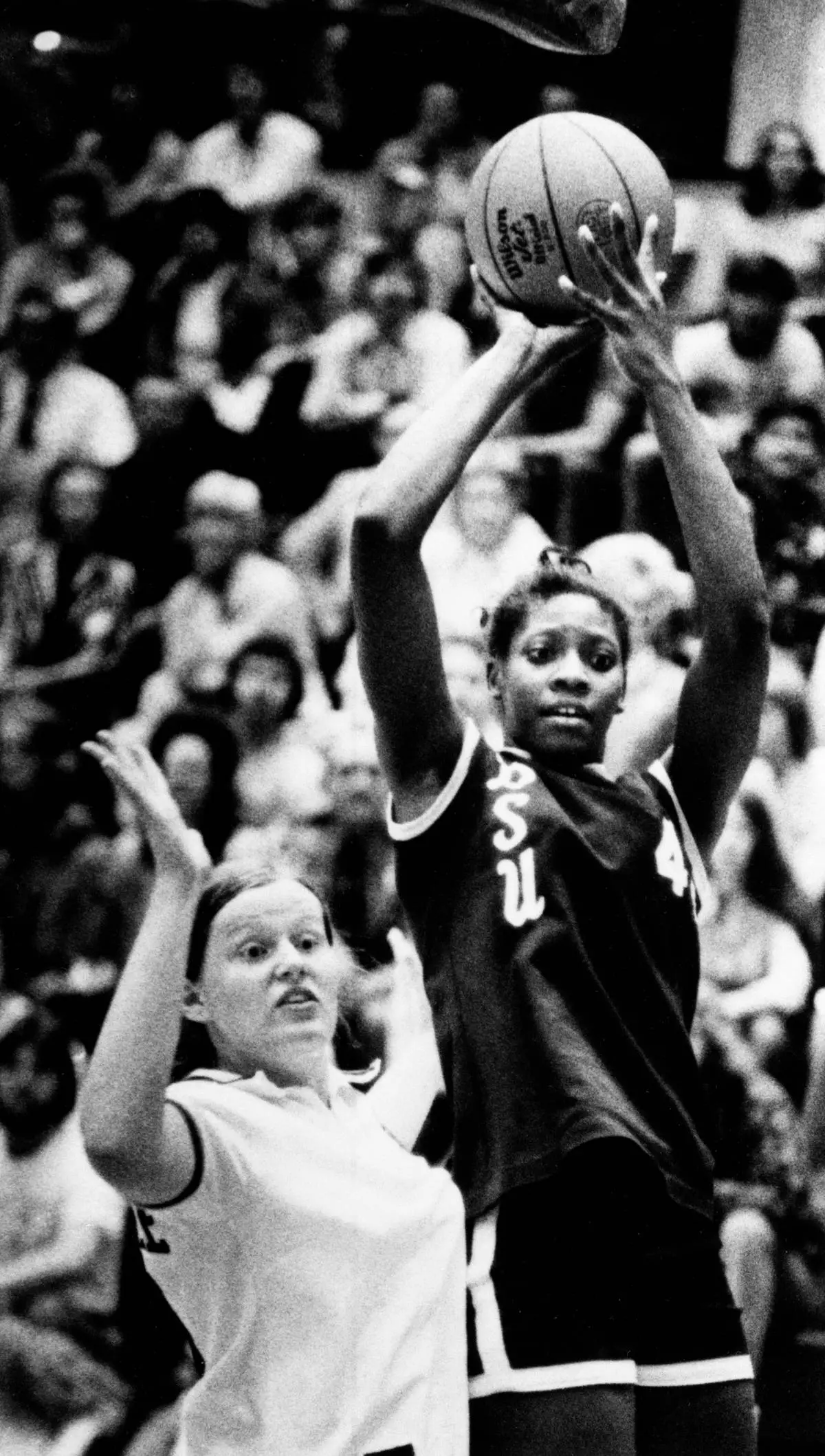
FILE - Delta State center Lusia Harris, right, towers over Penn State's Mag Strittmatter, left, as she pulls down a rebound at Penn State in University Park, Pa., March 24, 1976. (AP Photo, File)
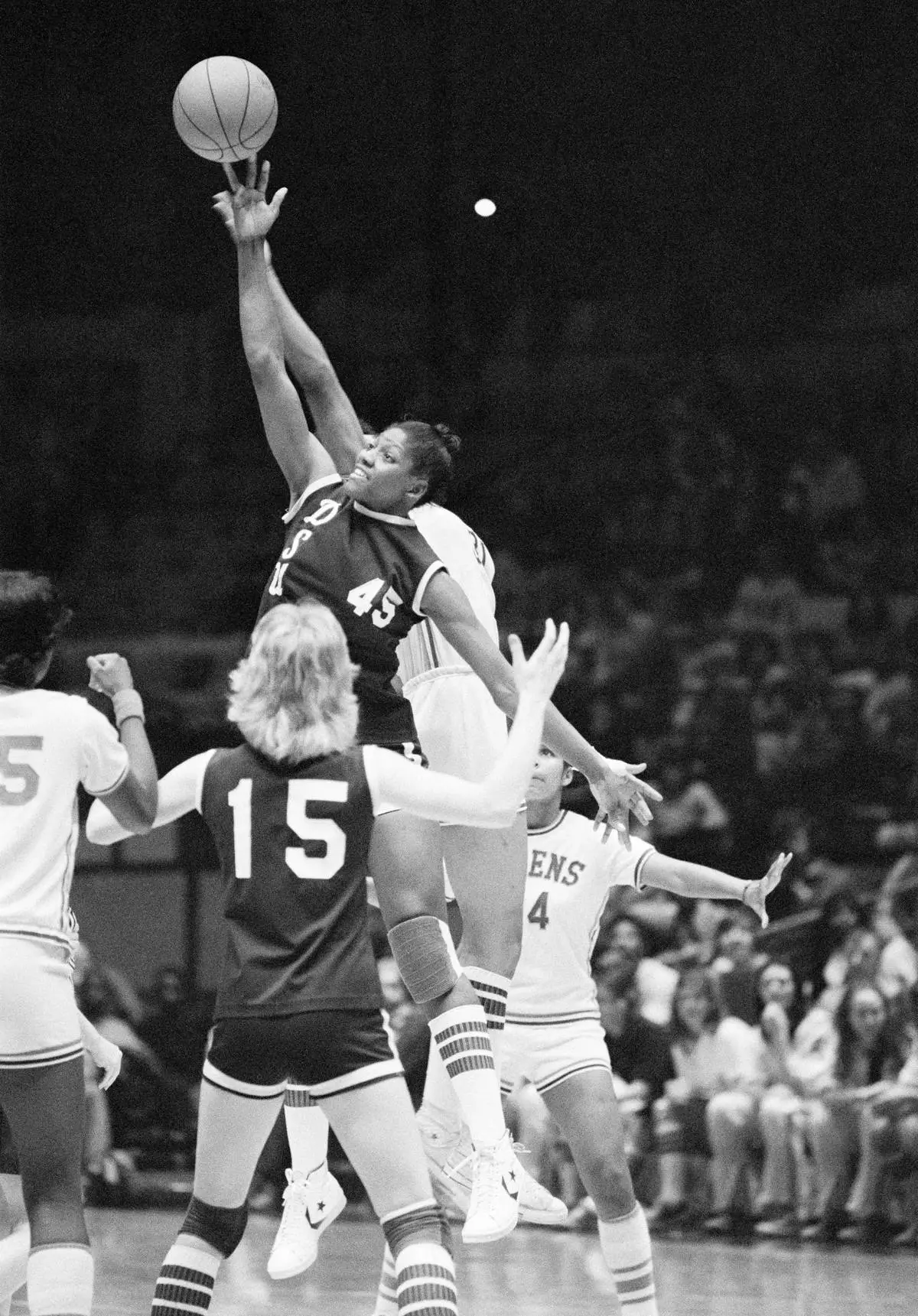
FILE - Delta State University's Lusia Harris (45) gets off a shot against Queens College during a women's college basketball game at Madison Square Garden in New York, Feb. 23, 1976. (AP Photo/Ron Frehm, File)
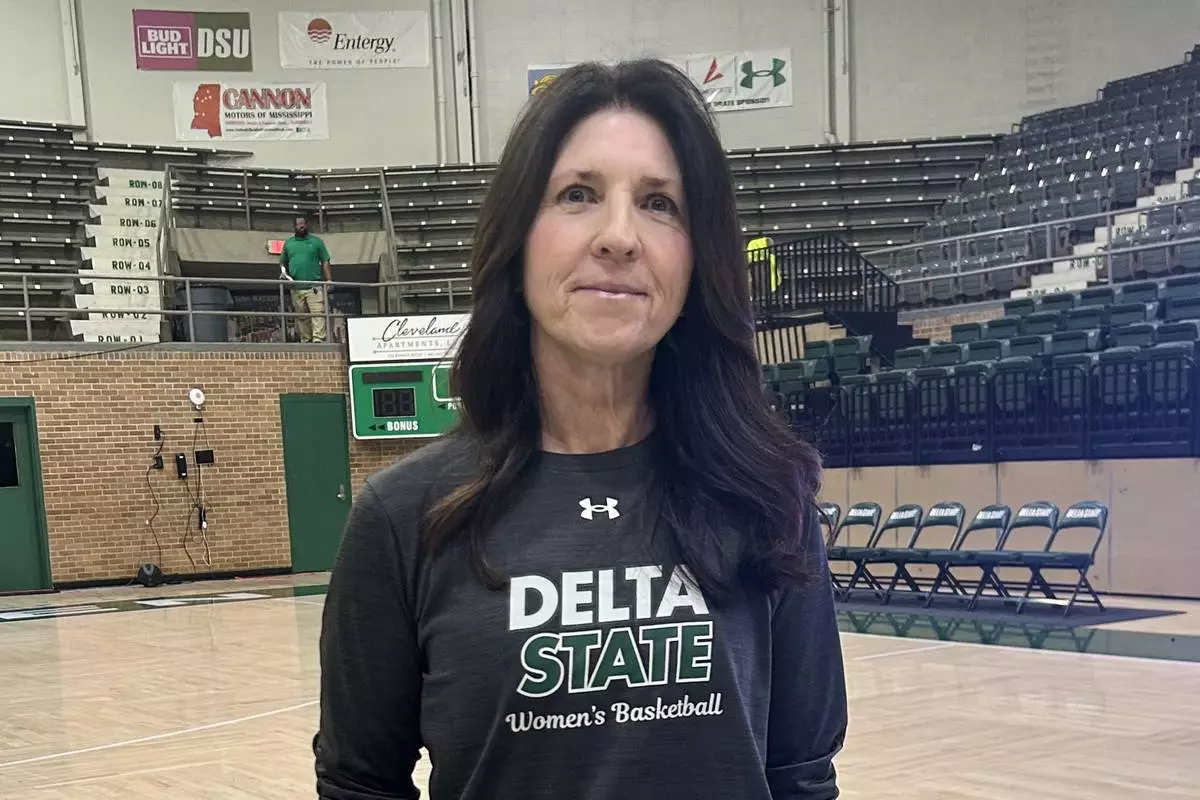
Delta State women's basketball coach Tracy Stewart-Lange poses for a photo, Feb. 17, 2026, in Cleveland, Miss. (AP Photo/Alanis Thames)
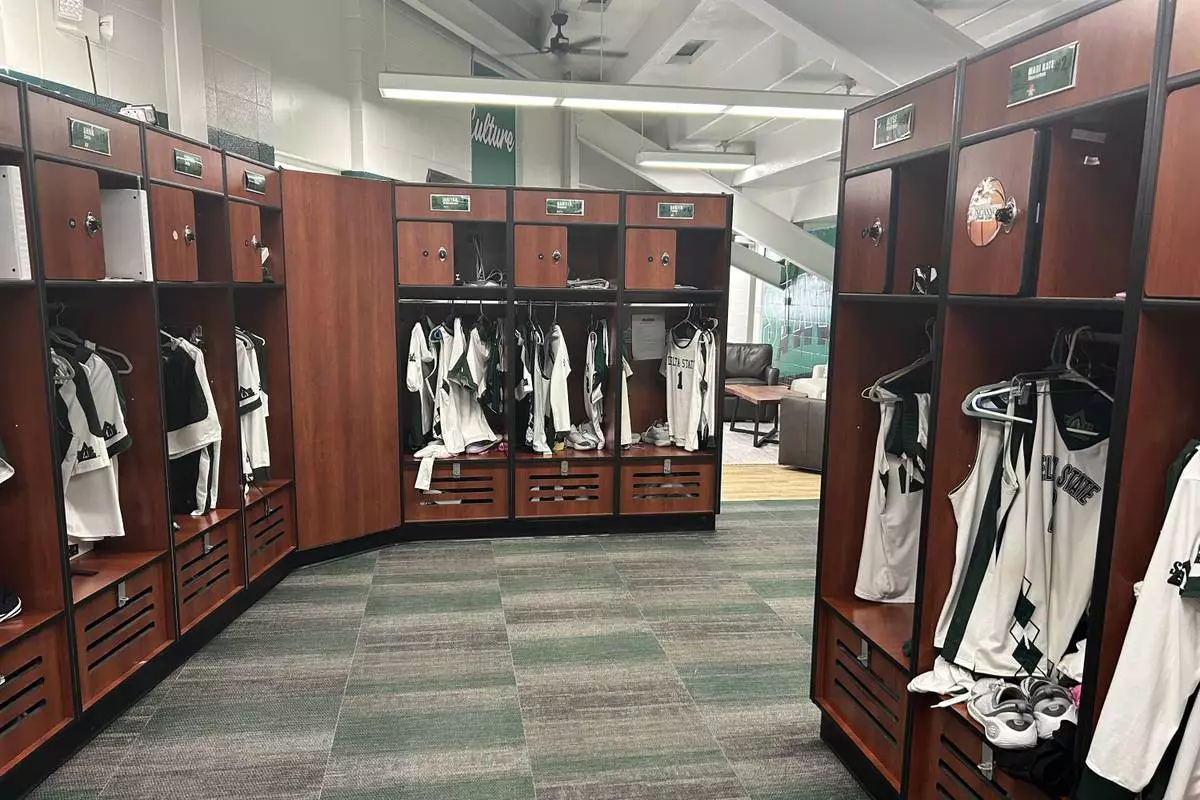
The Delta State women's basketball locker room is seen, Feb. 17, 2026, in Cleveland, Miss. (AP Photo/Alanis Thames)
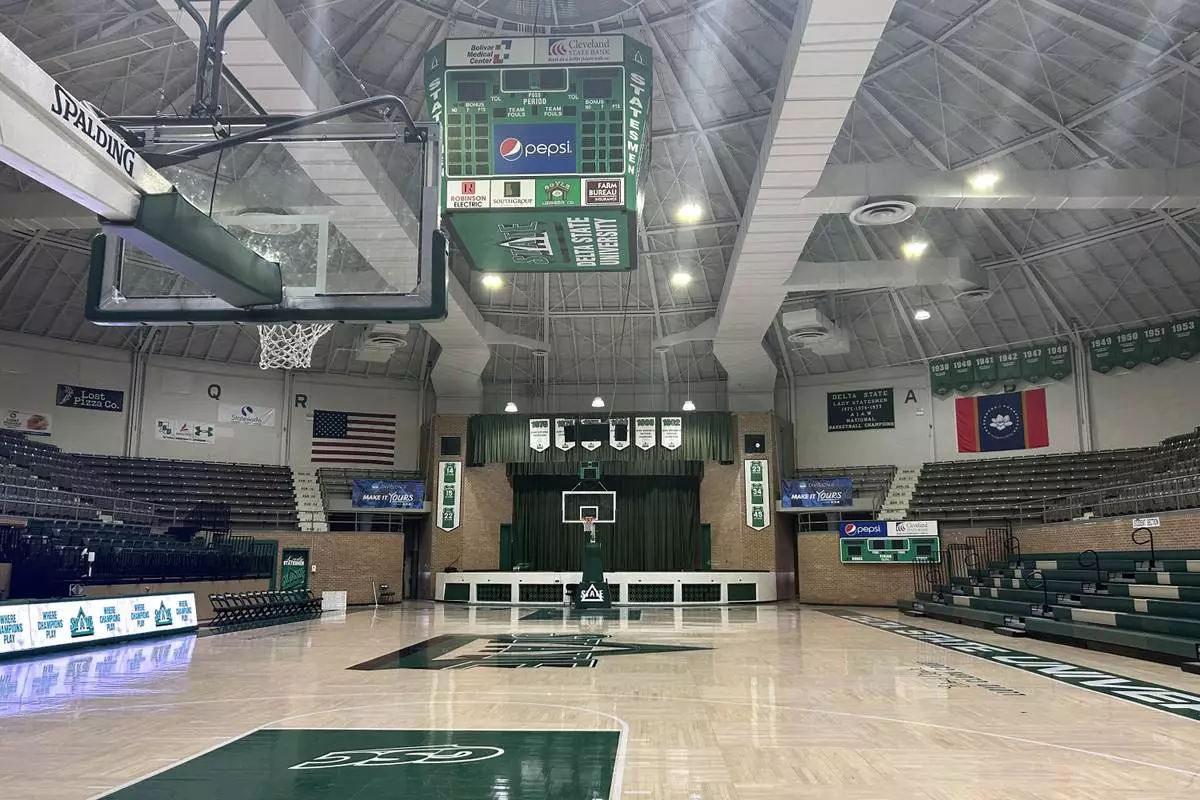
The Delta State basketball court is seen, Feb. 17, 2026, in Cleveland, Miss. (AP Photo/Alanis Thames)