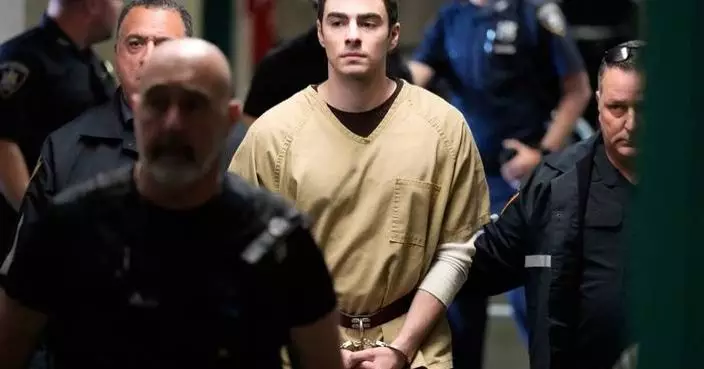
CHICAGO (AP) — One of the sons of notorious Mexican drug kingpin “El Chapo” pleaded guilty on Monday to U.S. drug trafficking charges, months after his brother entered a plea deal.
Known locally in Mexico as the “Chapitos” — or “little Chapos” — Joaquín Guzmán López and brother Ovidio Guzmán López are accused of running a faction of the Sinaloa cartel. Federal authorities in 2023 described the operation as a massive effort to send “staggering” quantities of fentanyl into the U.S.
Joaquín Guzmán López, 39, pleaded guilty to two counts of drug trafficking and continuing criminal enterprise after admitting his role in overseeing the transport of tens of thousands of kilograms (pounds) of drugs to the U.S., mostly through underground tunnels. With the plea deal, his attorney said, he is expected to avoid life in prison.
Security was tight at Chicago's federal court ahead of the hearing in which prosecutors detailed events leading up to Guzmán López's dramatic arrest with another longtime Sinaloa leader on U.S. soil in July 2024.
Wearing an orange jumpsuit and matching shoes, Guzmán López spoke little in court Monday. At the outset of the hearing, U.S. District Judge Sharon Coleman asked him what he did for work.
“Drug trafficking,” he said.
“Oh that’s your job,” Coleman said with a chuckle. “There you go.”
If Guzmán López cooperates with the U.S. government, prosecutors said, they would reduce the life sentence attached to the charges. Regardless, he faces at least 10 years in prison, said Andrew Erskine, an attorney representing the federal government.
Guzmán López would have no opportunity to appeal the sentence as part of the plea deal.
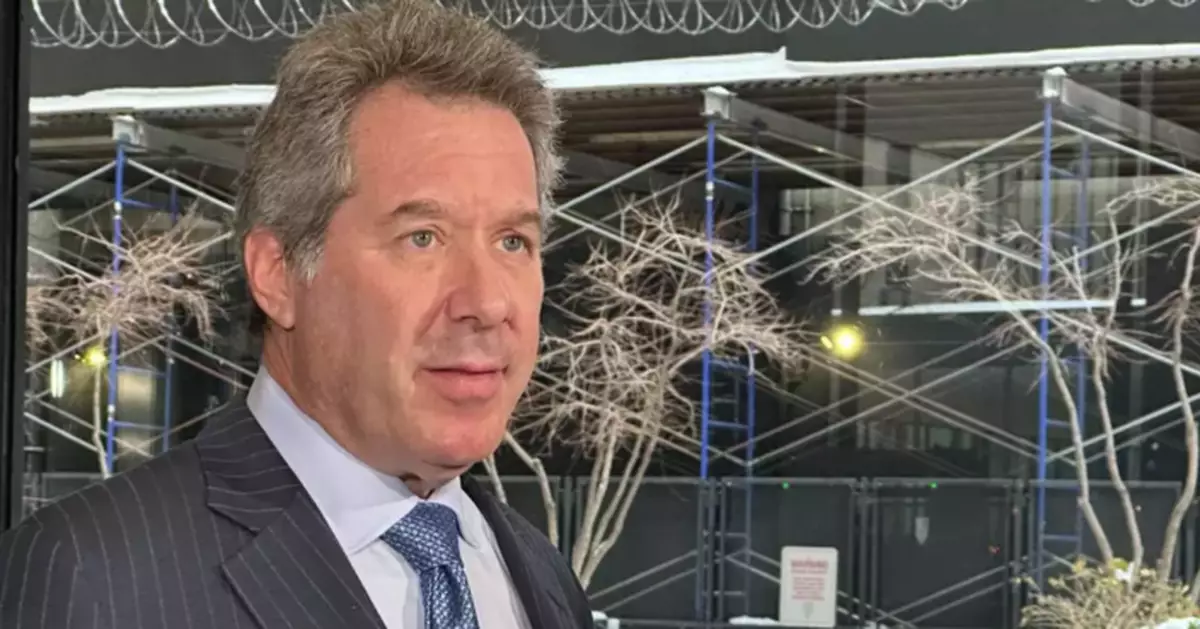
His defense attorney, Jeffrey Lichtman, commended both U.S. and Mexican authorities.
“The government has been very fair with Joaquín thus far,” he told reporters after the hearing. “I do appreciate the fact that the Mexican government didn’t interfere.”
Guzmán López and another longtime Sinaloa leader, Ismael “El Mayo” Zambada, were arrested in July 2024 in Texas after they landed in the U.S. on a private plane. Both men have previously pleaded not guilty to various drug trafficking, money laundering and firearms charges. Their surprising capture prompted a surge in violence in Mexico’s northern state of Sinaloa as two factions of the Sinaloa cartel clashed.
As part of the plea deal, Joaquín Guzmán López admitted to helping oversee the production and smuggling of large quantities of cocaine, heroin, methamphetamine, marijuana and fentanyl into the United States, fueling a crisis that has contributed to tens of thousands of overdose deaths annually.
Guzmán López also admitted to kidnapping an unnamed individual purported to be Zambada. Erskine described the alleged kidnapping in court, saying Guzmán López had the glass from a floor-to-ceiling window removed. During a meeting in the room with the unnamed person, Guzmán López allegedly had others enter through the open window, seize the individual, put a bag over his head and take him to a plane. On board, he was zip tied and given sedatives before the plane landed at a New Mexico airport near the border with Texas.
Erskine said the alleged kidnapping was part of an attempt to show cooperation with the U.S. government, which did not sanction those actions. He said Guzmán López also would not receive cooperation credit because of that.
Zambada's attorney has previously claimed that his client was “forcibly kidnapped” by Guzmán López onto the flight to the U.S.
Lichtman said he would try to seek a lower sentence.
“I don’t know how this ends up," Lichtman said. "If he gets a 10-year sentence, it’s still a lot of time for anybody to spend in prison.”
In court, observers were instructed to turn off electronic devices while authorities used police dogs to sniff bags and equipment in the lobby of the downtown courthouse.
In July, Ovidio Guzmán López became the first son of drug lord Joaquín “El Chapo” Guzmán to enter a plea deal. He pleaded guilty to drug trafficking, money laundering and firearms charges tied to his leadership role in the cartel. Legal experts called that plea deal a significant step for the U.S. government in their investigation and prosecution of Sinaloa cartel leaders.
Joaquín “El Chapo” Guzmán is serving a life sentence after being convicted in 2019 for his role as the former leader of the Sinaloa cartel, having smuggled mountains of cocaine and other drugs into the United States over 25 years. The brothers allegedly assumed their father’s former role as leaders of the cartel.
__
Associated Press writer Sophia Tareen in Chicago contributed to this report.
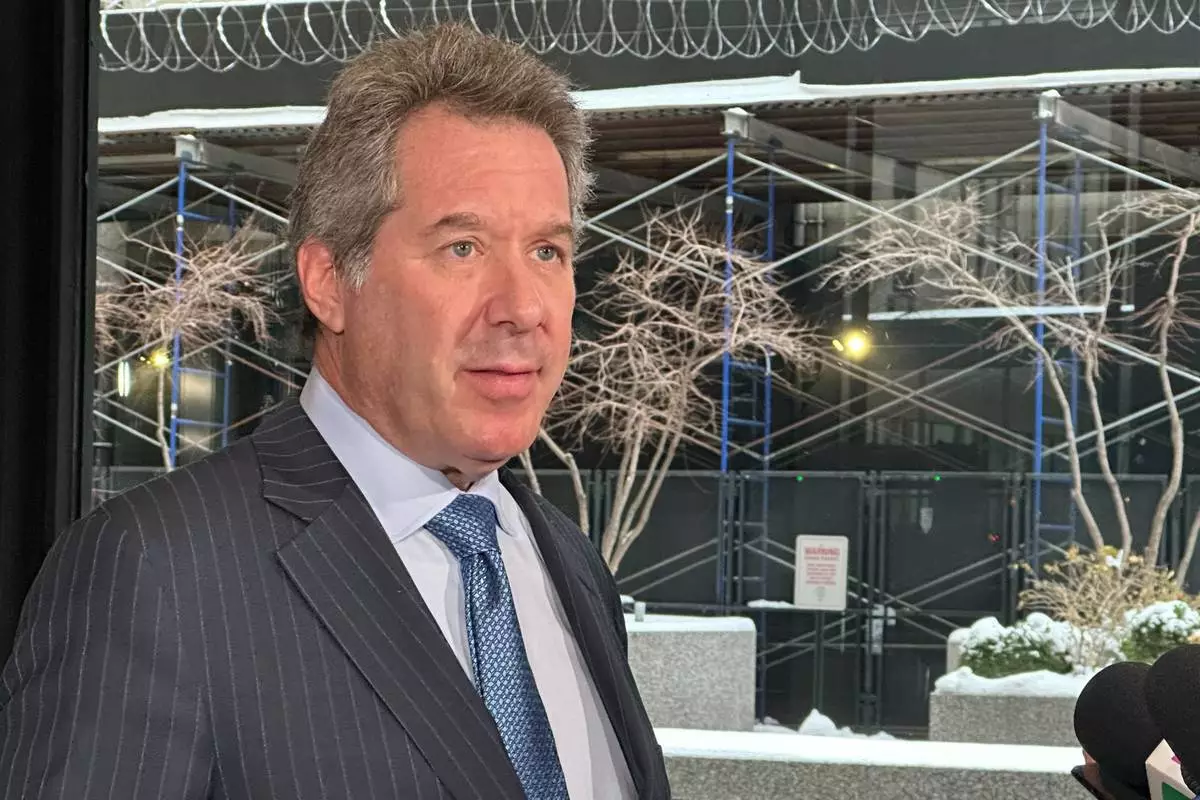
Jeffrey Lichtman, an attorney for Joaquin Guzman Lopez, speaks to reporters after his client appeared in US District Court for the Northern District of Illinois on Monday, Dec. 1, 2025 in Chicago. (AP Photo/Christine Fernando)
FILE - This image provided by the U.S. Department of State shows Joaquín Guzmán López after he was arrested by U.S. authorities in Texas. (U.S. Department of State via AP, File)
LONDON (AP) — U.S. President Donald Trump says he's strongly considering pulling the United States out of NATO, ratcheting up his criticism of European allies and exposing a wider rift in the trans-Atlantic alliance — this time over the Iran war.
While Trump's talk of a possible NATO pullout dates back years, the comments to The Telegraph newspaper in the U.K., published Wednesday, were among the clearest and most disparaging yet — suggesting that the fracture has deepened perhaps to a point of no return.
Asked whether he would reconsider U.S. membership in the alliance after the conflict in the Middle East ends, Trump replied: “Oh yes, I would say (it’s) beyond reconsideration."
NATO didn't provide immediate comment when contacted by The Associated Press.
U.K. Prime Minister Keir Starmer said that his government was “fully committed to NATO” and called it “the single most effective military alliance the world has ever seen.”
Many European leaders have felt political pressure over the war, which faces opposition in their countries and has sent petroleum prices soaring as Iran has effectively shut the Strait of Hormuz, the narrow waterway between Iran and Oman through which about one-fifth of the world’s oil passes.
“Whatever the pressure on me and others, whatever the noise, I am going to act in the British national interest in all the decisions I make,” Starmer said Wednesday.
The U.K. is working on plans that could help assuage Trump, and Starmer said military planners will work on a postwar security plan for the Strait.
On Thursday, British Foreign Secretary Yvette Cooper will host a virtual meeting of 35 countries that have signed up to help ensure security for shipping in the Strait — after the fighting ends.
Iulia-Sabina Joja, a senior fellow at the Middle East Institute, alluded to Trump's exhortation on Tuesday for allies to “go get your own oil” — in a social media post insisting it wasn't America's job to secure the Strait.
“The Europeans are not keen to go into an active warfare situation, to so-called ‘get’ their energy out of the Strait,” said Joba, a former deputy project manager at NATO Allied Command Transformation in Virginia.
Long-simmering tensions within the alliance have bubbled up again over the war.
As energy prices have spiked, Trump has been desperate to get countries to send their ships to the Strait of Hormuz. He has called NATO allies “cowards."
Even since his first term, Trump has urged the allies to assume greater responsibility for their own security and spend more on defense. He has argued that the U.S. has done more for them than the other way around.
A U.S. pullout would essentially spell the end of NATO, which flourished for decades under American leadership.
Speaking Tuesday on Fox News, U.S. Secretary of State Marco Rubio said: “I do think, unfortunately, we are going to have to reexamine whether or not this alliance that has served this country well for a while is still serving that purpose.”
Rubio raised questions with interviewer Sean Hannity about whether NATO has “become a one-way street where America is simply in a position to defend Europe — but when we need the help of our allies, they’re going to deny us basing rights and they’re going to deny us overflight.”
The criticism from Rubio could raise concerns in the alliance about whether the U.S. under Trump may no longer consider NATO as worth the time, money and personnel that Washington has invested in it.
The very mention of a pullout could weaken the alliance’s deterrence, particularly with Russia: It relies on ensuring that Russian President Vladimir Putin believes NATO will retaliate if he decides to one day expand Moscow's war in Ukraine.
NATO is built on Article 5 of its founding treaty, which pledges that an attack on any one member will be met with a response from them all.
As the Iran war has spread, missiles and drones have been fired toward NATO member Turkey and a British military base on Cyprus, fueling speculation about what might prompt NATO to trigger its collective security guarantee and come to their rescue.
The alliance hasn't intervened or signaled any plan to. NATO Secretary-General Mark Rutte — who has voiced support for Trump and Washington's role in the alliance — has been focusing mostly on the Russia-Ukraine war since Ukraine borders four NATO countries.
NATO operates uniquely by consensus. All 32 countries must agree for it to take decisions, so political priorities play a role. Even invoking Article 5 requires agreement among the allies. Turkey or the U.K. can't trigger it alone.
The U.S. can’t just simply walk away all that easy.
A Defense Act passed under U.S. President Joe Biden in 2024 prevents an American president from withdrawing from NATO without support of two-thirds of the Senate or under another act by Congress. It is unclear whether the Trump administration, which during his first term claimed broader authority on the matter, would challenge that law.
European leaders have called for the Middle East conflict to stop and want the U.S. and Iran to return to negotiations over Tehran's nuclear program, which Washington and Israel see as a threat.
The vocal opposition in Europe to Trump's war against Iran has started to turn into action.
Spain has closed its airspace to U.S. planes involved in the war.
Early last month, France agreed to let the U.S. Air Force use a base in southern France after receiving a “full guarantee” from the United States that planes not involved in carrying out strikes against Iran would land there.
The government of Italian Premier Giorgia Meloni, long seen as one of the European Union leaders with the best personal ties with Trump, denied permission for U.S. bombers to land at the Sigonella air base in Sicily for one mission related to the Middle East.
Franco Pavoncello, a professor of political science at Rome’s John Cabot University, said that decision might cost Meloni a lot of her political capital in Washington.
But he said: “The Italian government could not be seen by the European allies as too submissive to American interests, as it would have very negative repercussions both at home and in the EU.”
U.S. relations with Europe had already soured in recent months over Trump's call for Greenland — a semiautonomous territory of stalwart NATO ally Denmark — to become part of the United States, prompting many EU countries to rally behind Copenhagen.
Jamey Keaten reported from Geneva. Lorne Cook in Brussels, Giada Zampano in Rome, Sam McNeil in Dubai, United Arab Emirates, and Matthew Lee in Washington, contributed to this report.
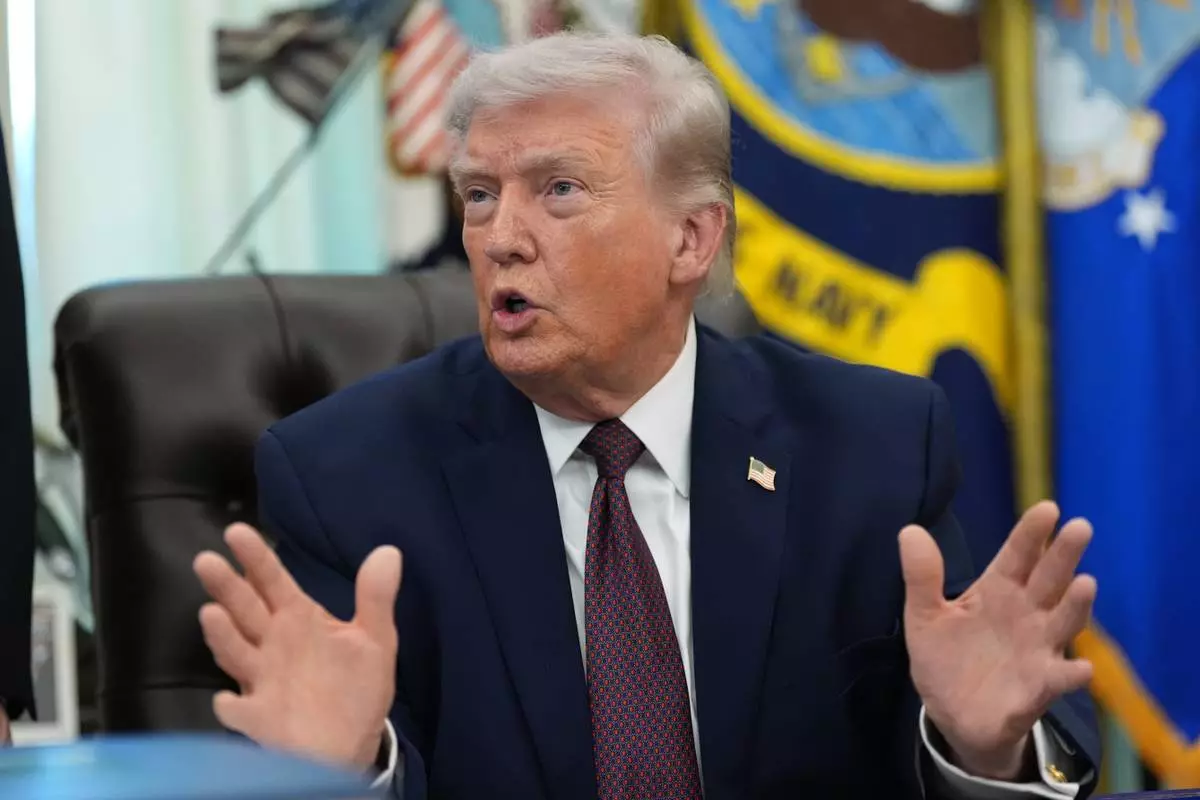
President Donald Trump answers questions from reporters after signing an executive order in the Oval Office of the White House Tuesday, March 31, 2026, in Washington. (AP Photo/Alex Brandon)
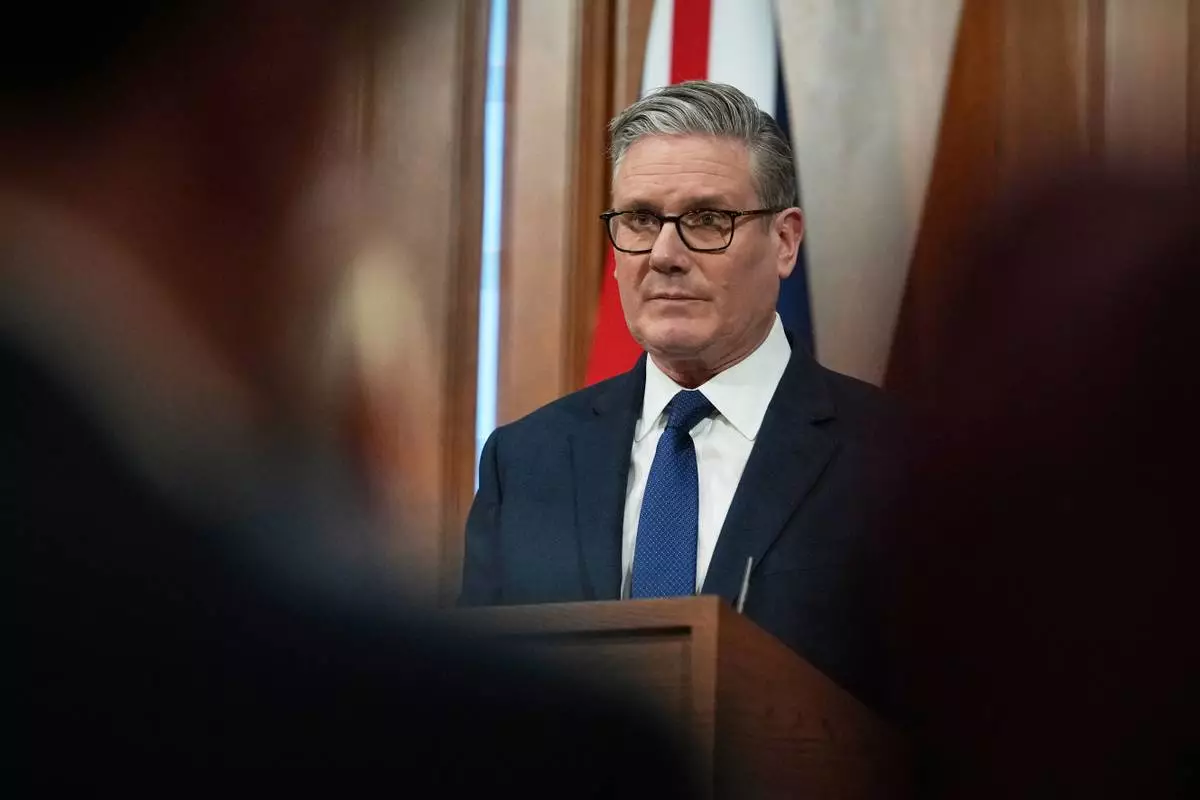
Britain's Prime Minister Keir Starmer speaks during a press conference at Downing Street in London, Wednesday, April 1, 2026. (AP Photo/Frank Augstein, Pool)
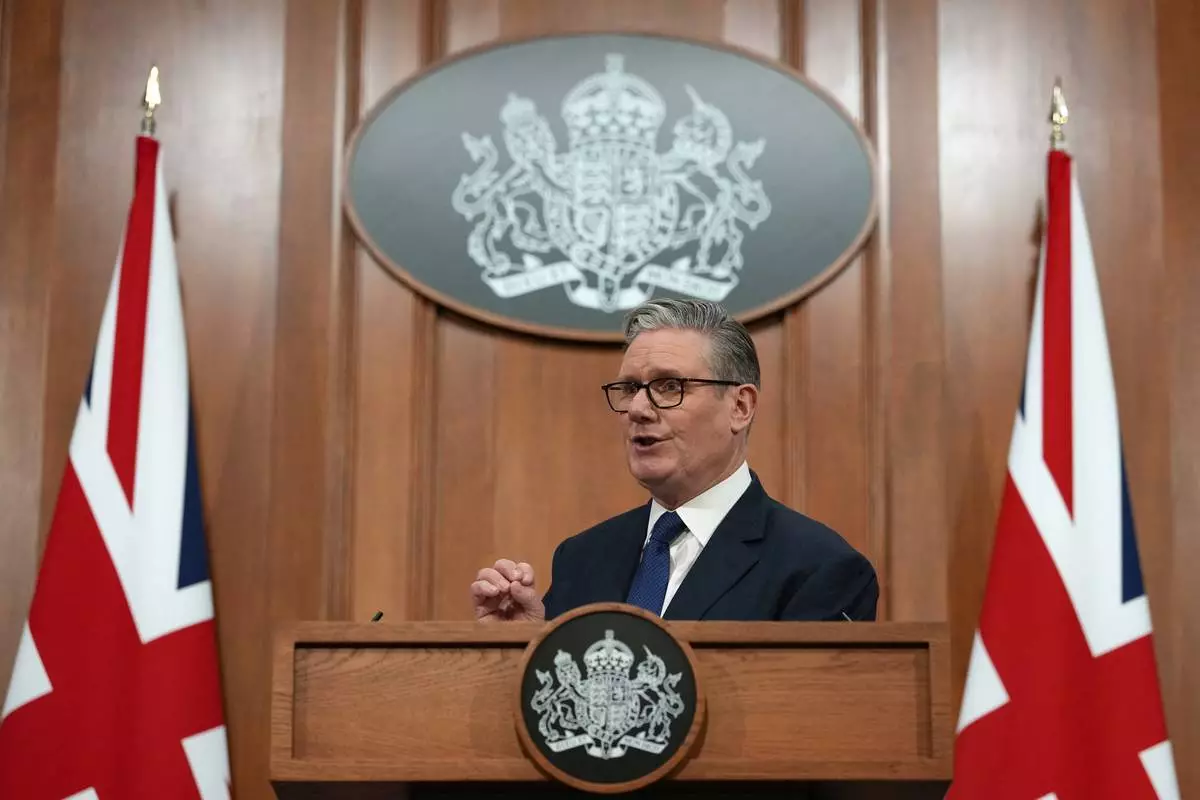
Britain's Prime Minister Keir Starmer speaks during a press conference at Downing Street in London, Wednesday, April 1, 2026. (AP Photo/Frank Augstein, Pool)
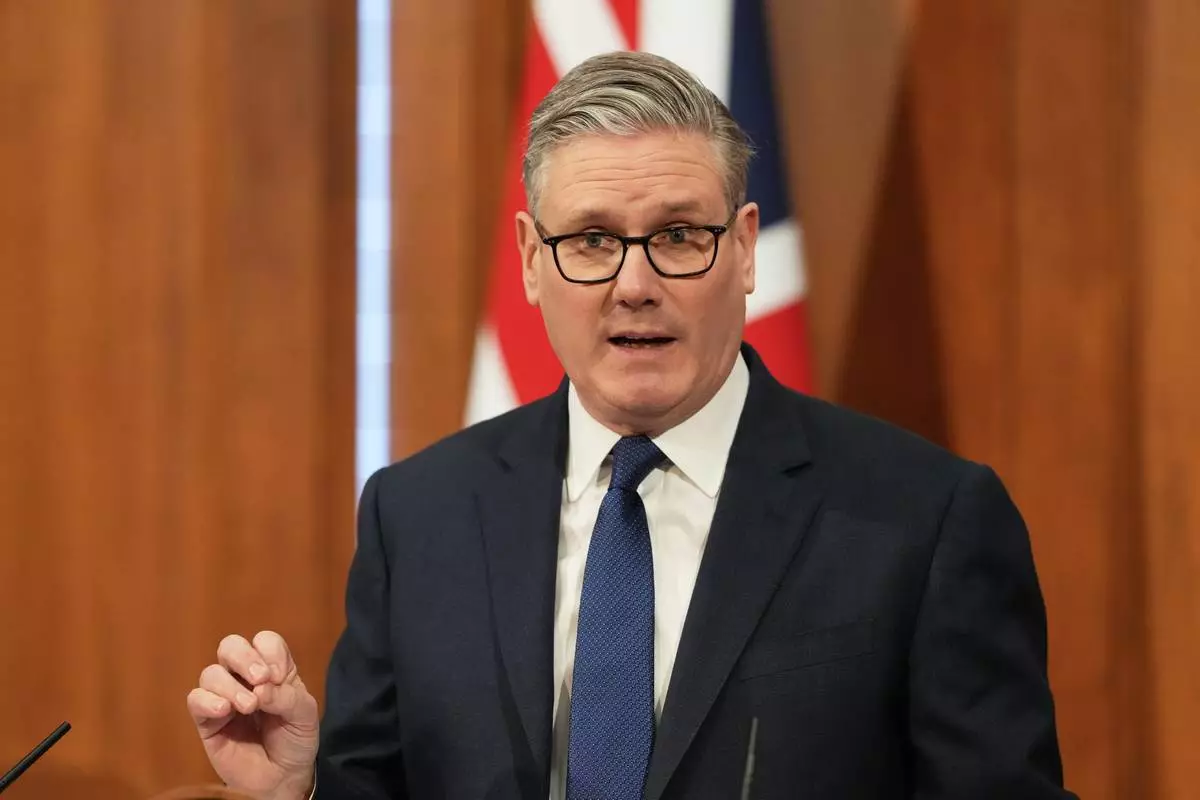
Britain's Prime Minister Keir Starmer speaks during a press conference at Downing Street in London, Wednesday, April 1, 2026. (AP Photo/Frank Augstein, Pool)